Twilight Story (濹東綺譚, Shiro Toyoda, 1960)

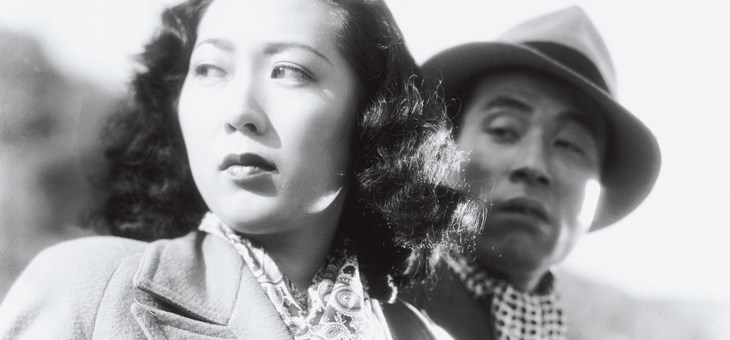
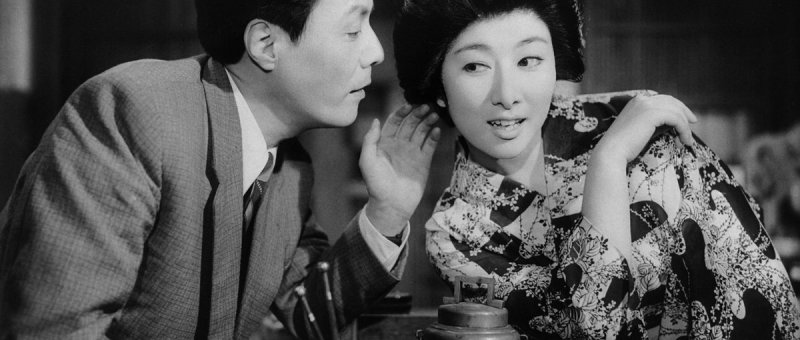
Director Shiro Toyoda, closely associated with high minded literary adaptations, nevertheless had a talent for melancholy comedy and for capturing the everyday reality of ordinary people. A fierce condemnation of the patriarchal society at a moment of intense masculinity, Twilight Story (濹東綺譚, Bokuto Kitan), an adaptation of the novel by Kafu Nagai, follows an ambivalent author as he covertly observes the life and love of a former geisha daring to dream of romantic salvation while fully aware of the world’s cruelty.

Set in 1936, the film opens with an author on a research trip who guides us into the world of the Tamanoi pleasure quarter which he seems to disdain but is drawn to all the same. Whilst there he runs into a nervous middle-aged man, Junpei (Hiroshi Akutagawa), who is later accosted by sex worker Oyuki (Fujiko Yamamoto) for use of his umbrella during a violent storm. A mild-mannered sort, Junpei is unused to the ways of the red light district and quickly makes his escape after being invited into Oyuki’s home. After a swift drink, however, he returns and the pair begin an awkward semi-romantic relationship.

Despite his affirmation that he is single, Junpei is in fact already married if (for the moment) unhappily. Though he knew his future wife Mitsuko (Michiyo Aratama) had given birth to an illegitimate child fathered by her employer, Junpei chose to marry her anyway because he was in love. The pair married, they say, for “genuine” reasons but the father of Mitsuko’s son continues to send maintenance money for the boy’s education and his constant presence has begun to play on Junpei’s mind especially as his teacher’s salary is dwindling in this age of militarism in which educational hours are decreasing in favour of compulsory military drills. Meanwhile, Mitsuko also seems to have got religion and spends most of her time reciting sutras with the implication that she has begun to neglect her husband, emotionally, spiritually, and most particularly physically. In order to escape his depressing home life, Junpei hangs out in the Tamanoi where men’s hearts are lighter and people talk frankly about love.

This is, of course, not quite the case, but the fantasy the pleasure quarters sell of themselves. Our jaded author is perfectly aware of that and broadly sympathetic towards the women caught in its web. Oyuki, a former geisha, has “debased” herself in order to earn extra money to send home to her family and pay the medical fees for her sickly mother. Her uncles constantly pressure her for more and she wonders if they are not merely exploiting her, using her money for their own benefit and refusing to chip in for her mother’s care. Nevertheless, she is trapped. On meeting Junpei with whom she seems to develop a genuine emotional connection, she dares to dream that one day they might marry, that she could leave this life behind and build a stable family home of her own.

Of course, it’s not to be. Like all men in the Tamanoi, Junpei is misrepresenting himself for his own ends. He is only using Oyuki as an idealised point of refuge from the unhappy marriage he shows no other signs of leaving. As the author points out, the men think they’re using women but the women are also using them though they do so without calculation. Denied power or agency of their own, the women of the Tamanoi have no other option than to manipulate that of men, though the author sympathises with them so strongly that to expose the hidden “vulgarity” seems to him an act of intense cruelty.

Junpei falls in love with the world of the Tamanoi because he thinks it’s more emotionally honest, but the truth is quite the reverse. Wandering through the narrow streets at night, the author pities the women in the windows, knowing that men come here to escape their isolation but there is no escape for these women who are forced to delude themselves that a better future is waiting in order to go on living. Meanwhile Junpei’s colleague, looking back over his shoulder towards the young men in uniform, declares that he too has lost all hope for a promising future. With militarism on the rise, hyper-masculinity has led to a further decline in the already woeful status of women with even the girls’ sympathetic pimp lamenting that the army, who have been rounding up sex workers for forced service in Manchuria, regard them as little more than products to be poked and prodded and giggled over as they are cruelly bought and sold.

Reuniting with his wife, Junpei is forced to face his emotional cowardice, that he was just playing with Oyuki’s feelings in indulging the fantasy of an idealised romantic union. Oyuki, meanwhile, faces the destruction of all her dreams when she realises her uncle has betrayed her, her mother is dead, and all her sacrifices have been for nothing. On some level she may have known Junpei had another woman, but needed to believe in the fantasy of his love for her in order to make her life bearable. Even so, she now sees no other future for herself than a return to work shorn of all her hope. Toyoda’s condemnation of the red light district is bleak and total, even as the jaded author himself becomes an ambivalent part of it, but the Tamanoi is only a symptom of longstanding social oppression exacerbated by militarist fervour as the lights go out all over town.

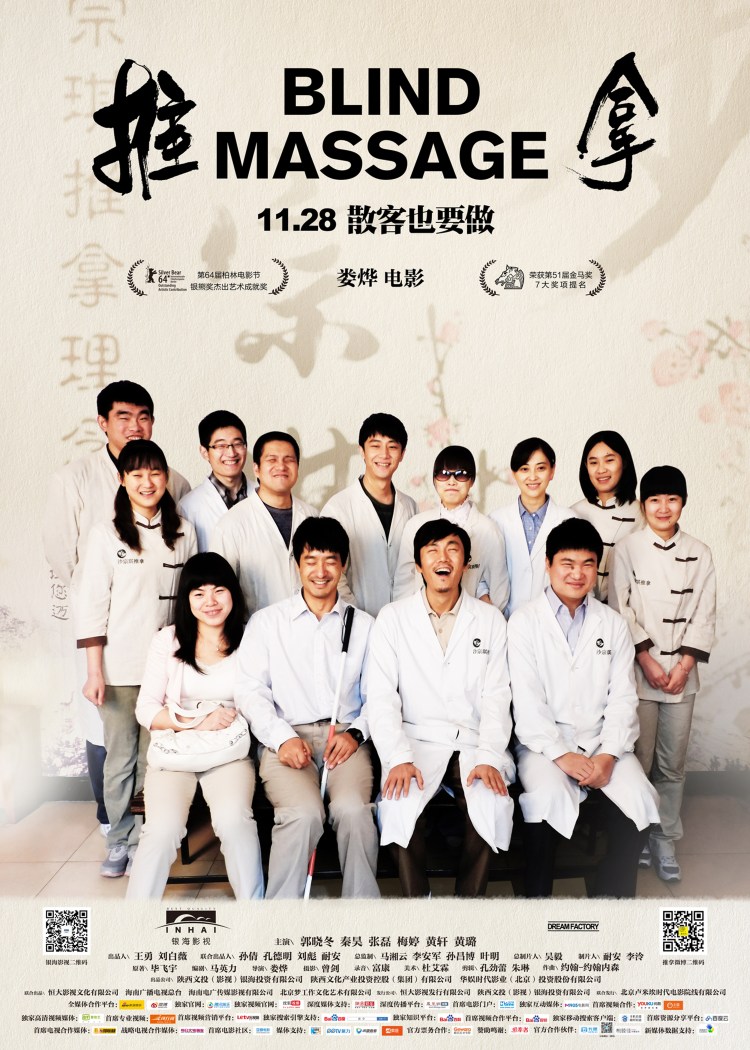

Blind Massage (推拿, Lou Ye, 2014)

Blind Massafe poster 1Lou Ye, defiantly controversial, has made those who cannot, for one reason or another, embrace their own desires the centre of his cinema. Seeking connection, his protagonists reel desperately from one traumatic event to the next but resist full commitment, no longer able to believe in the truth of their feelings in a society which has so often betrayed them. Blind Massage (推拿, T), a radical departure from the provocative politicisation that has hitherto marked his cinema, takes this one step further in setting itself inside what it sees as an entirely isolationist world – that of the blind who occupy a particular liminal space within modern Chinese society.

Lou begins with a voiceover and fractured vision of our most prominent protagonist, Xiao Ma (Huang Xuan), as he emerges from a childhood accident which killed his mother and cost him his sight. Though he is assured that his condition is only temporary and his eyes will eventually be healed, Xiao Ma later attempts suicide when he comes to understand that his doctors have been deceiving him and his sight will never return. Surviving, he learns to accept his blindness and attends a special school for those with disabilities where he learns to read braille and is trained as a masseuse – a traditional occupation for the blind in Chinese society. Once qualified he gets a job at the Sha Zongqi Massage Center which is staffed exclusively by those with visual impairments who live together on site and exist as a small and exclusive community.

The trouble begins when the two partners, Sha Fuming (Qin Hao) and Zhong Zongqi (Wang Zhihua), invite an old colleague, Dr. Wang (Guo Xiaodong), to join them. Wang brings with him his fiancée, Xiao Kong (Zhang Lei), with whom the young Xiao Ma eventually develops a fascination. Meanwhile, Fuming has also developed a fascination for another newcomer, Du Hong (Mei Ting), who, he has been told, is very “beautiful”. Du Hong, in turn, is attracted to the morose figure of Xiao Ma but perhaps understands that for one reason or another he is unable to “see” her (which might be one of the reasons she continues to pine for him).

As in his previous films, Lou centres himself in a question of haptic connection. The residents of the clinic feel themselves cut off from what they see as “mainstream society” which they believe belongs exclusively to the sighted. Mainstream society, unadaptable and perhaps unwelcoming, has seen fit to exile them to the extent that they are unable to survive outside of the specific career track it has laid down for them and without the support of their own community. Yet their occupation also depends on deep sensory perception on a level deemed inaccessible to the fully sighted and the ability to “see” the things which can’t be “seen”.

Fuming, outgoing and sociable, looks for outlets outside of his own community but is criticised by those within who worry that he is in someway attempting to deny his blindness by adhering to the conceptual world of the sighted which he is otherwise unable to comprehend on a sensory level. His “love” for Du Hong is rooted in ideas of “conventional” beauty which is, in fact, more an expression of his vanity as he longs to possess the “best” girl as Du Hong points out when she reminds him that he has no idea whether she is “beautiful” or not or even what visual “beauty” might be, and that in becoming obsessed with these incomprehensible ideas he has in fact missed all of the things which might be “beautiful” about her on another level than the visual.

Meanwhile, another resident at the clinic has become worried about Xiao Ma’s fixation on Kong and decided the best way to sort him out is to take him to a brothel (ironically, also a kind of “massage parlour”). Though originally reluctant Xiao Ma begins to develop a relationship with sex worker Mann (Huang Lu) which is forged through touch but occurs on a deeper level. A fight with one of Mann’s other clients has the ironic effect of restoring some of his vision, leaving him stumbling and confused but also excited and drunk on a kind of sensory euphoria as he tries to reconcile his differing kinds of perception to make his way home. Yet by this point in his life Xiao Ma’s entire identity and existence revolves around being a blind person – he cannot tell anyone at the clinic that his vision has begun to return for fear of losing his place in their community as well as his ability to support himself.

Eventually the community of the clinic becomes scattered as its residents begin to reassert themselves as individuals re-entering “mainstream society”. Casting visually impaired actors alongside familiar faces, Lou treats his subject with the utmost respect and demonstrates that many of the problems faced by those at the clinic are exactly the same as those faced by the protagonists of his previous films while also reflecting the various ways that society remains intolerant to those who have differing needs. Asking quite profound questions about the nature of “beauty” and “connection” when images have been absented from the frame Lou attempts to “visualise” what it might feel like to “see” without “seeing” in an exploration of defiant hidden realities which often go wilfully unseen in our own blinkered perceptions.


Original trailer (English subtitles)

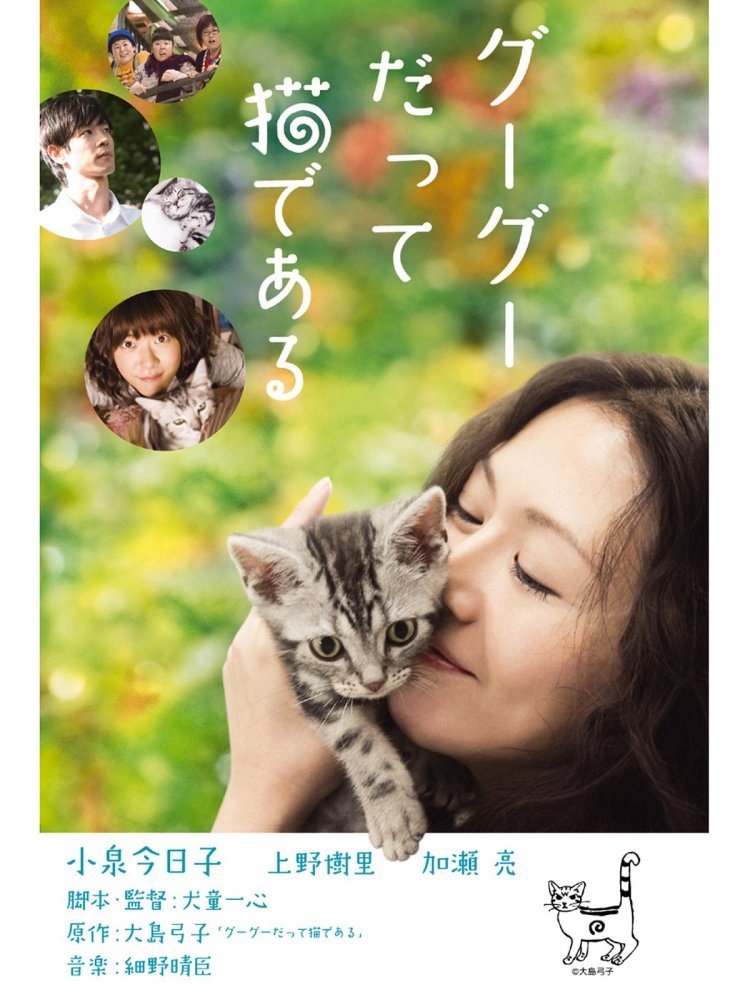
Gu Gu the Cat (グーグーだって猫である, Isshin Inudo, 2008)

Gu Gu the cat posterJapanese cinema has long been in love with the local flavour movie. It may be true that many otherwise fantastic examples of the small subgenre have a “sponsored by the tourist board” aesthetic, but then the pure “furusato” love is usually genuine enough and often proves infectious. Gu Gu the Cat (グーグーだって猫である, Gu Gu Datte Neko de Aru) is a case in point in its fierce determination to sell the benefits of trendy Tokyo suburb Kichijoji – an upscale bohemian neighbourhood well known for being home to artists and dreamers who take care to foster the kind of hometown spirit you wouldn’t normally associate with city living. The film is also, however, the story of a struggling middle-aged mangaka who is forced to deal with a long delayed existential crisis after her elderly cat passes away.

Ça Va had been living with Asako (Kyoko Koizumi) for the last 15 years but passed away while she and her team were working flat out on a special Christmas issue. Asako is of course devastated and not least because she feels guilty that perhaps she was too busy to notice that Ça Va was ill until it was too late. According to her assistant Naomi (Juri Ueno), Asako’s career had been faltering even before Ça Va passed away – the Christmas issue had been the only thing she’d produced all year leaving her team of assistants out of pocket and worried for the future. Grief-stricken as she is, Asako eventually decides to get a new cat, Gu Gu, enabling a rebirth in her professional as well as personal lives.

Based on an autobiographical story by mangaka Yumiko Oshima, Gu Gu the Cat wastes no time in reminding us that being a mangaka is a precarious business. Asako is well acclaimed as an artist and has inspired countless young women with her shojo manga (Naomi not least among them) but is still pressed into working insane hours to meet publication deadlines and is constantly badgered by her publishing company to provide new material. Her mother (Chieko Matsubara), meanwhile, just wants her to settle down and get married before it’s “too late”.

Asako’s mother’s nagging may seem like the usual kind of conservatism that is a little embarrassed by an unmarried middle-aged woman, as well as with the idea of a woman having a career and especially in manga which is a “popular” art and therefore less respectable than literature or painting. It is also, however, born of knowing her daughter and seeing that there is a part of her that hasn’t quite matured thanks to working on manga all her adult life which has left her feeling isolated and lonely in a way a cat might not be able to satisfy. This is perhaps why potential love interest Seiji (Ryo Kase) describes all her manga as “sad”, and why Asako is somewhat uncomfortable with being treated as a “famous author” rather than as a person.

Gu Gu the cat takes a back seat to most of the action (as cats are want to do) but does help engineer a meeting with Seiji who, despite being much younger than Asako, begins to reawaken in her a sense of desire if not exactly for romance then perhaps for life. Following a familiar pattern, however, Asako re-channels that desire into her manga – coming up with an idea in which a teenager suddenly grows old, neatly mirroring her sudden sense of having become “a woman of a certain age” overnight without really noticing. Having lost Ça Va, Asako attempts to come to terms with lost time in accepting that many choices have already been made and opportunities lost. In that sense there is something sad in Asako’s decision to remain alone in knowing that in the end she lost love because she was too timid to claim it, but then, the answer isn’t new romance but an acceptance of being happy in the present in the knowledge that things change and people leave but it will all be OK in the end.

Based on Oshima’s real experiences, Inudo’s film takes a turn for the melodramatic towards its conclusion which feeds back into his “live every day” message but is perhaps a little heavy for the cheerful slice of life drama surrounding it. Likewise, his strange decision to sell the joys of Kichijoji (which appear to be many) through an American Eikaiwa teacher narrating a journey through the area in the manner of a TV programme aimed at tourists is a particularly strange one which in no way benefits from its surreal plot revelation. Nevertheless, Gu Gu the Cat is a warm and affectionate tribute to this seemingly warm and quirky area which acts as a kind of coming of age story for its middle-aged heroine who, in a sense, births herself in coming to an acceptance that life goes on and the best you can do go along with it for as long as you can.


Original trailer (English/Chinese subtitles)

Camera Japan Announces Complete Programme for 2019

camera japan logo

Camera Japan, the premier Dutch showcase for Japanese film, returns for its 14th edition this September with another fantastic selection of recent indie and mainstream cinema. This year’s theme is “youth” and the programme has a special focus on films made by or about young people.

Contemporary Cinema

Fly Me to the Saitama still 2

  • 12 Suicidal Teens – 12 teens meet in an abandoned hospital to commit mass suicide but instead find themselves trying to solve the mystery behind the death of a young boy in a youthful drama from 20th Century Boys’ Yukihiko Tsutsumi.
  • Another World – three childhood friends reunite but find it difficult to escape from the shadow of the past in Junji Sakamoto’s tale of frustrated male bonding. Review.
  • Astral Abnormal Suzuki-san – indie comedy in which a young YouTuber and her family become part of a TV show.
  • Bento Harassment– A single mother fed up with her teenage daughter’s nonsense starts sending passive aggressive messages through bento in a tale inspired by a real life blog.
  • The Chaplain – the final film from the late Ren Osugi in which he plays a compassionate preacher ministering to those on death row. Review.
  • The Chrysanthemum and the Guillotine – Takahisa Zeze’s Taisho era tale of female sumo warriors and bohemian anarchists. Review.
  • Every Day a Good Day – charming tea ceremony memoir starring Haru Kuroki and the late Kirin Kiki. Review.
  • The Fable – a top hitman is given the challenge of laying low as a normal person for a year only to be sucked into yakuza drama. Heartfelt zany fun! Review.
  • Fly Me to the Saitama – the residents of Saitama have become an oppressed minority in this surreal comedy from the director of Thermae Romae. Review.
  • Hard-Core – an overly idealistic slacker and his simple-hearted buddy make friends with a damaged robot while accidentally getting mixed up in dangerous politics in Nobuhiro Yamashita’s adaptation of the cult manga. Review.
  • Jam – Sabu gets back to his roots with a tale of three guys on the run. Review.
  • Jesus – a little boy discovers he has a friend in tiny Jesus only to find himself feeling betrayed in Hiroshi Okuyama’s whimsical debut. Review.
  • Just Only Love – a lovelorn OL realises her boyfriend’s not that into her in Rikiya Imaizumi’s romantic drama.
  • The Kamagasaki Cauldron War – Osaka’s “invisible slum” is thrown into chaos when someone steals the local yakuza’s ritual bowl. Review.
  • A Life Turned Upside Down: My Dad’s an Alcoholic – a young woman struggles to take care of herself when her mother joins a cult and her dad takes to drinking.
  • Little Miss Period – surreal drama starring Fumi Nikaido in which periods are anthropomorphised as giant pink heart-shaped buddies.
  • Love at Least – sensitive drama in which a young woman with bipolar tries to face up to her feelings for her supportive (perhaps too much so) boyfriend when his manipulative ex shows up and starts interfering in her life. Review.
  • Melancholic – a Todai graduate slums it in a bathhouse only to discover the place doubles as a yakuza killing ground after hours. Review.
  • Mimicry Freaks – intense horror film in which a man wakes up on a hospital bed in the woods to be told he was executed thirty years previously.
  • My Dad is a Heel Wrestler – a nine-year-old boy exaggerates his wrestler dad’s success in this charming comedy starring real life wrestler Hiroshi Tanahashi.
  • My Father the Bride – a woman returns to her island home for the second anniversary of her mother’s death only to find her father wearing her mother’s clothes and apparently about to marry a man.
  • Okinawan Blue – three tales intertwine at an Okinawan guest house.
  • Only the Cat Knows – the disappearance of the family cat symbolises the distance in a long term marriage in a whimsical romantic drama starring legendary actors Chieko Baisho and Tatsuya Fuji with a notable cameo from Mikako Ichikawa. Review.
  • Orphan’s Blues – poetic drama in which a young woman with unexplained memory loss determines to track down a childhood friend. Review.
  • Queer Shorts – two mid-length queer films including Shun Nakagawa’s Kalanchoe in which a high school class becomes curious about their LGBT lessons, and Mika Imai’s Until Rainbow Dawn in which two deaf women fall in love.
  • Red Snow – impressionistic mystery starring Masatoshi Nagase and Arata Iura in which a journalist’s investigation of a thirty year old child disappearance begins to open old wounds. Review.
  • Rise of the Machine Girls – reboot of Noboru Iguchi’s classic splatter franchise.
  • Samurai Marathon – period drama directed by Bernard Rose in which the local lord’s idea of training his out of shape men through a marathon is misconstrued by the Shogun. Review.
  • Vision – Juliette Binoche goes rare herb hunting for Naomi Kawase.
  • We Are Little Zombies – four bereaved kids deal with their ennui in the time honoured fashion of going on an adventure and starting a punk band in Makoto Nagahisa’s anarchic drama. Review.

Classics

Stardust Brothers still 1

  • Crazed Fruit – Sun Tribe classic starring Yujiro Ishihara and his future wife Mie Kitahara alongside Masahiko Tsugawa in a tale of youth gone wild as two brothers fall for the same girl.
  • I Was Born, But… – Ozu’s classic silent movie in which two boys fear losing face to their friends over their dad’s less than impressive job. Review. Will be screened with live instrumentation from Gonçalo Almeida, Riccardo Marogna, and Phillip Ernsting.
  • Kids Return – youthful drama from Takeshi Kitano in which two lost young men muse on missed opportunities. Review.
  • The Legend of the Stardust Brothers – rediscovered cult gem from Macoto Tezka following the rise to fame of two aspiring pop stars. Review.
  • The Sun’s Burial – Nagisa Oshima classic set in the slums of Kamagasaki.
  • Tetsuo: The Iron Man – Shinya Tsukamoto’s legendary cyberpunk masterpiece.

Documentaries

Queer Japan still 1

  • Day of the Western Sunrise – partially animated documentary interviewing the surviving sailors of Lucky Dragon No. 5.
  • Kampai! Sake Sisters – documentary focussing on three women in the sake trade which has historically been a very male profession.
  • Queer Japan – a joyful exploration of LGBTQ+ life in contemporary Japan.
  • Sending Off – Ian Thomas Ash returns with his latest doc following a doctor providing hospice care to patients in their homes.
  • Tower of the Sun – Kosai Sekine’s doc focussing on the famous Taro Okamoto statue constructed for World Expo in Osaka in 1970.

Animation

Maquia still 1

  • Aragne: Sign of Vermilion – indie anime in which a young girl steps up to the plate after noticing a weird bug coming out of an old lady’s arm.
  • Chieri and Cherry – kids stop motion animation in which a girl and her stuffed toy try to save some puppies from a mean crow.
  • MAQUIA: When the Promised Flower Blooms – directorial debut from screenwriter Mari Okada in which a young immortal is exiled from her tribe and raises a human baby to maturity only to lose him to time. Review.
  • Penguin Highway – a precocious little boy determines to solve the mystery behind the random appearance of penguins in his small town. Review.

Camera Japan 2019 takes place across two weekends in Rotterdam (25th – 29th September) and Amsterdam (3rd – 6th October). Full information on all the films as well as ticketing links can be found on the official website. You can also keep up to date with all the latest news via Camera Japan’s official Facebook pageTwitter account, and Instagram channel.

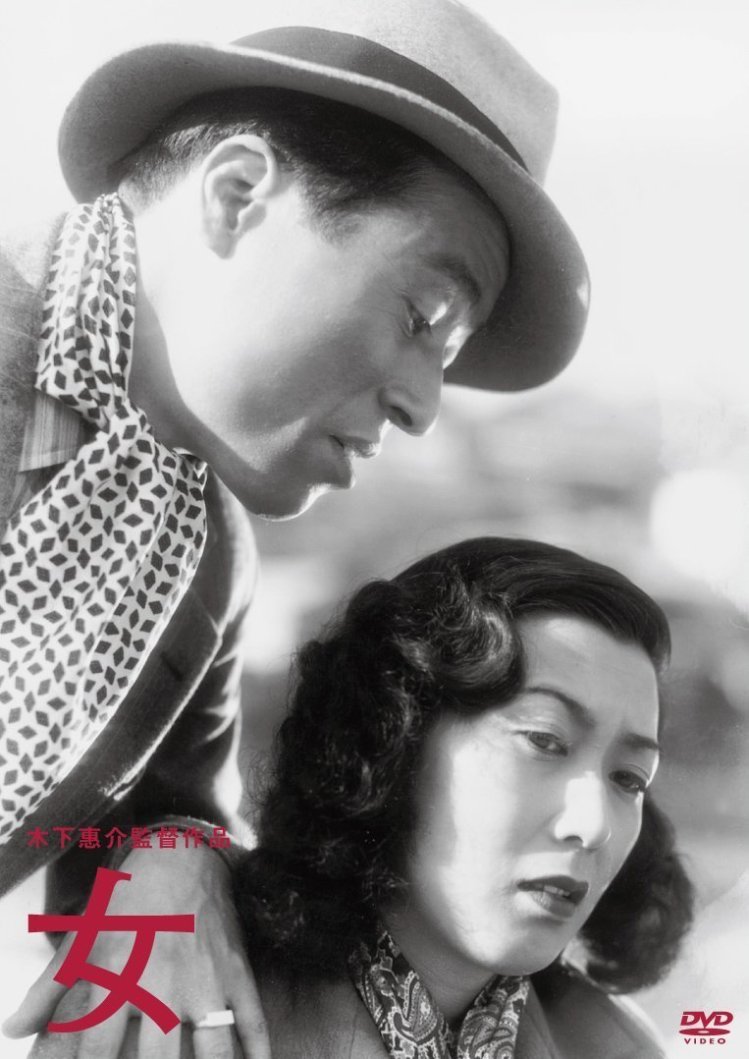
Woman (女, Keisuke Kinoshita, 1948)

Kinoshita Woman dvd cover“You must remember there are many kind people in the world” the heroine of Keisuke Kinoshita’s Woman (女, Onna) instructs her recalcitrant boyfriend in his 1948 noir infused drama. It might as well be a mission statement for the famously humanist director, but in contrast to many of his later explorations of the power of goodness, Woman asks if a stubborn belief in the possibility of redemption for a selfish man might only be an act of mutual destruction which in itself enables the continuing decline of humanity.

Our heroine is Toshiko (Mitsuko Mito), a young woman we first meet preparing to take to the stage in her job as a chorus girl in a musical review. Toshiko’s evening is disrupted when her no good boyfriend, Tadashi (Eitaro Ozawa), turns up unexpectedly and instructs her to run away with him. Though reluctant, Toshiko does indeed find herself pulled along only to discover that Tadashi is responsible for a heinous crime for which he appears to be entirely unrepentant.

In a double irony, Tadashi’s name literally means “correct”, not just in the sense of being the indisputably right answer to a question, but also of being “just” and imbued with moral goodness. Tadashi is, however, an immensely corrupted figure. Toshiko has her doubts about him. She objects to his criminality and desperately wants him to find a way to live “honestly”, but for some reason finds it impossible to simply break with him and somewhere deep down seems to believe that he is worth saving and that she can in a sense restore him to his natural condition.

During her unwilling flight the possibility of being able to do so dwindles before Toshiko’s eyes. Tadashi’s chosen method of entertainment for the journey is reading the newspaper clippings he’s collected detailing his crimes which include burgling a middle-class home, tying up the family and their maids, and stabbing a policeman who tried to intervene. Not only is Tadashi unafraid, he seems to be proud of his actions, grinning broadly as he reads and shows off his glorious deeds to the stunned Toshiko.

As Toshiko tries to run from him, she wanders into a nearby village filled with the cheerful sound of children playing as if to throw their natural innocence in stark contrast to Tadashi’s growing corruption. Cornered he tries to convince Toshiko by softly crying as he hears the children sing the gentle folksong Akatombo, remembering that he was once an innocent child like them but that his childhood was ruined by poverty that left him responsible for supporting his siblings two of whom eventually ran away never to be seen again. This he claims caused him to despise the world and vow revenge against a society that had abandoned him. Deceived into fighting a pointless war to return to a land in ruins in which there was no work for men like him, he decided to embrace his dark side and turned to a life of crime.

If it had been just desperation, perhaps Toshiko could have understood but as she points out, if everyone thought like Tadashi the world would be in an even worse state than it already is. Times are hard for everyone, but there are still many kind people who haven’t given in to their baser instincts and continue to live honest lives helping each other as they go. Tadashi tries to convince her that he will change, that he loves her and that she is the only good thing in his life, but though there may be a grain of truth in it, his words are all calculation as his wry smirk proves when Toshiko consents to take the bento he offers her in order to suggest that he actually cares about her wellbeing.

Toshiko vacillates. The further she goes the more convinced she becomes that Tadashi is no good and cannot be redeemed. Still, she finds it hard to abandon him. She too has been deceived, corrupted by male pride. An innocent shopgirl seduced by Tadashi’s false promises she fell into the seedy underbelly of the post-war world as he forced her into bar work and then to extort her clients. The chorus girl job is perhaps a step-up, but the reason she doesn’t want to leave it is not so much a career and chance for escape as her essential character in that unlike Tadashi she is not selfish or irresponsible and does not wish to inconvenience her employers by making a sudden disappearance.

Tadashi meanwhile attempts to undermine her sense of self, snapping that “anyone could fill in” for her at the theatre while roughly grabbing her each time she attempts to move away from him. Kinoshita shoots Toshiko’s flight from claustrophobic, film noir-esque 45 degree angles. Only in brief moments of calm during her fractious conversations with Tadashi is her world restored to a natural plane, as if he is her only anchor in this decidedly off kilter world which might explain why she finds it so difficult to cut him loose. Eventually the pair end up in a pleasant resort town that apparently holds happy memories for them as a couple, but Tadashi’s childish joy as he joins in with some cheerful street musicians reminds her only of his psychopathic cruelty as he loudly sings along as if he has forgotten that he is a wanted man with blood on his hands. She remembers him throwing stones at starving children – a boy and a girl who could easily have been the brother and sister who ran away from his unhappy home, while greedily guzzling his bento without even considering that he might have shared and alleviated their suffering.

The chaos of the post-war world is made manifest by fire in the town which brings the citizens into the square and sends debris flying from windows and rooftops into the streets below. Toshiko is eventually made to realise that there is no good left in Tadashi, and, as she tells a fellow dancer in the closing scenes, even if his feelings for her are genuine she owes him nothing because them. This final declaration may be a mild misstep as it paints Toshiko and women in general as enablers of male corruption, placing the blame of societal decline on women who continue to love problematic men despite their badness in the mistaken belief that love alone can redeem them. Nevertheless, it is also a kind of defiant advocation for a new post-war world in which greed and selfishness will not be tolerated and a woman’s right to make her own decisions both in terms of her romantic future and the direction of her life in general are never in question. Toshiko has made her choice and chosen not to live in the world of men like Tadashi but in a better, kinder one free of his constraint and finally on her own terms.


Akatombo

Raindance Returns for 2019 with Selection of East Asian Festival Favs

raindance white

London’s Raindance Film Festival returns from 18th to 29th September with a handpicked selection of independent filmmaking from across the globe. This year’s programme features a handful of East Asian indie features with a particular concentration on documentaries.

Ai Weiwei: Yours Truly ai weiwei yours truly

Chinese dissident artist Ai Weiwei holds an exhibition of postcards sent to political prisoners across the world in a documentary filmed by Cheryl Haines.

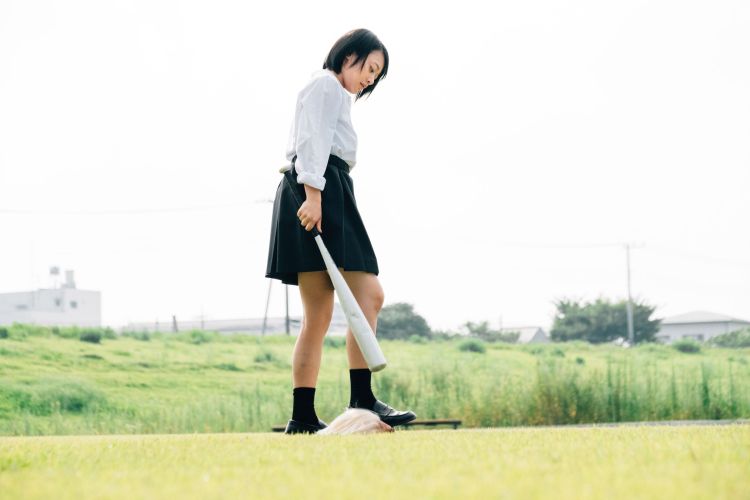
Demolition Girl (Japan)

Demolition Girl still. 1

A teenage girl starts earning extra money performing in niche videos in which she wears her school uniform and stomps on things in order to escape from her feckless family members in Genta Matsugami’s exploration of life in small-town, working class Japan. Review.

My Dearest Sister (Japan)

my dear sister

A filmmaker who has lived abroad for many years finds herself at odds with her mother and sister in her relationship to her overbearing father in Kyoka Tsukamoto’s autobiographical documentary.

Night Cruising (Japan)

FILM NIGHT CRUISING

Documentarian Makoto Sasaki follows blind musician Hideyuki Kato as he tries to achieve his dream of directing a science fiction movie.

A Dobugawa Dream (Japan)

Dobugawa still 1

A young man shuts himself away following the suicide of a friend then escapes to find a substitute family with an eccentric older man, a barmaid, a dancer, and a police officer.

Bombie (Laos)

bomie still 1

Documentary by Tanner Matthews and Shelby Baldock following bomb disposal officers in Laos.

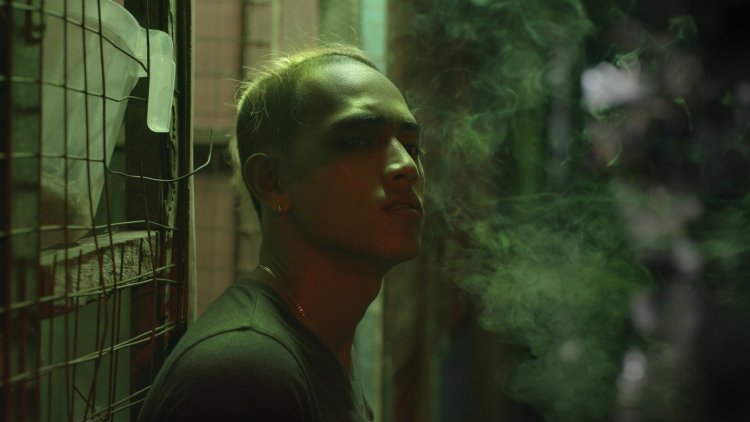
On the President’s Orders (Philippines)

On the President's orders

Documentary by James Jones and Olivier Sarbil exploring the effects of Duterte’s war on drugs on those who carry it out.

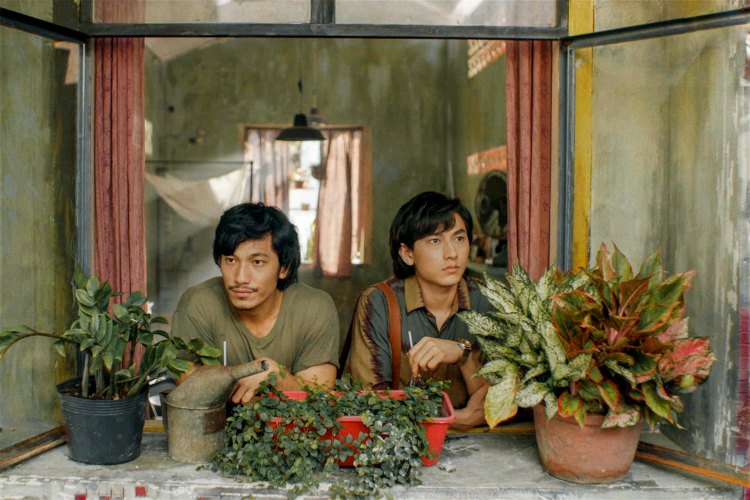
Song Lang (Vietnam)

Song Lang still 1

Beautifully filmed, highly atmospheric tragic romance set in 1980s Saigon in which an embittered thug falls for a Cải lương opera star. Review.

Raindance Film Festival takes place at Vue Piccadilly, 18th to 29th September. Tickets are already on sale via Eventbrite. You can also keep up with all the latest details via the festival’s official Facebook page, Twitter account, Instagram, and YouTube channels.

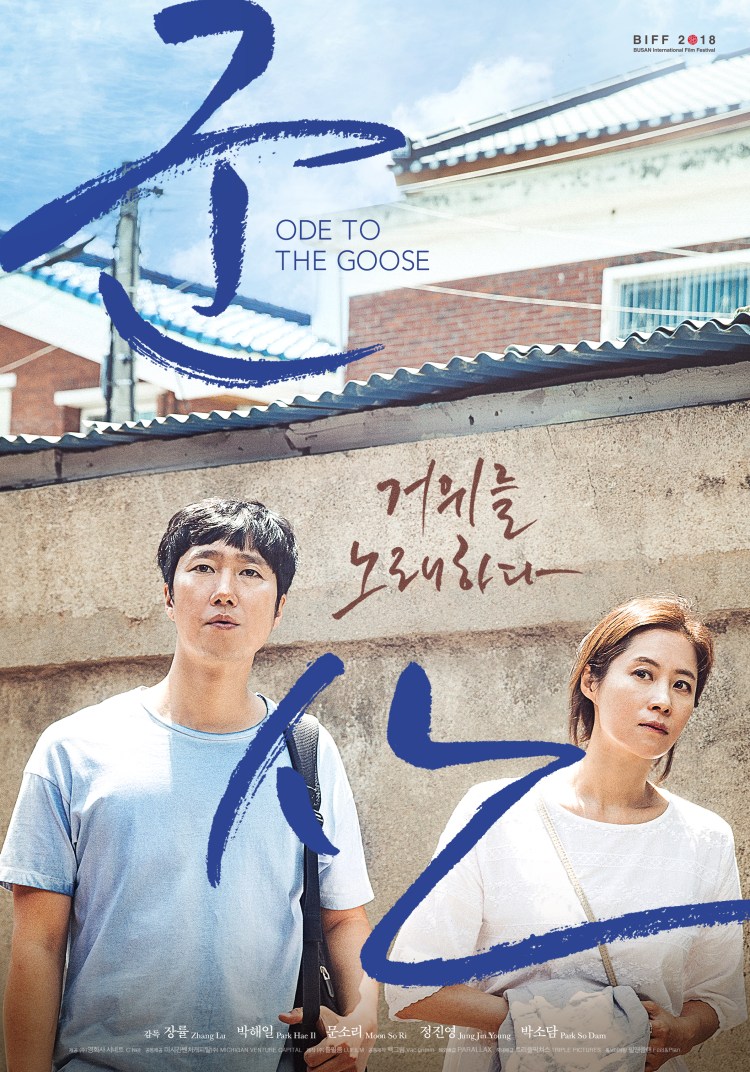
Ode to the Goose (군산: 거위를 노래하다, Zhang Lü, 2018)

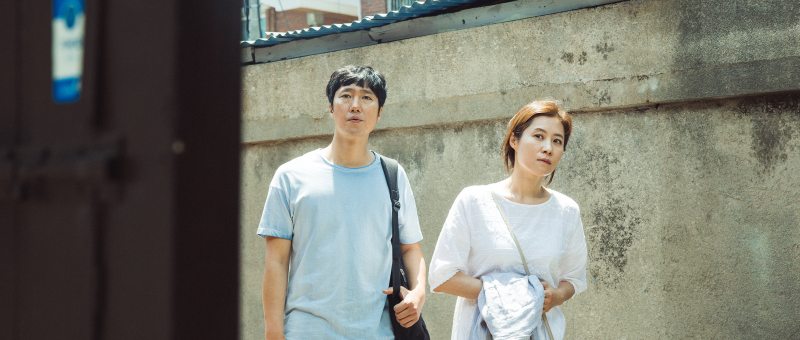
15eeddc21a2c46f3992b2b459ee3ceb3Past and present flow as one in Zhang Lü’s elliptical Ode to the Goose (군산: 거위를 노래하다, Gunsan: Geowileul Nolaehada). Making a perhaps controversial point, Zhang sets the majority of his tale in the harbour town of Gunsan which echoes ‘30s Korea when the nation was still brutally oppressed by the Japanese to which the many graphic photographs and monuments on display stand testament. Yet Zhang seems to ask, returning to his favourite theme, if they’re all Koreans no matter where they were born, why are some more oppressed than others?

The film opens with the hero, struggling poet Yoon-young (Park Hae-il), standing in front of a street map, lost in his mother’s home town. He is then joined by a slightly older woman, Song-hyun (Moon So-ri), whom he has apparently asked to accompany him to Gunsan on a whim without really explaining why. Still hung over from the night before, they stop off at an odd little noodle joint run by an elegant older woman (Moon Sook) who seems oddly fascinated by their strange chemistry. Yoon-young, innocently enough, makes conversation by asking about her home town only for her to shut him down. “What home town?” she fires back, “home is where you settle”.

Later we discover she speaks fluent Japanese, cheerfully conversing with the autistic daughter of the inn owner (Park So-dam) where the couple eventually stay after being judged “lucky” enough to be allowed in. The daughter of Japanese-Korean parents apparently “returned” from Fukuoka, the girl rarely speaks to strangers and only ever in Japanese, though she seems to take a liking to Yoon-young and is keen to try and connect with him, making sure he is always well taken care of while Song-hyun has turned her attentions to the girl’s father, melancholy widower Mr. Lee (Jung Jin-young) who likes to take photographs but only ever of landscapes and not of people.

The Lees are Korean too, even if one of them only speaks Japanese and they run a Japanese-style inn in the middle of a moribund museum to colonial horror (the local shrine even has a comfort woman statue standing in the back). Meanwhile, a passerby mistakes Song-hyun for a Chinese-Korean woman she once knew and insists on speaking to her in Yanbian dialect which Song-hyun, as we later learn, is unable to understand even if there is a Chinese-Korean connection in her family history. Song-hyun muses that had her grandfather, like his brother, chosen to stay in Manchuria after the war then she’d be Chinese-Korean too, as would famed poet of the colonial era Yun Dong-ju if he hadn’t died a political prisoner in a Japanese jail in Fukuoka which is, coincidentally, where the Lees were “from”. It is all “coincidental”.

So why does Yoon-young’s “right wing nut job” (as Song-hyun calls him) father hate Chinese-Koreans so much, blaming them for all the faults of the modern nation and decrying those who left for Shanghai with the Independence Movement as traitorous communist collaborators? A whimsical prequel (or a kind of re-imagining) of the Gunsan incident sees Yoon-young walking through his own “hometown” while a man who probably is not actually Chinese-Korean himself and may just be out to claim a buck or two, holds a rally for the rights of “foreign” Koreans in order to avoid exploitative employment practices and affirm that Koreans from other parts are the same as Koreans from Korea. Are “native” Koreans perhaps oppressing “non-native” ones in the same way that they were oppressed by the Japanese? In practical terms no, obviously not – there are no essential horrors here, but there is deeply ingrained prejudice and wilful exploitation. Interestingly enough, despite his conservatism, Yoon-young’s dad had him attend Chinese language classes, if ones that were run by the Taiwanese who are obviously not “communist” but were also formerly a Japanese colony.

Meanwhile, Yoon-young’s life takes him on a curious symmetry in which everything reminds him of something else. He repeatedly asks the women he meets if they’ve met before, experiences eerily similar moments in Gunsan and at home, and continues to look for connections between himself and a world of universal poetry stretching from the classical Chinese of the film’s title to the melancholy odes of Yun Dong-ju, writing in his “native” language in defiance of colonial authority. Dualities predominate – beauty/horror, attraction/indifference, silence/language, here/there, then/now, but through it all there is commonality. Yoon-young’s failure to communicate leaves him feeling defeated and depressed, trapped in a self-imposed exile while the gregarious Song-hyun gleefully moves forward little caring of the costs. Whimsical and “ambiguous”, Zhang’s playful poetry is difficult to parse but nevertheless carries an essential warmth in its reassuring familiarities and openhearted commitment to the universality of human connections.


Ode to the Goose was screened as the latest teaser for the upcoming London Korean Film Festival. Tickets are already on sale for the next and final teaser screening, Kokdu, which will take place at Regent Street Cinema on 16th September.

Original trailer (no subtitles)

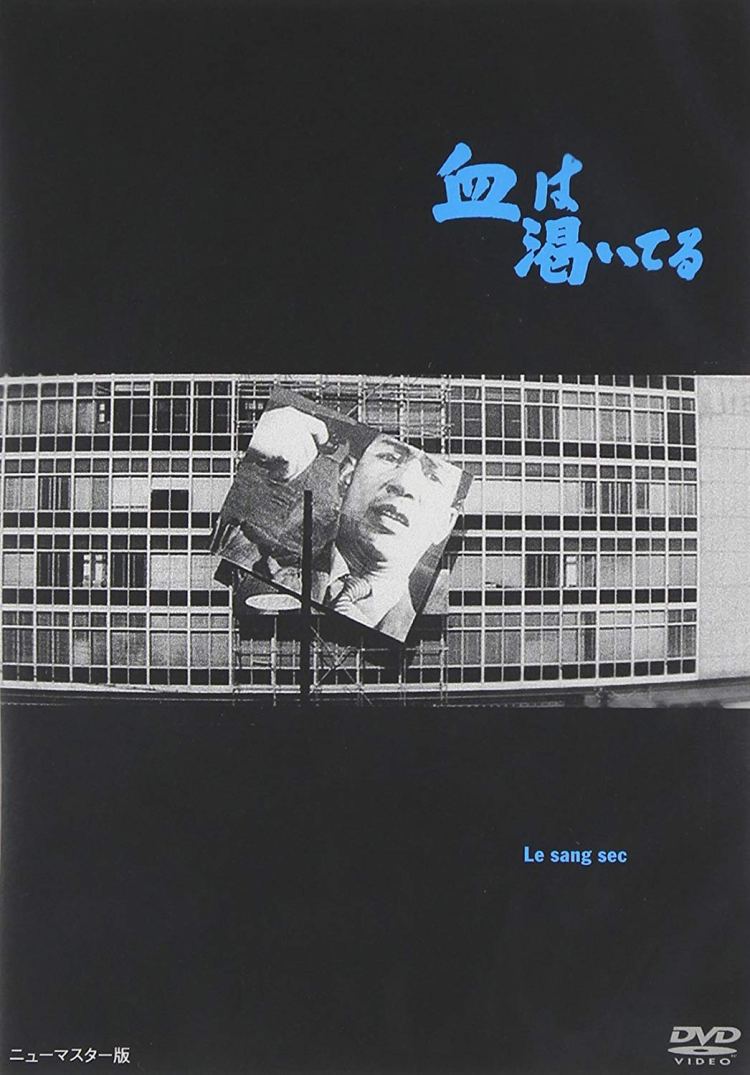
Blood is Dry (血は渇いてる, Kiju Yoshida, 1960)

Blood is dry DVD coverIn the new post-war economy, everything is for sale including you! Kiju (Yoshishige) Yoshida’s second feature Blood is Dry (血は渇いてる, Chi wa Kawaiteru) takes its cues from Yasuzo Masumura’s earlier Technicolor corporate satire Giants and Toys, and Frank Capra’s 1941 comedy Meet John Doe in taking a faceless corporate drone and giving him a sense of self only through its own negation. The little guy is at the mercy not only of irresponsible capitalist fat cats, but of his own imagination and the machinations of mass media who are only too keen to sell him impossible dreams of individual happiness.

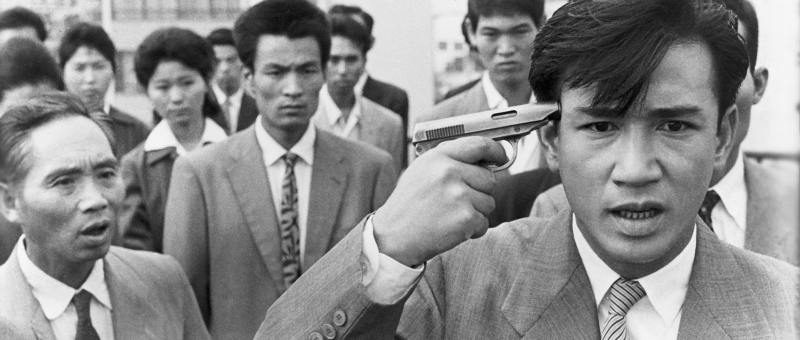
The action opens with a grandstanding rooftop speech from a former CEO to his distressed workforce informing them that because of “indifferent capitalism” this small business is going bust and everyone’s out of a job. Then, dramatically, our hero Kiguchi (Keiji Sada), steps out with a pistol and threatens to shoot himself, proclaiming that he no longer cares for his own life but doesn’t want anyone else to lose their job. Another worker, Kanai (Masao Oda), tackles Kiguchi and the gun goes off. Thankfully, he is only mildly wounded but Kiguchi’s case reaches the papers who make it into a human interest issue exemplifying the precarious economic conditions of the modern society. While he’s still somewhat current, an enterprising advertising executive hits on the idea of getting Kiguchi to act as the face of their campaign, bizarrely attempting to sell life insurance with the image of a man putting a gun to his head while proclaiming that “it’s high time everyone is happy”.

When we first meet him, Kiguchi is indeed a faceless, broken man at the end of his tether. His noble sacrifice is interpreted as an act of war on an unfair capitalist society, but as he later affirms in exasperation, Kiguchi had no political intent and never considered himself as acting with a greater purpose, he was simply terrified at the prospect of losing his job which is, in a sense, also his entire identity. Shy and mild-mannered, he stammers through speeches and curls himself into a hostile ball of awkwardness in front of the camera but ad exec Nonaka (Mari Yoshimura) is sure that only makes him a better sell for being “real” and relatable. Like the hero of Meet John Doe, however, Kiguchi starts to buy into his own hype. He fully embraces his role as the embodiment of the everyman, at once gaining and losing an identity as he basks in the unexpected faith of his adoring populace.

Kiguchi’s conversion wasn’t something Nonaka had in mind and it frightens her to realise she has lost control of her creation. Meanwhile, Nonaka’s ex, a paparazzo with a penchant for setting up celebrities in compromising situations in order to blackmail them, has it in for Kiguchi as the personification of his own dark profession. He resents the idea of using “suicide” as a marketing tool and the cynical attempt to sell the idea of happiness through the security of life insurance which, it has to be said, is a peculiarly ironic development.

Kiguchi’s liberal message of happiness and solidarity does not go down well with all – he’s eventually attacked in a taxicab by a right-wing nationalist posing as a reporter who accuses him of being a traitor to Japan, and it’s certainly not one which appeals to the forces which created him. Nevertheless, he does begin to capture something of the spirit of the man in the street who just wants to be “happy” only to have his message crushed when his image is tarnished by tabloid shenanigans and left wondering if the only way to reclaim his “artificial” identity is to once again destroy himself in sacrifice to his new ideal.

Yet Kiguchi’s motivation is both collectivist and individual as he claims and abandons his identity in insisting that he belongs to the people. His confidence is born only of their belief in him and without it he ceases to exist. Kiguchi’s entire identity has been an artificial creation with an uncertain expiry date and his attempts to buy it authenticity only damn him further while his actions are once again co-opted by outside forces for their own aims. The little guy has achieved his apotheosis into a corporate commodity leaving the everyman firmly at the mercy of his capitalist overlords, dreaming their dreams of consumerist paradise while shedding their own sense of self in service of an illusionary conception of “happiness”.


Original trailer (no subtitles)

Good-for-Nothing (ろくでなし, Kiju Yoshida, 1960)

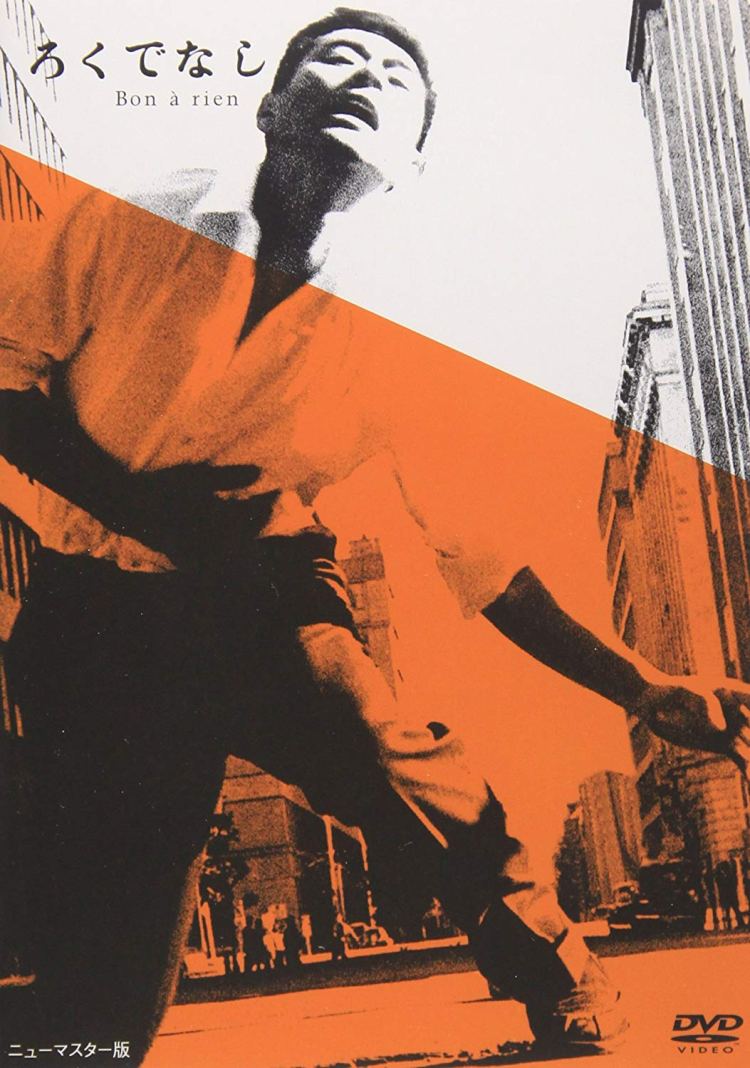
Good for nothing dvd coverIn the mid-1950s, Nikkatsu had accidentally provoked social outrage with a series of films later known as “taiyozoku” or Sun Tribe movies which revolved around aimless post-war youth who largely rejected the strident ambition of their parents for lives of dissipated abandonment. While the original author of the book that kickstarted it all fully intended to create moral panic, Nikkatsu perhaps hoped to capitalise on the inherent cool of adolescent rebellion and did it seems find an audience they hoped to continue courting with their youth movies even after the forced end of the taiyozoku movement. Shochiku, the home of polite melodrama, was a world away from Nikkatsu’s brand of angry young man but declining receipts encouraged them to get in on the action and so they began giving some of their younger ADs a chance to direct features in the hope of finding bold new voices who could speak to youth (a demographic their usual fare was not perhaps reaching).

Among these directors, Kiju (Yoshishige) Yoshida would go on to greater heights of avant-garde cinema but his Shochiku debut is perhaps more or less the kind of thing the studio was looking for. Released in the same year as Koreyoshi Kurahara’s The Warped Ones, Good-for-Nothing (ろくでなし, Rokudenashi) is another tale of youth gone wild only one with a much deeper sense of self pitying futility which casts its ill-fated hero as a noble soul left without purpose in the rapidly stratifying society of post-war Japan.

Against a heady yet whimsical jazz score (composed by Shochiku stalwart Chuji Kinoshita, brother of Keisuke), the action opens with a gang of petty delinquents kidnapping the secretary of one of their fathers, Hisako (Kakuko Chino), as she leaves the local bank. Toshio (Yusuke Kawazu) is in many ways the typical taiyozoku hero in that he is extremely rich and therefore filled with ennui because his life has no real purpose. He is not, however, the hero of Yoshida’s film. Gradually, our focus shifts to the intense figure of university student Jun (Masahiko Tsugawa) who, unlike the other members of the gang, remains internally conflicted as to the forward direction of his life and his complicated relationship with Toshio.

Whereas the taiyozoku films most often focussed on the bright young things of the new era – the children of those who had become rich in the post-war economy but had few values and were content to bury themselves in imported hedonistic pleasures, the “heroes” of Good-For-Nothing are the collaborators. If the taiyozoku were despised by the older generation as parasites living off inherited wealth and contributing nothing to society, then the guys like Jun are the parasites on the parasites. This is perhaps a view Jun holds of himself, wilfully embracing the “rokudenashi” label as expression of his intense self-loathing and acting in accordance with its values as an act almost of self-harm.

Toshio rebels against his sense of powerlessness in the darkest of ways – by setting his sights on taking his father’s “haughty” secretary down a peg or two. He may not like her confidence, self possession, and earnest determination towards honest industry but it is exactly these qualities which begin to attract Jun as representative of the society he has rejected but secretly longs to belong to. A poor student, he’s tried doing things the “right” way – part-time jobs, hard work etc, but has little interest in the student movement and views himself as “weak” for allowing himself to be swayed by the easy life of those like Toshio even in the full knowledge that he cannot live that way forever and his time at the beach will be as short as a summer vacation.

Hisako sees the conflict in Jun and tries to pull him towards a more positive path but is also attracted to him because of his darkness and nihilistic ennui. She too is unhappy with the status quo, living with her brother and his wife who quarrel about money and the disappointments of the salaryman dream while the office playboy hassles her at work and is only spurred on by her constant rejections. Hisako knows getting involved with Jun is playing with fire, especially if it keeps her in the orbit of the continually declining Toshio whose worrying behaviour is perhaps enabled by his well meaning liberal (though arch capitalist) father who is hoping his son will find his own way through hitting rock bottom, but salvation is a temptation it’s difficult to resist.

The heroes of the taiyozoku movies are aimless because they have no economic imperatives towards individual progress, but those like Jun or indeed like those of The Warped Ones are aimless because they see no sense of purpose in an intensely class bound society in which, paradoxically, all the cards are held by men like Toshio. Some, like Jun’s gang mate, decide the best way forward is to become a willing underling living off Toshio’s largesse who is, in his own way, intensely lonely and filling the friendship void with minions. Others, like Hisako, decide to plug on anyway despite the disappointments of socially conservative success. For men like Jun, however, the prognosis is as grim as in much of Yoshida’s later work, suggesting his nihilism is justified because there is no hope for men without means lost in the widening gulf of post-war inequality where any attempt at moral righteousness is likely to be rewarded only with further suffering.


Original trailer (Japanese with French/Traditional Chinese subtitles)

The Wonderland (バースデー・ワンダーランド, Keiichi Hara, 2019) [Fantasia 2019]

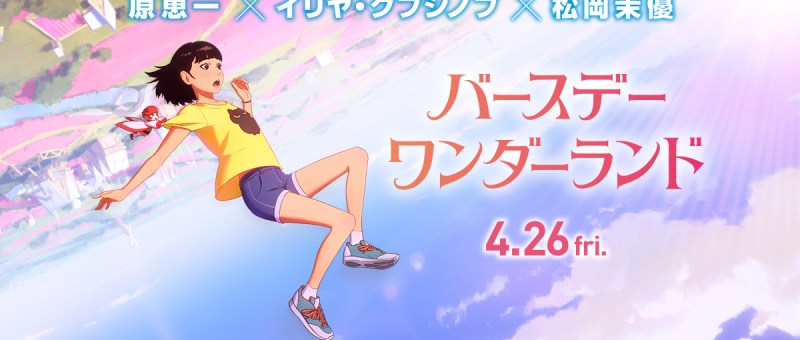
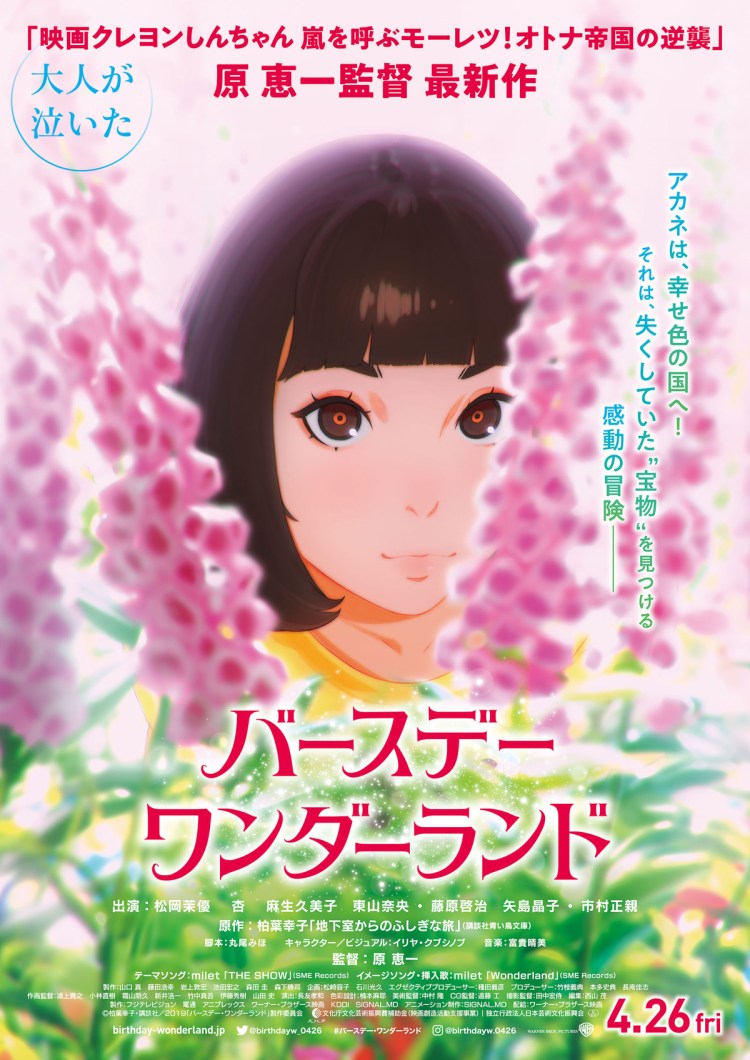
birthday wonderland poster 1The demands of adulthood are apt to overshadow any young teen’s life, but you can’t shake them off just by lying in bed and refusing to age. So the heroine of Keiichi Hara’s The Wonderland (バースデー・ワンダーランド, Birthday Wonderland) discovers as she determines to hideout from emotional complexity, waiting for the storm to pass and cowardly failing to defend a friend in the process. The last thing she wants is the responsibility of being “the chosen one”, but the thing about that is that you don’t get to choose and if the universe has plans for you it would be very irresponsible to refuse.

After (not) getting involved in a minor spat amongst friends about coloured hair clips, Akane (Mayu Matsuoka) decides the best solution is to feign illness, turn off her phone, and avoid going to school. Her kindly mother (Kumiko Aso), seemingly aware she’s not really ill, decides to let her stay home anyway but all she ends up doing is mistreating the cat in frustration and moping about, so her mum despatches her to her aunt Chii’s (Anne Watanabe) place to pick up her birthday gift which she presumably can’t open until the big day tomorrow. Truth be told, Akane doesn’t much like her aunt Chii, she’s far too free spirited and unpredictable for the neurotic teen, but she could stand to learn something from her irrepressible lust for life.

Akane gets the perfect opportunity to do just that when she sticks her hand onto a palm print in her aunt’s shop and is promptly greeted by a dapper-looking man with a fabulous moustache and his tiny minion (Nao Toyama) who crawl up through the hidden basement to explain that she is the “Goddess of the Green Wind” they’ve been searching for and must come with them right away because their nation is in peril! As expected, Akane doesn’t want to go, but is chivvied along by her overexcited aunt and a strange amulet the man, an alchemist named Hippocrates (Masachika Ichimura), places around her neck.

The amulet, he tells her, helps you move forward even if you want to go back. That is, in a sense, Akane’s entire dilemma as she finds herself on the cusp of adulthood, afraid to step forward and accept the responsibilities of maturity while longing to return to carefree childhood days when there was nothing much to worry about and always someone around to look after her. Like any good fairytale, she finds her mirror in the other world in a melancholy prince who remains so reluctant to take part in an essential ritual that he is almost willing to burn the world to avoid having to acknowledge his royal responsibilities.

Meanwhile, Akane is slow to adjust to the charms of her new Wonderland, refusing to engage and loudly stating her desire to go home while her aunt tries to encourage her to embrace a sense of adventure. Chii, the film’s best asset who proclaims “no alcohol no life” while thoroughly enjoying sparring with the uptight Hippocrates (who perhaps is also enjoying the challenge though might not want to admit it), might in some senses be a barrier to Akane’s self-actualisation but is also an important source of safety for her in an unsafe world and just irresponsible enough to push her niece towards taking the right kind of risks in order to do the right thing and save the kingdom.

The reasons the kingdom is in peril in the first place are hugely symbolic – an ongoing water crisis caused by governmental negligence is draining the world of colour while literally drying it out. Getting used to her new surroundings, Akane begins to see their charm. This world, near identical to her own in many ways, diverged around the industrial revolution. Where “our” world rocketed into a frenetic lust for convenience, the rhythms of this one stayed the same, a perpetual village society in which cheerful people live laidback lives surrounded by the beauty of nature – something Akane later comes to worry her own world is losing. Gradually letting go of her fear and getting a better idea of the kind of life she might want, Akane gains the courage to embrace responsibility through directly supporting someone else as they learn to do the same.

A whimsical coming of age tale, The Wonderland excels in world building but somehow never quite achieves the level of emotional engagement it seems to be looking for even as its sullen, detached heroine perhaps begins to realise she did a great disservice to her friend when she failed to defend her during the silly hair ornament argument largely because she personally didn’t want to rock the boat and put herself in the firing line. Her horizons suitably expanded, Akane finds she no longer needs an amulet to keep moving forward even when longing to look back and resolves to step into adulthood with an easy, laidback confidence learned from her palls on the other side.


The Wonderland was screened as part of the 2019 Fantasia International Film Festival.

Original trailer (English subtitles)