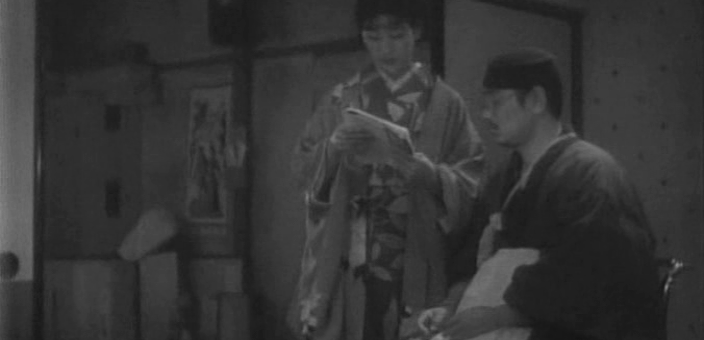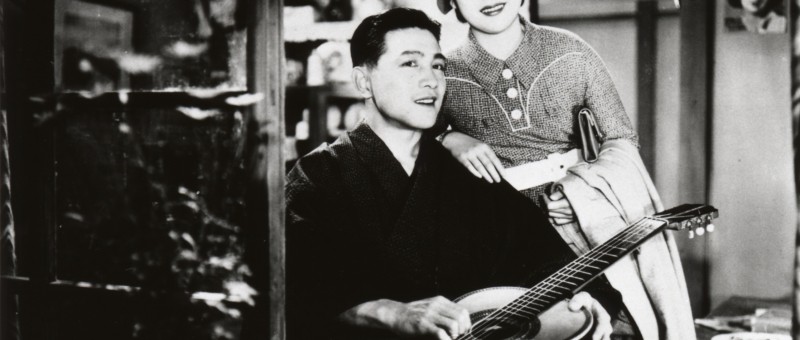
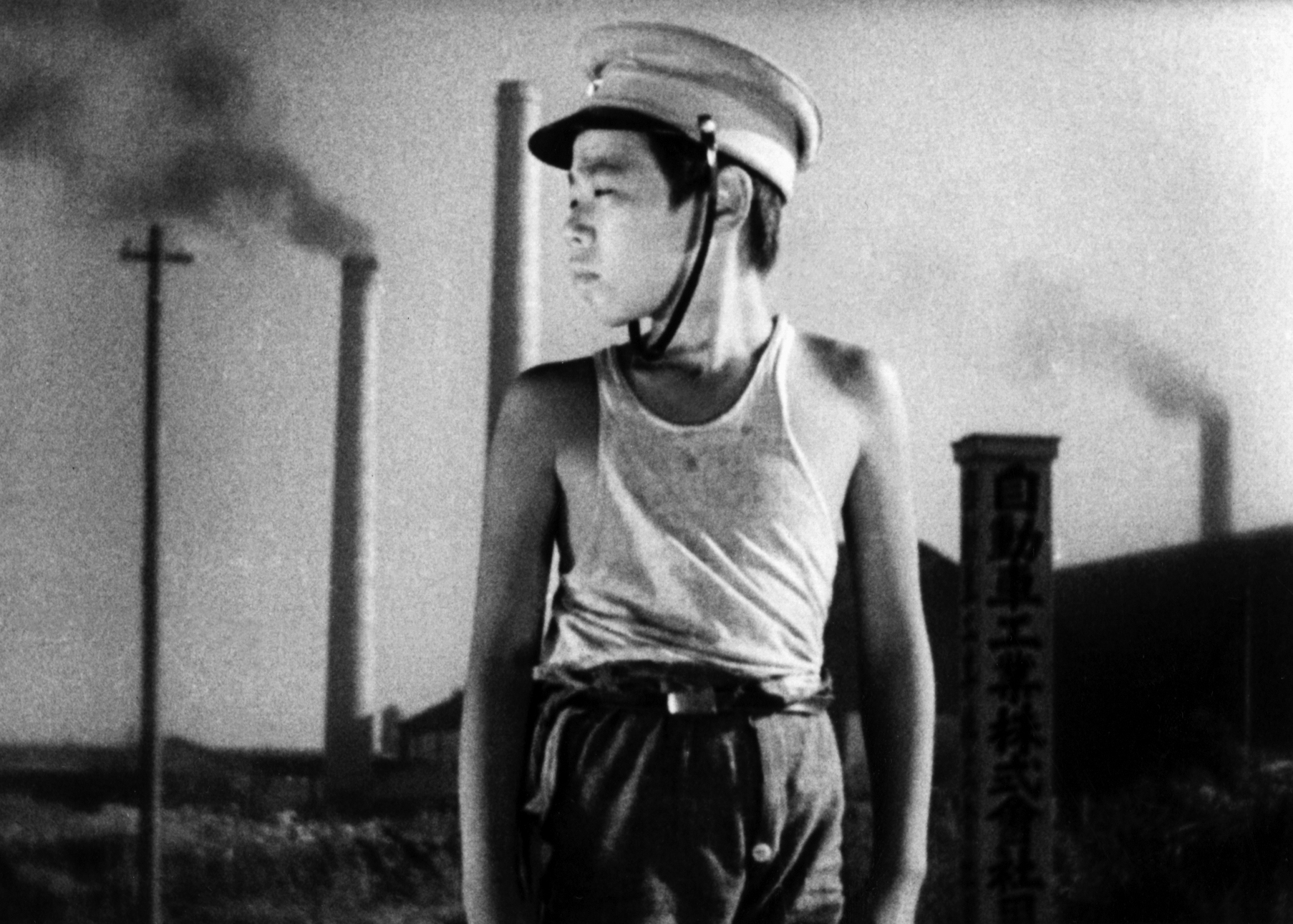
An Inn in Tokyo (東京の宿, Yasujiro Ozu, 1935)

Yasujiro Ozu was perhaps most at home in the genial world of the shomingeki in which everyone is comfortable enough and the problems, such as they are, are emotional rather than practical. He was also, however, an exacting chronicler of his times and unafraid, even in the tightening world of 1935, to explore life on the margins of a society on the brink of crisis. A proto-neorealist take on depression-era fatherhood, An Inn in Tokyo (東京の宿, Tokyo no Yado) finds that there are good people everywhere, but also that people can be good and make bad decisions even in their goodness. 

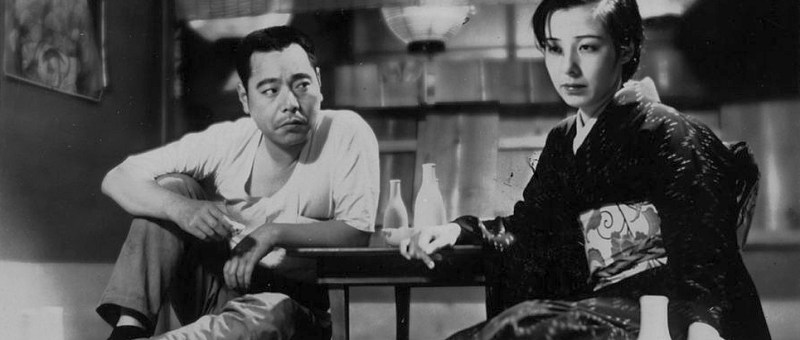
Kihachi (Takeshi Sakamoto), a widowed father of two boys, is unemployed and looking for work. He tells the guard at a factory that he is a skilled lathe operator, but the man doesn’t even look up from his paper as he unsympathetically tells him to be on his way. Remaining polite, Kihachi thanks him for his time and returns to his sons who are obviously disappointed and mildly irritated by the “mean” guard. The boys look on sadly as other children go off to school and tell their dad they aren’t hungry because they know he has no money for food and do not want to depress him further after being turned down for yet another job. 

We don’t know exactly what landed Kihachi in the circumstances he’s currently in, what happened to his wife, or why he lost his last job but we can probably guess the economic depression is to blame for most of it. The guard at the factory ignores him because he has no work to give and perhaps Kihachi isn’t the first to ask. The small family has been lodging at the titular “inn”, sleeping in a communal room while their resources dwindle. After losing all their possessions, they face the choice of whether to go for dinner and sleep in a field or go hungry and return to the inn. They opt for food, only for the heavens to open, but on this occasion rain is perhaps their salvation because it enables them to run into an old friend, Tsune (Choko Iida), who is able to put them up for a while and help Kihachi find work. 

Meanwhile, on the road the family bumps into a widow and her daughter who are in much the same situation only, as must be obvious, hers is much more serious because if Kihachi cannot find honest work then it may be near impossible for a woman with a child. Mrs. Otaka (Yoshiko Okada) and her daughter Kimiko are staying in the same inn and the children quickly become friends. “Childhood is the best time of life” Kihachi wistfully laments as they watch the kids play, “Children are lovely”. Mrs. Otaka agrees that it’s difficult with a little girl, but that she also keeps her going. The boys too are resilient and positive, the oldest Zenko cheerfully insisting that everything will be alright tomorrow while his father’s attempt to comfort Mrs. Otaka with the claim that things work out in the end cannot help but ring hollow. 

Zenko is quite literally burdened by his father’s failure in that it is he who is expected to carry the small parcel which contains all of their worldly possessions. Later he tries to delegate the responsibility to his younger brother, an act which backfires causing the bundle to be lost. They try to help out by catching stray dogs they can turn in to the police for 40 yen as part of an anti-rabies drive, but they are also children and want what other children have which is why Zenko makes an irresponsible decision to spend the money from catching a dog on a fancy cap he took a liking to after seeing another boy at the inn wearing one. Kihachi is obviously displeased, catching a dog means they can eat and they don’t have money for frivolous things like caps but we hear from his old friend Tsune that he has his irresponsible sides too as evidenced by his longing for sake while the boys long only for wholesome meals rather than sweet treats.

Nevertheless Kichachi is a good man, as Mrs. Otaka later says. He takes a liking to the widow which might be somewhat insensitive to Tsune who has by this point taken him in and started to help him put his life back on track while taking care of the kids, but his desire to help her also has an unpleasantly conservative streak. On learning she’s taken a job at a bar he rants at her in disappointment, exclaiming that he didn’t think she was that sort of woman and wondering why she suffered so long only to finally give in to sex work. Her tearful justifications that her daughter is ill fail to move him. He tells her to quit the bar and get money some other way, which seems unrealistic and even more so in the absence of a good friend like Tsune, who seems to have made a decent life for herself as an independent woman, to miraculously sort everything out. He tries asking Tsune for money, but she worries he’s up to no good and doesn’t want to enable him messing up his life just as he’s getting himself sorted, and so he makes a terrible and frankly irresponsible decision which places his own children in jeopardy solely to “save” Mrs. Otaka from becoming a fallen woman. Leaving the women behind to pick up the pieces and take care of the children, he trudges off alone, a fugitive father exiled from his family and at the mercy of an increasingly indifferent society. 

Radio Queen (ラヂオの女王, Shigeo Yagura, 1935)

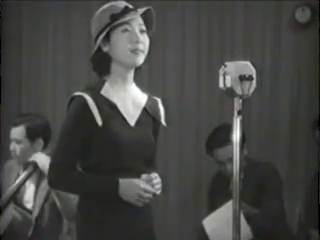
The conflict between warring neighbours of differing dispositions deepens when their children want to get married in Shigeo Yagura’s modernising comedy, Radio Queen (ラヂオの女王, Radio no Oujo). Against a backdrop of rising militarism, the film explores a generational shift in a new world increasingly dominated by mass media that quite literally speaks to the young not only through the newly established ubiquity of wireless radio but the talkie too leaving the old somewhat left behind confused by the rapid motion of progress.

In fact, the film opens with Kawamura, owner of a factory that makes aeroplanes that can’t fly, being woken up by his neighbours performing radio taiso callisthenics exercises. Kawamura dislikes radio on a conceptual level, though his dislike of it may also have a slightly subversive quality given the underlying element of coercive conformity that sees the nation performatively warm up for another day of national unity and hard work towards the growth of the empire. Then again, Kawamura is the film’s most ridiculous character finally giving a speech that he would be proud to sacrifice his son’s life for the nation by getting him to fly one of their biplanes to China as a kind of publicity stunt.

Publicity stunts are, however, a particular talent for Kingo who has very modern ideas about how to make not only his business but that of his father’s neighbour and frenemy Misome a success. Soon to finish university, Kingo plans to marry Misome’s daughter, Kimiko (Sachiko Chiba), who is currently working as a primary school teacher though both father fiercely object to the union. Kingo puts the kibosh on the idea of eloping mainly for practical reasons that they will be unable to support themselves financially on a running start but also for reasons of filial piety which probably do correspond with the censorship demands of the time. One of his ideas for winning over Misobe is to help him make his business of selling cough sweets for stage performers more successful through modern advertising and publicity techniques. Though originally rejecting his ideas, Misobe often takes his advice but pretends it was all his own idea further souring their relationship.

In any case, he wants to Kimiko to marry his chosen suitor, Kyuichi, who is training to become a pharmacist but also struggles with maths and has secretly been embezzling money in contrast to Kingo who is much more organised than his own father and has real business talent. Misome describes Kimiko’s job as a “hobby” and regards it as something she’s doing to keep busy until she gets married, a notion perhaps encouraged by social expectation given that it involves taking care of children which places her in a quasi-maternal position. She could presumably support herself, but the option is never given to her as even she tries to chivvy Kingo along by warning him that if he fails to win her father over she’ll end up married to the pharmacist as if she had no say in it at all. 

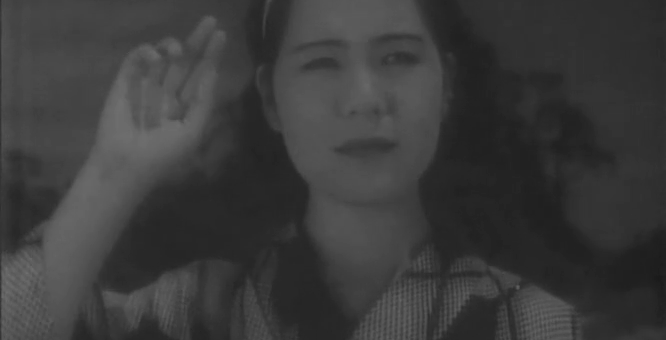
In any case, in a rather strange turn of events her singing in the school is heard by a film crew who’ve just had their lead actress pinched by a rival studio. They cast her in the part of a Christian nun who is also a schoolmistress but in contradictory fashion is involved in a romance which scandalises Kimiko and leads her to walk off set refusing to be exploited by the unscrupulous directors insisting that no such thing had been mentioned to her when she agreed to take the job. But it’s this that finally propels her to become the “Radio Queen,” taking a much more wholesome role singing nursery rhymes and reading fairytales for children across the nation through the new medium of the wireless. Kingo does not object to her fame and sees it as a positive sign that may cause his father’s opinion of her to change for the better despite his dislike of the device, though he does later become put out that the demands of her career leave her less time to spend with him.

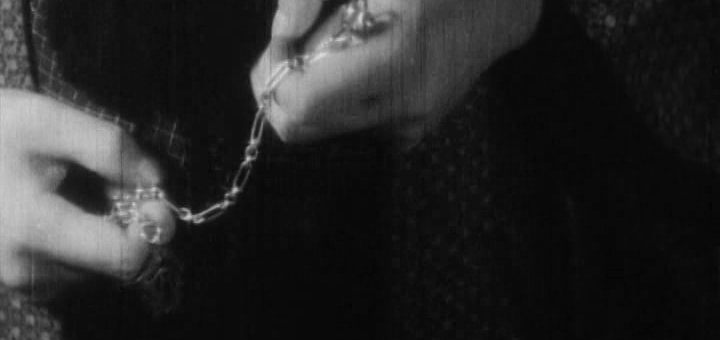
In that sense, it’s also “modernity” that disrupts their relationship along with changing gender and social roles while there is also a necessarily problematic element of then largely unregulated mass media. An unscrupulous consumerism seems to have taken hold with the foolish Kawamura also addicted to collecting “antiques” many of which are akin to religious relics of an age of modernity. We see a man drop a piece of wood on the floor outside which is later picked up by dealers and sold as a piece of the propeller of the first of ever plane which Misome jokingly offers to buy for Kawamura in the hope his aircraft might actually fly one day. On entering an antiques fair, they’re confronted by an object claimed to be the clasp from Rockerfeller’s wallet echoing some of Misome’s frequent allusions to his success as a self-made man while Kawamura conversely frequently alludes to Mussolini as if making plain his own slightly priggish attachment to militarism. 

Misome concedes that Kingo is a bright and promising young man and objects to him only on the grounds that he is Kawamura’s son and he prefers the pharmacist because he thinks it more advantageous to himself before realising what sort of a man Kyuichi is really is. In the end, they’re both bamboozled by mass media when Kimiko rushes to the airfield where Kingo is about to take off having petulantly agreed to the test flight after arguing with her. As she petitions the already in motion plane, he manages to pull her up into the passenger seat while the radio announcer announces their engagement live on air granting it a new legitimacy neither of the fathers can really argue with. The film ends with them flying off into a blue sky which suggests a victory for youth and freedom even if it seems a little too simple leaving the older generation behind on the ground with only the wireless for comfort.


Five Men in a Circus (サーカス五人組, Mikio Naruse, 1935)

“Life is a journey” according to the melancholy heroine of Mikio Naruse’s Five Men in a Circus (サーカス五人組, Circus Goningumi), one of the director’s early anti-comedies in which a collection of itinerant performers find not so much hope for the future as accommodation with despair. Though the Japan of 1935 was not perhaps as straitened as the nation was to become, an all pervasive sense of hopelessness traps these travelling players in perpetual motion, burdened by the unattainability of their dreams as they find themselves continually moving forward while standing still. 

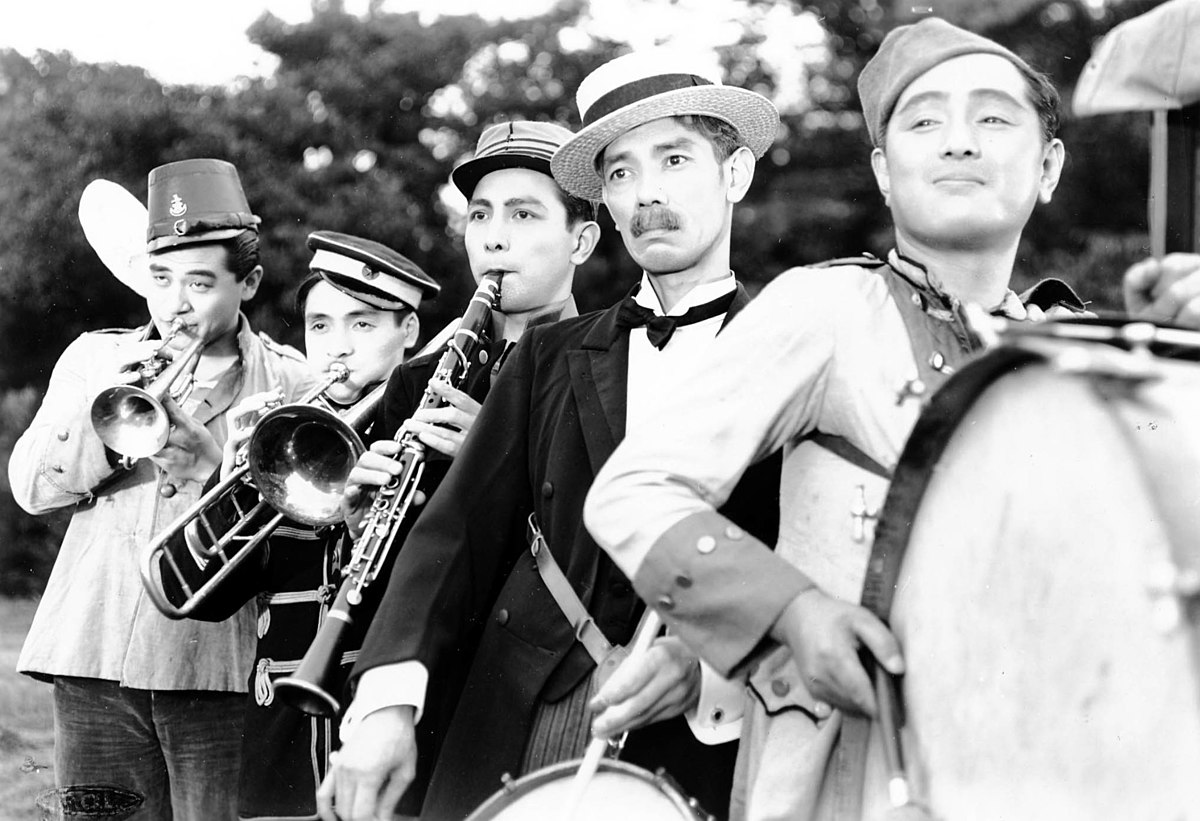
The five men of the title are an itinerant jinta brass band, though to tell the truth not a very good one. They were supposed to be on their way to play at a primary school sports day, only when they get there they’re told the event has been postponed to the following spring. After having wasted the afternoon killing time playing on the monkey bars and children’s slide, they decide to give a little concert anyway, not that anyone’s listening and there’s no real chance of getting paid. It’s in the next town, however, that they make a series of serendipitous meetings connected with a travelling circus which is currently undergoing a crisis as the entire male company has gone on strike against the boss’ tyrannical management style in a subversive dig at rising authoritarianism. 

All things considered, the circus seems to be doing pretty well for itself. It has a sizeable company with several accomplished performers and appears to be drawing good audiences. The boss (Sadao Maruyama) dresses in fancy outfits and there doesn’t seem to be much anxiety over hunger or any sign of the usual worries with which films about itinerant performers are usually concerned, all of which is in direct contrast to the jinta guys whose ragged appearance and habit of pinching yukata from the various inns on their route make plain their relative poverty. “None of us do jinta because we like it” the oldest of the players Seiroku (Ko Mihashi) points out, a woman behind in the bar him echoing that no one becomes a hostess because they like it either. None of these men had a burning desire to be in a band, they simply ended up there and now they can’t get out. Young orphan Kokichi (Heihachiro Okawa), however, dreams of going to Tokyo to study the violin carrying around a record of Western classical music to refresh his soul while worrying that his jinta life is corrupting him.  

Kokichi’s earnestness finds a fan and a mirror in Chiyoko (Masako Tsutsumi), the older daughter of the circus master who claims that she has long since given up hope of a better life even as she continues to dream her small dream of living in an ordinary house with a man she loves. Trapped by filial duty to her cruel father, Chiyoko actively encourages the escape of her younger sister Sumiko (Ryuko Umezono) who is in love with the ringmaster Kunio (Koji Kaga) though their father won’t let them marry. Kunio is also the instigator of the strike which is currently engulfing the circus, placing a strain on Sumiko’s conflicted loyalties as she struggles with her desire to leave the intinerant life behind. 

After the band is taken on as ringers to replace the striking musicians they also find themselves required to perform on stage, with varying degrees of success. Kokichi pleads to be given a chance to perform with a violin, even foregoing his pay as he’s warned the target audience is unlikely to find much to entertain them in a violin recital. His inexpert playing is roundly rejected by the baying mob who quickly begin throwing their rubbish at him until he’s forced to leave the stage in a moment of pure and crushing tragedy. Chiyoko tries to comfort him that she at least enjoyed the performance, but her words fail to cheer him more than superficially. He knows he’ll never go to Tokyo, or be anything more than a jinta player with only false hope to sustain him in the same way that Seiroku realises he’ll never never make peace with his past when he’s slyly conned by a 10-year-old girl he half suspected was the baby he abandoned out of economic desperation following the death of his wife. 

Yet it is in a sense romance that eventually eventually brokers resolution in the eventual implosion of Sumiko’s conflicted desires which cause her to “fall” from the trapeze, a moment of crisis daringly filmed through the use of double exposure superimposing Sumiko’s face over her POV of the men fighting in the ring. This narrowly averted tragedy apparently awakens something in her father who, she tells Kunio, only became cruel when their mother left, forcing him to relent and agree to be nicer to his employees while approving his daughter’s marriage. Yet romance cannot solve everything, and the only other romantic resolution we discover is in the roguish Torakichi (Hiroshi Uruki) who relents and accepts a woman he callously seduced and abandoned but who followed him because of the strength of a woman’s “passion”. Though we can see a connection has arisen between Chiyoko and Kokichi, it is not one which can be fulfilled, fate is pulling them in different directions. Forever a jinta player, he is pulled on to the next gig, the camera pulling back tragically from the bereaved Chiyoko, rooted to the spot as she watches her last hope walk away from her. “Life is a journey” she offers as a note of grim resignation, while knowing she’s going nowhere at all.


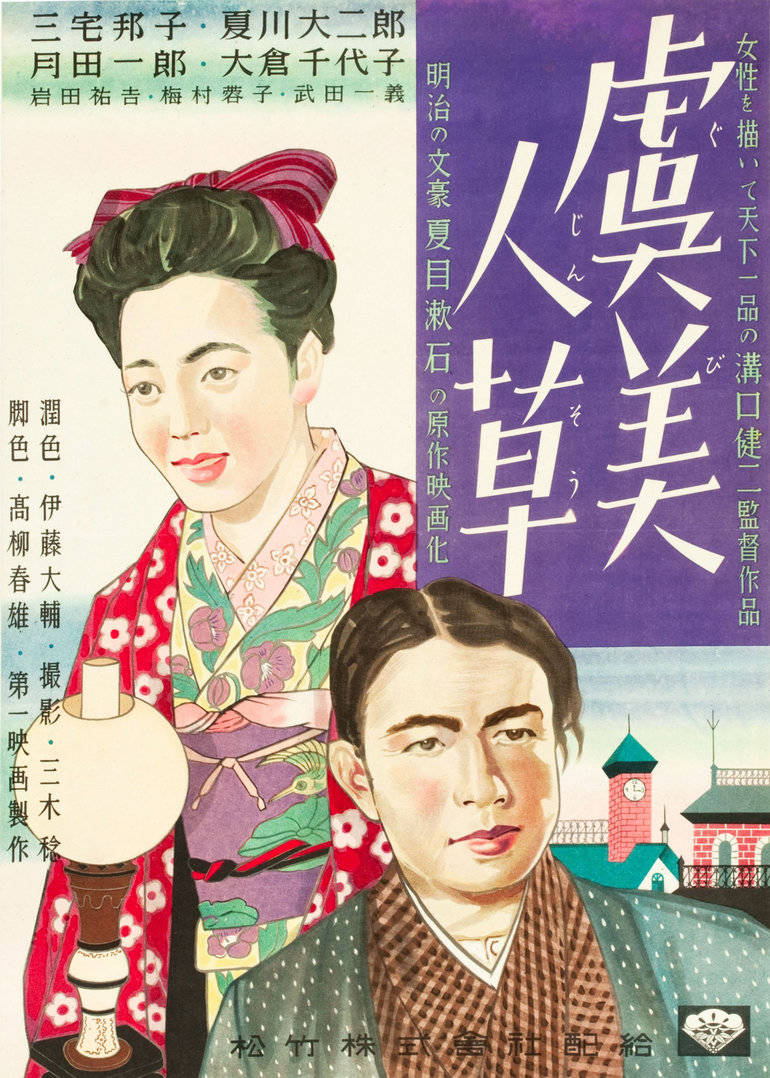
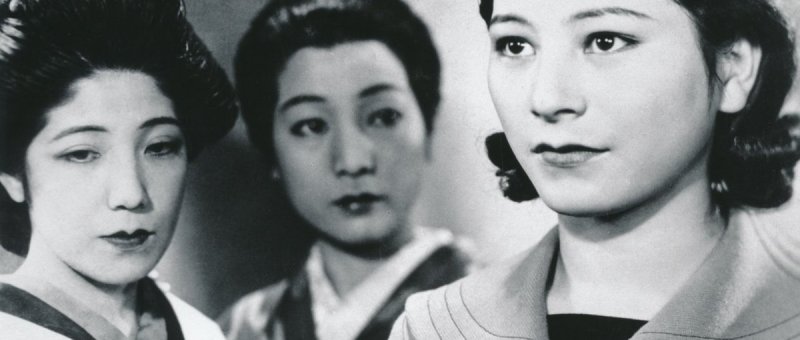
Poppy (虞美人草, Kenji Mizoguchi, 1935)

Most closely associated with tales of female suffering in a patriarchal society, Kenji Mizoguchi’s signature themes are already apparent in the films which survive from the pre-war era. Even so, 1935’s Poppy (虞美人草, Gubijinso), adapted from a novel by Natsume Soseki, largely sidesteps the parallel powerlessness of its twin heroines in placing the central dilemma firmly on the shoulders of its conflicted hero, a young man who owes everything to a benevolent patron whose daughter he is expected to marry but is captivated by a young and capricious heiress and consequently torn between duty and passion.

In late Meiji, an old man, Inoue (Yukichi Iwata), washes graffiti off his front wall apparently scrawled by a man desperate to marry his daughter Sayoko (Chiyoko Okura) whose beauty he claims puts other to shame (Inoue looks on approvingly at the last part, and decides to leave it). Inoue intends his daughter to marry Ono (Ichiro Tsukida), a young man he took in as a starving orphan and raised to adulthood. Ono is currently in Tokyo preparing to complete his doctoral thesis and the pair are very much looking forward to moving there to live with him. While Ono has not forgotten them, he has embarked on a life of his own as a Tokyo student, falling in love with the flighty Fujio (Kuniko Miyake) while working as a part-time English tutor. She too is keen to marry him, despite the fact she is technically still engaged to someone else, Hajime (Daijiro Natsukawa), in a match which was orchestrated by her father many years ago. Fujio’s mother is acutely concerned with her marriage for a number of reasons, the first being that Kingo (Kazuyoshi Takeda), her step-son and the family’s heir, refuses to marry and rejects his inheritance but if Fujio remains single then the fortune reverts to him. Secondly, she dislikes the idea of Hajime as a son-in-law because he has repeatedly failed to secure a position in the diplomatic corps and is currently unemployed.

The problem rests with Ono, whose conflicting desires are characterised not so much in terms of love versus obligation but as ambition versus constancy. Instead of explaining in person to Mr. Inoue that he is grateful to him and has no intention of rejecting their family but thinks of Sayoko as a sister and therefore would like to politely decline the idea of marriage, he sends a friend, Asai (Toichiro Negishi), to explain that he’s too busy to think about weddings and wants to defer the conversation until after his thesis is completed. Of course, Mr. Inoue sees through this thin excuse right away and is offended on his daughter’s behalf. The friend warns him that Ono is “worthless”. “He’s interested in what’s fashionable. He’s stupid” Asai goes on, implying that he is not exactly choosing to marry the woman he loves rather than honour a vague suggestion from the past, but is opportunistically seizing the chance to marry up into the high society of late Meiji Japan (a feat near impossible for a man who was once a starving orphan).

Love is not so much a part of the equation as one would expect and neither are the feelings of either woman held in very high regard. Nevertheless, Kingo eventually tries to warn Hajime away from his sister, explaining that “women who seek pleasure are dangerous”. “When I fall in love, I won’t just sit quietly waiting for my lover. I’ll make passionate love to him” Fujio flirtatiously tells Ono, dangling a precious watch from her father which serves as an indication of betrothal and membership of the family. Fujio and her mother are actively using the only means at their disposal to control their own futures by making a match they believe more beneficial which will ensure they keep themselves within the family succession, suggesting that Fujio, like Ono, is acting less out of “love” than self-interest, something which is later reinforced by her offering of the watch to Hajime who casts it to the waves in insistence that he was never interested in what it represents. 

While Asai recounts his meeting with Inoue, he tells Ono that he’s making the right decision and that his best option from all angles is to marry Fujio, but Hajime overhears him and chimes in with contrary advice that he should think carefully and be true to himself. In essence, all Hajime is telling him is to own his decision and make sure he is willing to live with it or else be consumed by self loathing and misery. By this point, we perhaps expect that modernity will win, that all will accept that it is unreasonable to expect anyone to sublimate their own desires to honour an old obligation and most particularly that the women be expected to submit themselves to dynastic marriages arranged by their fathers, but the resolution is quite the reverse. The modernist Fujio is twice rejected, while Sayoko and her father leave the modern capital for the ancient Kyoto. Ono is forced into a reconsideration of his spiritual debt to the Inoues who he would be betraying in marrying Fujio for social gain which is to say that feudalistic, patriarchal values are subtly reinforced while Western individualism is disparaged with only Hajime standing up for emotional integrity which neither philosophy particularly respects. In the end, nobody is happy but everyone is resigned to their particular misery as their burden to carry in knowledge that they have acted properly which is perhaps as close to a condemnation of a still oppressive society as you could get in 1935. 


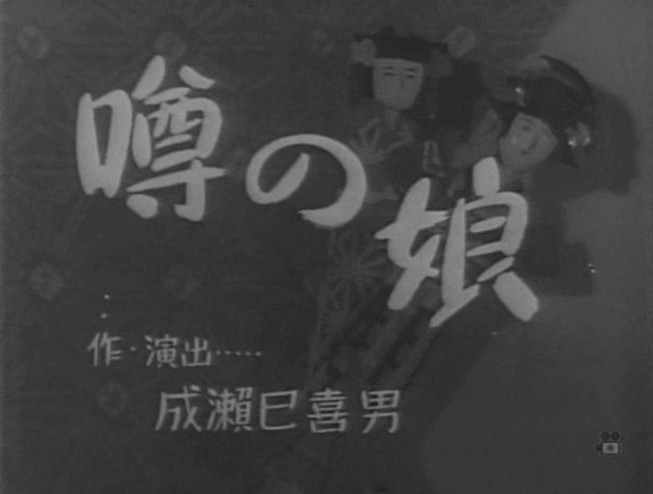
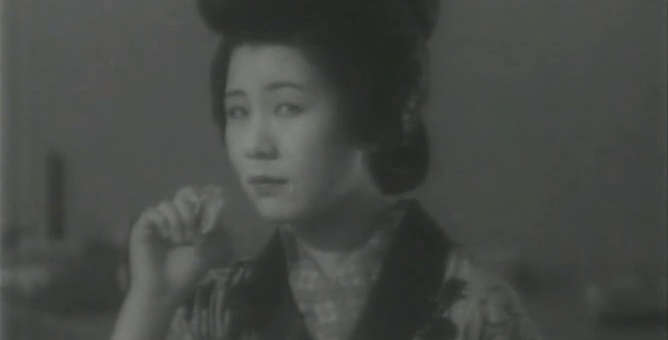
The Girl in the Rumor (噂の娘, Mikio Naruse, 1935)

vlcsnap-2019-12-21-23h50m32s752The world was changing in 1935, but not everyone was swept away by the fickle tides of modernity. The heroine of Naruse’s 1935 drama The Girl in the Rumor (噂の娘, Uwasa no Musume) is like many of his leading ladies betrayed by the world in which she lives, yet she’s also an encapsulation of the conflicts of the age, at once fiercely traditional and personally progressive while her “modern girl” sister is as selfish and judgemental as any of the bright young things who serve as extreme examples of the risks of Western individualism.

Kunie (Sachiko Chiba), an unmarried young woman, works in her family’s sake shop which is currently struggling to make ends meet. While the guys in the barbers opposite complain that the place has gone downhill since grandpa’s days, the old man himself has begun to worry that there’s something not quite right about their produce. In order to keep the shop going, there’s some talk that Kunie may marry the son of a wealthy family, but her father Kenkichi (Ko Mihashi) is against the idea. He married into his wife’s family and the marriage was intensely unhappy so he is mindful that the same fate doesn’t befall his daughter. His wife now long dead, Kenkichi is free to be more open about his longstanding affair with a bar owner, Oyo (Toshiko Ito), which produced a daughter, Kimiko (Ryuko Umezono), who was raised by Kenkichi and his legal wife and has no idea her birth was illegitimate. Kimiko, unlike her sister, has become a “modern girl”, dressing in Western fashions, listening to jazz, and staying out late going to parties. The trouble starts when Kunie decides to take her sister with her to the omiai for moral support and it becomes obvious that Sato (Heihachiro Okawa) is a bit of a “modern boy” who has lots more in common with the vivacious Kimiko and decides to break protocol by telling the go-between that he’d rather have her instead.

This move comes as a total blindside to the girls’ uncle who arranged the meeting. “The marriage proposal’s turned into something really weird” he tells Kenkichi over the phone while the two men try to work out what the best course of action is. The uncle seems to think it might be a good move to carry on the negotiations with Kimiko instead, after all Kunie is basically running the store so it would be more convenient to keep her around. Kenkichi is unconvinced. He knows Kimiko doesn’t really approve of all this old fashioned arranged marriage business, and to be honest he doesn’t seem to like her much so isn’t keen on talking to her about it but can’t rely on his usual trick of getting Kunie to do it because he doesn’t want to hurt her feelings by letting her know that Sato doesn’t fancy her and has asked her sister out instead.

Kimiko certainly is a “modern girl” and superficially proto-feminist. She mocks her sister’s traditionalism and criticises her for blaming “their” mother for the failure of their parents’ marriage, thinking that she is simply unable to move past the patriarchal mindset and used to blaming everything on the woman. Little knowing that Oyu is her mother, she rejects Kunie’s plan to have her come and live with them as new maternal presence, claiming that she has only contempt for mistresses and thereby exposing herself as being, ironically enough, more judgemental than her superficially conventional sister. Kunie may be “traditional” in her outlook, but she is also empathetic and understanding. It seems her mother may not have been an easy woman, and what she most wants is to repair her family by bringing Oyo into the fold in her “rightful” place at her father’s side. Despite her insistence on her own freedom, however, Kimiko is childishly moralistic, directing her anger with an oppressive system back on the people constrained by it. Yes Kenichi’s life is one of socially condoned hypocrisy, but there’s no point in blaming him or Oyo for trying to find happiness where they can.

Blame them she does, however, and her sister with them. Kimiko meets Sato by chance and starts dating him in the non-serious manner of young people of the time only for the Satos to become worried and again push the idea of a marriage. Having been spotted with Sato in the street by Kunie, Kimiko’s confession is cruel and cutting, delivered almost with glee as she reveals that her uncle and father have been avoiding telling her that Sato turned her down because he liked her sister more. Kunie had professed that she wasn’t all that bothered about the marriage because she had become convinced that she “couldn’t have a happy marriage anyway”, but her tears suggest a deeper hurt than having her hopes for the business dashed and being wounded by her sister’s callousness. Nevertheless, she wants nothing but her sister’s happiness and so if she seriously wanted to marry Sato for the “right” reasons, she would of course support her.

Kimiko however remains selfish and implacable. Kenkichi, hoping to teach her a lesson, brings Oyo into the home and reveals to Kimiko that she is a mistress’ daughter. It does not go well. Kimiko refuses to engage with Oyo, while Kenkichi also asks for an apology on behalf of Kunie who has only ever tried to protect both Kimiko and Oyo by trying to reunite their family, but Kimiko leaves in a huff shouting that she has no need of mothers or fathers or families or anything else. A rapprochement is brokered between the women only when Kenikichi is made to pay for his failure as a patriarch. It turns out grandpa was right after all, he’d been tampering with the sake and now the police want a word with him. With the arrival of Oyo, tacitly accepted by Kimiko’s final return to the home, the family is in some senses restored but also broken. The gossips in the barbers across the way lament the end of the Nadaya Sake store, callously speculating on what will replace it, while all Kunie can do is look on in consternation and disappointment.


Three Sisters with Maiden Hearts (乙女ごころ三人姉妹, Mikio Naruse, 1935)

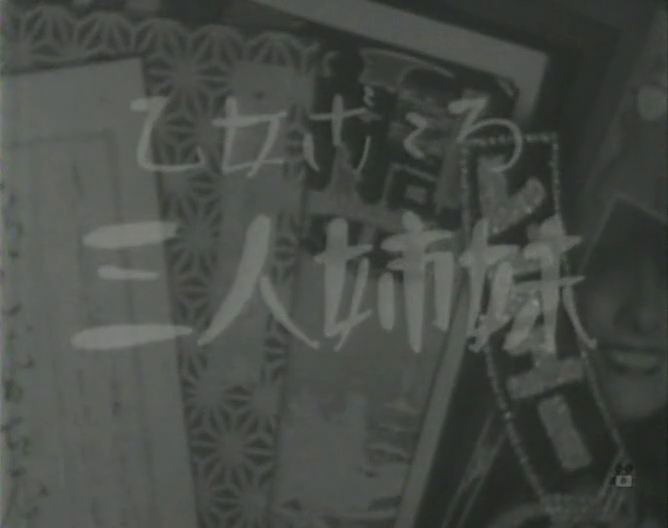
Three sisters with maiden heart title card“From the youngest age, I have thought that the world we live in betrays us” Mikio Naruse is often quoted as saying, and it’s certainly an idea which informs much of his filmmaking. 1935’s Three Sisters with Maiden Hearts (乙女ごころ三人姉妹, Otome-gokoro  Sannin-shimai), adapted from a short story by Yasunari Kawabata, is indeed a tale of the world’s cruelty as its saintly heroine attempts to escape her austere mother’s icy grip through kindness alone but finds her efforts frustrated by the world in which she lives.

Osome (Masako Tsutsumi) is the middle of three sisters raised by a cold woman (Chitose Hayashi) who forced her daughters to earn their keep by playing the shamisen on the streets of Asakusa. Oldest daughter Oren (Chikako Hosokawa) left the family some time ago after falling in love with a salaryman and hasn’t been heard from since, and while Osome is still expected to ply her trade, youngest daughter Chieko (Ryuko Umezono) has been spared, becoming a “modern girl” currently working as a dancer in a revue. Unbeknownst to her family, Chieko has also got a boyfriend – the handsome and seemingly quite wealthy Aoyama (Heihachiro Okawa) who runs into Osome by chance in the street and offers her a handkerchief to help fix her broken geta. This is not the story of a love triangle, however, so much as cruel fate accidentally bringing the sisters back together through a shared destiny.

While Chieko idly muses that it might have been better if her mother had opted for group suicide (joking with her lover about dying together as was apparently a fad at the time), Osome tearfully asks her to “please accept us as we are” but her pleas largely fall on deaf ears. Having taken in a series of apprentices, Osome’s mother continues to treat them cruelly, berating them for not picking up the shamisen, and insisting on “discipline” when she discovers one of the girls has had the temerity to buy a magazine with some of the money she herself has earned. Osome, in a characteristic act of kindness, insists she bought the magazine as a morale booster only to receive her mother’s scorn. “I put so much effort into raising you, but you still haven’t become people who’ll give an honest day’s work” she complains, commodifying them once again. “You don’t know how much easier it would be to go out and earn money myself”, she adds unconvincingly, telling her daughter she can always leave if she doesn’t like it despite having irritatedly complained about Chieko’s increasingly late return home and the possibility she may leave just like Oren did.

As Osome tells us, she and her sister were forced to play the shamisen in unsavoury Asakusa from only eight years old. As they got older, Osome was worried about the attention Oren seemed to be getting from “rough” men in the streets. Eventually Oren stopped carrying her shamisen at all and fell in with a bad crowd, only escaping when she met her husband Kosugi (Osamu Takizawa). Kosugi, however, is ill with TB and finding it difficult to hold down a job. Increasingly jealous and paranoid, he is afraid Oren will hook up with her old gangster friends and fall back into bad habits. Meanwhile, Osome is still playing her shamisen and putting up with rough treatment from the drunken clientele who sometimes try to manhandle her or make unreasonable requests. An irritated bar owner eventually knocks on a record to drown her out as if signalling her impending obsolesce.

Nevertheless, the older two sisters have largely remained traditional. Oren’s fall into the gangster underworld is signalled by a sighting of her in Western clothes, looking like a well to do young lady as Osome puts it, but once with Kosugi she soon reverts to kimono and fully embraces the role of a conventional housewife supporting her husband with all her strength. Chieko, however, is a “modern girl”, dancing in a nightclub revue and dressing exclusively in Western fashions. Some horrible boys who make a point of singing the rather vulgar song back at the girls through the window yell “modern girl” at her in the street, indicating just how shocking and unconventional her appearance was back in 1935 even in the backstreets of Asakusa. Nevertheless, Chieko appears to have found a satisfying romance with a “modern boy” in Aoyama who dresses in suits and seems to have a bit of money but is undeterred by a possible class difference and just as nice as his potential sister-in-law.

Despite Osome’s attempts to reunite the sisters, fate conspires against her. Oren hooks back up with her lowlife friends who use her in a plot to extort Aoyama while she remains completely unaware that she’s targeting her sister’s young man. Osome tries to tries to stop them but is stabbed by thugs in the process and, figuring out what’s happened, keeps Aoyama and Chieko away from the station where she has arranged to bid Oren goodbye on the last train out of Ueno. Poignantly, Oren seems happy that her sister has found someone nice, saying that she’d have liked to meet him still unaware she already has. The sisters know they likely won’t meet again, and Osome is content only in knowing that in theory at least she has saved the memory of the bond they once shared through preventing Oren’s involvement in the incident with Aoyama from coming to light.

Osome’s kindness is her undoing. Her world betrays her, she is simply too good, too pure-hearted to be able to survive in it. The three sisters struggle to overcome neglectful parenting, but their mother has at least survived if unhappily, suggesting the world is kinder to those whose hearts are colder. Oren and Chieko go their separate ways, into the past (on a train) and the future (by car), but Osome remains stubbornly in the waiting room with only the inevitable awaiting her.


The Actress and the Poet (女優と詩人, Mikio Naruse, 1935)

Actress and the Poet title cardAmong the directors most closely associated with the golden age of Japanese cinema, Mikio Naruse is not usually remembered for his sense of humour but his pre-war work often saw him making uncomfortable forays into the shomin-geki comedy. The Actress and the Poet (女優と詩人, Joyu to shijin), Naruse’s second film after leaving Shochiku for P.C.L, is among the more successful but also tinged with characteristic irony that says this is funny because it’s not funny at all.

The generic shomin-geki setup finds us in a small community of suburban houses where mild-mannered poet Geppu (Hiroshi Uruki) lives with his successful actress wife Chieko (Sachiko Chiba). Amusingly enough, and in a motif which will be repeated, the film opens with an high impact scene of a woman screaming after being threatened with a knife, but thankfully it turns out that Chieko and her friends are simply rehearsing for a play. The actors dispatch Geppu to fetch them some cigarettes, which brings him into contact with his no good “friend” Nose (Kamatari Fujiwara), a struggling writer who is absolutely sure his latest work is going to win a big prize which is why it’s not a big problem that he’s so behind on his rent that he’s been coming and going through the upstairs window so he doesn’t attract the attention of his landlady.

When we first meet Geppu he’s wearing a pinny and cheerfully hanging up the washing. A young man passes by on a bicycle and seems surprised, asking if he himself really did all that laundry to which Geppu somewhat improbably replies that it’s all second nature when you’ve been in the army. Even though this is obviously a very “normal” day for Geppu, the questions keep coming. Ohama (Haruko Toda), the nosy woman from next-door, remarks that everyone in the neighbourhood loves Geppu because he’s just so nice but he’s also become a hot topic with the ladies at the bathhouse because no one’s quite sure what it is he “does”. In the modern parlance, Geppu is a basically househusband who dabbles in “poetry”, or as Ohama later explains “songs for children”.

In this fiercely modern environment, it’s Chieko who wields the financial power while her husband appears not to mind trailing behind. She wears kimono but often with luxurious furs which might lead to us ask why they live in this modest suburban house rather than in the bright lights of the city, but even so the marriage appears to be a happy and progressively equal one. In fact, as we later discover, there’s never been a cross word between Geppu and his wife, which is a problem because Chieko’s latest role involves a marital tiff and she’s struggling to get to grips with it because she doesn’t know what it’s like to fall out with your spouse. To figure it out she gets Geppu to read lines with her in a situation which eventually repeats in their real life when Nose bamboozles Geppu into letting him stay in the upstairs room rent free, leading to an almost identical fight watched calmly by Nose and Ohama who think they’ve got ringside seats to a play they could never afford to see.

Nose’s intervention unbalances the couple’s relationship in that it forces Geppu to reassert his masculinity. “A promise between men is a serious thing”, Geppu affirms “I can’t just go back on it because my wife says no”. Chieko reminds him, however, that this is technically her house – she pays all the bills, while his “writing” career is good only for the odd box of sponge cake. She doesn’t like it, perhaps understandably, that he’s “invited” a ne’er do well to come and live with them without even bothering to talk to her about it. She tries to put her foot down, but Geppu remains as irritatingly passive as ever only slightly putout to have his subjugated status suddenly used against him.

Naruse ends the picture with a comic sequence in which Chieko sees the light. Thanks to her real life argument with her husband, she’s figured out how to perfect her performance but she’s apparently so method that she also begins to embrace her role as a conventional wife off stage too. Rather than Geppu letting her sleep in and cooking the breakfast himself, this time it’s Geppu wrapped up in a futon while Chieko chops veg downstairs. Nevertheless, there is a minor irony in this moment of domestic bliss in that it directly follows the news that the nice young couple who just moved in across the road have committed double suicide because of his embezzlement and subsequent debts. Neatly underlining the consumerist trends of the age, the couple wanted to die in their own home even if it was only “theirs” for a few moments. Meanwhile, Ohama and her insurance salesman husband are busy having a blazing row next-door which just goes to show that old-fashioned marriages aren’t so happy either.

Chieko superficially plays the conventional wife, engaging in a little role-play with her husband while Nose listens on from the stairwell, but theirs remains a very modern marriage in which she is free to fulfil herself outside the home and her husband is seemingly unbothered (to a point at least) by the mild censure of the local ladies who both love him for his niceness and perhaps dislike him for it too. Naruse undercuts the conventionally “happy” ending in which traditional gender roles are restored and the family rebalanced by ending on a note of irony as the home of Ohama, a traditional wife dominating her henpecked husband in a comic yet socially accepted fashion, is thrown into violent discord while all is peaceful in the decidedly modern house of Geppu.


Wife! Be Like a Rose! (妻よ薔薇のやうに, Mikio Naruse, 1935)

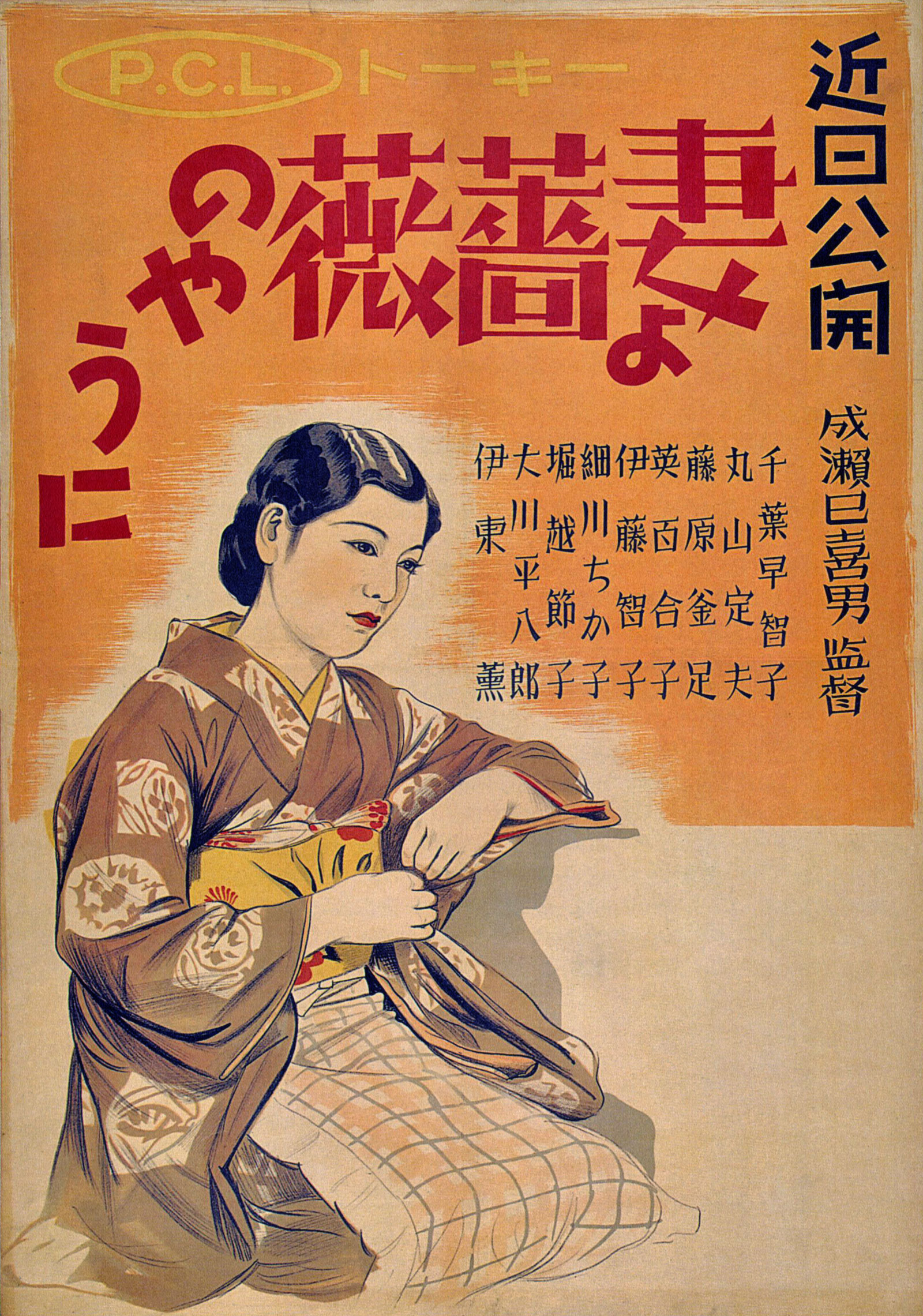
Wife be like a rose posterIt’s tempting to view the cinema of the 1930s as a gloomy affair, facilitating the rise of militarism and increasingly at mercy of the censors, but the early sound era was nothing if not playful and generously open to international influences. It was also often surprisingly progressive, evidencing the fact that pre-war Japan was also changing or, at least, that there was an appetite for change especially among the young. Mikio Naruse’s delightfully charming (perhaps uncharacteristically so) comedy, Wife! Be Like a Rose! (妻よ薔薇のやうに, Tsuma yo bara no yo ni) dramatises just this change as its modern girl heroine tries to process the definitive end of her parents’ relationship as she prepares to marry.

Kimiko (Sachiko Chiba) has a job in an office which is more or less supporting herself and her mother seeing as her father, Shunsaku (Sadao Maruyama), left the family over 15 years previously and has been living with former geisha with whom he has two other children. Despite his long absence, Kimiko’s mother Etsuko (Toshiko Ito) has continued to pine for her absent husband and makes a little money on the side writing sad love poems for the newspapers. A request to stand as a go between at a wedding, traditionally a role only performed by married women, forces Etsuko to accept that she has been abandoned but the snag is that Kimiko and her boyfriend Seiji (Heihachiro Okawa) want to get married themselves and so his father wants to meet Kimiko’s dad which is obviously a problem.

Despite her “modern girl” appearance, Kimiko has some quite old fashioned ideas. She looks down on her maudlin mother, believing that she’s brought her apparent romantic heartbreak on herself through being a bad wife. Etsuko never seemed very interested in Shunsaku when he was around and never did any of the little wifely things Kimiko thinks a wife ought to do like vacuous chat and helping her husband change out of his work clothes. Kimiko thinks a good wife “acts childish and cajoling, or jealous sometimes, or motherly and protective”, believing that Etsuko knows this and has the ability to play the part of the ideal spouse but refuses to and therefore has only herself to blame. Kimiko’s uncle (Kamatari Fujiwara), however, corrects her. He piles the blame on the irresponsible Shunsaku who ran out on a wife and daughter to shack up with geisha.

Shunsaku, meanwhile, may be irresponsible in one sense, but perhaps it’s equally irresponsible to stay in an unhappy marriage. Now a gold prospector in the mountains, he is poor and unsuccessful but has built a happy family home with a kindly wife and two sweet children. Kimiko’s desire to drag him back to the city is partly practical in that she needs him to be her father so she can marry Seiji, but there’s also a part of her that thinks that her father’s transgression must be corrected by forcing him to resume his paternal role. Unlike Etsuko, however, Oyuki (Yuriko Hanabusa) is the classically “good” wife and Kimiko can’t deny she’s good for her father. Seeing him in the mountains and remembering him at home, Kimiko begins to realise that it would be wrong to take him away from his new family even if she thinks she has the better claim, especially when she finds out that it’s Oyuki who’s been sending her mother maintenance cheques every month for the past few years.

In fact, Oyuki feels so guilty about stealing Shunsaku away that she’s been putting money aside to pay for Kimiko’s wedding/education while keeping her own daughter home from school. Far from the gold digger Kimiko had assumed her to be, she’s been the one supporting the feckless Shunsaku as he pursues his get rich quick dream of gold prospecting. Realising that the pair of them “act in perfect harmony”, Kimiko comes to the conclusion that her father belongs in the mountains but finds her resolve wavering after returning to civilisation. She begins to wish he’d stay and hatches a plan to get her parents back together only to see how out of sync they are after 15 years apart. They swap pleasantries like strangers, and the mild-mannered Shunsaku visibly shrinks in the presence of the shrewish Etsuko who allows her pride to ruin any attempt at reconciliation.

What the modern girl Kimiko discovers is that sometimes things don’t work out like they’re supposed to, and that’s OK. Though it is in one sense a “happy” ending in that it obeys a justice born of human feeling, it’s also a melancholy moment of defeat both for the lovelorn Etsuko who has, as Kimiko says “lost”, and the now resigned Kimiko who harbours a degree of contempt towards her mother for not fighting harder for love. Standing at a crossroads of modernity, Kimiko looks both forward and back. She vows to be a “good wife” but her foundations have been shaken. Is this tragedy, or farce? She asks herself. It’s almost impossible to say.


Lumberjack and Lady (與太者と小町娘, Hiromasa Nomura, 1935)

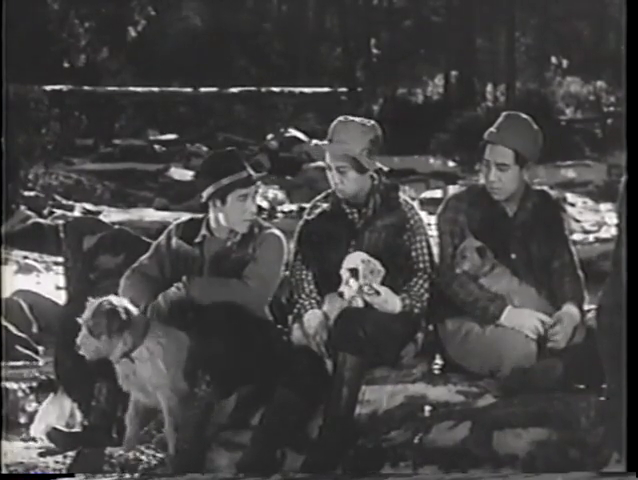
vlcsnap-2019-03-01-23h23m29s757Remembered mostly for his 1938 melodrama Aizen Katsura starring Kinuyo Tanaka and Ken Uehara, Hiromasa Nomura was a prominent studio director at Shochiku in the pre-war period before decamping to Shintoho in 1948 and then to Daiei in the mid-50s before shifting back to Shintoho and then to TV for the final part of his career. Much of his earlier work is presumed lost, but a late silent effort from 1935 Lumberjack and Lady (與太者と小町娘, Yotamono to Komachi Musume, AKA The Layabout and the Town Belle – part of the “yotamono” (layabout) series) seems to showcase a talent for slapstick comedy while perhaps engaging with the concerns of the time in its three heroes’ quest to defend their mountain against an evil upstart from the opposing peak.

The trouble begins when our three “stooges” get themselves stuck on a logging cart and accidentally end up on the other mountain where a rival logging group run by the fabulously moustachioed Torazou (Isamu Yamaguchi) are not exactly happy to see them. Just when things look grim for our heroes, Torazou himself shows up and saves the day, handing them a letter to take back to their boss, Kaheiji (Sojin Kamiyama). The letter, however, contains ill tidings – Torazou wants the hand of Kaheiji’s pretty daughter Kayo (Yoshiko Tsubouchi) and makes plain that he’s not about to take no for an answer.

The early part of the film revolves around the comical exploits of our three bumpkins who are always accompanied by their three adorable dogs. The guys are all, predictably, in love with Kayo but in a dreamy, innocent sort of way – there is no conflict between them over their shared love of the boss’ daughter, only a sort of pure hearted camaraderie and a desire to make sure the best is done for her which means putting paid to the evil Torazou once and for all.

In a mildly interesting twist, it’s clear that the Kaheiji gang are the poor but honest crowd. Our guys dress in torn and battered clothing, remaining unable to pay off their tabs with the wily old lady who runs the local store even after old Kaheiji has given them some money to go out on the town. Torazou’s boys, however, seem to be doing much better. Torazou himself is portly man in early middle age who is always accompanied by his bizarrely tiny henchman who is always ready to repeat whatever it was his boss just said only with additional menace. It’s clear we don’t want Kayo to fall into his clutches lest her innocence be polluted by his grubby little hands. A mustache twirling villain, Torazou is perhaps as close as you might be able to get in 1935 to a personification of the evils of the age as an exploitative capitalist fat cat who thinks he can do as he pleases because he has the most minions and the most friends in handy places. Not much of strategist, he thinks nothing of trying to force himself on the grieving Kayo as she bends over a grave, somehow convinced that this will be a surefire way to win her love and pave the way to a happy marriage.

The action takes an unexpected direction in the second act after a key player mysteriously falls off a cliff in true silent movie fashion. Realising they need to find a “suitable” husband for Kayo (i.e. someone not like them but of a higher social class), the guys run into “Mr. Yamazaki” (Den Obinata) from Tokyo who, unbeknownst to them, is Kaheiji’s chosen successor and a potential fiancé. Kenji brings some Tokyo class out to the mountains along with a little youthful hotheadedness in which he cannot help but refuse to back down in the face of Torazou’s continuous shenanigans – an act which accidentally puts Kayo in danger while he fixates on proving himself the bigger the man.

A light and fluffy escapade, albeit one which perhaps subtly reinforces some of the ideas many maybe seeking escape from, Lady and Lumberjack is largely built around the slapstick adventures of our three idiot heroes which are enlivened by the fresh mountain air and beautiful location shooting. Drawing inspiration from popular Hollywood silent comedies, Nomura perhaps fails to tie his series of set pieces together in a suitably coherent fashion but fully embraces the film’s sense of silly fun (mostly had at the expense of the decidedly dim, if essentially good, lumberjacks) while ensuring a victory for the honest little guy against the forces of selfishness and corruption.


A Hero of Tokyo (東京の英雄, Hiroshi Shimizu, 1935)

Hero of Tokyo still 1Hiroshi Shimizu’s ‘30s films, made against the backdrop of the increasingly censorious militarist regime, had an ambivalent attitude to Japan’s wider foreign policy, its economic impact, and prospects for the future. His final silent film, A Hero of Tokyo (東京の英雄, Tokyo no Eiyu), the title of which is perhaps either deceptive or mildly ironic, is among the bleakest of Shimizu’s depictions of a changing society he perhaps saw as increasingly corrupted by greed and inhumanity. A hahamono of sorts, Hero is not as crushing as Forget Love For Now, but ends on a note of frustrated ambiguity in which wrongdoing has been exposed and justice served but at a terrible cost, leaving the institution of the family itself and therefore the entire social order lying in pieces and broken beyond repair.

The film begins among Shimizu’s familiar milieu of small boys as they watch the trains that will eventually bring their fathers home to them coming and going. Some of the boys stay to play but eventually only one is left behind – Kanichi (Tomio Aoki), whose widowed father constantly works late and leaves him alone in the care of their maid. Kanichi’s father, Nemoto (Yukichi Iwata), is engaged in a local mining concern and, berated by the maid who reminds him that his son is often lonely, decides to marry again to bring order to his house. After placing an ad which states he is a widowed CEO with a good salary, Nemoto marries Haruko (Mitsuko Yoshikawa) – a widow with two children of her own, Hideo (Jun Yokoyama) and Kayoko (Mitsuko Ichimura). A short time later it is discovered that Nemoto’s business is a scam and he flees town leaving his family to face the music alone. Haruko, committed to raising all three children equally, must now find a way to support herself but as a woman with young children and few qualifications there are few jobs available to her. Soon she falls into bar work which may not be “respectable” but allows her to support her family.

10 years later, Haruko owns a fine suburban house and the children appear to be leading a fine middle-class life. Trouble begins when Kayoko (Michiko Kuwano) marries a nice middle-class young man only to be “sent back” soon after the wedding when his family find out about Haruko’s “shameful” past. Though Haruko had told the children that she worked “in a club where executives come to relax” when they were small, Kayoko is shocked and appalled to discover her mother is tainted with the stigma of the sex trade and even more so when her mother’s past threatens to destroy her future. Haruko begs her not to tell her brothers, but Hideo (Koji Mitsui) finds out from his girlfriend, who also dumps him on hearing the rumours, and goes off the rails. Only Kanichi (Mitsugu Fujii), the step-son, stands by the mother he regards as the “best in Japan”, feeling both profound gratitude and sorrowful empathy for the sacrifice she has made on his behalf.

At heart a hahamono, A Hero of Tokyo fits neatly into Shimizu’s career long interest in female oppression in casting Haruko’s trials as entirely caused by being badly let down by a patriarchal society. Having lost one husband and being betrayed by the second, Haruko is forced to stand alone in a society which refuses to forgive her for it. As a “married” woman, she can gain no “honest” work and the necessity to care for her children means that she cannot take a role in service which in effect means dedicating oneself to a family which is not one’s own. She lacks qualifications or connections and has no family to support her and so she is forced into the only remaining line of work available to women in her situation. Haruko makes a great success of herself and becomes an upright businesswoman running her own establishment even if she cannot be exactly proud of the achievement which does (to her own shame and regret) rely on the degradation of other women just like her, though she tries to do the best for them that she can.

Yet her children, as all ungrateful children of a hahamono, are unable to forgive her for the transgressions she was forced to make entirely for their benefit. Having cast their mother as a saint of elegance and decorum, they cannot accept this new information which renders her a mere woman at the mercy of a cruel society. Kayoko, having run away from home, ironically finds herself in the same, or perhaps a worse, position, becoming a streetwalker – by her own admission “famous” and an accidental subject for one of Kanichi’s episodes of investigative reporting as a rookie newspaper man. Meanwhile Hideo has crossed to the other side and joined the ranks of exploiters of women in joining a gang only to get himself into trouble for trying to leave it when he realises he has become a hired goon for one of Nemoto’s stooge companies. The children are “ruined” not by their mother’s “sin” but by the conservative society that forced her into it and by the paternal failures of Nemoto whose abandonment reduced them to dire desperation.

It is, in this sense, Haruko rather than Kanichi who is the “hero” of the title – valiantly battling against the prejudices and cruelties of the city whilst retaining her innate sense of honour decency and steadfastly shielding her children from suffering. Her attempt to protect them perhaps backfires, leaving them without the necessary perspective and humanitarian spirit to feel empathy for others rather than succumbing to the judgemental attitudes of the age. Thus both of the biological children are condemned to suffer in the very way Haruko suffered to prevent and then find themselves too ashamed to return to her. Only Kanichi who had already suffered in his childhood loneliness, in his shame for the transgression of his father, and his position as a step-son doubting his place in a family which was not his by blood, is able to accept and sympathise with his mother’s suffering and experiences only guilt and gratitude that she had chosen to sacrifice herself for his greater happiness.

Yet Kanichi’s role as the good son is also tainted by his filial opposition to his father as it necessarily conflicts with his desire for social justice as a crusading reporter. Kanichi’s desire to expose corruption is ultimately for the common good – to save innocent people being deceived by his father’s dishonourable scheming, but it’s also an act of revenge aimed squarely at a symbol of broken patriarchal responsibilities. In the various names Shimizu attaches to Nemoto’s sham businesses, he aligns him with the expansionist Japanese state which was currently attempting a similarly dishonourable attempt to sell the economic gains of its imperialist project built on the back of international exploitation and dishonesty. It is not just a father who has failed his family, but “the” father which is failing its people in leading them down a dark and disturbing alleyway in which honour and morality no longer have any currency.

Kanichi too profits from his father’s crime – his first bonus is a direct result of the exposé of his father’s company and so he also becomes part of a system of corruption. His actions, however, are not entirely accepted by Haruko who is ashamed and troubled by Kanichi’s crime against filial piety and therefore by his betrayal of the social codes which define his society. Kanichi has picked a side, but in doing so he has also damned himself and emerges not victorious but compromised. Despite the “happy” ending, in which justice has been done and the emotional bonds of the true family restored, the concluding scenes remain ominous as the newspaper boy delivers the sorry news all over town and ruptures the tranquil middle-class peace of Haruko’s once happy suburban home.