The Whole Family Works (はたらく一家, Mikio Naruse, 1939)

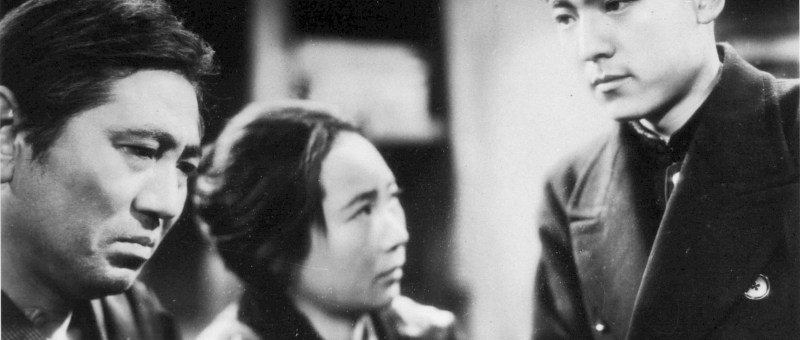
A young man becomes fed up with the constraints placed on his life and asks for the opportunity to improve his circumstances, but knows that to do so will leave his family at a disadvantage, at least in the short term. Is his request selfish, or are his parents selfish for exploiting the labour of their children and thereby impeding their progress in the world? As in many of Naruse’s films, the great enemy is poverty, but as the wise teacher Mr Washio says, the solution would be easy if Ishimura had a drinking problem or Kiichi were lazy but the situation is too complicated for such a simple adjudication.

Ishimura (Musei Tokugawa) has a job, but his wages are low and he has nine children to support along with elderly parents who are also still working. Fourth son Eisaku (Takeshi Hirata) tells his mother (Noriko Honma) that he doesn’t want to go to the factory and would like to carry on to middle school with his friends, but she tells him he’s being selfish and childish and that all his brothers began working after primary school. Perhaps because the burden disproportionally falls on her, it’s the mother who is most acutely obsessed with money and the most controlling of her children. Ishimura is more of a soft touch and genuinely sorry that he can’t really agree to oldest son Kiichi’s (Akira Ubukata) request to take five years off to study because the family can’t survive without his wages.

But Kiichi’s problem is that he’s trapped in a dead-end job. There’s no possibility of advancement and his wages won’t ever change. He could work there 50 years and never be able to support a family of his own. His idea is that he wants to become an electrician which he believes will be a steady occupation that will pay enough to allow him to take care of his parents when they’re old and also get married. He thinks if he doesn’t do something now, he’ll be trapped in this life forever and never escape his parents’ yoke. Nevertheless, he worries about whether his desire is “filial” or not and feels a tremendous amount of guilt and frustration that sends him to drink.

Ishimura also knows that if he agrees to Kiichi’s request, he’ll have to say yes to the others too. All the boys have dreams of their own with young Noboru (Seikichi Minami) even hoping to become a lawyer, while Genji (Kaoru Ito) and his younger brother Kokichi (Seiichiro Bando) are intent on joining the armed forces which is perhaps a nod to the rising militarism of the age. Scenes of imagined warfare leave a less aspirational vision of the military, though there hints of it throughout the boys’ lives through magazines and children’s literature such as the book Mr Washio gives to Eisaku. The household becomes a kind of microcosm of a totalitarian regime that controls the boys’ lives and futures, causing them to form a conspiratorial faction talking over their mutual dissatisfaction in the coffeehouse opposite run by Genji’s old school friend Mitsuko (Sumie Tsubaki) who has a crush on Kiichi. Eisaku has been patiently saving his allowance, but his mother finds out and so he blows the whole lot taking his brothers out for dinner rather than allow her to “borrow” any more of his money to which she feels herself entitled.

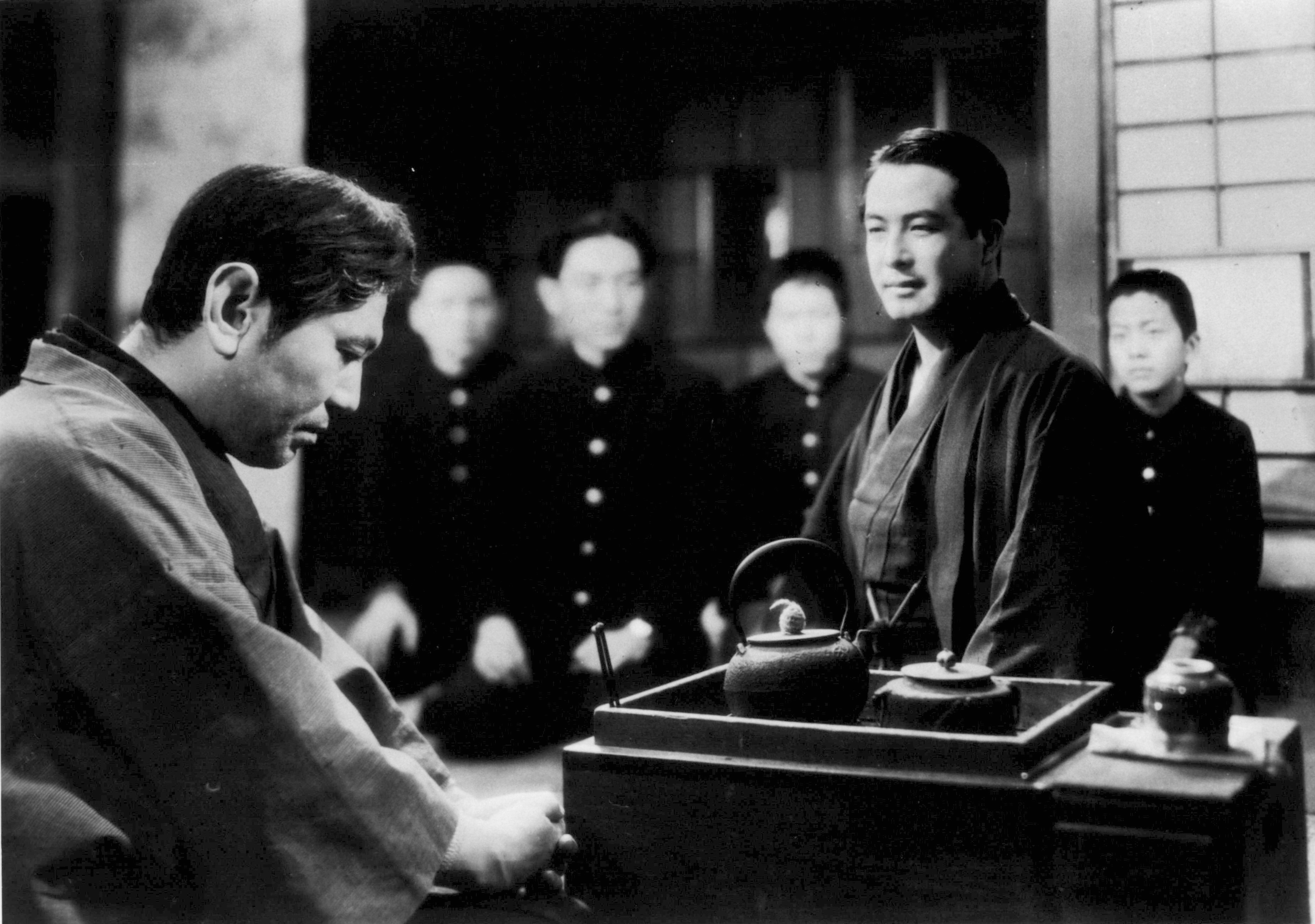
It’s the entitlement that’s the point. The parents expect the children to work without giving them any choice and thereby deny them the opportunity of working towards their own futures. Kiichi sees the big picture and wants to improve his circumstances, but does so because he wants to work for his family. He doesn’t intend to abandon them and chase his own success, he just wants to be able to provide for himself and at least have enough to eat. Mr Washio says he won’t tell him what to do, but also that there’s no rush, which seems like an intrusion from the censor’s board to reinforce the importance of filial piety over individualistic desire but also doesn’t deny that Kiichi has a point and as a grown man a right to freedom and independence. Nevertheless, there’s a subversive tension in the confrontation scene as the family sits in silence as the clock ticks away on the wall and the rain beats down outside. The brothers roll around in exuberance upstairs, while their defeated parents can only look up in resignation to their broken authority as the children’s revolution begins to take hold.


The Whole Family Works screened at Metrograph as part of Mikio Naruse: The World Betrays Us – Part II.
Sincerity (まごころ, Mikio Naruse, 1939)

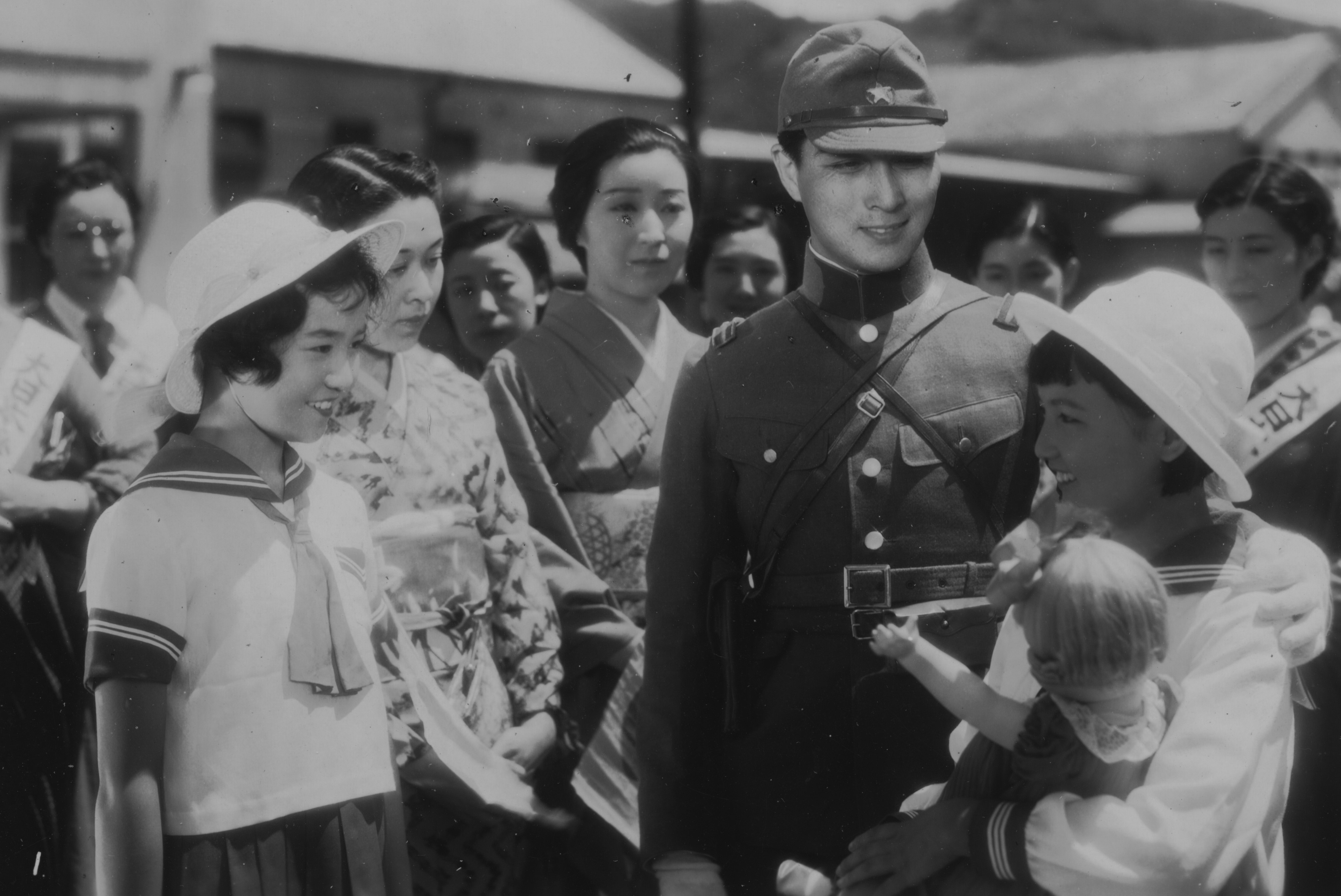
When the daughter of a poor family leapfrogs that of a rich one to be named top of the class, it exposes a series of hypocrisies and contradictions within the militarist order in Mikio Naruse’s 1939 drama, Sincerity (まごころ, Magokoro). The film opens, however, with a parade led by the Patriotic Women’s Association seeing young men off war. The group is led by Mrs Asada (Sachiko Murase), the mother of the rich girl, Nobuko (Etchan), who is busy giving orders to the other women regarding the air defence watch and sweet potato market which seems very forward thinking for the time period.

But in other ways it’s Mrs Asada who comes in for the greatest criticism as her bossiness and involvement with patriotic activity is depicted as a kind of displacement activity to mitigate her sense of uselessness and unhappiness in her marriage to arch militarist Kei (Minoru Takada) whom she fears is still hung up on his old girlfriend, Tsuta (Takako Irie), who is also the mother of Tomiko (Teruko Kato), the poor girl and apparent model student who has just displaced Nobuko as the cleverest girl in the class. Through Mrs Asada is rightly concerned that Nobuko has dropped a whole 10 places, Kei is not bothered by it at all because she is physically robust and healthy, which are the two most important qualities from a militarist perspective, leaving aside the fact that many wouldn’t regard a woman’s academic success as particularly important. Indeed, Kei is dismissive of his wife. Mrs Asada suggests that he finds her “stupid” and that their daughter is “stupid” by extension while Tsuta’s is clever and earnest because Tsuta is the same. He tells her that a child’s education is the mother’s responsibility and it’s probably her fault for busying herself outside of the home with her wartime activities with the implication that she’s been neglecting her child and that’s why her grades have fallen.

This point seems contradictory seeing that even at this stage, the nation expects women to serve their country in ways other than dedicating themselves to their families which is a responsibility secondary to that they owe to the emperor. Nevertheless, the implication remains that she’s doing it for the wrong reasons because what she enjoys is the status it gives her and the power of being in charge. Unlike Tsuta who has no husband, Mrs Asada’s family is wealthy with servants to take care of the domestic work so has nothing to do all day, while it’s also clear that the marriage is more or less dead and Kei does not particularly care for her, which he later admits, though partly because he has already rededicated himself to the nation in eagerly anticipating his call-up letter. When he’s first introduced, Kei is admiring a sword he’s having made ready for when he gets his papers to enlist as an officer. 

It’s a remark about Kei’s call-up that first sets alarm bells off in Tomiko in noticing the sadness it provokes in her mother, itself a little transgressive from a propaganda perspective. The grades situation doesn’t affect the girls’ friendship in the slightest, though this sudden reckoning with the past does begin to place a wedge between them not only in a growing awareness of their class differences but an awkwardness about the complicated situation between their parents which they are not well equipped to fully understand. Tsuta first tries to tell Nobuko the truth, but it upsets her so much that she lies instead and says that it’s true she knew Kei in the past but only as an acquaintance not a romantic partner. Nevertheless, the fact that she called him “Kei” rather than “Keikichi” or whatever his surname was before he married into Mrs Asada’s family suggests a great degree of intimacy which is something Tomiko seems to pick up on. 

There’s a persistent implication that Kei may be the father of both girls, which further reinforces the idea that their contrasting characters are a product of the way their mothers have raised them. Nobuko is described as self-involved and lazy, characteristics which reflect her privileged upbringing and sense of entitlement. Mrs Asada tries to talk to her new teacher, Mr Iwata, but his opinion is that Nobuko was most likely coasting and is struggling now because the work is more difficult and she hasn’t learned how to study or developed a consciousness that results are born of what you put into them. She, and her mother, simply expect to come top because it’s what a girl of her status deserves. Her displacement is a discomforting inversion of the social order. In this, the film both undercuts and reinforces militarist ideology in stressing the importance of hard work for all while doing so at the expense of a reverence for feudalistic ideas of class hierarchy. 

It’s this class divide that is transgressed when Kei sends the present of an expensive French doll to Tomiko after she and her mother come to Nobuko’s rescue when she cuts her foot on some sharp rocks while the girls’ are playing together at the river. The gift seems rather extravagant for the relatively minor act of kindness Tomiko and her mother performed which accidentally reunited Tsuta and Kei though neither of them say very much and while Tsuta seems to look at him longingly, Kei appears indifferent. Nevertheless, the grandmother suggests the doll reflects Kei’s sincere heart with the implication that it reflects his continuing attachment to Tsuta. Tsuta wants to refuse it, but realises she can’t because Mrs Asada likely doesn’t know and her finding out would just cause more trouble, though it’s a painful reminder of her romantic disappointment. 

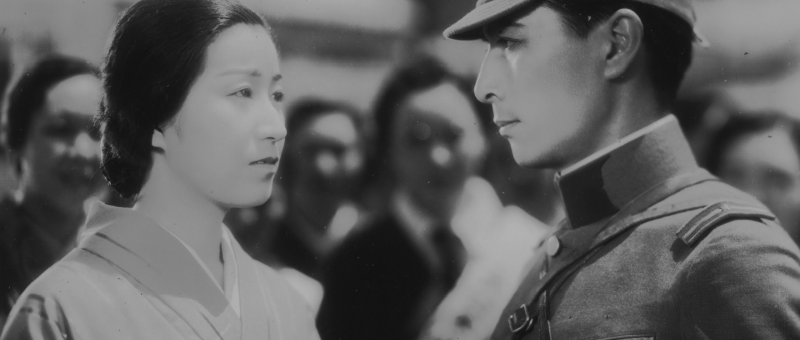
Tomiko ends up sending it back herself with a note for Nobuko explaining everything. Nobuko then limps off with her injured foot to return the doll to Tomiko and tell her none of that matters, she wants her to have the doll anyway. The doll then becomes a symbol of the sisterhood between the girls and the erasure of the class boundary between them. Tomiko can be seen holding the doll when they join the parade to send Kei off to war, while Tsuta and Mrs Asada also smooth out the misunderstandings between them to celebrate Kei’s mobilisation together. The message here is more that old differences must now be put aside so that everyone can serve the nation together rather than selfishly fixating on personal drama such as wounded pride or romantic heartbreak. Even so, Naruse slightly undercuts the patriotic conclusion with the hint of sadness on Tsuta’s face before she recomposes herself to smile at Mrs Asada and reinforce the sense of solidarity between them, while what we’re left with is the memories of the idyllic countryside setting and sense of pastoral serenity along with the sincerity of the relationship of the two girls which is rooted not in patriotism but genuine friendship that cares nothing for the divisions of social class or the rigidities of the adult world.


Sincerity screens at Japan Society New York May 10 as part of Mikio Naruse: The World Betrays Us – Part I.

Images: Collection of National Film Archive of Japan

A Brother and His Younger Sister (兄とその妹, Yasujiro Shimazu, 1939)

A young man’s love of go ends up getting him into hot water at work in Yasujiro Shimazu’s surprisingly progressive shomingeki, A Brother and his Younger Sister (兄とその妹, Ani to Sono Imoto). It seems office politics might not have changed all that much in the last 80 years even if many other things have, but conversely the film seems to have more to say about the changing nature of gender roles and attitudes towards women in a time in which it was becoming possible for a woman to live a fully independent life. 

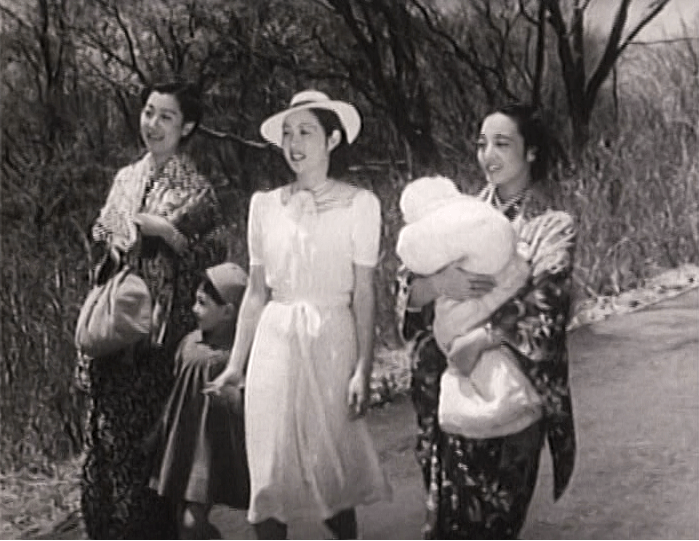
This window wouldn’t last very long and the situation largely reversed itself even amid the supposed equality enshrined in the post-war constitution, but Fumiko (Michiko Kuwano) at least has a well paying job as a secretary at a large company and consequently little desire to marry even at the comparatively late age of 24. Her earning capacity is later put forward as a reason that there “aren’t many opportunities” for marriage as men apparently feel threatened and embarrassed especially if their salary is lower than hers. It’s not exactly that she’s against marriage, but as she can support herself and is otherwise happy living with her brother Keisuke (Shin Saburi) and his wife Akiko (Kuniko Miyake). She doesn’t see the need to rush into such an important decision. Though she might change her mind if the right person came along, for the moment she just isn’t interested. Then again, Akiko’s sucking of her finger when she’s ironically cut by a thorn on a bouquet of roses from an unwanted admirer might suggest another reason marriage is not on her radar.

Her suitor, Michio (Ken Uehara), despite his handsomeness is a little creepy in his courtship and cannot seem to take a hint that Fumiko isn’t interested in him. A friend of her boss, he has a habit of dropping into the office for no real reason and attempts to ask her out when the boss isn’t there. She lies and tells him she’s married already (to a penniless painter!) but after the boss reveals the truth it doesn’t seem to occur to Michio that if she made up a story like that it’s because she doesn’t want to go out with him. We’re told that Michio studied at Oxford and is attracted to Fumiko because he’s impressed by her language skills, but he’s also some kind of stockbroker which quickly paints him as no good seeing as the film seems to have a minor message about how dabbling in stocks and shares is little better than gambling and definitely dangerous.

One of Keisuke’s colleagues has been given a warning because there’s a rumour that he’s into shares while another has apparently been demoted because it came to light that he had a fondness for horse racing. More than a moral judgement, it seems the reason is that these sorts of hobbies may eventually lead someone towards embezzling from the company to cover their debts. Keisuke’s supervisor is also worried that his 18-year-old son is refusing to go to university and apparently wants to join some kind of “investment society” which admittedly does not sound like a good idea so he wants Keisuke to talk him out of it. The big boss, meanwhile, who is also Michio’s uncle, turns out to be into shares himself which makes him a very compromised authority figure. 

Keisuke is not into shares, but he is very into the game of go which causes him to stay out until late at night playing with his bosses. He does this because he genuinely likes playing, but Fumiko worries that his colleagues will come to resent him assuming that he does so to curry favour. Apparently, something similar happened at his previous job which is why he ended up quitting abruptly. As he was quite lucky to get this one despite how impressed everyone seems by his capabilities, it would be better if that didn’t happen again. Nevertheless, the perspicacious Fumiko turns out to be right as as his co-worker Yukito (Reikichi Kawamura) becomes increasingly jealous of his success fearing that he will leapfrog him to take the shortly to open up supervisor position which he believes to be his simply because he’s been there longer (which is generally how things work at Japanese companies). Consequently, starts a series of rumours that Keisuke is a snitch who got the horse racing guy demoted and is only in his position thanks to schmoozing with the bosses.

This obviously leaves him with a huge dilemma when his boss asks him to put in a good word for Michio with Fumiko whom he is pretty sure won’t be interested. To his credit, Keisuke maintains that it’s up to her and his career is nowhere near as important as her happiness though he is also aware it’s going to be embarrassing for him when she says no. Fumiko knows this too, and it’s clear that she also feels incredibly awkward when he puts it to her but only asks for a few minutes to think before offering her primary justification for refusing which would be that she fears Keisuke’s colleagues will resent him even more if they come to the conclusion that he sold his own sister in the hope of career advancement. This does in fact turn out to be the case as Yukito has already started a rumour about a dynastic marriage that turns the rest of Keisuke’s colleagues against him especially as he’s given the promotion immediately before he was going to tell the boss Fumiko isn’t interested. 

Confronted by the horse racing guy, Keisuke ends up quitting again after getting into a physical confrontation with a seemingly remorseful Yukito who probably didn’t mean for it to go that far. Keisuke quits because he won’t have people think he was gossiping behind their backs and is offended by this attack on his integrity, but his decision is also a rebuke against this infinitely corrupt employment regime in which hypocritical bosses hand out jobs to their favourites and maybe do expect that Keisuke will persuade his sister to sacrifice herself for his career. She meanwhile is portrayed as an independent woman, but ironically rejects the marriage to save her brother’s reputation though perhaps equally she feared her “no” would not be enough on its own. Then again, she had apparently turned down several suitors already and no one really expected her to say yes this time unless she’d suddenly begun to feel anxious about her age and declining prospects. 

Nevertheless, it’s refreshing that the film does not force Fumiko into accepting marriage as so many others would and in fact legitimises her opposition to it and right to live as an independent woman for as long as she chooses. Keisuke is also in some ways rewarded for quitting his job at the corrupt company in immediately getting another one from a former co-worker who’s since started his own business and wants to expand to Manchuria. But this final scene almost seems tacked on for the censor’s benefit. It is perhaps a little unusual for 1939 that the film has so far made no mention of Japan’s imperial ambitions nor made any kind of patriotic appeal. It’s even been quite pro-internationalist in the talk of people speaking English and engaging in European trade (even if the currency trading Michio’s doing is definitely framed as bad). Fumiko spots a little patch of grass clinging onto the plane as they take off for Manchuria with Keisuke remarking that he hopes this little piece of Japan will take root on the continent. On one level, it suggests that contemporary Japan was too corrupt for an “honest” man like Keisuke to prosper while Manchuria will offer greater freedom for himself and the independent modern girl Fumiko (who declares she won’t marry until Keisuke’s successful), but it’s also of course an unpalatable advocation for the ongoing imperialist expansion which seems so out of keeping with everything that’s gone before. Even so, the message is clear that it’s Keisuke and Fumiko who are in the right and should be allowed to live just as they are in a society free of judgement and hypocrisy.


New Woman Question and Answer (新女性問答, Yasushi Sasaki, 1939)

Director Yasushi Sasaki is most likely best remembered for his post-war work at Toei where he specialised in jidaigeki and musicals, frequently working with tentpole star Hibari Misora on her period drama vehicles. He began his career, however, at Shochiku in 1929 as an assistant to Hiroshi Shimizu, later working with Yasujiro Ozu before being promoted as a director in his own right and gaining a reputation as a skilled producer of musical dramas with the release of Lovers’ Duet in 1939 which starred a young Mieko Takamine as an aspiring singer. 

Released in the same year, New Woman Question and Answer (新女性問答, Shin Josei Mondo) is by contrast a high-minded melodrama and rather surprising for the world of 1939, playing much more like the new constitution films appearing after the after such as Victory of Women which would unfortunately prove the last appearance from star Michiko Kuwano who sadly passed away on set during filming. At heart a female friendship drama, the film takes aim at the snobbery and lack of compassion among a group of upper-middleclass women while offering a slightly contradictory yet progressive view of the place of women in a changing society. 

As the film opens, seven former high school friends are having a small party with one member, Michiko (Kuniko Miyake), set to resign from their club intending to give up her university studies in order care for her ailing father and prepare to get married. Michiko’s marriage scandalises her friends in part because it’s a love match, but Toki (Michiko Kuwano) is horrified to realise on seeing her fiancé’s photo that the man Michiko intends to marry is her sister’s boyfriend, Murakawa. Murakawa indeed breaks up with Oyo (Hiroko Kawasaki), a geisha, brushing off their relationship as casual and meaningless while insisting that he has to think of his future which is why he’s marrying the wealthy Michiko. Toki first talks to her sister who is stoical and self sacrificing before having it out with an unrepentant Murakawa and then directly with Michiko who refuses to break the engagement viewing it only as a trivial matter of his having broken up with another woman to be with her. 

What she says, however, is less forgivable bluntly stating that she doesn’t think a geisha’s life should be equal to her own. It apparently rings no alarm bells for her that Murakawa frequents the red light district, or that if he can treat another woman so callously he might not be good husband material, she simply sees a geisha as not worth worrying about. Michiko had kept her sister’s occupation a secret from her friends fearing just such judgement, telling them that Oyo works in a beauty parlour, and is therefore unable to explain why she and Michiko have fallen out or why she chooses not to attend the wedding. While they think Oyo is a working woman they universally admire her, yet on accidentally discovering the truth they soon change their tune, one young woman having an intense prejudice against geishas for having “deceived” her father for some reason never thinking perhaps that’s something she should have taken up with him. While some are only disappointed that Michiko kept the truth from them, the group eventually disowns her after making a series of offensively judgemental remarks only to be taken to task by Oyo’s less patient friend who returns that “no geisha could be so heartless” as to break a friendship over such trivial prudery. 

Even so the film sees the need to offer additional justifications for Oyo’s decision to become a geisha in order to put her sister through college, insisting that her goal of becoming a lawyer is also necessary in order to satisfy the dying wish of her father who died in prison after being deceived in business. Nevertheless the women are eventually forced to face their unfair prejudices, if only through the education they receive on entering the work force and finally understanding how the “real world” works, restoring their sense of female solidarity and extending it also to the ranks of geisha as they join in with the girls’ club song while celebrating Toki’s promotion to the bar. 

This does seem to be an age in which it becomes possible for a woman to become independent, earning a university degree and entering a profession which will allow her to support herself though this more progressive message is somewhat walked back during the closing moments in which Toki herself ponders getting married, her companions reminding her that “the duty of a housewife matters most of all” even while affirming that there is no problem with her continuing to work as a married woman. Meanwhile, as Michiko’s friendly neighbour later laments a woman is sunk with an unreliable husband as Murakawa turns out to be having married her for her money only to discover there was none and leave her only with note explaining he intends to go travelling for a couple of years. She first states that she intends to work and support herself waiting for her husband’s return only to discover she is pregnant and thereafter reliant on the goodwill of her former servants. She discovers that the only viable line of work open to her is as a bar hostess, ironically adjacent to the geisha whose lives she had previously believed to have been so unequal to her own. 

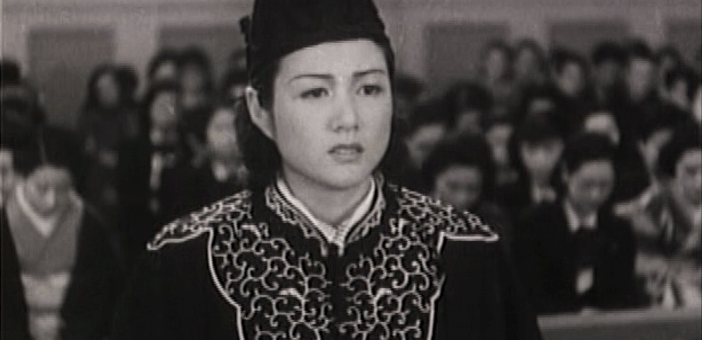
Nevertheless, the rather neat conclusion sees her reunited with Murakawa who had not only abandoned her but returned and asked for money, attempting to kidnap their baby when she objected to his attempt to install himself in her new life and thereafter landing her with a murder charge against which she is defended by the newly qualified Toki despite what appears to be a fairly massive conflict of interest. The triumph is both a victory of female friendship overcoming even the most unbridgeable of rifts and an awkward concession to the conservative status quo which demands a restoration of the traditional marriage insisting that Murakawa has now reformed in accepting his responsibilities while also reinforcing the class barriers against which the film had otherwise argued in the eventual union of the two servants one of whom had long been in love with Michiko. In any case despite its contradictions, New Woman Question and Answer provides a surprisingly progressive view of women’s rights and opportunities in the contemporary society affording them not only agency but the possibility at least of independence and personal romantic fulfilment of their own choosing. 


Fisherman’s Fire (漁火 / 어화, Ahn Cheol-young, 1939)

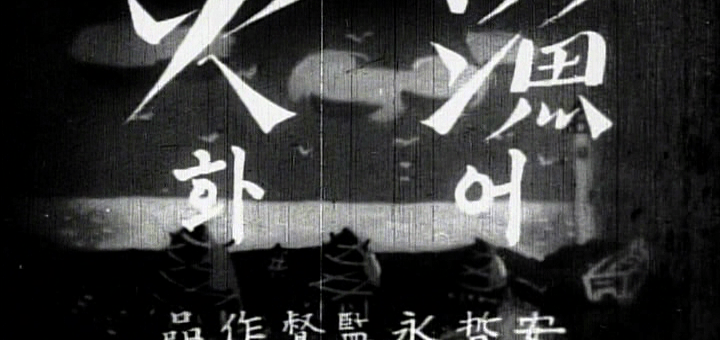
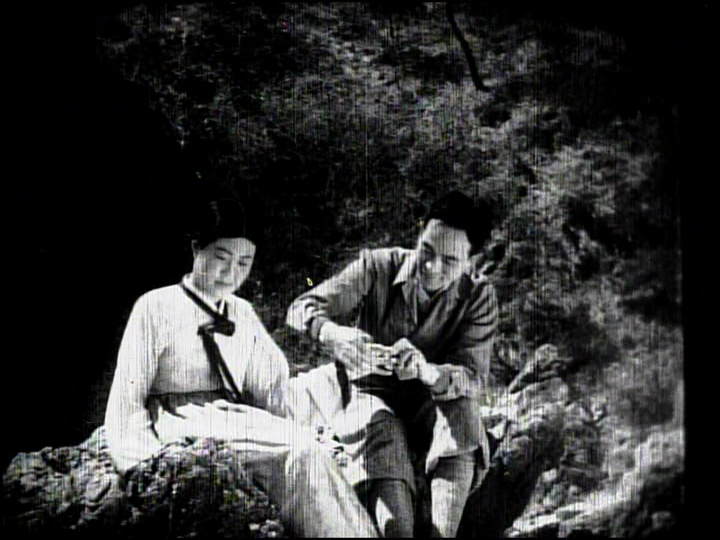
vlcsnap-2019-02-18-01h49m56s589Late into the colonial era, Korean Cinema became heavily invested in selling the “one nation” idea. Signs of “Koreanness” such as language, dress, and customs were actively discouraged if not directly suppressed while censorship regulations prevented any negative comment on the Japanese empire. Back in Japan, however, there was an appetite for an exoticised view of the colonial landscape which in part played into the idea of Korea as a “backward” land in need of Japanese sophistication. 1939’s Fisherman’s Fire (漁火 / 어화, Eohwa) was directed in Korea by Ahn Cheol-young as a collaborative project between the studio he had co-founded, Keuk-gang Film Company, and the well established Japanese studio Shochiku where it is was “supervised” by Yasujiro Shimazu who prepared the film for Japanese audiences.

Like many Japanese films of the 1930s, Fisherman’s Fire revolves round a young woman from the country who is mis-sold dreams of freedom and urban sophistication only to be misused and betrayed by unscrupulous men. In-soon (Park Rho-kyeong), a fisherman’s daughter, is in love with local boy Chun-seok (Park Hak) but her family is poor and her father has taken on a huge debt from the local lord, Mr. Jang. In-soon longs to follow her friend Ok-boon (Jeon Hyo-bong) to Seoul where she might be able to earn money to help repay the debt but her family aren’t keen for her to go and even though Ok-boon has apparently been able to make an honest life for herself other girls gossip about those who went to the city with big dreams but ended up pressed into sex work.

When her father is lost at sea in a storm, Mr. Jang pressures In-soon’s mother to give him In-soon as a concubine in exchange for the debt. Horrified, In-soon doesn’t know what to do but is unexpectedly saved by Jang’s son Cheol-soo (Na Woong) who gives her mother the money to cancel the arrangement. In-soon ends up going to Seoul, where she has arranged to meet Ok-boon, with Cheol-soo but when she gets there discovers that he has ulterior motives. He traps her in his apartment for 10 days while claiming he has been unable to contact Ok-boon, eventually taking advantage of her before she is able to (temporarily) escape.

In-soon’s sorry tale is one familiar from Japanese cinema of the 1930s – that of a young woman who has been betrayed by an inconsistent level of modernity from which she receives only the dangers and none of the benefits. Then again, her village home was not so innocent – she was after all about to be sold as a concubine to a lecherous old man, meaning that this isn’t simply tale of the pastoral innocence versus urban sophistication. As we discover, Ok-boon found herself in a similar situation to In-soon but was able to escape it and not only that, she has also become “financially independent” which is what she encourages In-soon to become as the only way of freeing herself from the clutches of cads like Cheol-soo who press their patriarchal privileges in order to take advantage of naive girls like In-soon who haven’t been made aware they have the power to refuse.

Unlike the heroine of Sweet Dream whose desires of leading a more fulfilling life eventually lead to nothing but a dead end, In-soon is in a sense allowed to leave her disappointments behind in the city and, as Ok-boon surprisingly advises her, forget about what happened with Cheol-soo and live her life. Traumatised and shamed by her experience, In-soon eventually ends up in sex work, attempting suicide when confronted by a leering Cheol-soo, but discovers that her friends and family have not changed their opinion of her and though she may be looking at it with new eyes, her village is still as beautiful as it has always been.

The village’s visual beauty is, in a sense, the point in that the film was quite obviously made to showcase the idyllic country landscapes of the colonial territories along with the charming local customs which is perhaps why the film is bookended with documentary-style scenes of the fishing community singing and dancing to folksongs as well as including minor details like a shrine visit. Indeed, some Japanese critics felt the film had “failed” in its aims precisely because of In-soon’s eventual journey to the city which loses the feeling of local flavour they regarded as its selling point. What the Japanese audience craved was an exoticised vision of ultra-Koreanness that was in fact entirely created in Japan – something many felt the film did not sufficiently offer which is why it did not prove popular with audiences or critics. Supervised and prepared in Japan for Japanese audiences by Shochiku’s Yasujiro Shimazu, edited by Kozaburo Yoshimura, featuring music by the Ofuna Orchestra (repurposing a traditional Korean tune), and utilising a narrative familiar from domestic films, Fisherman’s Fire is an attempt to sell a manufactured vision of Korea as charmingly unsophisticated and rooted within the romantic pastoral past.

Nevertheless, it has its surprising elements such as the startlingly progressive Ok-boon whose independent city life is praised rather than criticised even if In-soon eventually retreats back to her idyllic village home. Cheol-soo, the feckless landlord’s son, gets a comeuppance for his wicked ways in being fired from his job for unreliability and incompetence which stands in for a kind of karmic punishment for his cavalier misuse of In-soon and other women like her in his attempt to assert his feudal entitlement in the improper environment of the modern city. Unlike the conservative Sweet Dream, Fisherman’s Fire finds scope and possibility for the young women of a new society and is prepared to be forgiving of them even when they fail.


Fisherman’s Fire was screened as part of the Early Korean Cinema: Lost Films from the Japanese Colonial Period season currently running at BFI Southbank. It is also available as part of the Korean Film Archive’s The Past Unearthed: the Second Encounter Collection of Chosun Films in the 1930s box set. Not currently available to stream online.

Singing Lovebirds (鴛鴦歌合戦, Masahiro Makino, 1939)

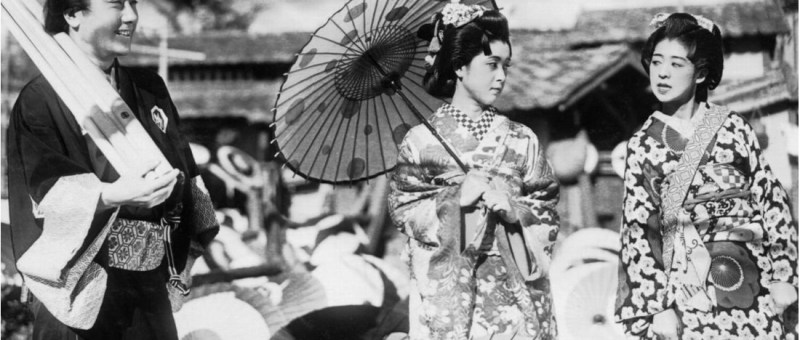
singing lovebirds still 5With things the way they were in the Japan of 1939, you might have expected cinema to have taken a universal turn to the dark side but surprisingly enough there was still room on the silver screen for silliness as the improbable marvel of Singing Lovebirds (鴛鴦歌合戦, Oshidori Utagassen) makes plain. Legend has it that musical master of the jidaigeki Masahiro Makino threw Lovebirds together in record time in order to fill a production gap after big time star Chiezo Kataoka was struck down by appendicitis in the middle of filming On the Road with Yaji and Kita. Kataoka is also Lovebird’s nominal male star though his appearance is understandably limited (his scenes were shot later and apparently in a matter of hours) leaving veteran actor Takashi Shimura to pick up the slack as an antiques obsessed disenfranchised former samurai who finds himself at the centre of a dastardly plot orchestrated by the higher ups to solve an ongoing romantic crisis among the youngsters.

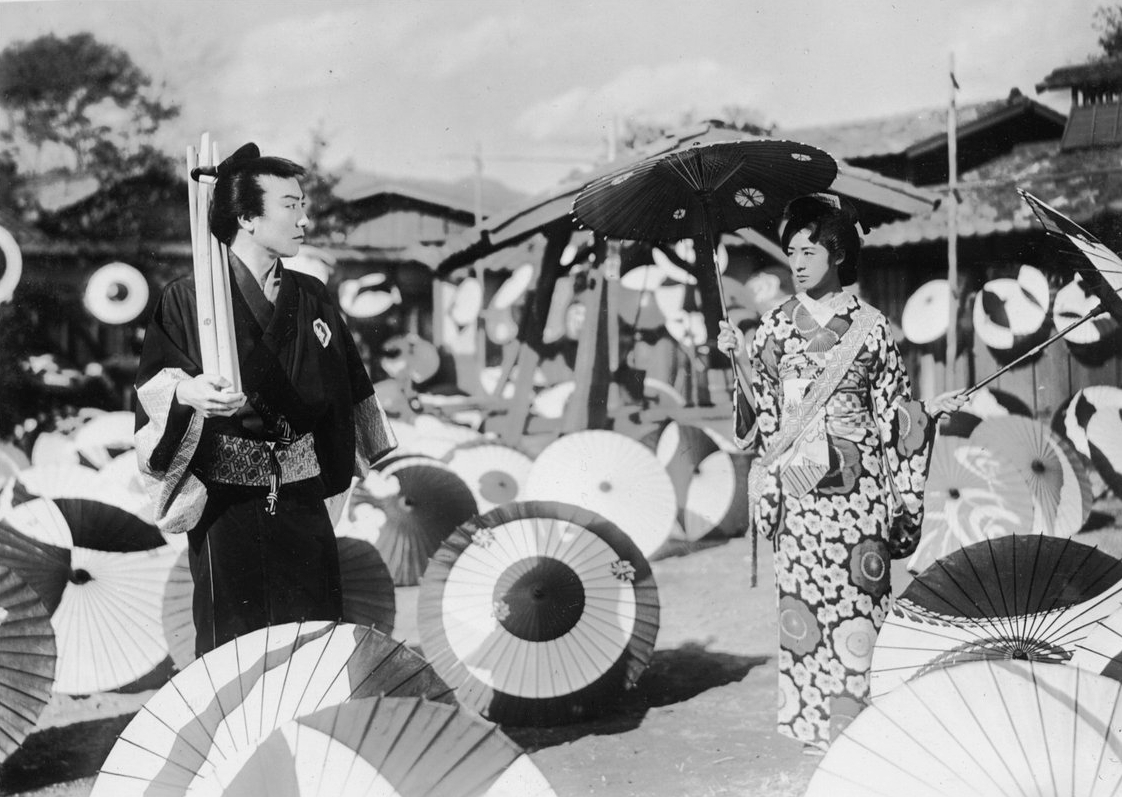
The crisis revolves around the handsome Reizo (Chiezo Kataoka) – a young ronin betrothed to a young lady from a well to do family, Fujio (Fujiko Fukamizu), whose father is keen to make the marriage official as quickly as possible. Reizo, however, has fallen for Oharu (Haruyo Ichikawa) – the daughter of ronin umbrella maker Shimura (Takashi Shimura). Meanwhile, Reizo has also become an object of affection for the daughter of a wealthy local merchant, Otomi (Tomiko Hattori), who is spoilt and entitled to the extent that Reizo’s resistance only enflames her ardour. If all that weren’t enough to be going on with, a randy local lord (Dick Mine) is also actively chasing most of the women in the area and after getting turned down by Otomi has his sights set on Oharu.

Peaceful times allow for small bursts of chaos and ongoing romantic silliness which is where we find our conflicted heroes, yet there is a persistent strain of anxiety in the precarious lives of the disenfranchised ronin who find themselves trapped in a cycle of wilful degradation which prevents them from taking on work unbefitting of a gentlemen and, consequently, permanently on the brink of starvation. Umbrella making, a frequent ronin-friendly occupation in the world of the jidaigeki, is one such way of making ends meet, but Shimura can only afford to feed his daughter barley much to her consternation. Rather than use his meagre resources for short term satisfaction he’s decided to “invest” them in various “antiques” which he believes both bolster his status and can be sold to provide a dowry for Oharu when she decides to marry.

Unfortunately, Shimura is mistaken – he’s not got as good an eye for antiques as he thought and is a well known mark for the local hawker. Everything he has is a fake and he’s wasted a small fortune on useless trinkets. Shimura’s antiques mania also leaves him open to other kinds of scams and manipulation when he gets himself into a small amount of debt to the randy lord and Fujio’s dad (Mitsuru Toyama) who have tricked him in order to try and get Oharu out of the Reizo picture and into the lord’s bedchamber. Unlike many Jidaigeki dads, however, Shimura is a nice guy and tells the higher ups where to get off because what kind of father sells his daughter for the price of a pretty tea bowl?

Shimura’s logic might not make much sense to the lords, or to many other residents of the jidiaigeki world, but is perfectly in keeping with the film’s surprisingly humanist morality in which all are made to realise that greed is bad, money is silly, and at the end of the day all that really matters is true love (even if you have to live in a hovel and survive on barley gruel for the rest of your life). Even the spoilt Otomi is finally forced to realise that you can’t force love and the best you can do is try to support other people’s happiness while you wait for yours to come along (which it is more likely to do once you start being nicer to everyone including your long suffering manservant).

Bright, cheerful, and filled with zany humour Singing Lovebirds is a refreshingly warmhearted piece of eminently hummable escapist fluff providing a much needed distraction from the austere world of 1939 in which its particular brand of anti-capitalist humanism would seem to be extremely out of place. Nevertheless, the corrupt and oppressive samurai order gets a much needed comeuppance, the little guy realises he doesn’t need to play their game anymore, and a young woman realises the only person she needed to feel good enough for was herself. A happy ending for all and an umbrella wielding dance routine to boot – who could ask for anything more?


Brief clip (extremely poor quality, no subtitles)

https://www.youtube.com/watch?v=GGQIzCN22tk

Okayo’s Preparedness (お加代の覚悟, Yasujiro Shimazu, 1939)

Okayo's Preparedness title cardYasujiro Shimazu had been the pioneer of the “shomingeki” and a fierce chronicler of the lives of ordinary lower middle class people. The growing presence of the militarist regime, however, demanded a slight shift of focus. 1939’s Okayo’s Preparedness (お加代の覚悟, Okayo no Kakugo) has its share of propaganda content, but it’s also mildly subversive. In the conventional narrative, a woman must get married and a man must find a purpose. Shimazu turns this upside-down – a man becomes a husband and a woman finds artistic fulfilment in the midst of heartbreak.

In the contemporary era, Osumi’s (Kuniko Miyake) husband has been drafted and is away fighting at the front leaving her alone at home where she makes ends meet running a traditional dance school while looking after their small daughter Mitsuko (Kazue Hayashi). Okayo (Kinuyo Tanaka) is the star pupil at school and also a live-in apprentice, functioning almost as a servant but regarded as a member of the family. The trouble begins when a Osumi gets a visit from her brother-in-law who has received a letter from her husband in which he requests some photographs of his wife and family going about their daily lives while he is unable to be with them. The amateur photographer he’s brought along is a young man of quality and the older brother of one of the school’s pupils. Okayo has developed a fondness for Shunsaku (Ken Uehara) during her time walking his little sister home and secretly hopes he returns her affections. Shy and nervous, she is nevertheless overjoyed when he takes her for tea while they wait for the photographs to be developed. Shunsaku, however, was just being kind. He actually has his eye on another pupil at the school (someone more of his social class) and Okayo is destined to experience her first real heartbreak.

Shimazu gets his propaganda obligations out of the way fairly quickly. We cut to a picture of a man in uniform proudly hanging on the wall whom we later realise to be Osumi’s absent husband. Though Osumi worries about him, his enlistment was regarded as a cause for celebration – Okayo felt obliged to have a rare cup of sake, and it’s clear Osumi is proud to be married to a man defending the nation. Nevertheless, it is also clear that he is experiencing suffering – Okayo and Osumi wonder if he too can enjoy the simple pleasures of warm sake and boiled tofu so far away from home, and Osumi also makes sure to send him a pair of of geta in her care package fearing that he may be missing the small but essential facets of his Japaneseness. Though this is only 1939 and the situation is not yet “serious” there is the betrayal of a mild anxiety in Osumi’s fears as well as in her husband’s letter which states the anxiety he feels after learning that a friend was told of trouble at home only after the fact. After all, it’s hard to put unpleasant news in a letter to someone you know to be already experiencing hardship. Hence the request for the photographs – real visual evidence that his wife and daughter are healthy and happy, rather than mere words which may be offered in the interests of comfort.

Meanwhile, Shimazu is secretly building a second argument behind the scenes. We expect the simple love story of Okayo and Shunsaku will proceed along the usual lines. He will come to appreciate her and they will marry despite the class difference and the difficulty of the times. That is not, however, what happens. Okayo’s attraction is apparently one-sided. Osumi’s brother-in-law warns her that Shunsaku is popular with the ladies, even if he also points out his rather stiff, respectable nature. Shunsaku’s mother has apparently had difficulty finding a suitable match for him which increases Okayo’s hopes, but the reason turns out to be that he has developed at attraction for another pupil at the school, as Okayo finds out listening at the door when Shunsaku’s mother comes to Osumi for an additional character reference. All at once Okayo’s world collapses. She remembers that she is a servant, forever separated from the “nice young ladies” who take classes at the school, and that her youthful romance has been little more than a distracting fantasy.

Earlier on, while taking tea with Shunsaku, Okayo had remarked on how important Osumi had told her her dancing training was as a means of achieving independence and self-sufficiency. The ability to dance well enough to teach (and acquire such well regarded pupils) is after all how Osumi has been able to support herself with a husband away in the army. Osumi’s brother-in-law also tells her something similar when he reminds her that it’s important for her to concentrate on her art rather than getting lost in a romantic daydream. Osumi, realising how hurt Okayo has become after overhearing her conversation with Shunsaku’s mother tries to comfort her with the same logic, convincing her that her infatuation in an entirely normal part of being young and that it will pass. Encouraging her to concentrate on her dancing so that she can turn it into a valid career, Osumi provides both a shoulder to cry on and a valid plan for the future, remaining both sympathetic and supportive in witnessing her pupil’s suffering.

Making a bold formal switch, Shimazu dramatises Okayo’s moment of self-actualisation as a dance sequence taking place in parallel to Shunsaku’s wedding. Sadly picking up a bow she slowly moves to the stage and begins to sing, eventually moving into dance before the scene dissolves and Okayo is in full costume, mid-performance playing the part of a brokenhearted woman watching her beloved marry another. Having danced through her pain and doubly experienced the suffering of her romantic disillusionment, Okayo collapses in exhaustion on the bare stage of the studio, gazing out at the windows and weeping once again as they remain empty yet perhaps open.


Four Seasons of Children (子どもの四季, Hiroshi Shimizu, 1939)

vlcsnap-2016-12-08-00h10m14s613Isn’t it sad that it’s always the kids that end up hurt when parents fight? Throughout Shimizu’s long career of child centric cinema, the one recurring motif is in the sheer pain of a child who suddenly finds the other kids won’t play with him anymore even though he doesn’t think he’s done anything wrong. Four Seasons of Children (子どもの四季, Kodomo no Shiki) is actually a kind of companion piece to Children in the Wind which also makes use of this motif, as they’re both based on works by the same author, Joji Tsubota, and feature the same cast playing characters with the same names. Four Seasons differs slightly in its form as it originally played as two films released at the same time with the piece split into four sections following the two central brothers across the course of a particularly traumatic year.

Beginning in spring, younger brother Sampei (Bakudan Kozo now known as Jun Yokoyama) is excitedly waiting for the arrival of an old man (Takeshi Sakamoto) who brings masks for the children and rides a fine horse. Unfortunately, Sampei takes a tumble and arrives last when only a noh style mask of a lady’s face remains which really doesn’t appeal to him (later he asks his older brother Zenta (Masao Hayama) to draw a moustache on it to make it look ”stronger”), so the old man offers to give him a ride on his horse to make up for it. Sampei and Zenta don’t think they have any grandparents, but Sampei thinks it would be nice if the old man were his grandpa for real.

After he does a typical Sampei thing and falls off a cow, Sampei’s mother (Mitsuko Yoshikawa) arrives and realises that, yes, mask man really is her estranged father who disowned her after she got married without his consent. Happy that perhaps her parents have finally forgiven her, Sampei’s mother is also a little bit worried as they’ve never explained to the children why they weren’t in contact with her parents and she’s afraid it might upset them. There’s also another problem. The boys’ father (Reikichi Kawamura) is currently very ill, and their dairy farm isn’t doing well either. The family have large debts secretly taken out with the father-in-law’s company behind his back, so all of this could quite easily backfire. More drama erupts when an ambitious underling, Rokai (Seiji Nishimura), realises there’s a possibility the old man will take his daughter’s family as his direct heirs rather than promote from within the company and starts on a series of fiendishly machiavellian plans to oust his rival.

The boys, however, know very little of this. They love their cows and life on the ranch, and the thing they’re most sad about is when they end up having to move in with grandpa for a while to avoid some of Rokai’s scheming. Having been very popular in their old town, the boys are slower to make friends and quickly run into a problem with the son of the man who’s causing their family so much bother. A typically melancholy episode sees little Sampei wandering off on his own to make friends with the carp in the local lake because there’s no one else for him to talk to. However, the boys later bond with their would be arch nemesis, Kintaro (Teruo Furuya), in defiance of the ongoing feud between their families, even going so far as to carry him on their back all the way home after he breaks his leg falling out of a tree when his father stupidly “repossesses” the backyard where the kids have been playing together safely.

Gradually, as time wears on, the allegiance of Kintaro and his mother starts shift away from Rokai and towards the boys and their family who have never been anything other than kind to them. In a nice piece of symmetry, it seems the two women were also close childhood friends who have been kept apart thanks to the ongoing pettiness instigated by the menfolk. The grandfather, having fully patched things up with his daughter, is doing his best to remain on the side of decency despite Rokai’s underhanded tactics but finds himself increasingly cornered by his finagling. The boys’ commitment to their friend and refusal to give in to Rokai’s attempts to use the children to perpetuate his feuding only serve to remind everyone how petty and self serving Rokai’s actions really are.

Rokai is several times described as “a real villain” by the disbelieving grandpa, constantly exasperated by the dishonourable conduct of someone he’d employed on his staff for several years. Yet aside from Rokai himself, it’s greed and pettiness that are the true villains of of the piece. The boys’ father gives them some very important advice for their future lives when he tells them not to strive to have more things than other people but to be generous in its place. Rokai, afraid and resentful, eventually gets his comeuppance, ending a long year of torment for the Ono family and restoring justice to an unjust world.

The boys themselves know little of the details of the feuds between their families, worrying about normal things like whether they’ll be able to go on to middle school and wondering how the cows are doing back at their old ranch. It’s these details at which Shimizu excels as usual, perfectly capturing the reality of childhood even whilst giving more space to adult concerns than he often did in many of his other, more purely child centred films. Once again making great use of location shooting, Shimizu captures the fast disappearing rural paradise the boys inhabit which is entirely divorced from the political tension of the day. Another warm and humorous tale of kids and the way they often become the accidental victims of a grown up dispute, Four Seasons of Children perfectly unifies all of Shimizu’s ongoing themes right up to its necessarily just, compassionate, ending.