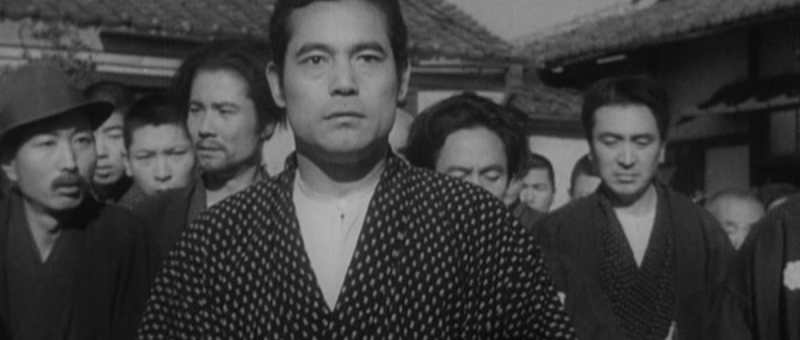
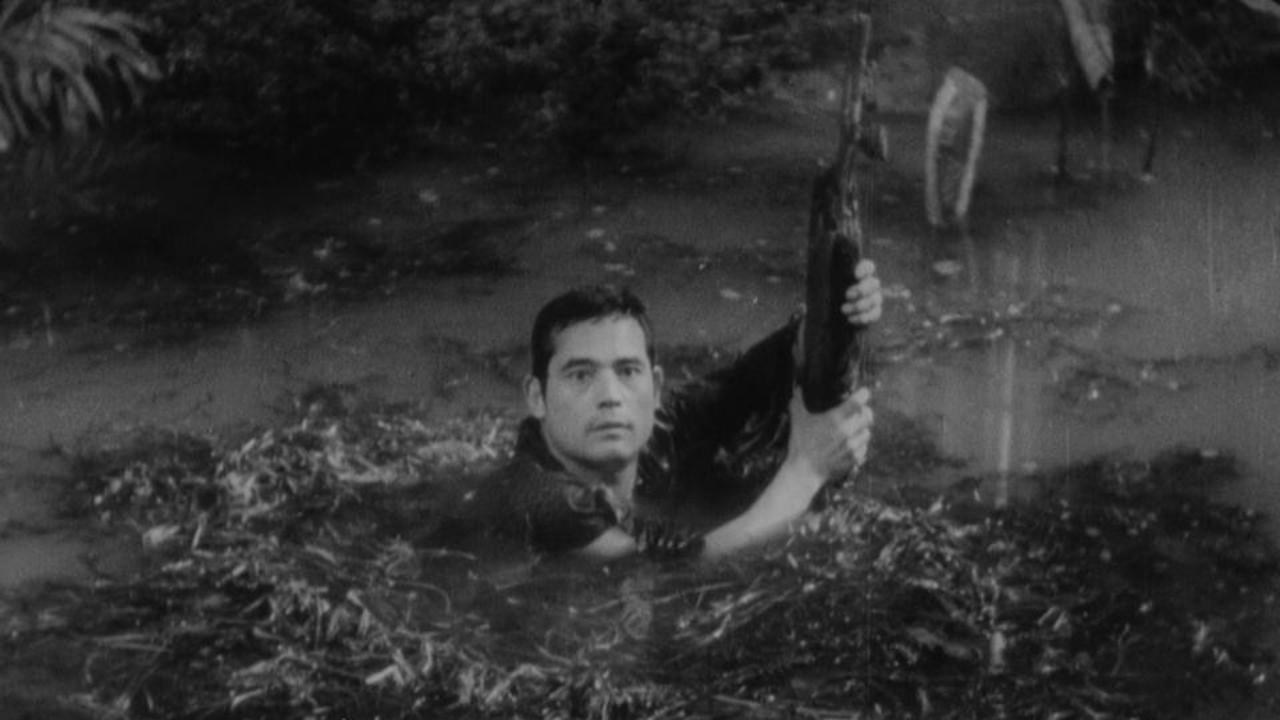
Sanshiro Sugata (姿三四郎, Akira Kurosawa, 1943)

It might seem curious in some ways to make a film about the importance of humanity in martial arts during a time of war, but Akira Kurosawa’s debut feature Sanshiro Sugata (姿三四郎, Sugata Sanshiro) does just this in depicting the hero’s coming of age as a gradual progress towards awakening as he learns to attain control over body and mind through the modern discipline of judo. Based on a novel by Tsuneo Tomita, the film is in many ways a typical martial arts drama in which a young hopeful seeks a master and must eventually face a rival, but lends a note of poetry to the tale which is in other ways perhaps out of keeping with its times. 

The times of the film, however, are late Meiji as demonstrated in the lively opening sequence which ventures into a town in transition where policemen in Western-style uniforms walk the streets alongside townspeople dressed largely in kimono as is the hero, Sanshiro Sugata (Susumu Fujita), who’s come looking for a famous jiujitsu master. Taken on as a pupil, he overhears the master, Momma (Yoshio Kosugi), disparaging a rival, Yano (Denjiro Okochi), who has come up with a new martial art he calls judo which is fast gaining both respect and popularity. Momma thinks it’s all just a branding exercise and Yano’s “judo” is just repackaged jiujitsu, irritated that he seems primed to take a prestigious position as a trainer to the police force which runs its own martial arts contest. Sanshiro goes with them when they attempt to ambush Yano and teach him a lesson only to be easily defeated and humiliatingly thrown in the local river. Sanshiro immediately switches his allegiance, discarding his geta to give Yano a ride home in his rickshaw.

As Yano repeatedly tries to teach Sanshiro, judo is more than a martial arts discipline and places humanity at the centre of everything. This is a difficult lesson for the hot-headed Sanshiro to learn, quickly falling foul of his new master after brawling in the red light district and dramatically throwing himself into the pond. Clinging to a pole, he refuses to get out until Yano forgives him, but in true master fashion Yano merely says that getting out of the pond or not is entirely up to him. It’s while he’s in there, and after a few words from a Buddhist monk, that he witnesses a lotus flower slowing unfolding and achieves a kind of enlightenment that allows him to realise he’s been childish and petulant, finally getting out of the water to submit himself to the rigorous discipline of the martial arts life. 

The flower motif recurs several times, not least being its subversion when antagonist Higaki (Ryunosuke Tsukigata) sprinkles the ash of his cigarette over it. Making his first appearance in dandyish Western dress, Higaki is described as a snake-like villain, his evilness emphasised by his non-Japanese attire in contrast to pretty much everyone else who continues to dress in kimono. Higaki vows that his fight with Sanshiro must be to the death, in part a fight between the nascent art of judo originating in the post-feudal society and the traditional art of jiujitsu, but echoing Sanshiro’s first fight with former master Momma which resulted in his death and plunged the hero into spiritual conflict. He then experiences something similar when realising that he has inadvertently fallen in love with Sayo (Yukiko Todoroki) the pure-hearted daughter of another rival, Murai (Takashi Shimura), who also desires to fight him but as it turns out only in his desire to face a worthy opponent. Sanshiro wants to back away, afraid that he may humiliate or even kill the father of the woman he loves but is brought back to himself by more words from the monk who tells him that he must be as innocent as she is and engage in the fight in a sportsmanlike fashion as a spiritual as well as physical contest. 

This is also to some degree true of his final confrontation with Higaki which too is a confrontation with the evils of the age if less comfortably also satisfying the censors by allowing Higaki to stand in for foreignness in general. Higaki is indeed often accompanied by the sound of the wind which echoes his modernity, the fight taking place in a large windswept field below roiling clouds as the two men grapple despite the advice of their intermediary to call it off before one of them really dies. Higaki does in a sense die a sort of death in that we’re told after the fight he reformed and also managed to find a similar kind of enlightenment to Sanshiro who is then bashful and romantic while heading off on another journey from which he assures Sayo he will soon return. It’s true enough that there doesn’t seem to be much that would appeal to the censors of 1943 save the implied defeat of Western powers and celebration of Japanese martial arts given that humanity is repeatedly emphasised as the core component of judo and that Sanshiro achieves an individual enlightenment rather than finding peace as a member of a team or community, but they did otherwise decide to cut a substantial amount of the film said to contain a love scene and references to alcoholism that they deemed improper. Nevertheless, there are shades of Kurosawa’s later greatness even here in his dramatic composition and expressionistic use of nature to detail one boy’s journey into manhood through the spiritual rather than physical gymnastics of the philosophy of judo. 
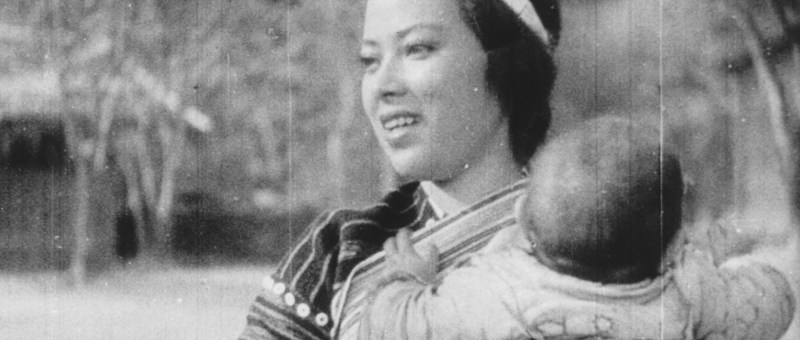

Sayon’s Bell (サヨンの鐘, Hiroshi Shimizu, 1943)

Like all directors of his era, Hiroshi Shimizu made a series of National Policy propaganda films though he was often able to circumvent their requirements by focussing on themes that interested him more directly such as teamwork or childhood. Sayon’s Bell (サヨンの鐘, Sayon no Kane) is however an unavoidably propagandist film filled with praise for the Japanese empire and to modern eyes incredibly problematic in its depictions of the indigenous peoples of Taiwan many of whom did “volunteer” to serve in the Japanese imperial army a notable example being that of Li Kuang-hui who was the last Japanese soldier to be discovered hiding in the Indonesian jungle in 1974 having been recruited from the Amis people.

The film opens with a lengthy series of title cards explaining that the film is dedicated to the Takasago Volunteers, “Takasago” being, aside from the title of a famous noh play, the name Japanese gave to the indigenous people of Taiwan believing them to have been “civilised” by Japanese rule. Thus in the opening sequences, we see the role of the Japanese military personnel as essentially paternal. They are policemen, doctors, teachers, instructors, and directors of construction who are dedicated to raising the aboriginal people to level of Japanese citizens through forced assimilation. 

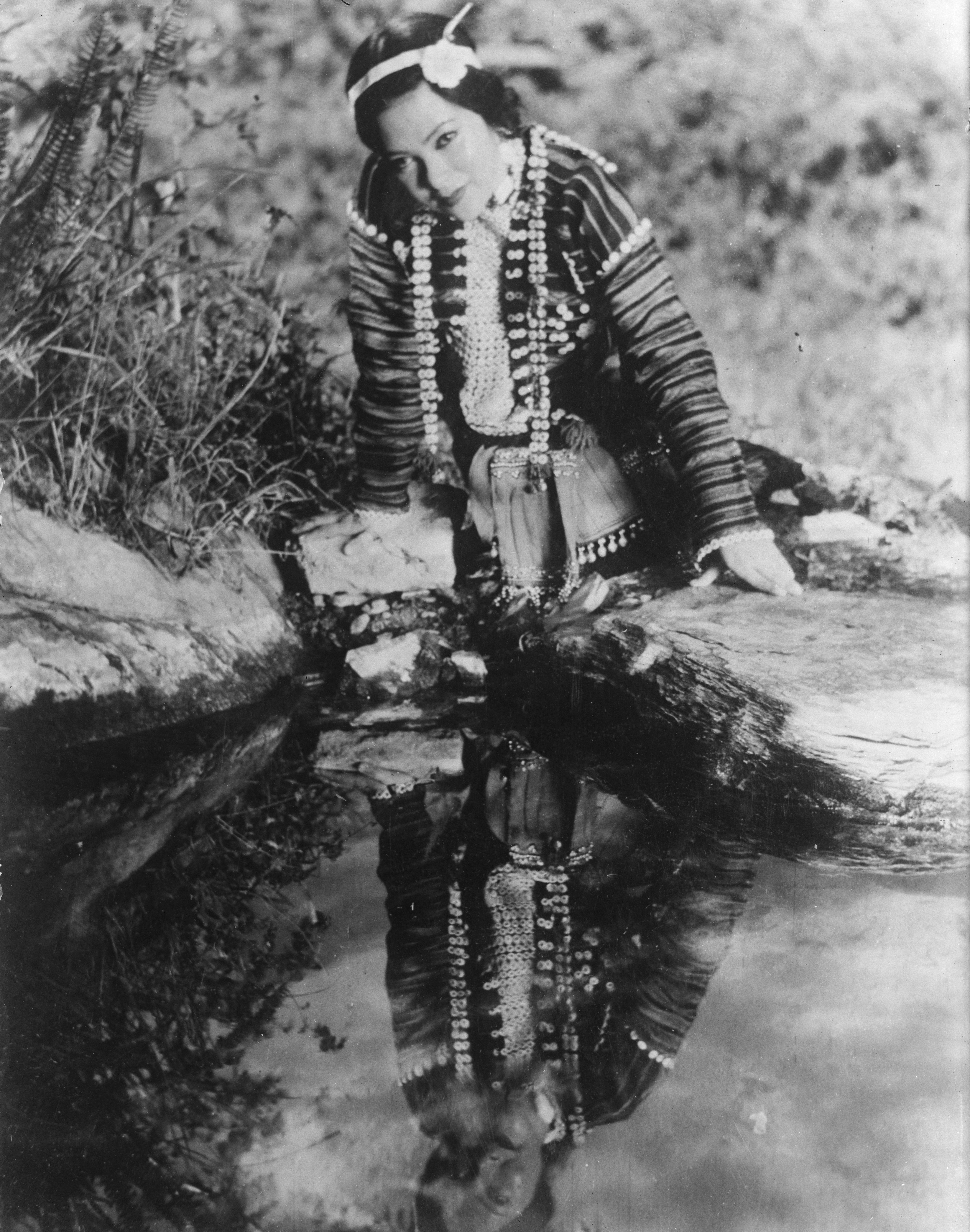
Inspired by a real life incident that also inspired a popular song of an indigenous woman who drowned in a river while carrying the belongings of a Japanese policeman, the film uses the titular Sayon as an arbiter of Japaneseness enhanced by the casting of Li Koran, later known as Shirley Yamaguchi/Yamaguchi Yoshiko, who was actually Japanese but presented as Chinese in the propaganda cinema of the time having been born in Machuria and fluent in Mandarin. Somewhat awkwardly given that Sayon is supposed to be an indigenous woman herself, she is the one schooling the local children in how to be Japanese reminding them that they should “use Japanese properly” rather than their indigenous language and praising one young boy for abandoning his indigenous name and adopting that of “Taro” instead. Japanese rule in Taiwan was not as oppressive as it was in the other parts of the empire and they did have some local support thanks to their investments in infrastructure and modernisation. Nevertheless, they did attempt to enforce the use of the Japanese language and the taking of Japanese names though it should also be noted that the KMT government did exactly the same thing only with Mandarin when it gained control of the island. 

That aside the indigenous people were often treated poorly in comparison to the rest of the of the population and we can see that the framing of them is often racist and derogatory such as when an abandoned baby is taken to the police and they remark that the indigenous community have too many children and they all look alike. The eligible men from the village, including Sayon’s love interest Saburo (Hatsu Shimazaki), have been sent to Japan for a kind of militarist re-education and are eagerly awaiting their opportunity to serve the emperor in the army. Though this may seem surprising, it apparently reflects a real fervour among indigenous men who were convinced to enlist by the money on offer and a campaign of rumours that suggested men who did not do so were unmanly and therefore unattractive to the local women. When the first round of volunteers is selected, a great amount of time is given to consoling the men who were not chosen many of whom protest and plead to volunteer their services. 

In an effort to inject some drama the film includes a love triangle between Sayon, Saburo, and Mona (Kenzo Nakagawa) who is said to be moody out of jealousy and unrequited love for Sayon but later reveals he was only jealous of Saburo in respect of playing second fiddle to him as a worthy man of the village again eager to serve the Japanese emperor. Led by Li Koran, there are several renditions of a patriotic war song singing the praises of the Taiwanese army that read that like a call to arms, though the audience for this film is certainly domestic and it seems unlikely that it would be screened in these mountain villages in Taiwan.

The first part of the film is basically ethnography featuring picturesque scenes of the local scenery and footage of the indigenous people living the “simple, peaceful life” patronisingly described in the opening titles while there is some exoticisation of the aboriginal culture in the elaborate costumes and scenes of indigenous rituals. Perhaps the most shocking aspect is that Sayon is encouraged to break a traditional taboo by entering a sacred lake where women are forbidden to go lest they anger the god Uttofu. With her new cultural re-education, Sayon thinks Uttofu is a myth and goes to the lake to help Saburo assess it because the Japanese are planning to drain it to create a rice paddy. For this she is expected to drown herself in the water to placate Uttofu and is urged to do so by the tribal elders with the Japanese basically agreeing with them deciding that they should catch an animal to sacrifice and if that doesn’t work, while it’s “unfortunate”, Sayon should indeed hurl herself into the lake if the for the good of the empire rather than Uttofu. 

It is quite odd to think that the Japanese military personnel would go along with human sacrifice rather than clamp down on a practice they would otherwise term backward, though in that light it’s impossible not to see her later death by drowning as a rejection of the “modernity” the colonial authorities represent and a re-assertion of indigenous culture. The bell referenced in the title refers to one given to the village to commemorate the incident bearing an inscription of Sayon’s name. When the KMT gained control of Taiwan, they erased the inscription on the bell and removed it as a symbol of Japanese rule though it was later restored after the end of martial law and the monument re-erected beside the bridge which was also named “Sayon’s Bridge” in a evocation of the complicated relationships between the three nations. The film is however rather uncomplicated in its themes which to modern eyes prove extremely unpalatable despite the often beautiful cinematography capturing the idyllic Taiwanese countryside.


Sayon’s Bell screens at the Museum of the Moving Image May 11 as part of Hiroshi Shimizu Part I: The Shochiku Years.

Straits of Chosun (朝鮮海峽 / 조선해협, Park Gi-chae, 1943)

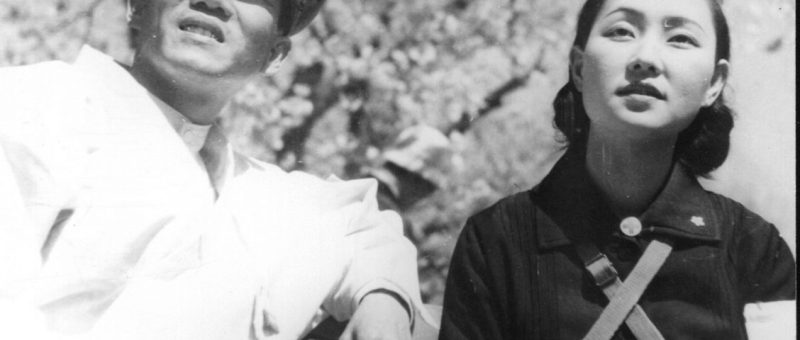
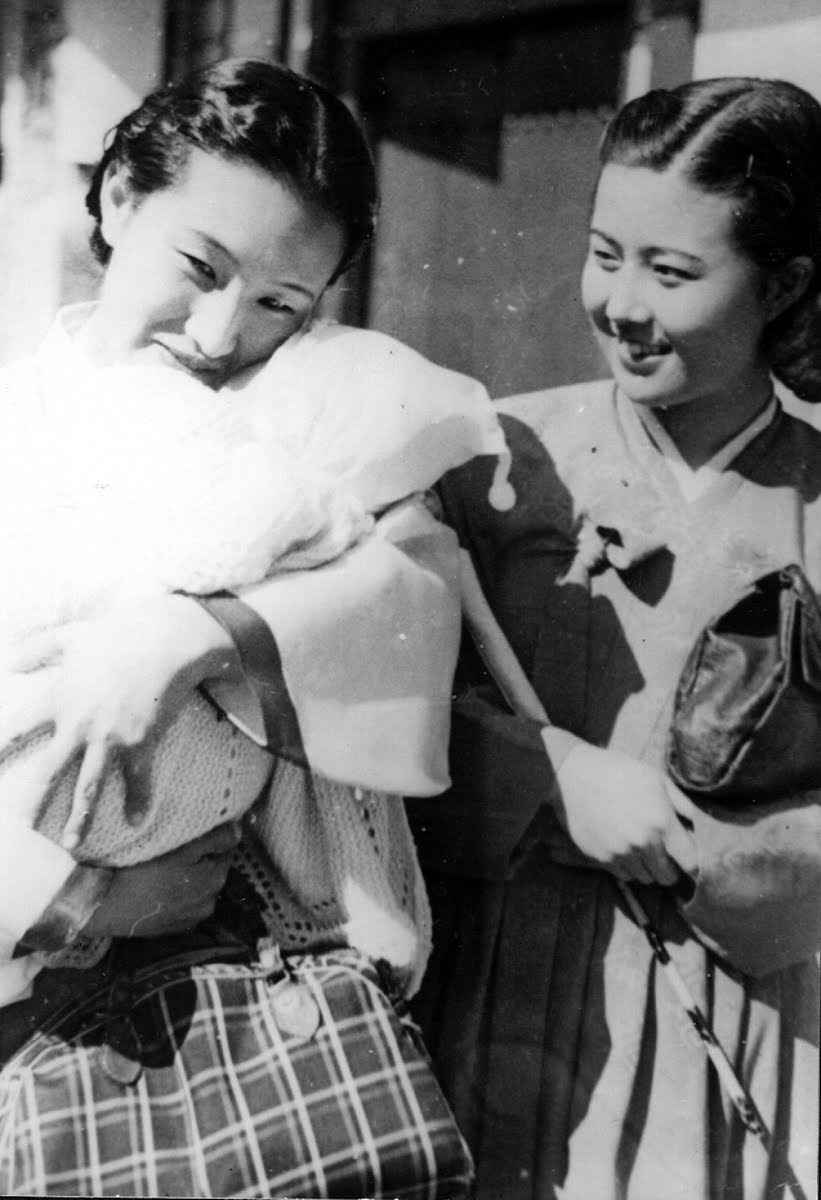
Straits of Chosun still 1Following a period of increasing censorship, the Colonial Government banned Korean language cinema altogether in 1942. Nevertheless, cinema was still a major propaganda tool even if much of the audience was not quite ready to receive its messages offered only in a language they may already have felt hostile towards. 1943’s Straits of Chosun (朝鮮海峽 / 조선해협, Joseonhaehyeob) was shot entirely in Japanese and is fully committed to the “one nation” ideals which had marked Korean Cinema in the colonial period but it also faces a somewhat interesting battle in paradoxically arguing for a kind of liberal modernity in which “love” overcomes centuries of tradition and becomes the driving force enabling the continuing forward propulsion of the Japanese empire by means of war.

The film opens with its hero, Seki (Nam Seung-min), making a melancholy offering at the altar of his older brother recently fallen in war. For reasons of which we are not yet aware, Seki is thrown out of his familial home and seems to be at odds with his father who insists he has shamed them. It turns out that Seki’s crime is not of the kind one might expect, but only of having selfishly married a woman of his own choosing without his family’s consent. Kinshuku (Moon Ye-bong), his wife, is now pregnant and the couple seemingly have no money. In order to impress his father, Seki enlists in the army leaving his pregnant wife behind, alone, and with no real idea where he is or whether he’s ever coming back.

Whichever way you look at it, Seki’s abrupt enlistment is an extremely selfish and irresponsible action seeing as Kinshuku appears to have no family and will have to find a way support herself financially even when the baby’s born – though Seki refers to her as his “wife”, their exact legal connection is not quite clear and it does not seem she is getting any of his military pay (or, perhaps he just chooses not to send it to her). Nevertheless, his primary goal in enlistment seems to be proving himself a man worthy of respect by honouring his father’s wishes in the hope that he will eventually relent and give his blessing to their marriage. Strangely, while he does this he cuts off contact with Kinshuku while she adopts the role of the patient wife offering spiritual support from afar and serving the nation by working in a factory (later resolving to raise her son to become a fine soldier like his dad).

In fact, Straits of Chosun is extremely reminiscent of the earlier Japanese film So Goes My Love save for complicating matters with the addition of a baby and a war. Released in 1938, So Goes My Love is a mildly anti-militarist melodrama in which a spoilt son of a wealthy household has defied his family to marry a young woman of humble means and been disowned in the process. As in Straits of Chosun, it is the anxious sister (Kim Sin-jae) who eventually becomes the bridge bringing the traditionally minded parents and earnest daughter-in-law together. In both cases, the sister is the voice of reason speaking for the rights of youth to determine its own destiny – a desire which would become more prominent in the post-war world but was already growing even in the ‘30s.

The Colonial Government had realised that the major stumbling block to increasing recruitment was the reluctance of noble families to risk the end of their family line in sending their childless sons off to war. What they needed to break was centuries of patriarchal traditions which placed familial authority solely in the hands of the father when they needed that authority to belong to the nation. Thus Seki’s compromise, like that of the son in So Goes My Love, requires some give on the part of the parental generation who must cede some of their authority to their son, who will then transfer it not to his own family or his own will but to the forces of empire. Seki goes to war to bring glory to his father’s name, but his father must then accept the choice that he has made to defy his authority by marrying a woman of his own choosing without seeking permission. Of course, having a guaranteed heir in the form of a new, legitimised grandson is an ideal bridge to just such a compromise in neatly unifying Seki’s twin obligations.

Compromised as it is, Straits of Chosun does its best to push the one nation idea in insisting that each and every Korean must do their bit in order for Japan to secure peace in Asia. Thus Kinshuku works herself into nervous collapse in service of her nation just as Seki is injured on the battlefield, neatly symbolising their continuing spiritual connection. Kinshuku’s selfless love is, in a sense, the force which serves to underpin the expansion of imperialism, as uncomfortable as that idea eventually seems to be. Nevertheless, despite its propaganda aims and naive defence of imperialist goals, Straits of Chosun accidentally makes an argument for liberal modernity in which men and women are equal partners in their shared endeavour, the class system has collapsed, and the individual has the right to determine their own destiny free of familial obligation.


Straits of Chosun was screened at the Korean Cultural Centre in conjunction with the Early Korean Cinema: Lost Films from the Japanese Colonial Period season currently running at the BFI Southbank. It is also available on DVD as part of the Korean Film Archive’s The Past Unearthed box set (currently OOP). Not available to stream online.

The Living Magoroku 生きてゐる孫六 (Keisuke Kinoshita, 1943)

Film_Eclipse_LivingMagoroku_original

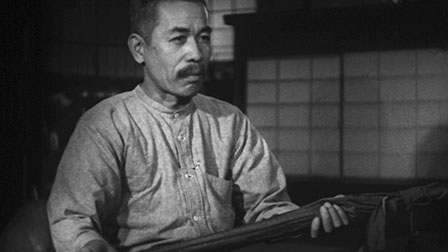
The Living Magoroku, the second film in Criterion’s Kinoshita and World War II box set, is the director’s second feature also made 1943 shortly after Port of Flowers. Like his previous film, it was also made under the severe censorship requirements in place during the war but this time around the propaganda is far more pronounced though still fairly mild given the time period. That said, The Living Magoroku is still full of the wit and warmth characteristic of Kinoshita’s filmmaking even if it is forced to up its jingoistic content.

Incongruously beginning with a samurai battle taking place in 1573, the action quickly shifts to the same battleground where a group of raw recruits are being put through their paces before being sent off to die nobly for the Emperor in distant lands. Berating them for their lack of respect, the instructor reminds them that each recruit is descended from the very men who died on fields like these whose graves they should still be tending. This small rural town still goes by the old ways. There may be no real samurais anymore but each and every decision has to go through the local matriarch, Mrs Onagi. Actually, Mrs Onagi has a son who should rightfully be in charge but he’s such a neurotic drip who thinks he’s dying of lung disease that no one pays much attention to him. The Onagis own the entire battlefield area, some 75 acres, given to their ancestor after the battle and legend has it there’s a curse that should anyone try to cultivate it all the men of the Onagi line will die young. The field has remained untouched for 300 years, but with a war on shouldn’t the Onagis rethink their reluctance to turn this wasteland into a productive agricultural area, even if the ridiculous idea of an ancient curse was somehow real?

Like Port of Flowers, The Living Magoroku is actually fairly light on militarism despite featuring a group of soldiers and prefers to focus on the slightly backward looking nature of this small village. Even under the conservative nature of wartime Japan, it’s odd that a couple of young people would feel the need to ask the old lady at the manor for permission to marry given that she really has very little to do with them – and even odder that she would refuse to give it and that her refusal would actually bother them. The cause of the problem being that the girl’s brother is the chief instigator of the motion to get the field back in use, and that he went directly to the young master rather than the mother who’s been de facto in charge of these things. Local politics – some things never change! The young people want to use the land, curse-shmursh, but the old people would rather not. Just suppose the curse is real – poor Yoshihiro, technically head of the Onagi family, is so worried about his prospective fate (and the way his mother, grandmother and sister seem to worry about it for him) that he’s almost paralysed with fear and resentment!

Thrown into the mix is another problem concerning the sword referenced in the title – a sword of unparalleled fineness forged by Maguroku the First of which very few survive. The instructor at the army base claims to have one which infuriates the local blacksmith and sword expert as he simply refuses to believe it. By coincidence, the Onagis also have one of these swords and are paid a visit by an army doctor seeking to buy it as, it turns out, his family once owned one but he sold it unknowing its rarity to pay for his medical tuition. Of course, the Onagis don’t want to sell a precious family heirloom, though they admire the doctor’s zeal to repay his debt to his late father by acquiring another one. The instructor’s sword turns out to be a fake anyway prompting the blacksmith to make him a new one – after all, needs must and a sword is just a sword, the name on it won’t matter much on battlefield. Similarly a field is just a field, isn’t it selfish not to use it when the country needs grain even if it might cost your life seeing as every other young man is looking down the barrel of a gun at the present time? The message is clear, traditions should be honoured, yes, but when it comes down to it, the present is more important than the past and superstition gives way to clearheaded pragmatism. Every resource must be pooled for the common good and personal sacrifices must be made to ensure a better future for everyone.

The Living Magoroku feels a little more uneven than Port of Flowers, and actually ends quite abruptly with a strange newsreel style wrap-up of events. Luckily, it’s still broadly a comedy in strictest sense (it ends in a series of marriages, everyone not already married ends up wed), poor old Yoshihiro gets a new lease on life and becomes a productive member of society, the village gets a bumper harvest and all is right in the world save the strange final message about the instructor who is apparently carrying his new sword bravely in the heat of battle. Like Port of Flowers, it wants to reinforce the traditional values of community spirit and giving up your own individual pleasures and freedoms for everybody’s good. The past informs the future, how could it not, but when push comes to shove you have to let it go. Like everything in life there has to be a balance, respect your history – yes, but not so much that it costs you your future.

Port of Flowers 花咲く港 (Keisuke Kinoshita, 1943)

film_syosai_img_01_04-thumb-730x480-1642Keisuke Kinoshita is far better known in his native Japan than outside it despite his long and prolific career in filmmaking. Equally adept at comedy and tragedy and tackling all genres from musicals to crime dramas, Kinoshita began his career in the relatively turbulent war years where every last detail was at the censor’s mercy.  Port of Flowers is his very first foray into the director’s chair and began a long association with the comedy genre. Though, yes, it has it’s obligatory moments of bare faced propaganda, the film is refreshingly light on heavy handed political statements and prefers to focus on a humorous take on small town life.

Life in a sleepy little port town is about to get significantly more exciting after the local inn has received two rare telegrams purporting to be from the same man but sent from different locations one day apart. The man in question claims to be the son of a businessman who lived in the town some years previously but has since died and the bereaved child has a hankering to see the little shipping village that the father apparently loved so much. After picking up their new guest at the station the mini delegation of inn keepers and officials are shocked to discover another disgruntled customer also claiming to be the sender of the letter. Sufficed to say neither of the two in question is what he claims to be but has come to town with the intention of fleecing some gullible country bumpkins out of grandma’s silver. The two decide to work together but eventually the goodnatured enthusiasm of the villagers (and the rising war effort) begin to make them rethink their nefarious ways!

Given the time period and strict censorship, it would be ridiculous not to expect some degree of pro-war sentiment in the film but Kinoshita has managed to more or less leave the conflict as merely a background setting. Life in this little fishing village seems fairly tranquil and the war has barely encroached on its idyllic settings. There are youngish men about, the people aren’t rich but they aren’t afraid and the only mention of turbulence seems to be a young woman who’s recently returned from Manchuria not entirely at her own volition. There are some fairly excited mentions of various victories but these are fairly minor events, almost like something happening far away to other people to whom you feel connected but not quite involved with. The most important thing is the building of the ship – not only is it a source of pride for the villagers, a way of fulfilling the dream of a respected visitor they all remember fondly but it will also be for their country. Everyone must contribute as they can because it’s for the entire community of citizens, not just the village but for everyone in the country and it’s important. Their sacrifice and hard work will matter because it will be for the greater good.

Here endeth the lesson, for the most part. What of our two bumbling crooks? It’s never really explained how they came to know so much about this poor, unsuspecting community and simultaneously hatched on the same scheme at the same time but they must have been pretty well out of options to think these poor villagers were going to be worth this much effort. They came to commit a fraud but ended up having to actually do the impossible and make their improbable scheme work solely because the villagers’ kindness was too much to bear. The addendum to the lesson being that pure hearts can shame the devil and innocence becomes infectious after a while (in the best possible way).

Very much of its time and with an air of disposability, Port of Flowers is an enjoyable, surprisingly warm film but not without its faults. Eschewing heavy handed propaganda for a subtle enforcement of traditional, communal values it reflects Kinoshita’s subsequent humanistic concerns and even manages to do so without giving in to the censor’s red pen. A nice take on an old story, Kinoshita once again proves that nothing matters so much as people and goodness will always win through in the end.