
 Korean War films have a very particular tone and flavour often absent from those from elsewhere. As sad and despairing as they can be across the world, war films are generally the realm of macho heroism, men bravely holding back tears and charging forth with unrestrained rage in a quest to avenge their fallen comrades. Korean War films, however, like the majority of the nation’s cinematic output, are tinged with melodrama. These men wail, talk about their mothers, and worry for the future while forging intense bonds of homosocial brotherhood and becoming a battlefield family. The debut feature from Kim Ki-duk, Five Marines (五人의 海兵 / 5인의 해병, O in-ui haebyeong) is a prime example of this approach, eschewing combat scenes for behind the lines ensemble drama as ordinary men attempt to come to terms with the extraordinary situation of war.
Stock footage of the battlefield eventually gives way to a small squadron of marines digging trenches and at constant risk of ambush by Chinese forces. The main drama revolves around lieutenant Deok-su (Shin Young-kyun) who is the son of the company commander but there has long been bad feeling between the two men as Deok-su has always felt that his father favoured his brother, Deok-han (Choe Bong), and never really loved him. Meanwhile we’re introduced to another four marines – intellectual Jeong-guk (Choi Moo-ryong), Ju-han (Flyboy / Gwak Gyu-seok) – a father of five from Seoul, farm boy Yeong-seon (Park Nou-sik), and mother’s boy with anger issues Hun-gu (Hwang Hae). Following the death of two comrades, the squad of five is sent on a daring missing into enemy territory to blow up an arms depot through which they aim to make the sacrifice their friends have made in some way meaningful.
Made just eight years after the end of the Korean War and apparently commissioned by the Marine Corps in the wake of the May 16 military coup which initiated the dictatorship of Park Chung-hee, Five Marines takes a very different approach to that seen in other contemporary war films such as Lee Man-hee’s The Marines Who Never Returned. Though in no way particularly jingoistic or warmongering, it would be difficult to describe Five Marines as an “anti-war” movie, not least because it avoids depicting scenes of combat until the final mission in which, as expected, some or all of the heroes will fall valiantly defending their fellow Koreans as well as their friends.
Jeong-guk, the college educated enlisted man, originally considers himself to be taking part in the pantomime of war, going along with the ridiculous sham of soldiering, but when a fellow soldier – a young boy who spends his time rewriting a poetic confession of love he doesn’t quite have the nerve to send to the girl he left behind, falls in front of him, Jeong-guk suddenly wants to join the fight for real. The idea of militaristic patriotism is then subtly reinforced if not quite sold with patriotic fervour. The necessity of the sacrifice is never questioned and the idea of doing one’s duty remains paramount even if it is also clear that the war has taken these men out of their familial environments leaving their women at home alone and, perhaps, defenceless.
Kim explores the peacetime lives of each of the men through flashback with the consequence that we get to know and care for them as people rather than as combatants. We rejoice with Jeong-guk when he hears he’s going to be a father, share Ju-han’s amused frustration when his wife includes all their bills in his mail, and worry with Hun-gu when his usual letters have not arrived. During their down time, the men discuss women but with more tenderness than expected – save for Yeong-seon’s rather lewd (and apparently fabricated) story of his wedding night for which he is rightly taken to task by his stern company Sergeant. Rather than focussing on the negatives of military service, Kim emphases the warmth and friendship among the men who forge deeper and stronger connections precisely because of the ever present threat of death.
When the final mission rolls around, Kim allows the action to take centre stage as the five man squad plots and executes a daring raid which does not quite go to plan and eventually erupts into a more conventional fire fight. Marrying the demands for macho battle scenes with the emotional quality of melodrama, Kim allows the men to sort out their emotional difficulties, shedding both blood and tears in equal measure. More emotional drama than action packed celebration of the glory of war, Five Marines may not quite be what the Marine Corps had in mind but perhaps serves their purpose anyway in reinforcing the positive ideas of camaraderie and patriotism whilst telling the stories of ordinary men and extraordinary heroism.
Available on DVD as part of the Korean Film Archive’s Kim Ki-duk box set. Also available to stream online for free via the Korean Film Archive’s YouTube Channel.
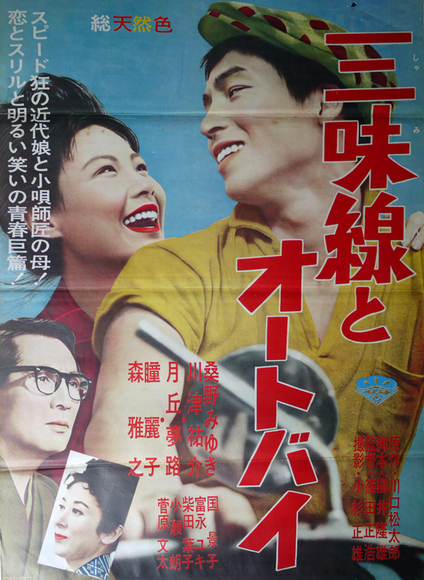 Masahiro Shinoda’s first film for Shochiku,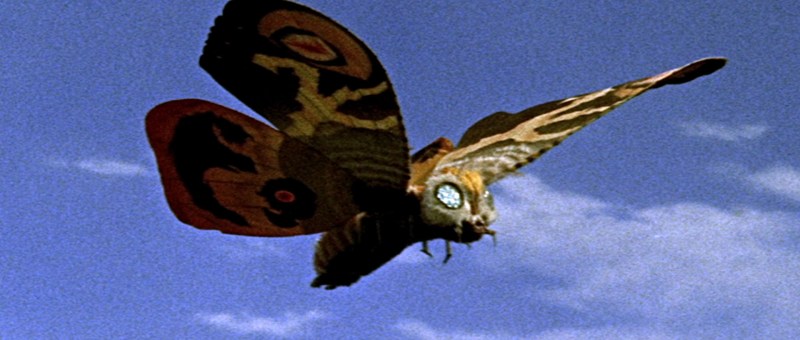
 Japan’s kaiju movies have an interesting relationship with their monstrous protagonists. Godzilla, while causing mass devastation and terror, can hardly be blamed for its actions. Humans polluted its world with all powerful nuclear weapons, woke it up, and then responded harshly to its attempts to complain. Godzilla is only ever Godzilla, acting naturally without malevolence, merely trying to live alongside destructive forces. No creature in the Toho canon embodies this theme better than Godzilla’s sometime foe, Mothra. Released in 1961, Mothra does not abandon the genre’s anti-nuclear stance, but steps away from it slightly to examine another great 20th century taboo – colonialism and the exploitation both of nature and of native peoples. Weighty themes aside, Mothra is also among the most family friendly of the Toho tokusatsu movies in its broadly comic approach starring well known comedian Frankie Sakai.
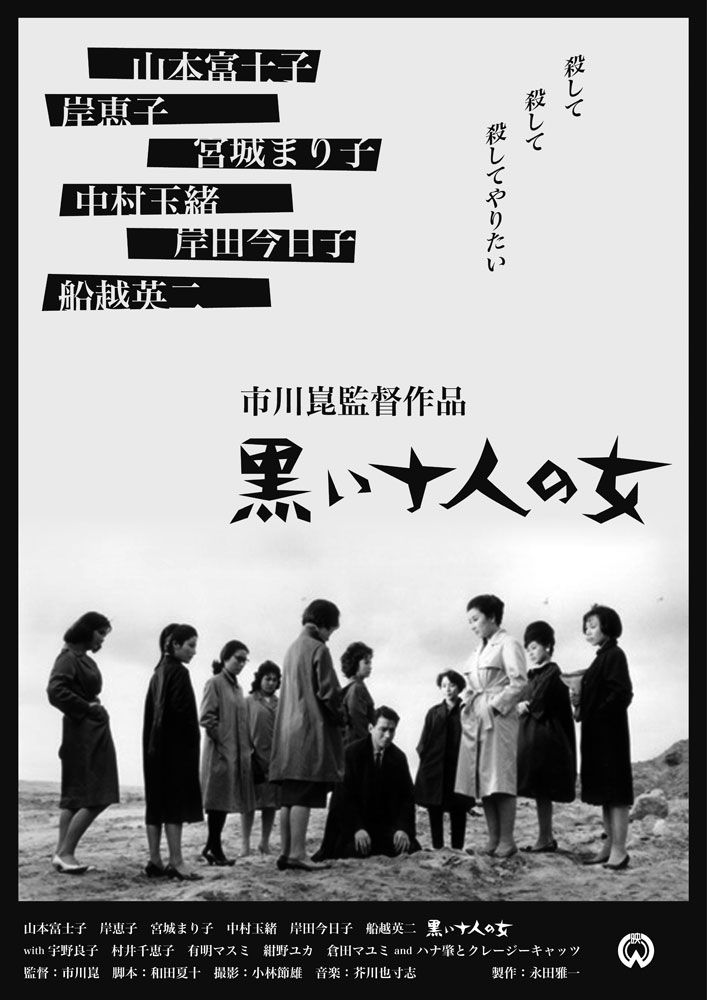 Kon Ichikawa, wry commenter of his times, turns his ironic eyes to the inherent sexism of the 1960s with a farcical tale of a philandering husband suddenly confronted with the betrayed disappointment of his many mistresses who’ve come together with one aim in mind – his death! Scripted by Natto Wada (Ichikawa’s wife and frequent screenwriter until her retirement in 1965), Ten Dark Women (黒い十人の女, Kuroi Junin no Onna) is an absurd noir-tinged comedy about 10 women who love one man so much that they all want him dead, or at any rate just not alive with one of the others.
 Windows on Worlds