Bridge of Japan (日本橋, Kon Ichikawa, 1956)

Punishment Room, released in 1956 as Daiei’s attempt to get in on the Sun Tribe phenomenon, had provoked a moral panic that brought the whole short-lived movement to a close. In considering his next film, Ichikawa consulted with Daiei executive Matsutaro Kawaguchi, who is also the father of Punishment Room’s star Hiroshi Kawaguchi, and was offered the chance to direct one of two relatively safe and subdued literary adaptations, either Izumi Kyoka’s Nihonbashi, or Kafu Nagai’s Okamezasa. Ichikawa chose Nihonbashi (日本橋), though his wife and screenwriter Natto Wada feared adapting it maybe beyond her capabilities.

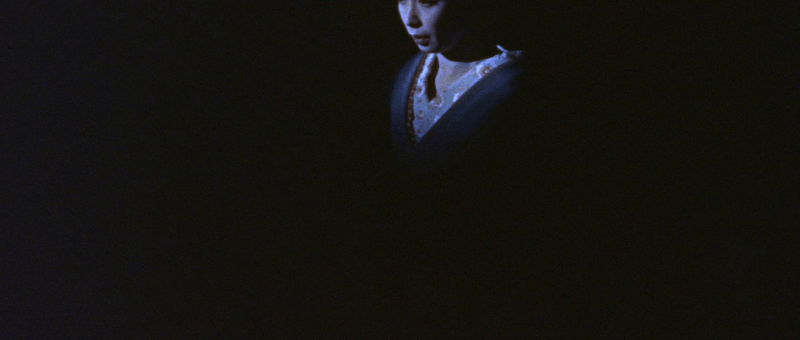
The film is generally known under the The Bridge of Japan in English-speaking territories. This is either an attempt to suggest a wider thematic importance that extends across the nation, or an overly literal translation of a place name. In any case, the significance of Nihonbashi is that, during the time the film is set, it was known as an area where there were many high-class geisha houses. On the other hand, Izumi was well known for incorporating supernatural themes in his work, which  is why the film opens like a ghost story with the curtain rising on a dark and gloomy alleyway through which a geisha walks until she finally dissolves leaving only a creepy song and the sound of her geta rattling along on the cobbles. 

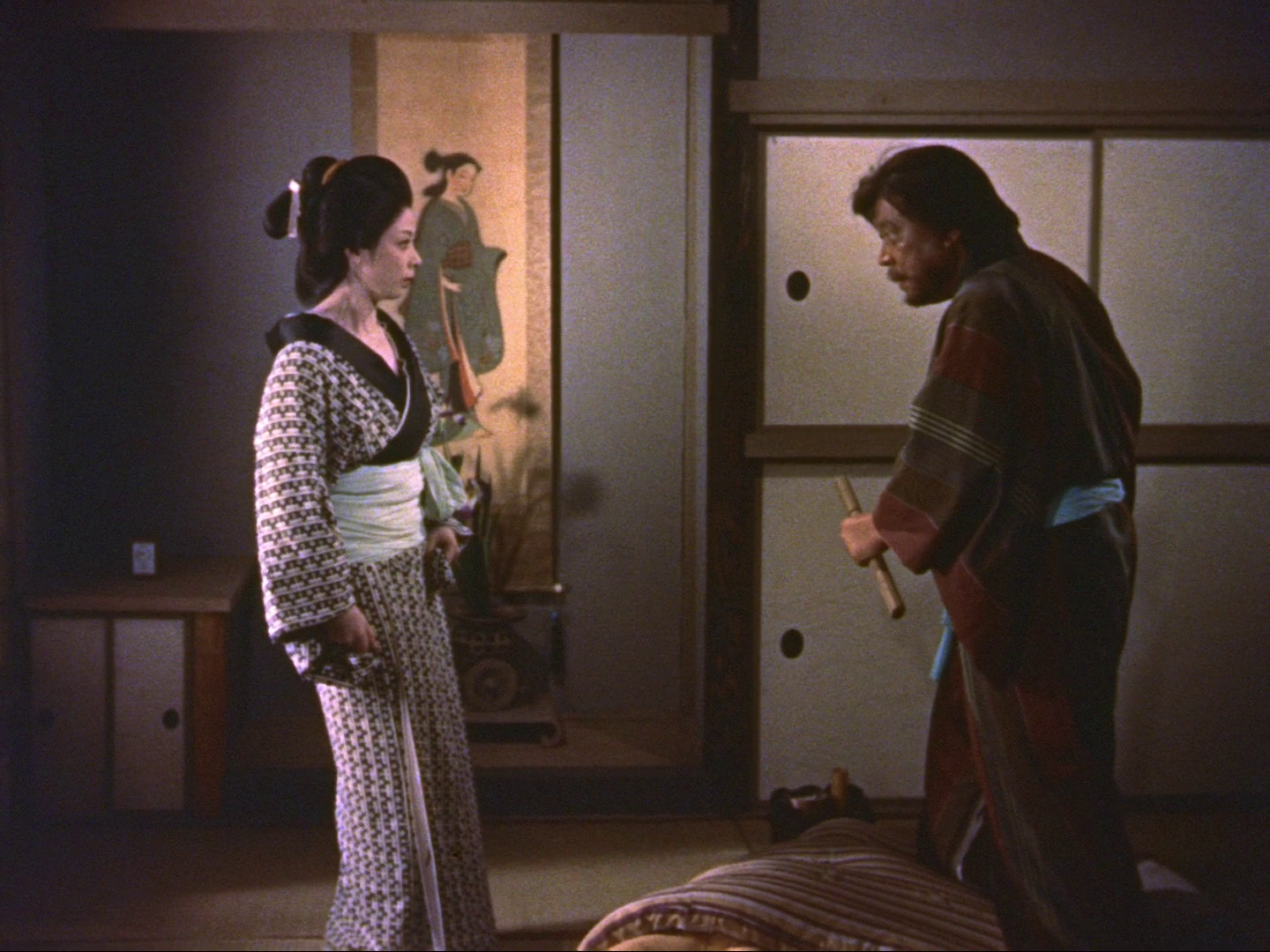
The messages seems to be that this is a place that consumes women. The ghost is said to be that of Owaka who, according to rumour, cheated on her husband who left her after which she died of tuberculosis. Ambitious geisha Okoh (Chikage Awashima) has just moved into Owaka’s former giesha house, apparently unperturbed by its grim history or the the possibility that it is effectively cursed. Geisha come to a miserable end if they act selfishly, according to one of Okoh’s clients who will essentially prove correct further sealing Okoh’s unhappy fate. As is common in these tales she has an entirely one-sided rivalry with local favourite Kiyoha (Fujiko Yamamoto) who her is total opposite in terms of personality. Kiyoha is kind, gentle, and dislikes her life as a geisha, not because she disapproves of it, but because of the moral compromises it requires her to make and the happiness that it denies her.

She has taking a liking to a regular customer, university professor Shin, but when he asks her to marry him, she has no choice but to refuse. Then again, Shin’s proposal is seemingly driven by his incestuous desire for his older sister, who, perhaps having realised this, has disappeared from his life apparently in shame in having become the mistress of a married man to provide for his education. Shin then bears out a sense of hypocrisy in the relationship between men and geisha in that he insists he has never seen has as one but only as his sister who was of course another woman sexually exploited for material gain. As Kiyoha is unable to marry him because she must also financially support her mother and an illegitimate daughter, as well as being indebted to her primary patron, they will not meet again as a geisha and a client.

Okoh, meanwhile, has a tendency to pick up things Kiyoha as dropped as a way of getting back her meaning she is now determined to become Shin’s lover, though he is not interested in her. After she helps in him out with a predicament with a local policeman in which she claims to be his wife, she really considerers herself to be so, though again one-sidedly. She then faces the same thing with a clingy client, Daikichi, she nicknames “Red Bear,” who has convinced himself, one-sidedly, that she is his wife despite also having a legal wife and child.

Red Bear is presented somewhat grotesquely and really takes on the position of a monster within the story. He was once a wealthy seafood wholesaler from Hokkaido who set up shop in Tokyo before an economic downturn which has also impacted the geisha world. This, along with his foolish infatuation with Okoh has ruined him financially and may also have contributed to the later death of his wife which leads him to abandon his infant son ironically dropping him off at Kiyoha’s knowing she will care for him though she rejected Red Bear on the grounds of his ugliness. Driven into a kind of madness, he now subsists on grubs and maggots that live on his distinctive but poorly made bearskin coat.

Okoh is also driven into madness when Shin decides to become a wandering pilgrim and search for his sister in order to ease the tension between Okoh, Red Bear, and Kiyoha. For her, Shin may represent a way out of this geisha world as a respectable man’s wife, something which is otherwise unobtainable to her. While in some senses, a geisha could claim greater independence as a single woman through running her own house rather than being dependent on a patron, she may also be denied the possibility of a settled domestic life or romantic fulfilment. Even if Kiyoha cannot escape her life as a geisha, she does at least have her daughter and comes to dote on Red Bear’s son, though without knowing who his parents were. 

Her parting with Shin (Ryûji Shinagawa), who does not belong in this world and has undergone a religious conversion in deciding to become a monk permanently having given up on looking for his sister and symbolically accepting Okoh as his wife, is then bittersweet but not as much of a tragedy as the fate of Okoh. The geisha house appears to have been purified, released from its cursed legacy under the ownership of Kiyoha even if geisha gossiping about the constant flow of people in this ever changing area. The alleyway which was once dark and gloomy, is now brightly lit and has lost its sense of ominousness, if otherwise seeming rather ordinary.

This was Ichikawa’s first colour film, though in order to recreate Izumi’s world he decided on a broadly grey colour palate for the props and sets, recreating all of the Meiji-era setting only to burn it down for real during the fiery climax. At that time, filming in colour also required additional lighting which meant that it was stiflingly hot on set. They eventually had to purchase industrial size air coolers of the kind that were only used in cafes, pushing up the production budget which was already high considering the painstaking attention to detail in the historical sets which included laying actual tracks to recreate the Meiji-era street car. Nevertheless, it all pays off in the exquisite visuals that bring that bring this world to life in all of its defeated hopes and melancholy. 


The Crowded Train (満員電車, Kon Ichikawa, 1957)

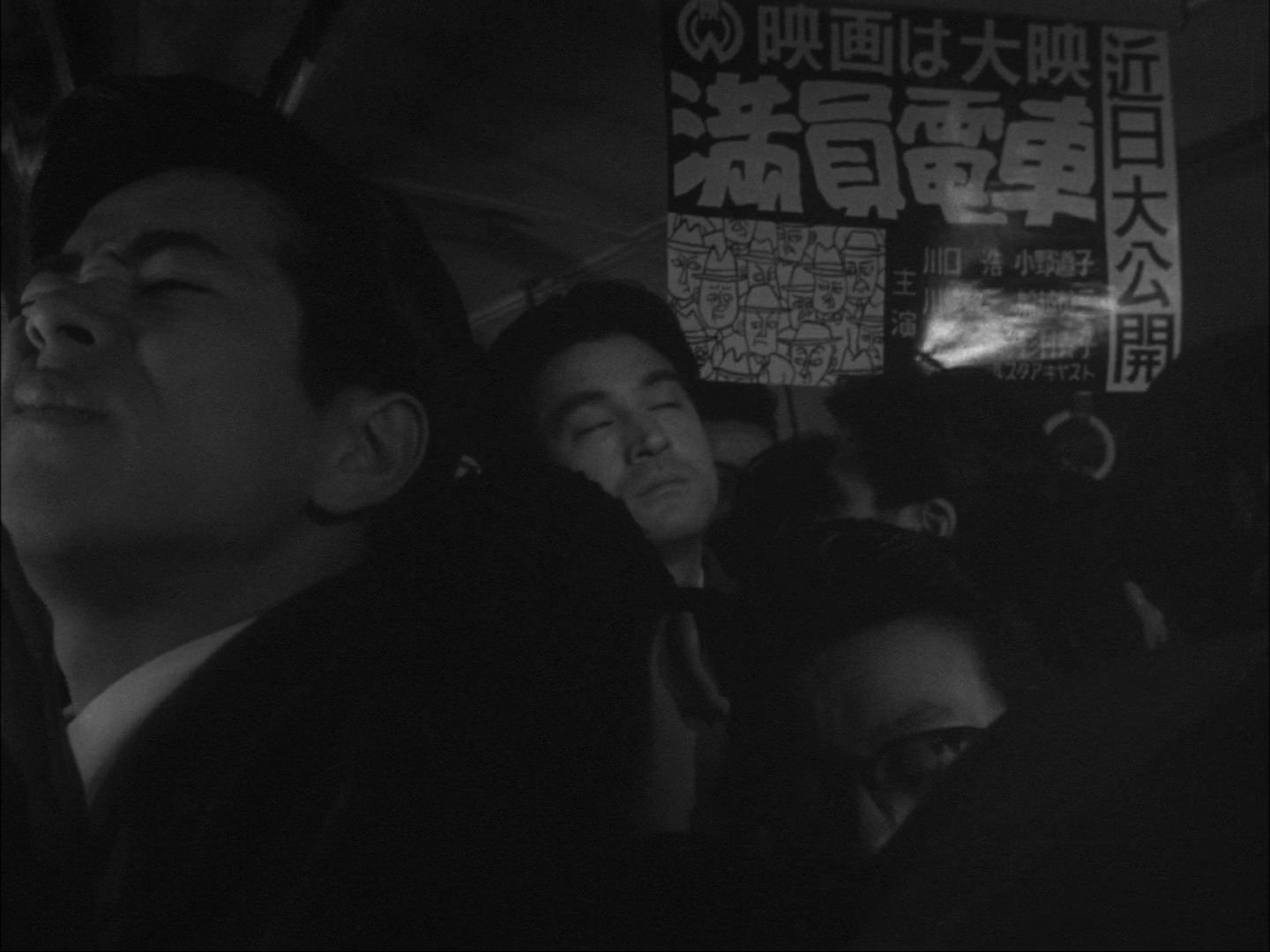
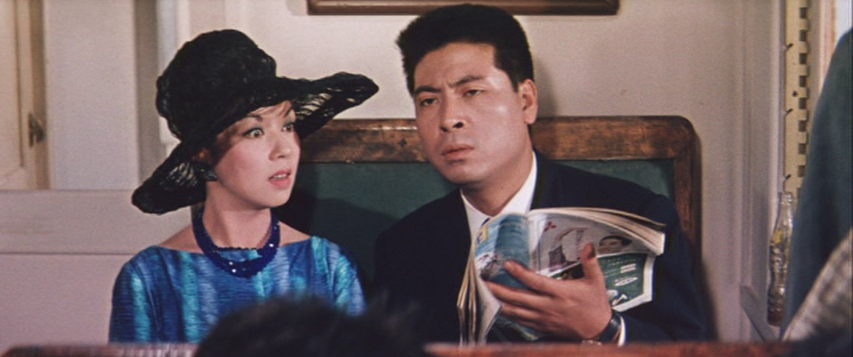
The Japan of 1957 moves like clockwork in Kon Ichikawa’s absurdist satire, The Crowded Train (満員電車, Manin densha). You can’t expect a seat to be there just because you want to sit down, according to go-getter Tamio, you have to fight for your place on the crowded train that is the post-war economy. His horologist father raised him to prize things like order, precision, and self-reliance, yet the irony is that in a nation like this, if everyone else’s clocks are wrong and only yours are correct, you may be better off resetting them.

Nevertheless, Tamio (Hiroshi Kawaguchi) comes to think of himself as part of the machine and does his best to slot himself into the rhythms of contemporary urban life. People move around in the same way as the bottles manufactured at the brewery where Tamio gets a job after graduating from a top university. But he soon learns fitting into the system requires a degree of compromise. On his first day at the office, he’s told off by his new boss for being overly efficient. He finished all his work before 10:30, but his daily quota is fixed and his productivity only makes things difficult for others. The head of brewery anticipates that increasing automation will allow them to increase efficiency through shedding personnel, only the unions and cultural practice won’t let them. Tamio is one of only three people was recruited for his skills. The other seven joining with him are nepotism hires that will likely drain resources due to their lack of ability, but will be promoted anyway because of their connections. 

In any case, he might have hoped for a better job after graduating from such a good university. A rational man like his father, Tamio meticulously works out how much he can expect to earn over a lifetime subtracting things likes taxes, insurance, and the costs of raising a family. It turns out, the salaryman life is rather disappointing and there’s relatively little reward at the end of it. His constant toothaches and mounting health problems are manifestations of his anxiety and buried desperation. He lives in a company dorm with no furniture surrounded by long corridors of identical rooms. Everyone leaves at the same time every morning to take their place on the train. His colleague Sarai (Eiji Funakoshi) tries to make friends with him, but also explains how most of the other men in the building have been ruined in one way or another by the salaryman life. One has returned to the dorm after his wife left him. Another has a heart condition, but has run through his sick leave and has no choice but to return to work. Tamio only got his position because the previous occupant of his room jumped from the window. 

Sarai says that he held off on making friends with Tamio because he was afraid of him. Graduates overthink things, he says, and are ill suited to the regimented life of a salaryman. The film opens with another kind of conveyor belt visualising the expansion of the educational sector beginning with a handful of graduates in the Meiji era to the present day in which there are so many the ceremony has to take place outdoors in the rain. Tamio loses his job after falling into a coma for month without giving prior notice and is told by a friend he asks for help that they just don’t need graduates from top universities. He’s eventually only able to get a job as a school caretaker by leaving his degree off resume, but is then abruptly fired when they find out. Despite the system apparently overproducing graduates it has no need for, all the teachers want their kids to university and are open to Tamio’s plan to set up school to teach people how to get in.

Meanwhile, Tamio’s father has since entered a mental institution and is apparently very happy there. Everyone else is mad except for me, he claims, but also appreciates the sense of order and precision he couldn’t find in the outside world. The doctors find it impossible tell patients apart from visitors suggesting lack of division between sanity and madness, while Tamio’s father had originally accused his mother of insanity simply for being cheerful. Cheerfulness or insanity seem to be the only ways out of this impossible situation as Tamio desperately tries to hold the roof on his shack during a storm while his mother is just happy to be able to live with her son and hopeful that her husband will get “better” so they can all live together again. “There is always another school year ahead of you,” the head teacher of the primary school tells his new charges somewhat omniously, suggesting that they too are destined to spend their lives fighting for a seat on a packed-out train with no clear destination.


The Woman Who Touched Legs (足にさわった女, Yasuzo Masumura, 1960)

Busho Sawada’s serialised novel had been adapted several times before with the first released shortly after its publication in 1926, but this “modernised” version directed by Yasuzo Masumura, The Woman Who Touched Legs (足にさわった女, Ashi ni Sawatta Onna), is tailor-made for the post-war era as the titular woman heads off in search of the old Japan only to learn that it no longer exists and what little of it remains is being sold off for golf courses and ever expanding American airbases whose noisy aircraft fly constantly overhead.

To that extent, Saya (Machiko Kyo) is an embodiment of aimless post-war youth. Her father was accused of being a spy and took his own life while her mother worked herself to death when she was just a child. Though she travels with a rather dim young man who refers to her as his older sister, they are not actually related by blood and seem to have belonged to the same community of street criminals in Osaka along with their “big sister” Haruko (Haruko Sugimura) who has since moved back to Atsugi which is Saya’s “hometown”. Since her parents’ deaths, she’s been obsessed with the idea of revenge and pickpocketing money to save for a giant memorial service to show the relatives who chased her family out of town how well she’s done for herself. But when she arrives, she can’t even find the place she’s looking for. A policeman flips through a series of ancient, handwritten ledgers looking for evidence of people with her surname and suggests they’ve all left town. Even the last one left is the wife of an adopted son who plans to move to Tokyo after their house is purchased by developers who want to build a golf course.

The golf course may be a symbol of Japan’s increasing prosperity, but the airbases seem to hint more at a sense of corruption and oppression. Saya’s “hometown” is a mythical concept that belongs to an idealised vision of a pastoral Japan before the war that she unconsciously wants to return to. Her mother spoke of a small settlement of perhaps 30 houses, a village society with a river running through it. The village has now, however, been swallowed by the airbase and, in fact, erased so that no one even quite remembers it. Saya is left feeling that she no longer has a hometown, and ironically asks policeman Kita to arrest her so she can go back to prison, which is, perhaps, where her heart truly lies. At least, it’s much quieter than here without any noisy aircraft flying overhead.

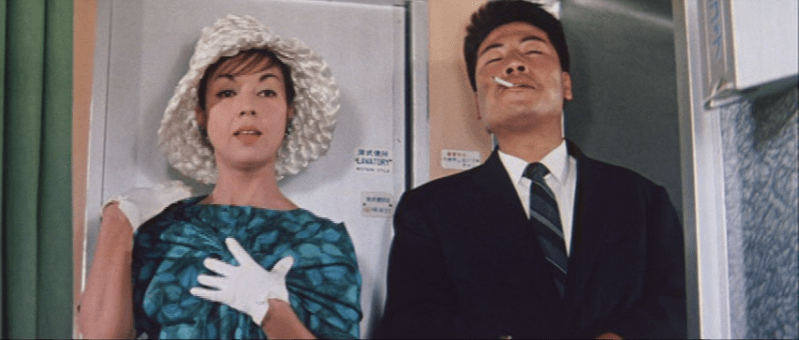
Nevertheless, Kita (Hajime Hana) is a fairly bumbling policeman and the film opens with what turns out to be part of a book set in a lawless Japan where people gamble, party, and openly sell guns on an ordinary train. Kita is currently on holiday, which he’s been forced to take even though he doesn’t really want to. He’s technically powerless for the moment, but continually complains that he’s not allowed to arrest Saya unless he catches her in the act of pickpocketing. It’s clear that the pair have feelings for each other it’s inconvenient to admit, and all this talk of “arrest” maybe more a kind of metaphor in which Saya secretly wants to be caught by Kita with the snapping of the handcuffs akin to the putting of a ring on a finger. The pair effectively lead each other on a merry dance with Saya ironically eventually chasing the policeman rather than the other way around.

The film does open rather salaciously with a closeup of a woman’s legs in fishnet tights followed by a kickline, and Machiko Kyo does indeed play up her sexy image to play the beautiful pickpocket who uses her body as a tool to mesmerise much to Haruko’s disapproval. Besides Kita, she’s followed by a rather louche writer (Eiji Funakoshi) who declares that he doesn’t need models, though evidently captivated by her, while declaring himself too successful and overworked. He doesn’t want more money, he just wants some free time and no one seems to want to let him have any, though he doesn’t exactly get a lot of writing done on this wild goose chase looking for Saya’s missing hometown. Absurd as it is, this unlikely rom-com between a beautiful pickpocket and bumbling policeman does at least end in a moment both of constraint and liberation as Saya finds herself content with her famous legs cuffed and Kita content to wear a different hat as they ride off on a decidedly unusual honeymoon.


Being Two Isn’t Easy (私は二歳, Kon Ichikawa, 1962)

With the Olympics still two years away, the Japanese economy had begun to improve by 1962 and the salaryman dream was on the horizon for all. But for young couples trying to make it in the post-war society things were perhaps far from easy and having more to want coupled with the anxieties of a newly consumerist society only left them with additional burdens. A surprisingly moving evocation of the cycle of life, Kon Ichikawa’s Being Two Isn’t Easy (私は二歳, Watashi wa Nisai) is as much about the trials and tribulations of its toddler hero’s parents as they try to navigate their new roles in a world which now seems fraught with potential dangers. 

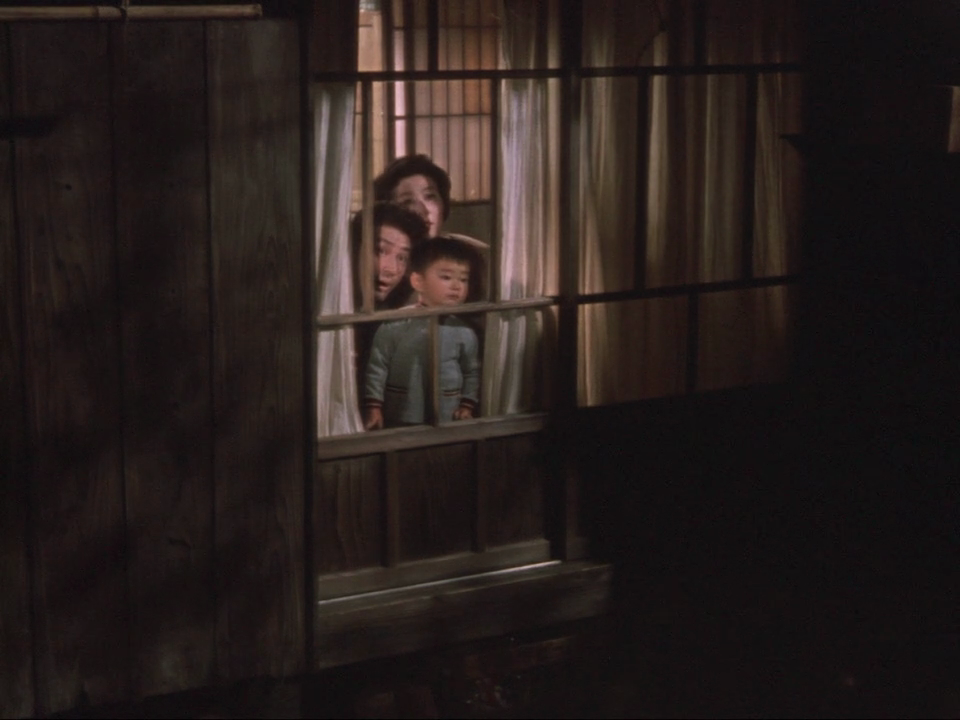
This difference in perspective is brought home in the opening sequence in which soon-to-be two Taro (Hiro Suzuki) recalls his own birth in a slightly creepy voiceover, lamenting his mother cooing over him excited that he is smiling for her though he is not yet able to focus and has no idea the vague shadow above him is his mother or even what a mother is. His smiling is simply involuntary muscle contraction as he learns how to manipulate his body. Nevertheless, little Taro is a definite handful taxing his poor mother Chiyo (Fujiko Yamamoto) with frequent attempts to escape, managing to get out of the apartment and start climbing the stairs the instant she’s turned her back. “Always finding fault, that’s why grown-ups are unhappy” Taro complains, irritated that even though he’s quite proud of himself for figuring out not only how to undo the screws on his playpen but the string his parents had tied around it for extra protection, he’s not received any praise or congratulation and it feels like they’re annoyed with him. 

The landlord alerted by the commotion somewhat ironically remarks that “Japanese houses are best for Japanese babies” (being at least usually all on one level even if they also sometimes have their share of dangerously precipitous staircases), implicitly criticising the new high rise society. There do indeed seem to be dangers everywhere. Another baby playing on the balcony eventually falls because the screws are rusty on the railings only to be caught by a passing milkman in what seems to be an ironic nod to the film’s strange fascination with the new craze in cow’s milk to which Taro’s father Goro (Eiji Funakoshi) attributes Westerners’ ability to grow up big and strong. Taro does seem to get sick a lot, the doctor more or less implying that his sickliness is in part transferred anxiety from an overabundance of parental love. Visited by her older sister who lives on a farm in the country and has eight children, Chiyo becomes broody for a second baby (though not another six!) but Goro isn’t so sure, not just because of the additional expense or the fact that their danchi apartment is already cramped with the two of them and a toddler, but reflecting that he already lives in a world of constant fear why would you want to double it worrying about two kids instead of one?

Nevertheless, Goro is certainly a very “modern” man. He helps out with the housework and is an active father, taking on his share of the childcare responsibilities and very invested in his son. He accepts that his wife also “works” even if he also insists it’s not the same because she doesn’t have to bow to Taro and is not subject to the petty humiliations of the salaryman life. Tellingly, this changes slightly when the couple end up leaving the danchi for a traditional Japanese home to move in with Goro’s mother after his brother gets a job transfer. Grandma (Kumeko Urabe) is actively opposed to him helping out around the house, viewing it as distasteful and unmanly not to say a black mark against Chiyo for supposedly not proving up to her wifely duties. Living with Grandma also introduces a maternal power struggle under the older woman’s my house my rules policy which extends to criticising Chiyo’s parenting philosophy not to mention refusing to trust “modern technology” by insisting on rewashing everything that’s been through the washing machine by hand.

Yet when Taro becomes sick again it’s perhaps Grandma who has a surprisingly consumerist view of medical care. Exasperated by the couple’s failure to get Taro to take his medicine she offends the doctor by insisting on him having an injection as if you haven’t really been treated without one. Eventually she takes him to another clinic where they get on a conveyor belt of doctoring, rushed through from a disinterested receptionist to a physician who yells “bronchitis” to a nurse who violently sticks the baby in the arm. After that Taro vows never to trust grown-ups, though Grandma only gives in when she realises injections are not an instacure and didn’t do any good. 

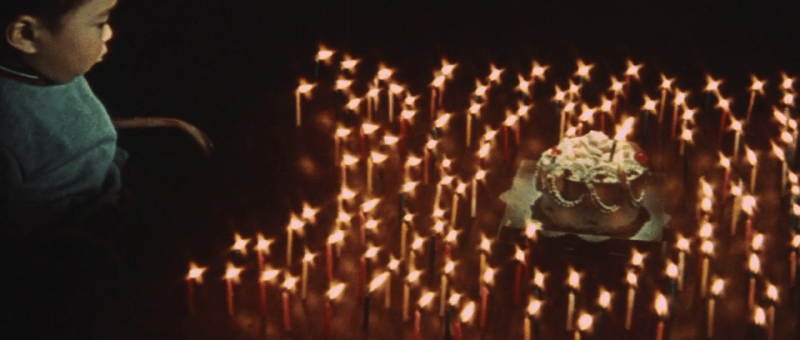
For all that however there’s a poignancy in Taro’s reflecting on his birthday cake with its two candles that Grandma’s must have many more and in fact be brighter than the moon with which he has a strange fascination. He’s just turning two. He used to be a baby but now he’s a big boy and soon he’ll be a man. Goro reflects on time passing, for the moment he’s a father but might be a grandad soon enough. The wheel keeps turning which perhaps puts the hire purchase fees on the TV he bought to keep Grandma occupied and out of the way into perspective. From the experimental opening to the occasional flashes of animation and that banana moon, Ichikawa paints a whimsical picture of the post-war world as seen through the eyes of a wise child but ironically finds a wealth of warmth and comfort even in an age of anxiety.


Alone Across the Pacific (太平洋ひとりぼっち, Kon Ichikawa, 1963)

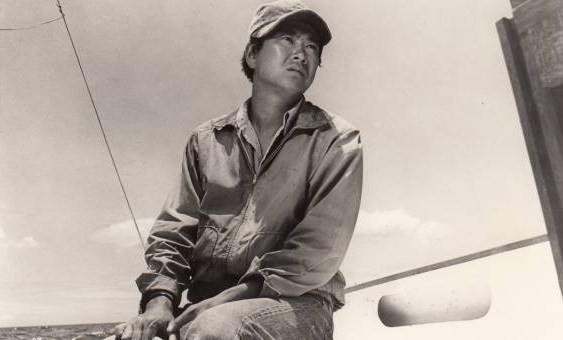
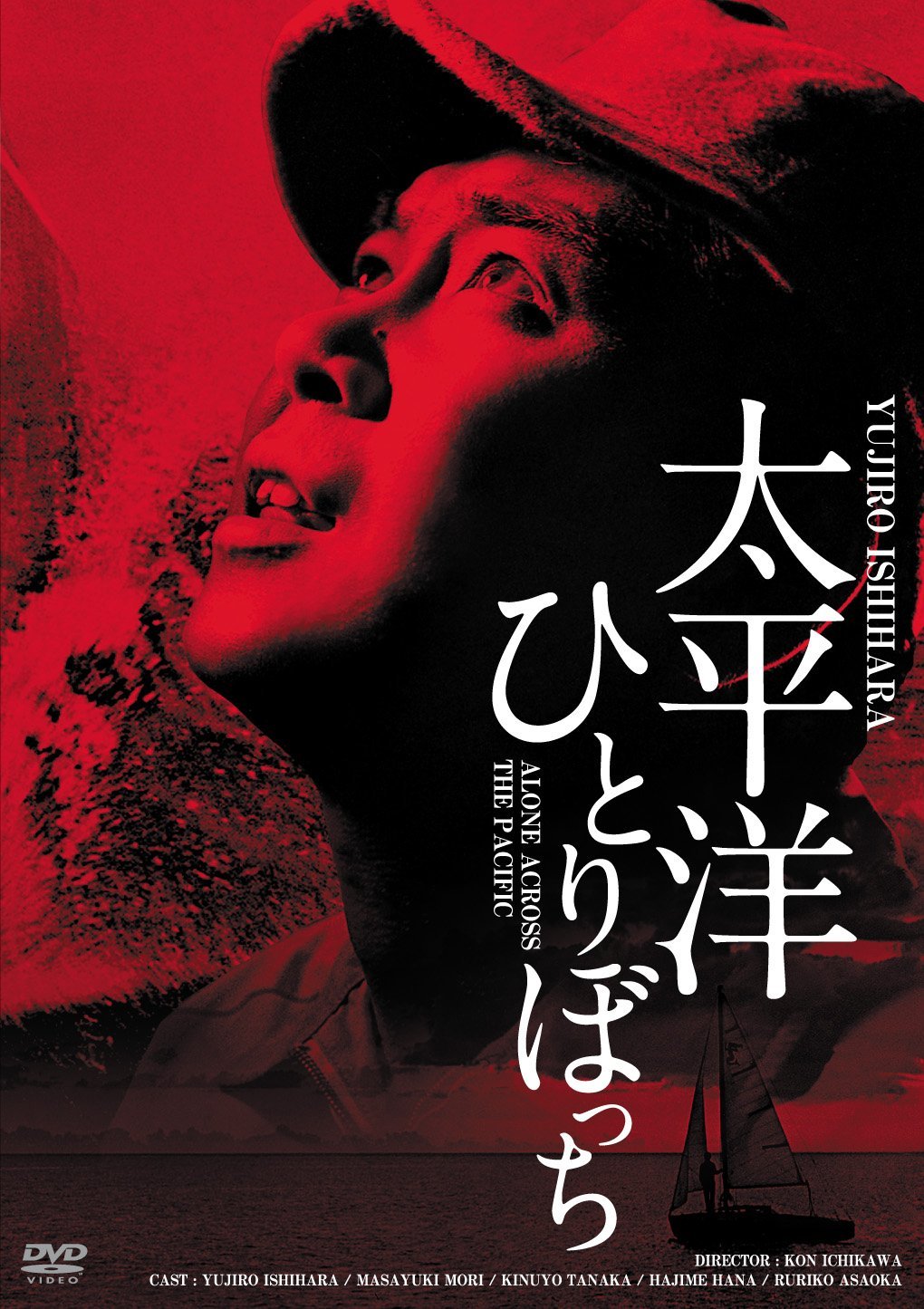
Alone Across the PacficKon Ichikawa made two sorts of movies – the funny ones and the not so funny ones. Despite the seriousness of the title, Alone Across the Pacific (太平洋ひとりぼっち, Taiheiyo hitori-botchi) is one of the funny ones. Like many of Ichikawa’s heroes, Horie is a man who defies convention and longs for escape from the constraining forces of his society yet is unable to fully detach himself from its cultural norms. Based on the real life travelogue of solo sailor Kenichi Horie, Alone Across the Pacific is less the story of a man battling the elements, than a cheerful tale of a man battling himself in a floating isolation tank bound for the “land of the free”.

Kenichi (Yujiro Ishihara) is a strange man. He has few friends (aside from the family dog, Pearl) and is obsessed with the idea of running away to sea. Inspired by the tales of other intrepid sailors, his dream is to sail all alone across the Pacific Ocean from Osaka to San Fransisco. Despite the fact that it is illegal for small boats to leave Japanese waters (and that he is too impatient to wait for his passport to come through), Kenichi has custom made his own yacht, one without an engine, and has set off on his longed for voyage under the cover of darkness.

Rather than filming Kenichi’s journey naturalistically, Ichikawa opts for an adventurer’s tale as Kenichi provides an ironic voice over detailing some of his naive failings as a rookie sailor undertaking such a daunting mission. Each of Kenichi’s crises links back to a memory from his shore life, reminding us why he’s on this journey in the first place. Kenichi’s struggles are the same as many a young man in post-war Japan and, in fact, many of those previously played by the poster boy for youthful rebellion, Yujiro Ishihara.  Unwilling to live a life hemmed in by the predetermined path of a job for life, wife, children and total social conformity, Kenichi longs to be free of his cultural baggage by abandoning his civility during a long process of isolation therapy free of overbearing fathers, fretting mothers, indifferent sisters and a generally noisy world.

Kenichi’s father (Masayuki Mori) is the very personification of authority, berating his son for his fecklessness and pointless obsession with sailing – a sport a working class boy like Kenichi can barely afford. Kenichi’s determination to achieve his goal sees him leave school early, take a job in his father’s workshop only to quit suddenly for a more lucrative one delivering luggage for a travel agents, and quitting that too to work full time on his boat. While his father huffs and puffs his mother (Kinuyo Tanaka) worries, hoping her mad son won’t really go through with it but knowing that he will.

When Kenichi finally reaches San Fransisco, he’s assaulted by congratulatory voices from all directions. Towed into harbour by a motor boat, Kenichi first has to deal with mundane problems like the customs patrol wanting to know if he’s got any fruit left on the boat before a crowd gathers to shake his hand asking where he’s come from and why, what he wants to do now, and praising him for his daring feat of solo sailing glory. In Japan however, things are different. Dragged out for an interview by the press, Kenichi’s worried mother avows that she’s just happy to know her son is safe while his father bows deeply and reassures everyone that he will absolutely put a stop to any such random acts of individualism his wayward son may attempt in the future. 

Kenichi evades the twin pulls of his mother’s apron strings and his father’s handcuffs by taking off alone but even at sea he’s never free of his cultural programming, checking the wide empty ocean before removing his clothes and then stepping back down into the cabin to finish the job. Kenichi’s failure to acquire a passport is an ironic one seeing as part of what he’s running from is being Japanese but even as his quest is one for self determination it is also intensely selfish and self involved. In this Kenichi commits the ultimate act of individualism, caring nothing for the thoughts and feelings of others in the all encompassing need to achieve his goal. Kenichi may have found a home at sea, but on land he’s caged once again, a prisoner both of social conformity and his own need to defy it.


Available on R2 DVD from Eureka Masters of Cinema.

Original trailer (no subtitles)

The Outcast (破戒, AKA The Broken Commandment, Kon Ichikawa, 1962)

Kon Ichikawa’s approach to critiquing his society was often laced with a delicious slice of biting irony but he puts sarcasm to one side for this all too rare attempt to address the uncomfortable subject of Japan’s hidden underclass – the burakumin. The term itself simply means “people who live in hamlets” but from feudal times onwards it came to denote the kinds of people with whom others did not want to associate – notably those whose occupations dealt in some way with death from executioners and undertakers, to butchers and leatherworkers. Though outright discrimination against such people was outlawed during the Meiji restoration, social stigma and informal harassment remained common with some lingering tendency remaining even today.

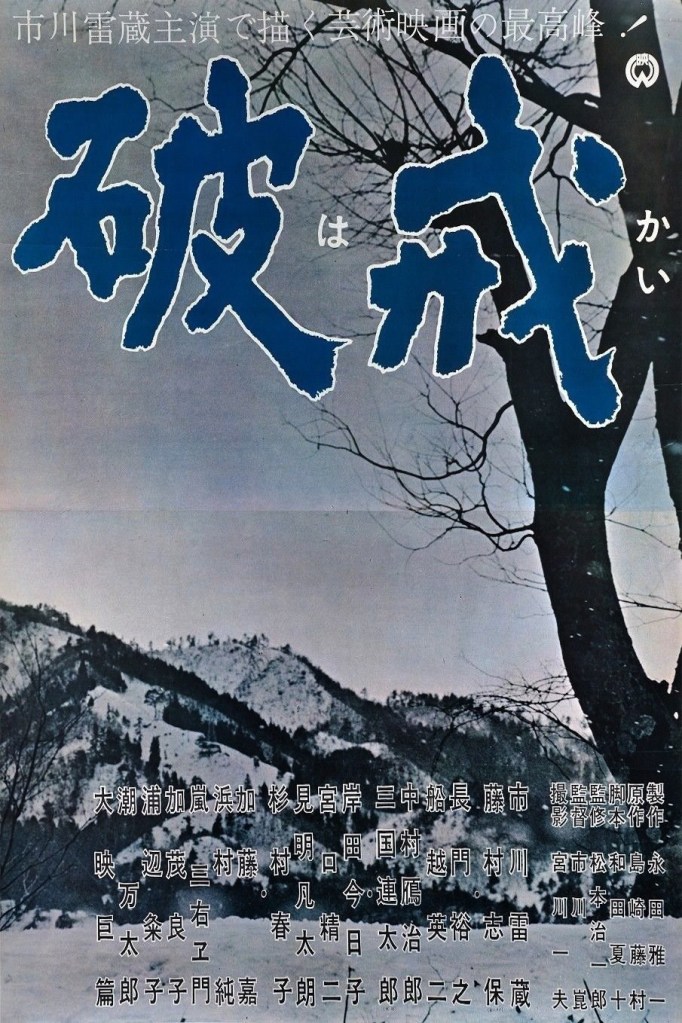
The Outcast (破戒, Hakai), adapted from the book by Toson Shimazaki (known as The Broken Commandment in English) is the story of a young man of burakumin lineage who has to hide his true identity in order to live a normal life in the Japan of 1904. Segawa’s father, formerly a village elder, sent his son away to live with his brother and his wife in a distant town where they could better hide their burakumin status to enjoy a better standard of life. Sadly, Segawa’s father dies after being trampled by a recalcitrant bull never seeing his son again and leaving him with the solemn commandment to live as a regular person, never revealing his connection with the burakumin world.

This debt to his father’s sacrifice creates a conflict in the heart of the young and idealistic Segawa (Raizo Ichikawa). Forced to listen to the casual racism all around him and unable to offer any kind of resistance, Segawa has become interested in the writings of a polemical political figure, Rentaro Inoko (Rentaro Mikuni), who has begun to write passionate political treatises advocating for burakumin rights. When Inoko turns up in Segawa’s town, he finds himself a new father figure and political mentor but continues to feel constrained by the debt of honour to his father’s sacrifice and is unable to confess his own burakumin heritage even to Inoko.

The world Segawa lives in is a conservative and stratified one in which old superstitions hold true even whilst hypocritical authorities use and abuse the trust placed in them. Inoko falls foul of local politics after he discovers a politician has married a wealthy burakumin woman solely for her money and is planning to expose him at a political rally. This same politician has already threatened to blackmail Segawa who continues to deny all knowledge of any burakumin related activities whilst failing to quell the eventual gossip surrounding Segawa’s lineage. The gossip causes problems at the school where Segawa had held a prestigious teaching position as the headmaster and school board fear the reaction of the parents. Though the people at the temple where Segawa takes refuge after growing tired of the racist inn owners in town are broadly supportive of the burakumin, the priest there has his own problems after having made a clumsy pass at his adopted daughter, Shio (Shiho Fujimura) – the daughter of a drunken teacher sacked by the school in order to avoid paying him a proper pension. At every turn the forces of authority are universally corrupt, selfish and venal, leaving no safe direction for a possible revolution of social justice to begin.

This is Segawa’s central conflict. After his experiences with Inoko, Segawa begins to want to follow in his footsteps, living out and proud as a burakumin and full time activist for burakumin rights. However, this would be undoing everything for which his father sacrificed so much. Talking things over with Inoko’s non-burakumin wife, Segawa is also presented with a third way – reveal his burakumin heritage and attempt to live honestly as an ordinary person, changing hearts and minds simply through leading a life among many other lives. This option seems attractive, especially as Segawa has fallen in love and would like to lead an ordinary life with a wife and family, but his youthful idealism is hungry for a greater, faster change than the one which will be born through simple integration. Despite the warnings of Inoko’s wife who believes change will occur not through activism but through the passage of time, Segawa decides his future lies in advancing the burakumin cause in the wider world.

When Segawa does choose to reveal himself, he finds that there is far more sympathy and support than he would ever have expected. A woman he has come to love wants to stay by his side, his previously hostile friend rethinks his entire approach to life and apologises, and even the children in his class convince their parents that their teacher is a good and a kind man regardless of whatever arbitrary social distinction may have been passed to him through an accident of birth. Segawa’s conflicted soul speaks not only for the burakumin but for all hidden and oppressed peoples who have been forced to keep a side of themselves entirely secret, faced with either living a lie in the mainstream world or being confined to life within their own community. His choice is one of either capitulation and collaboration, or resistance which amounts to a sacrifice of his own potential happiness in the hope that it will bring about liberation for other similarly oppressed people.

Scripted again by Natto Wada, The Outcast takes a slightly clumsy, didactic approach filled with long, theatrical speeches but does ultimately prove moving and inspiring in advocating for the fair treatment of these long maligned people as well as others facing similar discrimination in an unforgiving world. As a treatise on identity and rigid social attitudes, the film has lost none of its power or urgency even forty years later in a world in which progress has undoubtedly been made even if there are still distances to go.


Ten Dark Women (黒い十人の女, Kon Ichikawa, 1961)

Ten Women in BlackKon Ichikawa, wry commenter of his times, turns his ironic eyes to the inherent sexism of the 1960s with a farcical tale of a philandering husband suddenly confronted with the betrayed disappointment of his many mistresses who’ve come together with one aim in mind – his death! Scripted by Natto Wada (Ichikawa’s wife and frequent screenwriter until her retirement in 1965), Ten Dark Women (黒い十人の女, Kuroi Junin no Onna) is an absurd noir-tinged comedy about 10 women who love one man so much that they all want him dead, or at any rate just not alive with one of the others.

Kaze (Eiji Funakoshi) is a TV producer by profession, though it might be better to think of him as a professional ladies’ man. He’s married to a woman who owns a bar, but is also carrying on affairs with nine (!) other women plus occasional one night stands with 30-50 others he meets through his work. His wife knows about his affairs and, while not happy about it, is putting up with things like decent wives are supposed to do. However, many of Kaze’s “mistresses” have inconveniently discovered each other’s existences and bonded in their mutual frustration with him. Strangely they all think he’s a great guy and remain very much in love with him but the situation being what it is the entirety of the betrayed wife and mistress support club eventually comes to the same conclusion – Kaze must die!

However, the women are all so devoted to Kaze, they don’t quite want him to disappear so much as for him to pick them and only them to live with happily ever after. One of the women foolishly warns Kaze about their plot as leverage for her marriage proposal but unfortunately for her he still turns her down and returns home to ask his wife what’s going on. She doesn’t deny her murderous intentions and in fact tells him in great detail how they intend to do him in. Kaze, to his credit, says he doesn’t mind very much and only worries about his wife’s future life as a murderess. Together they hatch a plan to fool the other women involving a pistol loaded with blanks and a tomato but nothing quite goes to plan.

An absurdist satire about the intense vanity of the womanising male, Ten Dark Women looks forward to Fellini’s similarly themed 8 1/2 or City of Women though here the idiotic husband at the centre becomes both prey and foil for the group of plotting women seeking revenge against his disloyal ways. Kaze, as he himself admits, is not particularly appealing to women though his position at the TV studio undoubtedly proves useful to some of them. He’s a curiously passive presence, not so much seeking out female company as acquiescing to it. It’s not quite clear if his concern for his wife should she decide to kill him is genuine or a means of manipulative self preservation but at any rate he takes the threat to his life extremely calmly.

Each of the women has their own claims on Kaze but the other thing they all have in common is being the prisoner of an extremely sexist society. Some of the women are with Kaze for careerist reasons, but it’s clear that there is a definite limit placed on a woman’s potential both inside and out of the creative industries. The commercial model makes a play for a more official relationship by bringing up the fact that Kaze’s wife has a job and therefore cannot devote herself entirely to Kaze’s wellbeing as proper wife should (as by implication would she after marrying and retiring from the modelling world). Kaze helped his wife set up her bar which she runs herself though constantly plays hostess to her husband’s industry friends. It appears what Kaze wants is less a devoted wife than an indifferent one who will permit his frequent “indiscretions” whilst also providing him with a conventional “home”.

Another of the women tries to get herself a promotion but her boss, though broadly sympathetic and dangling the idea of a raise, brings up the oft repeated notion that there’s no sense in giving her the job because a woman should leave at some point to marry and have children. When the woman criticises the behaviour of her male colleagues, her boss simply shrugs and admits men in TV aren’t “serious”, yet when she points out that she is serious and works hard she is told that women are better off at home. Women, he says, express themselves through their children whereas men make their mark through a career. The woman says that she believes everyone should try to reach their own potential in whatever way they can but her pleas fall on deaf ears. This notion is repeated later on when the women try to take revenge on Kaze by tricking him into resigning from his job – a man is his work, he claims. A man without a job is nothing at all and a man who is kept by a woman is less than nothing – Kaze is suddenly panicked, losing his occupation and social position is much more frightening to him than losing his life.

The women couldn’t kill the system or the TV, but they could kill Kaze so who can blame them for trying. Another of the women states that the imposed isolation of a man’s working life has cost him the ability to connect with other people on a human level and so his erasure is simply the end of a long process of social death. If some of the women triumph, others retreat as one does in suicide only to return as a ghost longing for the murder plot to succeed so that she and Kaze can be alone together at last. Kaze thinks he’s using each of them, but they have all been using him in one way or another and his only way out lies either in death or becoming a trophy for the most needy of his paramours.

Cynical in tone, Ten Dark Women is an amusingly absurd look at gender roles in early 1960s Japan as each of our women attempts to usurp male power for their own ends, some with more success than others. Ichikawa employs beautiful noir lighting in his elegantly composed black and white photography which, along with its jazzy score, gives the film a familiar feeling of crime laced modernity. An early instance of the feminist revenge film, Ten Dark Women is very much a comedy which avoids making its group of frustrated, resentful women mistreated by a buffoon of a TV exec the butt of its own joke, neatly highlighting the precarious nature of their existence which obliges them to rely on so hollow a support.


Original trailer (no subtitles)