Boiling Water Lama (開水喇嘛, Lu Adiong, 2019)

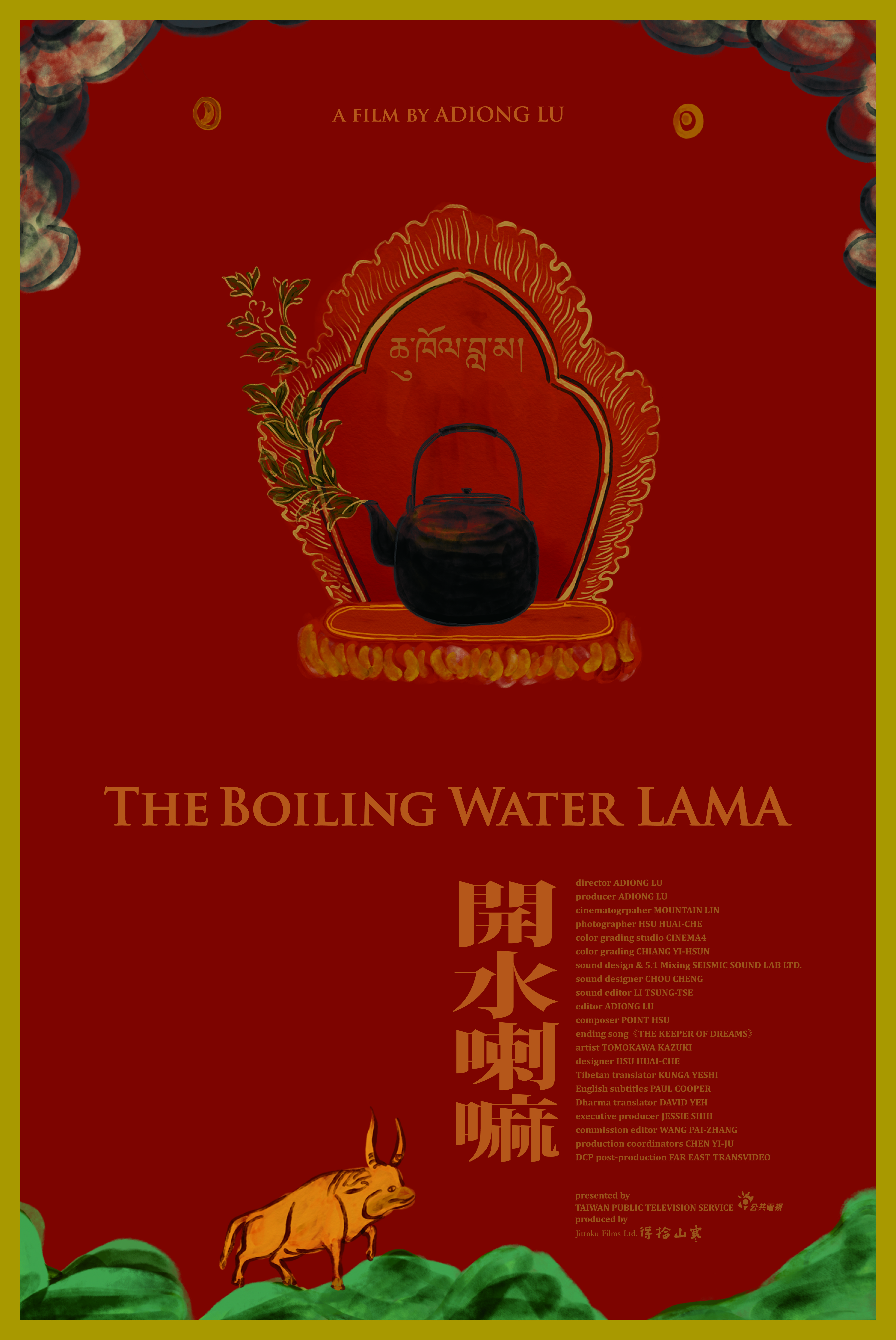
A lone monk provides spiritual healing in a decaying world in Lu Adiong’s enigmatic documentary Boiling Water Lama (開水喇嘛, Kāishuǐ Lǎma). Living in wooden house built by his followers high up in the small village of Xiongtuo on the Tibetan plateau, the Lama provides both pastoral care and traditional medicine to residents of the region many of whom have travelled over the mountains to visit him in hope of gaining his wisdom. 

Lu opens however with a lengthy shot of the desolate landscape, frosty and seemingly devoid of human presence home only to mud, smoke, and rubble. Later he will cut to a series of similar shots featuring a family of wild boar encroaching into the village, seemingly free to roam as if nature is already reclaiming this crumbling settlement. The Lama meanwhile remains hidden to us, crammed in as we are with a tightly packed group of followers awaiting his advice in a darkened room alight only with the warm yellow glow of the surrounding walls. The problems they bring him are many and varied, often related to the process of death and dying wanting to know which sutras they should read for a late relative, or intensely curious to know when and where their deceased loved one might have been reborn. Perhaps because of the obvious demands on his time, the Lama’s replies are often curt, imbued with unexpected efficiency as he simply consults his charts and recommends an appropriate sutra. He does not appear to recognise his visitors even when they remind him that he himself oversaw a ritual for them sometime previously, though he is always patient and kind, pausing to give a small boy receiving medical treatment some pocket money to buy sweets on the way home. 

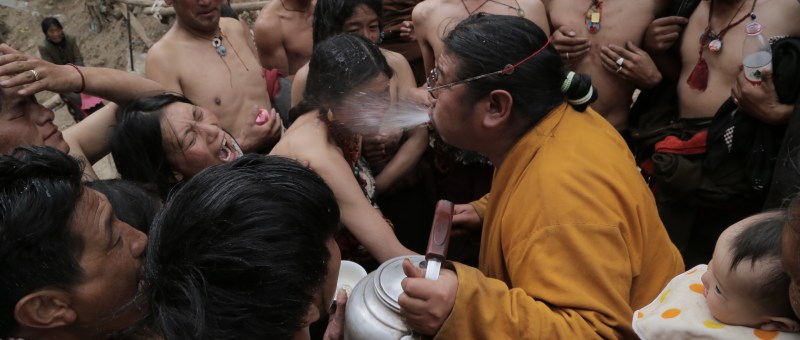
Meanwhile, he also treats the sick attaching suction cups to the affected area to suck out the “bad blood” while explaining to another complainant that his problem is he is like a car engine with not enough oil and too much petrol. Cauterising the wound with incense sticks, he completes his treatment by spitting boiling water over the broken skin, handing over some paperwork to the husband which he apparently does not need to return in person. Other callers meanwhile are burdened with emotional dilemmas, a man wanting advice about the marriage of two village youngsters who’ve fallen in love but the girl’s parents aren’t keen and in any case would prefer that she and her new husband live independently rather than with his family as the in-laws wish. The Lama does not give the man the answer he was perhaps hoping for nor does he have a very favourable prognosis for another who visits wanting to know if it’s in the cards for him to patch things up with the wife who’s apparently left to return to her parents though as he tells it not because there was anything wrong in their relationship. 

True to his name, the Lama keeps the kettle boiling while a collection of visitors gather outside his home waiting for the climactic purification ritual in which men and women remove their shirts and endure the scalding water on their bodies, some directing it to the site of their ailments, baring their knees or ankles. Others have brought their children who scream in pain and terror, the water clearly far too hot for them to bear while the Lama spits out the last of the boiling liquid into the eyes of those there afflicted. In contrast to the traditional setting, many of the villagers can be seen photographing or filming the event on their smartphones to record the occasion. As if to refute the final image, however, of the Lama overseeing the landscape as the villagers return home, Lu breaks the intense Japanese folksong playing over the end credits with a whimsical, snow covered scene in which a cow eventually appears and fixes its gaze directly into the camera lens. An enigmatic exploration of a disappearing way of life in all of its various contradictions, Boiling Water Lama finds no answers to its central questions leaving only the Lama as he metes out his judgements to all who come seeking his advice. 


Boiling Water Lama screens on 12th December at London’s Rio Cinema as part of Taiwan Film Festival UK 2020.

Original trailer (English subtitles)
The Reason Why I’m Home (回家的理由, Chang Ming Yu, 2019)

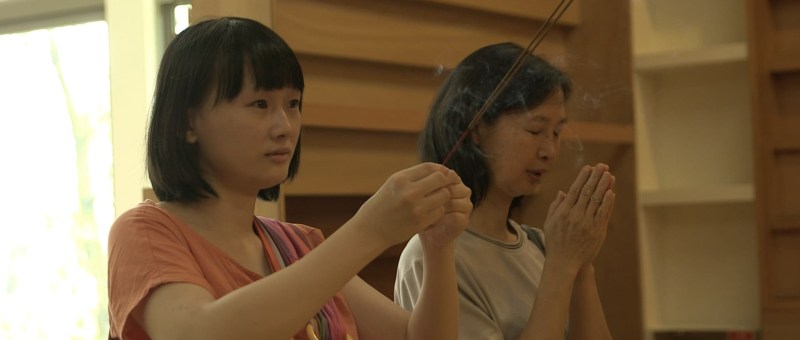
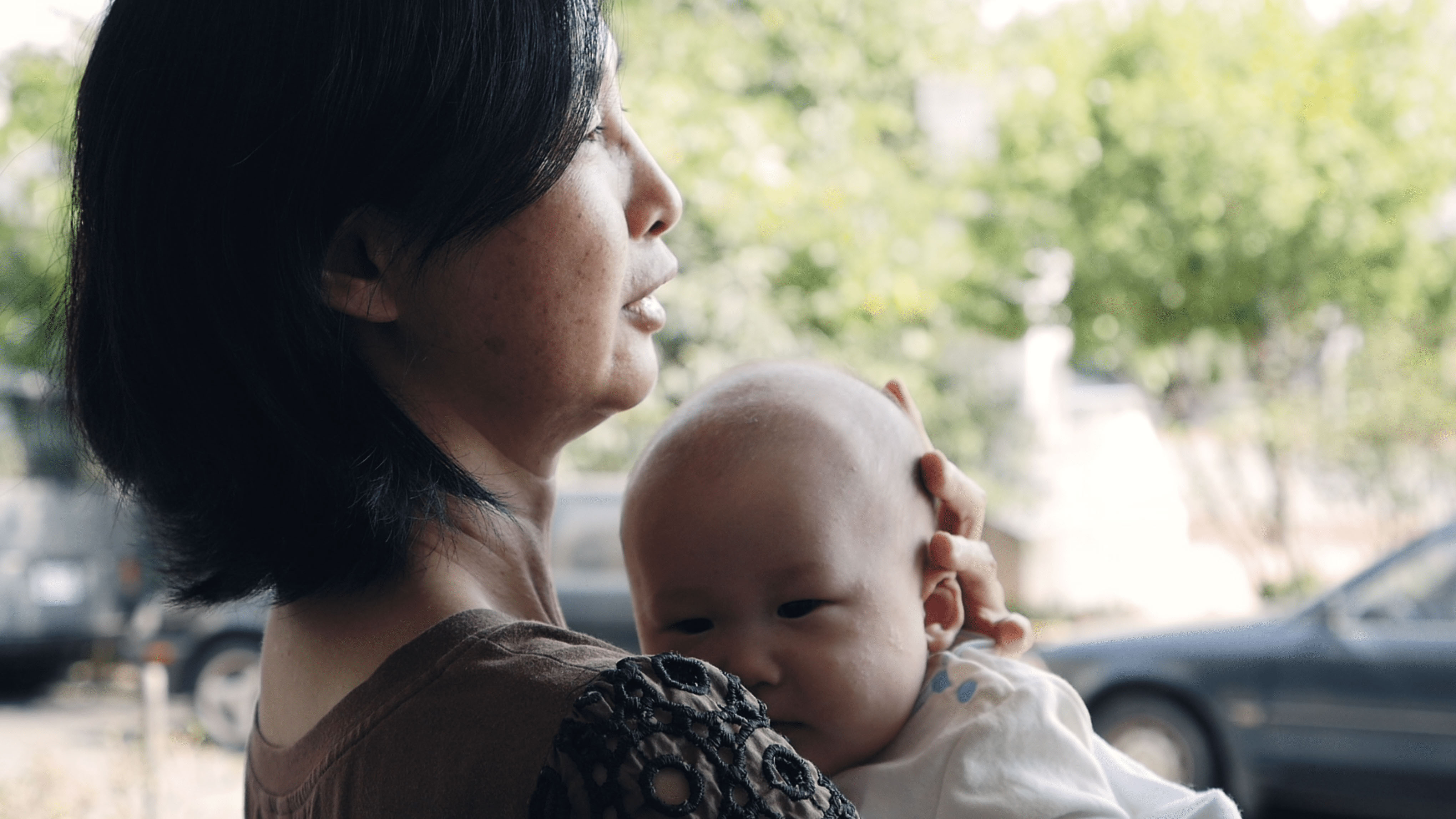
How do you learn to forgive after family tragedy? That’s a question Chen-yun the heroine of Chang Ming Yu’s documentary The Reason Why I’m Home (回家的理由, Huíjiā de Lǐyóu) begins to ask herself as she tries to come to terms with an extremely traumatic history while preparing to become a mother. As a close friend of his subject, Chang is both companion and chronicler, a quietly supportive presence as Chen-yun navigates these extremely difficult emotional waters, but also prompting her to think more deeply about the concept of family at the exact moment in which she begins to found her own. 

The reason Chen-yun returns home after a five year absence is that she is told her younger brother has been taken seriously ill. In fact, as it turns out he has passed away, apparently beaten to death by members of the cult her mother Fen-chueh belonged to though she also claims he had become a drug user. Fen-chueh accepts responsibility for her son’s death, but is said to have been under control of the cult’s crazed leader Chen-miao who according to Chen-yun brainwashed her brother to make him believe he was a bad person. Chen-yun suspects that like her he eventually wanted to leave but was unable to and was subsequently killed. She harbours a degree of guilt that she chose to leave him behind, telling him only that she was leaving to look for their father who had already escaped the cult. 

Expecting a baby with her policeman husband, Chen-yun is forced to deal with the fallout from the scandal of her mother’s crime, hounded by press determined to interview her about the case. Chen-yun’s father, technically the plaintiff in the case against Fen-chueh, signals his intention to sever ties with his former wife and advises Chen-yun to do the same while also telling her not to seem too happy which seems like an unfair request when she’s about to give birth to new life. After all as she puts it, life goes on. She hasn’t forgotten about her brother but you can’t go on mourning forever. Nevertheless, despite her earlier animosity in which she hinted that her mother had been abusive in her childhood and refused to say when questioned whether or not she still loved her, Chen-yun finds herself ringing Fen-chueh when she needs someone who can sign papers on her behalf at the hospital while her husband is unavailable. As healing an act as that might seem to be, it also has its share of awkwardness, a nurse accidentally asking a series of tactless questions necessary for the admission forms such as how many siblings Chen-yun has along with other details her mother is assumed to know but does not. 

Given what we know of her family background, it is perhaps surprising that Chen-yun continues to allow Fen-cheuh back into her life, even asking her to look after her baby son. Nevertheless in the brief time before Fen-chueh must report to serve her four-year prison sentence, Chen-yun begins to repair their fragile maternal bond, coming to understand her mother a little more now that she has become a mother herself and perhaps learning to forgive her for her role in her brother’s death. “No one taught us how to be parents” Fen-chueh later confesses to Chang in a private interview, having realised that though she thought she was doing the best for her daughter she may only have been causing her harm. 

As a new mother Chen-yun cannot help but think of similar questions as she begins to bring up her young son in the midst of her family legacy, taking him with her as she visits her brother’s grave and to visit her mother in the prison so he’ll get to know grandma even while she’s away. Mixing observational footage with brief conversational sessions between a behind the camera Chang and an often emotional Chen-yun, The Reason Why I’m Home focusses not on the tabloid fodder of the crime with its cruel cultists and legacy of abuse but on the slow process of healing as Chen-yun learns to forgive herself and her mother while repairing their fragile family bonds as she does her best to raise her son in love and safety.


The Reason Why I’m Home streamed as part of this year’s San Diego Asian Film Festival.

Original trailer (English subtitles)
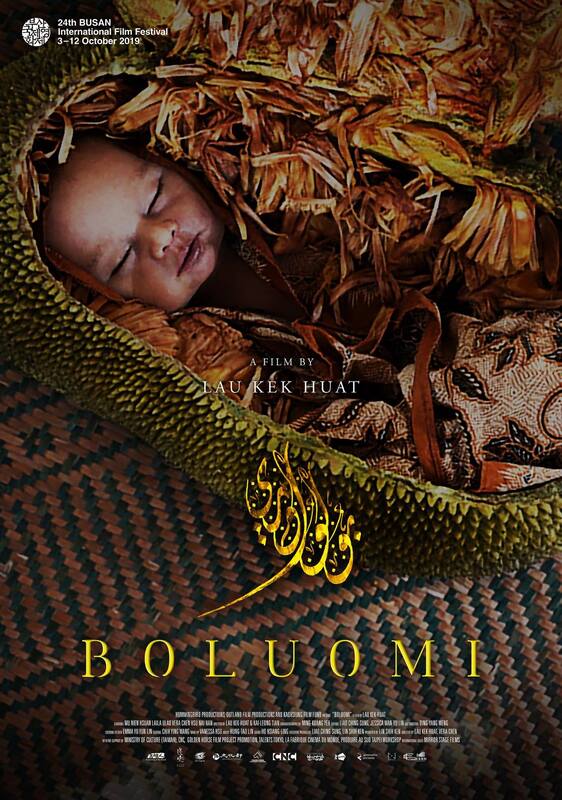
Boluomi (菠蘿蜜, Lau Kek Huat & Vera Chen, 2019)

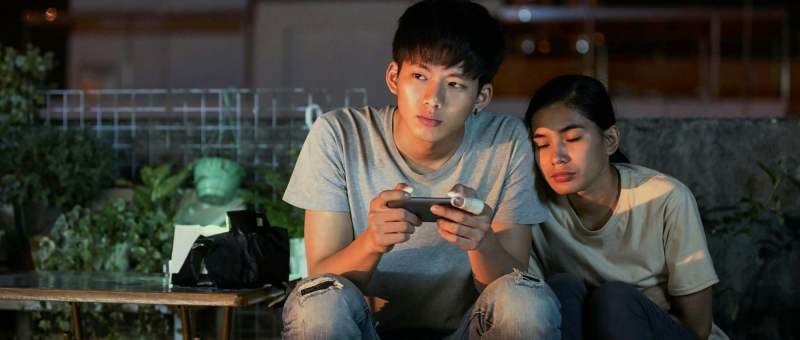
Legacies of trauma and displacement frustrate the connection between two floating youngsters in Lau Kek Huat & Vera Chen’s poetic drama, Boluomi (菠蘿蜜, Bōluómì). Making a direct connection between the Malayan Emergency and a sense of rootlessness in the contemporary generation, Lau & Chen send their conflicted hero overseas in an attempt to plant himself anew but even there he discovers himself merely another kind of other even as he forms a tentative bond with a similarly displaced woman rendered still more marginalised by her undocumented status and inability to speak the language. 

The film opens with the central trauma which is itself one of many as a child is born to a communist guerrilla fighter, Gyun (Vera Chen), and is then abandoned in the forest hidden inside the shell of a jackfruit or “boluomi” as is the custom apparently intended to ensure the child’s survival. In this case the child does indeed survive and like the opening of a fairytale is rescued by an older muslim Malay couple who have no children of their own and decide to adopt him, giving him the name “Mi” inspired by the unusual circumstances of his birth. Segueing to the present day we’re introduced to the hero, Yi-fan (Wu Nien-hsuan), just as he’s been humiliatingly stopped at customs on his return to Taiwan where he is studying agriculture because the homemade sambal his mother gave him is apparently too fragrant for the authorities’ taste. They won’t meet until later, but it’s at the airport that he first crosses paths with Laila (Laila Ulao), a young woman from the Philippines escorted out as one of many “carers from South East Asia” though as we later discover her true destination is a local massage parlour where she works as a cleaner in order to send money home to her family. 

Connecting the two timelines through a fragmentary dream we can assume that the abandoned child is Yi-fan’s father and that his double abandonment, later taken away from the loving older couple he believed to be his parents when his birth mother resurfaces, is responsible for his rage and fecklessness which has in turn left Yi-fan angry and resentful. The legacy of the Malayan Emergency is also perhaps connected to his feelings of alienation as a member of the Chinese minority, denied a place at university he feels solely on the basis of his ethnicity. Yet when he gets to Taiwan he’s suddenly not “Chinese” enough and incongruously finds himself speaking Malay even if there’s a double irony in being told that he should speak Chinese while in Taiwan. His professor with whom he seems to be on slightly awkward terms, perhaps another manifestation of his suspicion of male authority figures, pours cold water on his suggestions of finding a way to stay in Taiwan by opening a business instructing him that diaspora students have a duty to go home to stimulate social change. 

In a rather pregnant metaphor, the teacher’s opening lecture concerns foreign fruits successfully transplanted to Taiwan but also uncomfortably references viruses lurking in the soil, while Yi-fan’s attempts to grow a hybrid boluomi tree by grafting the Malaysian plant onto the Taiwanese eventually fail in parallel with his frustrated relationship with Laila who finds herself equally rootless while attempting to care for a fragile friend trafficked from Vietnam as a mail-order bride and now suffering ill heath but afraid to get treatment because of her status as an undocumented sex worker. Yi-fan befriends Laila by becoming an interpreter, helping her at the post office by translating into their shared language, English, and thereafter deepening their connection through the similarities found in Malay and Tagalog. Yet Yi-fan’s simple dreams of romance are frustrated by the world in which they live even as the pair bond through a shared sense of continual displacement. 

Try as he might, Yi-fan can’t make the boluomi grow, though it seems Laila could, putting down firmer roots while Yi-fan remains perpetually on the margins unable to escape the legacy of loss and alienation even in wilful migration. Struggling to survive in the precarious, largely hidden migrant worker underclass, Yi-fan and Laila’s romantic fantasy can never be more than just that though eventually comes full circle with another boy abandoned in the forest and a tree finally taking root.


Boluomi streams in Poland until 6th December as part of the 14th Five Flavours Film Festival.

Original trailer (English subtitles)
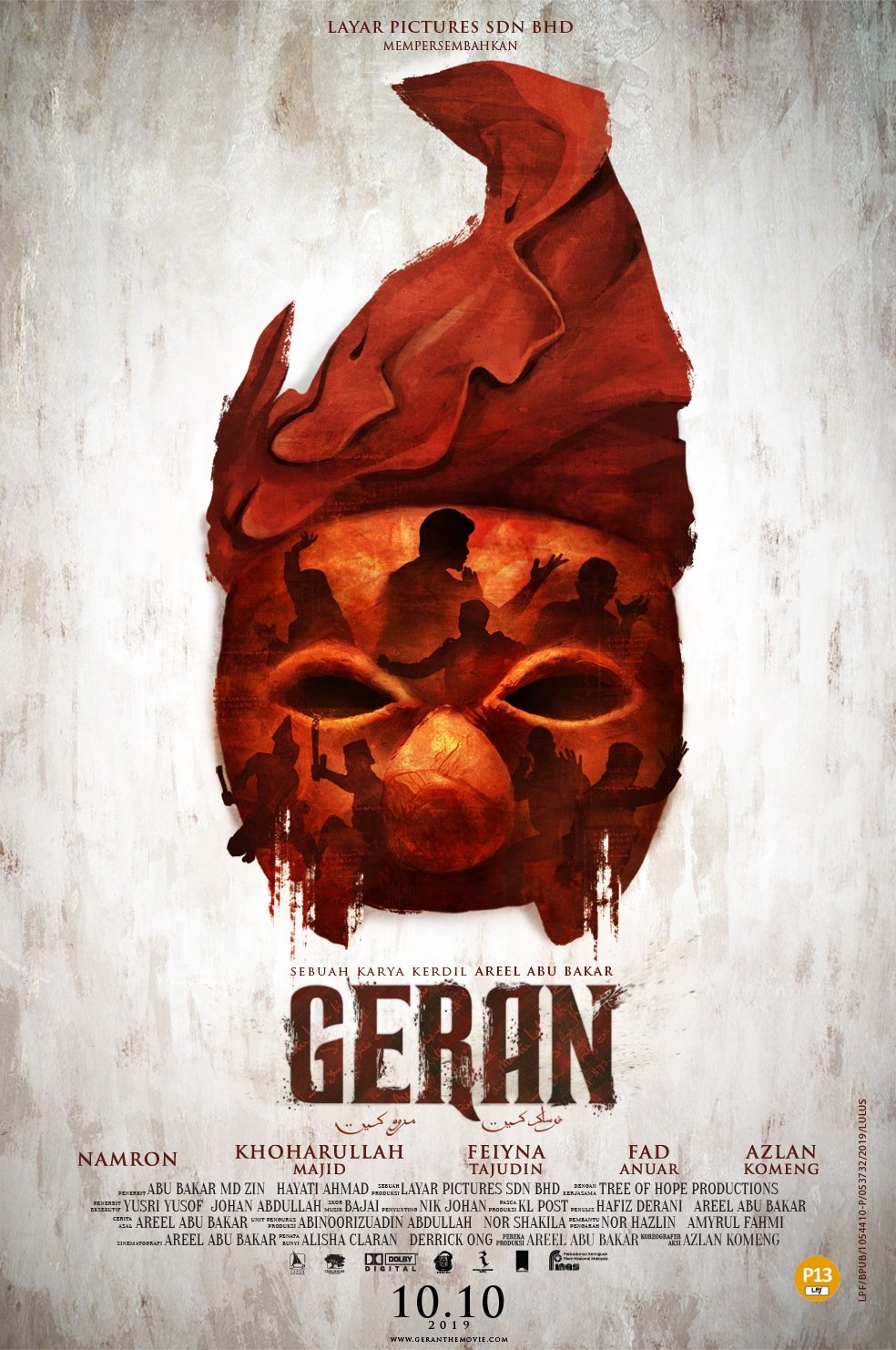
Geran (Areel Abu Bakar, 2019)

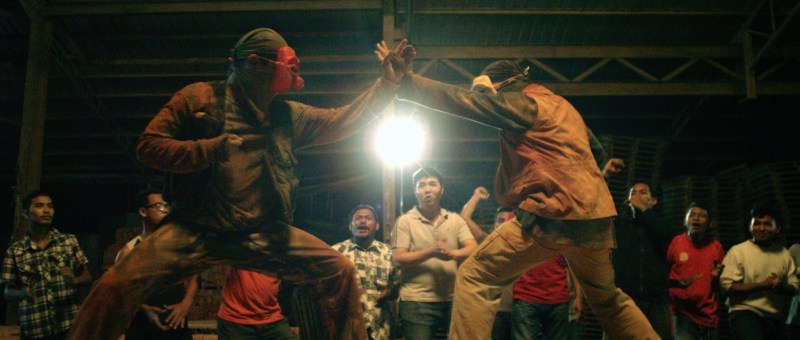
“Our family is not merely living for the love of wealth, but for love of a family” according to the late matriarch of the family at the centre of Areel Abu Bakar’s spiritually imbued martial arts film, Geran. Showcasing the Malaysian art of silat, Geran finds the family at the mercy of an increasingly corrupt and selfish society, stoically maintaining their “heritage and dignity” in the face of constant encroachment by the destabilising forces of evil in the form of violent and greedy gangsters.

All the trouble starts early one morning when sister Fatimah (Feiyna Tajudin) discovers that the deed to the family home is missing and concludes that her delinquent younger brother Mat Arip (Fad Anuar) who has not yet returned has most likely taken it as collateral for his gambling debts. Patriarch Pak Nayan (Namron) is not too worried, after all there’s nothing they can do with a deed that’s in his name and would need his permission to transfer, but soon enough the goons turn up only to get a rude awakening, quite literally kicked out by Fatimah who is more than capable of defending herself. They won’t stay away for long, however, because Mat Arip has played right into the hands of arch gangster Haji Daud who has unfinished business with Pak Nayan and an insatiable need to acquire all the land in town. 

The family’s prowess with silat is in many ways presented as an extension of their Islamic faith, a deeply spiritual act which connects them to their land and their culture. There’s not a little irony involved in the juxtaposition of older brother Ali (Khoharullah Majid) training with his mentor and Mat Arip gurning frantically on the fringes of a street fight, a sordid bastardisation of their noble art further sullied by the fact Mat Arip has placed a bet on the match’s outcome (which as we later discover is also rigged). Ali meanwhile remains pure hearted, sure that justice will triumph in the end while determined to defend himself and his family from the corrupting forces which surround them. 

As we discover, Haji Daud’s venality is a direct mirror of Pak Nayan’s goodness, a revenge quest born of his own dark heart and insecurity. Yet he remains a shadowy figure, hiding in back rooms while sending his minions to fight on his behalf. Mat Arip is reminded that debts must be paid, something his spiritually minded family probably agree with even as they continue to forgive him while hoping he’ll be able to free himself of his appetite for self-destruction though it does not appear there is much else out there for him other than his life of vicarious thrills. Unfortunately for him, he’s mired in a macho posing contest with Haji Daud’s equally bored, though presumably better resourced, nephew following a drag racing altercation that eventually gives him pause for thought in robbing him of his car. 

“God’s law is inescapable” Ali echoes, assured that Haji Daud’s crimes cannot go unpunished in a cosmic if not an earthly sense and he will someday pay for his deliberate exploitation of the miseries of the poor. Targeted by goons, the siblings get ample opportunity to show off their silat skills, Fatimah chased through a marketplace, eventually assisted by friendly stall owners shocked at her near lapse in taking a cleaver to one of the gangsters, while Ali goes on-on-one with Daud’s chief minion before going on all out assault to rescue Mat Arip realising that he too has probably fallen victim to attack.

The voice of Ali’s mother eventually reminds him that his successes come not only through his own action but through the prayers of those who love him, reinforcing the importance of familial solidarity as the siblings commit themselves to rescuing Mat Arip while forcing the gangsters into retreat. A worthy showcase for the art of silat with its high impact, innovatively choreographed action scenes, Geran is also a potent spiritual drama in which the family does its best to save itself as a means of saving others, holding the line against the Haji Daud’s of the world with little more than bare fists and incorruptible integrity. 


Geran streams in Poland until 6th December as part of the 14th Five Flavours Film Festival.

Original trailer (English subtitles)
Gundala (Joko Anwar, 2019)

“If we see injustice before our eyes and do nothing then we’re no longer humans” the idealistic father of a future superhero instructs his young son, trying to impart a sense of humanitarianism as a basic moral good. It’s a lesson the boy will find himself unlearning and resuming later, his innocence well and truly destroyed by an often cruel and cynical society only to be reawakened to the idea that it doesn’t need to stay that way. Among the most recognisable names of Indonesian cinema, Joko Anwar turns his hand to the creation of a local comic book cinematic universe, adapting the 1969 comic Gundala by Harya “Hasmi” Suraminata for the present day filtering contemporary Jakarta through classic Gotham. 

Operating as an origin story for the titular hero, Gundala opens with the young hero Sancaka (Muzakki Ramdhan) unable to prevent his father’s (Rio Dewanto) death due to his fear of electrical storms when he is first set up by a duplicitous factory boss and then assassinated while leading a protest for fair pay and conditions. Soon after, Sancaka loses his mother (Marissa Anita) too after she is forced to go to the city for work and never returns. Ending up a ragged street kid, he’s saved from an attack by a rival gang by an older boy (Faris Fadjar Munggaran) who teaches him how to protect himself physically and mentally by convincing him that the only way to survive on the street is keep his head down and walk on by even if it looks like others are in trouble. 20 years later the adult Sancaka (Abimana Aryasatya) is an aloof young man working as a security guard at a print house where his sympathetic mentor Agung (Pritt Timothy) begins to remind him of his father in his conviction that “living is no use if you stop caring and only think about yourself”, while he also finds himself defending the woman next-door, Wulan (Tara Basro), and her young brother Teddy (Bimasena Prisai Susilo), from hired thugs sent to intimidate them because of their involvement in a protest against the forced redevelopment of a local marketplace.  

Events seem echo around him. The major villain Pengkor (Bront Palarae) is also an orphan but on the opposing side as the son of a cruel plantation owner murdered by his not altogether ideologically pure workers whose desire for fair pay and conditions he had resolutely ignored. According to cynical politician Ridwan (Lukman Sardi), Pengkor became a union organiser of his own, leading an uprising at the abusive orphanage he was placed into by a cruel uncle hoping he’d die and free up the inheritance, thereafter becoming a kind of godfather to the fatherless with a thousands strong army of eternally grateful orphans he saved acting as sleeper agents for a coming revolution. 

Pengkor’s nefarious plan involves fostering a conspiracy surrounding contaminated rice said to make the unborn children of the women who eat it turn out “immoral”, a generation of psychopaths unable to tell right from wrong. Fairly unscientific, it has to be said, but playing directly into the central questions of the nature of “morality” in a “immoral” society. Can it really be “moral” for bosses to exploit their workers and get away with it, for politicians to cosy up to gangsters and remain complicit with corruption, and for a man like Pengkor to be the only hope for orphaned street kids otherwise abandoned and ignored by a wilfully indifferent society? Pengkor decries that hope is the opiate of the masses, but that’s exactly what Gundala eventually becomes for them in his “electric” ability to resist, eventually rediscovering his humanity as he designates himself as the embodiment of “the people” pushing back against the forces of oppression and seeming at least to win if only momentarily.  

Young Sancaka’s fear of lightning is, in essence, a fear of his power and his social responsibility something he is quite literally shocked into accepting. In a world of quite striking social inequality, he finds himself the lone defender of the oppressed whose very existence spurs others, including previously cynical politician Ridwan, into rediscovering their own humanity in the resurgent hope of a better future. As someone puts it, peace never lasts long but you keep fighting for it because every moment is precious. Not so much a battle of good versus evil as a battle for the meaning of good, Anwar’s Gundala recalibrates the anxieties of the late ‘60s for the modern era and creates an everyman hero not only to resist them but to foster a spirit of resistance and humanity in the face of heartless cynicism. 


Gundala streams in Poland until 6th December as part of the 14th Five Flavours Film Festival.

Original trailer (English subtitles)
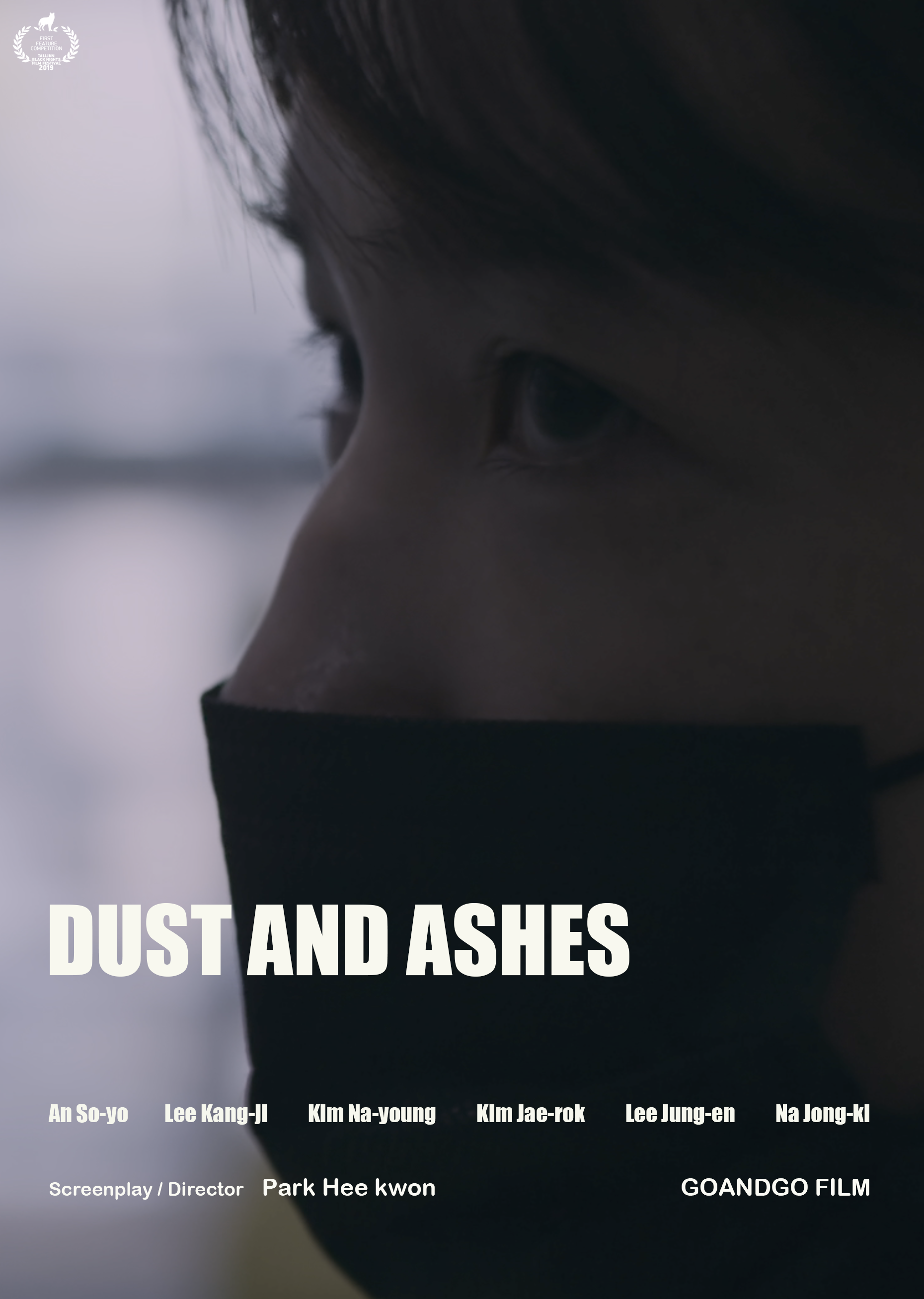
Dust and Ashes (축복의 집, Park Hee-kwon, 2019)

“People are property of the government from the cradle to the grave, since it’s all over they give it back to you” a corrupt policeman ironically explains handing over a dodgy document designed to help a desperate young woman subvert her tragedy. Stark in execution, Park Hee-kwon’s near wordless exploration of urban poverty Dust and Ashes (축복의 집, Chuk-bok-eui Jip) finds its heroine resorting to the unthinkable in a simple quest to survive while trapped in a world collapsing all around her. 

As we first meet Hae-su (Ahn So-yo), she’s leaving her factory job which evidently involves substances so toxic that she washes right away and scrubs her jacket clean ready for the next day before leaving for her other gig, scrubbing barbecue grills at a restaurant. She keeps trying to call someone who doesn’t pick up and walks home through the darkened streets, pausing so long outside the door we wonder if she’s gone to see whoever it is who won’t return her calls but eventually lets herself in with a key and walks quickly to the bathroom without turning on the light as if there’s something in there she doesn’t want to see.

Perhaps we begin to doubt Hae-su, somewhat uncertain of what has actually happened, but we can also see that she is griefstricken and nervous, driven to extremes in the depths of her despair. She must necessarily have known what was waiting for her at home, planned it, knowing exactly what it is she must do next. Her brother, Hae-jun (Lee Kang-ji), meanwhile is evidently not so much in favour, petulant and resentful but aware he has little choice in playing the role which has already been dealt him. Hae-su’s painful quest takes her on a journey through the corruptions of the modern society from a dodgy doctor taking cash for certificates to a corrupt policeman ‘helping” her alter the narrative circumstances to her advantage but only for a fee. 

Meanwhile, she’s about to be evicted, the entire area she lives in earmarked for “redevelopment”, a wasteland of deconstruction strewn with dust and rubble. We see her suffer the ignominy of a funeral with no flowers where she and her brother are the only mourners, a sight which seems to raise eyebrows not least with the insensitive policeman. Opening with darkness and the sounds of machinery, Park situates us in an industrial hellscape as if our entire lives took place on a gurney, trapped inside a wooden box being slowly pushed towards the fire. Showing the entirety of the funeral process in painful detail from the tender yet efficient embalming to the eventual cremation, grieving becomes something impossibly cold and clinical, no fancy curtains here merely an LCD screen reminiscent of that above a baggage claim carousel to let you know your loved one’s ashes (or more accurately bone dust ground in an industrial blender) are now ready for collection neatly packaged inside another, smaller wooden box. 

Yet Hae-su has no choice but to put up with these indignities. There appears to have been some level of male failure involved in the family, an absent or estranged father figure apparently no help, while we can also infer that the shadowy presence bothering her that she takes such care to avoid is an agent of the loan sharks in part responsible for her financial predicament. We can only imagine the desperation that must have forced this small group of people to take such a dreadful decision, and the anxiety of those left behind as they wonder if it will all come to nothing. Yet even if it works out, we get the impression Hae-su is running to stand still. Victory only means the continuance of the status quo, there seems precious little sign Hae-su or her brother will be able to escape their penury especially after everyone, including the loan sharks and dodgy policeman, exacts their cut. 

In the end all there is is dust and ashes. Hae-su evermore encumbered, wearing a mask to stave off the inevitable but still breathing in the corruption of the world around her as it too collapses into dust, a deconstructed wasteland of economic hubris. Necessarily bleak, Park’s spare, numbed photography finds only emptiness in Hae-su’s rain-drenched streets even as she strides off into the distance determined to survive no matter what it takes. 


Dust and Ashes streams in Poland until 6th December as part of the 14th Five Flavours Film Festival.

Festival trailer (English subtitles)

The Takatsu River (高津川, Yoshinari Nishikori, 2019)

What price modernity? Post-war migration saw a rapid turn towards urbanisation with the young forsaking their countryside hometowns to chase the salaryman dream in the cities. Though there has in recent years been a mild reversal to the prevailing trend as economic fluctuation and technological innovation have a generation of anxious youngsters looking for a simpler life, the effects of rural depopulation have only become starker in light of Japan’s ageing society leaving the elderly isolated in inaccessible communities with few family members or facilities to support them. This push and pull of the traditional and the modern is at the heart of Yoshinari Nishikori’s The Takatsu River (高津川, Takatsugawa), in many ways an elegy for a vanishing Japan but also an ode to the furusato spirit and to continuity in the face of change. 

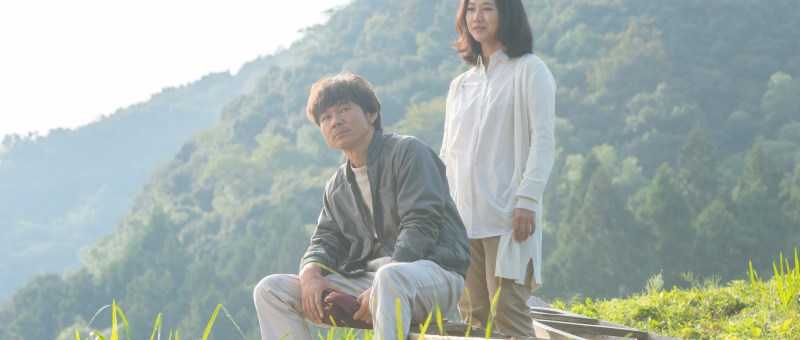
Set in a small town on the Takatsu River in Japan’s Shimane prefecture on the South West coast of Honshu, the central drama revolves around the middle-aged Manabu (Masahiro Komoto), a widower with a teenage son and a daughter recently returned from university in Osaka. His problem is that his son Tatsuya (Ishikawa Raizo) has been skipping out on rehearsals for the Kagura dance society, something which is obviously close to his father’s heart. About to graduate high school Tatsuya is perhaps at a crossroads, like many of his age trying to decide if his future lies in his hometown staying to take over the family farm, or in the cities as a regular salaryman. 

“Everyone thinks of leaving once” Manabu philosophically laments to the lady at the post office though like most of the other parents he does not try to influence his son’s decision even if he’s additionally grumpy about his lack of commitment to Kagura dance. The dance troupe is not just a precious artefact of traditional culture or a means of entertainment but a social hub for the small community in which the generations mix freely and are equally represented. One older man affectionately known as “Pops” (Choei Takahashi) is over 80 years old but refuses to give up the art of Kagura dancing, not only because he loves to perform but because he enjoys being part of the society especially as he lost his eldest son to a flood in childhood and the other, Makoto (Hiromasa Taguchi), has become a lawyer in the city who rarely visits his hometown claiming that his wife has a dislike of “bugs”. 

Acting as a surrogate son to the old man, Manabu’s other quest is to convince Makoto to visit a little more often, touting the idea of a reunion for some of their old elementary school friends a few of whom are, like Manabu, still living in the village. Unfortunately, however, Makoto’s time in the city has fully converted him into a heartless ultra-capitalist who struggles to understand a more traditional way of thinking. Meeting up to celebrate the successful graduation of another friend’s apprentice as a sushi chef, the guys lament the case of their friend Yoko (Naho Toda) who never married, apparently calling off an engagement to look after her elderly mother who has dementia while acutely feeling the responsibility of taking on her family’s 300-year-old traditional sweet shop. Confused, Makoto wonders why you wouldn’t just stick the parents in a home and get married, much to the consternation of his friends. Similarly, when Manabu asks him for some legal advice about how to stop a resort being built up river he reveals himself to be fully on the side of corporate power. After all, he points out, a resort will bring jobs and foot traffic to the area encouraging modernisation and better transport links which will also draw young people back towards the village. If you want to save the community, perhaps it’s the best and only way. 

Yet as Manabu points out, the Takatsu is the last clean river in Japan. His daughter Nanami (Ito Ono) came back after uni because she missed the taste of sweet fish that you just can’t find anywhere else. If the river is polluted by construction, the fish will disappear and perhaps there’ll be nothing left to “save”. With the local school set to close now there are only a handful of pupils, Manabu and his friends are minded to pick their battles and protect what it is that’s most important, eventually reacquainting Makoto with his furusato spirit by confronting him with the traumatic past which had kept him away. Bar repeated references to the double-edged sword of the Takatsu in the potential for lethal flooding, Nishikori’s gentle drama perhaps provides an overly utopian view of country living which sidesteps the hardships that can often accompany it, but also celebrates community spirit and an atmosphere of mutual support, qualities which have convinced city-raised farmhand Kana (Yurie Midori) that the rural life is the one for her. A gentle elegy for a disappearing way of life, The Takatsu River is ultimately hopeful that something at least will survive as long as the clear stream flows on.


The Takatsu River streams in Poland 25th November to 6th December as part of the 14th Five Flavours Film Festival.

Original trailer (English subtitles)
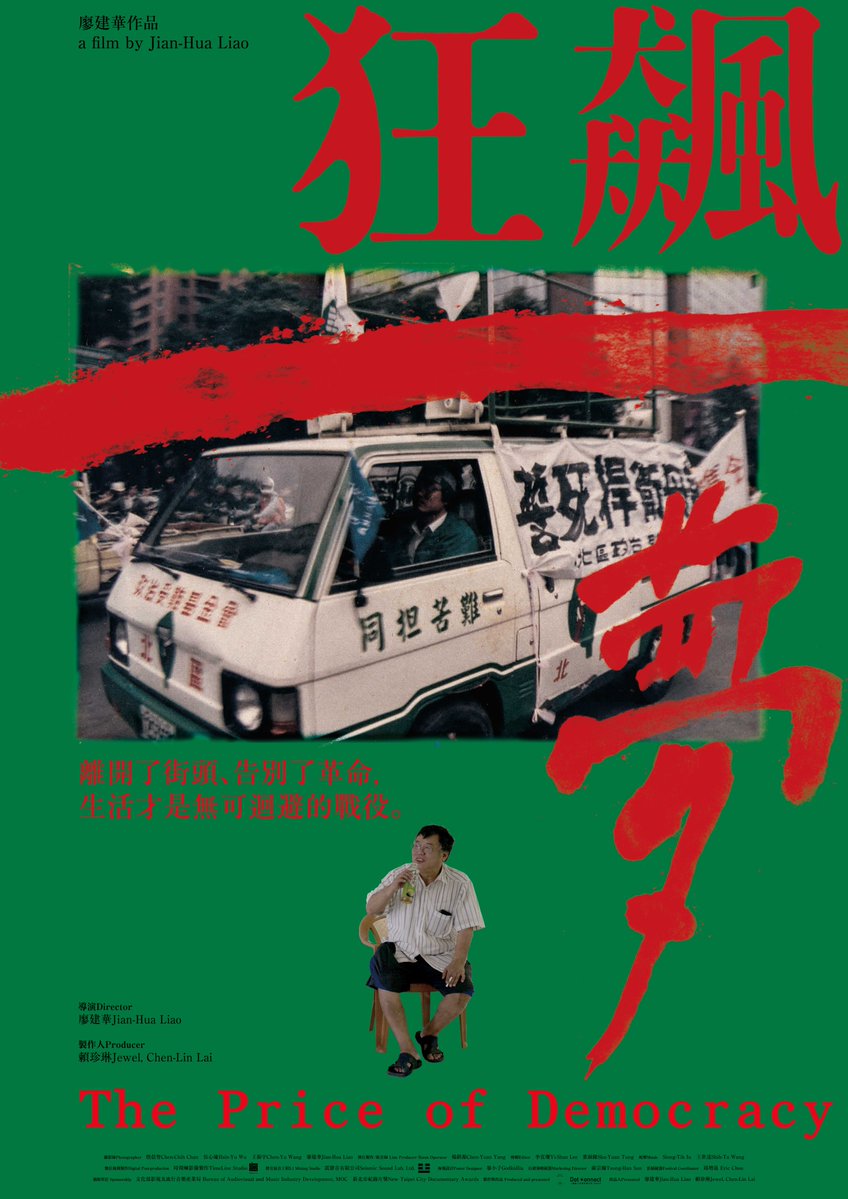
The Price of Democracy (狂飆一夢, Liao Jian-Hua, 2019)

What does a revolutionary do after the revolution? Lacking direction in his own life, director Liao Jian-Hua finds himself asking the question of those who fought for an end to martial law in Taiwan, wondering if the price they paid for their idealism was really worth it. Following two now elderly protestors both of whom continued with activism after the advent of democracy, he discovers that the battle was never really won and that each has their share of loss if not quite regret for the sacrifices they made to try and bring about the better world. 

The first of Liao’s subjects, Hsin-i, is a popular novelist though perhaps unexpectedly known for romance featuring working class women rather than anything more overtly political. Daughter of a Mainland soldier, she was married with two children when she first began to become disillusioned with Taiwan’s political situation after realising the extent to which the authorities would go to rig elections. Unfortunately, the family she married into was staunchly nationalist, actually members of the KMT, and after her husband read a satirical story she wrote for a magazine the marriage broke down. Fearing reprisals, Hsin-i’s husband and in-laws emigrated to America and took her children with them while she remained in Taiwan and deepened her involvement in the movement for democracy. 

Kang, meanwhile, is a Minnanese man from the South who came to Taipei for work. Staunchly leftist, he lives up to his ideals even in his 60s earning no more than the minimum wage and living in a kind of commune with other gentlemen of a similar age, often allowing those in need to stay giving up his bed to make space for them. Like Hsin-i, his activism eventually cost him his family though he admits that his marriage was perhaps a mistake to begin with with. Showing Liao pictures of his youth he reveals himself to be quite the dandy and caught up in the consumerist revolution of an increasingly prosperous society (another wealthy girlfriend even bought him a Renault when they first came to Taiwan), only to be converted to socialism after leaving the army. He admits that he married his wife largely because she was pregnant but was uncomfortable with her upper-middle class lifestyle, her father attempting to railroad him into running a convenience store. Given their ideological differences, the marriage failed and Kang lost contact with his son who would now be in his early 30s. 

Other members of the activist group swap similar stories, that their wives and families complained that they “changed” after getting into activism or accused them of neglecting their familial duties for the political. Kang describes this as a choice between “small” love and “big”, familial love versus the societal. He and his friends chose big love at the expense of the small, devoting themselves to bettering their society. Hsin-i meanwhile doesn’t see it quite the same way and harbours a degree of guilt and regret for not having been as present as she might have liked in the lives of her family, often torn between activism and caring for her elderly mother while obviously missing her children even now forlornly looking up the Facebook profile of the daughter who declined to have contact with her. 

Though each of them continued with activism after the end of the martial law period, both Hsin-i and Kang also have traumatic memories of what was obviously a very intense time, recalling the tragic death of one young man who self immolated in protest against oppressive KMT regime. While Kang seems to accept his act with sadness, it led Hsin-i to question the movement and her place within it that others knew this young man planned to take his life in such painful way and did nothing to discourage him. From the vantage point of a very different Taiwan following the victory of Tsai Ing-Wen’s Democratic Progressive Party in 2016, now regarded as the most liberal of Asian nations, Liao wants to ask them if they feel all their suffering was worth it but discovers perhaps that he’s asking the wrong question when the costs of betraying one’s ideals may not be worth contemplating. There is always work to do, and whatever it may have cost them, both Hsin-i and Kang have remained true to themselves as they continue to do what they can to bring about the better world filled with a big love for the whole of their society. 


The Price of Democracy (狂飆一夢, Kuángbiāo Yī Mèng) streams in the UK 28th November to 5th December as part of Taiwan Film Festival UK

Original trailer (English subtitles)

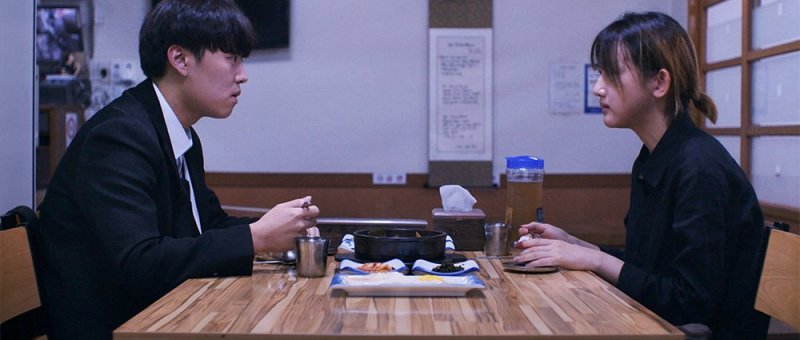
Forbidden Dream (천문: 하늘에 묻는다, Hur Jin-ho, 2019)

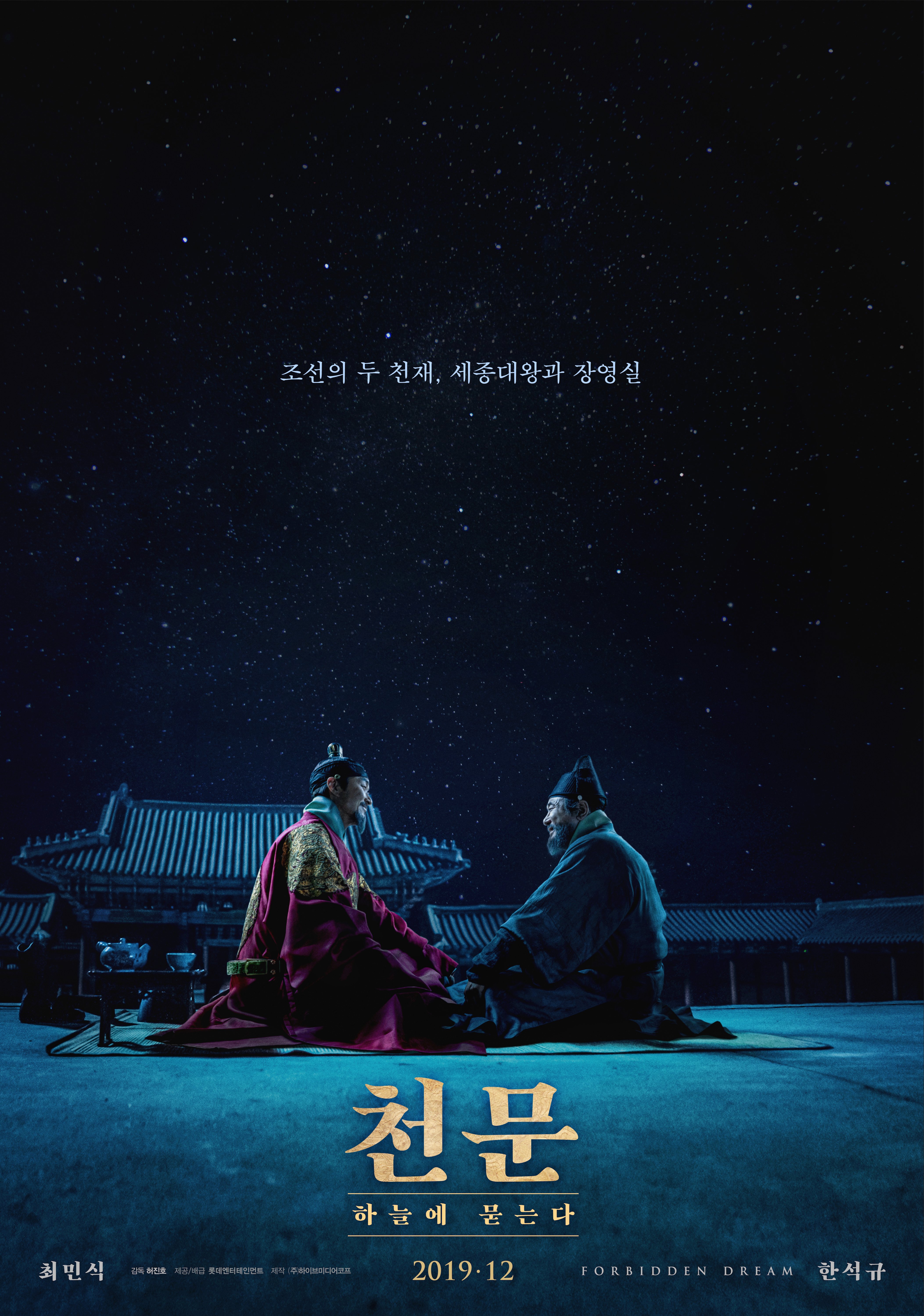
Technology is a great motivator for social change, which is one reason why there are those who would prefer to shut it down before it exists, afraid of the threat it poses to their own power and status. Best known for tearjerking romantic melodrama, Hur Jin-ho follows historical epic The Last Princess with a quietly nationalistic journey back to the Joseon era in which calls for greater sovereignty perhaps incongruously go hand in hand with progressive politics which see the good king Sejong (Han Suk-kyu) agitate for greater social equality through the democratisation of knowledge. This is his “Forbidden Dream” (천문: 하늘에 묻는다, Cheonmun: haneul-e mudneunda), the existence of a “fair” society in which anyone can read, write and learn regardless of the social class into which they were born.

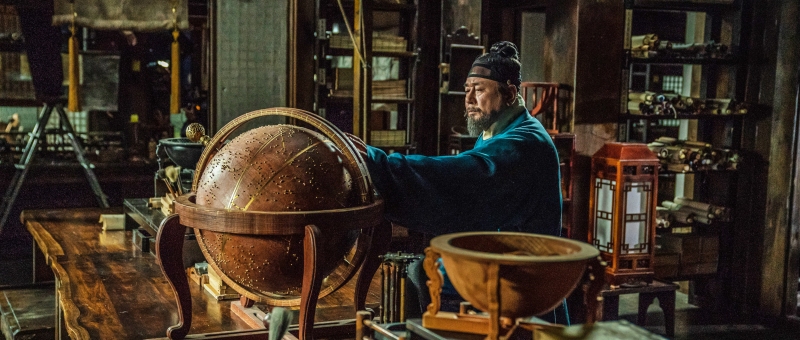
Apparently inspired by the mysterious disappearance of legendary court inventor Jang Yeong-sil (Choi Min-sik) from the annals despite his close friendship with the king, Hur sets his tale in the 1440s during which time Korea is a tributary of the Ming. The problem with that is that though Korea remains a sovreign nation and Sejong its king, the Ming have positioned themselves as the culturally superior arbiters of knowledge. Facing persistent famines, Sejong is convinced that the key to agricultural prosperity lies in getting rid of the Ming almanac and using their own time zone which is better suited to the Korean Peninsula and will allow their farmers to make the best use of their land. The Ming, predictably, do not like his idea and are forever sending envoys to tell him to stop trying to “improve” on their technology. Nevertheless, he persists which is how he comes to meet Jang Yeong-sil, a technological genius whose innate talent has brought him to the palace despite the fact that he was born a slave. 

In Yeong-sil, the perhaps lonely king Sejong discovers a kindred spirit, the two men quickly, and transgressively, speaking as equals when it comes to developing their new technology. Giddy as schoolboys, they work on their inventions together for the betterment of the people, beginning with building a water clock to better indicate the time when the sun goes down. Sejong frees Yeong-sil and makes him a “5th rank scientist”, gifting him the clothes of a gentleman, but his open hearted egalitarianism sets him at odds with his ambitious courtiers who resent being forced to share their space with a former slave, puffed up on their feudal privileges that convince them advancement is a matter of name and intrigue. 

Just as Hur suggested in The Last Princess that the courtiers sold their country out because of an internalised sense that Korea was small and backward and could not stand alone, so Sejong’s ministers begin to abandon him and turn their fealty to the Ming. Sejong believes in Korean independence, certain that only by standing free can the country prosper and the people be happy. Others however fear Sejong’s “forbidden dream” of a more equal society knowing that it necessarily means a lessening of their own power and the privilege they feel themselves entitled to. Besides timekeeping, Sejong has also been working on a new alphabet which will further set them apart from the culture of the Ming. The ability to read and write using Chinese characters which Sejong feels are not perhaps well suited to Korean has hitherto been reserved for the elite. Sejong’s alphabet which will eventually become the Hangul still in use today removes the barriers to knowledge which ensure the rule of the few can never be challenged while also reinforcing the idea of a cultural Koreanness which is valid in its own right, equal to that of the Ming, and obviously a better fit for his people who will then be able to create glorious inventions of their own. 

Hangul is the “something eternal that no country can take away” that Sejong dreamed of as his legacy, but it’s also the thing that costs him his transgressive friendship with Yeong-sil as his courtiers reject his internal challenge to the social order, favouring the feudal certainties of the Ming over his revolutionary kingship. Undeniably homoerotic in the depths of its sincerity, the attachment of the two men, a slave and a king, is embodiment of Sejong’s forbidden dream as a symbol of a better world where all are free to innovate. “Class does not matter” he tells Yeong-sil as they stare up at the stars, “what matters is that we look at the same sky and share the same dream”. That better world, however, will be a long time coming, Yeong-sil a martyr punished for his class transgression but making a personal sacrifice on behalf of the king who was also his friend so he can bring about his forbidden dream of an independent Korea powered by cutting edge technology created by men like him with fine minds from all walks of life. Well, perhaps there’s still some work to do, but you get there in the end. Anchored by the magnetic performances of its two veteran leads, Forbidden Dream does not entirely escape the pitfalls of the Joseon-era drama with its palace intrigue and complex interpersonal politics, but is at its best when celebrating the intense friendship of two men united by the desire to innovate even if that innovation is not always convenient for the world in which they live.


Forbidden Dream streamed as part of this year’s New York Asian Film Festival.

International trailer (English subtitles)
Images: © 2020 LOTTE ENTERTAINMENT All Rights Reserved.

Dear Loneliness (致親愛的孤獨者, Lien Chien-hung & Sunny Yu & Liao Che-yi, 2019)

“After 10 years or 20 years, you will feel less lonely. Surely you will not be hurt anymore due to your pure feeling and kindness” a warmhearted bookstore owner (played by literary superstar Lo Yi-chin AKA Lou Yi-chun/Luo Yijun) advises a series of young women in a parting letter, reminding them that the reason they suffer so is only their youth and that too shall pass. Inspired by Hou Chi-jan’s documentary series Poetries from the Bookstores which highlighted 40 Taiwanese indie bookshops, omnibus film Dear Loneliness (致親愛的孤獨者, Zhì Qīn’ài de Gūdú Zhě) features three segments helmed by three promising young directors selected through Dreamland Image’s Storylab featuring three women each consumed by loneliness at differing stages of youth. 

In the first of the stories, 12-year-old Xiaoyu (Lin Chi-en) is introverted and friendless. In common with the heroines of the other two segments, she is disconnected from her family, raised by a grumpy grandpa who hates her reading habit which he sees as a waste of time because it makes no money. Like many of the other girls at school, she has a crush on handsome teacher David (Chung Cheng-Chun) whose obvious enjoyment of the attention he receives has his relatively more authoritative colleague feeling worried enough to ask him if his behaviour isn’t a little inappropriate. Burying herself in romance novels and engaging in mental fantasies of her teacher Xiaoyu struggles with her adolescent desire while firmly rejected by her peer group, the girl on the next desk going so far as to adjust the angle of her selfie to avoid Xiaoyu being caught in the background. The irony is that David may indeed be engaging in inappropriate conduct with his students, just not with Xiaoyu whose jealousy and resentment may accidentally expose him for what he is but leave her even more marginalised. 

Kai-han (Angel Lee), meanwhile, also experiences parental alienation, yelled at by her unsupportive father just at the moment she really needs some help. Having left her small town for uni in Taipei she discovers a girl from the Mainland already in the room she thought was hers. Owing to some kind of mix up, she finds herself abruptly without accommodation with term about while the harried office admin lady is decidedly unhelpful. After taking temporary refuge in a bookshop where she’s berated by her father over the phone who accuses her of being lax with details and bringing this on herself, she decides to try getting the Mainlander to vacate “her’ room, but she is understandably unwilling seeing as she’s paid her rent for the term already. Things take a turn for the unpleasant when Kai-han discovers her wallet missing and after reading a series of xenophobic online comments decides the Mainland girl took it. She tries to get it back, perhaps mistakenly feeling she’s standing up for herself and taking responsibility but incurring only tragic consequences which yield ironic results. 

The oldest of the women, Xiaoxun (Chang Ning) who gives her age perhaps unconvincingly as 20, left her “indifferent” family in Kaohsiung for love, ending up on the fringes of the sex trade because she needed money. Yet she ends up taking a strange job in prison “rehabilitation”, flirting with the various lonely men who request her and vowing to wait for each of them until they get out. Prisoner 2923 (Liu Kuan-ting) is a little different, deep and introspective he forces her to realise that she too is imprisoned. “Each day goes by whether you’re happy or sad” she cheerfully advances, deflecting his questioning until the time runs out. He sends her to a book store, because you can’t recommend the best book, the best book chooses you. Meanwhile, she reflects on her problematic relationship with her ex who is now dating her friend before realising she’s hooked on the mystery of 2923, eventually hearing his story but allowing it to free her from her sense of shame and inertia as she ponders a return to source, perhaps finally meaning it when she tells him too that she will wait for him. 

The three women each experience loneliness and despair at different stages of life, but as the bookseller points out they are all very young. The key to escaping their loneliness, he claims, lies in experience, filling the void with “the fullness of life”. Asked what it is they should do he can’t say, but assures them that he would give them a hug “because you are very precious, you just don’t realise that now”. A strangely life affirming experience, Dear Loneliness is a gentle hand in the darkness pointing the way for those who feel hopeless and alone back towards a place of light and safety to be found, it seems, in your local indie bookshop.


Dear Loneliness streamed as part of this year’s New York Asian Film Festival.

Original trailer (English/Traditional Chinese subtitles)