The Hole, 309 Days to the Bloodiest Tragedy (Bolong, 309 Hari Sebelum Tragedi Berdarah, Hanung Bramantyo, 2026)

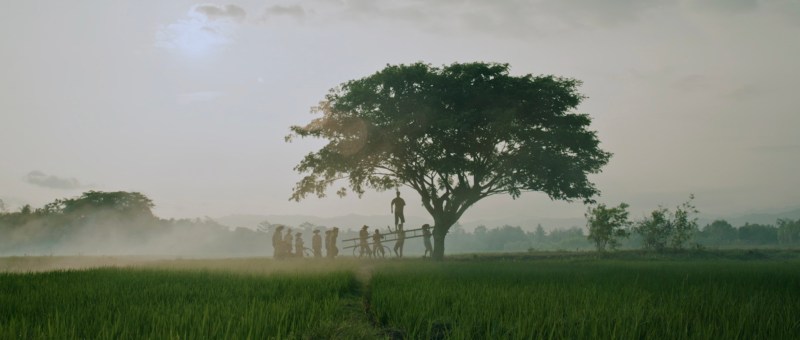
There’s something about a hole in the ground that invites mystery. Who put it there and why, where does it lead, and should we be worried about people falling in or what might crawl out of there that someone or something might have wished stayed buried. Hanung Bramantyo’s The Hole (Bolong, 309 Hari Sebelum Tragedi Berdarah) digs back to the Indonesia of the mid-1960s in which one kind of authoritarian rule is dying while the new had not yet been born. His hero finds himself torn between conflicting loyalties while straddling class boundaries as he searches for a potentially inconvenient truth behind the murders of several local officials.

The opening title cards tell us that this story takes place before a “national tragedy” in which seven army officers were murdered and their bodies thrown into a well during the 30 September Movement’s failed coup attempt. The killings are blamed both on “the communists” and perhaps on the army engaging in some questionable manoeuvres of its own. Sugeng (Baskara Mahendra) is charged with finding out the truth in order to rehabilitate the army’s image. He’s also made aware, however, that the village lies in a convenient spot for anyone who might be looking to launch a coup against Sukarno, which presumably includes Suharto. 

But what he quickly finds is that each of the dead men arguably deserved it and that the list of people who might have wanted them gone is quite long even before you start adding in ghosts. Each of them is someone with legitimate political power that they have enthusiastically misused. The village head Sumanto said he’d fix local infrastructure but embezzled the money for himself while bribing the police chief to turn a blind eye. The village secretary scammed the local farmers and trapped them in debt. Dependent on these authority figures, the locals were powerless to oppose them and those who attempted to speak out were quickly silenced. 

Some attribute these killings to the communists for that reason in that taking out corrupt officials is in line with their ideology, though it could just as likely be a person or group of people fed up with living under this system as Sukarno’s “guided democracy” began to fall apart due to its increasing dependence on China and Russia which further inflamed the nationalists and military. Sukarno had indeed based his system of government on a traditional village, but this one is rotten to the core as the corrupt officials all protect each other. Others argue that the killings are the revenge of a “hollow ghost,” and even if some are as dismissive of the supernatural as educated policeman Sugeneng, the term could perhaps stand in for many who have been hollowed out by governmental betrayal and pushed beyond breaking point. 

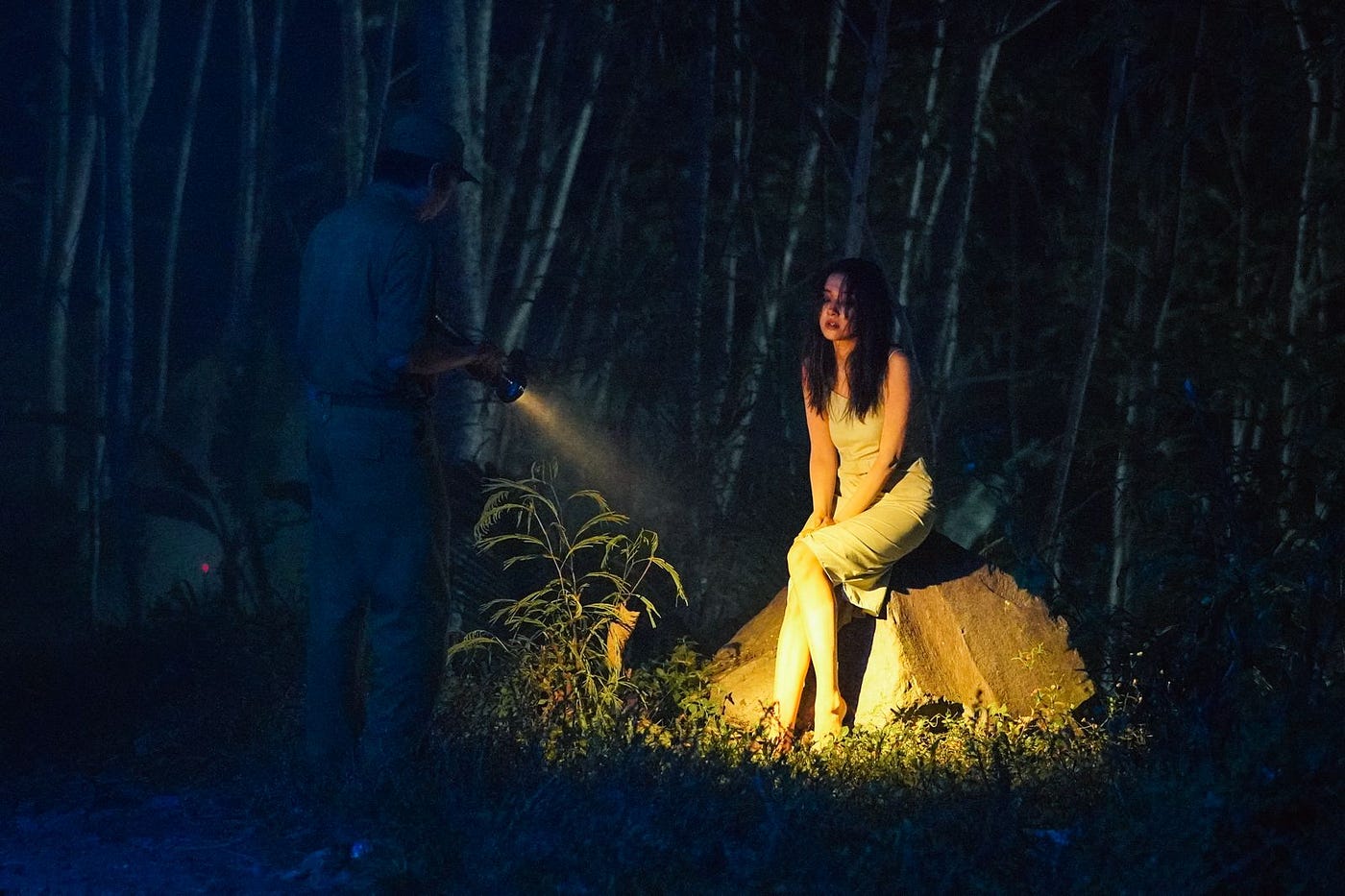
Sugeng may not believe in ghosts, but he stands in an awkward position. He was a adopted as a child by a wealthy man from just that village who is now on his deathbed. Sugeng’s adoptive father badgers him into marrying his adopted sister, Arum (Carissa Perusset), though he feels uncomfortable with it and even if assured by his imam that there’s nothing untoward about the arrangement still thinks of Arum as a sister. It’s tempting then to think that his present predicament is caused by the breaking of a taboo, or that, as an adopted son, he’s inherited a dark legacy stemming from his father’s wealth and privilege while doing his best to forget his roots and inhabit this new upper-class world. Back in the village, one of the guards on duty at the time of the murder pranked a friend with a black magic book made to look like the Quran, and perhaps it’s not so far-fetched to consider that dark sorcery is a possible cause for the strange events.

Sugeng, however, has no idea what he’s up against. He can’t see the political context nor his family’s fading fortunes nor is he really prepared for the truth behind the murders. It doesn’t quite occur to him that there might be a dark truth within his own household and callously ignores his new’s complaints about being chased by ghosts, focussing on his case and rarely coming home as she tries to care for her dying father alone. The holes here are the one’s in Sugeng’s, and the nation’s, buried histories, but it’s all still there and waiting to be unearthed. “The nation is not in a good state,” Sugeng’s imam friend warns him, and it seems that you can’t really blame anyone for turning to one dark side or another when things are as bad and confusing as they currently seem to be.


Trailer (English subtitles)
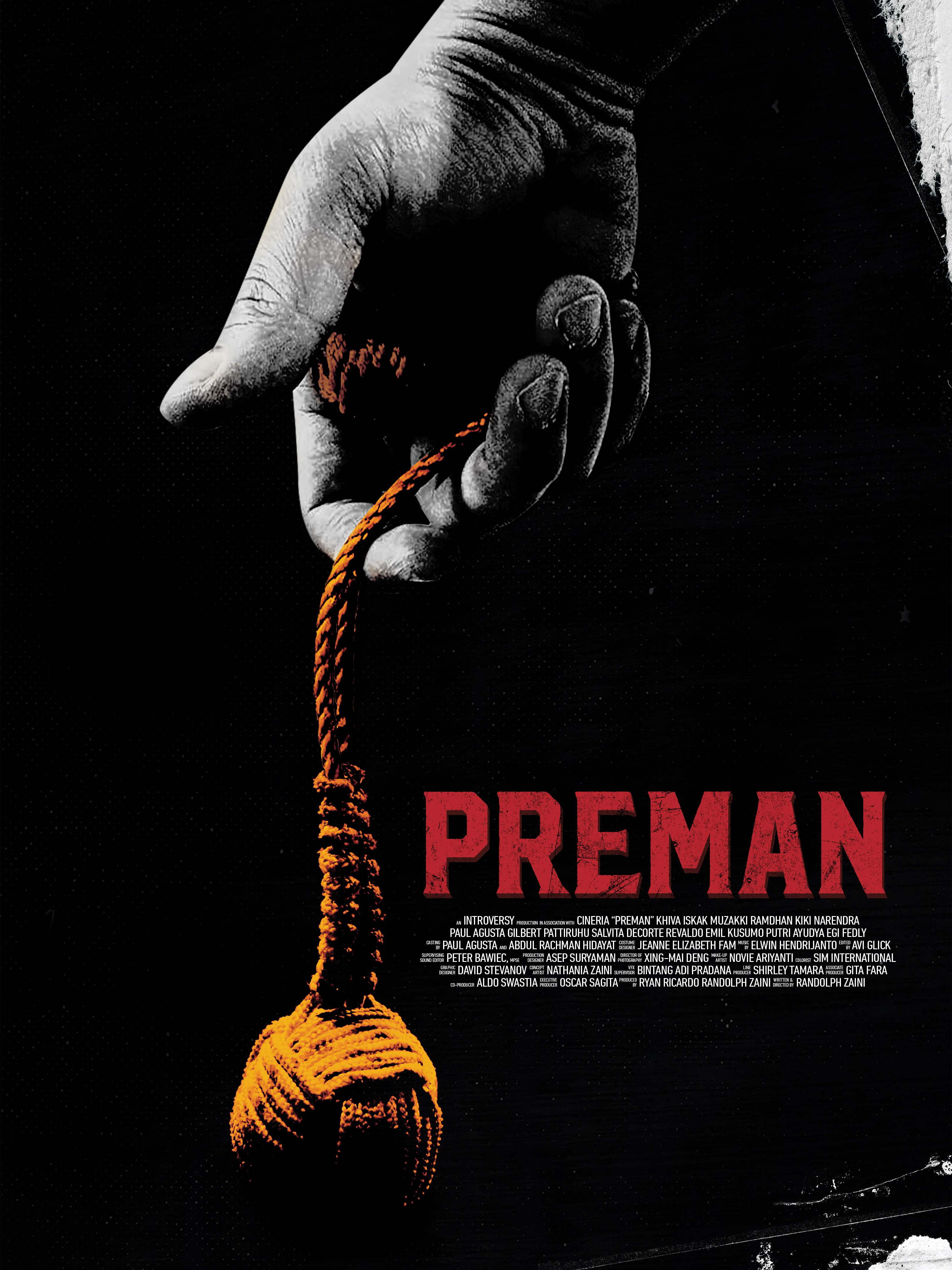
Preman: Silent Fury (Randolph Zaini, 2021)

“Sooner or later, you gotta do the right thing” the girlfriend of a complicit policeman tries to explain while he rationalises that in reality there’s little difference between a policeman and a gangster and even he’s too afraid to stand up to a dictatorial local thug deeply tied to an ambitious politician. Like many recent films from Indonesia, Randolph Zaini’s Preman: Silent Fury is a tale of toxic masculinity, societal prejudice, and a bullying culture but also one of fear and complicity in which a marginalised man must face his childhood trauma in order to save his son from suffering the same fate. 

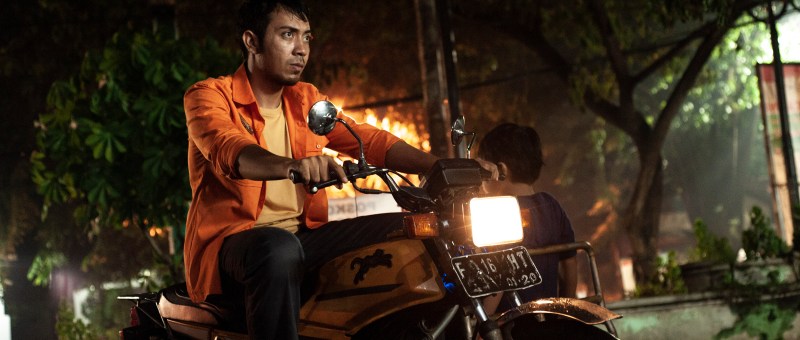
Sandi (Khiva Iskak), who lost his hearing in childhood, is a member of a vigilante preman gang, Perkasa. The preman view themselves as defenders of justice, but in reality are feared and despised by the world around them for their intimidating and violent behaviour. Sandi’s gang was once ruled by the wise Haji (Egi Fedly) who had lofty ideals of defending his local community from an oppressive authority but he’s recently been ousted by the authoritarian Guru (Kiki Narendra) who is no better than a thug willing to do the dirty work of a city politician in return for power and influence. His first job is clearing a local slum by force, insisting its residents leave but offering them no safe place to go. When Haji tries to resist, Sandi’s young son Pandan (Muzakki Ramdhan) witnesses his murder and thereby places a target on his back and that of his father as they try to figure out how to survive Guru’s increasing ruthlessness. 

Dressed in a military outfit, Guru is an allegory for lingering authoritarianism visually recalling historical dictators and is introduced while giving a bombastic speech which Sandi is obviously unable to hear yet goes along with anyway. Sandi’s deafness is in one sense aligned with his complicity in that he is literally unable to hear the reality of world around him but is also linked back to the childhood trauma which robbed him of his voice. An early failure to do the right thing, siding with the bullies out of fear rather than standing up for his friend who was being taunted with homophobic slurs, set him on a life long path of complicity too afraid of the gang and of preman culture to ever be able to leave it. 

Yet his disability also leaves him marginalised with few other directions in which to turn considering that disabled people struggle to find work in a society that has little accommodation for difference. Hairdresser/assassin Ramon (Revaldo) who refers to himself exclusively in the third person and peppers his speech with French, points out that everyone viewed Medusa as the villain but the real villains were Poseidon who raped her, Athena who cursed her, and Perseus who killed her rather than Medusa herself. Ramon is also on the end of a series of homophobic slurs from one of the Perkasa thugs who’d been trying to talk to one of his colleagues, who wants to be a musical theatre star, about erectile disfunction but struggled to get his point across while using a series of broad euphemisms out of embarrassment hinting at the hidden costs of societal repression. “Ramon is a mirror reflecting the ugliness of the world” the assassin explains, wielding his scissors of vengeance on behalf of a corrupt authority. 

As the policeman’s girlfriend points out, the reason the policeman has ended up in trouble is that he didn’t help Sandi when he asked him, just like Sandi didn’t help his friend, because he was too afraid to stand up to a thuggish bully. At some point you have to do the right thing, she reminds him, and only by refusing to be intimidated by Guru can they hope to escape his violence along with the threat he presents which allows him to dominate their society. Impressively shot given its low budget origins, Zaini’s playful drama features a series of well choreographed action sequences culminating in a striking avant-garde conclusion in which Sandi faces off against fox-suited villains, spraying psychedelic neon paint and exorcising the pain of his childhood trauma while freeing his son not just literally but mentally from an oppressive and bullying society. 


Preman: Silent Fury screens at Asia Society 23rd July as part of this year’s New York Asian Film Festival. It will also be released in the US later in the year courtesy of Well Go USA.

Original trailer (English subtitles)

Images: Courtesy of Well Go USA Entertainment

Gundala (Joko Anwar, 2019)

“If we see injustice before our eyes and do nothing then we’re no longer humans” the idealistic father of a future superhero instructs his young son, trying to impart a sense of humanitarianism as a basic moral good. It’s a lesson the boy will find himself unlearning and resuming later, his innocence well and truly destroyed by an often cruel and cynical society only to be reawakened to the idea that it doesn’t need to stay that way. Among the most recognisable names of Indonesian cinema, Joko Anwar turns his hand to the creation of a local comic book cinematic universe, adapting the 1969 comic Gundala by Harya “Hasmi” Suraminata for the present day filtering contemporary Jakarta through classic Gotham. 

Operating as an origin story for the titular hero, Gundala opens with the young hero Sancaka (Muzakki Ramdhan) unable to prevent his father’s (Rio Dewanto) death due to his fear of electrical storms when he is first set up by a duplicitous factory boss and then assassinated while leading a protest for fair pay and conditions. Soon after, Sancaka loses his mother (Marissa Anita) too after she is forced to go to the city for work and never returns. Ending up a ragged street kid, he’s saved from an attack by a rival gang by an older boy (Faris Fadjar Munggaran) who teaches him how to protect himself physically and mentally by convincing him that the only way to survive on the street is keep his head down and walk on by even if it looks like others are in trouble. 20 years later the adult Sancaka (Abimana Aryasatya) is an aloof young man working as a security guard at a print house where his sympathetic mentor Agung (Pritt Timothy) begins to remind him of his father in his conviction that “living is no use if you stop caring and only think about yourself”, while he also finds himself defending the woman next-door, Wulan (Tara Basro), and her young brother Teddy (Bimasena Prisai Susilo), from hired thugs sent to intimidate them because of their involvement in a protest against the forced redevelopment of a local marketplace.  

Events seem echo around him. The major villain Pengkor (Bront Palarae) is also an orphan but on the opposing side as the son of a cruel plantation owner murdered by his not altogether ideologically pure workers whose desire for fair pay and conditions he had resolutely ignored. According to cynical politician Ridwan (Lukman Sardi), Pengkor became a union organiser of his own, leading an uprising at the abusive orphanage he was placed into by a cruel uncle hoping he’d die and free up the inheritance, thereafter becoming a kind of godfather to the fatherless with a thousands strong army of eternally grateful orphans he saved acting as sleeper agents for a coming revolution. 

Pengkor’s nefarious plan involves fostering a conspiracy surrounding contaminated rice said to make the unborn children of the women who eat it turn out “immoral”, a generation of psychopaths unable to tell right from wrong. Fairly unscientific, it has to be said, but playing directly into the central questions of the nature of “morality” in a “immoral” society. Can it really be “moral” for bosses to exploit their workers and get away with it, for politicians to cosy up to gangsters and remain complicit with corruption, and for a man like Pengkor to be the only hope for orphaned street kids otherwise abandoned and ignored by a wilfully indifferent society? Pengkor decries that hope is the opiate of the masses, but that’s exactly what Gundala eventually becomes for them in his “electric” ability to resist, eventually rediscovering his humanity as he designates himself as the embodiment of “the people” pushing back against the forces of oppression and seeming at least to win if only momentarily.  

Young Sancaka’s fear of lightning is, in essence, a fear of his power and his social responsibility something he is quite literally shocked into accepting. In a world of quite striking social inequality, he finds himself the lone defender of the oppressed whose very existence spurs others, including previously cynical politician Ridwan, into rediscovering their own humanity in the resurgent hope of a better future. As someone puts it, peace never lasts long but you keep fighting for it because every moment is precious. Not so much a battle of good versus evil as a battle for the meaning of good, Anwar’s Gundala recalibrates the anxieties of the late ‘60s for the modern era and creates an everyman hero not only to resist them but to foster a spirit of resistance and humanity in the face of heartless cynicism. 


Gundala streams in Poland until 6th December as part of the 14th Five Flavours Film Festival.

Original trailer (English subtitles)