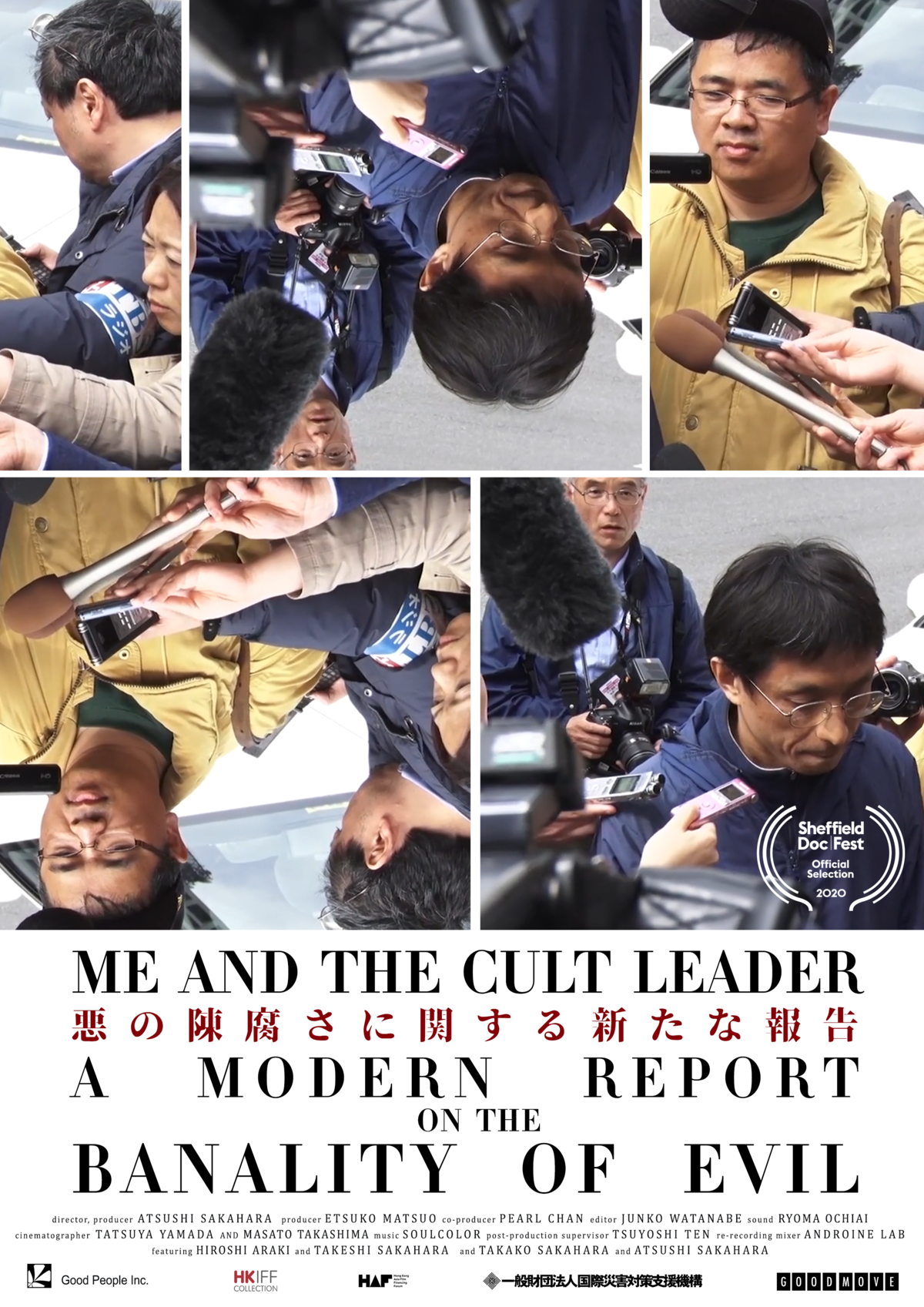
Me and the Cult Leader (AGANAI -悪の陳腐さについての新たな報告, Atsushi Sakahara, 2020)

How can you continue to serve an ideology which you know is responsible for a heinous act that offends your sense of moral righteousness? That’s a question that Atsushi Sakahara, a survivor of the sarin gas attacks on the Tokyo subway, finds himself asking in his documentary Me and the Cult Leader (AGANAI -悪の陳腐さについての新たな報告, Aku no Chinpusa Nitsuite Aratana Hokoku), as he meets with Hiroshi Araki, a current member of Aleph, the successor to Aum, the cult which planned and executed the 1995 act of terrorism which led to the deaths of 13 people and left 6200 injured, many like Sakahara with life changing consequences. 

Yet Sakahara’s purpose is the opposite of polemical, he merely reaches out to Araki in an effort to understand the mindset not only of someone who joined Aum in the early ‘90s and was a member at the time of the attack though not directly involved, but of someone who stayed and continues to believe in the teachings of cult leader Asahara who was executed in 2018 after years on death row along with other members responsible for Japan’s only exposure to domestic terrorism. Throughout it all, however what he seems to want is some kind of apology, or at least an act of contrition, something which proves elusive as the distant, thoughtful Araki largely refuses to engage as if afraid to accept that the ideology to which he has devoted all his adult life may in fact be corrupt and empty. 

Araki’s justifications run mainly to technicalities. He does not exactly deny that members of Aum were responsible for the attack, but explains that their guilt is the most logical explanation given the available evidence which includes their own confessions and so concludes it is likely the truth. The two men travel together on a kind of pilgrimage back to their respective hometowns which happen to be in the same area of the country, while in another coincidence they also attended the same university at the same time. A jovial presence, Sakahara attempts to hurry the near silent Araki along, pushing him to open up which he eventually does but failing to elicit from him anything which might begin to free him from the icy grip of his ideology. 

Sakahara subtitles his film “A modern report on the banality of evil”, and there’s certainly something of that as the film opens in a subway station, Sakahara and Araki merely two ordinary middle-aged men in anoraks waiting for a train. Yet Araki is clearly not an “evil” man. He appears to be thoughtful and sensitive, often breaking down in tears as the journey forces him to remember his life before he renounced the world, the vision of his grandmother waving him off at the station after a summer holiday leading back to that of his mother as he severed connection with her to join with Aum. He doesn’t quite explain what led him to join the cult save being overwhelmed by Asahara’s charisma when he gave a speech at Kyoto university in the early ‘90s, Sakahara having witnessed him arrive the year before but jokingly shouting out for the famously outlandish cult leader to show off his talent for levitation, save that he became disillusioned with consumerism after a pencil case he lusted over as a child lost its lustre when he got it home. The training, he goes on, caused him to lose the capacity for joy or pleasure, leaving him he explains with no other choice than to join the cult because there was no longer anything left for him in the outside world which had become unbearably painful as a result.

Yet knowing what he knows, how can he go on practicing Asahara’s teachings? Sakahara tries not to push him, only once or twice pressing for an answer as to whether or not he sees and understands his suffering and feels remorse, later introducing him to both his parents in an effort to prove that actions have wider consequences, that he is not the only victim but that others suffer because of his suffering. Meeting Sakahara’s equally compassionate mother and father does appear to move something with him, evoking a loose apology even if he immediately walks back on it with some manichean justifications that Sakahara is also responsible for everything that’s happened to him because it is all a result of his choices, good and bad. 

The unavoidable conclusion is perhaps that Araki is simply afraid to confront the implications of everything he’s seeing lest his entire worldview collapse and he realises he’s wasted all of his adult life serving a corrupt and empty ideology. Sakahara acts with total warmth and compassion for his dilemma, even at one point quite literally buying him a coat because he’s only brought his anorak despite it being freezing (Araki also constantly carries a sleeping bag because his asceticism seems to extend to beds and futons), patiently listening to his often sad stories of youth but every revelation is followed by extended silence, Araki shifting back inside himself unwilling risk bursting the bubble. Sakahara, however, remains patient hoping for the day that the cultist will finally see the light. 


 Me and the Cult Leader streams in the US until Oct. 31 as part of this year’s San Diego Asian Film Festival.

Original trailer (English subtitles)

Under the Open Sky (すばらしき世界, Miwa Nishikawa, 2020)

“Am I too unhealthy to live in society?” asks the hero of Miwa Nishikawa’s Under the Open Sky (すばらしき世界, Subarashiki Sekai) of his doctor, but the only answer he gets is a wry chuckle and an exhortation not to be so “pessimistic”. Inspired by Ryuzo Saki’s 1993 novel Mibuncho, the first of Nishikawa’s six features to be adapted from secondary material is in many ways a typical Showa-era story, testifying to the fact that the world has not changed as much as we might have hoped in the intervening 30 years since Saki’s novel was published, but it’s also a lowkey condemnation of the quiet hypocrisies which continue to define our notions of civility in the story of a man who was perhaps too good to survive in our “society”.

Opening with bars and heavy snow, Nishikawa introduces us to Mikami (Koji Yakusho) as he nears release after serving 13 years in prison for killing a man in what is described by the authorities as a yakuza gang war, though Mikami is keen to point out that he’d already attempted to leave the yakuza by then and the killing was mere self defence. In any case when questioned by the officers about to release him, he admits no remorse over the man’s death only that he lost 13 years of his life over “that hoodlum”. In any case he’s thrown out into the cold, boarding a bus back into the city where he vows to go straight. Once there, however he discovers the outside world to be fairly inhospitable. Not only are the skills he learned in prison next to useless when it comes to finding employment in the contemporary economy, but he must also contend with societal prejudice and his own wounded pride.

Stepping for moment into the realms of the issue movie, Nishikawa explores the relative impossibility of re-entering mainstream society as someone who has been convicted of a crime. Having spent most of his adult life in and out of prison as a petty yakuza footsoldier, Mikami has little education and no marketable skills aside from his capacity for violence and the ability to drive, something of which he is now deprived because his licence expired while he was inside and to get it back he has to start from scratch by passing the new-style two-part test. Mikami’s life is indeed a typical post-war story, abandoned to an orphanage by his geisha mother from which he later escaped and ended up joining a gang in place of the family he never had. “Prison is the only place that won’t kick you out no matter how badly you behave” he later quips, accidentally laying bare his yearning for unconditional love found only shakily in yakuza brotherhood.

Yet that old-fashioned, post-war yakuza is an outdated institution, like Mikami himself a relic of the Showa era floundering in the late Heisei society in which gangsters wear sharp suits and have fancy offices, finding more sophisticated ways to make war with each other than open thuggery. Everybody wants out, Mikami later muses to himself, but it’s hard to fit in to society and those like him find themselves drawn back towards the vagaries of the yakuza life for all the dubious certainties it continues to offer them. His lawyer and guarantor Souji (Isao Hashizume) tells him that he needs to regain his love and trust of people, but that’s a tall order when it feels like no one loves you and they make a point of letting you know you’re not forgiven. Even a simple trip to the supermarket proves traumatic when the head of the local neighbourhood association who just happens to run it decides to pick him up for shoplifting just because he knows he’s an ex-con. Thankfully he later realises his mistake and is filled with remorse, moved by Mikami’s quiet dignity in asserting his innocence and right to shop as he pleases. 

For all that, however, Mikami is a man of violence who has known no other way of life, taught that his only acceptable emotional release lies in pain and destruction. His violence is, however, for the sake of others not himself. He does not become violent with the store manager Mastumoto (Seiji Rokkaku) who later becomes his friend, but gleefully confronts two punks hassling a terrified salaryman and teaches them a minor lesson in the way only an old hand can. This other side to his otherwise childishly naive character shocks frightens Tsunoda (Taiga Nakano), a TV director Mikami had approached with the intention of being featured on his show in the hope of tracking down the mother who abandoned him, who engages in some armchair psychology to imply that the source of Mikami’s rage lies in his alienation as a rejected child. The irony is that Souji, his wife (Meiko Kaji), Matsumoto, and Tsunoda become Mikami’s new “family”, replacing that he’d looked for in the yakuza and providing a grounding in mainstream society that allows him to shed his anger, but the compromise they ask of him is in itself soul crushing in its implications to the extent that his complicity with it is no redemption but a moral failure. 

If such is the price of civility, Mikami may have a point, perhaps it isn’t worth it. In the end, it is our world which fails to live up to his goodness, his violence a result of society’s continued indifference to human suffering. He is no more free outside the walls than in, constrained by an unforgiving emotional austerity that permits injustice in the name of harmony. If you can’t protect the ones who’ll save the flowers from the storm, then what is your freedom for? Subverting a well worn redemption narrative, Nishikawa finds a wealth of kindness in a broken world, but suggests it’s not enough save us until the world itself is redeemed. 


Under the Open Sky streams in California until Oct. 31 as part of this year’s San Diego Asian Film Festival.

Teaser trailer (English subtitles)

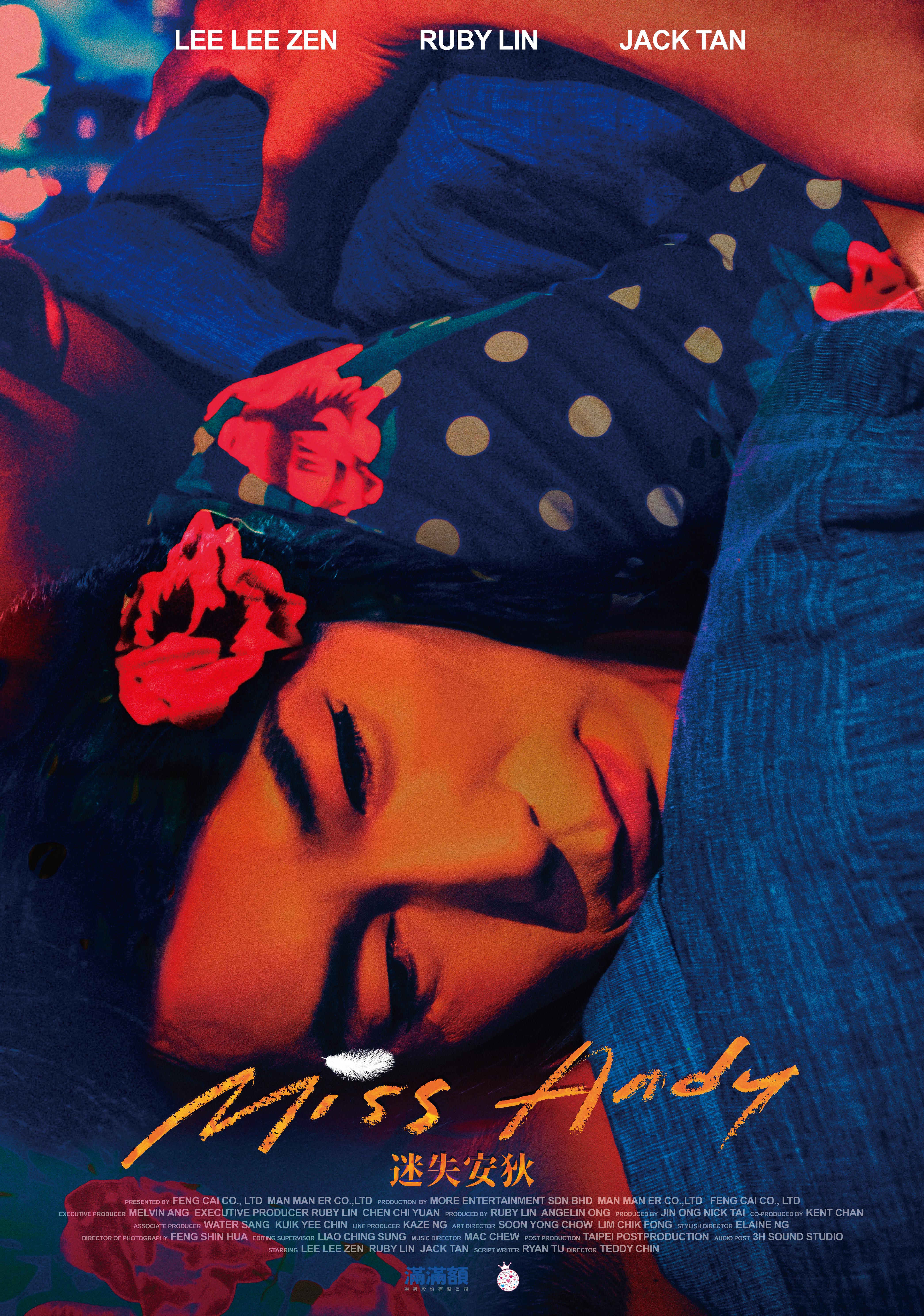
Miss Andy (迷失安狄, Teddy Chin, 2020)

“The things we like we’re still going to lose” according to a drunken young man lamenting youthful impossibility in Teddy Chin’s melancholy tale of marginalisation and frustrated hope, Miss Andy (迷失安狄). A Malaysian-Taiwanese co-production, Chin’s sensitive drama allows its disparate protagonists to find a sense of security in the solidarity of an accidental family, but all too quickly reminds us that despair is the enemy of love and that a lack of faith in human connection can undermine even the most genuine of bonds in those who can no longer believe in future happiness. 

The titular “Miss Andy”, Evon (Lee Lee-zen), has certainly had her share of disappointment. Now 55, she transitioned five years previously following the death of her wife but both of her grown-up children have since disowned her. Having lost her livelihood, she’s had no choice other than to resort to sex work in order to make ends meet, finding herself on the receiving end of male violence from her clients only then to be arrested with the man insisting that he was only defending himself against her advances and attempt to rob him while the unsympathetic police officer dead names and berates her with homophobic slurs. She is eventually forced to strip and expose her genitals while half the station gawp and take photos. Evon decides to give up on sex work and advises her friend Lucy to do the same, but she refuses to see the danger and is later murdered by a man who solicited her for sex. 

Feeling totally alone, Evon tries to claim her position in society, insisting on receiving her pay from her previous employer who tries to short-change her justifying herself with more transphobic slurs. Evon has only one other friend, Teck (Jack Tan), a young man with a hearing impairment who offers her additional work as a delivery driver during which she encounters a little boy looking longingly at some pastries in a small store by a petrol station. She decides to buy one for him, but the boy has gone when she returns. Later that night, however, she gets a surprise discovering the boy and his mother having snuck into her apartment after stowing away on the truck. Hearing that they’ve escaped an abusive relationship and have nowhere else to go she invites them to stay.

Sophia (Ruby Lin), the boy’s mother, is an undocumented migrant from Vietnam. She’s struck by the unlikely miracle of Evon because her name sounds a little like the Vietnamese for hope, something on which she was beginning to give up. We see her telephone her family, but her father only angrily demands more money, eventually passing the phone over to her sister who unsentimentally tells her that her mother has died. All the rest of the family were with her, only Sophia was absent. Feeling just as alone as Evon she is grateful for her kindness, swearing to find a job to repay it while cooking and cleaning as a means of saying thank you. 

Later joined by Teck and anchored by Sophia’s young son Kang who is the same age as the granddaughter Evon is rarely allowed to see, they begin to become a family, united in their sense of marginalisation each in some way rejected by mainstream society. Evon religiously buys lottery tickets using the birthdays of her wife and children as numbers in the hope they’ll eventually come up and she’ll somehow win her family back. Even Sophia who had perhaps not dared to dream of a brighter future eventually joins in as they idly fantasise about the kind of home they’d build if they actually won while sitting in an upscale furniture store before the server at a festive restaurant offers to take a picture of their “family”, but when that sense of possibility finally presents itself the illusion is shattered. Desperation undermines their fragile bond, pushes them towards doubt and betrayal, no longer able to believe in the viability of simple human goodness or mutual support as mechanisms for living but suddenly selfish and self-destructive destroying everything they’d built in mistakenly staking all on the vague possibility of material comfort.

Asked about her dreams, Evon had only stated that she wanted a safe and stable life but what she craved was the sense of togetherness and acceptance she felt with Sophia and Kang while her children continue to reject her and she finds herself marginalised by a conservative society that refuses to affirm her existence as a transgender woman. Bathed alternately in the melancholy neon of the outside world and the golden warmth of Evon’s apartment, Miss Andy leaves its marginalised protagonists wounded, pushed into acts of self harm having lost all faith in the veracity of simple human connection corrupted by the fear and despair of an unforgiving society ruled by inequality and prejudice. 


Miss Andy streamed as part of this year’s New York Asian Film Festival.

Original trailer (English subtitles)
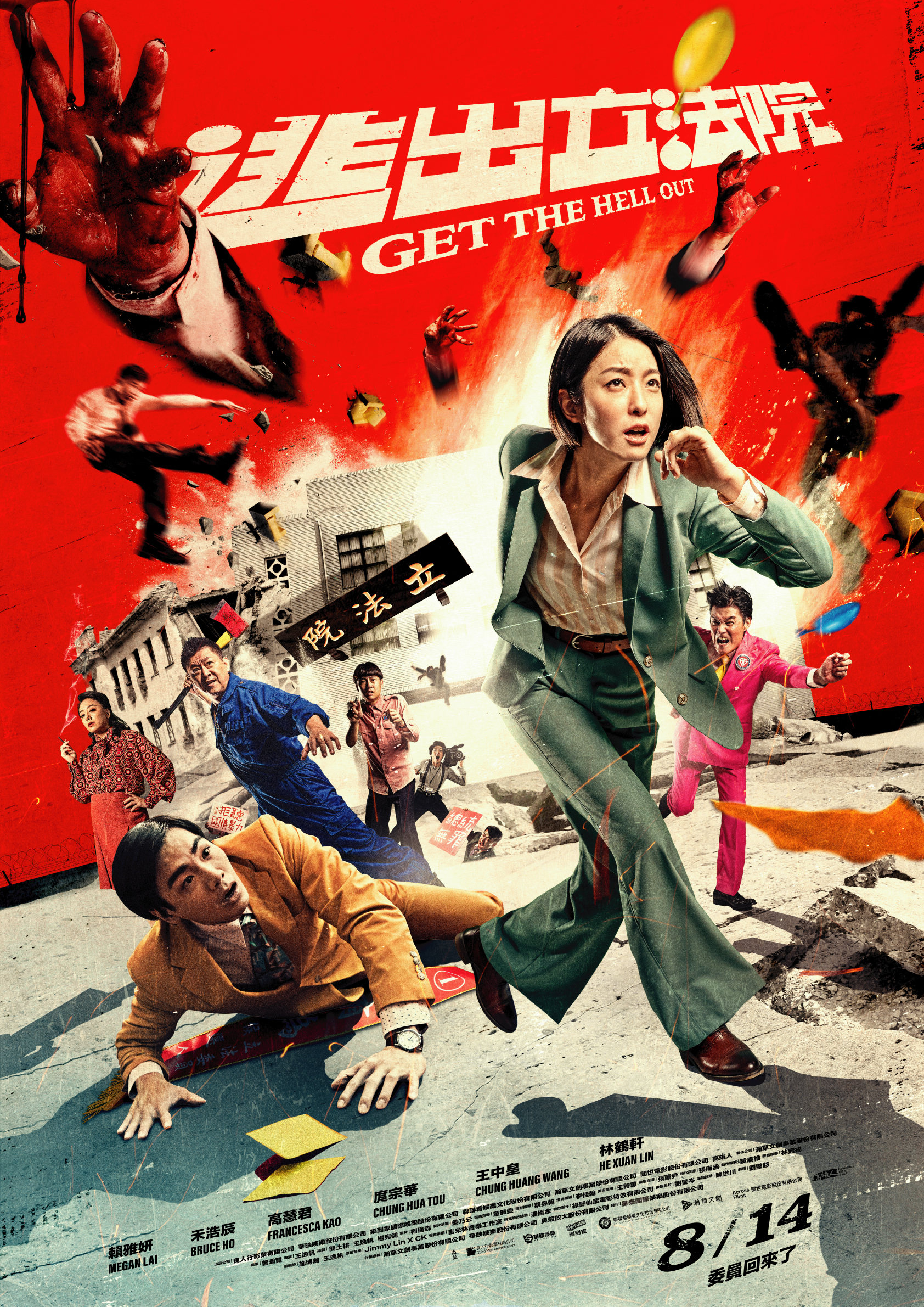
Get the Hell Out (逃出立法院, Wang I-Fan, 2020)

“A wrong movie makes you suffer for 90 minutes. A wrong government makes you suffer for four years” according to the title card at the beginning of Wang I-Fan’s madcap Taiwanese comedy, Get the Hell Out (逃出立法院, Táo Chū Lìfǎyuàn). A deliberately unsubtle political satire, Wang’s debut feature ultimately has its heart in the right place as its hapless hero comes to the conclusion that he just wants to protect his “home” and, ironically starts to believe he can really do that through the democratic process now that the legislative palace has literally been destroyed and rebuilt, freed of “idiot” zombies. 

Bumbling security guard with a nosebleed problem Wang You-Wei (Bruce Ho) has relatively little interest in politics. In fact, he’s only working in the building because his childhood crush Ying-Ying (Megan Lai) has recently become an MP standing on a single issue of getting the building of a foreign chemical plant she holds responsible for a plague of “idiot” rabies in her home town cancelled. Despite the prevalance of actual physical fights in the parliament, Ying-Ying is forced to stand down after her rival colludes with friendly press to provoke her into a violent outburst which results in a barrage of misogynistic criticisms that she obviously has trouble controlling her emotions and is unfit for office. Trying to protect her in the fray, You-Wei becomes an accidental hero in the media for valiantly defending press freedom. What ensues is a battle of influence as both sides try to manipulate the political capital of You-Wei’s unexpected celebrity, Ying-Ying hoping to convince him to take over her seat and oppose the chemical plant, and her rival Kuo-Chung (Wang Chung-huang) hoping he’ll join his cypto-fascist “Better Generation” faction to support it. 

Openly described as a gangster, the garishly dressed Kuo-Chung is a symbol of thuggish, vacuous populist politics, expert at playing the system to his advantage. The irony is that You-Wei starts to use his political brain but is operating under a misapprehension. His goal is impressing Ying-Ying and he incorrectly assumes getting more power by throwing his lot in with Kuo-Chung will help him do that, but all she cares about is getting the chemical plant cancelled to save her hometown with a secondary goal of eliminating the threat from the weird “plague” she assumes is caused by toxic waste and turns the infected into rabid “idiots”. Some might say the political class is already zombified, a bunch of numbskulls drunk on power, or that it’s the populace who are sleepwalking through their lives, but no one was really prepared for the prime minister getting turned into a zombie after a meeting with a foreign head of state to discuss the economics of the chemical plant. 

As Ying-Ying puts it, she spent so much time fighting to get in to parliament, and now she’s desperately trying to fight her way out. Wang’s “infection” allegory takes direct aim at a corrupt political class who might not care about the various risks of the chemical plant because they only affect a small group of relatively poor people living in a remote coastal village while the supposed economic and political benefits are important for the national good. But what Ying-Ying and You-Wei come to realise is that the entire nation is their “home” and so they must protect it by making it better and that starts by curing the “plague” of “politics”. Nevertheless, even if you get rid of Kuo-Chung another like him will rise, identically dressed, in his place because the battle for democratic freedom is never really won. 

Wang throws every post-modern device he can think of at the screen from Streetfighter graphics to onscreen karaoke lyrics and ironic product placement in the greatest tradition of low budget, nonsense Taiwanese comedies with the necessary consequence that the gags come thick and fast and are largely disposable while the spy movie pastiche complete with megalomaniacal, techno-genius villain never quite takes off. Nevertheless, there is gory zombie action aplenty filmed with cartoonish glee and not a little irony as Ying-Ying and You-Wei attempt to fight their way out of the corrupt parliament before it all gets blown to hell only to walk right back in there afterwards with a positive message of altruism and personal responsibility as they commit to rebuilding better with a revitalised idealism and belief in the power of democracy purged of the plague of idiocy.


Get the Hell Out streamed as part of Scene Taiwan 2020.

Original trailer (English subtitles)
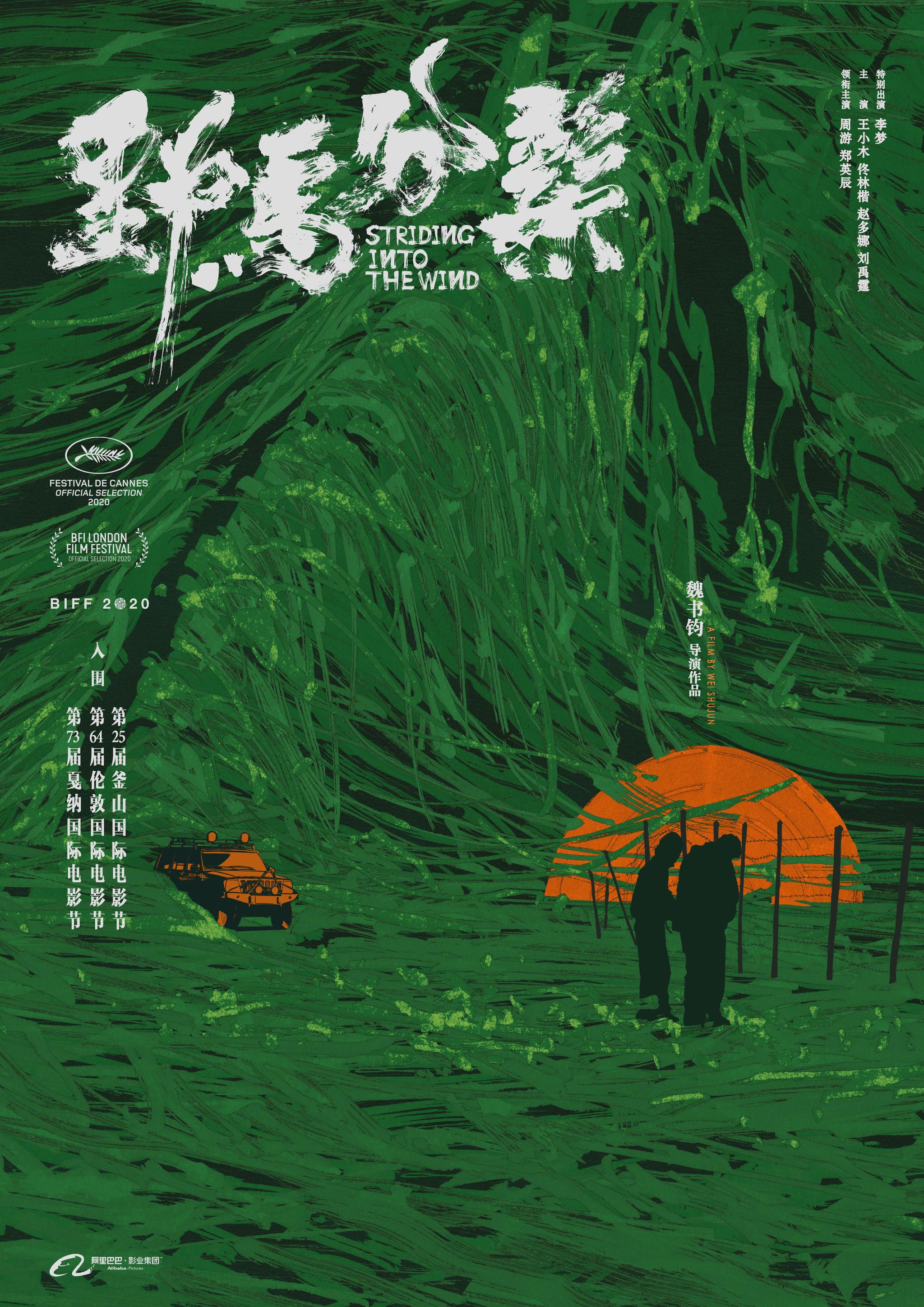
Striding into the Wind (野马分鬃, Wei Shujun, 2020)

“You’ll have a fabulous life too” dejected student Kun is advised, if only he’ll buy a secondhand ’97 Jeep Cherokee sitting forlornly on the lot of an irritated car salesman. If it’s so great why has no one else bought it, he not unfairly asks only for the salesman to reply that it’s because they’re morons who don’t know a good deal when they see one. The directorial debut from Wei Shujun whose graduation short On the Border won the Special Jury Distinction award at the 2018 Cannes Film Festival, Striding into the Wind (野马分鬃, Yěmǎ Fēn Zōng) is in many ways a tale of millennial malaise as the post-90s generation contemplate the relative elusiveness of the Chinese Dream in a society which seems to them much more authoritarian and restrictive than many would imagine.  

A 20-something film student, Kun (Zhou You) is not so much rebellious as founding his resistance in slacker passivity yet it’s his failure either to fully reject the rules of his society or accept his complicity that prevents him moving forward. As the film opens we watch him go rogue during a driving test, literally veering off course in his quest for independence as symbolised in his repeated failure to acquire a licence. So little does he care for the rules of his society that he goes looking for a car anyway, prepared to settle for the cheapest available which is what leads him to the Jeep Cherokee, wilfully mis-sold a vision of the Mongolian Dream by the overconfident salesman. Showing him videos of the wide open grasslands re-invisioned as a new frontier complete with wild horses running free over the horizon, the salesman of course neglects to mention that a vehicle of this age is not going to be particularly reliable, nor cheap to maintain especially if you can’t manage your own mechanics, and will soon be rendered unroadworthy under new emissions guidelines. Kun is being sold a pup. His quest for independence is primed to stall on the highway. It literally cannot take him where he wants to go. 

Meanwhile, he finds himself struggling under the weight of a young man’s ego squeezed on both sides by those who feel he’s not working hard enough at his studies and those who feel his quest to become an indie filmmaker is frivolous and irresponsible. Kun and his friend Tong (Tong Lin Kai) when they go to class at all more or less ignore their professor, at one point firing back at him that he teaches because he cannot do having never actually worked on professional film set. Kun’s attitude is to an extent vindicated in that he does actually seem to have more experience and be ahead of the man who is supposed to be teaching him, but on the other hand if he’d only bit his tongue and played by the rules he’d simply have passed the class and graduated rather than getting himself an instant fail for non-attendance with a side of pissing off the professor. Tong is mystified that, in essence, they’ve paid a lot of money and wasted four years to learn how to press a couple of buttons, but they’re also reminded by the not so subtle father of Kun’s girlfriend Zhi that these days you’re nothing without a PhD. Nervous and chastened, Kun lies that he might become a teacher like his mother as his parents intended, only for Zhi’s father to railroad him into applying for a steady civil service job right there and then, filling the form himself on his own laptop leaving Kun feeling even more emasculated at the hands of the older generation. 

For her part, Zhi is already getting bored with Kun’s irresponsibility. Forced to degrade herself with a part-time job as eye candy at various corporate events, she’s seemingly ready to head into a respectable middle class life while Kun is still dreaming of the grasslands and overly attached to his uncool car. She complains that he’s always saying he’s going somewhere but never actually goes, irritated when he rejects her offer to take him somewhere on her dime. Eventually she advises him to scrap the Jeep, a confrontation that threatens their relationship but Kun is still too attached to an illusionary dream of freedom to consider it. When he eventually gets to Inner Mongolia while working on a friend’s film shoot, he discovers that the “spirit of the grasslands” is largely absent. The banquet they’re invited to an awkward spectacle for tourists, the local culture repurposed and repackaged as a vision of an exoticised otherness that is the flip side of Kun’s equally inauthentic desire for a Chinese wild west. The grasslands appeal because their vast emptiness expresses infinite freedom, but paradoxically precisely because there is nothing there. 

Constantly frustrated by male authority figures from his father who is literally a cop to his resentful professor, quietly sneering girlfriend’s father, and the entire police force, not to mention his unseen mother apparently a well known professor synonymous with educational success, Kun finds himself constrained, longing to run free like the wild horses of the Mongolian plains but unable to shake off the yoke of social responsibility. Forced to give up the Jeep because of his own foolishness in misguidedly trying to evade authority, he becomes a passenger listening to the radio as a man he thought ridiculous and deluded is accorded unexpected success. Kun’s filmmaker friends emulate Wong Kar-wai, Hou Hsiao-Hsien, and Hong Sang-soo, looking beyond the Mainland for a sense of artistic cool but equally seeming to have few truly “independent” ideas of their own. The Chinese indie scene, Wei seems to say, flounders like Kun trapped by his own sense of inertia unable to free himself from an oppressive society, striding into the wind but ill-equipped to counter its resistance. 


Striding into the Wind streams in the UK 16th October, available to start between 6.30 – 7pm as part of this year’s BFI London Film Festival.

Clip (English subtitles)

Not Quite Dead Yet (一度死んでみた, Shinji Hamasaki, 2020)

©2020 Shochiku Co., Ltd. Fuji Television Network, Inc.

“What’s important is purpose, to live for something. Without it you’re as good as dead” according to the hero of madcap existentialist farce Not Quite Dead Yet (一度死んでみた, Ichido Shinde Mita). The feature debut from ad director Shinji Hamasaki pits a rebellious student against her overly literal, authoritarian dad as the pair begin to come to a kind mutual understanding only once he “dies” after being tricked into taking an experimental drug in order to unmask conspiracy within his own organisation. 

College student Nanase (Suzu Hirose) intensely resents her father (Shinichi Tsutsumi), the CEO of Nobata Pharmaceuticals which he has long been pressuring her to join. She’s currently the lead singer in death metal band Soulzz only according to a record scout at one of their shows their problem is that they’re all “zz” and no soul. Meanwhile, Nobata has assigned an underling, Matsuoka (Ryo Yoshizawa), to shadow her partly because Matsuoka too has very little presence and is in fact nicknamed “ghost” for his essential invisibility. The trouble starts with the escalation of a corporate feud as Nobata’s old buddy Tanabe (Kyusaku Shimada) starts manoeuvring to get his hands on the company’s research into an anti-ageing serum codenamed “Romeo”, planting a mole inside the organisation. As a consequence of his research another of the scientists nicknamed “Gramps” has stumbled on another drug which renders someone temporarily “dead” for a period of two days, naming it “Juliet”. Watabe (Yukiyoshi Ozawa), a consultant Nobata has brought in to streamline the business, convinces him to take the experimental drug in order to flush out the mole while secretly working with Tanabe to take over the company by forcing through a merger while Nobata is out of action. 

A typical socially awkward scientist, Nobata believes that life is about experiment and observation, a belief system which has thoroughly irritated his daughter who still lives at home but has divided the territory in half with clearly marked red tape. Nanase’s animosity towards her father apparently stems back to the death of her late mother Yuriko (Tae Kimura), angry with him that he never left his desk and didn’t make it to the hospital in time to see her before she passed away. “Life’s not a lab experiment” she sings, recalling her childhood during which her overly literal father took away life’s magic by patiently over explaining fairytales, scoffing that Prince Charming probably didn’t revive Sleeping Beauty with a kiss but a transfer of static electricity, while continuing to order her around in fatherly fashion now she’s all grown up. Perhaps still stuck in a petulant adolescence she started the band to vent her frustrations with the world in the form of a death metal “mass”, but she’s growing up. Her bandmates are getting jobs or getting married, she’s still stuck with no real clue about what it is she actually wants to do with her life except that she doesn’t want anything to do with Nobuta Pharmaceuticals.  

Once her father “dies”, however, she begins to gain a new appreciation for his life philosophy able to see but not hear his “ghost” while his body lies on a table in the office cafeteria. Nobata went into pharmaceuticals to help people, but has been led on a dark and vacuous path pursuing anti-ageing technology which is in itself a rejection of change and transience. Ending all her sentences with the word “death”, that’s not something Nanase can get behind. She believes in growing old gracefully, that they make drugs not to cheat death but to be able to spend longer with those they love. As her father had advised Matsuoka to do, she begins to find her purpose, rediscovers her soul, and figures out what it is she’s supposed to do with her life.

Matsuoka, however, seems to be permanently “invisible” despite the tentative romance that develops as he and Nanase attempt to subvert the conspiracy to stop them doing her dad in for good, brushing up against the venal Tanabe who seems set to muster all his corporate advantages against them partly because of an old grudge against Nobata. Of course, you have to wonder why the conspirators didn’t just poison him rather than having him go Juliet and then entering a race against time to cremate him before he wakes up, but as Nobata reminds us there are many things which science cannot explain. A cheerfully silly Christmas tale of rediscovering what it means to be “alive” in the presence of death, Not Quite Dead Yet is zany seasonal fun but with plenty of soul as its heroes learn to shake off cynical corporatism for a healthy respect of the values of transience.


Not Quite Dead Yet screened as part of Camera Japan 2020.

Original trailer (English subtitles)
Images: ©2020 Shochiku Co., Ltd. Fuji Television Network, Inc.

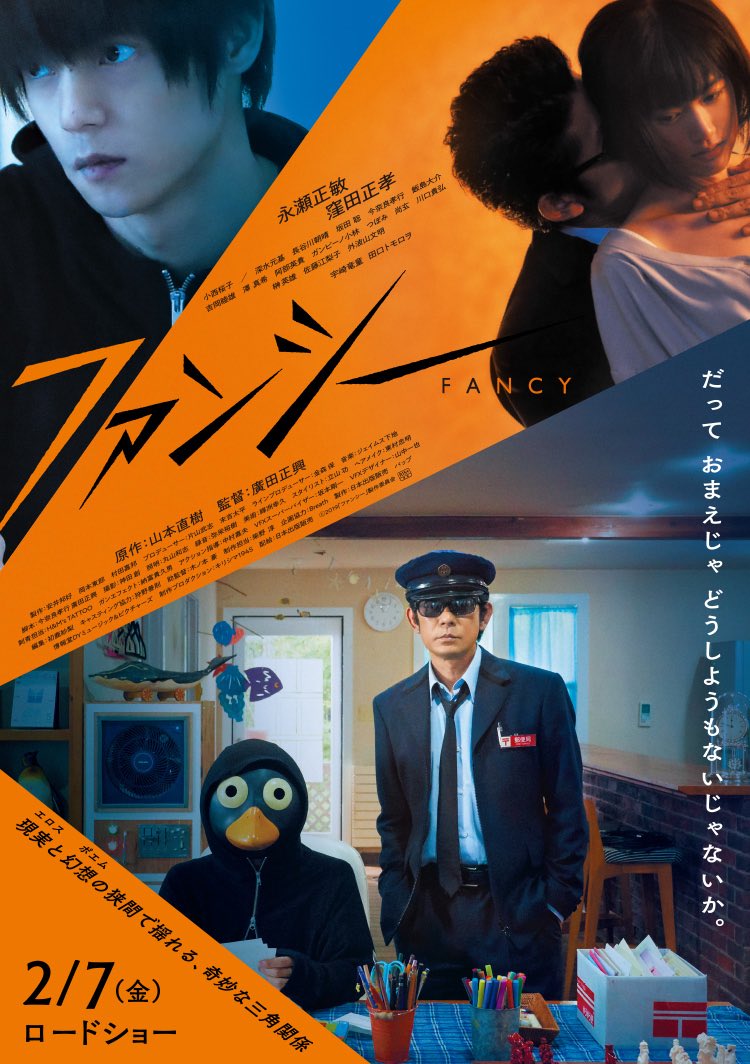
Fancy (ファンシー, Masaoki Hirota, 2020)

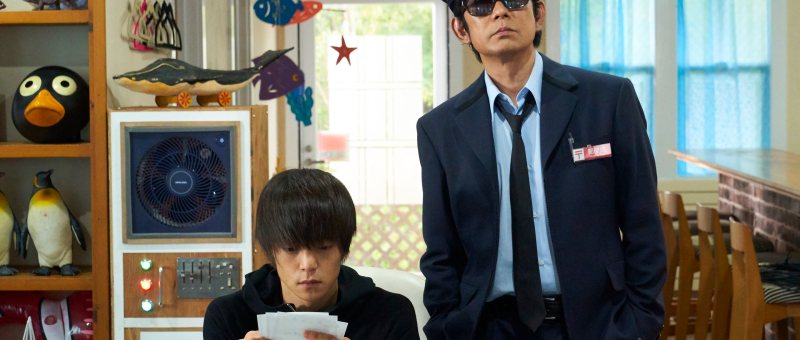
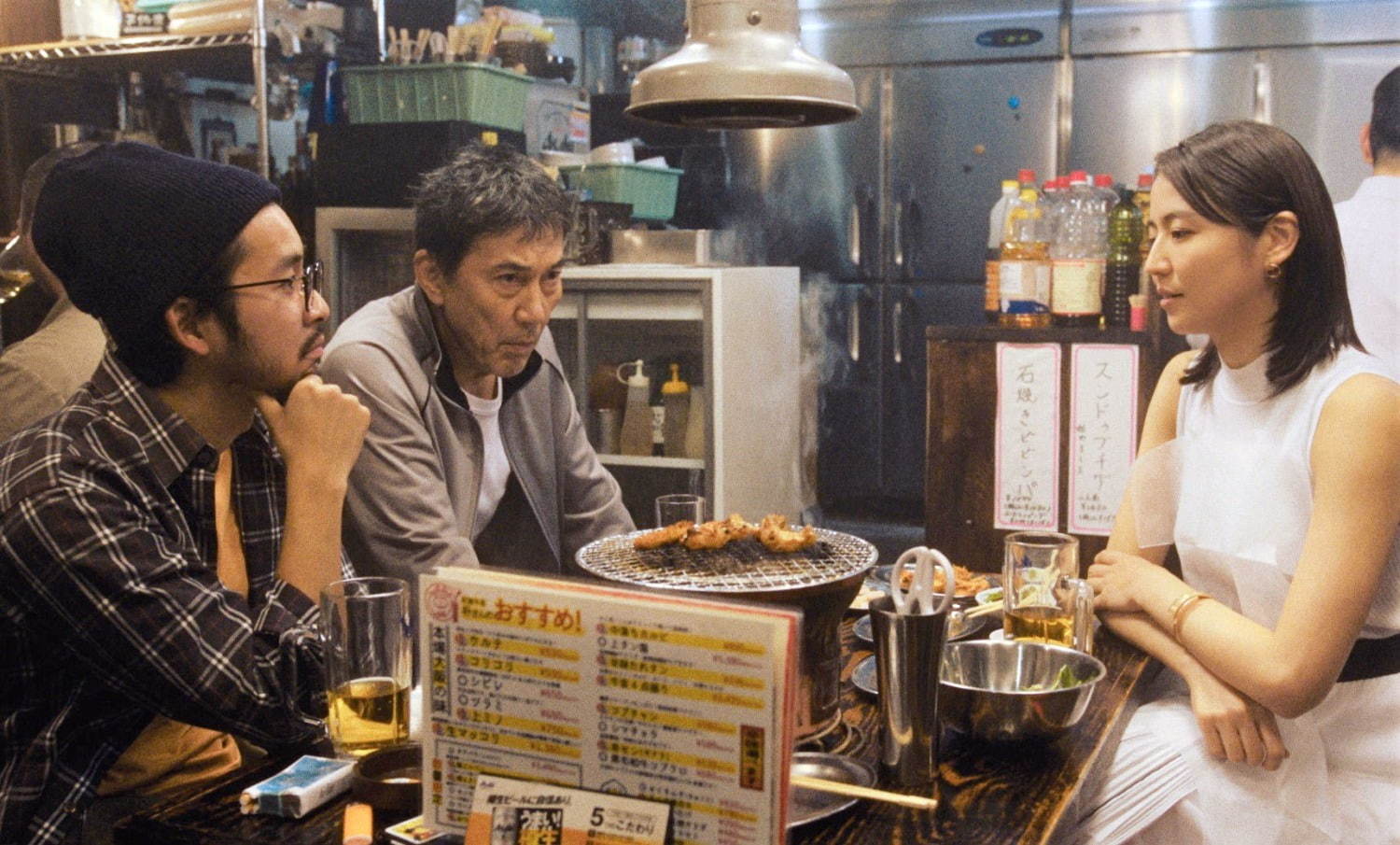
“Every minute of life is yours to make use of” according to the ultra cool hero of Masaoki Hirota’s Fancy (ファンシー), a laconic postman with a penchant for sunshades and a resigned attitude to transience. Adapted from the manga short story by Naoki Yamamoto, Fancy is indeed a transitory tale, a minor episode in the life of a poet who thinks he’s a penguin, his best friend the postman, and his penpal seeking her own kind of escape in an impromptu and probably unwise proposal of marriage. 

The postman, Takasu (Masatoshi Nagase), is also a tattooist, a former yakuza now reformed and living quietly in an old-fashioned hot springs town which seems to be stuck in the Showa era. As Takasu’s colleague Tanaka (Tomorowo Taguchi) puts it, it’s pretty “standard” now for everyone to have two jobs, his side hustle being a shooting gallery which is a front for the sex trade. Even the local Buddhist priest is intent on trying to sell everyone he meets a funerary monument, while Southern Cross Penguin (Masataka Kubota) is a best-selling poet particularly popular with high school girls in addition to being a flightless aquatic bird in human form. Penguin doesn’t expect us to believe him, but tells us that a penguin is just what he is and there’s no particular reason for it. So completely does he take his penguinhood that he opens the door in a full penguin mask, dresses only in black and white, mainly eats raw fish, and keeps his home ice cold with the aid of several industrial-size air conditioners. Penguin prides himself on answering the many fan letters he gets, explaining that they’re not so much “fans” as “comrades” who are also looking for the “shining country”. In any case, his fan mail is how he met the postman, his only friend, who is content to shiver in his home putting whisky in his tea to stave off the cold. 

Penguin’s life begins to change, however, when he gets a letter from “Moon Night Star” (Sakurako Konishi), a fan with whom he’d been corresponding. Moon Night Star pretty much insists on becoming his “wife”, failing to take Penguin’s hints that she might not be very happy “married” to an aquatic animal who can’t go outside. As we will later discover, Moon Night Star is in her own way rebelling against her fate, taking refuge in Penguin’s igloo and engaging in a delusion that she loves him in order to make it work. For his part, Penguin perhaps comes to like her too, but he can also see that she’s quite “depressed” stuck in the cold with him, pushing her towards the outside and into the arms of the postman. 

Takasu, meanwhile, finds himself on a series of borders as he begins to confront his past in the form of his absent father and the family he seems to have lost, sympathetically telling his pained former wife that her life is hers to do with as she wishes, perhaps in a sense cuttingly refusing her apology but also accepting her right to seize the present. Another man with two jobs, Takasu’s childhood friend is both yakuza gang boss and hotelier, confiding that the gangster stuff is too stressful and he wishes he could just focus on the hotel in the same way the Takasu has now become a postman. It’s his strange relationship with a yakuza drifter, however, that threatens to drag him back into gangsterdom as he learns that there’s been a schism in his former clan. With a turf war brewing, the loyalists have taken over his friend’s hotel, unreconstructed Showa-era yakuza on the streets of a pleasant hot springs resort. 

“We’re doomed anyway, do what you like” one of the goons intones, in one sense subverting Takasu’s mantra but in another perhaps embracing it. A memory of his father reminds him to “make very second count” while also catching him in an endless moment of gaze, unable to forget the back of the woman his father was tattooing at the time. Takasu looks and does eventually touch, but admits his jealousy obsessed with skin as canvas only latterly taking off his shades in a willingness to see and be seen. Penguin, meanwhile, who wanted to swim in a sea of words, finds himself floating free, braving but eventually succumbing to the heat before exclaiming that he’s going to close his eyes to allow a new story to start. The love of a poet is fleeting, Takasu reflects as each of the various protagonists shifts towards their “main” identity, edging back towards conventionality in abandoning the “fancifulness” of their sometimes strange existences. There will, however, be more strange adventures because even if it falls apart beneath your feet, life’s what you make it, be you a postman or a penguin. 


Fancy screened as part of Camera Japan 2020.

Original trailer (no subtitles)

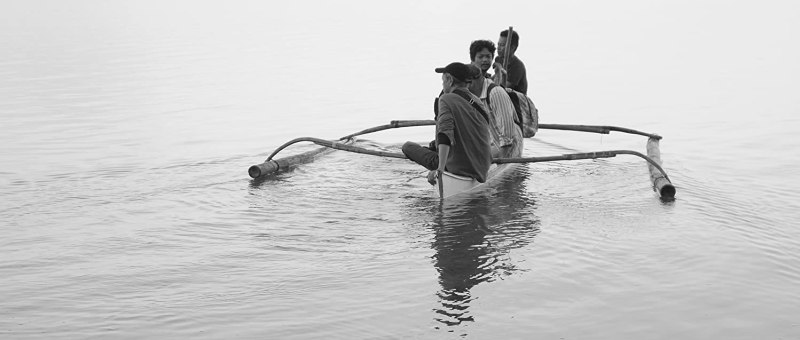
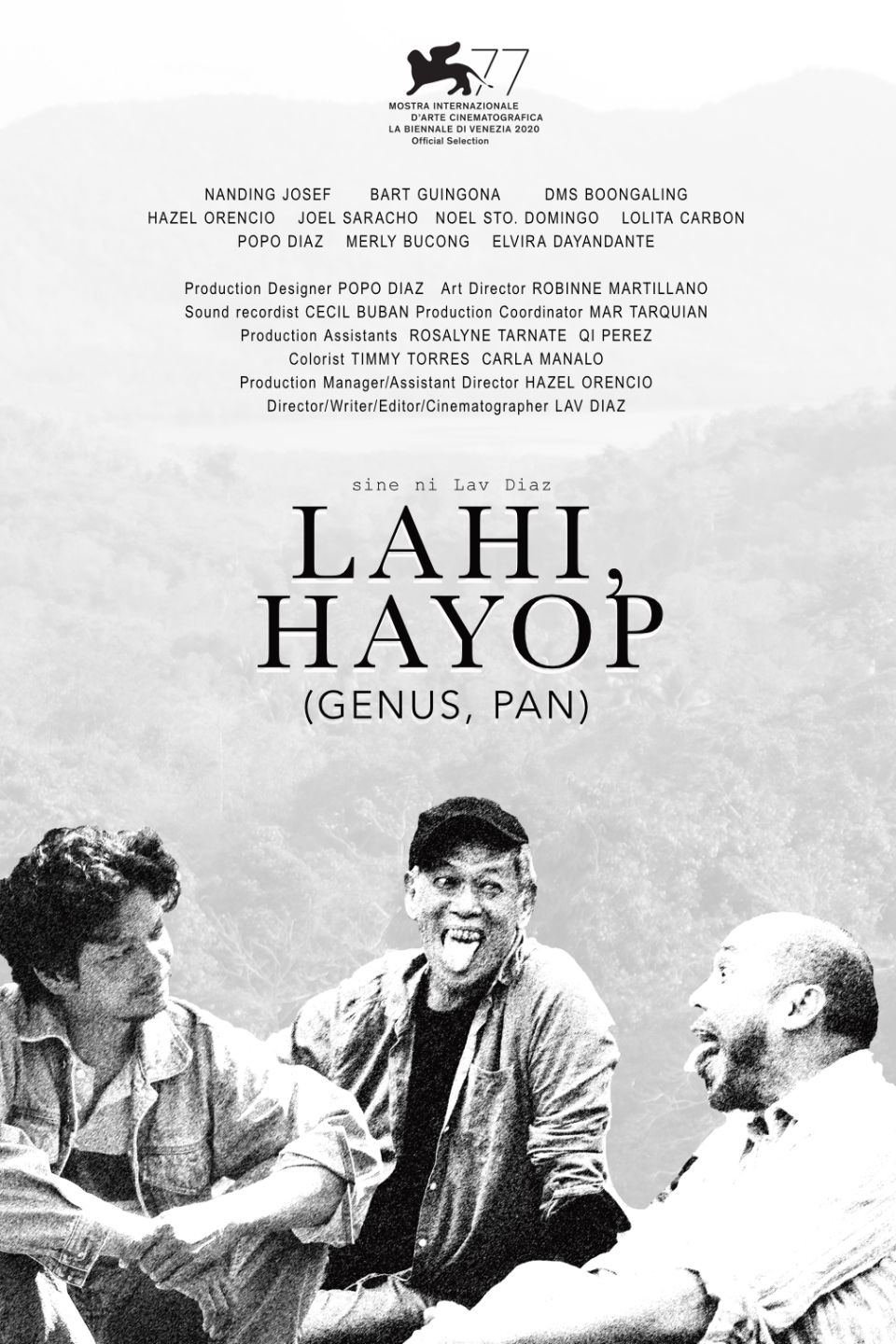
Genus Pan (Lahi, Hayop, Lav Diaz, 2020)

“Use your mind not your emotions” the hotheaded youngster of Lav Diaz’ Genus Pan (Lahi, Hayop) is repeatedly told, perhaps ironically by an earnest man of faith. Diaz’ shortest work in quite some time at a comparatively trim 156 minutes, Genus Pan is also among his most accessible in its seeming directness but carries with it hidden depths in its questioning of the “unevolved” human psyche, no better than an ape unable to overcome its baser instincts or cure the curse of human selfishness in which the only way to escape oppression is by becoming an oppressor. 

This is what Andres (Don Melvin Boongaling) fears has happened to his sometime friend, Baldo (Nanding Josef). As the film opens, the men are collecting their pay but as is customary the money is depleted before it even enters their hands with so many charges and deductions symptomatic of a world of normalised exploitation. Baldo found jobs at the goldmine for the young Andres and his old friend Paulo (Bart Guingona) but expects a cut of their pay as a brokerage fee, money Andres is loathe to give him both on principle and because he needs it to pay for medical treatment for his ailing sister. Baldo, however, is unsympathetic accusing the young man of ingratitude and disrespect. The three men are to travel back to their home village together on a boat Baldo has paid for, instructing the boatman to drop them at the far end of the island in order to avoid having to pay any more “fees” to the various authorities they may otherwise encounter in town, after which they will journey on foot through the forest. 

The forest itself is a primal place in which man is most aware he is also an animal. This fact is perhaps brought home to the men thanks to a broadcast received on Paulo’s radio in which a psychologist expounds on the idea that the human brain is largely underdeveloped, the marking of a developed mind a predisposition towards altruism. There is not so much difference, he argues, in the mind of an average human with that of an ape, “Genus Pan”, ruled by its basest instincts of selfishness and violence. Left alone in the forest and forced into mutual dependency, the differences between the three men each in their own way archetypes begin to strain their relationship. Paulo, a deeply religious man who spends most of his time reading the bible, is the peace maker but is also hiding a dark secret which perhaps informs his unexpectedly cynical advice to the earnest Andres who declares himself sick of his world of constant corruption, unwilling to be “a witness to this kind of dirt all my life”. Andres resents Baldo not only for the practical impact of his attempts to extort him, but that he has given in to the world’s venality and become another oppressor just like everyone else. Paulo advises him to use his head not his heart which would doubtless tell him that resistance is futile, but even in his nobility Andres cannot escape his rage at this infinitely feudal world in which a powerful few carry untold authority. He alone raises concerns about conditions at the goldmine where being buried alive is not an uncommon occurrence, not to mention the other mysterious deaths and disappearances, and longs for answers as to the murder of his brother he suspects for refusing to pay bribes to the local authorities, along with the spurious imprisonment of a local woman, the rape of a pair of sisters, and abuses against an indigenous mountain community.  

At the forest’s edge, Paulo reveals to him what it might have cost to escape his oppression as a member of a circus ruled by a cruel and sadistic tyrant, lamenting that in truth they were never able to escape Hugaw Island the ironic name of which apparently means “dirt”, given to it under the Japanese occupation in which it housed a comfort women station where women kidnapped from surrounding islands were forced into sexual slavery. The action shifting to another three men, the oppressors the Captain (Popo Diaz), Sergeant (Noel Sto. Domingo), and the least “developed” mind of all the calculating thug Inggo (Joel Saracho), further history of the island is revealed in its past as a smuggling hub unfairly defamed by foreign powers who spread rumours of its dangers to keep the curious away. Inggo longs to get his hands on the “jar of truth”, a burden later entrusted to Baldo’s daughter Mariposa (Hazel Orencio) who can move only very slowly yet is often carrying tremendous weight. 

Shooting in his familiar style, monochromatic static camera and long takes, Diaz’ shocking shift to handheld to dramatise false testimony as Inggo conspires against Andres to quell his rebellion hints at the irrational instability of “truth” and its potential for misuse at the hands of men like Inggo. A lone holdout against post-colonial feudal oppression, Andres’ refusal to capitulate cannot stand. As Paulo had warned him, he is a threat to the social order. The “smart” ones play along, and then like Baldo they join in while the Inggos of the world continue to prosper in their smug and heartless cruelty. “The island people are mute” a bereaved mother laments, “fear has taken over”. Ending on a note of intense anxiety, Genus Pan suggests that the civility we believe separates man from beast is at best paper thin while resistance is met only with futility when those in power are free to act with absolute impunity. 


Genus Pan streams in the UK 11th October, 5.30pm to 14th October, 5.30pm as part of this year’s BFI London Film Festival.

Original trailer (English subtitles)
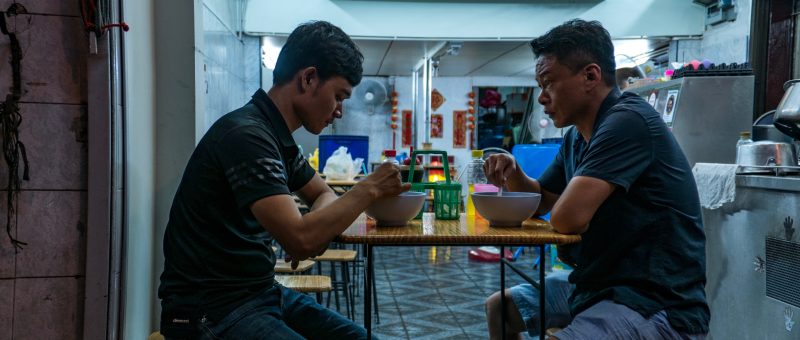
Days (日子, Tsai Ming-liang, 2020)

It’s not so much time that makes you feel old as the weight of all the days. Returning with his first narrative feature since 2013’s Stray Dogs, Tsai Ming-liang’s Days (日子, Rìzi) spins a tale of twinned loneliness in which two men, one young one older, one rich the other poor, embody two kinds of sadness as they live out their days of detachment as living ghosts in world which seems to have no place for them. 

Tsai opens with the face of his muse, Lee Kang-sheng billed only in the credits as Kang a wealthy man living in a spacious home surrounded by the beauty of nature. The lengthy, unbroken scene finds him staring impassively out of a window while a storm rages outside, the sound of rain falling while the reflection of trees blown by the wind is eerily reflected behind him. We can see that Kang is a man in great pain, his eyes filled with a melancholy desperation. He stretches and rubs his neck, his physical discomfort perhaps a manifestation of the emotional suffering which he tries to heal by fire, enduring painful moxibustion in search of relief.

Meanwhile, in Bangokok, Laotian migrant Non (Anong Houngheuangsy) is quietly tending fires of his own, firstly those of ritual offering and secondly of sustenance as he stokes the embers to cook the old fashioned way in his tiny, spartan apartment. While Kang is a resolutely passive presence, Non fills his lonely days with industry, constantly at work as we witness him laboriously prepare his dinner with documentary realism. Non is at home with solitude in the private space, but forever alone outside of it. He stands to one side at the market where he works as customers mingle around him, always out of place and unseen like a ghost hovering in the corner of the frame. 

Parallel lines who meet, the two men eventually share a poignant, nominally transactional encounter in a nebulous third space of a neutral hotel room to which Kang has called Non for a sensual massage, presumably how he makes ends meet in Bangkok. Once again the young man does all the work while Kang lies impassive, Non oiling his fingers as he runs his hands over the older man’s body easing his pain through physical contact before he retreats off screen and we hear fabric falling, his Calvin Kleins hitting the floor as the two men briefly connect through an intense act of lovemaking, later proceeding to the shower where Non, still in the role of caregiver, tenderly washes the dejected Kang. Before he leaves, Kang idly hands the younger man the gift of a music box, a spontaneous decision that sparks a moment of melancholy emotional release. They struggle to say goodbye. Non leaves and Kang chases after him, Tsai lingering in the empty space of the hotel room while the two men head for dinner before returning to their respective days in someways changed and others not. 

His pain perhaps temporarily eased, Kang is not quite so passive as before, doing something or other with a fish and going for late night walks, but still finds himself lying awake while the sounds of outside wash over him, his eyes wide with fear and sadness. Non, meanwhile, returns to his routine but even more of a ghost than before, sadly cradling the music box as if in memory of his momentary connection its sound drowned out by the noise of anonymous modernity while the world goes on all around him, an invisible figure ignored by passersby walking alone into the night. 

A opening title card warns us that this is a film intentionally unsubtitled, much like life left to our own shallow grasp of meaning in thought or action, but what little dialogue there is hardly requires interpretation we feel it all the same. Tsai conjures an almost Antonionian sense of emptiness in place, a lengthy still shot of a “haunted” building peeling at the facade suddenly brought to life by the brief shadow of a cat in a window, while abruptly shifting to handheld to follow Kang, somehow alone and clutching his neck in pain in the chaotic streets. Both men exist at angles to the world, as if in some kind of secondary plane, meeting only for an instant and then returning to their solitary existences with only the brief memory of connection perhaps more painful than its absence. Tsai charts competing reactions to existential loneliness, the listless ennui of the wealthy Kang and the ceaseless industry of migrant worker Non, but finds them both equally displaced, searching for connection in an increasingly disconnected world. 


Days streams in the UK until 11th October, 6.30pm as part of this year’s BFI London Film Festival.

Original trailer (dialogue free)

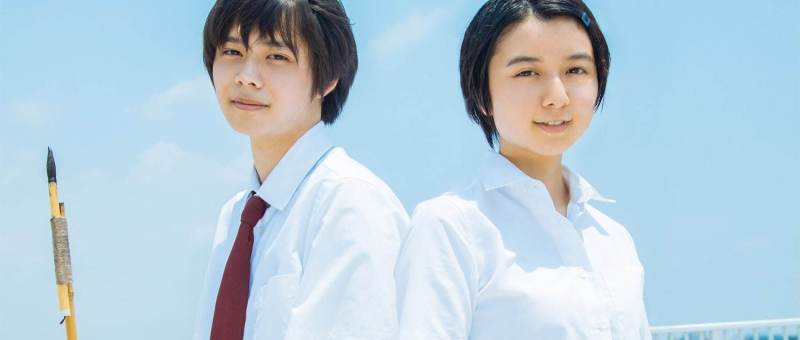
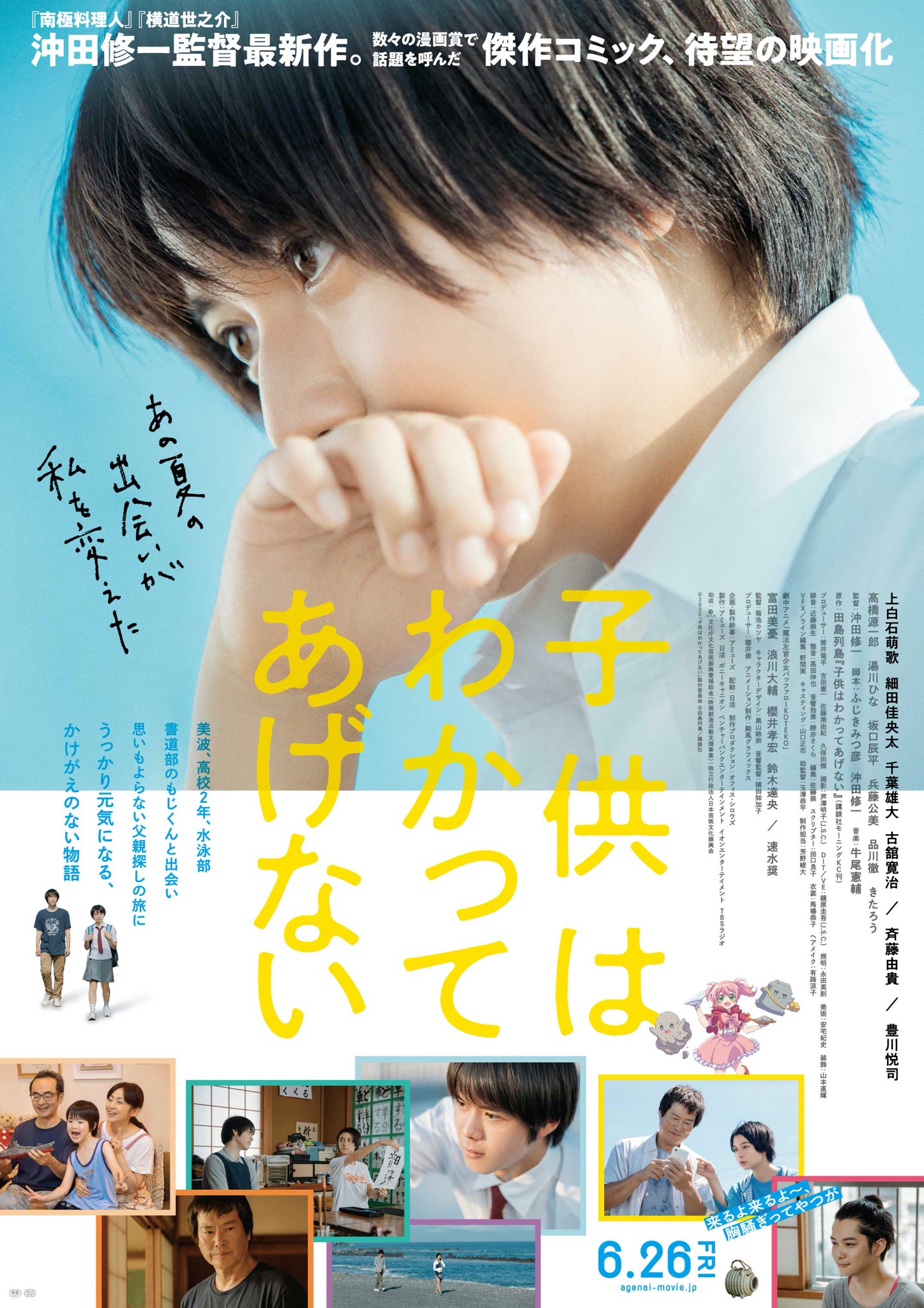
One Summer Story (子供はわかってあげない, Shuichi Okita, 2020)

“One man’s not enough to make a difference, you learn something and pass it on” the heroine of Shuichi Okita’s One Summer Story (子供はわかってあげない, Kodomo wa Wakatte Agenai) is told, learning about life from her philosophical, slightly defeated birth father. Adapted from the manga by Retto Tajima, Okita’s teen drama is in many ways a typical “summer story” in which a high schooler goes on a quietly life changing journey during one of the last summer breaks of their adolescent lives, but it’s also as much of his work is an empathetic plea for a kinder world built on mutual understanding and acceptance. 

Okita signals as much with his animated opening, taken from the heroine’s favourite show, Koteko, in which a magical girl plasterer helps “Count Cement” repair his relationships with his estranged children, Mortar and Concrete, from whom he had withdrawn in shame realising that without water he is nothing while his kids could still make something of themselves through becoming bridges and houses. Koteko is something of a touchstone for Minami (Moka Kamishiraishi), a regular high school girl and member of the swimming team moved to tears by the opening song which preaches that walls aren’t something to be overcome but a canvas on which you can plaster your dreams. At the pool one day, she spots a boy on the roof painting a picture she quickly recognises as Koteko, rushing up there to befriend him as a fellow fan. In addition to being a Koteko-lover, Moji (Kanata Hosoda) is the son of a prominent calligraphy family and it’s at his house that she finds a vital clue, a talisman which matches the one she got from her birth father for her last birthday. 

Immediately following the end of the opening anime sequence, Okita shows us a happy family scene in which Minami’s stepdad (Kanji Furutachi) hands her tissues while she cries to the ending theme, joining in with the dance while her mum (Yuki Saito) cooks in the background and her live-wire half-brother runs round in his pants. Her family setup might still be considered unusual in conservative Japan, in fact one of her friends even exclaims that they’d never have guessed that her stepdad isn’t her birth father on hearing her mother was married before, but they are clearly very close and loving, ordinary in the very best of ways. Minami isn’t unhappy or lonely at home, she isn’t really thinking too much about her birth father even if perhaps on some level curious but the talisman becomes a thread to tug on, sending her on a quest of self-discovery seeking some answers about her past as she begins to come of age. 

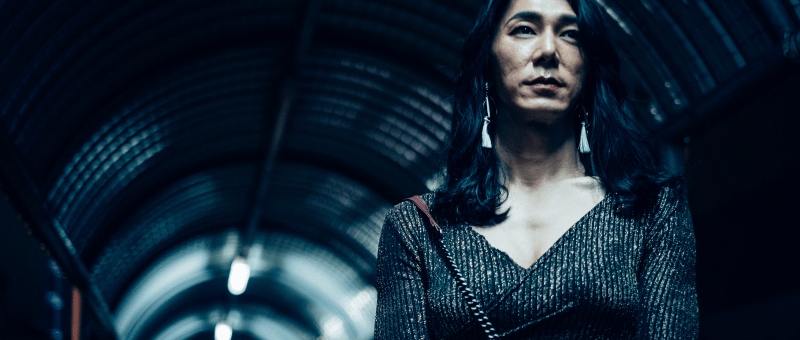
To do this, she enlists the help of Moji’s older sibling Akihiro (Yudai Chiba), a transgender woman disowned by the conservative, traditionalist family of calligraphers and now living above a bookshop while working as a “detective”. As the pair find out, it’s less high crime than missing moggies that are Akihiro’s stock in trade but she’s moved to have a go helping to find Minami’s dad after looking at her bankbook containing her life savings, not for the amount but because she remembers saving up herself at Minami’s age to fund her reassignment surgery. Invoicing her later, Akihiro bills her zero yen telling her merely to make sure she uses her money to help others when she grows up, echoing the film’s pay it forward philosophy as advanced by Moji who teaches kids calligraphy at his dad’s school, advising Minami that people can only pass on skills they’ve learned from others and so perhaps she could teach someone to swim. Her birth father Tomomitsu (Etsushi Toyokawa), a former cult leader who lost faith in himself for being unable to teach his innate mind reading ability to his followers, eventually tells her the same thing, that what’s important in life isn’t grandstanding, trying to change the world all on your own, but sharing what you know in a gentle process of continuity and change. 

Ironically enough and in true teenage fashion, Minami finds new security in family after lying to her mother about going on a school trip to find her dad, later realising her mother is only slightly hurt about the lying and not at all about her reconnecting her birth father. Through her extended stay with him at the seaside she begins to find the courage step into herself, accepting the position of teacher in helping a lonely little girl learn to swim, while also processing her growing feelings for the equally shy Moji who leaves her space to complete her quest on her own but chases after her when he thinks she really might be in danger. A gentle summer story Okita’s breezy drama has a pleasingly timeless, occasionally retro feel, full of summer warmth in its spirit of acceptance and mutual support as its surprisingly carefree youngsters come to an appreciation of themselves and each other as they push forward into a more adult world with confidence and compassion. 


One Summer Story screened as part of Camera Japan 2020.

Teaser trailer (English subtitles)