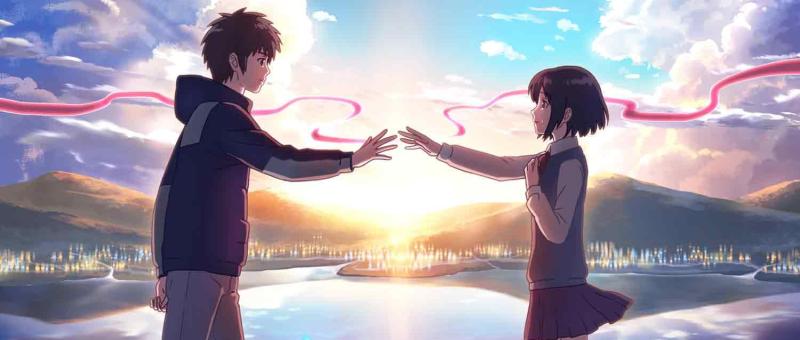
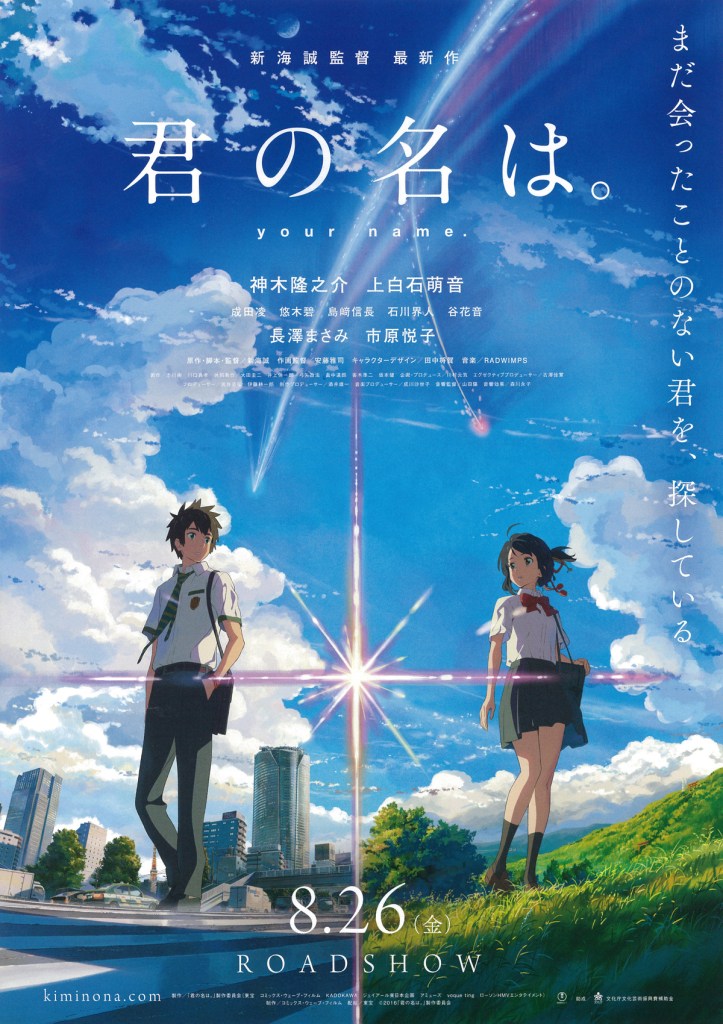
 Indie animation talent Makoto Shinkai has been making an impact with his beautifully drawn tales of heartbreaking, unresolvable romance for well over a decade and now with Your Name (君の名は, Kimi no Na wa) he’s finally hit the mainstream with an increased budget and distribution from major Japanese studio Toho. Noticeably more upbeat than his previous work, Your Name takes on the star-crossed lovers motif as two teenagers from different worlds come to know each other intimately without ever meeting only to find their youthful romance frustrated by the vagaries of time and fate.
Mitsuha (Mone Kamishiraishi) is a typical country girl and daughter of a Shinto temple family who dreams of the urban sophistication of the big city. Taki (Ryunosuke Kamiki), by contrast, is a typical city boy living in Tokyo and taking full advantage of its cafes and mass transportation systems. One fateful day, each wakes up in the body of the other and must quickly adjust to living in someone else’s skin. Though each originally believes the events to have been merely a dream, friends and family members are quick to point out the strange behaviour of the two teenagers. Neither Mitsuha nor Taki maintains a clear memory of their time in the other’s world though they are able to keep in a kind of contact through their respective diaries (his on a smartphone, hers in a more traditional notebook). Beginning to develop a degree of mutual affection through their strangely acquired intimacy, Mitsuha and Taki each have a profound effect on the other’s life but fate seems content to keep them apart.
Body swap comedy is not an unusual genre in Japan (Obayashi’s similarly themed I Are You, You Am Me being a notable example which was even remade by the director himself thirty years later as Switching, Goodbye Me), nevertheless Shinkai mines the situation for all of its awkward comedy as Mitsuha and Taki get used to living as the opposite gender. Beginning with the obvious repeated joke of Taki waking up and squeezing “his” breasts, there are other issues to contend with from which pronoun to use to remembering to avoid slipping into a rural dialect. Taki, obviously at sea with how to get on as a girl, causes consternation by turning up late for school with messy hair and subsequently behaving in an unacceptably masculine way. Conversely when Mitsuha is playing Taki, she helps him sort out various things in his life through her feminine influence including getting him a date with his workplace crush.
The pair are indeed “star-crossed” as their romance is heralded by the arrival of a rare comet, watched by both at the same time, as it splits in two. The comet strike turns out to have a much more pressing importance than simply as a symbol of romantic destiny but neatly represents the central dynamic of Mitsuha and Taki as two halves of the same soul. The two are connected by the “red string of fate” visualised through Mitsuha’s long red hair ribbon which later makes a reappearance in Taki’s sake based dream sequence and serves to bind the two together. Mitsuha’s family also make traditional braided bracelets which, as her grandmother tells us, represent the flow of time itself, weaving narrative into dramatic knots.
The knot, in this case, is the comet strike which later threatens to keep the tragic lovers apart rather than bring them together. Recalling the devastating earthquake of 2011, the destruction wrought by such a catastrophic event does not stop at loss of life but becomes a great ongoing loss – things left unsaid, opportunities missed, lives unlived. If it were only possible to turn back time and somehow save all those people from harm. Mitsuha and Taki have been given just such an opportunity thanks to their usual connection.
Like many Shinkai heroes, Taki and Mitsuha later find themselves burdened with a sense of incompleteness, as if they’re continually searching, trying to regain something they’ve lost but are unable to put a name to. The memories of their shared past fade, dissipating like a dream upon waking leaving a only faint trace behind them, just enough to know that something is missing. Yet, journeys end in lovers meeting, and even in a metropolis as vast as Tokyo recognition is powerful force.
Shinkai takes his trademark aesthetic beauty to all new heights with his idyllic country landscapes, realistic cities, and the visually striking (if potentially deadly) fracturing of a comet. Much less deliberately downbeat than Shinkai’s previous work which often emphasised the impossibility of true love satisfied, Your Name is no less emotionally affecting even if its melancholy sense of longing persists until the very last frame.
Reveiwed at the BFI London Film Festival 2016
Original trailer (English subtitles)
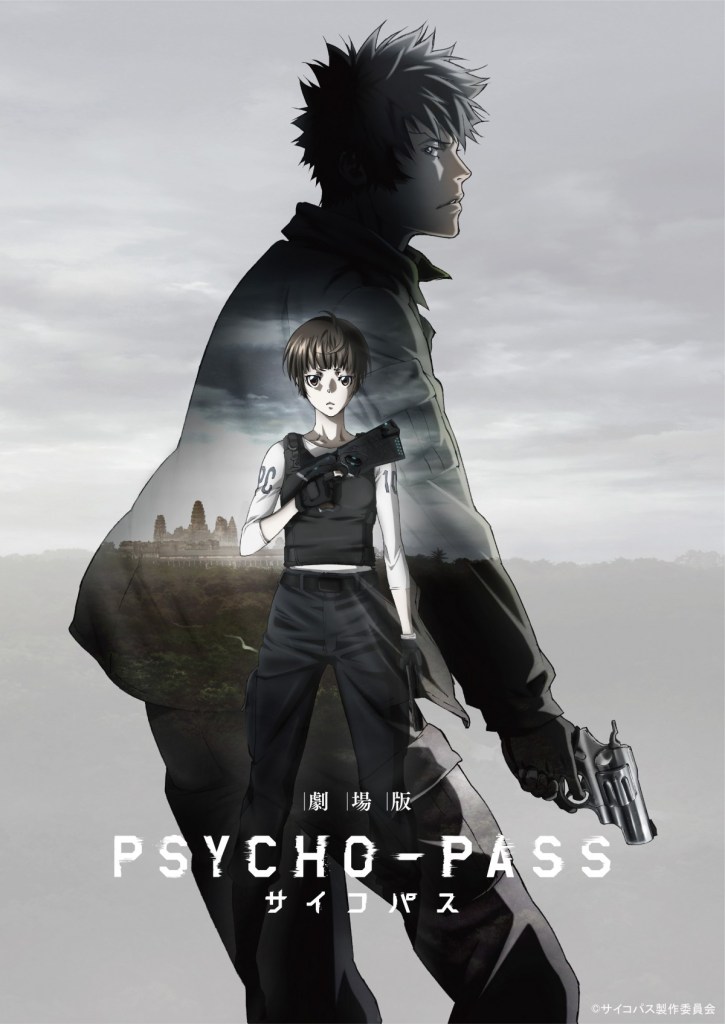 The Japan of 2116 is a peaceful place. Crime is at an all time low thanks to the Sybil system which monitors the nation’s citizens issuing them a “Crime Coefficient” rating assessing how likely they are to commit a crime. When a potential criminal’s Psycho-Pass reaches an unacceptable level, the Public Safety Bureau are called in to hopefully put a stop to any criminal activity before it has the chance to occur.
 Masamune Shirow’s cyberpunk manga Ghost in the Shell burst onto the scene in 1989 and instantly became a genre classic. Mamoru Oshii then adapted the manga into a much lauded anime movie in 1995 which almost came to define cyberpunk animation even if it emerged towards the end of the genre’s heyday. A sequel, Ghost in the Shell: Innocence followed in 2004 as well as a TV anime spin-off Ghost in the Shell: Stand Alone Complex. Now with the 20th anniversary of the original animated movie, the series has yet again been adapted into a series of entirely new anime OVAs under the name of Ghost in the Shell: Arise. Ghost in the Shell: The New Movie (攻殻機動隊 新劇場版, Kokaku Kidotai – Shin Gekijoban) is the big screen outing of this latest incarnation scripted by Tow Ubukata who also produced the very GITS influenced Mardock Scramble.
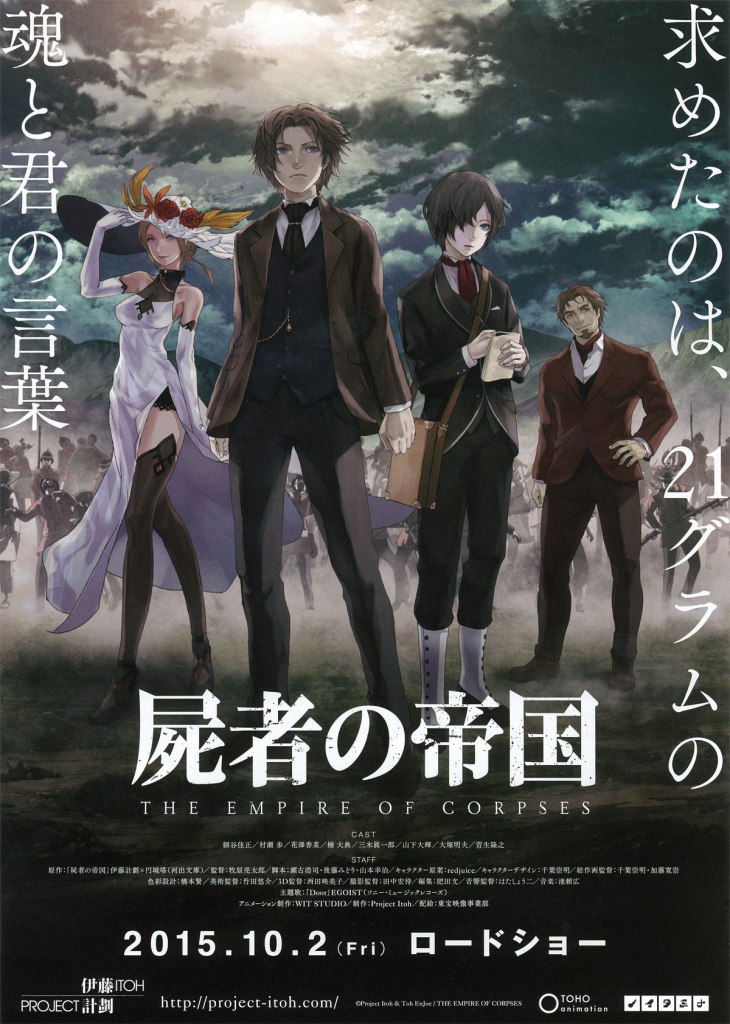 Empire of Corpses (屍者の帝国, Shisha no Teikoku) is what would happen if someone’s vast library of Victorian literature was destroyed in a fire and then someone tried to put all the not too singed pages back together based on their knowledge of international pop culture. Inspired by Project Itoh’s novel of the same name and the first of three planned adaptations of his works, Empire of Corpses is a very specific kind of absurd, boys own action adventure based around the idea of empire supported by a zombified proletariat.
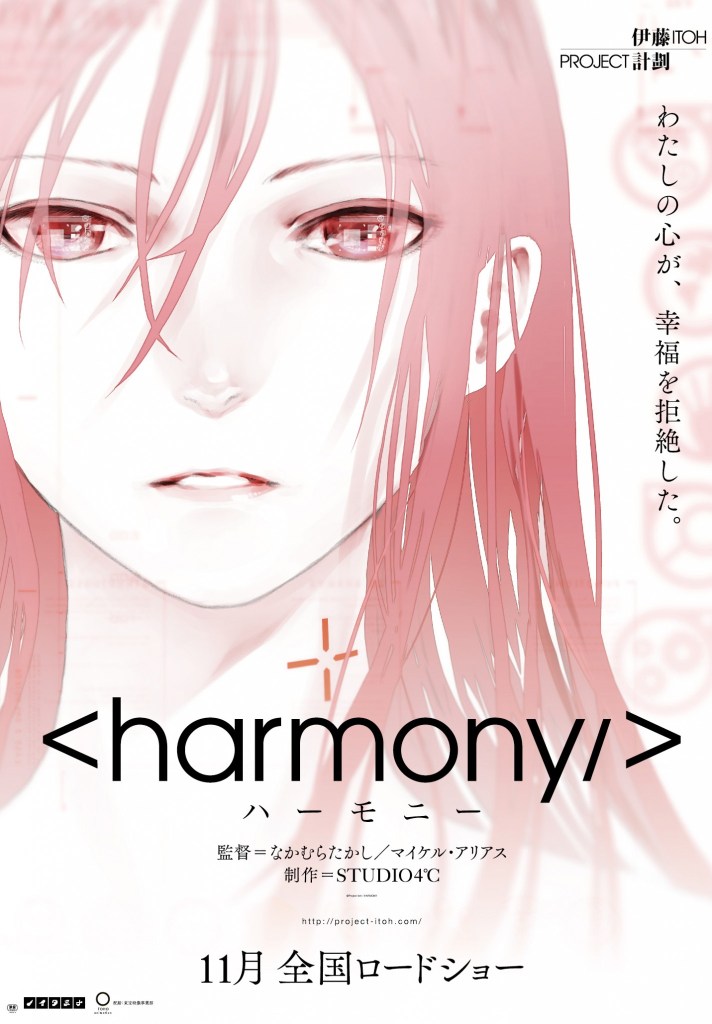 Harmony – the word itself sounds peaceful. A coalescence of sympathetic sounds, the feeling of wholeness and happiness. However, if given the choice, would you like to live in a world of peace and plenty in which your body is almost government property and your personal freedom is limited in favour of ensuring the survival of the species, or would you rather take your chances with the world as it is complete with its violence, sadness and pain if it meant you could be free to live in which ever way you see fit? Michael Arias’ adaptation of the Project Itoh novel addresses just this question in all its complexity as utopia turns out to have a heavy entrance fee.
 Italian cinema once had a hearty appetite for genre fare, but has long since abandoned the weird and wacky in favour of the arty or the populist. You wait years for an Italian superhero movie and then two come along at once. Following on from Gabriele Salvatores’ much younger skewing The Invisible Boy which perhaps owed more to Spy Kids than anything else, first time director Gabriele Mainetti brings us a bloody, R-rated yet humour filled look at the superhero genre filtered through Japanese manga and anime rather than US comic books.
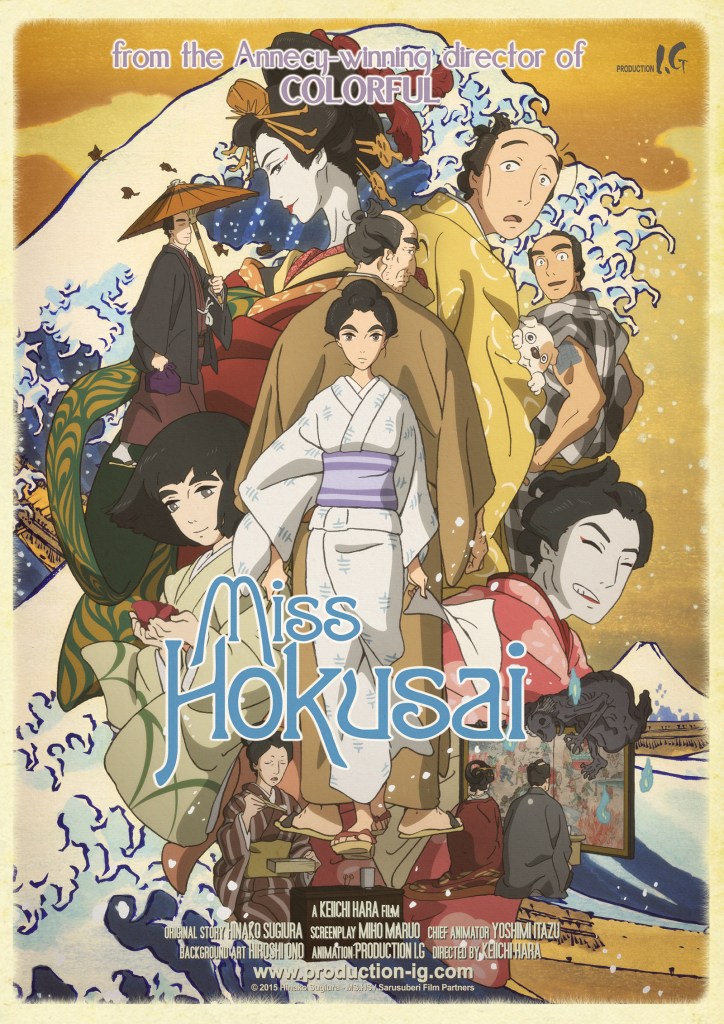 When it comes to the great Japanese artworks that everybody knows, the figure of Hokusai looms large. From the ubiquitous The Great Wave off Kanagawa to the infamous Dream of the Fisherman’s Wife, the work of Hokusai has come to represent the art of Edo woodblocks almost single handedly in the popular imagination yet there has long been scholarly debate about the true artist behind some of the pieces which are attributed to his name. Hokusai had a daughter – uniquely gifted, perhaps even surpassing the skills of her father, O-Ei was a talented artist in her own right as well as her father’s assistant and caregiver in his old age.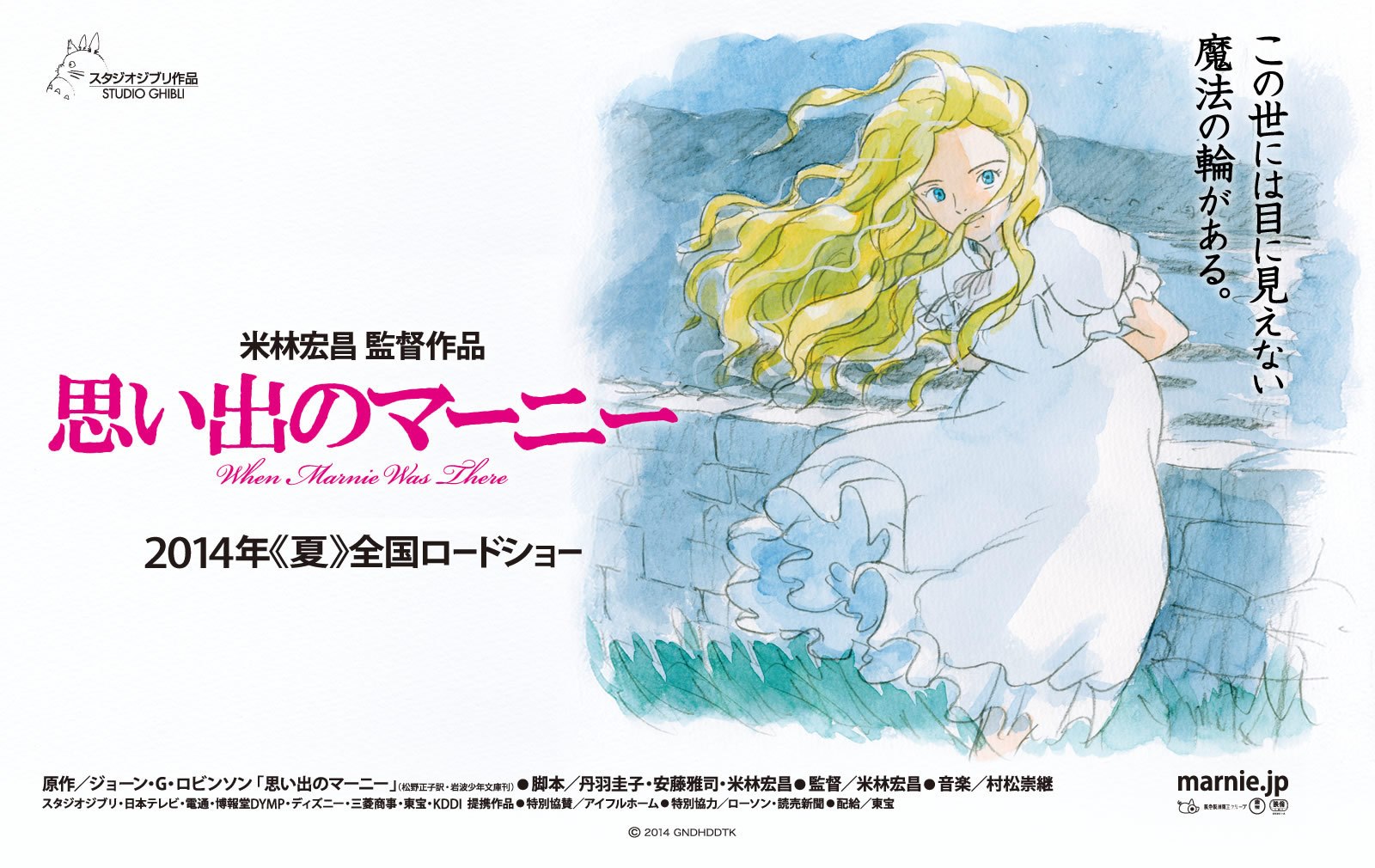

 Windows on Worlds