According to a young woman at the centre of Takahisa Zeze’s In the Wake (護られなかった者たちへ, Mamorarenakatta Monotachi he), natural disasters are monsters that devour humans with no rhyme or reason, but people close to her have died by human hands while left at the mercy of a hypocritical social welfare system. Though the social workers insist that benefits are something everyone is entitled to when they need support, others go to great lengths to stop anyone getting them. “That’s the country we live in,” one explains with a tone that implies he thinks this is exactly as it should be.
That social worker is the second to be found dead in suspicious circumstances nine years after the devastating 2011 earthquake and tsunami. The police obviously suspect a grudge, that someone who was turned down for benefits got fed up and killed him in revenge. But as assistant Mikiko (Kaya Kiyohara) says, it’s unlikely to be any of them because they are all “too busy trying to survive,” so they don’t have time to waste on things like vengeance. Zeze then switches to the welfare office where a social worker is trying to explain to an elderly applicant all of the different forms and documentation he’ll need to prepare for his claim. These people already have to jump through hoops to prove their “neediness,” while most of them feel defeated and humiliated in even having to ask and would prefer not to have to depend on the government.
But a lot of Mikiko’s work involves challenging those suspected of committing benefits fraud. The first of two people she talks to is a single mother with mental health issues (Chika Uchida) who’s had to start working full-time and consequently gone over her allowance meaning her benefits should stop and she should pay back what was “wrongfully” claimed. The woman insists she needs the extra money because her daughter was being bullied for being on benefits so she wants to send her to cram school and be able to buy educational supplies, but Mikiko remains unsympathetic. The second is a man who it’s admittedly harder to sympathise with as he appears to have bought quite a fancy car which again takes him over the limit as a car is classed as a luxury item rather than a necessity. Mikiko doesn’t think they should pay out when he could easily sell the car. Of course, it’s not that simple. The man may need the car in order to work and without it would have no choice but to rely on benefits to a greater extent. In any case, he gets on Mikiko’s nerves because to her it’s people like him that prevent them helping more “genuinely” needy cases.
But on the other hand, when they could and should have helped they refused and effectively blackmailed an old lady into revoking her application even though she had only 6000 yen (£30) left in the bank and was on the brink of starvation with no one else to turn to. Another of the social workers insists that good neighbours are the most effective way of tackling poverty which is equal parts unreasonable and unrealistic. Then again, there was a kind of solidarity that arose in the wake of the earthquake in which an old woman’s kindness saved a young man and little girl from being dragged away by the weight of their despair, giving them a new home and surrogate family along with proof of the fact that there is always someone there to help and that kind of compassion can be a kind of salvation.
Even so, Mikiko’s insistence that you have to ask to receive, along with the welfare officer’s almost vampiric obsession with getting the applicant themselves to clearly state they need help, seems contrary to her philosophy in which it should just be provided with no questions asked. They know how difficult asking for help can be and deliberately leverage the social stigma of being on benefits to discourage people from applying for them. Citing increased demand and government cut backs in the wake of the earthquake, the social worker confusingly suggests that by declining more cases they can help more people in the long run which doesn’t make a tremendous amount of sense while his eerie grinning hints that he has begun to enjoying sadistically humiliating these vulnerable people who’ve been brave enough to come forward and ask for that to which they are otherwise entitled.
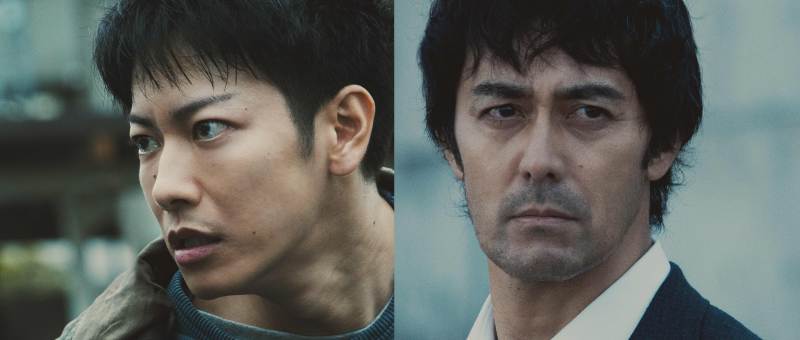
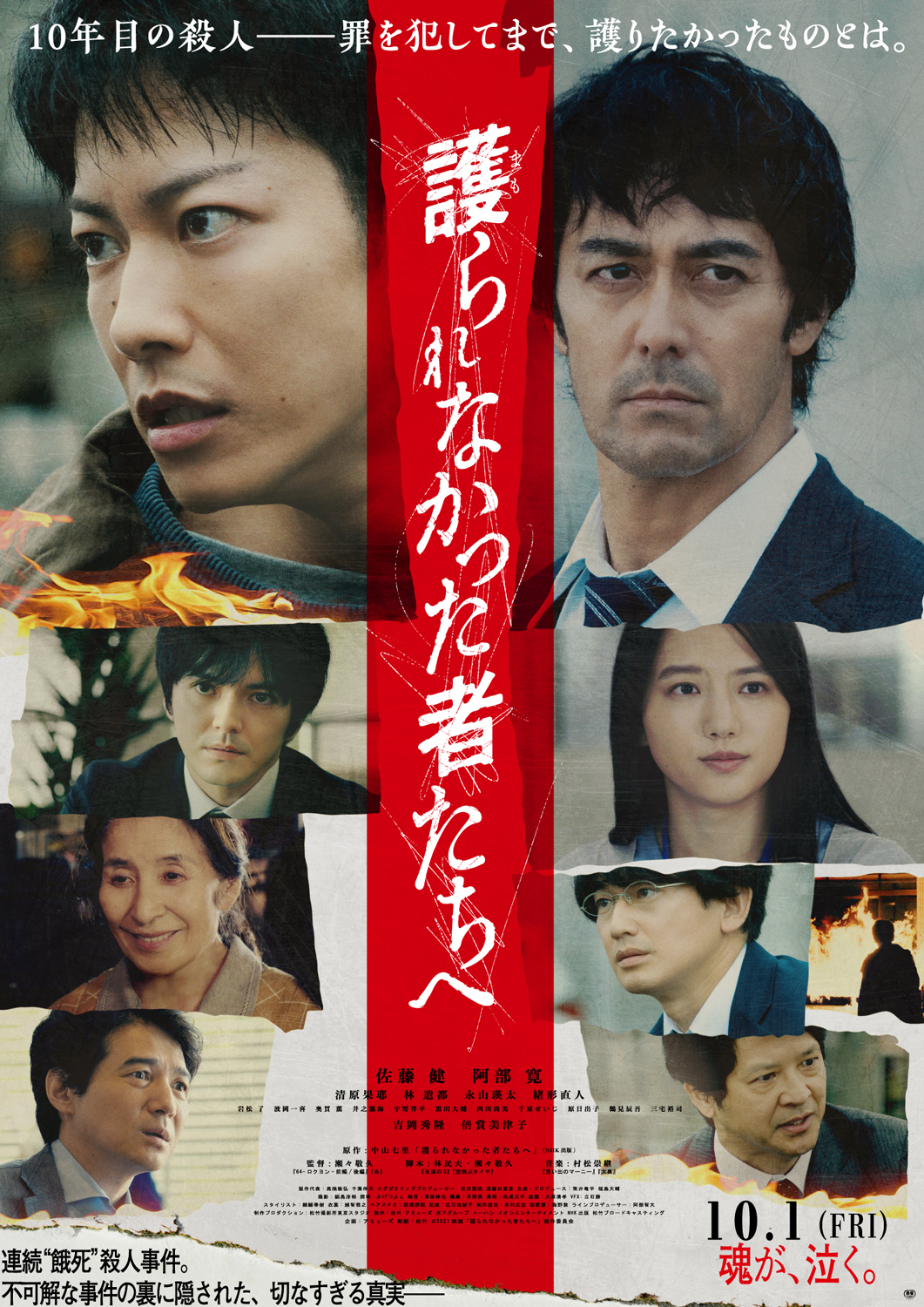
They are all living in the wake of this disaster, something of which aloof yet empathetic detective Tomashino (Hiroshi Abe) is all too aware having lost his wife and son in the disaster. As his son’s body was never found, he too lives in a state of limbo but through investigating the killings begins to find a kind of closure along with an unexpected sense of understanding with a gloomy young man, Yasuhisa (Takeru Satoh), himself a suspect and struggling to make sense of the past, his survival, and the ongoing injustice of the world around him. The film takes its Japanese title, “those who were not protected”, from a note Mikiko writes about the importance of empathy in social work encouraging her colleagues to rebel even if their bosses tell them not to, but also hints at the grief and guilt felt by those left behind that in the end there were those they were not able to save but they can perhaps make their peace with that by continuing to help those around them even if their society largely refuses to do so.
In the Wake screens as part of this year’s Japan Foundation Touring Film Programme.
Trailer (English subtitles)


 Windows on Worlds