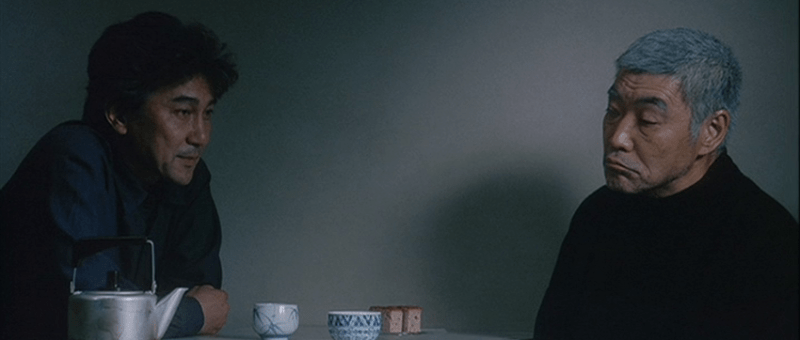
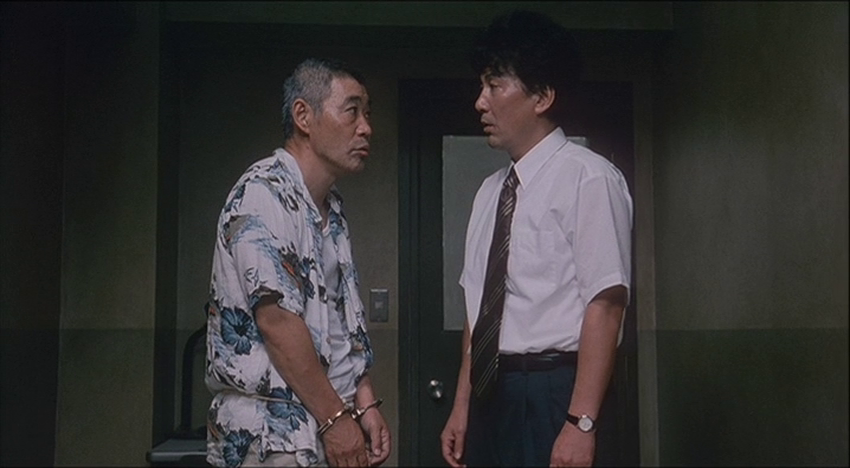
The thrill and excitement of being a thief only exist when there’s a great detective around, according to the legendary cat burglar, Nekoda, in Izuru Narushima’s warmhearted crime drama, The Hunter and the Hunted (油断大敵, Yudan Taiteki). The film takes its title from a four-character idiom, a proverb advising that the greatest danger is complacency, which is indeed one of the weapons employed by Neko, nicknamed “the Cat”, as he builds a relationship with the man he hopes will become his greatest adversary.
Jin (Koji Yakusho) is a widowed single-father coming to the conclusion that his career as a policeman is incompatible with his responsibilities as a parent. Perhaps bearing out the still sexist nature of the early 2000s society, everyone keeps telling him to remarry so that he won’t have to worry about childcare any more, or else find a job that doesn’t require being constantly available in order to work on the criminals’ schedule. The problem is that Jin really likes his job as a thief catcher having transferred from the local police box after his wife passed away from an illness. He really doesn’t want to give it up, but is beginning to feel as if he has no choice. Neko (Akira Emoto) too encourages him to remarry and Jin lets slip that he’s taken a liking to a lady that works at his daughter’s daycare. But though Misaki really likes Makiko (Yui Natsukawa), the thought of her father remarrying causes her to go on a three-day hunger strike. Reluctantly, Jin has to give up on his romantic hopes, though he refuses to do so in terms of his career and in fact goes on to be promoted after receiving a commendation for catching Neko seemingly by chance when he stepped in to fix Misaki’s broken bicycle while Jin was too busy with something else.
It turns out, however, that it wasn’t really by chance at all. Neko has an MO. He essentially allowed Jin to arrest him because he needed medical treatment. Neko’s life of crime means that he can’t enrol on the government health insurance scheme so he can’t afford to go to the hospital where he’d be arrested anyway. Nevertheless, he seems to take a liking to Jin precisely because of his mild-mannered earnestness and tries to teach him how to think like a thief so that when he gets out in 10 years’ time, he’ll be a worthy adversary and their cat and mouse game can truly begin. Having Neko out there gives Jin a concrete reason to stay in the police and polish his skills, while knowing he has Jin to play off gives Neko a sense of purpose in an otherwise aimless life of total freedom. He describes thievery as his calling and claims that as laws are made by humans and a vocation is given by god, he has a right to pursue it that transcends human justice even if Jin scoffs at his sophistry.
Deciding against remarriage, Jin’s main personal relationship outside his daughter becomes that with Neko who is somewhere between friend and adversary. Once Misaki has grown up and tells him that she plans to do humanitarian work abroad after training as a nurse, Jin can’t help but feel betrayed. She prevented him from marrying a woman that he genuinely cared about, but now tells him he should meet the woman the lady from the bakery is trying to set him up with and plans to palm him off on someone else, just as she feared he might do if he married again leaving his new wife care to Misaki and devoting himself to work. But what he realises it that his relationships with Misaki and Neko are basically the same. He has to accept that his daughter has grown up and chosen her own path to follow. It’s time to let her go. Neko, meanwhile, has found his freedom in thievery, and so he will never stop doing it no matter how many times Jin catches him or how many times he escapes. All Neko wants out of life is that they both stay healthy enough to keep playing this game right to the very end so that he can die as a thief having experienced the true joy of battling his nemesis while Jin too enjoys the thrill of the chase as a thief-catcher hot on the trail of a master. Which is to say, no one actually wants to win this game, and what has really come to matter is their extremely co-dependent friendship that transcends the limits of the law.
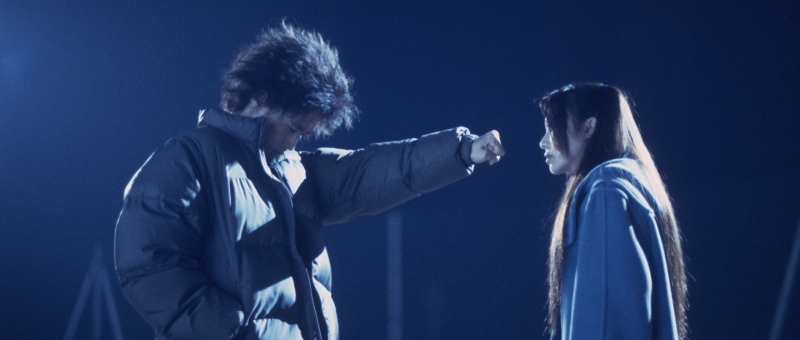

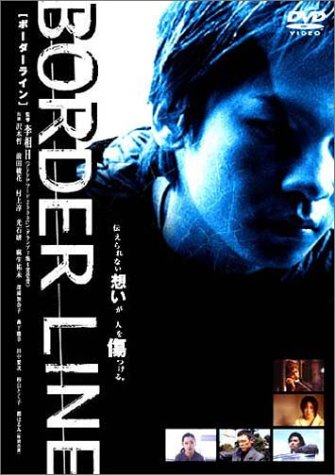 Throughout his career Lee Sang-il has shown himself adept at creating ensemble character dramas but nowhere is this as much in evidence as in his well crafted debut, Border Line. Focussing on the unlikely overlapping stories of a number of people who each find themselves crossing a threshold of a more spiritual nature, Border Line traces back each of the fractures in contemporary society to the broken cord of the parental bond.
 Windows on Worlds