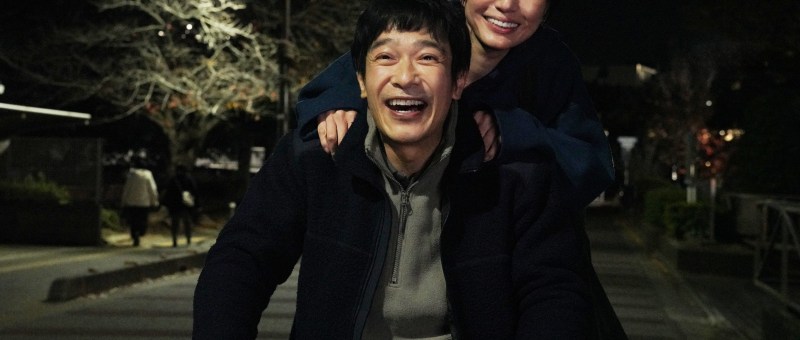
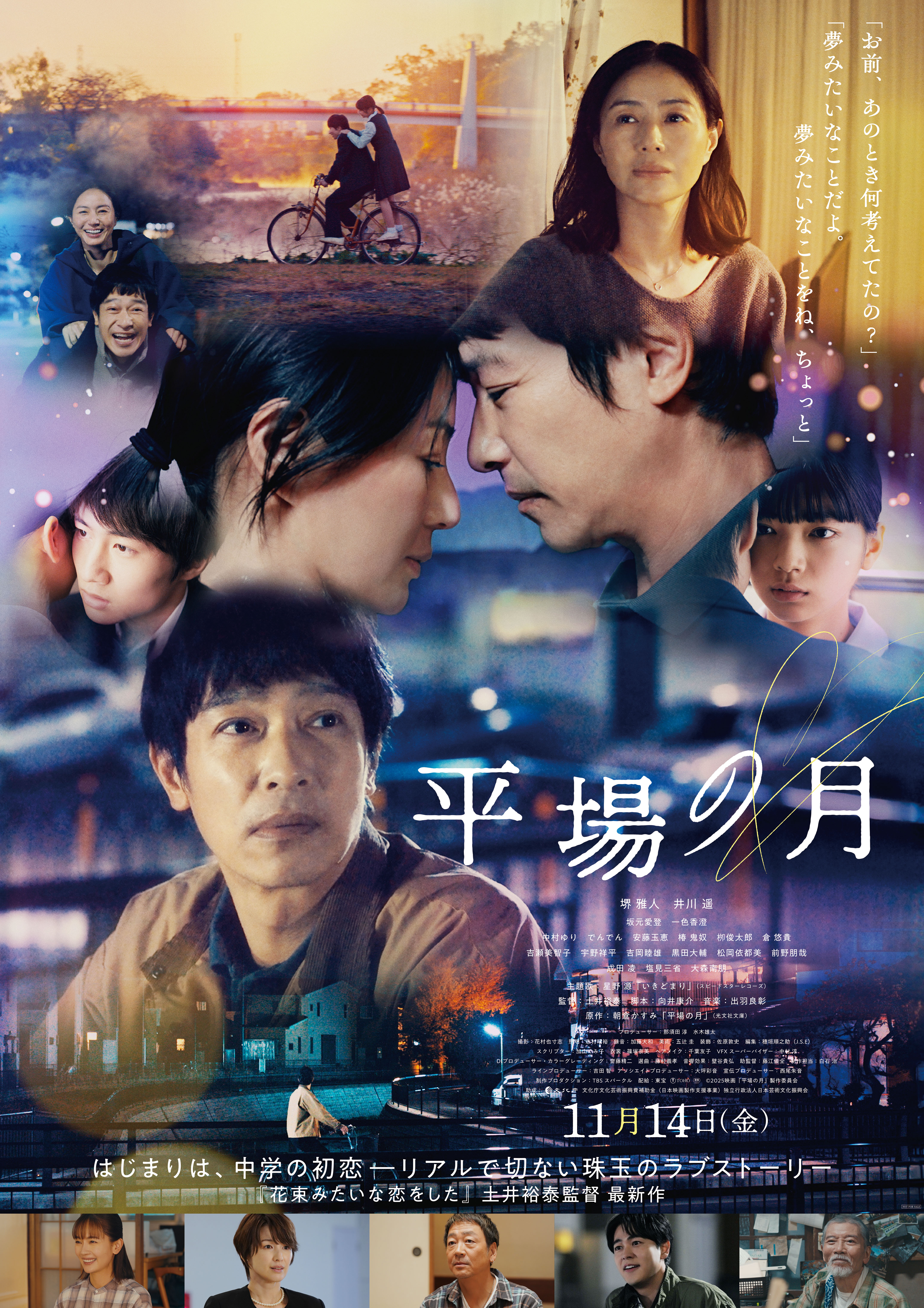
Back in the early 2000s, Nobuhiro Doi was a leading figure of the short-lived “jun-ai” or “pure love” boom with films such as Be With You, and Tears for You, as well as TV dramas like Beautiful Life and Orange Days. Adapted from the novel by Kasumi Asakura, A Moon in the Ordinary (平場の月, Hiraba no Tsuki) is a kind middle-aged take on the same material in which former classmates reunite 35 years later but discover that they aren’t really any better equipped to understand what love is than they were as teenagers.
The pair even bond over hearing Hiroko Yakushimaru’s Main Theme, the title song of the movie of the same name, in which the singer laments that they still don’t understand love even after living 20 years. Kensho (Masato Sakai) and Yoko (Haruka Igawa) have lived more than 20 years since they last saw each other and are each carrying their own particular baggage of failed or compromised romances. Each having returned to their hometown where they’ve reconnected with their former classmates, there is something of a return to childhood in their relationship even while tempered by the compromises of age. As one of Kensho’s former classmates says, he’s reached the age where doing new things is a bother and now the conversation turns on people’s health issues or those of their parents.
Kansho moved back after his divorce to care for his mother but she now lives in a care home and has advanced dementia. Every time he reminds her who he is, she replies that “Kensho is dead,” but he just humours her. Yoko, meanwhile, has moved back after an ill-advised affair with a younger man left her broke. Widowed young, she harbours a degree of guilt over the circumstances that led to her marriage while also perhaps a little embarrassed to be working in the hospital cafe having graduated from a good university and holding a well-paying job in the city. Despite her initial reluctance, she bonds with Kensho over their shared sense of middle-aged despair as he awaited the results of some potentially concerning medical tests.
Health issues are, however, only a part of the problem. Yoko is also carrying childhood trauma and a low sense of self-worth that once made her determine to live life alone, which is a difficult habit to break. Following her experiences, she lives in a spartan flat she says she keeps tidy to make life easier for whoever has to deal with it after she’s gone and also makes sure to sleep on the bed so the mess will be contained if it’s a while before anyone finds her if she passes away. Even before encountering her own life issues, she seems to be living in a kind of limbo state until reconnecting with Kensho. The “impossible dream” she describes might be as simple as getting to grow old with the person you love, though it’s something she doesn’t really think she’s entitled to or deserving of.
As Kensho says, they’ve both been plenty hurt already, what if they just end up hurting each other more? His older co-worker advises him that getting hurt is just part of it and he’d gladly go through it all again, but romance is as hard at 50 as it was at 15. Some things have changed and others haven’t. It’s a little ironic, in some ways, that the film ends with a Chinese-style disclaimer reminding audience members that it’s illegal for two people to be riding the same bike given that the film’s main theme is the unchanging innocence of romantic connection. After meeting Kensho, Yuko starts to plant flowers in her makeshift garden rather than purely practical herbs as if she were welcoming joy back into her life, but she still feels herself to be a burden and has a tendency to pull away rather than expose herself emotionally while Kensho’s decision to allow her to do that seems foolish in the extreme. In the end, perhaps there is only loneliness and absence. In a flashback to their teenage years, Kensho says that he didn’t want to become a regular grown-up which he inevitably has, now filled with middle-aged regrets while Yoko never quite managed to move past herself and accept the possibility of love as another than an impossible dream.
screens as part of this year’s Nippon Connection.
Trailer (English subtitles)

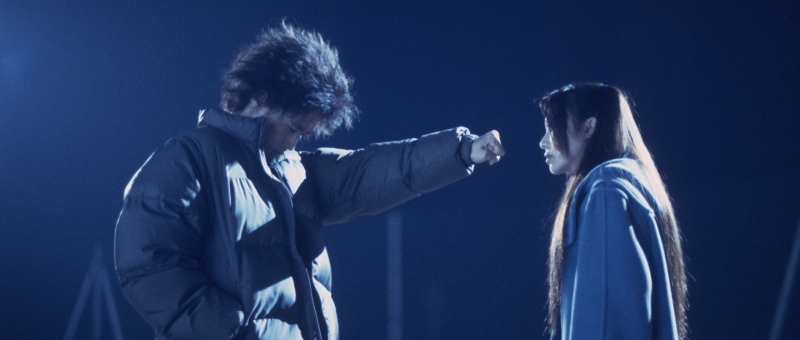
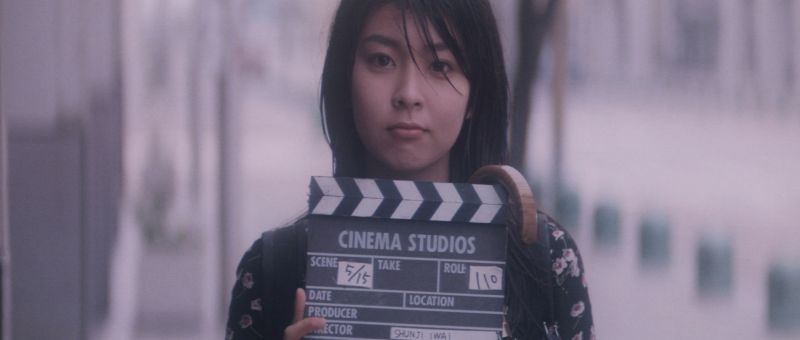
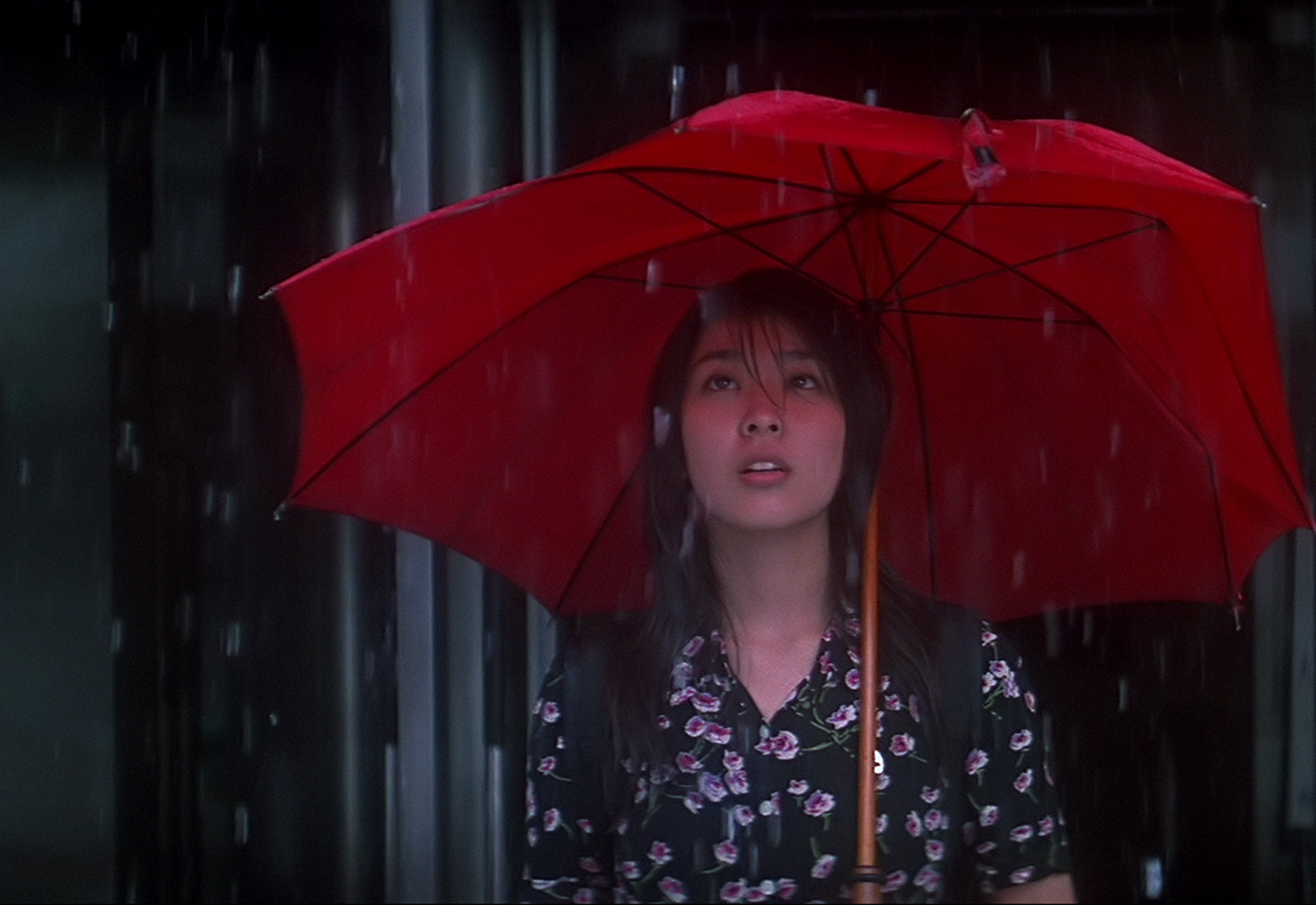
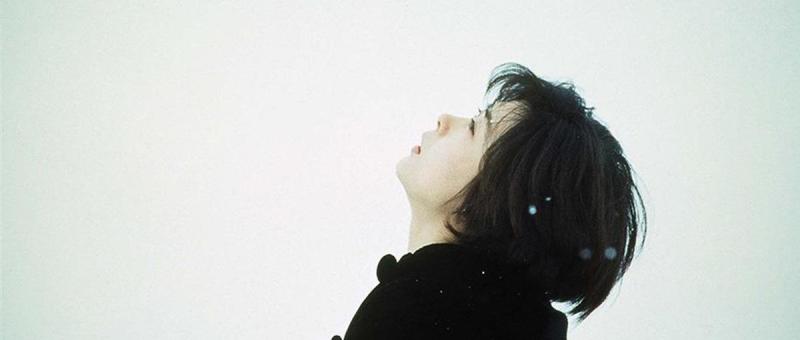

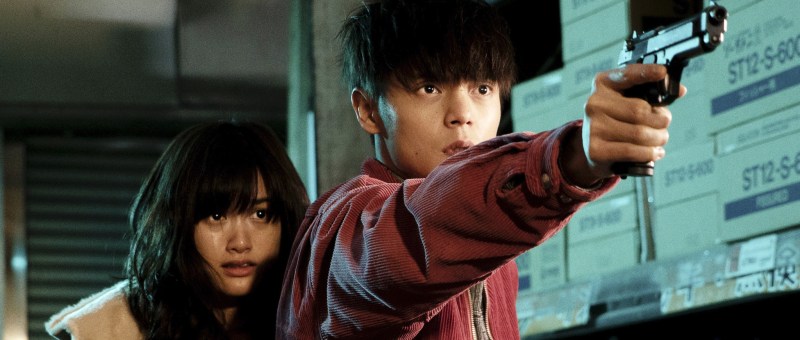


 The “jun-ai” boom might have been well and truly over by the time Takahiro Miki’s Girl in the Sunny Place (陽だまりの彼女, Hidamari no Kanojo) hit the screen, but tales of true love doomed are unlikely to go out of fashion any time soon. Based on a novel by Osamu Koshigaya, Girl in the Sunny Place is another genial romance in which teenage friends are separated, find each other again, become happy and then have that happiness threatened, but it’s also one that hinges on a strange magical realism born of the affinity between humans and cats.
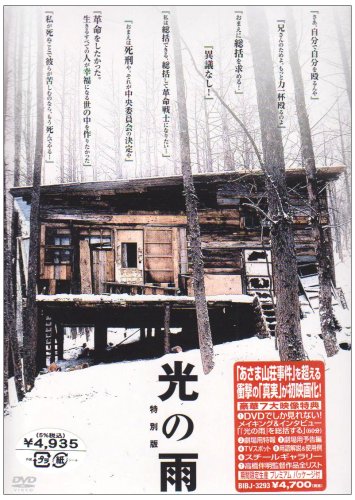 In the closing voice over of Banmei Takahashi’s Rain of Light (光の雨, Hikari no Ame), the elderly narrator thanks us, the younger generation, for listening to this long, sad story. The death of the leftist movement in Japan has never been a subject far from Japanese screens whether from contemporary laments for a perceived failure as the still young protestors swapped revolution for the rat race or a more recent and rigorous desire to examine why it all ended in such a dark place. Rain of Light is an attempt to look at the Asama-Sanso Incident through the eyes of the youth of today and by implication ask a few hard questions about the nature of revolution and social change and if either of those two things have any place in the Japan these young people now live in. Takahashi reframes the tale as docudrama in which his young actors and actresses, along with their increasingly conflicted director, attempt to solve these problems through recreation and role play, bridging the gap between the generations with a warning from those who dreamed of a better world that was never to be.
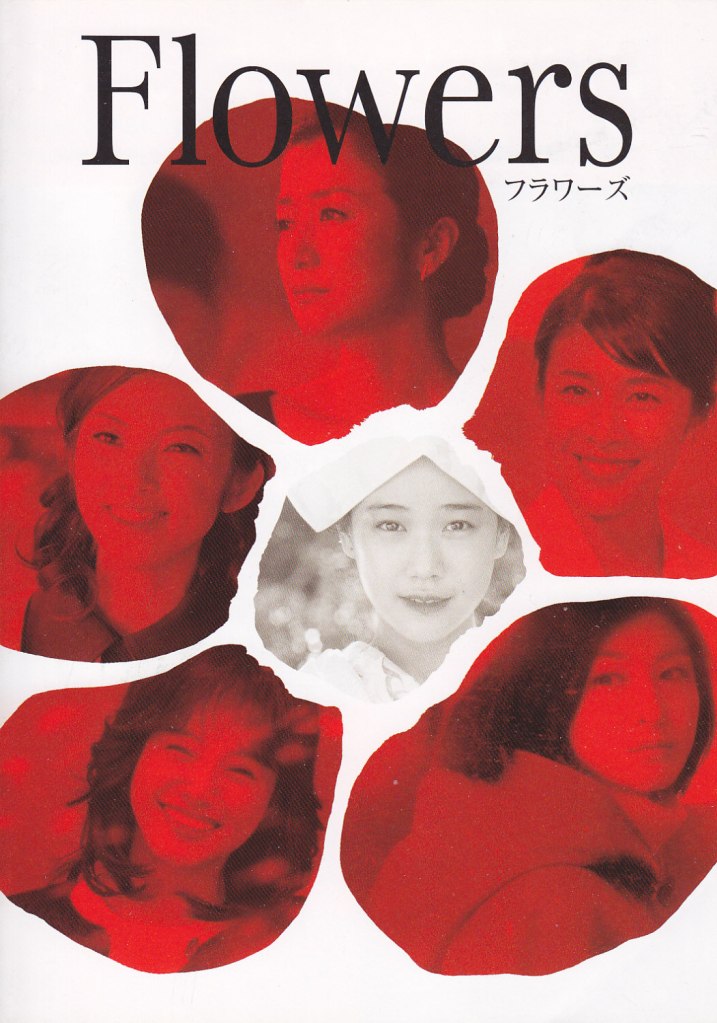 The rate of social change in the second half of the twentieth century was extreme throughout much of the world, but given that Japan had only emerged from centuries of isolation a hundred years before it’s almost as if they were riding their own bullet train into the future. Norihiro Koizumi’s Flowers (フラワーズ) attempts to chart these momentous times through examining the lives of three generations of women, from 1936 to 2009, or through Showa to Heisei, as the choices and responsibilities open to each of them grow and change with new freedoms offered in the post-war world. Or, at least, up to a point.
 Windows on Worlds