
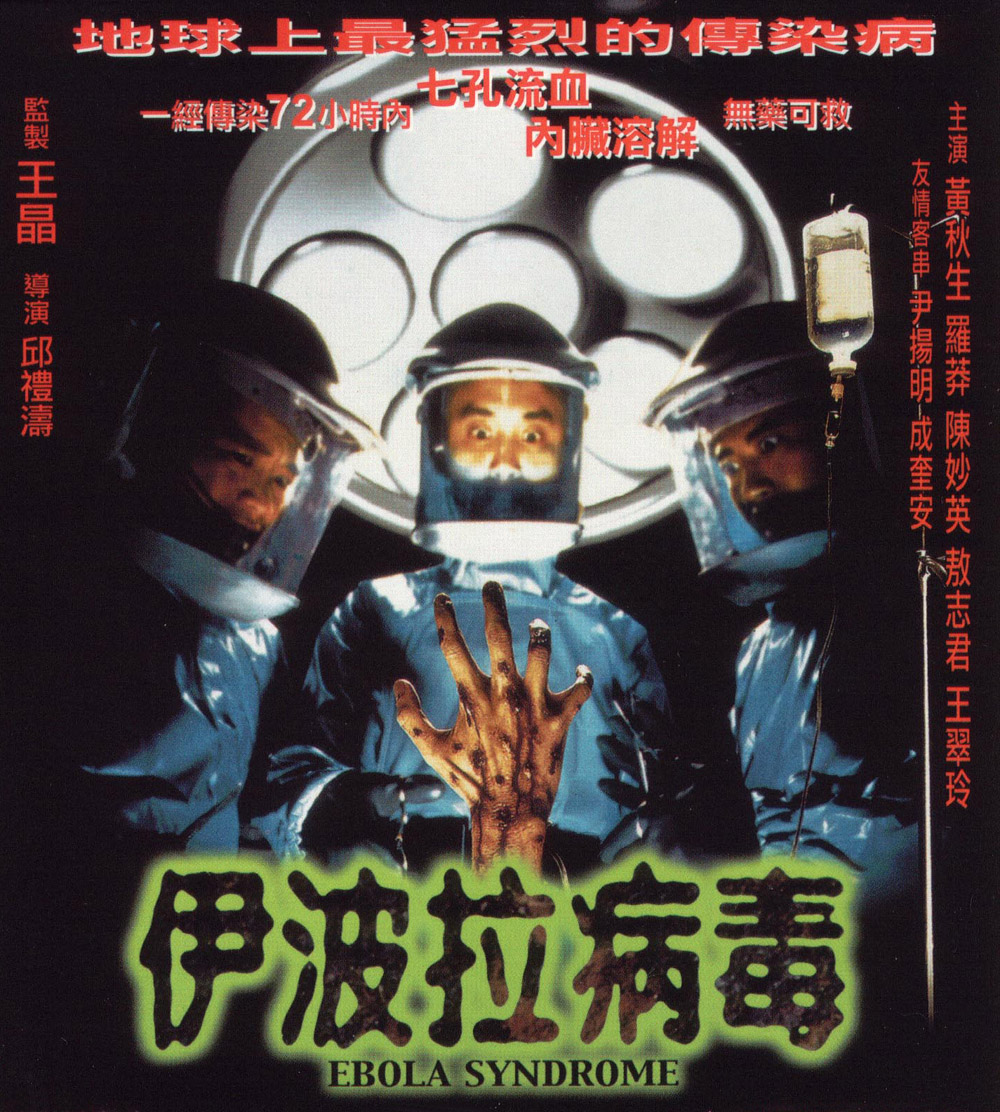
Ebola Syndrome (伊波拉病毒, Herman Yau, 1996)

“I’ll fuck up whoever busts my balls!” snarls the protagonist of Herman Yau’s notorious 1996 Cat III exploitation film Ebola Syndrome (伊波拉病毒), seemingly filled with internalised rage in a sense of oppression as a little guy continually at the mercy of bosses who exploit and belittle him. Then again, Kai (Anthony Wong Chau-Sang) is not a nice guy and his various crimes are less those of an emasculated man towards an unfair society than a sociopathic disregard for conventional human morality. 

Even so, his first act of violence is a result of his attempt at petty class rebellion by sleeping with a mob boss’ wife only for the boss to come home and ritually humiliate him by ordering his wife to pee all over his treacherous underling before threatening to cut his bits off with a pair of secateurs. Kai, however, goes crazy and uses the shears to take out the boss, the associate, and the wife, pausing as he leaves to douse their terrified little girl in petrol in an ironic piece of foreshadowing only to be interrupted before he can light a flame. 10 years later in 1996, Kai is on the run working in a Chinese restaurant in Johannesburg where he is once again oppressed and belittled by the Taiwanese manager and his wife not to mention further displaced by the complicated racial politics of mid-90s South Africa. 

A minor comment on colonial corruptions in the anxiety surrounding Hong Kong’s imminent transition, Kai and his boss Kei (Lo Meng) find themselves in a difficult position in facing discrimination from all sides. Needing meat for their restaurant, they decide to strike a deal with the local indigenous community after being insulted by a white butcher but on their arrival walk into some kind of ritual conducted over the bodies of numerous locals who each have bloody welts all over their skin. On meeting with the leader, the pair immediately rip him off while he plays a grim joke on them as they discover two human bodies in place of the pig carcasses they’d intended to buy before he returns to set them straight.

This early moment of foreshadowing has its own dark irony as Kai will eventually end up once again murdering three people he accuses of busting his balls before mincing them up and turning them into “African Char-sui Bao” hamburgers. By this point Kai is already a “super spreader” having unknowingly contracted the ebola virus after raping a near comatose indigenous woman at the waterside who vomited white liquid in his face as he climaxed. In another instance of cruel cosmic irony, Kai turns out to be one of small amount of people effectively immune recovering quickly from what seems like flu but almost certainly having infected Kei and his wife and through them anyone who ate the African Char-sui Bao which is how ebola winds up in the city and eventually travels all the way to Hong Kong after Kai cuts his losses and goes home to live the high life on Kei’s savings. 

Yau does not hold back on the gore nor on the very real terror of the ravages of ebola as a doctor gruesomely dissects a human body remarking on the disintegration of its internal organs. At this point, Kai doesn’t know ebola’s what he has or that he’s passing it on but it’s unlikely he’d care. When the truth is finally revealed he runs anarchically through the streets with a meat cleaver shouting “ebola for everyone” and spitting at passersby as if taking his revenge against humanity itself. Yet he’s ultimately a wild animal trapped in civilised society caring for nothing other than the satisfaction of his immediate needs aside from his desperation to affirm his masculinity, not to be looked down on or bullied. We see him impassively chop up live frogs and witness the heads being torn off live chickens for others to drink their blood seeing him for what he is, an urban predator with no sense of conventional human value systems. 

Even so, the film seems to suggest this breed of malicious selfishness and amorality cannot be exorcised from the contemporary society while the infection continues to spread exponentially, the film’s bleak conclusion implying that the innocent will continue to suffer while the systemic causes of the disease go unexamined. Then again, Yau approaches his material with absurdly dark humour that implies that this really is some sort of cosmic joke in which all you can really do is laugh at life’s immense cruelties. 


Trailer (no subtitles)
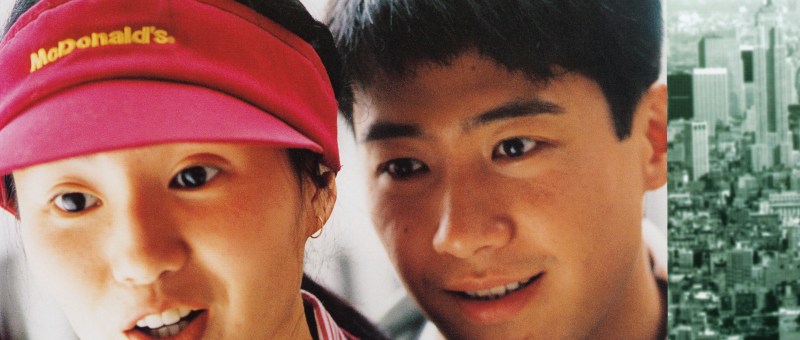
Comrades, Almost a Love Story (甜蜜蜜, Peter Chan, 1996)

“Fate brings people together, no matter how far” according to a wise old chef in early ‘90s New York. He’s not wrong though Peter Chan’s seminal 1996 tale of fated romance Comrades, Almost a Love Story (甜蜜蜜) is in its own way also about partings, about the failure of dreams and the importance of timing in the way time seems to have of spinning on itself in a great shell game of interpersonal connection. But then, it seems to say, you get there in the end even if there wasn’t quite where you thought you were going. 

As the film opens, simple village boy from Northern China Xiaojun (Leon Lai Ming) arrives in Hong Kong in search of a more comfortable life intending to bring his hometown girlfriend Xiaoting (Kristy Yeung Kung-Yu) to join him once he establishes himself. His first impressions of the city are not however all that positive. In a letter home, he describes the local Cantonese speakers as loud and rude, and while there are lots of people and cars there are lots of pickpockets too. It’s in venturing into a McDonald’s, that beacon of capitalist success, that he first meets Qiao (Maggie Cheung Man-Yuk), a cynical young woman hellbent on getting rich who nevertheless decides to help him by whispering in Mandarin realising he doesn’t understand the menu. Hailing from Guangdong, Qiao can speak fluent Cantonese along with some English and thus has much better prospects of succeeding in Hong Kong but takes Xiaojun under wing mostly out of loneliness though accepting a kickback to get him into an English language school where she piggybacks on lessons while working as a cleaner. Bonding through the music of Teresa Teng, they become friends, and then lovers, but Xiaojun still has his hometown girlfriend and Qiao still wants to get rich. 

As we later learn in one of the film’s many coincidences, Xiaojun and Qiao arrived on the same train if facing in different directions. Hong Kong changes each of them. When Xiaojun eventually manages to bring Xiaoting across the border, he’s no longer the simple village boy he was when he arrived while Qiao struggles with herself in her buried feelings for Xiaojun unwilling to risk the vulnerability of affection but visibly pained when confronted by Xiaojun’s responsibility to Xiaoting. She finds her mirror in tattooed gangster Pao (Eric Tsang Chi-Wai) who, like her, shrinks from love and is forever telling her to find another guy but is obviously hoping she won’t as afraid of settling as she is. 

For each of them this rootlessness is born of searching for something better yet the irony is as Xiaojun says that Hong Kong is a dream for Mainlanders, but the Mainland is not a dream for most in Hong Kong who with the Handover looming are mainly looking to leave for the Anglophone West. Qiao’s early business venture selling knock off Teresa Teng tapes fails because only Mainlanders like Teresa Teng so no-one wants to buy one and accidentally out themselves in a city often hostile to Mandarin speakers as Xiaojun has found it to be. What they chased was a taste of capitalist comforts, Qiao literally working in a McDonald’s and forever dressed in Mickey Mouse clothing which Pao ironically imitates by getting a little Mickey tattooed on his back right next to the dragon’s mouth. But when they eventually end up in the capitalist homeland of New York, a driver chows down on a greasy, disgustingly floppy hamburger while Qiao finds herself giving tours of the Statue of Liberty to Mainland tourists in town to buy Gucchi bags who tell her she made a mistake to leave for there are plenty of opportunities to make money in the new China. 

Ironically enough it’s hometown innocence that brings them back together. The ring of Xiaojun’s bicycle bell catches Qiao’s attention though she’d thought of it as a corny and bumpkinish when he’d given her rides on it in their early days in Hong Kong. Xiaojun had in fact disposed of it entirely when Xiaoting arrived partly for the same reason and partly because it reminded him of Qiao. The pair are reunited by the death of Teresa Teng which in its own way is the death of a dream and of an era but also a symbol of their shared connection, Mainlanders meeting again in this strange place neither China nor Hong Kong, comrades, almost lovers now perhaps finally in the right place at the right time to start again. Peter Chan’s aching romance my suggest that the future exists in this third space, rejecting the rampant consumerist desire which defined Qiao’s life along with the wholesome naivety of Xiaojun’s country boy innocence, but finally finds solid ground in the mutual solidarity of lonely migrants finding each other again in another new place in search of another new future. 


Comrades, Almost a Love Story screens at Soho Hotel, London on 9th July as part of Focus Hong Kong’s Making Waves – Navigators of Hong Kong Cinema.

Short clip (English subtitles)

Teresa Teng – Tian Mi Mi