Wild Search (伴我闖天涯, Ringo Lam Ling-Tun, 1989)

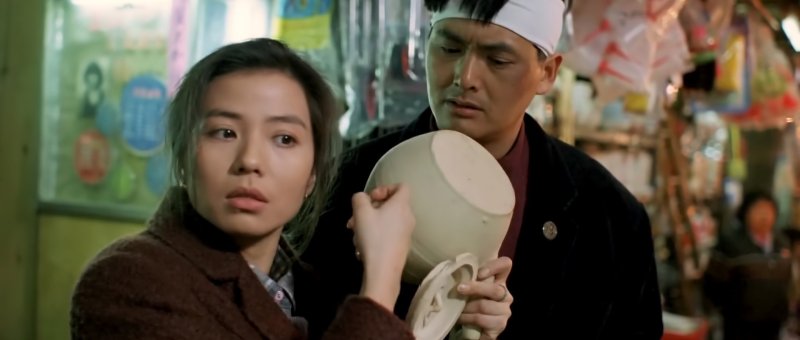
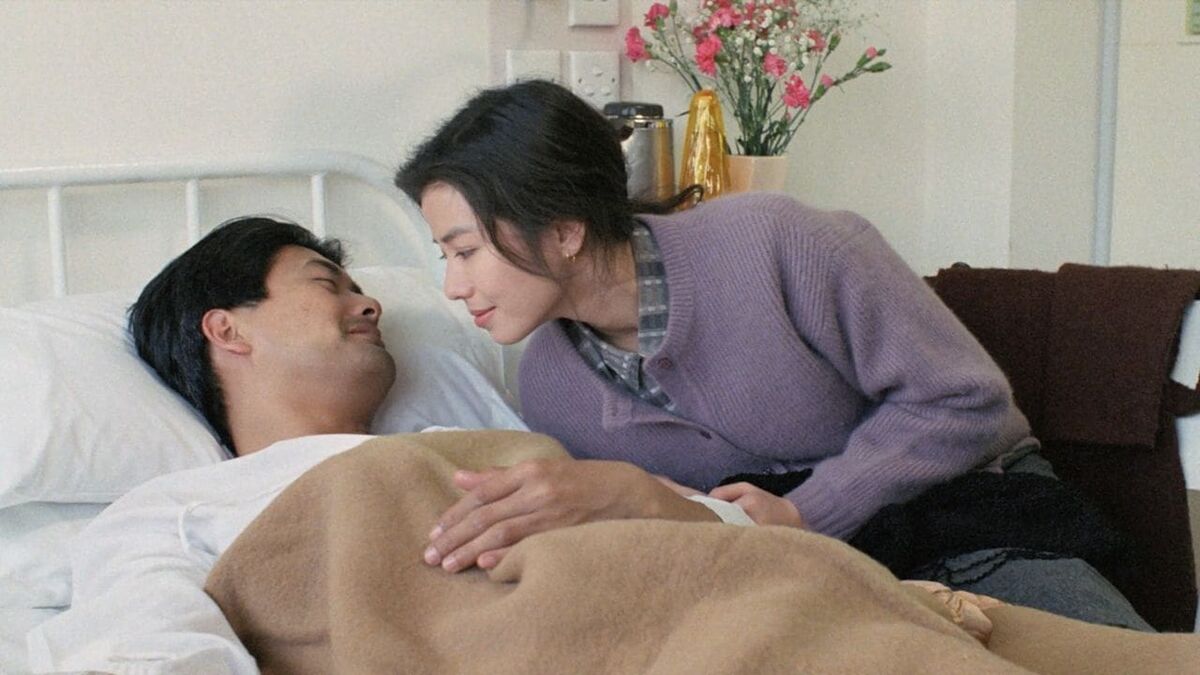
Loosely inspired by Peter Weir’s Witness, Ringo Lam’s Wild Search (伴我闖天涯) sees Chow Yun-fat’s melancholy cop falling for Cherie Chung’s isolated village girl while chasing down arms dealers in a changing Hong Kong. Just as Mew-Mew enters the more traditional world of the inland Chinese community, Hong Kong also seems to be facing incursions from the outside while becoming richer and more sophisticated as a burgeoning financial centre.

This clash of cultures can perhaps be seen in the relationship between Elaine (Elaine Jin), an antiques dealer from the inland Chinese village, and Hung (Paul Chun), a Chinese-Vietnamese gangster with friends in high places. Suckered into using her antique shop as a front to smuggle guns in from Vietnam and sell them on to Japanese yakuza, when is Elaine killed by one of her own men during a police raid Hung denies all knowledge of her and refuses to accept paternity of her now orphaned daughter Ka-Ka. He says that he has plenty of mistresses and suggests to Mew-Mew that he is essentially untouchable thanks to his connections. 

Hung appears to be the source of corruption both the inland Chinese community and Hong Kong as a whole. Elaine’s father has disowned her because of her relationship with Hung and having a child out of wedlock. Despite her orphanhood, the grandfather (Ku Feng) rejects Ka-Ka, refusing to speak to her or waving a knife in her face and screaming that he’ll sell her if she doesn’t stop crying. Mew-Mew first bonds with her because she’s the only witness in his arms dealing case, but also adopts a quasi-paternal position over her largely because no one else is willing to do so. He also draws closer to Elaine’s sister Cher (Cherie Chung Chor-hung) who is caring for Ka-ka, even if the implication is that she is the pure-hearted innocent uncorrupted by contemporary capitalism unlike her sister who went to the city.

But there are incursions and corruptions even within the Inland Chinese community as Cher is pressured by her ex-husband who spent a long time in China where he had another woman and a family he kept secret from Cher. Now he’s insistent on moving back into the family home despite being officially divorced, and becomes increasingly paranoid about Cher’s relationship with Mew-Mew. There might then be a minor irony in the fact that Leung had a wife and son in China, while Mew-Mew is also a widower who lost his wife and son and was originally wary of embarking on another romance. 

Nevertheless, there is a kind of healing that takes place through these interconnected relationships that eventually squeezes the Vietnamese gangsters out. Though he resented Ka-ka as a symbol of all the ways his daughter had wronged him, the grandfather eventually comes to love and accept his grandaughter. Leung, meanwhile, ends up going completely crazy when he begins to realise that Cher has chosen Mew-Mew but eventually concedes defeat on witnessing Mew-Mew’s selflessness when he rescues him from the marauding gangsters even though he’d just been trying to kill him with a meat cleaver a few moments ago. Hung, by contrast, is laid low when his men start turning against him in the hope of better treatment.

Somehow, this world that had seemed broken beyond repair in the opening scenes in which the Christmas lights and neon signs are juxtaposed with scenes of women escaping violent men and bloodied corpses in the street, has been made whole again and not least through the repeated refrains of Teresa Teng’s The Moon Represents My Heart along with shots of the moon above Hong Kong that echo the innocence of the romance that arises between Mew-Mew and Cher. To that extent, the action scenes may play second fiddle to the drama but are also themselves visceral and kinetic from the high-speed car chases to the final showdown in which the gangsters make it all the way to the village as Mew-Mew’s romantic and professional lives collide in a bloody fight to the death with the twin forces of their corruption. While the gangsters might be willing to unleash terror in public places little caring for the lives of ordinary people, Mew-Mew and friends will seemingly counter that with compassion and solidarity while protecting all that they hold dear.


Trailer (Traditional Chinese / English subtitles)
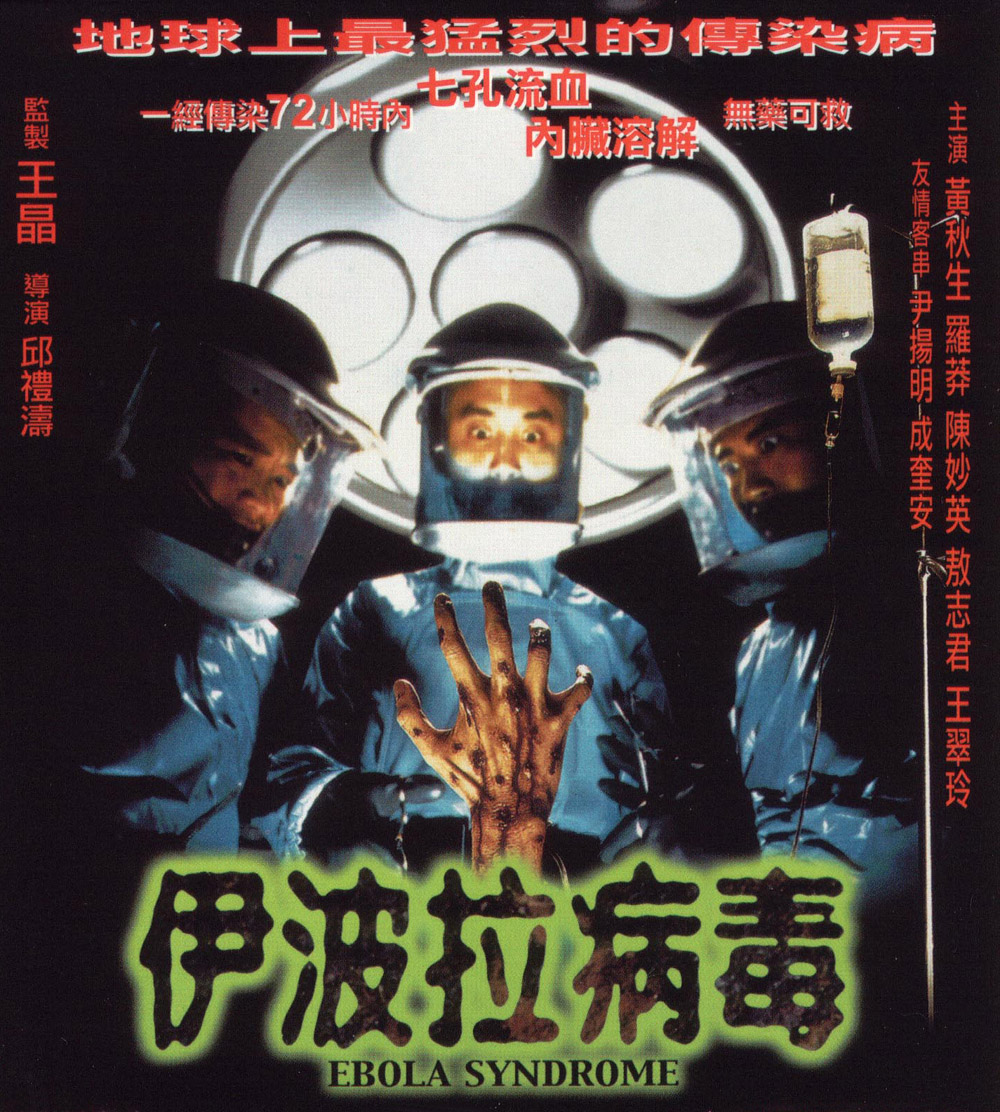
Ebola Syndrome (伊波拉病毒, Herman Yau, 1996)

“I’ll fuck up whoever busts my balls!” snarls the protagonist of Herman Yau’s notorious 1996 Cat III exploitation film Ebola Syndrome (伊波拉病毒), seemingly filled with internalised rage in a sense of oppression as a little guy continually at the mercy of bosses who exploit and belittle him. Then again, Kai (Anthony Wong Chau-Sang) is not a nice guy and his various crimes are less those of an emasculated man towards an unfair society than a sociopathic disregard for conventional human morality. 

Even so, his first act of violence is a result of his attempt at petty class rebellion by sleeping with a mob boss’ wife only for the boss to come home and ritually humiliate him by ordering his wife to pee all over his treacherous underling before threatening to cut his bits off with a pair of secateurs. Kai, however, goes crazy and uses the shears to take out the boss, the associate, and the wife, pausing as he leaves to douse their terrified little girl in petrol in an ironic piece of foreshadowing only to be interrupted before he can light a flame. 10 years later in 1996, Kai is on the run working in a Chinese restaurant in Johannesburg where he is once again oppressed and belittled by the Taiwanese manager and his wife not to mention further displaced by the complicated racial politics of mid-90s South Africa. 

A minor comment on colonial corruptions in the anxiety surrounding Hong Kong’s imminent transition, Kai and his boss Kei (Lo Meng) find themselves in a difficult position in facing discrimination from all sides. Needing meat for their restaurant, they decide to strike a deal with the local indigenous community after being insulted by a white butcher but on their arrival walk into some kind of ritual conducted over the bodies of numerous locals who each have bloody welts all over their skin. On meeting with the leader, the pair immediately rip him off while he plays a grim joke on them as they discover two human bodies in place of the pig carcasses they’d intended to buy before he returns to set them straight.

This early moment of foreshadowing has its own dark irony as Kai will eventually end up once again murdering three people he accuses of busting his balls before mincing them up and turning them into “African Char-sui Bao” hamburgers. By this point Kai is already a “super spreader” having unknowingly contracted the ebola virus after raping a near comatose indigenous woman at the waterside who vomited white liquid in his face as he climaxed. In another instance of cruel cosmic irony, Kai turns out to be one of small amount of people effectively immune recovering quickly from what seems like flu but almost certainly having infected Kei and his wife and through them anyone who ate the African Char-sui Bao which is how ebola winds up in the city and eventually travels all the way to Hong Kong after Kai cuts his losses and goes home to live the high life on Kei’s savings. 

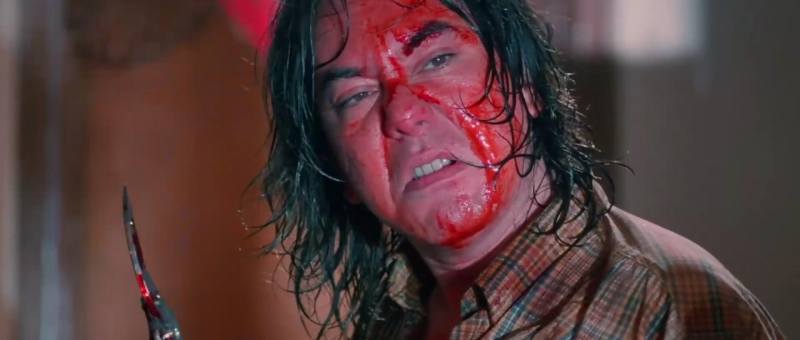
Yau does not hold back on the gore nor on the very real terror of the ravages of ebola as a doctor gruesomely dissects a human body remarking on the disintegration of its internal organs. At this point, Kai doesn’t know ebola’s what he has or that he’s passing it on but it’s unlikely he’d care. When the truth is finally revealed he runs anarchically through the streets with a meat cleaver shouting “ebola for everyone” and spitting at passersby as if taking his revenge against humanity itself. Yet he’s ultimately a wild animal trapped in civilised society caring for nothing other than the satisfaction of his immediate needs aside from his desperation to affirm his masculinity, not to be looked down on or bullied. We see him impassively chop up live frogs and witness the heads being torn off live chickens for others to drink their blood seeing him for what he is, an urban predator with no sense of conventional human value systems. 

Even so, the film seems to suggest this breed of malicious selfishness and amorality cannot be exorcised from the contemporary society while the infection continues to spread exponentially, the film’s bleak conclusion implying that the innocent will continue to suffer while the systemic causes of the disease go unexamined. Then again, Yau approaches his material with absurdly dark humour that implies that this really is some sort of cosmic joke in which all you can really do is laugh at life’s immense cruelties. 


Trailer (no subtitles)