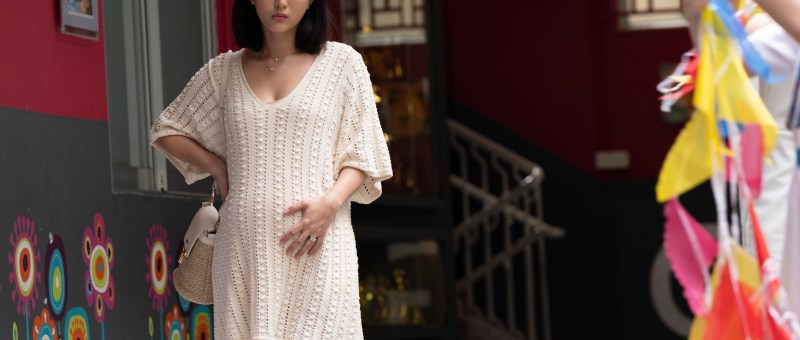
Tales from the Occult (失衡凶間, Fruit Chan, Fung Chih-Chiang, Wesley Hoi Ip-Sang, 2022)

A collection of Hong Kongers contend with the hidden horrors of the contemporary society in the first instalment in a series of anthology horror films, Tales from the Occult (失衡凶間,). Veterans Fruit Chan and Fung Chih-Chiang are accompanied by Wesley Hoi Ip-Sang making his directorial debut as the three directors each tackle lingering terrors as the protagonists of the three chapters are quite literally haunted by past transgressions from a pop singer on the edge consumed with guilt over a teenage trauma, to a sleazy financial influencer who might inadvertently have killed a hundred people, and the denizens of a rundown tenement who are too afraid to report a possibly dangerous presence to the police lest it damage the property value of their flats. 

In Wesley Hoi Ip-Sang’s opening instalment The Chink, a carefree high school girl chasing a stray cat stumbles on the body of a burglar who apparently fell from the rooftops and was trapped in a tiny cavity between two buildings. Some years later Yoyi (Cherry Ngan) has become a successful pop star but is still haunted by her failure to report the body to the police all those years ago worried that perhaps if she had he might have been saved though he had obviously been dead for some time when she found him. Her kindly psychiatrist uncle Ronald (Lawrence Cheng Tan-shui) tries to assuage her anxiety but fails to consider that there might actually be a dark presence in her new flat. Meanwhile, she’s also under considerable stress given that she’s in an ill-defined relationship with Alan, her married manager, who eventually brands her “mentally unstable”, and she’s somehow oblivious to the fact her high school best friend is clearly in love with her. Even so, as it turns out, perhaps you can also be haunted by the living while there are some threats that even the most well-meaning of psychiatrists is ill-equipped to cure. 

It’s ironic in a sense that Yoyi was provided with her new apartment as a path towards an illusionary freedom which is really only a means for Alan to exert greater control over her life while the heroine of Fung Chih-Chiang’s final sequence The Tenement has in a sense chosen seclusion in installing herself in a moribund tenement block in order to concentrate on her writing. The contrast between the two buildings couldn’t be more stark but even the tenement dwellers are paranoid about house prices while assuming the creepy, water-drenched presence encountered by author of pulpy internet novels Ginny (Sofiee Ng Hoi Yan) is an attempt by developers to scare them out of their homes amid Hong Kong’s horrifyingly competitive housing market. Still, like Yoyi they are each haunted by past transgressions but pinning the blame on former gangster Frankie Ho (Richie Jen) who was once accused of drowning a man. What began as a haunting soon descends into farce as they realise the “water ghost” seems to be a young woman who has passed away in their stairwell and decide to “dispose” of her with Frankie’s help to avoid a scandal destroying the value of their homes. But then, all is not quite as it seems as the sudden appearance of a journalist investigating a scandalous “love crime” makes clear. 

Fruit Chan’s middle chapter Dead Mall also takes aim at internet investigators and dodgy “influencers” as sleazy financial snake oil vlogger Wilson (Jerry Lamb) fetches up at a shopping centre surrounded by shoppers in masks to advertise that the mall is actually doing fine despite the economic downturn produced by the pandemic which he describes as worse than that of SARS. In reality the mall is “dead” with barely any customers and rows of shuttered stores, Wilson is simply doing a paid post in an attempt to raise its fortunes not least because the original mall was destroyed in a fire 14 years previously started by a carelessly discarded cigarette. Wilson is pursued not only by those who claim they lost money because of his terrible financial advice, but by a paranormal live streamer who has a separate grudge against him while he continues to refuse any responsibility for his actions answering only that investment carries risk and there’s no opportunity without crisis. What he discovers is perhaps that you reap what you sow, Chan frequently cutting to hugely entertained netizens baying for his blood while he attempts to outrun his fiery karma. 

In each of the increasingly humorous storylines, Chan’s being a particular highlight of wit and irony, there is a lingering dissatisfaction with the contemporary society from the pressures of the fiercely competitive housing market to the kind of financial desperation and longing for connection that fuels the consumerist emptiness of influencer culture. The jury might be out on whether there’s really any such thing as “ghosts” but the haunting is real enough even if it’s only in your mind. 


Tales from the Occult screens at the Garden Cinema, London on 9th July as part of Focus Hong Kong’s Making Waves – Navigators of Hong Kong Cinema.

Original trailer (English subtitles)
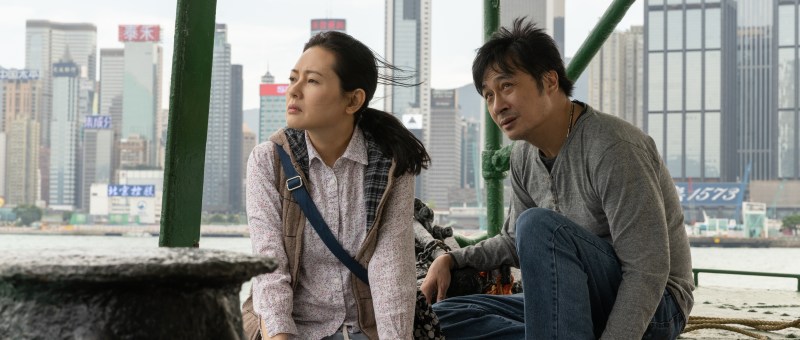
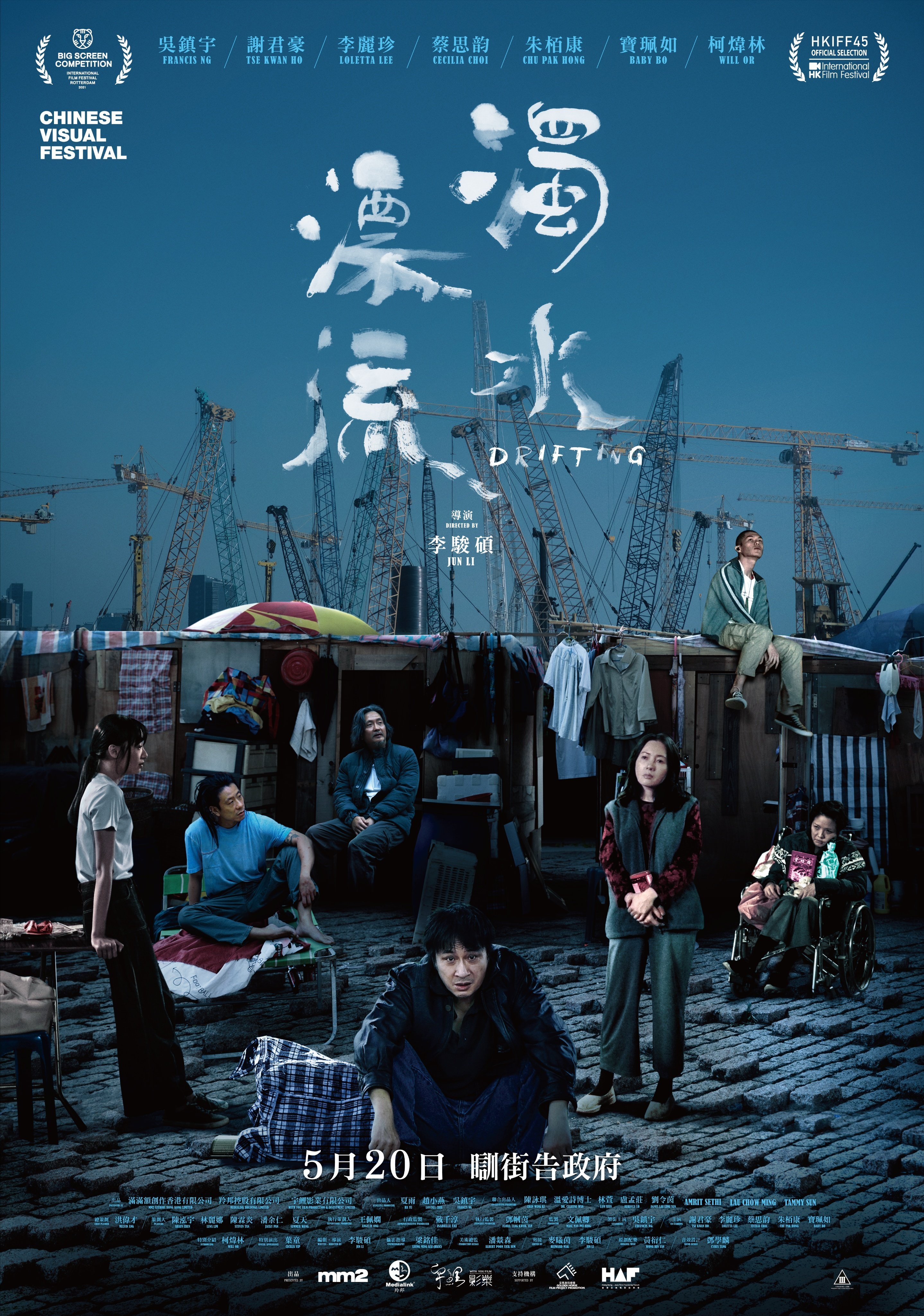
Drifting (濁水漂流, Jun Li, 2021)

“It’s just a bigger prison out there anyway” a prisoner tells his jailer surprised by his lack of enthusiasm for “freedom”. Following transgender drama Tracey, Jun Li continues his exploration of the marginalised citizens of contemporary Hong Kong with Drifting (濁水漂流), in this case the growing numbers of the unhoused who find themselves unfairly victimised by an increasingly authoritarian regime all while the city’s famous housing problem sprouts new blocks of luxury condos daily further displacing those without the means to live in them. 

Released from prison Fai (Francis Ng Chun-yu) has nowhere else to go but back to the streets where he is welcomed by a ritualistic shot of heroin gifted by street godfather Master (Tse Kwan-ho), a refugee from Vietnam occupying a liminal status neither able to leave or remain owing to a criminal conviction which prevents his asylum in this or any other country. Fai’s attempts to rebuild his life are however frustrated when the community he is a part of falls victim to “street cleaning” in which uniformed officers turn up without warning to move them on, taking what little possessions they have and disposing of them as rubbish. This proves too much of an indignity for Fai who, along with the others and the help of social worker Ms Ho (Cecilia Choi Sze-wan), launches a law suit against the city both for damages against their stolen property and for an apology for the way in which they have been treated. 

“I am homeless. I am not worthless” runs the chant the small band of protestors recites outside the offices of government, but it’s a feeling that many of them find hard to internalise. Shing (Chu Pak-hong), a long time drug user, is originally afraid of the lawsuit because of the shame of people finding out about his drug use, relenting only when reminded he can file anonymously and thereafter wearing a medical mask just to be sure he can’t be identified. Fai, by contrast, agrees to be the face of the campaign but is frustrated by the approach of the media who, he feels, are not truly interested in publicising his case only in his “sob story” which he refuses to give them. Time and again, the homeless community is exploited by well-meaning do-gooders including a large number of students who either patronise them with ironic tasks or romanticise the homeless “experience”. 

Social worker Ms Ho is the only one who genuinely tries to help but even she finds her interventions sometimes cause more harm than good. While a friend of Fai’s darkly comments that her wheelchair gives her an advantage applying for public housing, Fai struggles to see a future for himself on the streets lamenting that no one’s going to hire him anyway and explaining that his drug use is a self-destructive way of killing time in an attempt to escape the boredom and despair of his futile existence. During the court case, he voluntarily enters rehab to try and come off drugs but also finds himself suffering with a serious illness for which he is afraid to get treatment because “hospitals are not a place for the living”. 

Echoing Fai’s distaste for the fetishisation of poverty, Li offers only sparse details of what brought these men and women to the streets save that many of them have been imprisoned which gives them a healthy scepticism when it comes to dealing with the justice system. Offered a settlement, most of the community want to accept but Fai is minded to hold out. The money is not so important to him, he’s replaced the things he needs, what he wants is his dignity in being given a proper apology and an acknowledgement as a human being. “Where can poor people live?” he asks, peering from the scaffolding on a half-completed luxury condo building witnessing gentrification in action as it towers over a slum knowing that its presence only means more “street cleaning” while people like him are pushed further into the margins, continually displaced by an economic prosperity to which they are not invited. “No one can save anyone” Fai finds himself admitting, the solidarity of the homeless community eventually shattered by their conflicting goals even as they continue to care for each other as best they can. Anchored by a standout performance from Francis Ng Chun-yu as the weary, defeated Fai battling his own traumas in addition to those of the world around him, Drifting paints a bleak picture of an increasingly unequal society seemingly content to abandon its most vulnerable citizens to the vagaries of a marginal existence. 


Drifting screens at the BFI Southbank on 15th July as the opening night gala of this year’s Chinese Visual Festival.

Original trailer (English subtitles)
Baby : The Secret Diary of A Mom To Be (Baby復仇記, Luk Yee-sum, 2019) [Fantasia 2020]

“You’re finally a mom just like us!” a supportive friend exclaims in Luk Yee-sum’s pregnancy comedy Baby: The Secret Diary of a Mom to Be (Baby復仇記), “women are destined to be moms, that makes your life perfect”. A humorous take on maternal anxiety, Luk’s otherwise warm and empathetic screenplay cannot help but feel slightly out of touch in its wilfully mixed messages, as evidenced in the total lack of irony in the above statements. While the heroine is encouraged to have it all, her existence is still defined by the ability to bear children, all her other achievements apparently meaningless should she “fail” to become a mother while the choice not to is so invalid as not even to be considered. 

In her early 30s, Carmen (Dada Chan Ching) is a high-flying career woman who has elected not to have children with her basketball player husband, Oscar (Kevin Chu Kam-yin). She’s just been (verbally) offered a big promotion managing a new office in Vietnam, while her circle of friends are all housewives and mothers. Carmen had in any case believed that she would not be able to have a child due to suffering with polycystic ovary syndrome, but the discovery that she may be expecting could not have come at a worse time especially as her overbearing mother-in-law Margaret (Candice Yu On-on) has hired a weird maternity coach (Tam Yuk-ying) to help Carmen fulfil her purpose in life by providing a grandchild. She considers taking an abortion pill without telling Oscar about the baby but when he finds out by accident they decide to go through with the pregnancy. 

Of course, that means Vietnam is off. According to her boss they wanted someone “right away” and so sent a colleague instead. “Maybe you’ll think differently after your baby is born” the boss adds, not quite suggesting her career’s over but definitely implying her prospects have been significantly reduced. Meanwhile, the other women in the office no longer seem to take her seriously. Everyone is telling her to take things easy, leave the heavy work to the young ones, as if she’s just biding her time to motherhood and an early retirement from the employment scene. 

Carmen’s anxieties are in many way in regards to the ways her life will change along with the impending loss of freedom and independence. She resents the baby for messing up her career plans, while fearing that she’s being asked to abandon her own hopes and desires in order to become someone’s mum rather than just someone. It doesn’t help that Margaret has already more or less taken over, wielding both her economic advantage and her position as grandma-in-waiting to exert control over Carmen’s living situation. She moves maternity coach Tam into the couple’s home, the pair of them boxing up her evening attire and designer shoes as things a mother no longer needs without bothering to ask her, literally ripping away the vestiges of her old life while refusing her any kind of autonomy. 

Yet her reluctance is reframed as childhood trauma in dysfunctional relationships with her own mother who was apparently largely absent playing mahjong, and a nun at her school who was perhaps a surrogate maternal figure she was unfairly ripped away from when her mother ran out of money for the fees and she had to leave. Carmen’s lack of desire for motherhood is then framed as a kind of illness that must be cured so her life will “perfect”, the implication being that the free choice not to have children is not valid, only a corruption of the feminine ideal born of failed maternity. By paying a visit to Sister Cheung and then to her mother (who remains off screen) she can “repair” her problematic attitude, eventually submitting herself entirely to Margaret’s maternal authority in recognising that her overbearing caring also comes from a place of love and kindness even as it reinforces conservative social codes. 

In a surprising role reversal, meanwhile, Oscar adopts the position of the trophy husband whose career ambitions are perhaps unfairly dismissed by Carmen who has the better prospects for offering financial security. With impending fatherhood on the horizon he tries to assert his masculinity in looking for a steady job but soon realises he has no real skills for the workplace and is later inducted into a strange dad’s club which provides odd jobs and a place for harried fathers to hang out playing video games in escape from their stressful family man lives. A kind and patient man Oscar is perhaps understandably irritated when Carmen ironically snaps at him that he should give up his career ambitions to facilitate hers but later signals his willingness to become a househusband which reinforces the broadly positive have it all message while problematically continuing the narrative that a woman’s fulfilment is found only in motherhood and without it her life is incomplete. 

Nevertheless, Baby: Secret Diary of a Mom to Be has its charms in its empathetic examination of maternal anxiety while highlighting if not quite condemning the costs of living in a patriarchal society. Carmen’s “happily married” friends each have problems of their own they’re afraid to share lest it damage the image of familial bliss they’ve been keen to cultivate. Their secret unhappiness is strangely never a factor in Carmen’s decision making, nor is the quest for that ideal ever critiqued despite Carmen’s eventual success in finally having it all. Still despite its mixed messaging and subtly conservative overtones, Luk’s sophisticated dialogue and quirky sensibility lend a sense of fun and irony to a sometimes dark exploration of impending parenthood.


Baby : The Secret Diary of A Mom To Be streams in Canada from 20th August to 2nd September as part of this year’s online edition of Fantasia International Film Festival.

Original trailer (English / Traditional Chinese subtitles)