
New Female Prisoner Scorpion (新・女囚さそり 701号, Yutaka Kohira, 1976)

After the fourth film in the Female Prisoner Scorpion series, star Meiko Kaji decided to move on but Toei had other ideas and opted for a reboot as signalled by the addition “shin” or “new” to the otherwise identical title to the very first film. New Female Prisoner Scorpion #701 (新・女囚さそり 701号, Shin Joshu Sasori: 701-go) moves in a slightly different direction spinning a tale of a less straightforward revenge coloured by conspiracy cinema and a series of real life high-profile corruption cases including the Lockheed Scandal, itself name checked in the film. Just a few months earlier, Roman Porno actor and fervent nationalist Mitsuyasu Maeno had lost his life in a suicide attack on the home of underworld figure and right-wing fixer Yoshio Kodama who had been instrumental in “convincing” Japanese airlines to buy Lockheed planes over McDonnell Douglas.

In any case, this Nami Matsushima (Yumi Takigawa) is an ordinary young woman who becomes concerned about her sister Taeko (Bunjaku Han) when she uncharacteristically drops out of contact after behaving strangely. Taeko is a political secretary to assemblyman Miura (Ichiro Nakatani) who is currently the vice-minister for justice and at the centre of a burgeoning corruption scandal. After Nami and her fiancée Toshihiko (Yusuke Natsu) manage to meet up with Taeko, she is suddenly kidnapped from the hotel car park while the man who was with her, Sugino (Nenji Kobayashi), is gunned down. Sugino is found to be carrying his passport and two airline tickets to Paris which, along with Taeko’s strange behaviour, imply they were planning to flee the country together. Looking more closely at the wedding presents her sister had given her, Nami realises she’s left her a cassette tape with the instruction to leak its contents to the press should anything untoward happen to her. 

Nami uses the tape as leverage with Miura to try and rescue her sister but ends up learning some unpleasant truths before being framed for Taeko’s murder and sentenced to 15 years in prison. Toshihiko, who had originally been supportive, betrays her, testifying at her trial that she may have been resentful that Taeko was against their marriage only to later marry Miura’s daughter and go into politics apparently siding with the bad guys. Toshihiko may have seemed like a nice guy, but it’s also true that he tried to pressure her into premarital sex that she didn’t want by insisting that he couldn’t wait for marriage, suggesting they blow off her sister and go to a hot springs in Hakone instead. Most of the men in the film are equally spineless and duplicitous not least the guards who with the exception of one are all corrupt and/or abusing the inmates. 

Not content with sending her to prison, Miura tries to have Nami offed with the assistance of the warden who puts her in a cell with the prison’s most notorious offender. Fusae (Mitsuyo Asaka) orders her minions to beat and torture Nami, at one point gang raping her while the only way she can think of to save her life is by claiming there’s another tape so if they kill her they’ll never know where it is and run the risk of the contents leaking. 

Meanwhile, she’s approached by a group of anarchists who tell her they need a leader which seems a little contradictory but nevertheless enables a jailbreak even as Nami develops a rivalry with the feisty prisoner number 804. Though she obviously didn’t commit the murder for which she was imprisoned, Nami is no pushover and in fact burns one of her tormentors alive not to mention stabbing another in the eye with a pencil and cunningly splitting a pair of scissors to gain twin knives. Rather than the classic scorpion look, she appears almost batlike, spreading her arms in her cape as she prepares to make her final act of revenge right outside the Diet building itself as if she were making a point about cleaning up politics aside from avenging her sister’s death and her own mistreatment. Director Kohira lends her a supernatural quality in her eerie silhouette as if she’s already become something else, a force of nature transformed by her righteous anger towards a corrupt society largely ruled by venal men willing to kill and use women for their own benefit or pleasure. Even Nami is forced to admit her complicity having learned her sister may have paid for her education through allowing herself to be traded by Miura as a political bargaining chip. She is not, however, willing to let it stand, resisting a controlling a patriarchal society with all of the resources available to her.

Love Letter (ラブレター, Shunji Iwai, 1995)

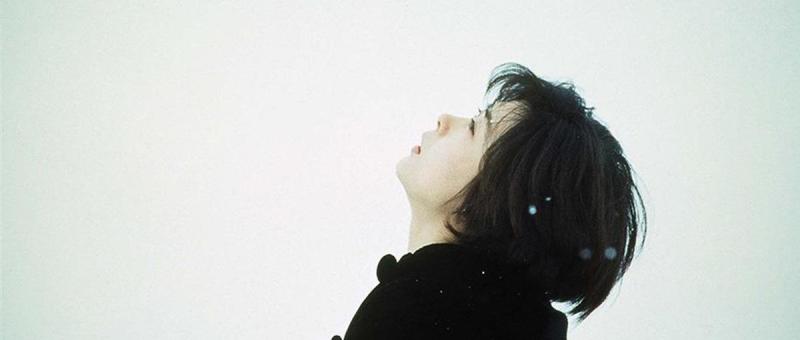
“People are forgotten so easily” a widow laments after an insensitive comment from a family friend, yet there is perhaps a difference between forgetting and letting go as exemplified in the distance between two accidental pen pals in Shunji Iwai’s profoundly moving romantic melodrama, Love Letter (ラブレター). A huge hit and pop culture phenomenon throughout Asia on its 1995 release, Iwai’s first theatrical feature bears many of the hallmarks of his enduring style in its soft focus, ethereal lighting and emphasis on nostalgia as the two women at the film’s centre each restore something to the other through their serendipitous correspondence. 

Iwai opens with a memorial service for Itsuki, the late fiancé of the heroine, Hiroko (Miho Nakayama), who passed away two years previously in a mountain climbing accident. Hiroko has since started a relationship with his friend Akiba (Etsushi Toyokawa) who avoided attending the memorial out of misplaced guilt and gave up mountaineering soon after Itsuki’s death. Akiba is keen to move their relationship forward, but fears that Hiroko is still stuck in the past unable to let go of her love for Itsuki. On a visit to Itsuki’s mother (Mariko Kaga), she finds an old address in his middle school year book for a home that apparently no longer exists and decides to mail him a letter saying nothing more than “How are you? I’m fine” of course expecting no reply. What she didn’t know, however, is that there were two Itsuki Fujiis in her Itsuki’s class, the other being a woman still living at the same address to whom Hiroko has accidentally mailed her correspondence. Confused, the other Itsuki (also played by Miho Nakayama) mails back and eventually finds herself recalling memories of the male Itsuki as an awkward, diffident teen she may have entirely misunderstood. 

Played by the same actress the two women are each in a sense trapped in an eternal present, unable to move forward with their lives. While Hiroko is consumed by grief and fearful of committing to her new relationship with Akiba lest she betray the memory of Itsuki, Itsuki is still struggling to come to terms with the traumatic death of her father 10 years previously who passed away from pneumonia after contracting the common cold leaving her with persistent health anxiety. Meanwhile, she is also struggling to move on from her family home which is in an increasingly perilous state of disrepair. She and her mother (Bunjaku Han) want to move into a modern apartment, while her grandfather (Katsuyuki Shinohara) prefers to stay even though it seems that the house will soon have to be demolished. 

Through their accidental correspondence, both women are forced to deal with recent and not so recent loss, Itsuki in some senses having forgotten the boy who shared her name while Hiroko remains unable to forget. Through his trademark ethereal lighting and frequent use of dissolves, Iwai hints at a sense of perpetual longing for the nostalgic past. The letters may not have been from the late Itsuki in a literal sense but were perhaps a message from him, connecting the two women and eventually freeing each of them as the love letter of the title is finally delivered ironically enough hidden inside a copy of Remembrance of Things Past. 

This sense of grief-stricken inertia is perfectly reflected in the snowy vistas of the lonely northern town of Otaru, thrown into stark contrast with the intense heat of the furnace in Akiba’s glassblowing workshop, or the gentle warmth of the old-fashioned stove in Itsuki’s room as she types replies to Hiroko’s handwritten letters. As Hiroko eventually reflects, they each knew a different Itsuki and have each in a sense both lost him if restoring something one to the other through the exchange of memories that grants Hiroko the understanding she needs to let go and Itsuki the poignant realisation of a youthful missed connection. A bittersweet meditation on love, loss, grief, and memory, Iwai’s epistolary drama has its own sense of magic and mystery in the strange power of this serendipitous connection leading to a tremendous sense of catharsis as a long delayed message finally makes its way home bringing with it a shade of melancholy regret but also possibility in the new hope of forward motion.


Love Letter screens at the BFI on 22/28 December as part of BFI Japan.

Original trailer (no subtitles)

Proof of the Man (人間の証明, Junya Sato, 1977)

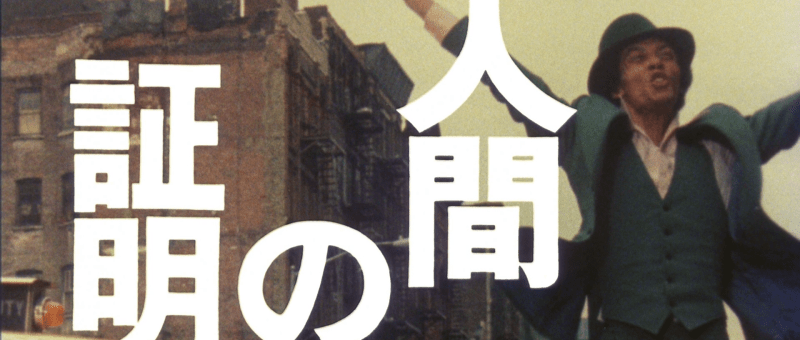
proof of the man posterOne could argue that Japanese cinema had been an intensely Japanese affair throughout the golden age even as the old school student system experienced its slow decline. During the ‘70s, something appears to shift – the canvases widen and mainstream blockbusters looking for a little something extra quite frequently ventured abroad to find it. Pioneering producer Haruki Kadokawa was particularly forward looking in this regard and made several attempts to crack the American market in the late ‘70s and early ‘80s before settling on creating his own mini industry to place a stranglehold around Japanese pop culture. Sadly, his efforts mostly failed and faced the same sorry fate of being entirely recut and dubbed into English with new Amero-centric scenes inserted into the narrative. Proof of the Man (人間の証明, Ningen no Shomei) is one of Kadokawa’s earliest attempts at a Japanese/American co-production and, under the steady hands of Junya Sato, is a mostly successful one even if it did not succeed in terms of overseas impact.

Based on the hugely popular novel by Seiichi Morimura, Proof of the Man stars the then up and coming Yusaku Matsuda as an ace detective, Munesue, investigating the death by stabbing of a young American man in Japan. The body was discovered in a hotel lift on the same night as a high profile fashion event took place with top designer Kyoko Yasugi (Mariko Okada) in attendance. After the show, an adulterous couple give evidence to the police about finding the body, but the woman, Naomi (Bunjaku Han), insists on getting out of the taxi that’s taking them home a little early in case they’re seen together. On a night pouring with rain, she’s knocked down and killed by a young boy racer and his girlfriend who decide to dispose of the body to cover up the crime rather than face the consequences. Kyohei (Koichi Iwaki), the driver of the car, is none other than the son of the fashion designer at whose show the central murder has taken place.

Like many Japanese mysteries of the time, Proof of the Man touches on hot-button issues of the immediate post-war period from the mixed race children fathered by American GIs and their precarious position in Japanese society, to the brutality of occupation forces, and the desperation and cruelty which dominated lives in an era of chaos and confusion. The only clues the police have are that the victim, Johnny Hayward (Joe Yamanaka), said something which sounded like “straw hat” just before he died, and that he was carrying a book of poetry by Yaso Saiji published in 1947. Discovering that Hayward was a working-class man of African-American heritage from Harlem whose father took a significant risk in getting the money together for his son to go to Japan (hardly a headline holiday destination in 1977), the police are even more baffled and enlist the assistance of some regular New York cops to help them figure out just why he might have made such an unlikely journey.

The New York cops have their own wartime histories to battle and are not completely sympathetic towards the idea of helping the Japanese police. Munesue, of a younger generation, is also harbouring a degree of prejudice and resentment against Americans which stems back to a traumatic incident in a market square in which he witnessed the attempted gang rape of a young woman by a rabid group of GIs. Munesue’s father tried to intervene (the only person to do so) but was brutally beaten himself, passing away a short time later leaving Munesue an orphaned street kid. In an effort to appeal to US audiences, Proof of the Man was eventually recut with additional action scenes and greater emphasis placed on the stateside story. Doubtless, the ongoing scenes of brutality instigated by the American troops would not be particularly palatable to American audiences but they are central to the essential revelations which ultimately call for a kind of healing between the two nations as they each consider the ugliness of the immediate post-war era the burying of which is the true reason behind the original murder and a secondary cause of the events which led to the death of Naomi.

Naomi’s death speaks more towards a kind of growing ugliness in Japan’s ongoing economic recovery and rising international profile. Kyohei is the son not only of high profile fashion designer Kyoko, but can also count a high profile politician (Toshiro Mifune) as his father. Spoiled and useless, Kyohei is the very worst in entitled, privileged youth driving around in flashy cars and going to parties, living frivolously on inherited wealth whilst condemning the source of his funds as morally corrupt citing his mother’s acquiescence to his father’s frequent affairs. Yet aside from anything else, Kyohei is completely ill-equipped for independent living and is essentially still a child who cannot get by without the physical and moral support of his adoring mother. 

Johnny Hayward, by contrast, retains a kind of innocent purity and is apparently in Japan in the hope of restoring a long severed connection as echoed in Saiji’s poem about a straw hat lost by a small boy on a beautiful summer’s day. The words of the poem are later repeated in the title song by musician Joe Yamanaka who plays Johnny in the film and is of mixed race himself. As in most Japanese mystery stories, the root of all evil is a secret – in this case those of the immediate post-war period and things people did to survive it which they now regret and fear the “shame” of should they ever be revealed. Some of these secrets are not surmountable and cannot be forgiven or overcome, some atonements (poetic or otherwise) are necessary but the tone which Sato seems to strike encourages a kind of peacemaking, a laying to rest of the past which is only born of acceptance and openness. Despite the bleakness of its premiss on both sides of the ocean, Proof of the Man does manage to find a degree of hopefulness for the future in assuming this task of mutual forgiveness and understanding can be accomplished without further bloodshed.


Original trailer (no subtitles) – includes major plot spoilers!