Maru (まる, Naoko Ogigami, 2024)

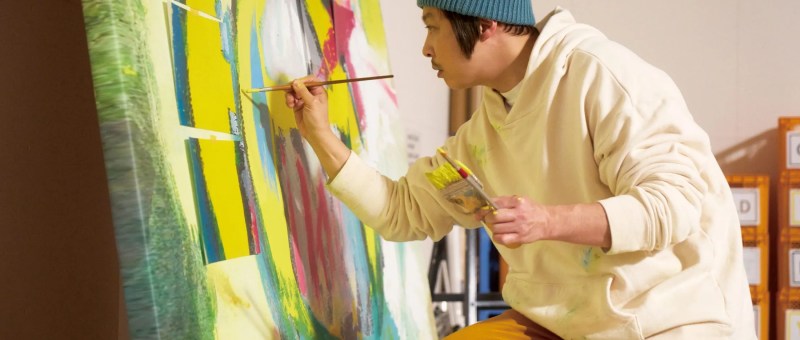
Taken to task by a coworker (Riho Yoshioka) for allowing himself to be exploited as an assistant to an internationally famous artist who views them as little more than tools and takes all the credit for their work, Sawada (Tsuyoshi Domoto) asks if she knows who built Horyu Temple. He has to supply the answer himself, Prince Shotoku. But of course, he didn’t. It wasn’t  as If he drew up the plans or cut the wood with his own hands. 1300 carpenters built it, but no one thinks about them. Only about Prince Shotoku, because he commissioned the work and paid for it. Sawada doesn’t think what he’s doing is all that different, and that times haven’t really changed all that much. Not many people get to make a living doing what they love, so perhaps that’s enough for him. 

But his colleague asks if he sees himself more as a worker than an artist, as if she were unintentionally making a value judgement on the nature of art. The line between artist and artisan maybe so thin as to not exist, but why is it that we think of art which is perceived to have a practical application differently from that which we assume is intended only as a means of self-expression? “What about your own art?” she asks Sawada, but he doesn’t really have a notion of it because he’s been so focussed on earning a living as part of a wider capitalist superstructure in which art too is a commodity. Akimoto (Kotaro Yoshida) is basically running an art sweatshop mass-producing pieces for an international market and operating it like a brand in which everything is released under his own name. When Sawada falls off his bike and breaks his dominant arm, Akimoto simply fires him.

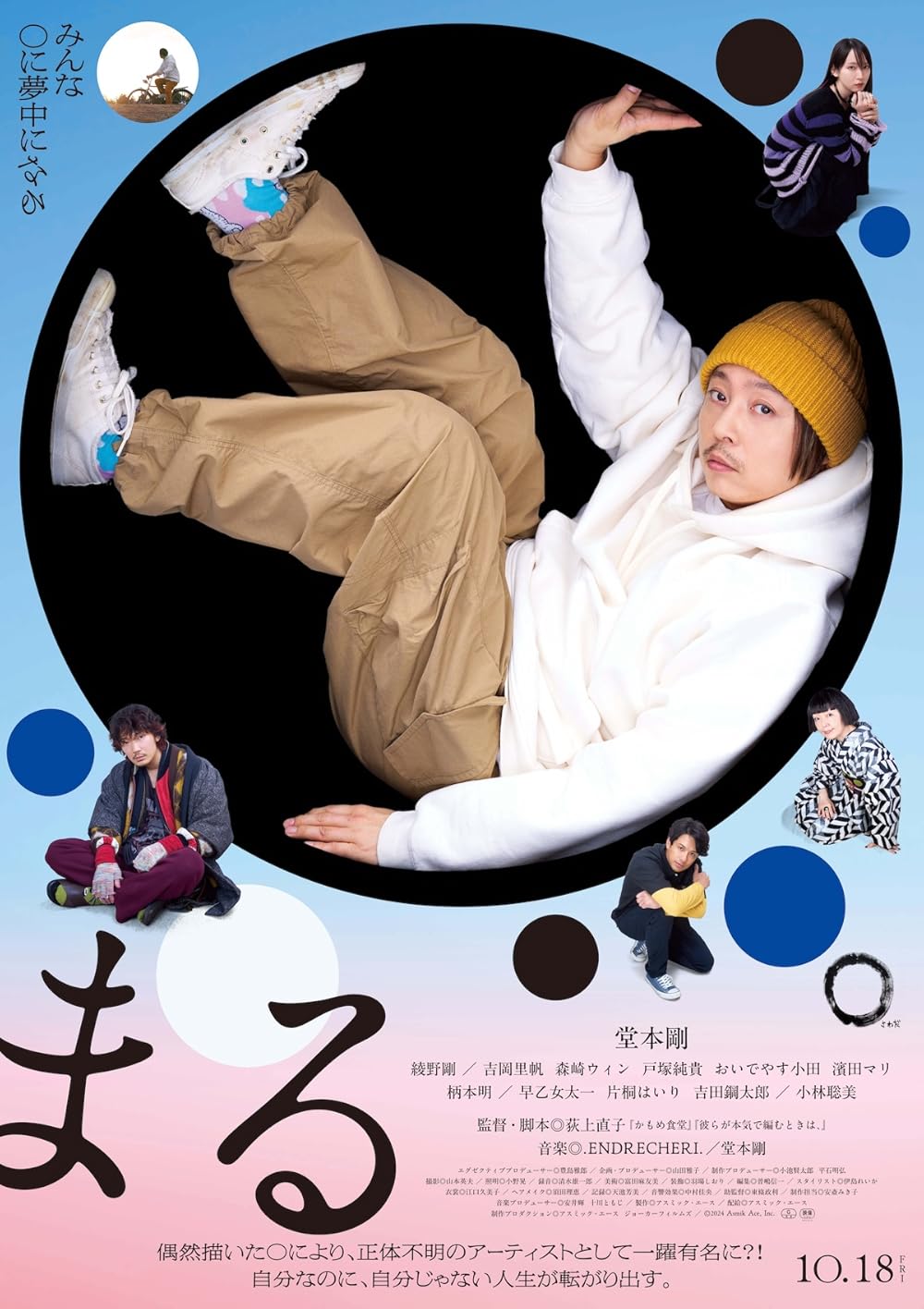
But then, things begin to get strange. Sawada draws some circles with his left hand and includes them with a few things he plans to sell to a second-hand shop where they’re picked up by a strange man who describes himself as a “magician who can’t do magic” and offers him fantastic amounts of money for his work even though all he did was draw a circle. Sawada discovers what he drew is called an “enso” and represents “serene emptiness”, but at the same time others seem to project whatever they want to see in the hole inside while Sawada himself is uncertain what should be there. The magician tells him that his follow-up work is no good because his enso are full of desire in his newfound lust for fame and riches, but at the same time he and his art have also become a commodity and like Akimoto he’s locked into producing more of what people want rather than expressing himself or finding artistic fulfilment. 

His colleague returns to attack him again. Now she criticises him for exploiting art to make money. “Art that’s expensive and just for a few wealthy people isn’t real art,” she says. She sticks to her message that the labour of those like her is being exploited and the world is set up for a few wealthy elites. Their chant of “we want sushi too” might seem flippant, but it represents the world that they’re locked out of. Sawada’s incredibly intense, struggling mangaka neighbour is obsessed with getting sushi too, though there’s plenty of it on the buffet at Sawada’s show which Sawada eyes hungrily. Eventually he’s reduced to grabbing some to eat on his own in a stairwell, signalling his liminal presence within this space. He’s the artist and it’s his show, but he isn’t really part of this world and no one’s really interested in him except when he’s giving mystical quotes as part of his marketing brand. 

The conclusion that he comes to that his art at least should exist for art’s sake. That all he ever wanted to do was paint as a means of being true to himself, only that simple desire has got lost amid the complications of modern life. It’s very hard to draw circles of serenity when you’re living in a rundown apartment block with a worrying subsidence problem and your neighbour screams all night in despair before punching a hole in your wall which you’ll probably have to pay to have fixed. Nevertheless, through Ogigami’s elliptical tale, Sawada does perhaps begin to find a path back to his own art or at least what art means to him which is after all what’s in the middle circle even if all anyone looks at is the edges. 


Maru screened as part of this year’s Camera Japan.

Trailer (no subtitles)
Good Luck (グッドラック, Shin Adachi, 2025)

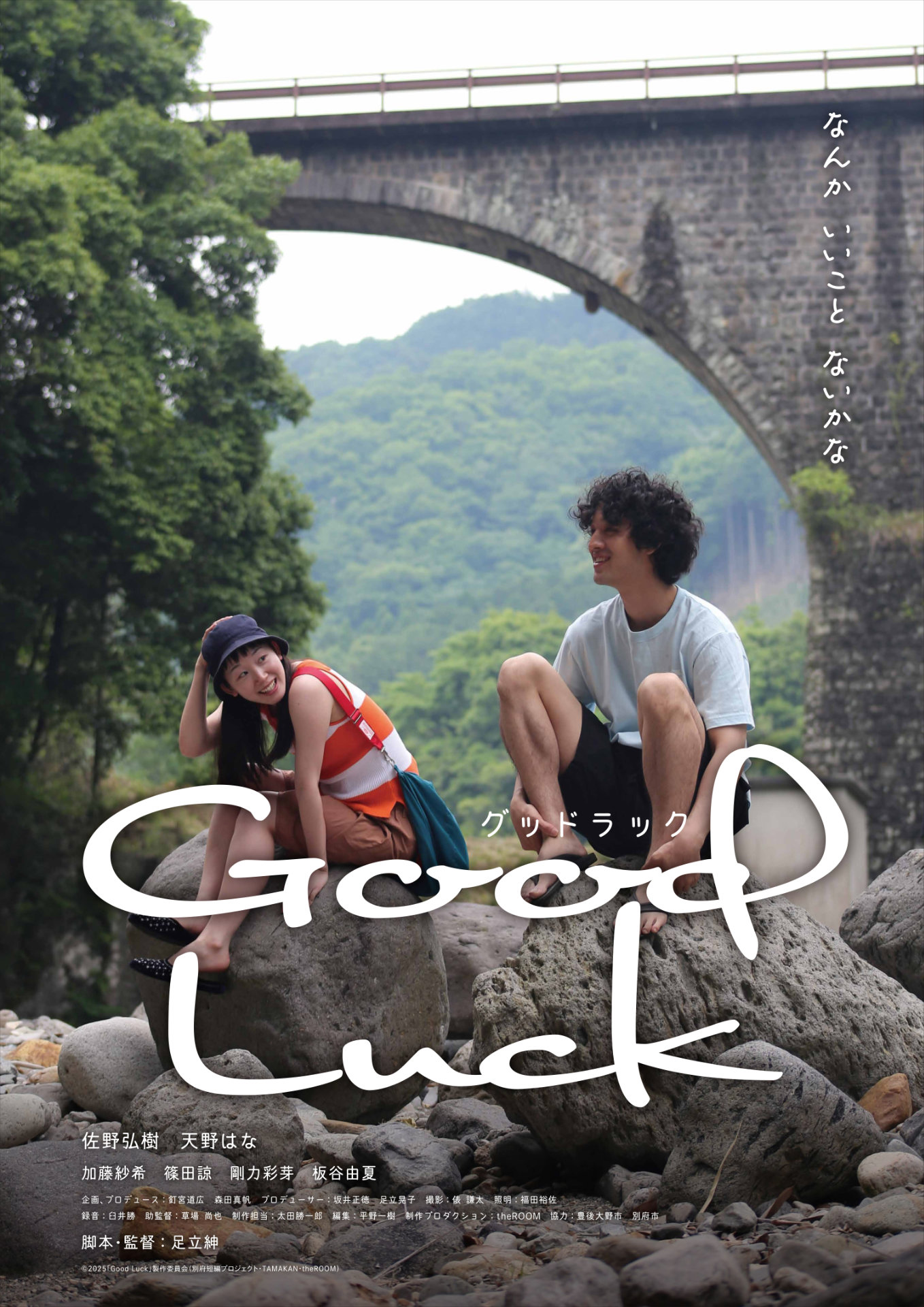
Taro’s (Hiroki Sano) problem as far as he sees it, is that he lacks self-confidence and is unable to understand why other might like him, though he fears few do. That’s especially true of his girlfriend/financial backer Yuki (Saki Kato) about whom he makes a short documentary because he thought it would be good to make a film about the person who’s most important to him. But Yuki fires back that the person who’s most important to him is himself, so he should turn the camera around, but that’s exactly what he doesn’t want to do even if the film is really about himself anyway. 

To that extent the film backfires in that, when he’s unexpectedly invited to a festival in Beppu and and convinced by Yuki to go because she’s irritated by just how little effort he seems to put in, all anyone can talk about is Yuki who they say must love him very much or at any rate has a lot of patience and understanding. This is doubly true of the lady running the Bluebird Theatre who says out loud live during the Q&A that his film was boring, and she only chose it because of the contrast between how mediocre the film was and Yuki’s force of personality. She suggests that Taro doesn’t know what sort of films he wants to make, or even why he’s making them in the first place, and she’s right.

Awkwardly, this sense of confusion seems bound up with his relationship with Yuki which is unbalanced in his mind because she asked him out rather than the other way round. As he tells Miki (Hana Amano), an extremely extroverted young woman with an amazing laugh that he meets on his travels, his biggest regret in life is not being able to tell he girl he liked that he liked her in high school. This indecision and lack of confidence have left him directionless in his film career and uncertain in his relationships while it seems clear Yuki is not really his muse despite what others might say about her star quality if only by virtue of how sorry they feel for her for having to put up with Taro.

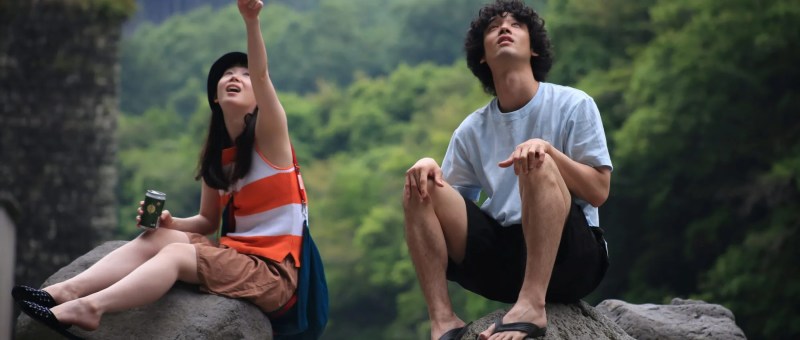
But then again, he’s basically swept away Miki too who hijacks his last couple of days touring the saunas around the hot springs resort. She explains that she likes to travel alone because she difficulties interacting with other people, though she gets along much better with strangers which is why she clicks so quickly with Taro even if he’s only hanging out with her by virtue of being too polite/spineless to decline her invitations. The pair end up echoing Before Sunrise in their walking tour of the natural attractions of the area, while Miki tells him that her biggest regret in life is that she hasn’t achieved anything that society values even if there are things that she’s good at and fears that she won’t be able to do the things that she wants to do before she dies. 

Truth be told, Taro doesn’t really do much for Miki or ask any real followup questions while simultaneously beginning to fantasise about her as recounted through an incrediblely meta sequence taking place in his treehouse room. Nevertheless, he begins to see in her the kind of muse he’s been looking for along with discovering why he wants to make films and what kind of films he wants to make. But in then in true Adachi fashion, maybe Taro is just as superficial as he says he is and later drawn to another pretty woman on a train all while not making that much of an effort to get back to Yuki whose father has had a heart attack to which Taro seems mostly indifferent. There are certainly lots of strange women around Taro from the gloomy innkeeper in Beppo to the gaggle of ladies at a shrine convinced he’s an old high school friend, but as much as he has a talent for encountering the surreal, Taro doesn’t seem to know what to do with it and remains a somewhat passive observer to afraid to voice his feelings, simultaneously making films only about himself that nevertheless express nothing of his own soul.


Good Luck screened as part of this year’s Camera Japan.

Trailer (no subtitles)
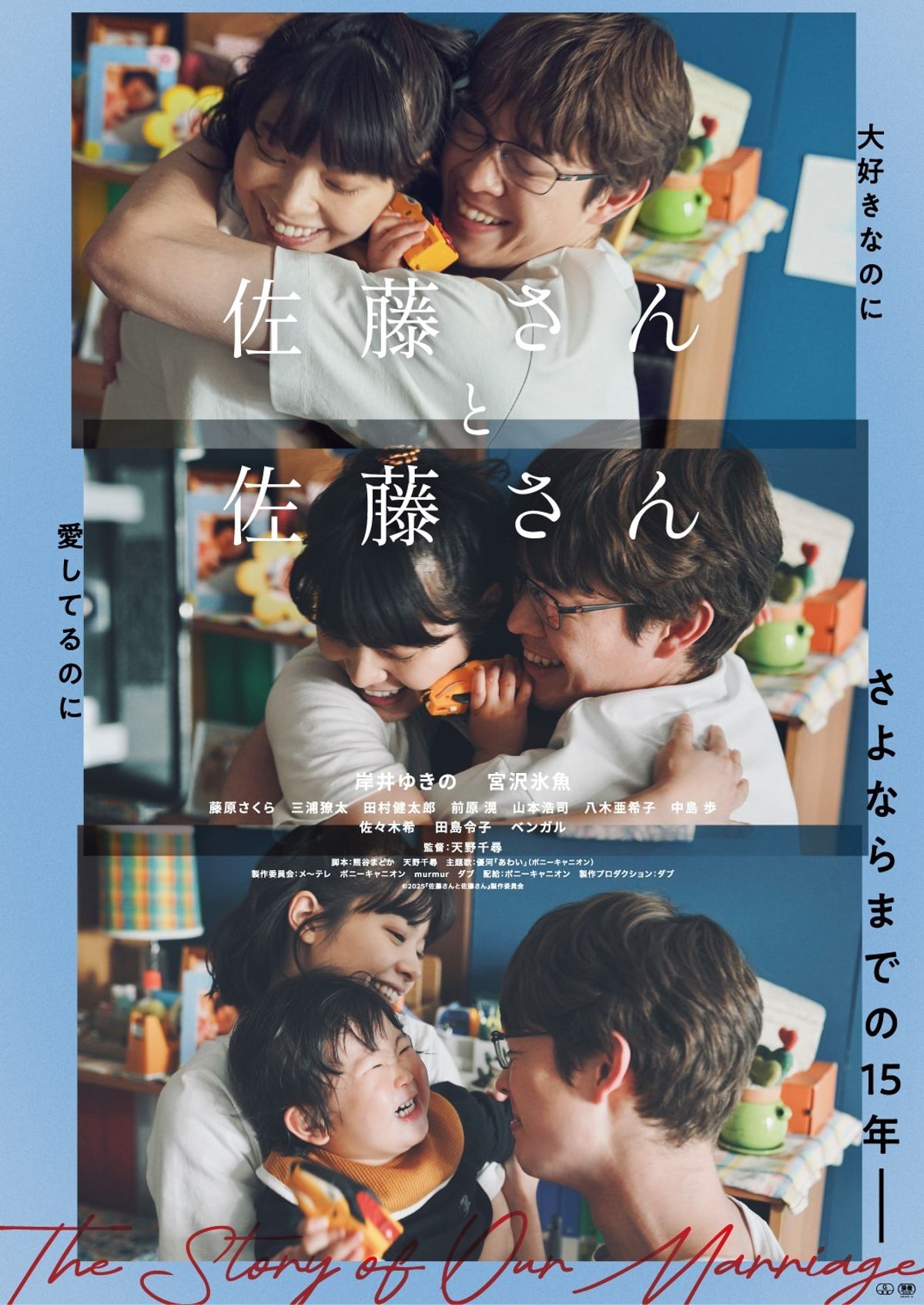
Sato and Sato (佐藤さんと佐藤さん, Chihiro Amano, 2025)

Aged 37 and recently divorced herself, lawyer Sachi (Yukino Kishii) listens to a man whose wife has evidently left him complain that what really soured him on her was that there was a dead bug in their living room that remained in the same spot for months on end, which indicated to him that his wife only ever swept the room as if it were round, literally cutting corners in their married life. He also complains that she only ever fed the children ready meals for dinner and they only ever had toast for breakfast. “I mean, would anyone call that a woman?” he rolls his eyes and sighs, expecting instant support from his legal team. It doesn’t seem to have occurred to him that he could simply have swept up himself or sorted breakfast and dinner, though he now brands his wife an unfit mother and seeks full custody, perhaps only as a means of hurting her or vindicating himself.

It’s this patriarchal take on the division labour that comes under the microscope in Chihiro Amano’s profoundly moving marital drama, Sato and Sato (佐藤さんと佐藤さん, Sato-san to Santo-san). Following the gradual disintegration of a relationship under the pressures of contemporary married life along with changing notions of gender roles, toxic masculinity, and the ways in which men and women navigate the domestic environment, the film seems to ask why it is that there isn’t more equality across the board, with practical and emotional responsibilities for the home still disproportionately falling on one partner.

This is all is more obvious when Tamotsu (Hio Miyazawa) ends up becoming an accidental househusband after repeated failures to pass the bar exam. He and Sachi, who share a surname which is also the most common in Japan making them a pair of everypersons, met as members of the university coffee club and, in truth, seemed somewhat mismatched from the start. She just bought the deal of the day and had the beans ground there. He’s carefully researched the best on offer and had the beans roasted to perfection with the intention of grading them on the day for the best flavour. Depending on how you see it, perhaps they complement each other and round out the corners to become one whole, but, on the other hand, maybe they aspire to different things. Nevertheless, they become a happy young couple full of hope and expectation for the future. But their relationship is soured by Tamotsu’s failures, and only more so when Sachi says she’ll study for the bar with him only to end up passing herself when he again yet fails.

Of course, it’s embarrassing for Tamotsu on a personal level that he can’t pass the exam, especially when he’s so told so many people that he’s going to be a lawyer. He’s been putting everything else on hold, including his relationship with Sachi having put off meeting her parents until he’s passed out of fear he’ll disappoint them. The sense of inadequacy begins to eat away at him, especially after Sachi begins working as a lawyer and is taking care of most of their bills. The other men we meet in the film, especially Sugai who is being divorced by his wife of 50 years, stress their position as a provider, as if that were all they needed to do in order to fulfil their role and buy their wife’s devotion. But Mrs Sugai, who now refuses to see him, states only in a letter that living with him is unbearable and he all he ever did was shout at her so there’s no prospect of communication. Tamotsu too is further driven into despair by the thought that others see him as “unmanly” because he’s being supported by his partner, though in reality masculinity is a performance for other men and not really something most women care about. What begins to bother Sachi is not his failure, but that she feels as if he’s given up and is not really contributing to their relationship or seriously studying to pass the exam. 

On a visit back to his hometown due his grandmother’s health crisis, starts to bond with a local woman and almost forgotten childhood friend who has herself escaped an abusive marriage but lost her children to her in-laws. He sees in her a more idealised kind of traditional wife, but after conplimenting him that his wife must be very lucky as he helps clear up at the bar where she works while all his friends doze off drunkenly, she gives him a rude awakening. He’s just like the others after all. He wants comfort, which is to say emotional labour from her, a woman he doesn’t really know, and the absolution sought by every man who says his wife doesn’t understand him. He wants to be told that he’s right and good, even while he blames Sachi and his domestic responsibilities for his inability to pass the bar. While talking with his old friends and hearing that his ageing father is planning to close their family farm, he starts to think about moving back and starting some sort of non-profit but as Sachi says when he puts it to her rather abruptly, he’s not really serious. Even if this sort of life might really suit him better, it’s not a decision he’s made after coming to the realisation that the bar exam is beyond him, but an attempt to run away not only from his failure but his domestic responsibilities. 

But by the same token, even while the roles are reversed Sachi falls into many of the same traps as an insensitive husband. So busy with her own working life, she doesn’t really see things from Tamotsu’s perspective and is only irritated by what she sees as his failure to commit to one thing or another. He is annoyed when she does things like point out there’s no toilet paper or contemplates buying a washing machine to make his life easier, because really he doesn’t think these things should be his responsibility and suggesting they are makes him feel like less of a man. They can’t orient themselves around the idea of a marriage as a domestic partnership in which they split both domestic and external labour equally and are each responsible for the whole. 

But then again, perhaps society isn’t ready for that either. Though Tamotsu does actually take care of the home environment and is the main caregiver for their son, Fuku, others still look to Sachi where a child is concerned. When they’re called into school because Fuku has apparently seriously injured another child in a squabble over building blocks, Tamotsu wants to ask more questions about how this happened, but Sachi immediately takes over and reassures the teachers she’ll make the necessary apologies to the other family, whispering in private that they’re all too busy to string this out which may not, of course, be very helpful in terms of Fuku’s further development. Conversely, when the pair are picked up by police after a violent argument in the street, the officer insists he has to write down “unemployed” even if Tamotsu says he’s a househusband, while when Sachi replies “lawyer” he assumes she’s trying to assert her right to legal representation and chuckles that she’s not under arrest so it isn’t necessary. She has to show him her lawyer’s pin to explain, and even then he just stares at them dumbfounded by their usual family setup. 

Sachi’s friend Shino who consults her for divorce advice when her husband cheats on her, reflects that Sachi might have had it easy in one sense because she never needed to change her name and accommodate herself with the loss of identity that comes with being called “Mrs Hasegawa” or “Miki’s mum” rather than by her birth name which admittedly was passed down from a father rather than a husband. For Shino taking back her maiden name was more important than a divorce in allowing her to reclaim herself as an individual who has choices and agency and isn’t someone who exists only in relation to a man in her social role as wife and mother. The film suggests the reason the marriage is unsustainable is precisely because society doesn’t accept it as a partnership of equals, so even when Tamotsu finally passes the bar, they end up with what’s perceived as two husbands and no one taking care of the domestic space to which the only solution is two households. With profound empathy for each, the film takes care not to apportion any blame, except perhaps on the parade of useless husbands being sued for divorce while unable to understand why their wives have left them or accept any responsibility for the failure of the marriage, but sees only the sadness of romantic failure and the impossibility of an uncompromised happiness in an otherwise oppressive society.


Sato and Sato screened as part of this year’s Camera Japan.

Trailer (no subtitles)
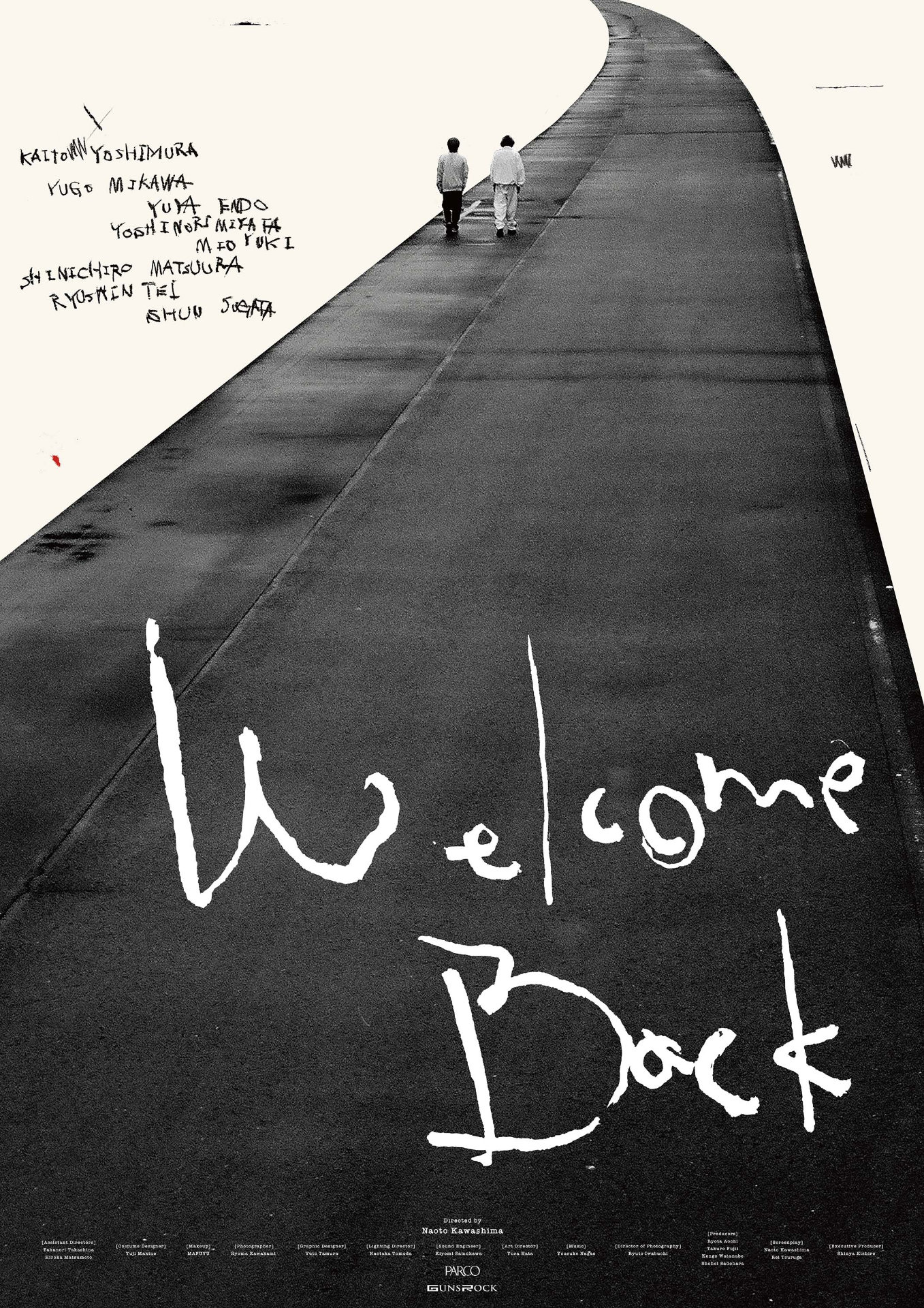
Welcome Back (Naoto Kawashima, 2024)

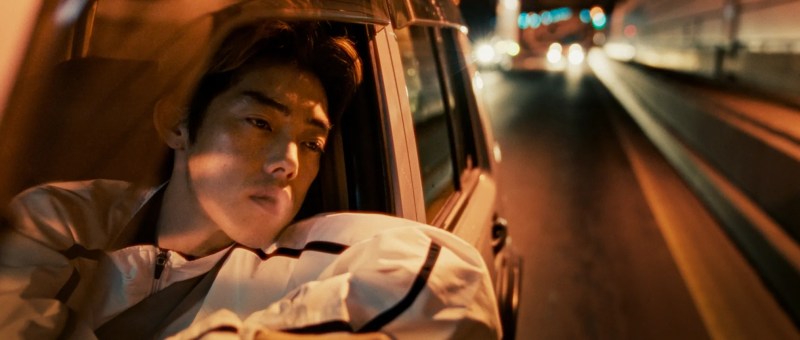
“Once you play the heel, you can’t go back,” according to up-and-coming boxer Teru’s (Kaito Yoshimura) coach, but it turns out to be truer than for most for the aspiring champion for whom getting up off the mat proves an act of impossibility. While he plays the hero for younger brother figure Ben (Yugo Mikawa) and talks a big game before stepping into the ring, in reality Teru is riddled with insecurity and using bluster to overcome the fear that he can’t live up to the image Ben has of him.

The terrible thing is, he might be right and Ben, a young man with learning difficulties who later gives his age as 10 though clearly in his 20s, may be beginning to see through him. “I lost because I looked at you,” he later says of a failed attempt to fight off their chief rival, but it might as well go for his life which he’s spent in Teru’s footsteps ever since his mother abandoned him with Teru’s family when they were just children on the same housing estate.

As such, Teru does genuinely care for Ben, but has also been hiding behind him in allowing him to become something like a mascot or cheerleader, someone over whom he feels superior but also looks up to him as the sort of person he wants to be but perhaps isn’t. In any case, his boxing career has been going well and he’s on track to become the Japanese champion, but at the same time he’s proud and arrogant. He thinks he knows better than his coach, and likes to make a big entrance trash talking his opponents in a larger-than-life manner that might be more suited to pro-wrestling than the comparatively more earnest world of boxing and earns him a degree of suspicion as a result. His opponent Kitazawa (Yoshinori Miyata) is his opposite number in that, as Teru points out, he’s deathly serious and certain in his abilities which is why he’s able to KO Teru mere seconds into their title match. No longer “undefeated”, Teru simply gives up and retires from boxing only to spiral downward while working as a supermarket mascot, eg. Ben’s old job from which he also gets him fired by messing it up for both of them because of his pride and temper.

But for Ben, the certain truth of his life has been that “Teru never loses”. Now that Teru lost, something’s very wrong with the universe and he has to put it right, which is why he decides to fight Kitazawa himself even if he has to walk to Osaka from Tokyo to do it because they’ve got no money for transport. What neither Teru nor Aoyama (Yuya Endo), a boxer Teru once defeated in another title fight but ends up helping him and Ben on their quest, is that after obsessively watching Teru all this time, Ben is actually quite a talented, if untrained, fighter. They were hoping they could get him to give up on his plan by finding someone weaker than Kitazawa to defeat him so he’d know he had no chance, but he basically fights his way all across Japan to prove that Teru really is the hero he always thought him to be. 

This turns out to be inconvenient for Teru because inside he feels himself to be a loser and since his single defeat has been running away from the fight. As he later begrudgingly realises, none of this would be happening if he’d knuckled down done the training so he’d be able to beat Kitazawa in the first place rather than being consumed by his pride and arrogance. He should be the one fighting Kitazawa, not Ben who is putting himself in danger because the world doesn’t make sense to him any more. Kitazawa, meanwhile, has his number and seems to look down on him for his lack of fighting spirit, correctly surmising he will walk away from the chance to fight him for real when he opts for a last resort of trying to bribe him to fake a sparring match so that Ben will see him win and be able to go on with his life. 

But nothing quite goes to plan, and it seems like Ben might be starting to see that Teru might actually be using him to bolster his own sense of low self-esteem which obviously means that he does and always has looked down on Ben. Having come to a realisation that he needed to play the role of the hero that Ben needed him to be, perhaps what he sees is that Ben has outgrown him and that despite his constant insistence that “Ben is a child” is capable of doing what he couldn’t in fighting back even when the odds seem impossible. Teru is defeated by life, but fighting back in his case might look like something a little less glamorous that starts with eating some humble pie and calling in a favour to get a shot at a regular job he’ll have to take a little more seriously. In one way or another, their accidental road trip clarifies the dynamics of their “brotherly” relationship, but at the same time leads them to a point of division in which moving forward might necessarily mean they’re going in different directions.


Welcome Back screened as part of this year’s Camera Japan.

Trailer (no subtitles)
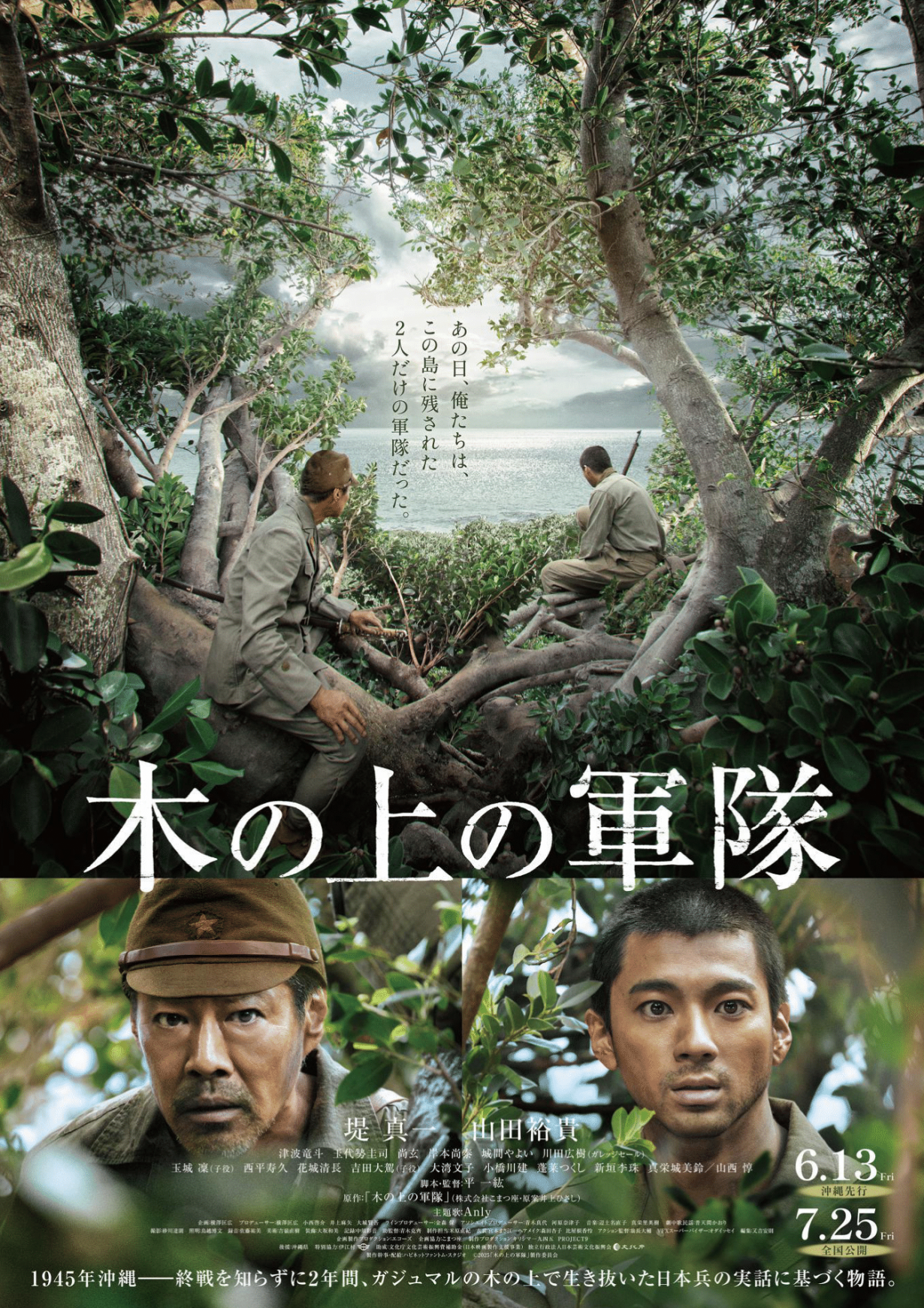
Army on the Tree (木の上の軍隊, Kazuhiro Taira, 2025)

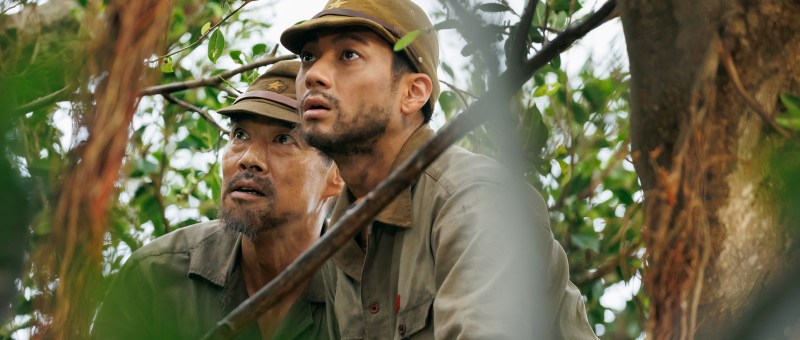
Based on an unfinished play by Hisashi Inoue, Kazuhiro Taira’s Army on the Tree (木の上の軍隊, Ki no Ue no Guntai) confronts the absurdity of war by marooning its heroes in a banyan tree far above the conflict but also increasing unwilling to come down and face an uncertain reality. Instead, they remain in a kind of limbo, trapped somewhere between life and death in continuing to fight their war in their own way while unbeknownst to them, the wider world moves on.

In any case, this “army of two” is comprised of very different men with a complicated and ever-shifting dynamic. Lieutenant Yamashita (Shinichi Tsutsumi) is a loyal militarist from Miyazaki on the mainland, while private Agena (Yuki Yamada) is a local who has never left the Okinawan island where his family were once farmers, until the Japanese army requisitioned their land. The truth is that Japan is a coloniser here, too, and there’s an awkwardness involved in the way they see the islanders as both Japanese and not. While discussing the building of a new air base Yamashita describes as the envy of the Orient, one of the other officers suggests they will simply use “the locals” in suicide attacks as if their lives are completely disposable and not of equal value to those of the mainland soldiers, while simultaneously suggesting they belong entirely to the empire for the commanding officers to use as they see fit. They’ve been training the civilian villagers in local defence using spears to attack straw models labelled “Churchill” and “Eisenhower”, but when one older man jokes about smearing his with excrement so the enemy might have a better chance of dying of infection, Yamashita beats him about the head for what seems like an eternity.

It’s Yamashita who seems to cling fiercely to militarist ideology and his loyalty to the emperor, even if there’s an obvious conflict in the fact that he’s “run away” to hide in this tree with Agena while the rest of his men are dead. This also gives him an additional psychological reason to want to stay up there so that he won’t have to face his guilt and shame in the defeat and having survived it along with having allowed all of his men but one to die. Trapped there together, the two men have no reason to believe that anything has changed and think the battle is still ongoing with American soldiers patrolling the forest. They attempt to survive foraging for food and water, drinking from a trough into which a dead body has fallen while Yamashita at first firmly rejects the idea of eating tinned food left behind by the Americans, describing it as “enemy food” and the eating of it as an act of treachery. Agena is not so foolish and finally gets Yamashita to eat some and avoid starvation by tipping some of it into an old Japanese army ration tin.

But as much as Yamashita is in charge by virtue of military hierarchy, he’s also a stranger here while Agena is intimately familiar with the terrain. He has a much better idea of knowing how to survive in the forest and which plants and insects are okay to eat. The truth is that the army had confiscated all this land to turn it into an “unsinkable aircraft carrier” which the local recruits had to build with their own hands. Once the situation deteriorates, they’re ordered to blow the whole thing up to prevent the Americans taking it over rendering their labour entirely pointless especially as their only goal is to slow the Americans down. They have no real prospect of stopping them or of surviving the assault. Meanwhile, as Agena points out, neither he nor the island will ever be the same again. His mother had lost her mind after their land was taken and his father failed to return from the war, while most of his friends are dead and the places he played as a child have taken on new meanings or perhaps no longer exist. The world before the war is lost to him, and he can’t ever go home again, unlike Yamashita who still has somewhere, and presumably also someone, to go back to.

Yamashita is not altogether appreciative of this fact as much as he comes to see Agena as a stand in for the son from whom he’d become estranged because of his hardline authoritarianism. Nevertheless, the bond that’s arisen between them does begin to reawaken his humanity and dissolve the rigidity of his ideology so that he is gradually able to accept the reality that Japan has lost the war, their battle is over, and it’s time to come down from the tree. Taira largely avoids judgement or falling into the trap of glorifying these men’s actions as soldiers who refused to give in, focussing instead on the absurdity of their position along with the literal and psychological dimensions of their purgatorial existence as they attempt to process how to move forward into an unknown world while still tormented by the old.


Army on the Tree screened as part of this year’s Camera Japan.

Trailer (no subtitles)