Who’s the Woman, Who’s the Man? (金枝玉葉 2, Peter Chan, 1996)

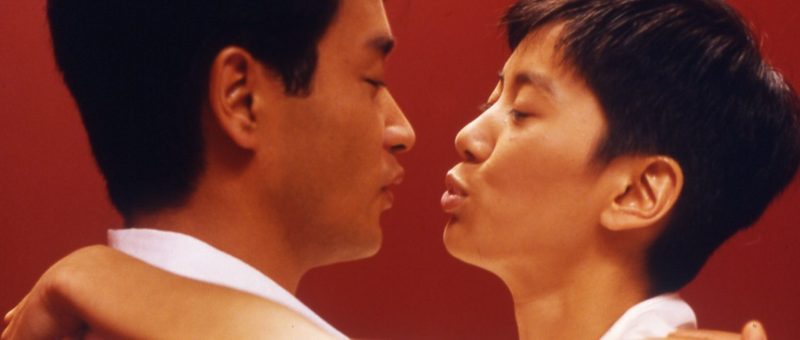
“I don’t care if you’re a man or a woman, all I know is that I love you,” the hero had finally accepted after the heroine’s madcap dash across town in the closing scenes of Peter Chan’s 1994 rom-com, He’s a Woman, She’s a Man. But as it turns out, it isn’t quite that simple. Inverting the structure of the first film, sequel Who’s the Man, Who’s the Woman? finds the heroine romantically confused as her “masculine” persona increasingly interferes in her relationship with the still conflicted Sam (Leslie Cheung).

It certainly hasn’t been plain sailing for anyone as Wing (Anita Yuen) agrees to move in to Sam’s luxury flat but refuses to live downstairs as Rose (Carina Lau) had done, instead insisting on sharing his life and his bed in their entirety. For his part, Sam’s reluctance to share his space is reflective of his fears of intimacy while he resents Wing’s immediate attempts to install herself by remodelling the apartment to her own taste. Meanwhile, the old problem has resurfaced in that now he’s got Wing he’s not all that interested in her and hasn’t written any songs in months. In an attempt to manage her interference in his life, Sam suggests resurrecting Wing’s pop career as a male idol but proves a victim of his own success as she quickly begins earning much more money than him and gains the upper hand in the relationship. 

Wing’s increasing masculinity leaves Sam feeling somewhat emasculated while forced into the “feminine” role previously occupied by Rose. Suddenly successful, Wing is offering to pay large sums of money to help Sam fulfil his dreams which only deepens his sense of shame in his inability to earn money for himself. Wing had insisted on living together in the main apartment, but now that she’s so busy suggests moving into Rose’s old flat downstairs so that they can, after all, have their own space. Sam had wanted it that way before, but now that it’s Wing who suggests it, he’s romantically anxious while simultaneously conflicted because he cannot acknowledge their relationship publicly as he is still uncomfortable with people assuming he is “gay”.

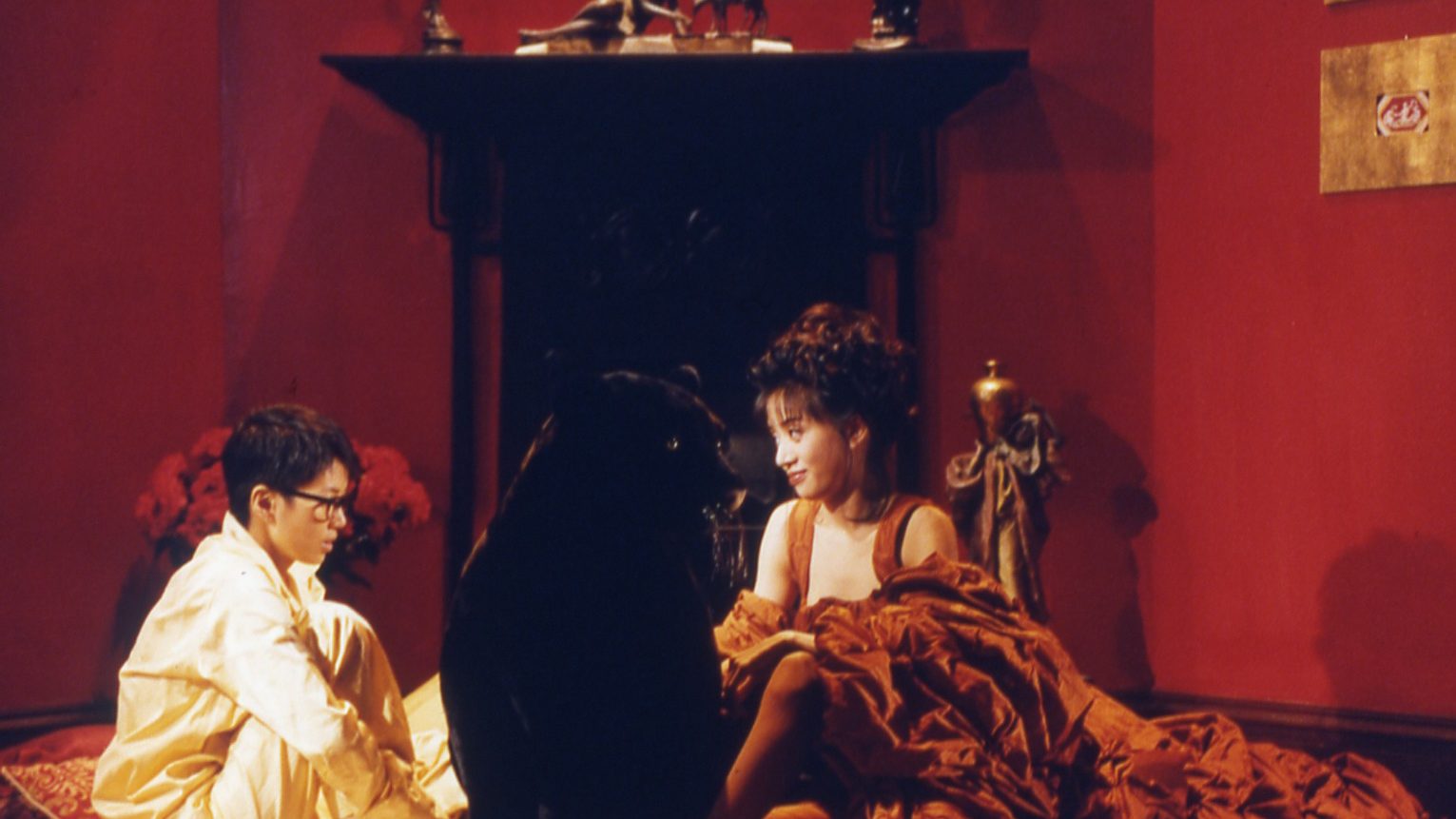
All of which is doubly confusing for Wing who is under increasing strain trying to straddle a gender binary. Not only is she trying to deal with Sam’s contradictory behaviour and resentment of his emasculation, but in growing into her masculine role finds herself questioning her sexuality in experiencing unexpected attraction towards other women and in particular the captivating Fan Fan (Anita Mui), a mysterious former pop star who has moved into the downstairs flat after spending many years abroad. Just as Sam had in the previous film, Wing struggles to accept her desires unable to reconcile falling in love with Fan Fan with her love for Sam while Fan Fan in turn falls for her mainly in her femininity in claiming that she has been looking for something kind and innocent that she no longer believed existed in the world. 

“Love can’t be explained,” Sam admits when talking to his decorators, a gay couple who ironically tell him how much it means to them to see a same-sex couple in the public eye, though Sam still refuses to acknowledge the relationship because he doesn’t want to be seen as “gay” and Wing is in any case a woman. Mirroring Sam’s relationship with the openly gay Auntie (Eric Tsang), Fan Fan’s assistant O (Theresa Lee) is a lesbian who is relentlessly courted by Fish (Jordan Chan) despite her constant rejections of him. He tries to present himself as female by shaving his legs and later crossdressing in order to win her heart, only to end up reaffirming O’s avowed homosexuality. For Wing, however, she has only a dilemma in being faced with a choice between her love for Fan Fan and that for Sam which seems as if it may have run its course just Sam’s love for Rose once did. 

Sam only really begins to understand his himself after a more mature discussion with Rose regarding the realities of their relationship, while Fan Fan effectively plays a similar role in sacrificing her own desire believing that Wing belongs with Sam but taking the new hope their love has given her back out into the world. Neatly inverting the first film’s conclusion, it’s Sam who has to make an active choice about what it is he wants though the ironic ending may suggest he doesn’t have much control over his destination either even if discovering he already has what he was looking for.
He’s a Woman, She’s a Man (金枝玉葉, Peter Chan, 1994)

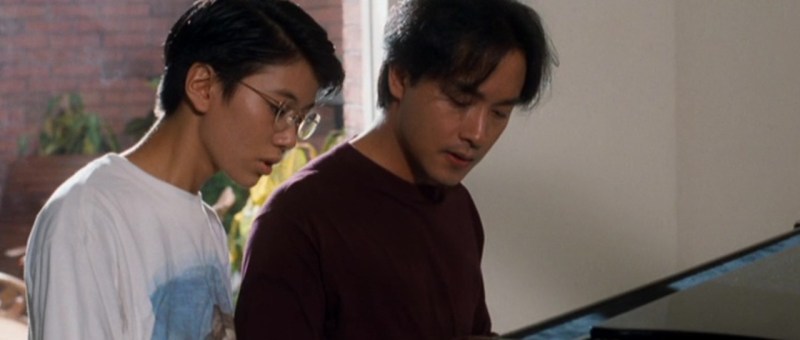
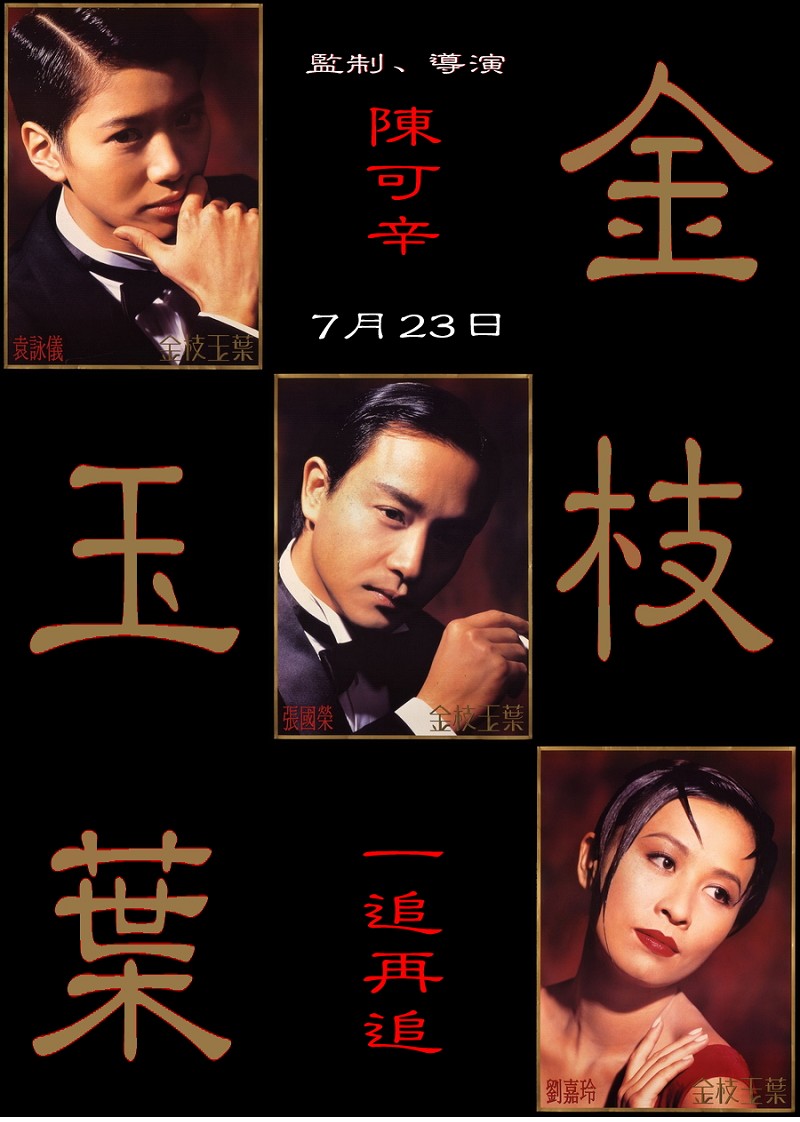
A frustrated composer in a moribund relationship with his former muse experiences a moment of existential confusion on feeling an unexpected attraction to his latest prospect whom he assumes to be male in Peter Chan’s hilarious meta comedy, He’s a Woman She’s a Man (金枝玉葉). Broadly progressive in its views of gender and sexuality, the film also takes aim at a growing obsession with celebrity in an increasingly consumerist culture. 

The heroine, Wing (Anita Yuen), is a case in point. She’s completely obsessed with the singer May Rose (Carina Lau) to the point that she almost lives her life vicariously through her. Rose’s successes are her successes, while she earns a few extra pennies peddling celebrity tat like Aaron Kwok’s used tissues. Rose meanwhile is riding high professionally by winning yet another reward, but her relationship with songwriter/manager Sam (Leslie Cheung) has clearly run its course. He’s become bored with the “celebrity” lifestyle and hasn’t written anything new in some time while unwilling to admit that he’s fallen out of love with Rose, refusing to take on new proteges because of his habit of falling in love with them.

That’s one reason he finally agrees to take on a male star, assuming there will be no danger of romantic conflict and intending to kick back against celebrity culture if ironically by creating an “everyman” sensation. But unbeknownst to him, Wing has had a male makeover and decided to enter the auditions in the hope of meeting her idols. Unexpectedly picked up for a recording contract during a spat between Rose and Sam, Wing finds herself having to keep up the act but is conflicted on fearing her presence is only deepening the rift between the “perfect couple” whose wedding it is her life goal to witness. 

Even before her makeover, Wing makes repeated references to her atypical gender presentation in lamenting her flat chest, especially in contrast with a rival celebrity hunter she nicknames “big boobs”. She takes lessons in performative masculinity from her roommate and best friend since primary school Yuri (Jordan Chan), who appears to have no romantic interest in her, and stuffs glow sticks down her trousers to make herself feel more “complete”. Yet despite all that, she is always forced to deny her seeming femininity with several people directly asking her if she is “gay” which is a more complicated question than it seems given that she’s a straight woman but currently living as a man. To find out for sure, Rose tries to seduce her in an attempt which is admittedly predatory and ends in a chase around the bed with Wing desperately trying to avoid being accidentally “outed” in an amorous moment. 

Nevertheless, there is a degree of romantic attraction in Wing’s obsession with Rose which is also a reflection of her internalised sense of shame in her atypical femininity as seen in her wide-eyed observation of Rose’s shadow dance as she slips into something more comfortable along with her admission that she always wanted to know what it felt like to touch a breast (because she feels she has none of her own). Even so, she begins to fall for Sam who is slowly being driven out of his mind with romantic confusion in being unable to reconcile his attraction to Wing with his heterosexuality. One of Wing’s closest associates whom he refers to as “Auntie” (Eric Tsang) is an openly gay man who asks him the all important question of whether of what’s really bothering him isn’t Wing’s ambiguous sexuality but his own. The question takes on a meta dimension in the knowledge that Cheung was himself bisexual but at that point not openly. Much as Sam explains, he might personally not have a problem with it but some people in the industry are very “sensitive about this kind of thing”.

Sam doesn’t know that Wing is “really” a woman, which might neatly explain his inexplicable attraction to her, but cannot begin to reconcile himself until he accepts that it “doesn’t matter what you are” because the fact remains that he loves her. Wing might make her final dash in more stereotypically female attire, but she does so in a voluminous white dress which, aside from its matrimonial connotations, further emphasises her lack of conventional femininity in her literal inability to manage it as she attempts to run while trying not to trip over herself. “Too much reality can really get up your nose,” Rose had complained in trying to keep her fantasy of a fairytale romance alive while internally accepting she can no longer be the “ordinary” girl Sam is looking for in a world of celebrity miasma and consumerist aspiration, finally reaching her own moment of self-acceptance just as Wing decides to shoot her shot right into Sam’s tender heart.

Trailer

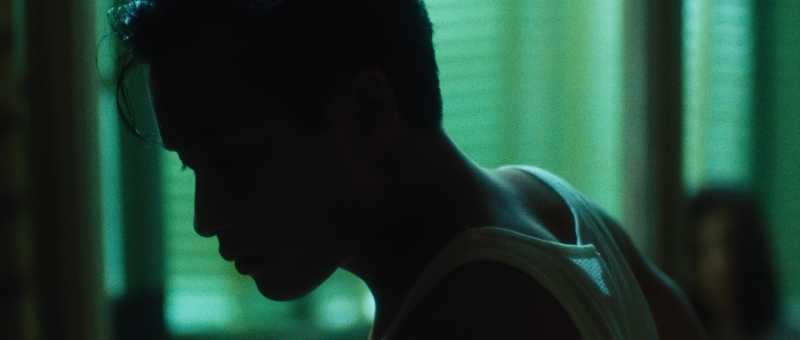
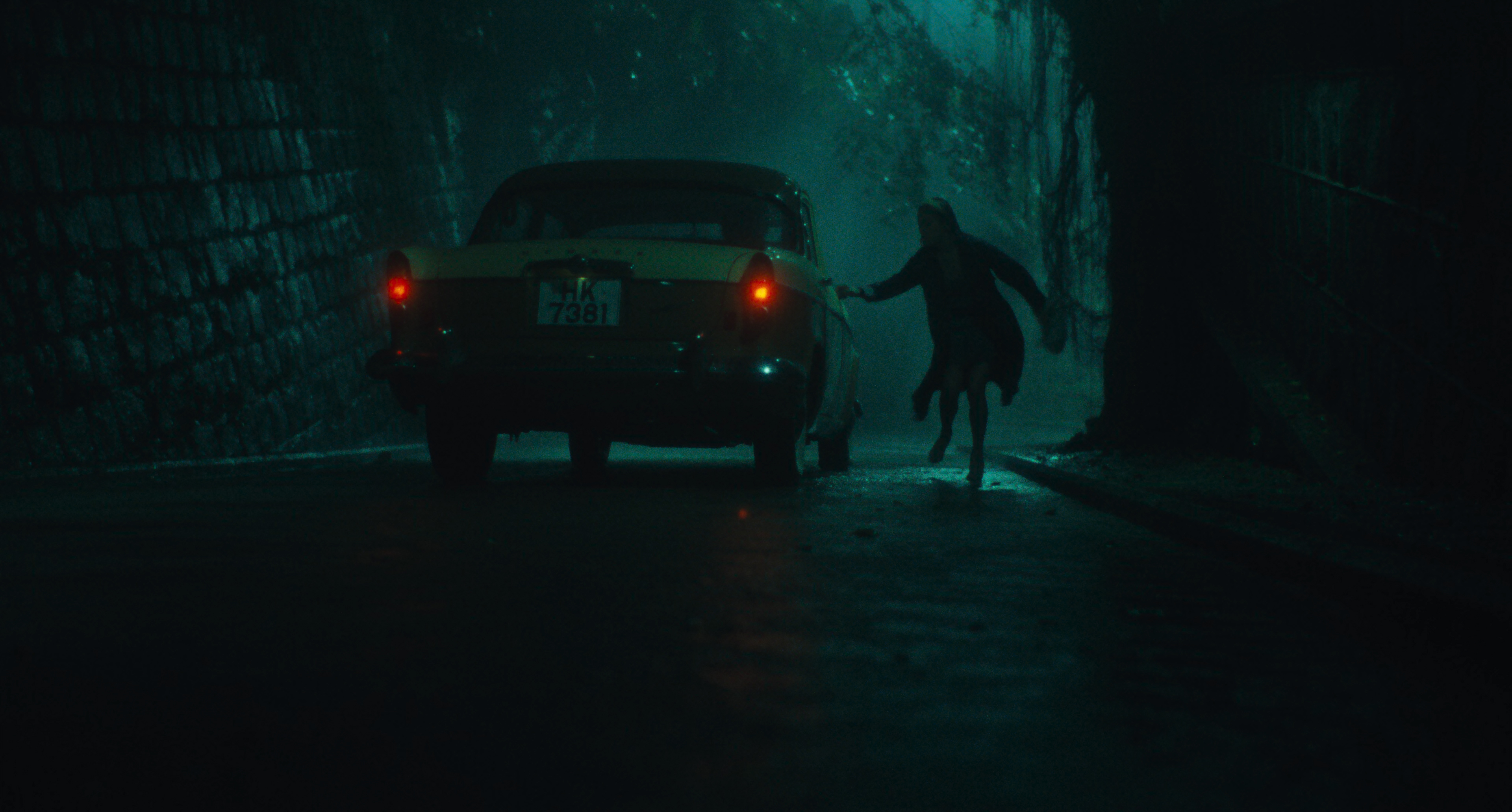
Days of Being Wild (阿飛正傳, Wong Kar Wai, 1990)

“I used to think a minute could pass so quickly, but actually it can take forever” laments a lovelorn heroine in Wong Kar Wai’s melancholy ‘60s romance Days of Being Wild (阿飛正傳), somehow neatly encapsulating the director’s entire philosophy. The heroes of Days are obsessed with minutes, seconds, hours, years, the barely perceptible passing of time. Clocks pervade the frame, their violent ticking the most prominent element of Wong’s strangely barren soundscape, a constant reminder of a life slowly etched away ceaselessly beaten towards an inevitable conclusion. 

The hero, Yuddy (Leslie Cheung Kwok-wing), describes himself rather poetically as a bird without legs cursed to fly and fly meeting the ground only once at the moment of his death, an overly sentimental metaphor for which he is later taken to task by the equally rootless Tide (Andy Lau Tak-wah), a former policeman turned sailor who wonders if it’s just a line he uses to seduce lonely women with boyish sadness. We might wonder the same thing as he picks up the lonely Li-zhen (Maggie Cheung Man-yuk), a Macao émigré apparently unable to sleep, by telling her she’ll see him in her dreams before forcing her to look at his watch for a whole minute as if that after 3pm on April 16, 1960 were now a sacred date forever etched in time. She thought that sounded “so sweet”, but as he later tells her Yuddy is not the marrying kind and she too is trapped inside that moment, often framed behind bars or the tiny window of her box office booth before the door is cruelly slammed on her romantic delusion seemingly by automatic operation of the clock. 

In a twist of fate, Li-zhen meets Tide during his previous life as a policeman when she makes a fairly embarrassing attempt to get back together with Yuddy after he reacts coolly to her suggestion of marriage only to discover him with his new love, cabaret dancer Mimi (Carina Lau Kar-ling). “I’m not gonna be as stupid as her” Mimi insists flouncing out of his apartment only to find herself just that, making a desperate visit to Li-zhen at the stadium after the affair has ended to tell her to her back off only for the rather unsympathetic Li-zhen to point out they’ve both been deceived, “he treats all women the same”. 

A perpetual lothario Yuddy moves from woman to woman without touching the ground, but his rootlessness is seemingly born of maternal disconnection in his ambivalent relationship with the Hong Kong sex worker who raised him but refuses to disclose the identity of his Filipina birth mother supposedly a noble woman who for unknown reasons paid a foreigner US$50 a month to raise her son. Like the other women in Yuddy’s life, Rebecca (Rebecca Pan Di-hua) does her best to tie him down, apparently unwilling to reveal his origins in fear he’d leave her, but also mirrors him in her constant quest for affection bought from a series of younger men and apparently one older who threatens their relationship in inviting her to a new life overseas. Ironically enough, she soon tells her son to “fly, fly as far as you can” all the way to the Philippines, though Yuddy already suspects he’s been a flightless bird all along, dead from the very beginning.

Yuddy’s search for closure and identity ends disappointment and a painful lack of resolution, as does the nascent romance between the policeman and the box office girl, her mistimed phone calls amounting to a literal missed connection while Tide ponders lost love from foreign seas, and Mimi tragically chases the ghost of Yuddy all the way to Manila pined for by Yuddy’s self-conscious friend Zeb (Jacky Cheung Hok-yau) left behind alone. Trapped in the timeless present, they are each denied either past or future, lost in a lovelorn dream of perpetual longing. As if to ram his point home, Wong shows us another clock and then another man we’ve never seen before (Tony Leung Chiu-wai) as he gets ready for an evening out, crouching slightly in what appears to be a shallow, sub-divided garret making it clear that these stories have no endings, flying and flying until they hit ground and seemingly born in the air. A woozy, zeitgeisty journey through mid-century loneliness, Wong’s second feature leaves its melancholy heroes consumed by nostalgia for an ill-imagined future unable to escape the cruel tyranny of an interminable present. 


Transfer: Among the more faithful of the recent 4K restorations, Days of Being Wild nevertheless shifts to a slightly greener hue in keeping with the house style adopted for the series, adding to Wong’s sense of melancholy nostalgia and perhaps in keeping with Doyle’s original artistic vision.


Days of Being Wild is currently available to stream in the UK via BFI Player in its newly restored edition as part of the World Of Wong Kar Wai season.

Original trailer (unrestored, English subtitles)

Detective Dee: The Four Heavenly Kings (狄仁杰之四大天王, Tsui Hark, 2018)

Detective Dee four heavenlu kings posterMaybe we could use a Detective Dee or two in this bold new age of fake news and powerful ideologies. Tsui Hark at least finds another case for the famed Tang Dynasty detective though this time one which sees him at the centre of a conspiracy, a bug in the system which must be squashed in order to pave the way for someone else’s revolution. The Four Heavenly Kings (狄仁杰之四大天王, Rénjié zhī Sìtiānwáng) of the title (no, sadly Andy Lau has not returned with a few of his friends in tow) refers to the four Buddhist deities which ought to tip us off to the kind of story this is as personal desires, of one sort or another, threaten to destabilise a state.

At the end of the previous film, Young Detective Dee: Rise of the Sea Dragon, Dee (Mark Chao) was “rewarded” with a place in the inspectorate and guardianship of the Dragon Taming Mace. However, scheming consort Wu Zetian (Carina Lau) is not particularly happy about her husband’s grand gesture and still has her doubts about Dee. Claiming that she fears such a powerful weapon/symbol being in the hands of someone who may betray the crown, Wu instructs Dee’s Sworn Brother and head of the Justice department Yuchi Zhenjin (Feng Shaofeng) to retrieve the Mace at any cost. Yuchi is reassured that Dee is not in danger and so agrees to work alongside Wu’s handpicked troop of “magical” crooks (who have actually been hired to take care of Dee to stop him messing up Wu’s grand plan). Needless to say all is not as it seems and Wu has fallen under the influence of nefarious forces who are merely using her lust for power as a convenient mechanism for facilitating their own agenda of revenge for a past era’s betrayal and oppression.

Dee’s methods are, more or less, inspired by Sherlock Holmes, granting him almost supernatural powers of foresight and observation though this time he is not occupied with one specific case so much as solving the mystery of the hidden insurrection within the Tang. The Mace may seem like a MacGuffin but its power is real and eventually holds the key to defeating the forces of chaos which threaten to bring down the state. Wu’s quartet of “Taoist” magical mercenaries are quickly exposed as expert wielders of tricks and trinkets rather than supernaturally charged avengers, but the state can’t help being captivated by the “magic” which finally puts paid to their ambition and is rocked by the power of the false images which continue to assault their senses.

Tellingly the big bad here is a foreign cult which makes extensive use of “hypnosis”, strange potions, and smokescreens in order to create the illusion of magic. Illusion, however, is as good as or perhaps better than the truth when it comes to political manipulation. The cult’s powers apparently aided the creation of the Tang state but once they were no longer needed, they found themselves cast out, tortured, and humiliated. Unsurprisingly they want their revenge and will settle for nothing less than the humiliating fall of the nation they helped to build.

Good old fashioned deduction and rationality are useless in the battle to free infected minds from the hypnotic power of fake news perfectly tailored to embrace one’s darker instincts. Wu, secretly or otherwise, lusts for power of her own and was easily manipulated by the promise of support in her campaign to seize the throne. Meanwhile, the leader of the Wind Warriors is infected with an intense desire for violence and killing to ease his deep seated rage over the misuse of his people. The answer is, of course, Buddhism. Life is too beautiful to be marred by hate while the act of forgiveness is the ultimate show of strength. Nevertheless, Tsui abandons Dee’s cool, analytical approach for a strangely spiritual final battle in which the fake news machines wielded by the Wind Warriors are pitted against the intense calm of a finely tuned mind (and the slightly moodier one of a giant white gorilla). Hell is full of suffering, Dee reminds the monk, enlightenment will have to wait. Perhaps “enlightenment” is merely another selfish desire won at the expense of blocking out the calls for help from those in need.

The Dragon Taming Mace is the ultimate symbol of justice, literally able to cut through the spell of illusion to expose the truth below. Wu had reason to fear it, even if she was not in the position to understand why. Dee is indeed a worthy guardian and unsullied soul, committed to the pursuit of compassionate justice wherever he goes even if he does so as a representative of the authority. Wu may have regained her senses, but that doesn’t mean she’s cured of the underlying causes of her possession as the large statue of Guan Yin which looks mysteriously like her seems to prove. Dee may have another mystery on his hands, but in any case his work is far from done in a land of intrigue and duplicity in which justice hangs by a slippery thread.


Detective Dee: The Four Heavenly Kings is currently on limited UK cinema release courtesy of Cine Asia. Find out where it’s playing near you via the official website.

Original trailer (English subtitles)