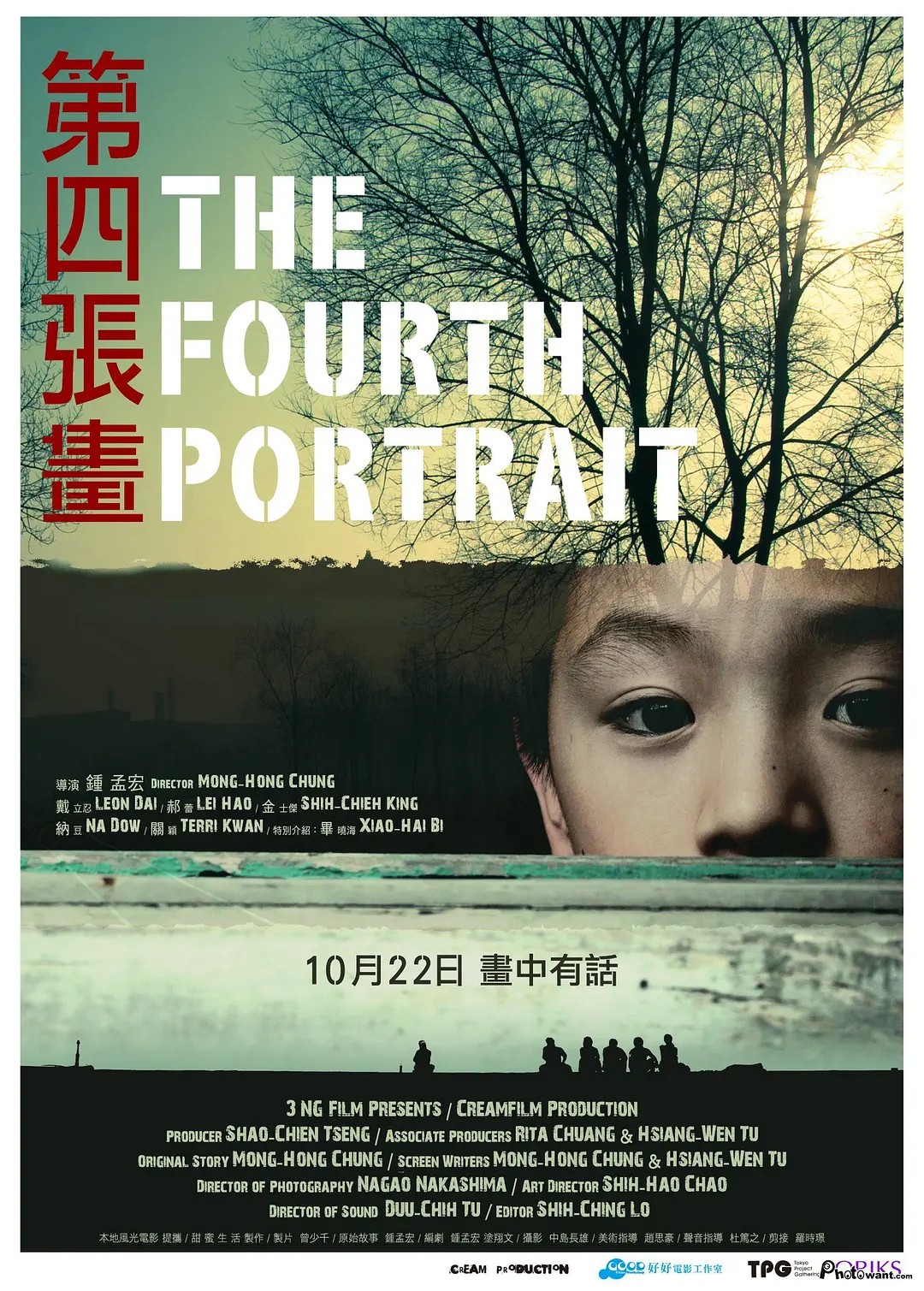
The Fourth Portrait (第四張畫, Chung Mong-Hong, 2010)

A young boy struggles to forge his own identity while lost amid the legacy of perpetual displacement in Chung Mong-Hong’s whimsical coming-of-age drama The Fourth Portrait (第四張畫). As the title implies, Chung structures his tale around four images as the boy looks for guidance through each of his relationships but perhaps finally discovers only that he is on his own and has only himself for protection yet must find the courage to try and escape even if it causes him pain. 

At 10 years old, young Xiang (Bi Xiao-Hai) is impossibly burdened in the way no child should be as a doctor coldly tells him that his father will soon pass, a nurse instructing him to stay put and let them know when his father is gone. Xiang impassively places a napkin over his father’s face, the undertakers bickering amongst themselves while deciding to do the funeral for free seeing as this child is now all alone and seemingly has no other family. Yet no one comes to take care of Xiang, he has to go home on his own and begins living independently eventually resorting to stealing lunch boxes at school only to be caught and scolded by a grumpy janitor who both tenderly offers him food but then roughly slaps him when he notices the boy is crying. 

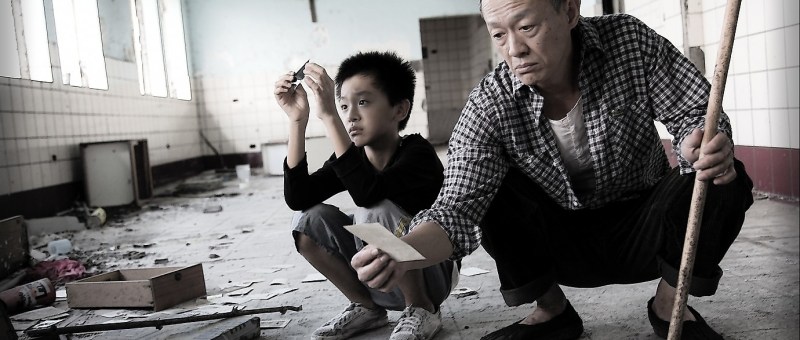
As Xiang is about to become, the old man, Zhang (Chin Shih-Chieh), is also a displaced person having travelled from the Mainland 50 years previously. He takes him to scavenge abandoned buildings meditating on what it is that gets left behind, why it has value to some and apparently not to others. Xiang himself was abandoned by his mother who took his older brother with her but chose to leave him with his father, wondering perhaps if he is valuable or not. Technically if not literally orphaned, Xiang is later reunited with his mother, Chun-lang (Hao Lei), but is then displaced himself, forced to move to the city and into the house she shares with her second husband and infant child. Like Zhang his mother came from the Mainland in search of a better life she did not find and is living with a sense of disappointed futility trapped in her marriage to a dejected and violent man (Leon Dai) while forced to support the family through sex work at a nearby hostess club frequented largely by Mainland gangsters. 

Unanchored and insecure in his new environment, Xiang begins having strange dreams of his apparently absent brother Yi but his attempts to discover the truth about the past only further destabilise the foundations of his new home. His mother cannot fully embrace him because of her guilt over leaving him behind while unable to fully process the reality of what may have happened to Yi too frightened of the truth to risk poking around. His stepfather meanwhile is a haunted man, unable to work and seemingly the primary carer to their small child though neither them are ever really seen paying much attention to the baby. When Chun-lang tells Xiang that he is a stranger in their house, that she is no longer the mother she once was because she has married another man and has another child with him, she does so perhaps partly to encourage him to leave advising him to steer clear of his stepfather in a bid to keep him safe yet blaming herself for all the tragedy which has befallen her accepting it would not have happened if she had not “messed up” her life. 

Perhaps this is why Xiang finds himself bonding with a decidedly strange middle-aged man he meets by accident in a public toilet. “Big Gun” paints himself as something of a big brother figure, suggesting that they can drift together travelling around on his moped. His conduct towards the boy is extremely inappropriate in more ways than one involving him in his life of petty crime, yet Xiang finds in him a sense of acceptance that he doesn’t get from the other adults along with a new sense of independence. Yet Xiang’s illusions are eventually shattered twice over, the first revelation paving the way for a greater loss of innocence in discovering the truth about his brother while the second perhaps leads him to feel that he really is alone, continually displaced, and entirely unanchored in a world with offers little prospect of warmth, affection, or a place to belong. 

Like Zhang and his mother, Xiang is fails to settle in contemporary Taiwan lost amid a stream of constant dislocations and bound only for endless wandering. Yet staring into a mirror preparing for his fourth portrait he perhaps begins to forge an image of himself informed by those he’s drawn before and giving him the sense of confidence to survive the emptiness of the world around him. Beautifully shot with a lingering ethereality, Chung’s enigmatic storytelling coupled with the whimsical score lend a note cheerfulness to what in many ways is a fairly bleak situation but perhaps reflects the surreality of the boy’s life in his constant quest for belonging. 


International trailer (English subtitles)
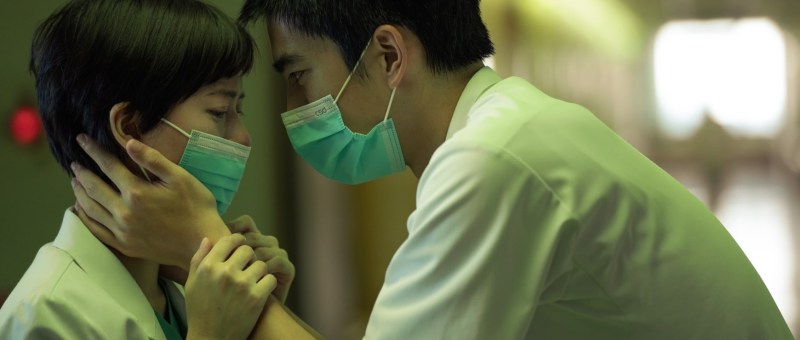
Eye of the Storm (疫起, Lin Chun-Yang, 2023)

In the early days of the pandemic, Taiwan was thought of as kind of safe haven which had largely managed to keep the disease a bay allowing many to live their lives more or less normally while much of the rest of the world contended with intermittent lockdowns of varying severity. The reasons for their success are said to lie in their experience during the SARS crisis of 2003. 

To that extent, there’s a kind of eeriness in Lin Chung-Yang’s poignant drama Eye of the Storm (疫起, yì qǐ) in watching the early days of this present pandemic play out 20 years earlier as medical personnel attempt to deal with a new illness about which they know almost nothing save that it appears to have a frighteningly high mortality rate. As the film opens, self-involved surgeon Xia (Wang Po-chieh) is clocking off a few minutes early in an attempt to make it to his daughter’s birthday party, rudely brushing off the complaints of warmhearted male nurse Tai-he (Tseng Ching-hua) and dismissing requests from his colleagues. Leaving in a taxi, however, he’s soon called back to deal with an emergency operation and becomes trapped when the hospital is placed into lockdown after the report of a possible SARS case. 

Unlike so many dramas centring on frontline healthcare workers during the COVID-19 pandemic, :Lin does not necessarily portray the medical staff in the best light. As the suspected case was being treated in B Wing it is the first to be shut down and some of the doctors and nurses start a protest refusing to treat patients with SARS resentful that they’ve been locked up with the disease. Meanwhile, in A Wing some of the nurses also go on strike holing themselves up in the rec room and refusing to come out. As Tai-he had been helping out in B-Wing, he is quickly rejected by his peers and exiled there despite having no symptoms while the nursing staff otherwise know that they maybe condemning him to death in sending him to the frontline battle against the disease.

Also on the frontline is journalist Yu-zhong (Hsueh Shih-ling) who snuck into the hospital after a tip off and is determined to let the people know by capturing the chaotic scenes at the hospital first hand. He and Xia eventually end up going through old records to figure out how the virus took hold while Xia mainly spends his time hiding in a storage cupboard and trying not to come into contact with anyone who might have SARS which is not very doctorly. Though originally desperate to get out of the hospital, Xia’s mindset begins to change when he sees how bad things are in B Wing after being charged with transporting food supplies while he later comes to realise that he may bear some responsibility in the rather cavalier treatment of a patient he recently operated on.

Then again, perhaps there is something also a little on the nose in the constant references to the disease’s origins in China while it’s the hospitals choice to use a Mainland construction firm that directly leads to the infection. In any case, Xia eventually beggins to come around realising that it’s selfish of him to refuse to help when the hospital is already so short staffed with some medical personnel on strike and others already falling ill and even dying. Lin lends the tunnel connecting the two wings an eerie quality in the ominous opening and closing of its oversize doors, as if Xia were really descending into hell dressed in a makeshift hazmat suit of yellow overalls. 

Xia had appeared to be a narcissistic surgeon with little interest in his patients. Criticised by Tai-he he clapped back that it’s the nurse’s job to care for them, not his, while continuing to keep his distance and fixating on being allowed to leave the hospital before beginning to empathise with the sick. Yet many other medical staff react in a similar way, overwhelmed by the fear and chaos of the situation while resentful in feeling that they’ve been unfairly imprisoned only later coming to accept the situation and returning to caring for the patients as best they can. Eerily echoing our present times, Lin’s poignant drama eventually finds a kind of serenity even among so much panic in quiet moments of small victories and human solidarity.


Eye of the Storm screened as part of this year’s New York Asian Film Festival.

Netflix trailer (English subtitles)

The Funeral (頭七, Shen Dan-Quei, 2022) 

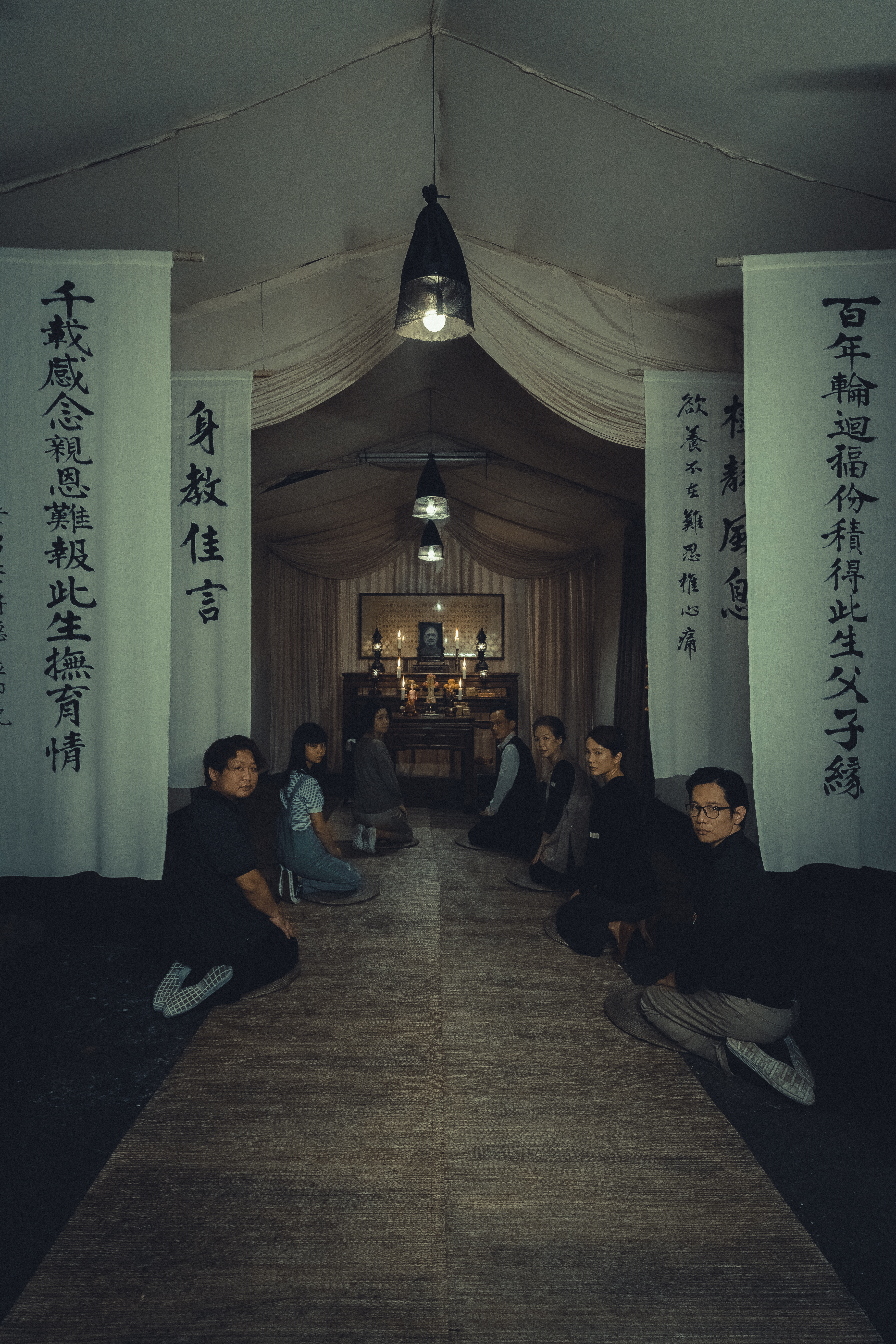
“They’re your family, they won’t hurt you anyway” a little girl is consoled on suggesting that her relatives’ home may be haunted but it’s a statement which seems remarkably naive given the toxic situation at the centre of Shen Dan-Quei’s gothic drama, The Funeral (頭七, tóuqī). There may well be supernatural goings on, but the root of the problem remains familial exile and the outdated social codes which lead to it causing nothing but misery and loneliness for all concerned. 

Single mother Chun-hua (Selina Jen Chia-hsüan) hasn’t seen her family in a decade. She works several jobs trying to support herself and her daughter Qin-xuan (Bella Wu) who is seriously ill and on the list for a kidney transplant. When in the opening scene she begins to suspect a ghost has entered the convenience store where she works nights, it’s impossible to tell if she’s actually being haunted or is just tired and anxious. In any case, she’s later let go from that job after a co-worker complains about her falling asleep on shift which is right about when she gets a call from her estranged uncle (Nadow Lin) to let her know her grandfather, whom she had been very close to as a child, has passed away and she should come home for the funeral. Chun-hua is however reluctant because she evidently fell out with her authoritarian father (Chen Yi-Wen) when she left home and returning now is awkward in the extreme. 

Having set the scene with Chun-hua haunted in the city, Shen moves the action to the creepy gothic mansion where she grew up which does indeed seem to be a spooky place defined by its hostile atmosphere. Her father wastes no time telling her that she’s not welcome, but Chun-hua holds her ground and insists on being allowed to pay her respects to the only member of the family who seems to have shown her any affection. Later flashbacks suggest a concrete cause of the family’s disintegration, but then Chun-hua’s father seems to have taken against her even in childhood apparently refusing to allow her to celebrate her birthday with her sister seemingly also resentful of her for no clear reason. Though her mother clearly loves her, she cannot defy her husband and is unable to defend her daughter. The only one of the family privately happy to see Chun-hua, even her mother eventually tells her it would be better if she returned to Taipei as soon as possible given the awkwardness of the situation. 

Then again, as we later learn, she may have another reason in mind though this attempt to reframe the family’s animosity towards Chun-hua is a little problematic in suggesting they are cruel because they love her and want to her leave the toxic environment of the house to save her from its poisonous legacy. The grandfather may have been the only one to show her love, but it is his failings that have created division within the family causing some to feel rejected, excluded from the circle for no fault of their own. Her father’s rejection of her is in its own way similar, even if we later see him remorseful realising that his authoritarian parenting has cost him his daughter.

There may be a lot of supernatural action with the taoist priest permanently engaged in rituals over the grandfather’s body, but the darkness and resentment is purely human, born of loneliness and rejection in a lack of love and respect between those who are related by blood. Qin-xuan is at a disadvantage in knowing nothing of her extended family or mother’s relationship to them, she also rejected on arriving for the funeral. The place is indeed haunted beyond the scuttling figures that seem to catch their eyes and laden with the heavy atmosphere of the family’s inherent toxicity. But then through this extremely dark event, the relationship between mother and daughter is in its own way strengthened not least in Chuan-hua’s selfless determination to save her daughter from her own familial curse not to mention her medical precarity. Even so, the melancholy conclusion may hint that the toxic familial curse cannot be completely cured and is destined only to repeat itself in a perpetual cycle of hauntings. 


The Funeral screened as part of this year’s New York Asian Film Festival.

Original trailer (Traditional Chinese/English subtitles)

Images: © PINOCCHIO FILM CO. LTD

High Flash (引爆點, Chuang Ching-shen, 2018)

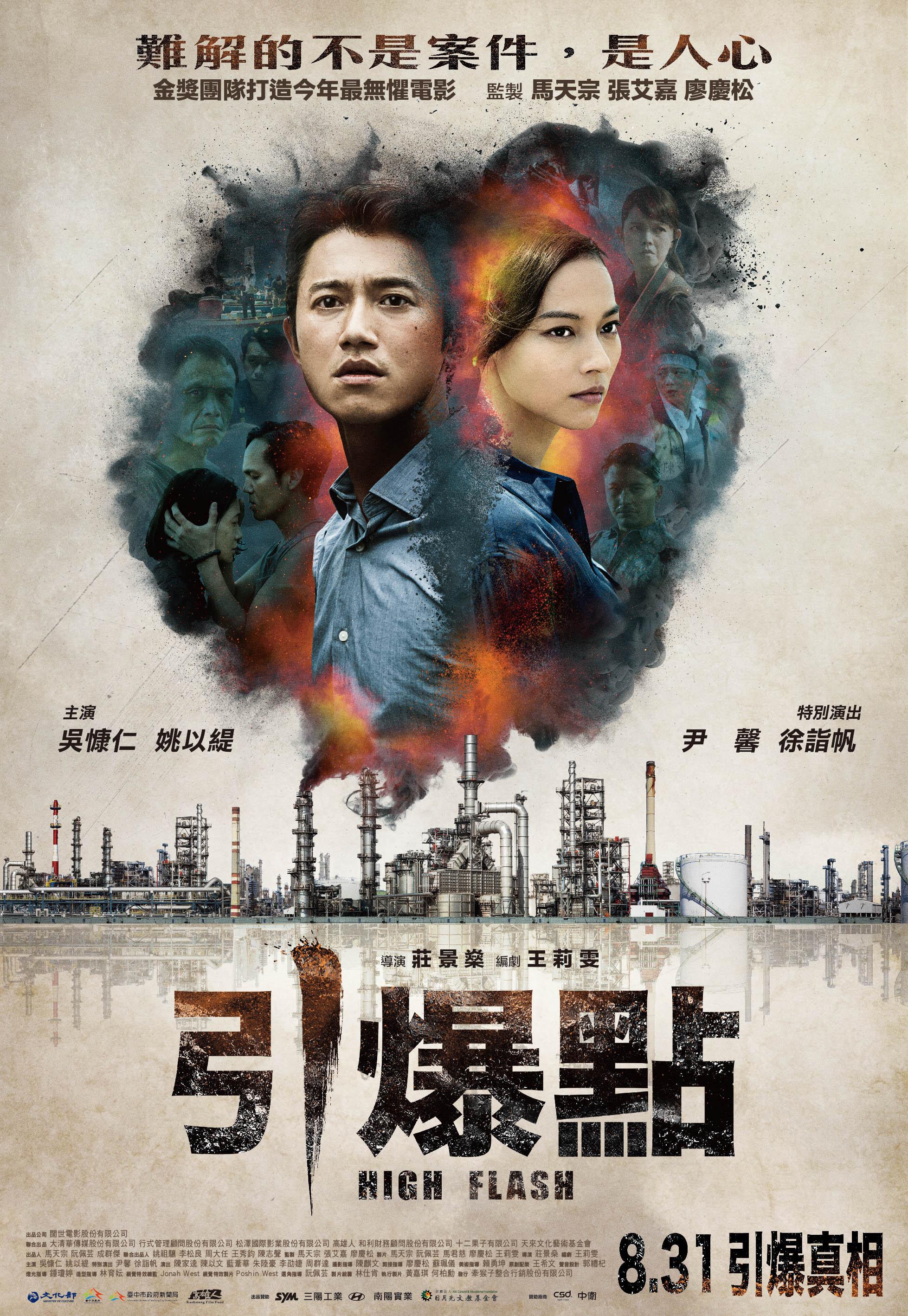
High Flash posterThe little guy is often at the mercy of big business, but the conspiracy runs still deeper in Chuang Ching-shen’s high stakes thriller High Flash (引爆點, Yǐnbàodiǎn). Set in the relatively unglamorous world of a small fishing village, High Flash begins with a mysterious death but quickly spirals outwards to ask questions about the connections between industrial conglomerates and the political establishment both local and national. Those who seem keenest to root out corruption may in fact be no less self serving than those who take advantage of it but perhaps there’s nowhere free of greed and selfishness when there are such gains to be made.

The action opens with a fierce protest by the local fishing community towards the large scale Tonglian petrochemical plant which they believe has been polluting their waters, ruining their health and livelihoods. While the newly elected mayor, Chen (Lan Wei-hua), is giving his best at the megaphone, a commotion breaks out when a burning boat collides with protestors and is later found to be harbouring the body of one Ah-hai (Bokeh Kosang / Hsu Yi-Fan) who is assumed to have committed self immolation in protest of the plant’s continued intransigence.

Earnest medical examiner Chou (Chris Wu Kang-Ren) isn’t sure that’s the case. His evidence suggests Ah-hai, who was already terminally ill with liver cancer, did not die of burns or smoke inhalation while his kidneys also exhibited strange florescent spots later identified as copper sulphate. Chou’s findings are music to the ears of jaded prosecutor Jin (Yao Ti-Yi), who also happens to be Chou’s former fiancée. She too is convinced there’s more to this than the elaborate suicide of a man whose life had been ruined by the heartlessness of big business.

Chuang quickly sets up the expected contrast between the scientifically minded Chou who claims to assess only hard evidence without emotional baggage, and the passionate Jin who is desperate to expose the truth at any cost though the romantic drama between the pair never quite ignites even as the past continues to inform their present relationship and the case at hand. Despite his insistence on hyper-rationality, Chou is not is a cold or unfeeling man as he proves by tenderly introducing himself to Ah-hai’s body and asking for his cooperation in investigating why he died, but his rigidity is perhaps to have unexpected consequences despite his best intentions which see him taking a special interest in Ah-hai’s unfortunate wife and son.

Ah-hai’s illness and that of his little boy who is suffering from a brain tumour are not explicitly linked to the illicit activities of Tonglian but the implication is clear. Industrial pollutants have destroyed not only the local fishing industry but with it a community which is now suffering with a large number of serious and unexplained illnesses. Tonglian, as might be assumed, is not particularly bothered, assuming it can rely on friends in high places and a complex web of thuggery and corruption to deal with any more serious opposition. Meanwhile, Ah-hai’s death is already being repurposed for political gain. The village regards him as a hero and a martyr who sacrificed himself in the most painful of ways in order to bring attention to their plight and the evils of Tonglian. None of which, however, is much use to his wife and son who are now unable to claim on his life insurance and are left without an income.

Vested interests exist on both sides – those keen to uphold Ah-hai as a hero and a martyr at the cost of his wife and son, and those keen to minimise the effects of his death in ensuring Tonglian is able to go on doing its (extremely dodgy) business with the same bottom line. While top execs boast about making a killing on the fluctuating company stocks and spending it on yachts, horses, and vintage wine, Ah-hai’s wife and son are left at the mercy of prevailing forces and fearful for their futures. The village might well feel that seeing as Ah-hai is dead anyway making a martyr of him whether he was one or not might be worth it if it helps expose Tonglian’s various transgressions but then again they may have overestimated the extent to which anyone really cares about big business corruption and the complicity of the state.

Nevertheless, in true conspiracy thriller fashion getting too close to the truth can prove dangerous and Chuang perhaps missteps in the case of whom he allows to pay the price, but his anti-corruption messages and warning about the cynical hypocrisy of big business eager to claim it cares about the little guy and his environment are sadly universal, as are his world weary implications regarding the eventual corruption and diminishing efficacy of longterm protests.


High Flash screens as part of the eighth season of Chicago’s Asian Pop-Up Cinema on March 28, 7pm at AMC River East 21 where director Chuang Ching-shen & actor Chen Chia-kuei will be present for a Q&A.

Original trailer (English subtitles)