Octopus with Broken Arms (误杀3, Jacky Gan Jianyu, 2024)

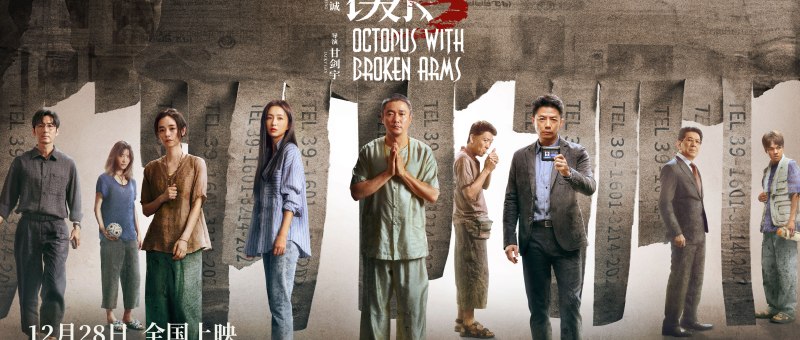
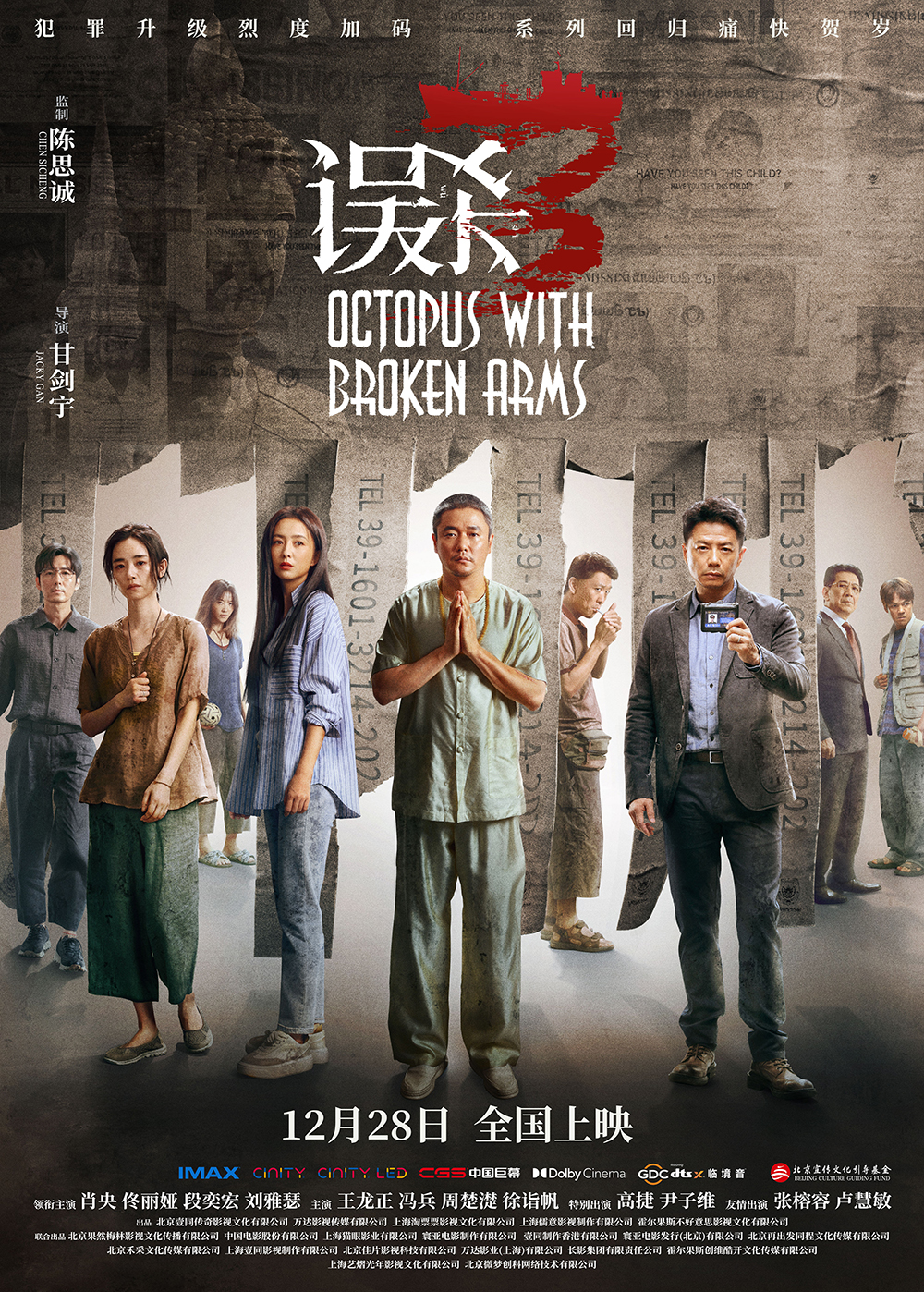
It’s quite surprising, somehow, that Octopus with Broken Arms (误杀3, wùshā 3) gets away with as much as it does simply being another recent mainstream movie set in an unidentified South East Asian nation where, conveniently enough, almost everyone speaks Mandarin. The third in the Sheep Without a Shepherd series, it quite clearly takes aim at the tendency of authoritarian governments to cover things up and deny the public the truth in any situation. Ordinarily, the censor’s board wouldn’t like that pointed out, nor would it like implications of police violence and corruption though as this is all taking place in “Not Mainland China”, it seems to have passed them by.

Then again, by setting itself overseas the film also deflects the implications of its focus on child trafficking which is a huge and well documented problem on the Mainland though here it becomes something that only happens overseas. The closing title cards in English offer a series of statistics about missing children worldwide, but avoid mentioning the statistics in China where the One Child Policy contributed to a phenomenon of children being kidnapped from the cities to be raised on rural farms while the preference of sons often saw daughters otherwise sold off.

In any case, Bingrui (Xiao Yang) is an ethnic Chinese refugee raised in an orphanage who got a huge capital injection from a gangster after finding his missing child and turned it into an internationally successful cosmetics corporation. When his own daughter Tingting is kidnapped, he seems to know immediately that he’s not been targeted simply because he’s a wealthy man and suspects the involvement of Fu-an (Feng Bing), an old “friend” with whom he’d had “a few issues” who had approached him for money for his son’s heart transplant which he had given him. 

It doesn’t take long to figure out that Bingrui must have been involved in something untoward even if he’s now a devout Buddhist who’s just trying to be a good father having lost his wife in childbirth. Fed a series of clues to find his daughter, it’s clear he’s being led towards a kind of confrontation with his past along with a test of character. He may be able to say that he did the things he did because he had no other choice. If he had not joined the side of those acting against all common notions of humanity, he would simply have become one of their victims. But there is a choice involved all the same, and Bingrui chose survival through the sacrifice of other lives. 

The fact that the kidnapper lives streams much of the chase suggests they’re less interested in the money than truth and ultimately want Bingrui to blow the whistle on a vast conspiracy which otherwise can’t be investigated because it’s burrowed deep into the police force and perhaps beyond. As one of those working against him later says, there are too many secrets destined to remain so that should be brought out into the light. A newsreader, however, remarks on hearing about a possible cover up of the deliberate murder of a number of trafficked children passed off as “refugees”, that what he most fears is that the people have lost faith in their government. Nevertheless, there might be something quite subversive about the lengthy scenes of citizens expressing discontent with blatant lies from the authorities and openly begging for the truth given the famously tightlipped CCP’s usual approach to public information.

In any case, the more we learn about Bingrui the harder it is for us to sympathise with him and the film then becomes more about proper paternity and the willingness of a parent to surrender their own life for that of their child. The film takes its English title from an incredibly elaborate school play little Tingting is involved in at the beginning of the film about how Octopuses are all orphans because their parents abandon them soon after birth and then pass away. Bingrui wasn’t exactly an orphan, like many of the children he was kidnapped from a loving family, but became one and lost his sense of humanity in the process. The question is whether he will be able to abandon his instincts for self-preservation to save his daughter or if, in the end, he will choose to save himself just as he did when chose to join those who kidnapped him rather than become a victim. Like many similarly themed thrillers of recent years, the film is built around a series of outrageous twists many of which are startlingly obvious but in their way serve the shocking quality of those that aren’t. What’s truly shocking is the depth of this conspiracy which hints not just at children being stolen and sold to overseas adopters, but trafficked into sexual exploitation or for illegal organ harvesting. The barbarity knows no bounds, and while the actions of Tingting’s kidnappers are in themselves brutal it’s clear they have no other way to ensure the injustice they face will be addressed. Indignant but avoiding sentimentality, Jacky Gan Jianyu’s slickly designed B-movie thriller nevertheless ends on a note of karmic retribution that the “hero” may not have earned but does at least allow him to make good on his promise and symbolically atone for the all the pain and suffering his callousness self-interest has caused. 


Trailer (English subtitles)
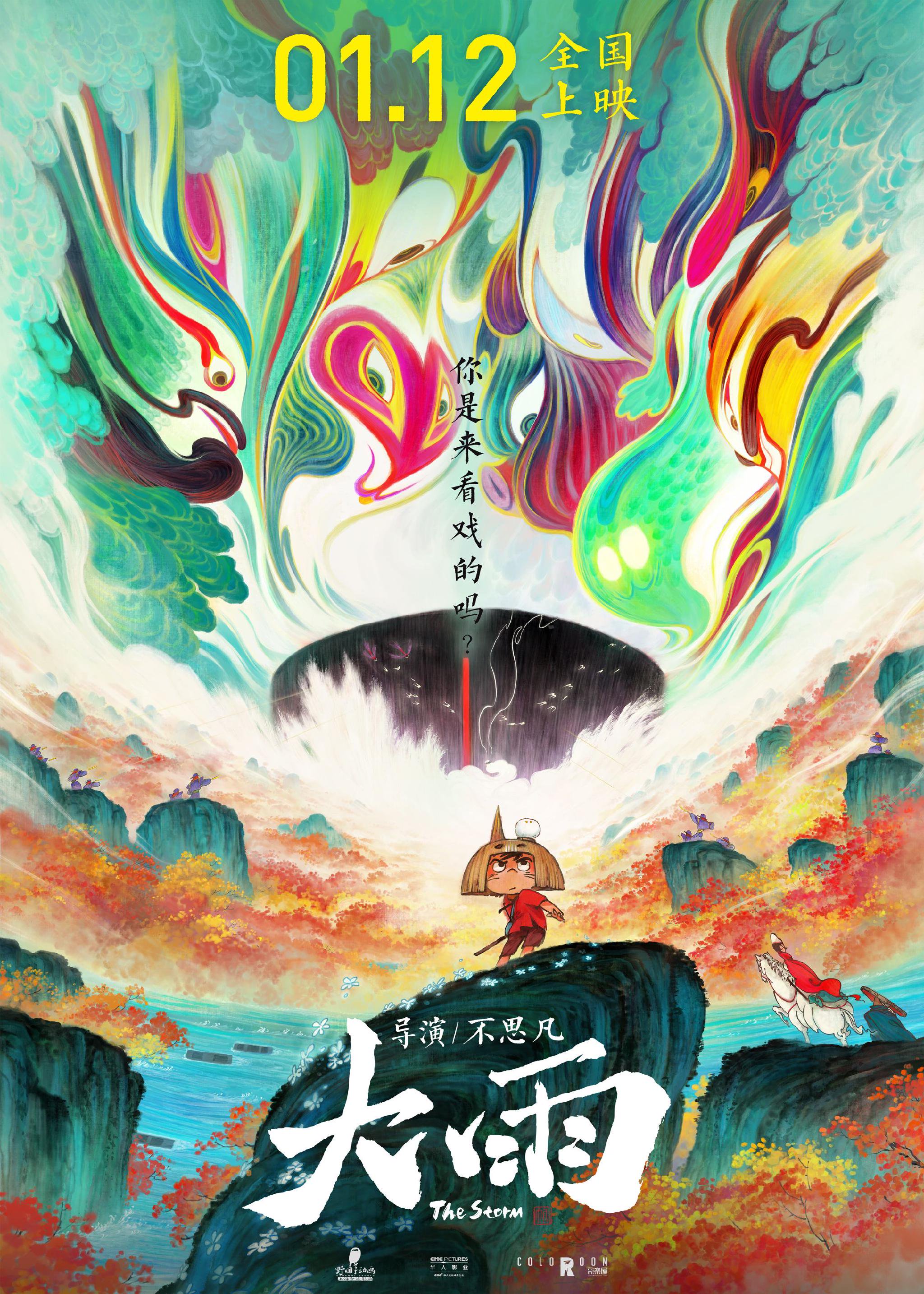
The Storm (大雨, Yang Zhigang, 2024)

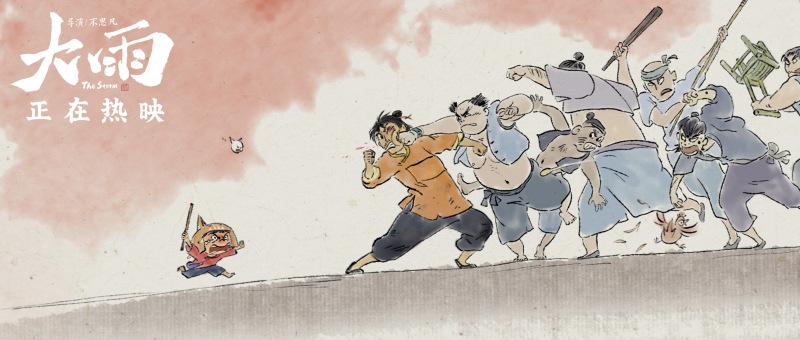
A cosmic storm is likened to the chaos of life in Busifan’s beautifully drawn but narratively obscure family animation, The Storm (大雨, dàyǔ). Set seemingly in a fantasy past which is also a kind of post-apocalyptic future in which mankind has ruined itself through greed, the film is at heart a kind of redemption story in which those left behind attempt to exorcise the negative emotions of the past and ease the destruction they have wrought by abandoning outdated ideas of wealth and status. 

The hero, Bun, is a young orphan adopted by the elusive Biggie who found him drifting down a river in a chest. Biggie decided to adopt the boy as his own but never allowed him to call him father while himself struggling the stigma of having been a criminal. Biggie sometimes leaves Bun on his own while he goes off to try and earn money to give him a better life and justifies his actions that everything he’s doing is only for Bun. Later in the film he expresses regret for “lying” to him, pretending the world was not so chaotic as is it is as the pair become embroiled in a supernatural curse while looking for the famed Nuralumin Satin said to be aboard a mysterious black ship filled with monsters. 

According to biggie, the Black Dragon Army hunting the Nuralumin birds into extinction led to an explosion in the jellyfish population while a prophesy states that the jellyfish will soon unite with another monstrous force during a cosmic storm becoming an awesome dragon that casts a shadow over the land. The ship itself seems to be a symbol of insatiable greed, a kind of floating marketplace in which people entered in search of riches but did not leave again. Inside, they became monsters devoid of all humanity and hungry only for material gain. 

The king’s own mother is said to have fallen victim to the curse, while his nephew also knew a troupe of opera singers who boarded the boat in search of an audience but have apparently lost their way. The spirits of the opera singers recount their plight, that as lowly entertainers they were only ever looked down on and abused no matter if they entertained the king himself and all his other royals. That they fell victim to the curse seems to be a condemnation of outdated ideas about social class and the stigmatisation of a profession, while Biggie’s fate seems to imply something similar. No matter how much he tried to turn himself around and be a good father to Bun, the world continued to reject him and he was left only with crime as a means to support himself. That’s one reason he wants the Satin, so that Bun will be looked after for the rest of his life and they won’t have to debase themselves anymore. 

We can see that the area they live in which is close to the famed Dragon Bay where the Black Ship eventually resurfaces is rundown and abandoned perhaps itself because of the lore that surrounds the area. Even so, the backgrounds are gorgeously animated with flowers in full bloom and Bun making his way through colourful and lively vistas of rural beauty. Yet it’s just this beauty that mankind’s greed has destroyed in the Dragon Army’s senseless killing of the Numalurin birds for which their guardian tribe has never forgiven them. Only the return of these birds and the giant deity that protects them can help end the curse, restoring the proper balance to the land in which the jellyfish are kept in check and the dragon cannot be formed. 

It has to be said that narratively the film is incredibly confusing and difficult to follow, at least for viewers who do not speak Mandarin. Nevertheless, what shines through is Bun’s redemptive power as he desperately tries to rescue Biggie from his own worst impulses, his greed and desperation in being drawn to the black ship like moth to a flame and in danger of being turned into one of the monsters. Constantly accompanied by round ball of fluff he encounters several other cute creatures while otherwise guided by a handsome young man who seems to be made of cloud while his wish that he really could stop Biggie from leaving by treading on his shadow might in an odd way come true. Boundlessly inventive, the film’s ideas sometimes get ahead of itself but are more than made up for in the unshowy beauty of its fantasy world. 


International trailer (Simplified Chinese / English subtitles)

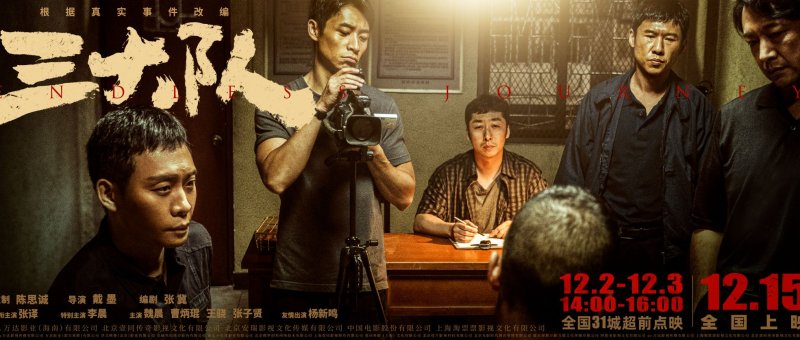
Endless Journey (三大队, Dai Mo, 2023)

The police officers at the centre of Dai Mo’s Endless Journey (三大队, Sān Dàduì) are soon stripped of their badges, accused of excessive force contravening laws existing since the medieval era to prevent vigilante justice. Yet in someways that’s essentially what they end up doing, extra-judicial investigators with a personal vendetta rather than a pure-hearted interest in justice even if the victim of the crime weighs heavily on their conscience. 

Though the film plays into the recent trend in Sino-noir and popularity of mystery thrillers at the Chinese box office, it is surprising that a film that is at least subtly critical of the justice system, featuring police who break the rules and are sent to prison, was approved by the censors board even if the central message is one of heroism as Captain Cheng (Zhang Yi) doggedly chases his suspect all over China for several years. Then again, the hero of this true life case turns out to be China itself as Cheng is reminded that his search is unnecessary given that the fugitive, Eryong (Zheng Benyu), is sure to be captured by the burgeoning surveillance network of CCTV cameras then being rolled out across the country. Years later, it’s the system that allows Cheng to identify Eryong as his DNA and fingerprints throw up positive matches within seconds of samples being taken thanks to the nation’s DNA database. 

Even so, as the veteran officer, Zhang (Yang Xinming), reminds the rookie behind every major case there’s a ruined family broken by their loss which is one reason why he doesn’t relish the prospect of investigating one so late in his career. This particular crime is so heinous that it’s become front page news which means that they’ve also got their boss breathing down their necks to get it solved as soon as possible with the existence of Division 3 itself on the line. Cheng pops home for a matter of minutes to check on his wife and daughter, shutting down his wife’s suggestion that they get a security system for their windows on the grounds that it would be an embarrassing thing for a detective’s home to have. The reason she wants one is that the victim in this case had been a little girl of around their daughter’s age unexpectedly home alone when thieves broke in by climbing over their aircon unit and smashing a window. Finding nothing of value they raped and killed the daughter. 

After a police officer dies as a result of the investigation, the squad take things too far questioning the first suspect leading to his death which is how they end up disgraced and sent to prison. After his release, Cheng has lost his family, his home, his job and identity as a protector of justice yet his determination to catch Eryong is born more of his desire to avenge a friend than it is to prevent further crime. His fellow officers join him in the beginning, but during the endless searching each make the decision to move on for easily understandable reasons such as their marriages, children, and illness but Cheng cannot let go even when prompted by an old friend from the force who tells him they have this in hand though there is perhaps a subtle implication that the police force isn’t really doing enough otherwise Cheng wouldn’t have to be chasing Eryong all over the country. 

But haunted by reflections of his own face, ageing, at times dishevelled and hopeless, Cheng is also searching for himself and a means to reclaim the self he once was by vindicating himself as a policeman along with Division 3 in finally completing their mission. The ominous score by Peng Fei with its stinging strings adds to the noirish feel as does the perpetual inevitability of Cheng’s forward motion in the dogged pursuit of his prey, unable to rest until Eryong has been brought to ground. His quest robs him of his life, but there is an undeniable poignancy to it in Cheng’s inability to find himself outside of the chase only to be left with a moment of uncertainty no longer sure who he is or where he goes now, left alone and with no sense of direction in the absence of his quarry.


Endless Journey is in UK cinemas now courtesy of CMC.

International trailer (English subtitles)

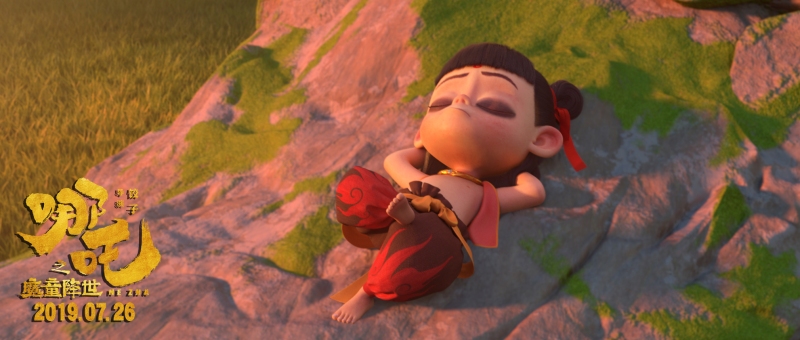
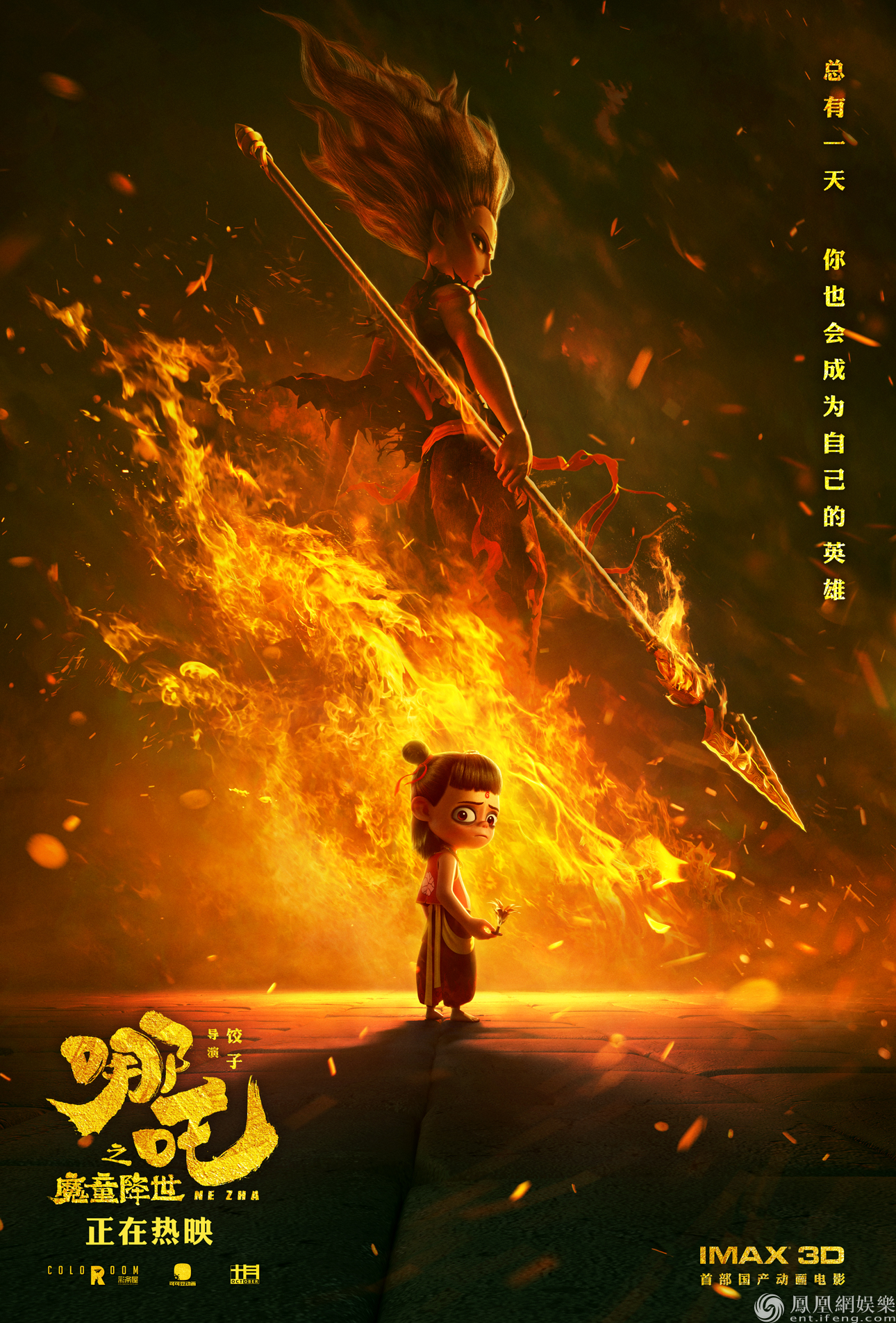
Ne Zha (哪吒之魔童降世, Jiaozi, 2019)

2755835c-570e-44bc-b2f2-515f706369bd_64fa474eb6b5a53c36be9bcd9311f283ce949be6_w1290_h1905Can you choose who you are, or is your identity constructed by accidents of birth and the society all around you? It’s a complicated question and even more so if you happen to have been born part demon thanks to a cosmological mixup. An origin movie of sorts for the titular hero familiar to most from classical Chinese folklore, Ne Zha (哪吒之魔童降世, Nézhā zhī Mótóng Jiàngshì) asks just that through the story of an extremely naughty, all powerful little boy who might be evil or just misunderstood and resentfully lonely because of the prejudice held against him by those fearful of his differences.

The trouble begins with the Chaos Pill which can pull power from sun and moon equally, threatening the integrity of the universe itself. Thankfully, the Heavenly King manages to split it into the Demon Pill and the Spirit Pill, enclosing both inside a lotus flower. He intends to send the Spirit Pill into the third son of general Li Jing (Chen Hao) and has put a curse on the Demon Pill so that it will be destroyed by lightening in three years’ time. Predictably nothing goes to plan because drunken deity Taiyi Zhenren (Zhang Jiaming) fails to stop the evil Shen Gongbao (Yang Wei) sending his minions in to steal the Spirit Pill and use it for his own ends. The Demon Pill ends up in the son of Li Jing, Ne Zha (Lü Yanting), who emerges from his mother’s womb as a bouncing ball of flesh before transforming himself into a small boy and proceeding to wreak havoc all over town.

Doting parents Li Jing and Madam Yin (Lü Qi) refuse to believe their son is all “bad” but recognise that they have a duty to the townspeople who are quickly fed up with Ne Zha’s antics and traumatised by years of being terrorised by “demons”. They would rather do away with the irascible little rascal, but could it be that he’s just bored and lonely? Given the increased demon threat, Madam Yin is often away slaying things and regrets she doesn’t have more time for her son while the other kids are afraid of him, both for quite rational reasons and also because his main way of making friends is quite mean. Increasingly resentful at being shunned as a “demon”, Ne Zha strikes back at the villagers in ways which are really just naughty rather than actually “evil” but obviously aren’t going to win him any friends.

Having failed to get help from the Heavenly Father who has predictably waltzed off for a bit as gods seem to do anytime there’s an actual problem in the mortal realm that they probably caused through inefficient planning, Li Jing decides to lie to his son that he’s really the Spirit Pill and has a duty to slay demons and help mankind. The deception begins to work. Imprisoned in a painting where Zhenren tries to teach him useful magic, Ne Zha takes his new responsibilities seriously, eventually escaping and trying to rescue a little girl who has been kidnapped by a water troll. Sadly, he goes about it all wrong and the townspeople embrace their prejudice to jump to the conclusion that he kidnapped the kid himself and has become even more dangerous.

Meanwhile, evil Shen Gongbao faces a similar problem as a deity shunned because he’s jaguar spirit who took human form. Allying with the villainous Dragons who have been given an ironic punishment to run a prison from which they can’t escape either, he gives the Spirit Pill to their bright hope Ao Bing (Han Mo) who, mirroring Ne Zha, struggles to accept his “evil” parentage and continues to do good and noble things behind his parents’ backs. Meeting by chance, the pair became friends but inevitably have to do battle before realising that they are two halves of one whole and thus represent a kind of salvation in linking hands rather than raising them.

Ao Bing, despite himself, is the more filial in that he thinks he has to accept the “destiny” his parents have given him as a liberator even if he doesn’t quite agree with their methods or reasoning. Ne Zha, by contrast, concludes that his fate is to resist his fate. He might not win, but he’ll fight it all the way and decide for himself who he is rather than allowing others to tell him. Genuinely funny, filled with amusing gags, and packed full of heart, Ne Zha is a gorgeously animated family fantasy and an impassioned advocation for living by your own principles while refusing to be bound by the unsolicited opinions of others.


Currently on limited cinema release courtesy of Cine Asia in the UK, and Well Go in the US.

Original trailer (English subtitles)