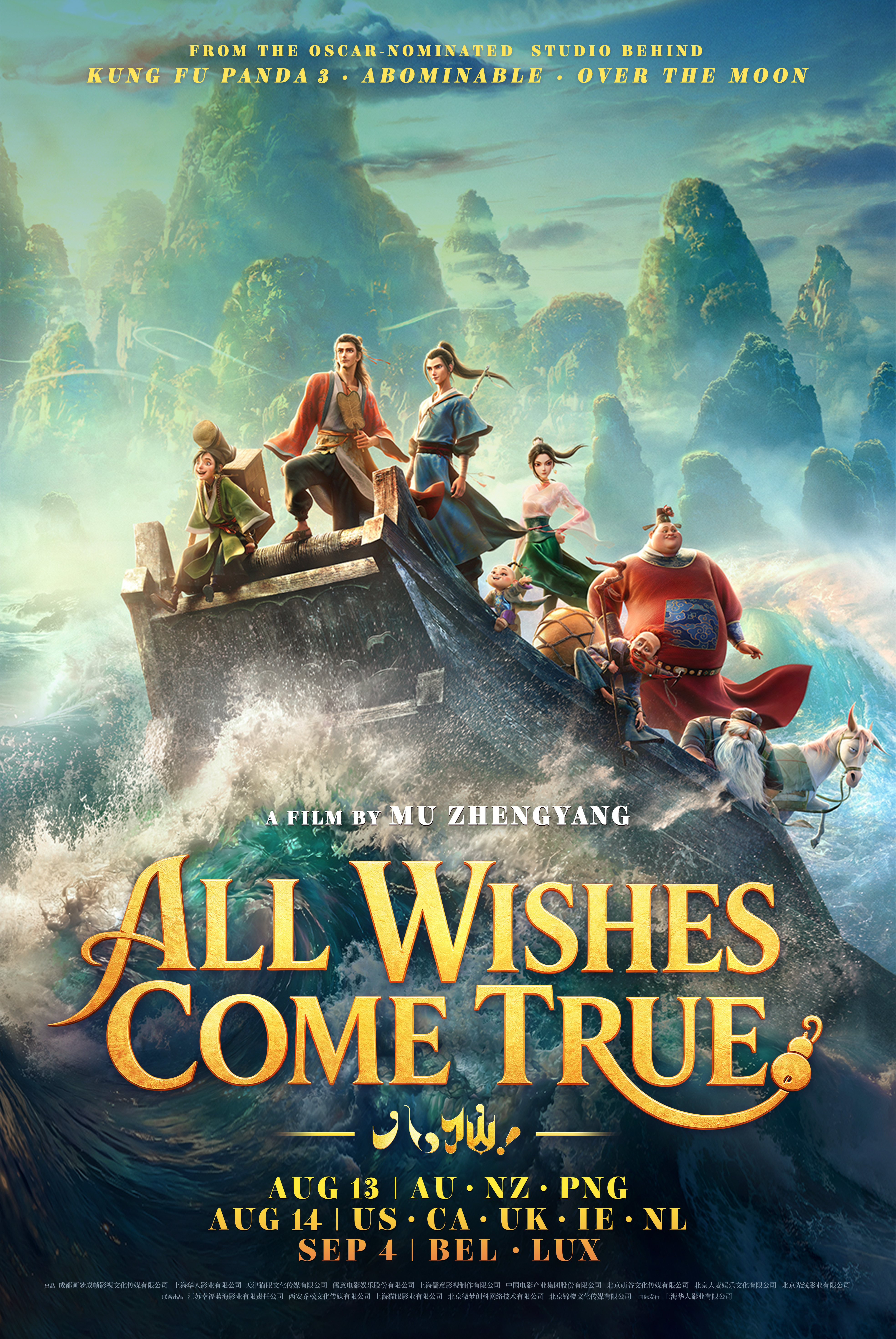
All Wishes Come True! (八仙!, Mu Zhengyang, 2026)

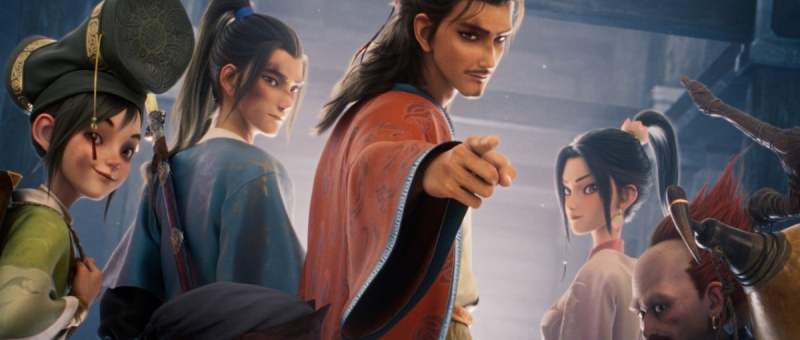
Long ago, a lantern defended humanity from the darkness. But now the lantern has gone missing, and the world is plagued by storms and turmoil. Those who can have fled to the glamorous city of Penglai where the mortal and immortal co-exist and destruction cannot follow. Mu Zhengyang’s animated epic All Wishes Come True! (八仙!, Bāxiān!) draws inspiration from the classic folktale Eight Immortals Crossing the Sea, dramatising it as an Oceans Eleven-esque caper in which a series of scrappy heroes must learn to put aside their greed for the greater good.

The very existence of Penglai is in itself a symptom of the problem. As some point out, the residents aren’t all that interested in finding the lantern because everything is fine in the city. The guardian gods who govern it, Fu Lu Shou, who represent luck, prosperity, and longevity, have become corrupt and are sitting on vast riches embezzled from citizens. Apparent hero Lü Dongbin believes that the lantern is hidden in their vault, but needs help to break in and retrieve it. He recruits local pickpocket Zhongli Quan, whom he believes reshaped the lantern to disguise it, on the promise of allowing him to take as much of the gold as he wants.

It turns out that Zhongli Quan was thrown out of the immortals academy for using an artefact to improve the lives of ordinary people suffering in a famine after prolonged drought. His master reprimands him that the vase is intended to help the elite, not a few peasants. He ironically curses Zhongli Quan that he will always be a thief and a liar, preventing him from living an honest life and forcing him into that of an outlaw. This has, in a way, made him cynical and greedy. The quest to retrieve the lantern presents an opportunity to break the curse and redeem himself, though Zhongli Quan always has half an eye on the gold. Lü Dongbin isn’t completely untainted either with the implication that he is the guardian who sold the lantern in a fit of pique having been passed over for promotion and is now trying to make it right by taking the lantern back. 

As such, the film presents an anti-capitalist, anti-consumerist message along with an ant-corruption sentiment as this team of ordinary mortals attempts to go against the gods by outsmarting Fu Lu Shou to reclaim the lantern and lift and the curse on the wider society. Zhongli Quan’s cynicism is an extension of that which has infected ordinary people who have been encouraged to believe that greed is good. As he and Lü Dongbin forge an uneasy alliance, there is a constant push and pull between them as Lü Dongbin does his best to bring Zhongli Quan back from the dark side by retrieving the lantern. 

The gang ironically attract some attention as apparent “thief catchers” signalling the ways in which people are not always who they claim to be. Nevertheless, they find themselves having to live up to the expectations of being a “hero”, gradually swapping their cynicism for a genuine desire to help those around them. This act of deciding to do the right thing in defiance of the authorities is both quietly subversive and a counter to the greed and selfishness which taken hold across the world along with the elitism that defines life in Penglai. 

At the same time, it’s clear that the gang can only succeed by working together and utilising each of their unique skills in harmony. In the end, they prosper precisely by calling in an unexpected ally who helps them pull off another heist on the villain through misdirection and subterfuge. Like many similar recent animated takes on classic folklore, the film humorously layers the modern world onto the fantasy setting through the swirling cloud highways that surround the city and opening taxi chase along with the magic wristbands that secure entry to Penglai’s VIP area. That the gang are later made immortals precisely so that the authorities can take credit for their actions is another ironic touch, suggesting that they can not really transcend the forces that constrain them. Nevertheless, what remains is the poignant tale of brotherhood and redemption in the relationship between Lü Dongbin and Zhongli Quan that quietly makes plain that in the end we save each other and kindness will always be repaid.


Trailer (Simplified Chinese and English subtitles)
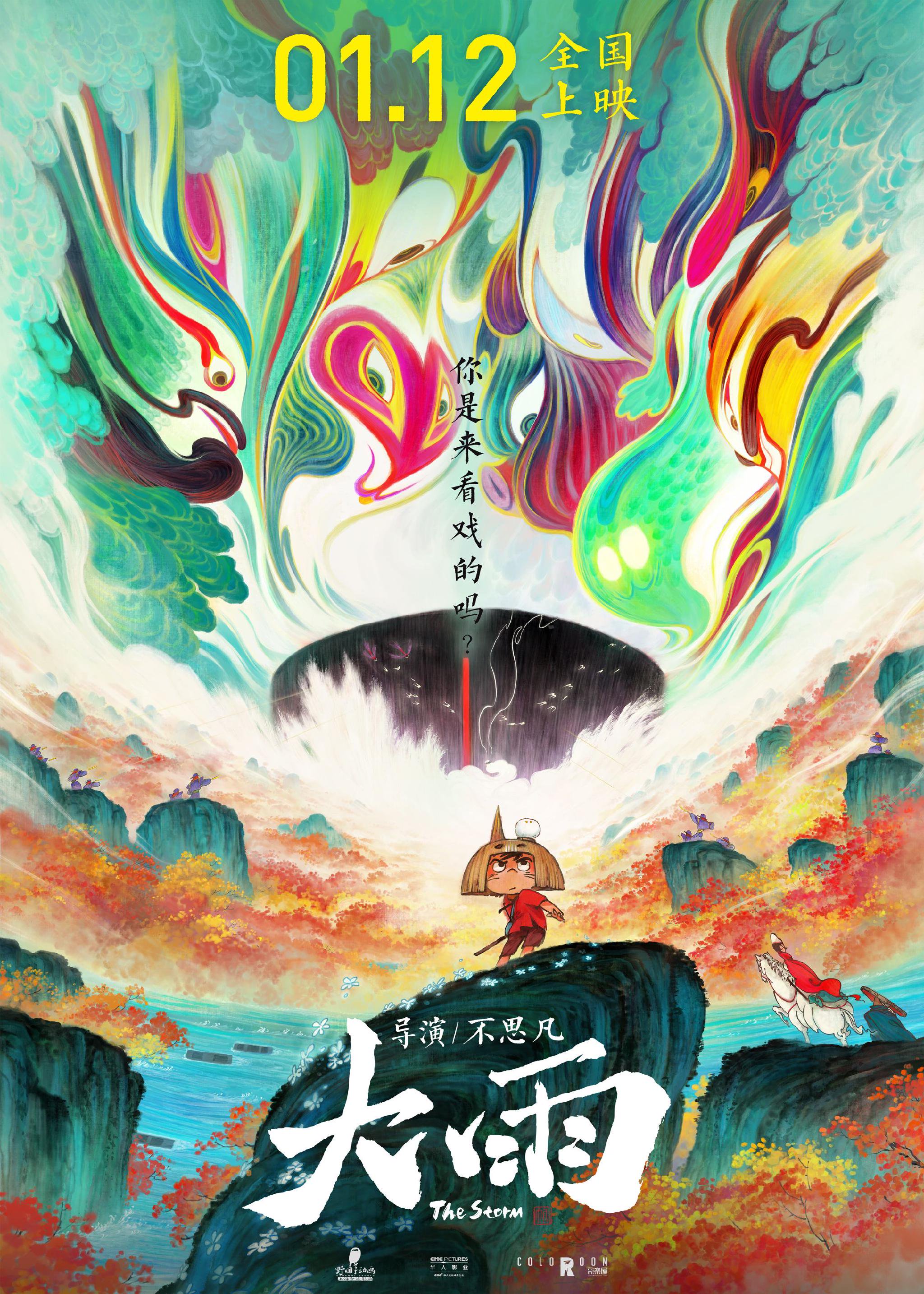
The Storm (大雨, Yang Zhigang, 2024)

A cosmic storm is likened to the chaos of life in Busifan’s beautifully drawn but narratively obscure family animation, The Storm (大雨, dàyǔ). Set seemingly in a fantasy past which is also a kind of post-apocalyptic future in which mankind has ruined itself through greed, the film is at heart a kind of redemption story in which those left behind attempt to exorcise the negative emotions of the past and ease the destruction they have wrought by abandoning outdated ideas of wealth and status. 

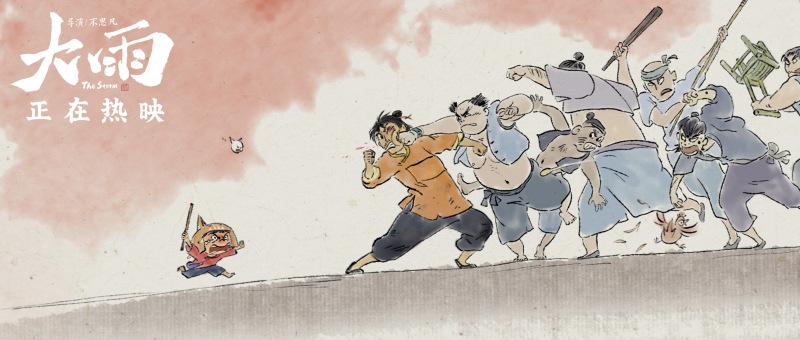
The hero, Bun, is a young orphan adopted by the elusive Biggie who found him drifting down a river in a chest. Biggie decided to adopt the boy as his own but never allowed him to call him father while himself struggling the stigma of having been a criminal. Biggie sometimes leaves Bun on his own while he goes off to try and earn money to give him a better life and justifies his actions that everything he’s doing is only for Bun. Later in the film he expresses regret for “lying” to him, pretending the world was not so chaotic as is it is as the pair become embroiled in a supernatural curse while looking for the famed Nuralumin Satin said to be aboard a mysterious black ship filled with monsters. 

According to biggie, the Black Dragon Army hunting the Nuralumin birds into extinction led to an explosion in the jellyfish population while a prophesy states that the jellyfish will soon unite with another monstrous force during a cosmic storm becoming an awesome dragon that casts a shadow over the land. The ship itself seems to be a symbol of insatiable greed, a kind of floating marketplace in which people entered in search of riches but did not leave again. Inside, they became monsters devoid of all humanity and hungry only for material gain. 

The king’s own mother is said to have fallen victim to the curse, while his nephew also knew a troupe of opera singers who boarded the boat in search of an audience but have apparently lost their way. The spirits of the opera singers recount their plight, that as lowly entertainers they were only ever looked down on and abused no matter if they entertained the king himself and all his other royals. That they fell victim to the curse seems to be a condemnation of outdated ideas about social class and the stigmatisation of a profession, while Biggie’s fate seems to imply something similar. No matter how much he tried to turn himself around and be a good father to Bun, the world continued to reject him and he was left only with crime as a means to support himself. That’s one reason he wants the Satin, so that Bun will be looked after for the rest of his life and they won’t have to debase themselves anymore. 

We can see that the area they live in which is close to the famed Dragon Bay where the Black Ship eventually resurfaces is rundown and abandoned perhaps itself because of the lore that surrounds the area. Even so, the backgrounds are gorgeously animated with flowers in full bloom and Bun making his way through colourful and lively vistas of rural beauty. Yet it’s just this beauty that mankind’s greed has destroyed in the Dragon Army’s senseless killing of the Numalurin birds for which their guardian tribe has never forgiven them. Only the return of these birds and the giant deity that protects them can help end the curse, restoring the proper balance to the land in which the jellyfish are kept in check and the dragon cannot be formed. 

It has to be said that narratively the film is incredibly confusing and difficult to follow, at least for viewers who do not speak Mandarin. Nevertheless, what shines through is Bun’s redemptive power as he desperately tries to rescue Biggie from his own worst impulses, his greed and desperation in being drawn to the black ship like moth to a flame and in danger of being turned into one of the monsters. Constantly accompanied by round ball of fluff he encounters several other cute creatures while otherwise guided by a handsome young man who seems to be made of cloud while his wish that he really could stop Biggie from leaving by treading on his shadow might in an odd way come true. Boundlessly inventive, the film’s ideas sometimes get ahead of itself but are more than made up for in the unshowy beauty of its fantasy world. 


International trailer (Simplified Chinese / English subtitles)