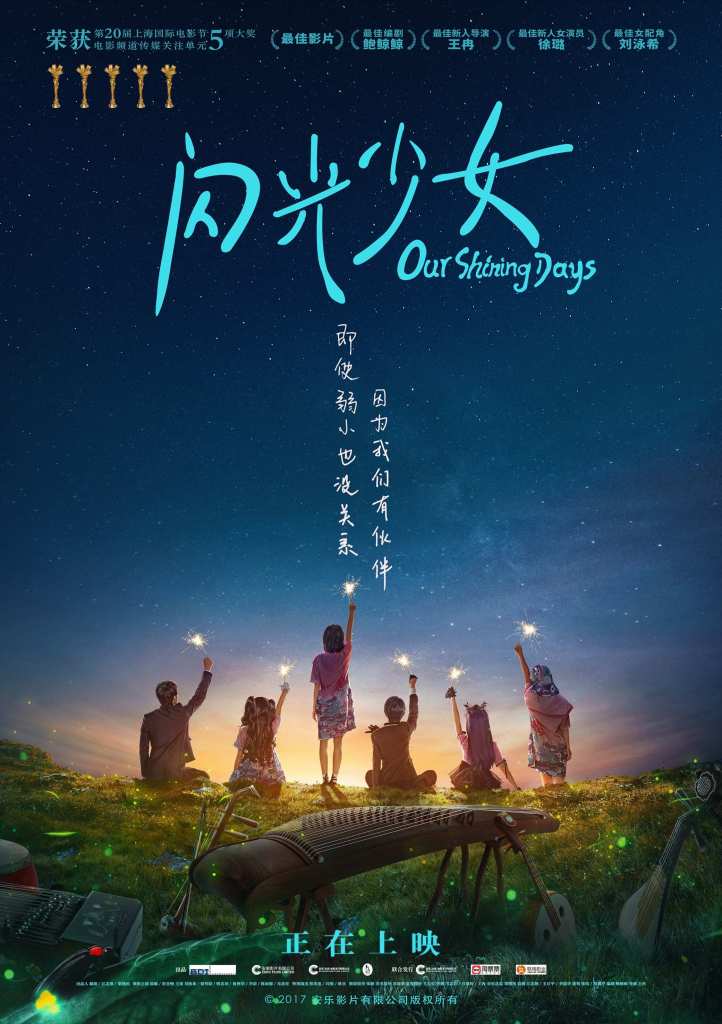
Our Shining Days (闪光少女, Wang Ran, 2017)

Doesn’t everyone deserve their time to shine? For the students at the music conservatoire at the centre of Our Shining Days (闪光少女, Shǎnguāng Shàonǚ), a glittering future may be difficult to imagine. Another in the recent series of Chinese youth comedies, Wang Ran’s debut may clearly be inspired by Japanese anime, but adds a noticeably patriotic beat in making its heroes devotees of traditional music facing off against the “pretentious” threat of European classical. 

The academy is strictly divided along class lines with the snooty classical kids pretty much ruling the roost. When an actual fight breaks out between factions, the conservative headmaster sides with the classical club and erects a series of prison-style gates to confine the folkists to their own corridors while also banning them from staying too late or eating in their rooms. Airy fairy nerd Chen Jing (Xu Lu) hadn’t previously cared about the folk vs classical drama, but is pulled into it when she falls for handsome pianist Wang Wen (Luo Mingjie). That’s why she naively volunteers to be a page turner for him at a big concert, not quite understanding she’s being made fun of. Determined to prove herself to him, she decides to form a traditional folk ensemble but finds it difficult to get recruits, ending up with a group of four otaku girls everyone else is scared of who only agree on the condition that she buys them all plastic model kits every week. 

A true underdog story, Our Shining Days makes heroes of its “losers” whose uncool tastes have seen them roundly rejected not only by their fellow students but also by their families. Chen Jing is a talented Yangqin player, but conflicted in her ambivalence towards traditional Chinese music. Internalising a sense of shame about her niche interest, she half convinces herself that she’s only learned yangqin because her parents made her and is not truly invested in the instrument, which is why she immediately assumes they’ll dissolve the band as soon as her mission of winning Wang’s heart is over. 

The otaku students, however, rediscover a love of the admittedly fantastical music, giving it a cool modern edge inspired by their love of anime and games. The otaku live in the “second dimension” and have already more or less othered themselves, but begin to actively enjoy being part of the band along with the communal pleasure of making music together. Meanwhile, the scruffy Chen Jing begins learning a little about life from the sacred otaku texts of her new friends, only to take their shojo manga-style advice a little too seriously in deciding to make a public confession to Wang which brutally backfires. Wang is planning to go abroad to study classical music, he’s not interested in lowly yangqin players. 

The class drama reaches a crescendo when the conservative headmaster announces that as of the following year the school will cease admitting students playing traditional instruments altogether. Spurred on by Chen Jing and the otaku girls, the oppressed folkists finally find the strength to resist, rising to prove there is a viable ensemble for folk instruments to counter the “sophisticated” classicists. The classicists adopt the motto “let my music be the soundtrack of war”,  but the folkists are all about team effort and peaceful co-existence. When the local inspector reminds the headmaster there is no conflict in music and expresses disapproval of the school’s prison-like environment, the folk ensemble, rather than trying to defeat the classicists, come up with a “better” solution in which they can work together so that folk music can still be heard as part of the big end of year concert. 

A cheerful coming of age tale which ends in the message that there’s a place for everyone and that those who are generous of spirit are the likeliest to prosper and be happy as they do, Our Shining Days also has its share of high school drama as the scruffy Chen Jing gradually progresses to towards a more mature elegance while her best friend Li (Peng Yuchang) gets the courage to confess his feelings in a much less ostentatious manner. Subtly patriotic in its suggestion that traditional folk music is “better” than the false sophistication of pretentious Western classical, the central messages are of love, acceptance, and authenticity, insisting there’s a place for everyone who comes with an equally egalitarian spirit. 


Currently available to stream in the UK (and possibly other territories) via Netflix

Singapore release trailer (English subtitles)
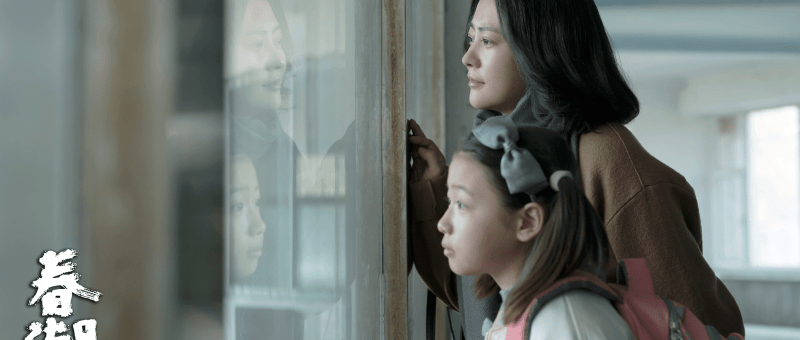
Spring Tide (春潮, Yang Lina, 2019)

Toxic motherhood takes on strangely subversive, allegorical tones in Spring Tide (春潮, Chūn Cháo), Yang Lina’s painful examination of the relationships between three generations of Chinese women, each in different ways victims of the times in which they live. It’s true enough that the folk tunes sung so happily are often odes to the “motherland” which betray none of the eeriness of their propagandistic intentions in their full hearted endorsement of nation as family, but the darkness is inescapable as we see their metaphors made flesh in a woman destroyed by her sense of disappointment in life and in turn destroying her daughters literal and metaphorical in a pathological attempt to give her life meaning. 

30-something Jianbo (Han Lei) is a socially conscious investigative journalist whose refusal to let sleeping dogs lie is a constant thorn in the side of her more conservative editor. At home, meanwhile, she’s mother to nine-year-old Wanting (Qu Junxi), who, we later realise is being raised by Jianbo’s feisty mother, Minglan (Elaine Jin Yan-ling), while she splits her time between the family’s backroom and a bed in a student dorm with occasional nights spent with an intense yet silent musician. 

Aside from the obvious emotional disconnection, the fracture lines between mother and daughter are also ideological. Jianbo is a post-80s generation woman, she wants to hold mother China to account because she wants her society to be better than it is. She unroots scandal and corruption and brings them to light through the power of the press, trying to create real social change through shaming the populace into better patterns of behaviour. But her mother Minglan lived through the Cultural Revolution, because of all she’s suffered she thinks that things are fine the way they are and criticising the beneficent state is like scolding the person that raised you. Caught in the middle, Minglan’s fiancé Zhou (Li Wenbo) espouses contradictory views, at once proud to have Jianbo as a daughter because “journalists are the conscience of a country”, but also grateful for the iron rice bowl system that gave him a steady job, not to mention a pension and the old person’s flat that’s allowed him to meet Minglan. 

Minglan’s life has indeed been full of suffering, though it is perhaps surprising how casually she and her friends remark on the terror they experienced during their youth while continuing to sing the old patriotic songs. “My motherland and I can’t be apart for a moment”, according to patriotic hit My People, My Country (我和我的祖国), but its tones suddenly seem sinister in their breeziness as we’re forced to consider the icy Minglan as a stand-in for China as a toxic mother, insisting that she must be respected and that her children must repay their debts to her, no matter how abusive she has been and may continue to be. To her friends in the retirement community, Minglan is a warm and caring woman, running the choir and organising local events, but she’s also blindsided by the suicide of a friend who took her own life because of an entirely different kind of filial disappointment coupled with existential loneliness. Minglan can’t understand why she did it, but in characteristic fashion largely makes it all about herself in lashing out at Jianbo when she points out that Mrs Wang was not as happy about their (read: Minglan’s) potential retirement plan as Minglan had believed her to be. 

“When were you going to realise this was a family and not a battlefield?” Jianbo asks her mother knowing that she can make no further reply. The tug of love over motherhood of Wanting is, in many ways, a tussle over the future of China. Minglan digs her nails in, telling Wanting a few hurtful truths about her mother while insisting that you really can’t trust anyone anymore but that’s OK because grandma loves you, while Jianbo remains powerless to reassume her maternity knowing that her only weapon is to avoid unduly antagonising her mother in the hope that she won’t end up alienating Wanting in the same way Minglan alienated her. All that exists between them now is a torrent of resentment, Minglan seeing her daughter only as the symbol of all her frustrated desires, and Jianbo knowing she’s become a sad and lonely woman solely because her mother refused to love her in the way she wanted to be loved. Jianbo is determined that she won’t let Minglan’s “vanity and hypocrisy” corrupt her pretty, sensitive daughter, pushing her towards an “ignoble and ridiculous life”. She wants Wanting to be free of this chain of abuse and all its authoritarian gaslighting, but has no mechanism to free her other than distance. 

Wanting, by contrast, is cheerful and kind. She has absolutely no filter and is entirely unafraid of asking difficult questions, but is also brave and strong, willing to stand up for others. A little girl in her class who happens to be from the Korean minority is criticised for her “poor” Mandarin and ordered to switch seats but her new buddy refuses to sit with her because he claims not to be able to understand what she’s saying. Wanting immediately pipes up that she understands perfectly, instantly becoming the girl’s best friend and visiting her home which appears to be one of immense harmony and happiness where her dad whirls her round while proudly singing Arirang, standing in stark contrast to Minglan’s joyous yet somehow self-involved recitals. China as an authoritarian mother may be losing its grip on power, while Jianbo’s generation struggles to free itself from the trauma of toxic parenting, but there is perhaps hope for Wanting as she and her friend decide to leave the patriotism showcase to follow the spring tide right out into a wide river of joy and freedom.


Spring Tide was screened as part of this year’s Osaka Asian Film Festival.

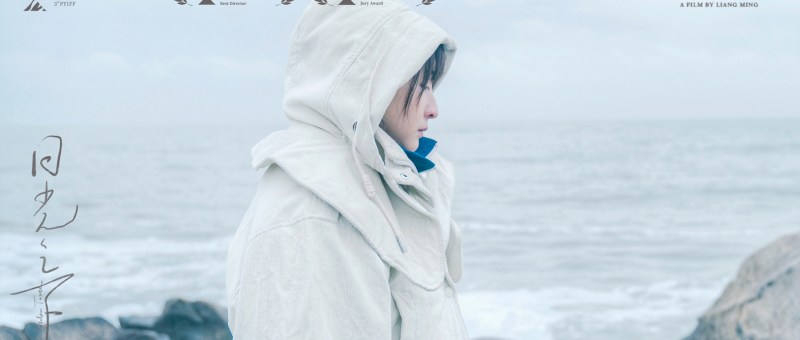
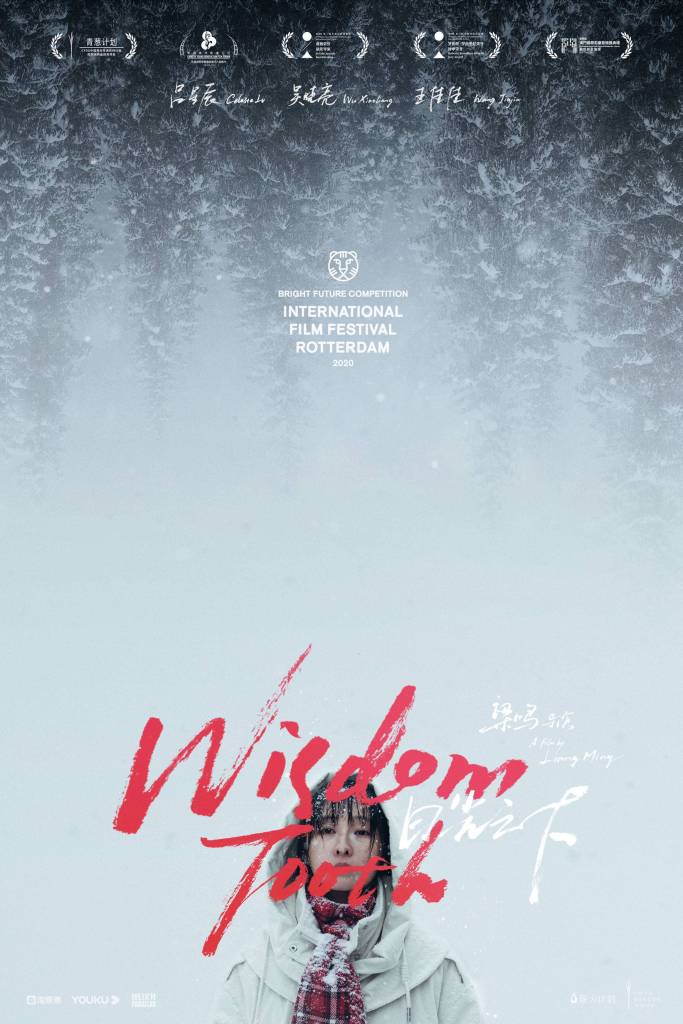
Wisdom Tooth (日光之下, Liang Ming, 2019)

A young woman rides the waves of changing times in Liang Ming’s Wisdom Tooth (日光之下, Rìguāng Zhīxià). Perhaps innocence is something slightly painful you’re better off without, but awakening to life’s light and shade can be a difficult process. Gu Xi (Celeste Lv) is suffering with a dull ache in her jaw and the solution is, apparently, merely pain killers but you can only numb yourself so long before you have to make a choice of whether to go on living with the pain, or free yourself from it. 

A young, if slightly immature woman, Gu Xi has a job in a local hotel and lives alone with her half-brother, Gu Liang (Wu Xiaoliang), who, until recently, has eked out a living as a fisherman. A recent oil spill revealed to have occurred some time ago but covered up by the authorities has put paid to that, while Xi also finds her job under threat because she has an undocumented status and there is shortly to be some kind of inspection. Having grown up without a mother and entirely ignorant of who her father might have been, Xi feels acutely anxious about her circumstances and is dependent on Liang for a sense of security. It is therefore unsettling for her when he develops an interest in the sophisticated Qingchang (Wang Jiajia), daughter of local mob boss Zhou (Chen Yongzhong) and a recent returnee from South Korea where she had been living with her mother. 

A mirror image of Xi, Qingchang is everything she she’s not. Xi is well known for wearing her brother’s clothes, dressing like a tomboy for reasons that are a combination of poverty and affection, where Qingchang has wardrobes full of the latest fashions brought back with her from overseas including a beautifully crafted Hanbok featuring an elaborate embroidered design. As much as she’s resentful and intimidated, Xi can’t help admiring the slightly older woman, captivated by her sense of self assuredness, and eventually develops a sisterly bond with her even while fearing that she may steal her brother away. 

A further intrusion, however, disrupts their tentative familial bonding. A fisherman found dead and floating on the sea hints at a burgeoning turf war between local bosses Zhou, Qingchang’s father and Liang’s employer now that he’s taken a job as a security guard at the docks, and Jiang (Tao Hai), a melancholy Christian who owns the hotel where Xi had been working. Though warned by others that Jiang seemed “creepy”, Xi feels indebted to him because her job at the hotel was saved after she approached him to intervene. Her habit of recording the conversations around her to listen to later presents her with a problem when she discovers that Zhou may have bumped off the fisherman himself and is planning to frame Jiang for the crime. Jiang, it seems is also receiving protection money to ensure the fishermen’s safety, apparently a promise he wasn’t able to keep. Xi is pulled three ways. She loses confidence in Qingchang who is now both tainted by association and a figure of mild discomfort, while fearful that if she reveals what she knows, serves justice and repays a debt by clearing Jiang, she will ruin her brother’s happiness and risk his rejection. 

Trapped in he realms of childhood, what she most wants is to preserve her status quo. Liang is everything to her – brother, father, and somewhat uncomfortably a figure of romantic impossibility. Her feelings towards Qingchang are mired in complexity, a nascent attraction perhaps underlying her sense of jealousy either misdirected through her complicated feelings for her brother or simply finding its anchor for the first time. An angry speech at her brother’s birthday party during which she inappropriately reads out a semi-explicit passage from a lesbian novel hints at an attempt to resolve an attraction she feels is taboo, though it is unclear for whom it is directed. As with most young people, she must come to an accommodation with the fact that her world is changing. A childhood promise that she and her brother would never marry, preserving their family of two forevermore, was always unrealistic but she struggles to let go of the idea of permanence in a childish sense of familial security. Like the oil polluting the seas, her world is coloured by uncertainties but like anyone else she discovers that her agency is limited and whatever choice she makes others will make their choices too. That dull ache in her jaw is a reflection of the ills of the world around her, an inconvenient tooth that needs to be plucked out and discarded leaving only the cold comfort of adult wisdom behind in its place. 


Wisdom Tooth screens on March 11/14 as part of this year’s Osaka Asian Film Festival.

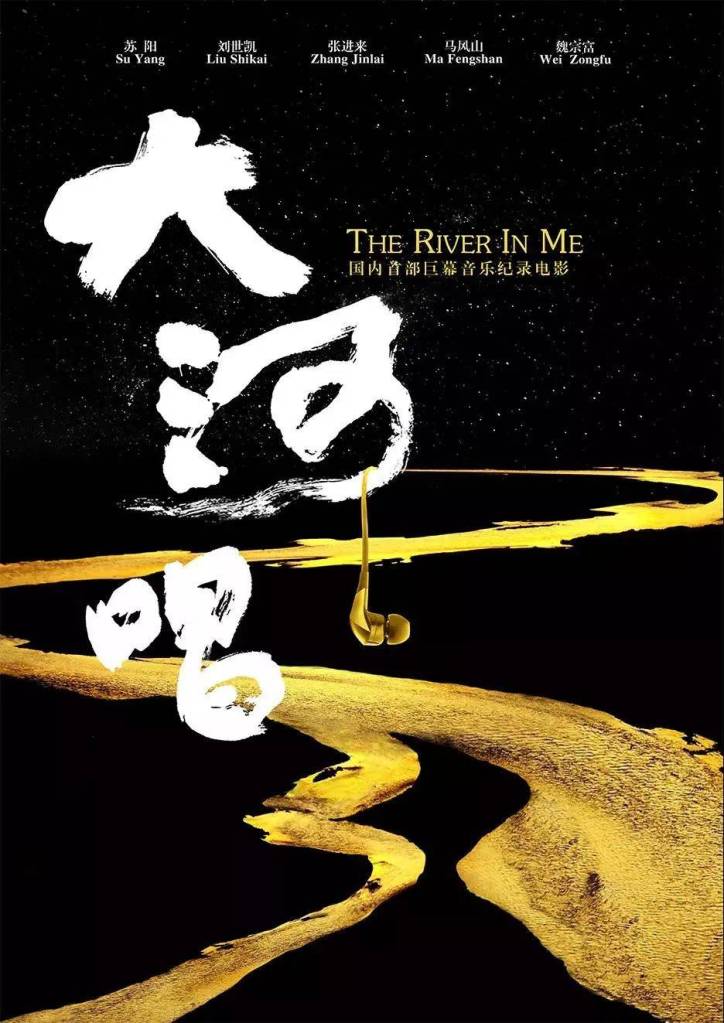
The River in Me (大河唱, Ke Yongquan, Yang Zhichun, He Yuan, 2019)

Can the old arts survive in the modern world or are they destined to fade away with the passing of time? Folk singer Su Yang is determined to preserve them, if only by assimilation, blending traditional folksong with Western rock to bring it into the modern era. While some complain that Su’s singing is inauthentic, he argues that authenticity, in that sense at least, isn’t the point. The only thing that matters is whether people like it and can feel something of themselves and of ages reflected in the ancient rhythms. 

Now a successful musician, Su is not originally from the country but moved to rural Yinchuan, Ningxia in Northwest China with his parents when he was seven. He later says it was the music of Yinchuan which touched him not because it is the greatest of cities but because it’s the one which most intersected with his life. Through his travels, Su meets up with a series of other practitioners of traditional arts mostly also from Ningxia and the surrounding area as he and they dwell on survival. 

Itinerant singer Liu Shikai makes a living playing the Sanxian, but fewer and fewer people are interested in listening while in private he feels himself lonely as a twice widowed father of three, especially as his youngest daughter has now married leaving him at home alone. Su laments something similar, reflecting that there’s no New Year for him. His festivities will consist of working and drinking, while his family can see him on TV from the comfort of their homes. Su’s brother complains endlessly about the annual Spring Gala (while watching it anyway), finding the show totally lacking in any kind of substance and becoming more boring by the year. His astute daughter, however, points out that his criticism is unfair or at least stating the obvious because the Spring Gala reflects “youth culture” which is perhaps flashy and superficial but equally is not intended to appeal to middle-aged men. Su appears on the program himself but might agree, seeing as it’s his mission statement to put a little soul back into the mainstream by bringing the rhythms of the Yellow River to contemporary society. 

Back in the country, meanwhile, folksongs are serving the same purpose they always have, expressing joy in the natural world and bringing communities together through choral solidarity. Then again, Hua’er singer Ma Fengshan, sometimes finds himself at odds with his. A member of the muslim minority, his house is filled with religious texts that he is unable to read because they are in Arabic which he doesn’t speak. Some have told him that he should spend more time on religious study, but all he wants to do is sing, while others actively oppose Hua’er for its “salacious” qualities, aware the songs can be used as a form of flirtation and convinced that they have the potential to cause marital breakdown and infidelity. In spite of everything, Ma keeps singing and is eventually joined by other members of his community wearing traditional dress to celebrate Hua’er music. 

For puppeteer Wei Zongfu, however, the future seems far less bright. Now ageing himself, he’s accepted that his descendants won’t want to succeed him and there are few people interested in learning shadowplay. The leather puppets crafted by his grandfather are so precious to Wei that he didn’t even want to take them to use in Su’s showcase of traditional arts in fear they might be damaged or stolen, opting for a safer paper play instead, but is now contemplating what’s best to do with them after he dies and if the art itself can survive when there is no one to perform it. 

That’s a problem also faced by Zhang Jinlai, the harangued head of a Qinqiang Opera troupe frequently at odds with his co-star wife who berates him for employing too many actors when they aren’t making any money. With economic factors to consider, he finds it hard to keep his troupe together and is pushed towards making “innovations” that might appeal to a younger audience but wishes to remain “authentic”. Su’s suggestion, by contrast, is that in the end you can only move forward, the old arts may have to adapt or die. Some may not approve of his modern take on the traditional, but in his own way he’s saving Hua’er song and helping to pass it on to future generations, in his own words extending the rhythms of the Yellow River to all corners of the world. 


The River in Me screens in Amsterdam on March 4/8 as part of this year’s CinemAsia Film Festival.

Original trailer (English subtitles)

Present.Perfect. (完美現在時, Zhu Shengze, 2019)

Live streaming has become big business in China. Locked out of the nation’s burgeoning economy, many youngsters have pinned their hopes online, seeking internet fame as a pathway towards a life less disappointing. Recent documentary People’s Republic of Desire showed us how cynical and exploitative the industry could be, how it often betrayed both viewers and stars in selling false connection and manufactured acceptance. Present, Perfect (完美現在時, Wánměi Xiànzài Shí), however, assembled from hours of live streamed content artfully regraded in crisp monochrome, shows us something else – the everyday bloggers who aren’t really in it for the money or the fame, but crave visibility and validation. 

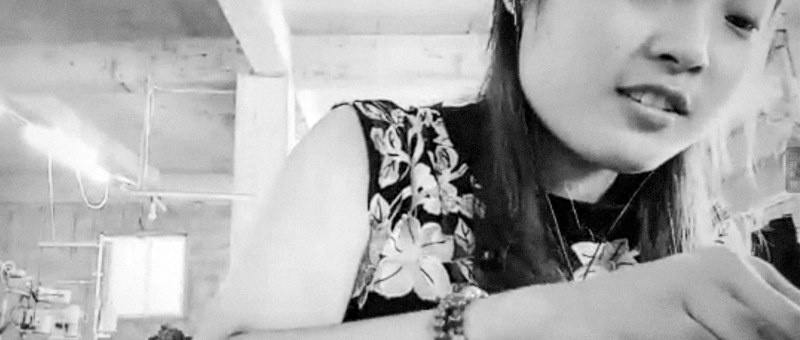
Zhu Shengze opens with a literal crane shot, scenes of construction and deconstruction as if symbolising the rapid reorganisation of the modern China. Rather than the more familiar chats, we see silent scenes of people working – men shifting bags from lorries, construction workers, later a farmer who does talk in order to tell us about his desire to found an ecological farm and invite us to experience his new “agritainment” facility. Eventually we arrive at a factory where a young woman who will recur throughout the film patiently sews underpants while chatting to her livestream followers, apparently free to do so though she admits that it decreases her productivity which is a minor problem because she’s paid by the unit. A divorced mother of a three-year-old, later seen clinging to her arm at the factory, she patiently answers repetitive questions about boyfriends and hopes for the future. 

One of many marginalised in modern China, the seamstress finds a sense of validation in the appreciation of the fans hanging out in her “showroom” and occasionally shooting her various presents by way of thanks. Not everyone is quite clear, however, about what services are exactly on offer. A dancer resists the pleas of a caller offering big bucks for a private chat hoping to persuade him to dance in the nude. The dancer offers him a different kind of ill-defined service, but encourages him to try another channel which might be more open to his particular needs. 

That kind of potential exploitation is a definite threat, but so is the callous maliciousness which all too often defines internet communication. A lonely dancer experiences trouble in the real world as a belligerent older gentleman angrily forbids him from filming in his chosen spot, but later offers a melancholy monologue about his many haters who, for some reason, are keen to insult him when all he’s ever tried to do is make them smile. The final scene of the movie finds him surrounded by a small crowd and attempting the famous Gangnam Style dance routine while the bystanders look on in silent bemusement, their eyes mostly fixed not on him but on the camera. 

Yet for all that, for those who’ve found themselves exiled from mainstream society online communication can provide an essential lifeline. One young man calmly explains that his genitals have been removed and, as a consequence, he never went through puberty and has become a 30-year-old with a child’s body. Bullied at school, he holed up at home playing video games until they too bored him. Though declaring himself “not gay”, he tells us that a crush on a male vlogger showed him a way out, that becoming a live streamer himself gave him the confidence to go out and explore the world, eventually leading a more independent life with a job in a local factory. Another man we’re introduced to was badly burned in a fire, losing his hand and sustaining significant facial scarring, itself something that attracts relentless trolling and inappropriate questions. 

In these brief windows into everyday life, what we discover is a kind of reverse voyeurism as the streamers offer up their reality in hope of connection. They are careful to remind viewers that they rely on presents, and the money comes in handy, but they aren’t planning on becoming famous or deluded into thinking they can strike it big. Some are just in it for the fun, goofing off for the camera moonwalking and sad no one seems to be interested, dancing alone to a Mandarin cover of classic ‘80s hit Dancing Hero, enlivening dull and repetitive tasks by presenting them as a kind of teaching exercise as they chat amiably with friendly strangers, calling out their names as they flash up in the showroom as if they’d just walked into a familar neighbourhood bar. Others crave a sense of validation, but all are looking for a kind of escape from a rapidly changing society built on a tenuous link to invisible strangers craving exactly the same. 


Present.Perfect. screens at the ICA from 24th January courtesy of ICA Cinema.

Festival trailer (English subtitles)
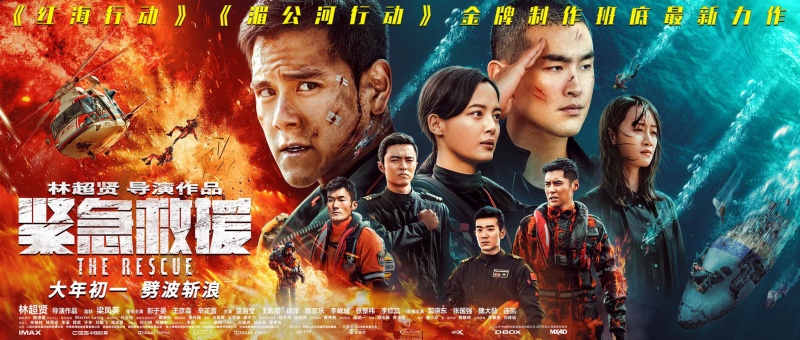
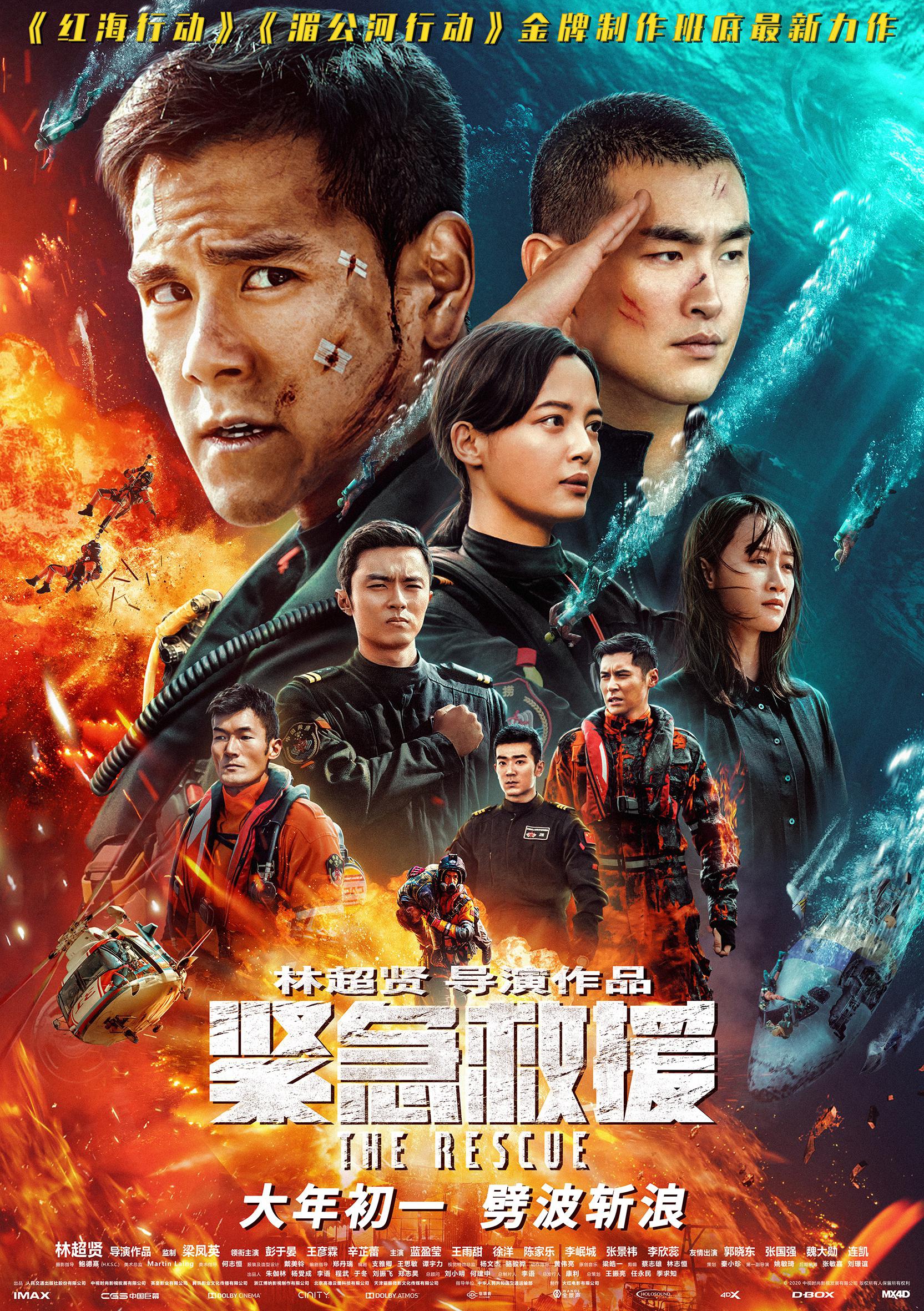
The Rescue (紧急救援, Dante Lam, 2020)

The rescue poster 3

It’s tempting to see Dante Lam’s latest foray into big budget mainland action as a continuation of his previous hits Operation Mekong and Operation Red Sea which paid tribute to the police and navy respectively, but it is also the latest in a series of films featuring China’s finest bravely battling against the odds to save the day. Like Tony Chan’s The Bravest which celebrated the selfless heroism of China’s firemen as they risked their lives to stop a potentially catastrophic fire in an oil refinery, The Rescue (紧急救援, Jǐn Jyuán) pays tribute to another undersung arm of the emergency services – China’s Coast Guard.

Our hero, Captain Gao Qian (Eddie Peng Yu-yen) of China Rescue And Salvage, is a devil-may-care hero who throws himself into danger without a second thought where lives are at stake. The motto of China Rescue And Salvage is “we risk our lives to give others hope”, but some feel that Gao Qian is too reckless with his and fear that he’s forgotten that you can’t save anyone if you get yourself killed playing at heroics. That’s something that’s temporarily brought home to him when the pilot of his helicopter is badly injured during a rescue on an oil rig engulfed by flames, leaving the inexperienced co-pilot to fill-in on his behalf. Gao Qian works his magic in the nick of time, but both of the pilots quit the team immediately afterwards, the pilot struck by the proximity of death and the co-pilot by his sense of inadequacy in feeling as if he failed to live up to the job.

Luckily the team soon get a new pilot – a lady, Yuling (Xin Zhilei), who clashes with Gao Qian in true disaster movie fashion in her desire for rational action and the kind of heroics that are strictly by the book. Against the odds, however, they make a good team, eventually bonding in mutual admiration for their complementary skills. Meanwhile, Gao Qian is also dealing with some home drama in that he’s just brought his young son Congcong (Zhang Jingyi), who had been staying with his grandmother, to live with him. Congcong seems to be suffering with some kind of illness, but is otherwise cheerful enough and hoping that his dad will get him a new mum, like, for example, the beautiful Yuling.

The death of his wife, his son’s illness, and the loss of colleagues he was forced to leave behind, haunt Gao Qian like a cosmic joke, as if he’s being “punished” for snatching so many other lives from the jaws of death. No matter how hard he tries, there are lives which cannot be saved – no helicopter can rescue you from terminal illness or debilitating disease. Nevertheless, he continues to do his best no matter the personal costs. “Everyone has their own battleground, mine is rescue” he tells a superior with determination after his priorities are questioned. In training, the coach reminds the rescuers that their enemy is nature. They push their bodies as far as they can go, willingly risking all to let others know that someone is always looking out for them and will come in their time of need. Faced with certain death, Gao Qian enters an eerily beautiful existential space born of liminality in which he is perhaps able to feel everything that is to be alive while his son, fighting his own battle, does something much the same.

The strangely poetic quality of life in extremis is directly contrasted with the hokey comedy of Gao Qian’s home life and the brotherly comradeship of the base which are both much more of the typical “New Year Movie” mould. Lam fares much better than Chan in heading off the obvious melodrama, though he too resorts to the obvious foreshadowing of a young man daring to get wedding photos taken while planning to risk his life for the greater good, while the quirky production design and wholesome warmth of Gao Qian’s home life as he attempts to make the world safe for his son offer a much needed escape from the anxiety of his disaster-fuelled existence. Unlike that of Red Sea, the world of The Rescue is a more open and hopeful one in which Gao Qian does his best to save everyone who needs saving no matter their nationality, feted far and wide as a hero even if he awkwardly embodies a magnanimous China as a world protector as he does so. Nevertheless, Lam once again manages to elevate his material beyond its propagandist aims, edging towards a more ambivalent contemplation of selfless nobility and the costs of courageous endurance.


In UK cinemas from 25th January courtesy of CMC Pictures. Unfortunately, the release of The Rescue has been postponed because of the Coronavirus outbreak in China. We will update you as soon as we hear of new release date!

Original trailer (English subtitles)

Adoring (宠爱, Larry Yang, 2019)

Adoring poster 1Pets can often be a point of contention in your average romance. As often as they bring people together, they can also drive them apart which is perhaps why the tug of war over an unexpectedly orphaned dog has become such a trope in bitter divorce narratives. Cheerful New Year movie Adoring (宠爱, chǒngài), however, is 100% pet positive, showing us that shared love for an adorable little critter only brings people closer even if it takes a little while to get there.

Each of our animal loving heroes is connected through a network of friendship or simply by using the same, very cheerful, vet’s. Teenager Nan (Zhang Zifeng) uses her pet golden retriever Zha as an aid while looking after her best friend, Leyun (Leo Wu Lei), who has recently lost his sight through illness. Illustrator An Ying (Kan Qingzi) has a crush on a handsome reporter who lives in her building but is both extremely shy and incredibly germaphobic which poses a small problem for her when he suggests co-parenting a little kitten they rescue from under a car. An Ying’s boss Zhao Le (William Chan Wai-ting) has just married beautiful air hostess Fang Xin (Zhong Chuxi), but her beloved dog Seven is both extremely jealous and aggressively territorial making the start of their married life somewhat stressful. Fang Xin’s friend Fay (Yang Zishan) has been dating smartly turned out fund manager Li Xiang (Wallace Chung Hon-leung), but is concerned that they always meet in hotels. Fearing he has another woman at home, she barges into his swanky townhouse but is surprised to discover that his big secret is a pampered pretty pink pig called Bell that occupies his basement in the height of luxury. Meanwhile, divorced dad Gao Ming (Yu Hewei) has become overly attached to the family cat and fears his daughter Mengmeng (Li Landi) will take it back to the US with her, and rookie delivery driver Ah De (Guo Qilin) bonds with a stray dog who helps him navigate a complex housing estate.

Much as everyone loves their pets, the animals are in some way also conduits for love between people. Leyun has been struggling to accept the loss of his sight and the feeling that the world he’s always known is slipping away from him, which is why he takes it so badly hearing that Nan’s parents are thinking of moving to be closer to her new high school. Nan wants to help him, and chooses to do so by training Zha to be a guide dog, but Leyun only sees the ways in which his friend is trying to fob him off with a dog rather than embrace the warmth that was meant by her gesture. Likewise, Gao Ming, has become so attached to the cat, Hulu, because he sees it as the last remnant of his family, his wife having left him and taken their teenage daughter to the US. Mengmeng Skypes him to talk to the cat, and he worries about losing touch with her if she no longer needs to, but misses the fact that perhaps she merely lets him use the cat as an excuse because she knows he’s an awkward man who doesn’t know how to talk to her. Zhan Le, meanwhile, is understandably irritated by Seven’s jealously, but does his best to make friends with him because he loves his wife and she loves her dog. An Ying too begins to become less afraid of human contact thanks to unexpectedly bonding with the kitten, allowing her to grow closer to her crush.

Bell, however, continues to be a problem for Fay who can’t get her head around why her handsome, stylish boyfriend keeps a “dirty” farmyard animal in the basement, let alone why he lavishes so much luxury on her. Jealous of the pig, she misses all the ways that Bell is actually rooting her human’s love story and just trying to make friends with her while protecting the household like any good pet should, leading her to make a potentially disastrous decision only to realise her mistake just in the nick of time. Darkness also invades the tale of delivery driver Ah De who finds out his new friend is under threat from vicious gangs who apparently round up stray dogs and sell them to restaurants (!). Somewhat uncomfortably, the “gangsters” following Ah De have Korean names, but ultimately turn out to be the good guys and part of the rescue team when all the pet lovers come together to save the independent pup and convince him that it’s OK to love again. As Ah De said, people think they take care of their pets, but sometimes it’s them taking care of you.


Currently on limited release in UK/US/Canadian/Australian/New Zealand cinemas courtesy of CMC Pictures.

International trailer (English subtitles)
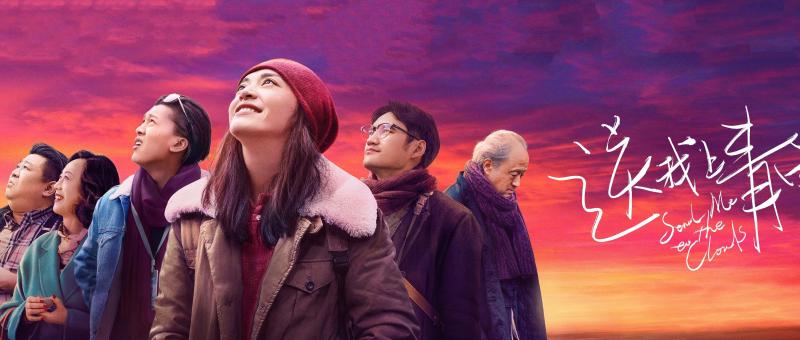
Send Me to the Clouds (送我上青云, Teng Congcong, 2019)

Send me to the clouds posterWomen hold up half the sky, Chairman Mao once said, but in contemporary China sexual equality is an unrealised dream of a previous era. The debut feature from Teng Congcong, Send Me to the Clouds (送我上青云, Sòng Wǒ Shàng Qīngyún) follows one “left-over” woman as she attempts to assert her independence in a world which still expects her to accept her subjugated position in a male dominated society by marrying and subsuming herself within a man’s career.

Ageing investigative journalist Shengnan (Yao Chen) whose name literally means “surpass men” has a cynical eye and fiercely independent nature but is struggling to make a living while protecting her integrity in an increasingly acquisitive culture. Getting kicked in the stomach by a “nutcase” while looking for evidence to support her theory that a local wildfire was started by a politician hoping to capitalise on successfully putting it out forces her to make a long delayed trip to the doctor who tells her that the pain in her abdomen is a result of advanced ovarian cancer and that she needs expensive surgery as quickly as possible.

As she’s been keen to ensure she acts ethically, ready money’s something Shengnan doesn’t have a lot of. Confiding in her cynical, ambitious best friend Simao (Li Jiuxiao) who has no such scruples, Shengnan finds him unwilling to help because, after all, there’s a chance Shengnan might die anyway which would mean it’s a bad investment because she won’t be able to pay him back. He does, however, offer her a job ghostwriting an autobiography for the eccentric father of the local official she was just in the business of exposing for shady double dealing. Understandably she doesn’t want to take the job and decides to try asking her parents without disclosing what the money’s for. Shengnan’s skeevy industrialist father (Shi Qiang), however, is currently losing out in the precarious Chinese economy and actually deigns to ask Shengnan for a loan before she can even broach the subject leading to a spiky father daughter argument. Shengnan has to take the job and throw her lot in with Simao even if she doesn’t feel quite right about it.

Simao cynically affirms that a problem which can be solved with money isn’t a problem, but unlike Shengnan he has no qualms about bowing before power if he feels there’s something to be gained by it. Shengnan nearly blows the gig when she takes offence to the official’s extremely condescending attitude but does after all have little choice given that her life is on the line. Meanwhile, the job is further complicated by the unexpected arrival of her mother (Wu Yufang) who decides to tag along while feeling neglected seeing as her now estranged husband is having yet another affair leaving her entirely alone in a culture which expects women to go back in their boxes until the menfolk want to take them out.

Shengnan and her mother come from very different generations, but in essence not much has changed. Shengnan’s mother married young and had her only daughter at 19 only to see her husband tire of her and the deeply entrenched idea that a woman’s career is a home and family exposed as a fallacy. Shengnan meanwhile was born during China’s reformist period and told that she had total equality only to be frequently criticised for her “manliness” in her desire to assert her independence. On visiting the doctor she displays worryingly little awareness of her health in her confusion regarding the cause of her cancer, stating that her love life ended years ago, but even if she’s quick to roll her eyes at Simao’s insensitive story about a woman who had the surgery and found it ruined her sex drive eventually decides she’d like to have one last hurrah with someone she really likes only to have her proactive stance on female desire rejected as unfeminine.

Yet this hyper capitalistic, intensely sexist environment is also harming men as Shengnan discovers in her unsatisfying encounters both with Simao and with a philosophical photographer she meets on a boat. Shengnan develops an attraction for Guangming (Yuan Hong) because of his softness and seeming desire to see further than others but eventually he disappoints her, trapped as he is by a hierarchal system to which he can offer only token resistance while hating himself for his cowardly complicity. Simao meanwhile has jumped headlong into the consumerist dream, obsessed with getting rich and not particularly caring what he has to do to make that happen.

The most meaningful connection Shengnan makes turns out to be with the subject of her biography, a randy 80-year-old poet (Yang Xinming) who quickly sets about romancing her mother with a series of cryptic text messages. The old man knows his son is a “complete moron” and even changed his name to something bland and commonplace so that the police might arrest someone else by mistake if he got caught while committing a crime, but has a sort of exasperated love for him and for the world that transcends his failing body and worldweary philosophy. Thanks to his refreshing earthiness, Shengnan starts to see a way forward, once again claiming her independence and resolving to live her life in the way she chooses for as long as it lasts while the men around her largely crumble under the weight of social expectations and a rampantly capitalist society.


Send Me to the Clouds  was screened as part of the 2019 London East Asia Film Festival.

International trailer (English subtitles)

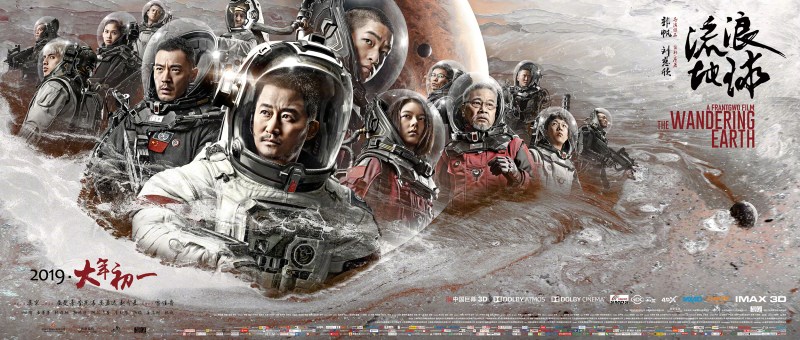
The Wandering Earth (流浪地球, Frant Gwo, 2019)

Wandering Earth poster 5Chinese cinema has not been as averse to science fiction as some would have it, but it’s true enough that The Wandering Earth (流浪地球, Liúlàng Dìqiú) marks a bold new chapter in its ambitious attempt to take Hollywood on at its own game. Adapting the novel by China’s premier sci-fi author Liu Cixin, Frant Gwo’s third feature is an interesting take on the New Year movie in which new beginnings are sought and families desperately try to reunite to see them in, only this time they do so against the backdrop of impending apocalypse as the universe threatens to swallow us whole.

Far in the future, the vast expansion of the sun will soon consume the Earth. The Wandering Earth project aims to save humanity by attaching jet thrusters to the Earth’s surface to push it out of harm’s way yet this safety measure has also had grave effects on the planet’s climate rendering the surface uninhabitable. 17 years previously, astronaut Liu Peiqiang (Wu Jing) left his 4-year-old son behind in the care of his father (Ng Man-tat) to take up a position on the space station intended to safeguard the Earth’s future. Now 21, Liu Qi (Qu Chuxiao) has grown up into a resentful, rebellious young man intent on seeing the surface for himself if only not to be home when Peiqiang finally returns to Earth. A natural disaster, however, leaves him stranded with his adopted teenage sister, Duoduo (Zhao Jinmai), just as the Earth is inconveniently drawn into a fatal collision course with Jupiter.

As much about fatherhood as it is about survival of a species, The Wandering Earth centres itself on the angry figure of Liu Qi who has been forced to live his entire adolescence underground and has come to deeply resent the memory of the father who allowed his sickly mother to die and then abandoned him. Peiqiang, meanwhile, has spent 17 years on the space station solely in order to save his son’s future, dreaming of the day they will finally be reunited. He cares little for his own life and has already spiritually handed the baton on to the next generation whose descendants, he hopes, may finally see a kinder sun rise over a new Earth.

This kind of selflessness is also reflected in the film’s refreshingly globalist outlook in which the world, no longer divided, has learned to act as one in order to combat the extreme threat from its own sun. The resistance may be China led, but depends on common endeavour and personal sacrifice. When a last ditch effort is required, the government cannot order its forces away from their families but can offer them the individual choice to keep fighting for survival, bringing teams from all corners of the Earth together as they descend on Indonesia where there just might be a one in a million chance to strike back at Jupiter and escape its gravitational pull.

Meanwhile, Peiqiang is up still up on the space station all alone and powerless while the annoyingly efficient operating system MOSS attempts to frustrate his efforts to save the Earth in service of its own mission to preserve humanity’s legacy. MOSS has made a series of calculations and given up, but giving up is not a very human trait and Peiqiang won’t do it. He makes impassioned speeches to the French-accented global authorities and ponders the best way to ensure his son’s survival even at the cost of his own but finally can only resist by literally attacking the system in overruling MOSS and acting on his own initiative.

A New Year tale through and through, The Wandering Earth is a celebration of family, togetherness, and home but is careful to dial down the patriotism for an insistence on the importance of mutual cooperation between peoples in order to combat existential threat with the spectre of climate change always on the horizon. The point, however, is that it is important to keep hope alive, if not for yourself then at least for others rather than give in to nihilistic despair. The Wandering Earth, grand and ambitious in scale, marks a new dawn of its own in terms of Chinese blockbuster sci-fi and does so with refreshing positivity as it places its hopes in human solidarity and individual sacrifice over jingoism and self-interest.


Currently available to stream on Netflix in the UK and possibly other territories.

Netflix trailer (English subtitles)
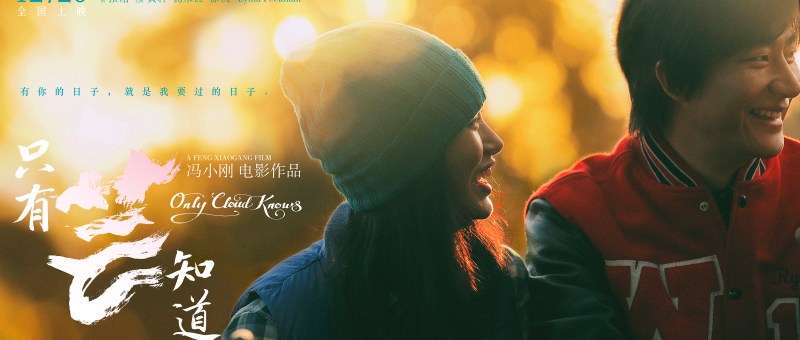
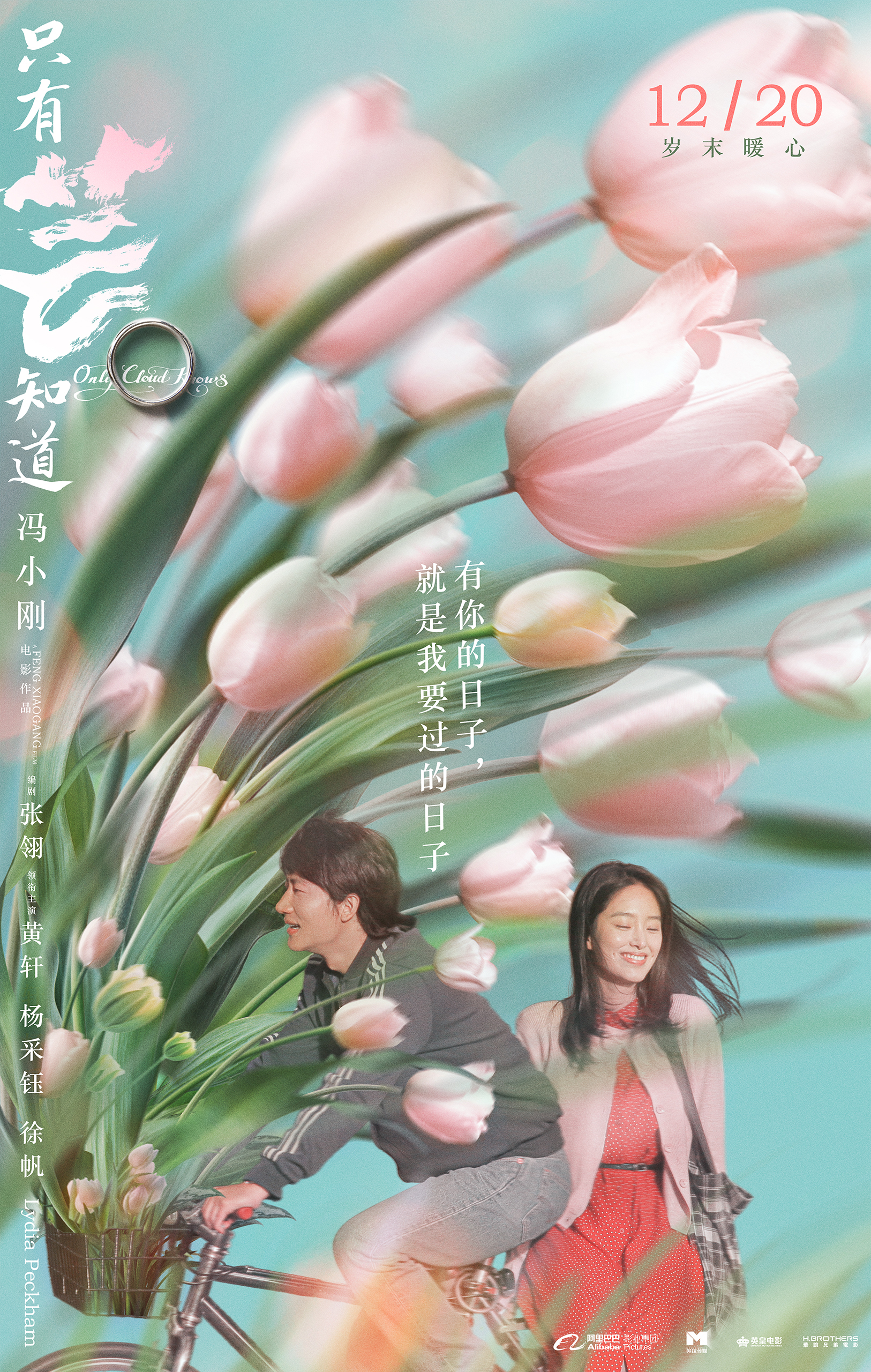
Only Cloud Knows (只有芸知道, Feng Xiaogang, 2019)

930161b9ca654d4cac056b550c6d0542If contemporary Chinese cinema has one message, it’s come home to China. Feng Xiaogang, however, has never been keen to go with the flow for all of his occasionally problematic affection for the nation as it was before the ‘80s reforms. A co-production with New Zealand, unabashed romantic tearjerker Only Cloud Knows (只有芸知道, Z Yǒu Yún Zdào) seems primed to speak directly to the diaspora audience, asking if perhaps the meaning of the word “home” has changed, less place than people and, therefore, infinitely portable.

In the present day, recently widowed Dongfeng/Simon (Huang Xuan) prepares to say goodbye to his late wife, Yun/Jennifer (Yang Caiyu), by travelling back through their long years together facing many ups and downs as they strove to make a life for themselves in the laidback greenery of the New Zealand countryside. Dongfeng travels first to the small town where they started a humble restaurant, cooking the kind of food Westerners expect rather than the authentic Chinese dishes they fear no one will try, and using their English names “for convenience”. While there they employ a friendly waitress, Melinda (Lydia Peckham), who is something of a free spirit saving up money to travel to distant lands, touring Asia and Africa.

Though they are blissfully happy, life is not without its difficulties. Working so hard to make the restaurant a success leaves them with time for little else and wondering if they’ve perhaps lost sight of something important. Dongfeng no longer plays his flute, and Yun worries that he’s sacrificed a part of himself to provide for her, becoming a slightly different person in the process. Obsessed with blue whales, Yun craves protection and security, the kind of things many associate with a building a stable home, but she also yearns for freedom and for something more than ordinary happiness. Minor resentment creeps in born of that central contradiction. Dongfeng wants to give Yun the kind of security he assumes she needs by betting everything on the restaurant, but all she really wants is him.

Nevertheless, protection and security were the things which attracted her to Dongfeng in the first place as symbolised by her obsession with blue whales. Somewhat improbably, his hotheaded decision to start a fight with a man who cut them up in a carpark and then insulted Yun only endears him to her further and also gets him a commendation from a local policeman who even tells him he might be cut out for life on the force, but to ease back on the violence because New Zealand is a peaceful place. There are things, however, that one cannot be protected from and as much as fate gives it also takes away. Yun craves protection because she feels insecure in an existential sense, convinced that she is “unlucky” and originally reluctant to agree to Dongfeng’s proposal in fear that she is destined to make him unhappy.

Sadly, that prediction eventually proves correct though through no fault of her own. Lucky in love, the couple face their share of hardships from an inability to start a family to losing beloved pets and dealing with illness, but there’s no joy without sadness and if your time together is shorter perhaps it is equally sweet. In his opening monologue, Dongfeng muses, quoting poetry, that time moved slower in the past and there was only enough of it to love one person before telling us that his life has been about one woman. Only Cloud Knows is the story of how he learned to say goodbye, but also of a 20-year love that endures to transcend time.

Apparently inspired by the true life love story of one Feng’s friends and collaborators, Only Cloud Knows has a rare kind of authenticity in its deeply felt romance which somehow seems all the more real for its clichéd genesis. Foreshadowings of partings echo throughout, reminding us that all love ends one way or another and it’s the ones left behind who mind it most, but rather than dwell on the maudlin, Feng shows that life goes on even in the midst of heartbreak. Houses change hands, old owners with teary eyes making space for bright-eyed youngsters full of hope for the future, while those who are leaving bequeath their unlived years to those they love with hopeful generosity. What Dongfeng discovers is that home is where the heart is, even if the heart is forever in the past.


Currently on limited release in US/UK cinemas courtesy of China Lion.

Original trailer (English subtitles)