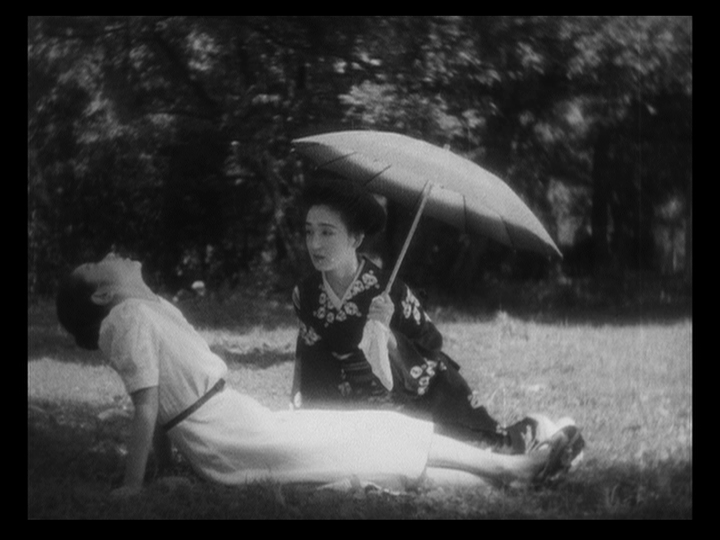
Ornamental Hairpin (簪, Hiroshi Shimizu, 1941)

ornamental hair pinShimizu goes on holiday! Again! Actually, when you think about it going on holiday is always inherently sad because just like everything else holidays end and you have to return to whatever it was that made you want to go on holiday in the place only with the painful reminder that a more cheerful world exists and you’re no longer in it. That rather depressing preamble out of the way, it’s time to join the temporary residents of a small hot springs resort in the picturesque countryside where a mislaid hairpin is about to kickstart a series of mini epiphanies in the diverse collection of guests.

We arrive at the inn in the company of Emi (Kinuyo Tanaka) and her friend Okiku (Hiroko Kawasaki) on a brief visit from the city. The inn is very full right now with a festival in town and everybody seems to want a massage! Another guest, the extremely grumpy professor Katae (Tatsuo Saito), is put out that the tour groups are sapping all the hotel’s resources and complains vociferously to his go partner who is staying at the inn with his two grandsons Jiro and Taro. Other guests at the inn include a mild mannered husband and his wife, Mr. (Shinichi Himori) and Mrs. (Hideko Mimura) Hiroyasu, and a recuperating soldier, Mr. Nanmura  (Chishu Ryu). Eventually the tour groups go home taking Emi and Okiku with them, but Emi discovers she’s left her ornamental hairpin behind and sends a letter offering to pay for the return postage if anyone should find it.

Mr. Nanmura finds it in his foot one day as he’s enjoying the hot springs and even though he’s not that bothered about it, complaining expert Professor Katae can’t make enough of a fuss about the supposedly shoddy conditions at the hotel. When the hotel owners write to Emi and explain to her what’s happened she jumps straight on a train to apologise in person.

Nanmura had actually been quite happy about getting skewered by the pin. He says he found it “poetic”, as if the atmosphere of the place had penetrated deeply into his skin. The supposedly learned Katae doesn’t quite understand the soldier’s poetic leanings and starts debating whether the owner of the pin will be pretty or not, as if that would make a difference to the soldier’s romantic construction of events. Emi is indeed very beautiful, through perhaps a little sad and obviously contrite about the pin. Everyone in the inn is quite invested in witnessing a true love miracle between the bizarrely crippled soldier and the wounded beauty from Tokyo.

Once again the inn is a constructed world, a safe haven far away from the trouble and strife which exists outside it. The guests indulge themselves in the tranquil atmosphere taking in the beautiful scenery and killing time on otherwise trivial pursuits which occasionally include projecting a kind of narrative on their new found friends. The two boys, totally bored by this deliberately unstimulating environment, turn everything into a competition – even cheering on their grandfather as snores along side the equally noisy professor with the result that pretty much no one else is getting any sleep. Later they help the injured soldier recover with a set of endurance games which see him trying to walk unaided from one tree to another and eventually across a bridge.

Further comic relief is provided by the Hiroyasus with the husband being the sort of mild-mannered man who has no idea what he actually thinks so he just goes along with everything everyone says (and later checks with his wife who has the ultimate authority). Hiroyasu often defers to the professor whose authoritative tone gets things done for him though he is in fact an extremely self centred prig who just loves to complain out of a desperate need to be validated. He’s the loudest snorer of all and is keeping everyone awake yet he constantly complains about the noise of the other guests and is quick to shout at the inn keeper when he can’t get a massage because they’ve been booked by the visiting tour groups the very presence of which also annoys him. Eventually he gets so grumpy he just goes home which is probably a win/win for everyone.

But what of Emi herself? She too is escaping from something. The loss of the ornamental hair pin and its rediscovery leading her to the inn and perhaps to Nanmura has pushed her into a further consideration of her life in Tokyo. She doesn’t want to go back, this brief respite has been too pleasant and she wishes it could go on like this forever, though she knows, of course, that it can’t. She doesn’t know what she’s going to do now, but at least while she stops at the inn the sun will light the way. This is 1941, Nanmura will probably be going back to the war, the future is uncertain for everyone, but in here everything is beautiful, calm, safe. It’s just a shame it can’t last.


Ornamental Hairpin (簪, Kanzashi) is the fourth and final film in Criterion’s Eclipse Series 15: Travels with Hiroshi Shimizu box set.

Clip of one of Nanmura’s “trials” (no subtitles):
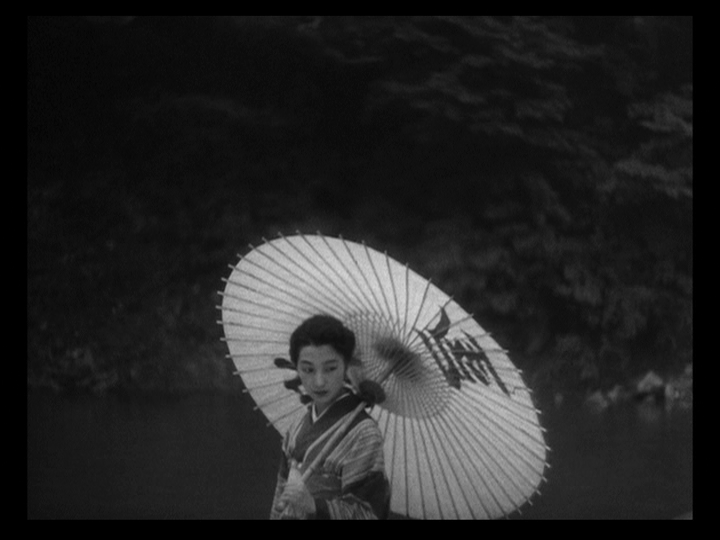
https://www.youtube.com/watch?v=WojtILzbaBk

The Masseurs and a Woman (按摩と女, Hiroshi Shimizu, 1938)

vlcsnap-2016-05-19-23h22m51s149Hiroshi Shimizu takes another relaxing sojourn in 1938’s The Masseurs and a Woman (按摩と女, Anma to Onna), this time in a small mountain resort populated by runaways and bullish student hikers. Once again Shimizu follows an atypical narrative structure which begins with the two blind masseurs of the title and the elegant lady from Tokyo but quickly broadens out to investigate the transient hotel environment with even a little crime based intrigue added to the mix.

We arrive at the resort town at the same time as the masseurs themselves who’ve walked all the way passing the time playing games with each other over who can guess how many children are in a group travelling the same way or counting how many people they manage to overtake on the road. Comically, their efforts to pass a group of students actually frighten them a little bit so they take off at speed meaning Fuku and Toku miss their daily target.

As well as the group of male students and another group of female ones, the town is also host to a mysterious and beautiful woman from Tokyo who seems both a little sad and a little scared with a tendency to overreact to small sounds and unusual situations. The other main group is a little boy and his uncle with whom he seems to have something of a troubled relationship.

Toku becomes fascinated with Michiho, the mysterious woman from Tokyo, whom he recognises because of her distinctive perfume. Though he is blind, he “watches” her – sensing where she goes and reading her emotional state. He seems to realise there’s very little possibility that she will return his interest, though he allows her to play on the obvious feelings he has for her, and the pair strike up a melancholic friendship. However, Michiho is only interested in making a play for the good looking uncle of the little boy who she has also befriended but the boy eventually goes cold on her, feeling a little rejected because she spends so long talking to his uncle. The two neglected guys, Toku and the boy, form their own kind of friendship as the blind masseur is the only person who is willing to have some fun with him in this slightly less than child friendly resort in which he’s unspeakably bored.

This being a holiday town, it’s a place that only exists for a small amount of time before sinking back into the mists like Brigadoon when the season ends. All things are transient here and everyone is just passing through. The friends you make are just for now and this brief respite from everyday life will fade from the memory like a pleasant dream. Toku ought to know this as he spends his life in such places, providing additional relief for the weary traveller, yet he still has a yearning to connect which is only exacerbated by the feeling that his blindness cuts him off from everyday society.

When a spate of bath house thefts occur and it turns out Michiho has been seen at each of the crime scenes, Toku comes to the obvious conclusion even though his feelings make him reluctant to suspect her. He tries to help Michiho evade punishment for what he believes are her crimes only to find out a very different sort of truth that sees her eventually decide to continue her journey onward to an uncertain future (though at least one that is 100% of her own devising).

Again, Shimizu opts for a lot of location shooting emphasising the beauty of the scenery and the tranquility of the atmosphere. Mostly he sticks to static camera shots, aside from one lengthly tracking sequence and the hand held finale walking after a departing cart, but when he tries to show us the vision of a blind man it’s a striking moment – a whirling chaos where we too can almost smell the elusive perfume of a woman we know is “beautiful”  though we cannot see her, and also know is deliberately toying with us. A melancholy look at the transience of human relationships and the impossibility of true connection, The Masseurs and a Woman is a genre melding tragicomedy filled with innovative directorial flourishes that are once again far in advance of their time.


The Masseurs and a Woman is the third of four films in Criterion’s Eclipse Series 15: Travels with Hiroshi Shimizu box set.

This is the only video clip I can find but it’s not subtitled and it has quite a long speech about Hiroshi Shimizu’s career at the beginning so skip to 2:17 for the film itself:

Mr. Thank You (有りがとうさん, Hiroshi Shimizu, 1936)

Mr. Thank YouBus trips might be much less painful if only the drivers were all as kind as Mr. Thank You and the passengers as generous of spirit as the put upon rural folk travelling to the big city in Hiroshi Shimizu’s 1936 road trip (有りがとうさん, Arigatou-san). Set in depression era Japan and inspired by a story by Yasunari Kawabata, Mr. Thank You has its share of sorrows but like its cast of down to earth country folk, smiles broadly even through the bleakest of circumstances.

Mr. Thank You is everyone’s favourite bus driver. In fact, some of his passengers have even deliberately decided to “miss” the previous bus because they heard he was driving the next one. It’s not hard to see why, he’s a good a driver and a very polite, nice young man who’s been given the affectionate “Mr. Thank You” nickname because of his habit of shouting a loud thank you to everyone who moves out of the way for his bus to pass in the narrow mountain roads (the aforementioned pedestrians are also to be seen waving wildly and shouting his nickname back at him as he grins at them in the rear view mirror). He’s also prepared to stop and pick up passengers along the way as well as carrying messages between villages and filling requests for the latest records to hit Tokyo stores.

Mr. Thank You was apparently shot without a firm shooting script other than the inspiration of Kawabata’s story so the dialogue has a very immediate, contemporary feeling. There isn’t so much of a story as a journey taken with this disparate group of people all travelling from one place to another for various different reasons with the small interjections of other passersby on the roadside. The main drama occurs between a woman and her daughter who have such ashen faces they might as well be ascending the gallows, a very modern whiskey swilling travelling woman, and a grumpy guy with a handlebar moustache who seems very anxious about the bus being delayed by all these pleasantries. Along the way, Mr. Thank You offers commentary on some of the people he knows from his regular trips which amounts to a collection of sad stories decrying the state of the nation in which fathers are selling their daughters and mad men wander the streets searching for lost love.

“Young women used to laugh, but you never hear that now.” Says one passenger glancing at the sad face of a girl on a bus to the city. The mother and daughter seem reluctant to talk about their journey but it’s obvious to all that the girl is to be sold to a geisha house, never to see her home again. Mr. Thank You is sympathetic to her plight whilst silently listening to the lamentations of his customers like a sober barman. At one point he wonders out loud if he might be better off driving a hearse – acknowledging his own complicity in taking money for escorting this poor girl off to a life of rack and ruin. The flirtatious modern woman sitting behind him (most likely a prostitute herself) reminds him that women who pass these mountains rarely make a return journey, perhaps there is another way he could help her even if he can’t do the same for everyone.

Shimizu also stops a minute to consider the human costs of all this rapid progress. Taking a brief break from driving, Mr. Thank You chats to an acquaintance who has been working on the road building programme. A Korean migrant, she is among the most put upon of workers. She hoped she might have enough money to ride on Mr. Thank You’s bus just the once, but no sooner has one road been completed than she’s despatched off to build another one on another mountain so she’ll have to bid him goodbye. Mr. Thank You (seemingly quite taken with her and sorry to hear they may not meet again) offers to let her ride for free but she looks back at the masses of other people who are walking the mountain passes because they can’t afford the bus either and says it’s OK, she will stay with them, walking onward with everyone else caught in the same predicament as herself.

Filmed in 1936 Mr. Thank You has an extremely modern sensibility with a lot of naturalistic location shooting outside of the cramped environment of the bus which forms the main setting for the drama. The bus drives onward without stopping as obstacles fade from view only to reappear in the rear view mirror like ghosts, phantom images reflected on the landscape here one minute and gone the next. Time and history are marching on though one gets the impression Shimizu at least does not approve of the way his country is heading. The passengers on Mr. Thank You’s bus all have their troubles, but they’re trying to do the best they can by putting a brave face on it. They laugh, they drink, they sing but eventually they will all have to get off the bus, away from the careful protection of Mr. Thank You, and return to land of badgers and foxes where it’s every man for himself and those who cannot pay the fare will have to walk the rest of the way on their own two feet alone.


Mr. Thank You is the second of four films in Criterion’s Eclipse Series 15: Travels with Hiroshi Shimizu box set.

Scene featuring the Korean migrant worker (with English subtitles)

Japanese Girls at the Harbor (港の日本娘, Hiroshi Shimizu, 1933)

japanese girls at the harbourHiroshi Shimizu made over 160 films during his relatively short career but though many of them are hugely influential critically acclaimed movies, his name has never quite reached the levels of international renown acheived by his contemporaries Ozu, Naruse, or Mizoguchi. Early silent effort Japanese Girls at the Harbor (港の日本娘, Minato no Nihon Musume) displays his trademark interest in the lives of everyday people but also demonstrates a directing style and international interest that were each way ahead of their time.
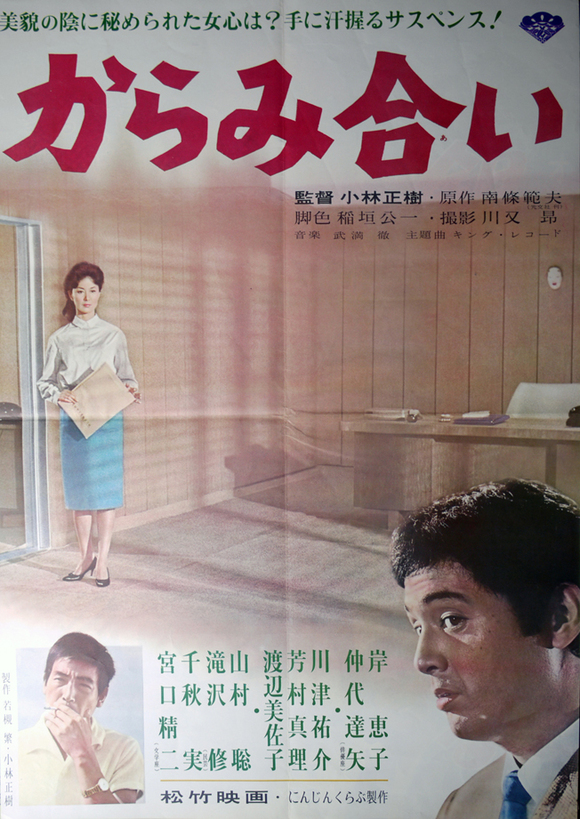
A classic melodrama at heart, Japanese Girls at the Harbor begins with two school girls living their humdrum lives of commuting back and for to school in early 1930s Yokohama. Dora and Sunako attend a Catholic school in the “foreign quarter” of the city and are devoted best friends who swear they’ll stick together for ever. However, motorcycle riding bad boy Henry rips right through their friendship in the way that only a bad boy can. Sunako abandons Dora at the harbour to ride off with Henry (later apologising to her understanding friend) but it turns out that Henry likes hanging round with gangsters and also has something going with an older lady called Yoko.

Dora tells Sunako if she really loves Henry she’ll just have to accept him for what he is before going off to find the cheating louse herself and give him a piece of her mind. However, when Sunako catches Henry and Yoko together she loses the plot entirely and ends up running off out of the city. Time passes and Sunako returns but in shame as she’s become a prostitute living with a painter whom she doesn’t seem to care for very much at all. Can she repair the damage with the now married Dora and Henry and get herself out of the hell her existence has become, or is she forever doomed to the life of a fallen woman?

Made in 1933 just as Japan was heading into its militarist era, Japanese Girls at the Harbour has an oddly international mindset with its Western houses, names and a Christianising atmosphere. An international port, there’s plenty of the outside world to be found in Yokohama where things seem to leave much more often then they arrive. Sunako says watching the boats leave makes her feel sad, but it’s she who will go off on one of Shimizu’s trademark travels, running from a crime of passion and the ache of a breaking heart.

A true friend, Dora has not abandoned Sunako and is willing to welcome her back into her home. Henry, the first to meet Sunako (at her place of employ) is torn between the old attraction, feelings of guilt over what’s happened to her, and his responsibility to Dora as her husband. Shimizu introduces an interesting metaphorical device as Henry and Dora wind a ball of wool whilst sitting together in their Western style house but as soon as Sunako arrives it falls onto the floor and begins to unravel, eventually becoming tangled up around the feet of Henry and Sunako who dance in the living room while Dora prepares a meal. Suddenly seeing her married life unravel just like this shaggy ball of wool, Dora, though still devoted to her friend, begins to feel a little afraid that Sunako may be about to jump back on the bike with Henry, just as she did all those years ago.

Shimizu’s interest is much more with the two young women than it is with Henry who remains very much a prize not worth winning. This is Sunako’s fallen woman story – eventually she comes to feel that she’s bringing too much disruption into the lives of her old friends who were getting on so well before. Henry and Dora were her last lifeline to her old self, the only old friends she could still count on, but if she wants to save them (and herself) she will have to stay away and lose them forever. Her redemption lies in self sacrifice, in giving up something that made her profoundly happy for its own good despite the immense amount of suffering she will incur in doing so.

Shimizu was one of the earliest proponents of location shooting and he does make good use of the atmospheric Yokohama streets before heading indoors for the seedy, smoky clubs and cheap tenement housing. He also introduces a series of strange jump zooms at two moments of unusually high emotion which add a degree of panic to the scene as well as heightening the nuanced reactions of the characters in question. This, coupled with his use of dissolves which often sees characters simply evaporate from the frame like unwelcome ghosts of memory, lends to the almost noir-ish, melancholic tone with its dream-like blurring of the real and the merely recalled.

An interesting example of international cross pollination in the early 1930s before hard line militarism became entrenched, Japanese Girls at the Harbor is a pregnantly titled story of a wronged woman abandoned on the shore and left with the choice to board a boat to fairer climes or remain behind and risk destroying what she most loved. The past becomes something to be absorbed and then put to rest. Ghosts cannot travel by water, and so you must leave them behind, like girls at the harbour staring sadly at departing ships.


Japanese Girls at the Harbor is the first of four films in Criterion’s Eclipse Series 15: Travels with Hiroshi Shimizu box set.

Video clip of a climactic scene which showcases Shimuzu’s jump zoom technique (presented without musical score but does have subtitles for the really quite amazing intertitles which are a definite highlight of the film).

(Video clip courtesy of Mubi)

The Inheritance (からみ合い, Masaki Kobayashi, 1962)

the inheritance Japanese posterKobayashi’s first film after completing his magnum opus, The Human Condition trilogy, The Inheritance (からみ合い, Karami-ai) returns him to contemporary Japan where, once again, he finds only greed and betrayal. With all the trappings of a noir thriller mixed with a middle class melodrama of unhappy marriages and wasted lives, The Inheritance is yet another exposé of the futility of lusting after material wealth.
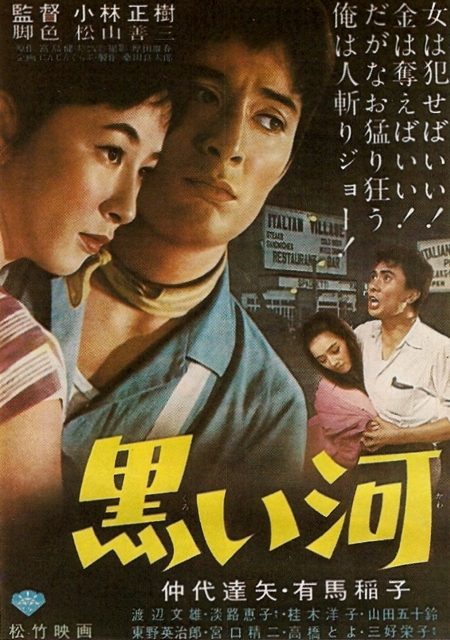
The film begins in a framing sequence in which Yasuko, an elegant woman dressed in a fashionable outfit, sunglasses and large black hat, is aimlessly window shopping when she encounters a familiar face she’d no desire to see ever again. The pair head for coffee with Yasuko lamenting that her pleasant afternoon has been ruined by the necessity of spending time with this “unpleasant” man. We then flashback to some time previously when Yasuko was just a poor secretary working for a top executive and lamenting over her sad life in her “concrete coffin” of a tiny apartment. When her boss discovers he has a terminal illness he makes a surprising declaration – he isn’t going to leave all of his money to his wife. The law says she has to get a third so she will, but the couple had no legitimate children and Kawara wants an heir. Apparently, he has three illegitimate children with whom he did not keep in contact so he intends to find these young people of differing ages and divide the money between them. As you can imagine, this news pleases no one and it’s not long before everyone is scheming how they can manipulate the situation to grab some of the money for themselves.

Shot this time in 2.40:1, The Inheritance has a slightly more whimsical air than some of Kobayashi’s other efforts. Aided by Toru Takemitsu’s jazz infused score, there’s a feeling of a chaotic, black farce lurking below the surface as the complicated schemes and counter schemes play off against each other all while an old man lies dying and largely, it seems, alone. In fact, the dying man himself is relegated to little more than a plot element, a physical countdown to the zero hour of his death and the release of his funds. Though charged with the task of tracking down these, until now forgotten, offspring, Kawara’s underlings immediately start thinking about the best way to spin their assignments. Maybe it’s better if they just can’t find the kids, or maybe if they find them and manipulate them into a more beneficial course of events. The only thing that matters is sticking to the course of action which is most likely to bring them into contact with the money.

The children themselves? Well, they’ve not turned out quite the way Kawara might have hoped. He stated that they’d only get the money if he finds out that they’re honest, decent, right living people. However, the oldest, a son, is a delinquent college student who likely wouldn’t be able to cope with receiving a sudden large lump sum of money so he’s out. The middle daughter is a nude model living a lifestyle Kawara would most likely regard as “immoral” so she will require some “fixing” if her side is to prevail. The youngest child, a seven year old daughter, has sadly passed away after being adopted in another town. However, the enterprising wife and her paramour have an ace up their sleeve in the form of another child they can substitute in her place. This child is quiet, well behaved and in all an ideal candidate for Kawara’s money (if only she actually were his daughter).

Our story is being recounted by Yasuko, so how does she fit into all of this? Commentator, heroine, perpetrator? We can guess a little of what must have happened from her appearance in the later framing sequence with which the film began. Though apparently wealthy, this Yasuko doesn’t seem particularly happy (even bar her unwanted reunion with Kawara’s lawyer). After being entrusted with the task of tracking down the oldest son who then develops a crush on her, Yasuko finds herself ensconced in Kawara’s household and eventually becoming his mistress. The affair begins with a quasi-rape after which Yasuko receives a large amount of money in a white envelope – an offering which repeats itself after each encounter with Kawara. At first she tries to pretend there was something more to it but eventually admits she got used to taking the money. Though she later tries to refuse Kawara’s offering, the corruption has already set in.

Recounted in a world weary tone by Yasuko, The Inheritance is another, though less abrasive, look at greed and lack of moral authority. Kawara is dying and perhaps regrets his devotion to his career rather than something with a greater legacy. However, he evidently showed no interest in his children before and has no real desire to meet and have a relationship with them before it’s too late – he simply wants an heir. His marriage turns out to be mostly physical convenience and even his wife is not so broken up about his illness so much as irritated to have sacrificed the last seven years and only receive a third of what she assumed would all be hers. The underlings scheme amongst themselves and unwittingly open a door for a challenger nobody expected. In some ways, from our point of view, the “right” person won but this was a game that had no right to be played. A sordid farce of squabbling over a dying man’s estate and for what, in the end? A fancy hat? Kobayashi doesn’t push as hard here as he has before, this time he casts veniality as black comedy rather than a social evil but still the lesson is clear, in most cases avarice will get you nowhere and even if you play the slow game and win you may not like where it takes you.


The Inheritance is the fourth and final of the early films from Masaki Kobayashi available in Criterion’s Eclipse Series 38: Masaki Kobayashi Against the System DVD boxset.


Black River (黒い河, Masaki Kobayashi, 1957)

20140731_762128Masaki Kobayashi is still not enamoured with the new Japan by the time he comes to make Black River (黒い河, Kuroi Kawa) in 1957 which proves his most raw and cynical take on contemporary society to date. Set in a small, rundown backwater filled with the desperate and hopeless, Black River is a tale of ruined innocence, opportunistic fury and a nation losing its way.
The tale begins as a poor student, Nishida, moves into a rundown tenement owned by a tyrannous landlady who collects rent payments as if drinking in souls. Nishida looks around his new abode with a depressed air as the landlady advises him that he can always clean the place up. The vast majority of his possessions are books and the studious Nishida quickly sets himself apart from the ordinary working class denizens of this forsaken place to whom he clearly feels himself superior. However, he does take a liking to a local waitress. This too is destined to go wrong as when Shizuko visits him late after work one night hoping to borrow a book, she is grabbed by a gang of guys who attempt to assault her. Another man turns up and disrupts them but it quickly transpires that the whole thing is a ruse set up by the local gangster, Killer Joe, who then rapes her himself.

The modern, jazz inspired score and classic love triangle plot are almost a seishun eiga cliché but Kobayashi is only partly interested in the central trio with the ruined girl at its core. Casting the net wider, he’s interested in each of the wretched people that live in this place which is on the fringes of an American military base. From the obvious and blatant pan pan girls to the secret prostitutes and black marketeers, the American military has become a disruptive force in the area offering the weak minded easy, if dishonest, ways of living. That is to say, the problem is not “the Americans” or “the occupation” so much as it is the society which is allowing itself to become corrupted by Western values.

In this place, it’s everyman for himself. One of the community is ill, probably with tuberculosis. At one point he’s in desperate need of a blood transfusion so the wife hysterically asks everyone else if they have a matching blood type which they all deny (some of them obviously lying). Nishida admits he has a match, but outright refuses his blood despite the fact that this man will likely die without it. This doesn’t matter however because someone remembers the wife herself is a match but even she did not want to volunteer her own blood to save the life of her husband. Later when he is rushed to hospital she will delay his departure trying to take all their worldly goods with them in case the husband dies and his relatives turn up to claim everything.

The landlady has hatched a plot with Killer Joe (played by a young Tatsuya Nakadai in his first film role) to evict the tenants, knock the place down and build a love hotel catering to the American troops. They have a small problem as a committed communist lives in the building and refuses to move – he also tries to organise some community action where he tries to get them to club together to reduce energy costs as the local American base doesn’t pay their bills and the community has to foot the bill for the entire area. Nobody really cares though and no one wants to pay.

Killer Joe plays the tough guy in swanky clothes and sunglasses but his authority is hollow and really he’s just a scared little boy. He rapes Shizuko because he’s too lazy and frightened to bother about doing things in the more conventional way. She, for herself, is too pure to consider herself anything other than ruined by her traumatic experience and immediately petitions Joe to marry her (he, predictably, laughs and offers to let her move in with him). She’s disgusted with herself but is completely in thrall to Joe, both attracted and repelled by him. Gone are her demure outfits and white parasol, in with the dark, figure hugging dresses with exposed shoulders, loose hair and pretty pearl earrings. Her love for Nishida is the one aspect of her former self that she clings to as a way of keeping her innocence alive. Eventually she decides the only way to reclaim her honour and be free of Joe is to kill him and kill the new self born in her by his violence.

Innocence, once lost, is not something which can ever be truly regained. Nishida makes the typically male decision and is saved from his folly by a typically female one, but the ending here can never be anything other than tragic for all involved. It’s the usual B-movie conclusion, leaving only a lonely white parasol lying abandoned on the road to ruin. The message is clear, the world is cruel because we allow it to be and that is a fact that is unlikely to change.


Black River is the third of four early films from Masaki Kobayashi available in Criterion’s Eclipse Series 38: Masaki Kobayashi Against the System DVD boxset.

Here’s a scene from about half way through the movie:


I Will Buy You (あなた買います, Masaki Kobayashi, 1956)

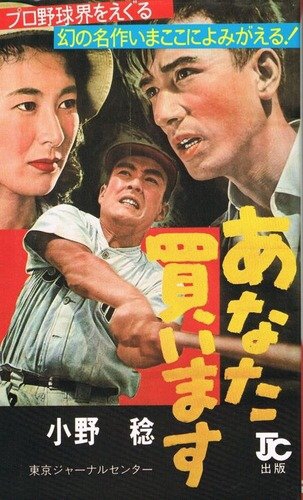
20140731_762129In I will Buy You (あなた買います, Anata Kaimasu, a provocative title if there ever was one), Kobayashi may have moved away from directly referencing the war but he’s still far from happy with the state of his nation. Taking what should be a light hearted topic of a much loved sport which is assumed to bring joy and happiness to a hard working nation, I Will Buy You exposes the veniality not only of the baseball industry but by implication the society as a whole.

Kishimoto works as a scout for a popular Tokyo baseball team. His job is to find the promising young players and charm them into accepting a contract before any of the other teams get to them. His first assignment doesn’t go well when he arrives at an ace pitcher’s home only to be told the subject in question is recovering from having lost a finger in a workplace accident. No major league career for him – Kishimoto heads home without even introducing himself. The next prospect is very exciting – a semi-well known college ball player who might be persuaded to turn pro. However, the student, Kurita, is “managed” by a benefactor, Kyuki (whose name literally means “ball spirit” in Japanese) who seems to be a difficult man to deal with. Nevertheless, Kishimoto is young, ambitious and determined to get Kurita on side by any means possible.

It’s just baseball, one might think but it’s almost as if we’re playing for souls. Everyone is lying, everyone is double crossing everybody else and everyone has their own interests at heart all the while swearing they only want the best for Kurita. Kurita has become a trophy, no one has even thought to ask him if he actually wants to keep playing baseball. He’s no no longer a person for them so much as a flag to be captured. This might actually work out quite well for Kurita himself who, it turns out, is far from the country bumpkin everyone has him pegged as. Though surrounded by carping relatives who are also all intent on exploiting his talent, the possibility of Kurita suddenly discovering the power to make his own decisions is a threat to everyone that they haven’t even considered yet.

Kyuki himself is the bad guy we’ve all been set up to be suspicious of but may actually turn out to be the most decent hustler in the picture. They say he spied for the Chinese during the war but is it a rumour you can really believe or just the jealous slurs of his various rivals? He himself says he taught Chinese girls to use the bayonet and carries an air of aloofness that makes him seem untrustworthy. He’s bankrolled Kurita’s education and taken on the position of a father to him over the last four years but how much of that is genuine feeling and how much financial investment? Kyuki is a married father with a family out of town but is sort of living with the older sister of Kurita’s girlfriend which is an awkward situation in itself. He also claims to have a serious gallstone problem which requires an operation though others claim he’s putting it on. Who is Kyuki, with his suspiciously apt name and hard nosed attitude can we trust him, or not?

I Will Buy You is a characteristically angry and cynical effort from Kobayashi and though it’s still a fairly early work carries some of his later technical prowess. Stripping the mask away from what is assumed to be a gentle pastime, the film lays bare the money hungry desperation of post-war Japan. Money ruins everything, even something as innocent as baseball. The Kurita from the end of the film is not the idealistic young student who came to Tokyo but a canny self-interested individual. Whether or not this transformation, and the accompanying transformation of Kishimoto whose eyes have been well and truly opened, is for the better or not maybe a matter of personal perspective but it’s not hard to guess where Kobayashi stands.


I Will Buy You is the second of four early films from Masaki Kobayashi available in Criterion’s Eclipse Series 38: Masaki Kobayashi Against the System DVD boxset.


The Thick-Walled Room (壁あつき部屋, Masaki Kobayashi, 1956)

4473285465_b5cf3a248fThere’s a persistent myth that Japanese cinema avoids talking about the war directly and only addresses the war part of post-war malaise obliquely but if you look at the cinema of the early ‘50s immediately after the end of the occupation this is not the case at all. Though the strict censorship measures in place during the occupation often made referring to the war itself, the rise of militarism in the ‘30s or the American presence after the war’s end impossible, once these measures were relaxed a number of film directors who had direct experience with the conflict began to address what they felt about modern Japan. One of these directors was Masaki Kobayashi whose trilogy, The Human Condition, would come to be the best example of these films. This early effort, The Thick-Walled Room (壁あつき部屋, Kabe Atsuki Heya), scripted by Kobo Abe is one of the first attempts to tell the story of the men who’d returned from overseas bringing a troubled legacy with them.
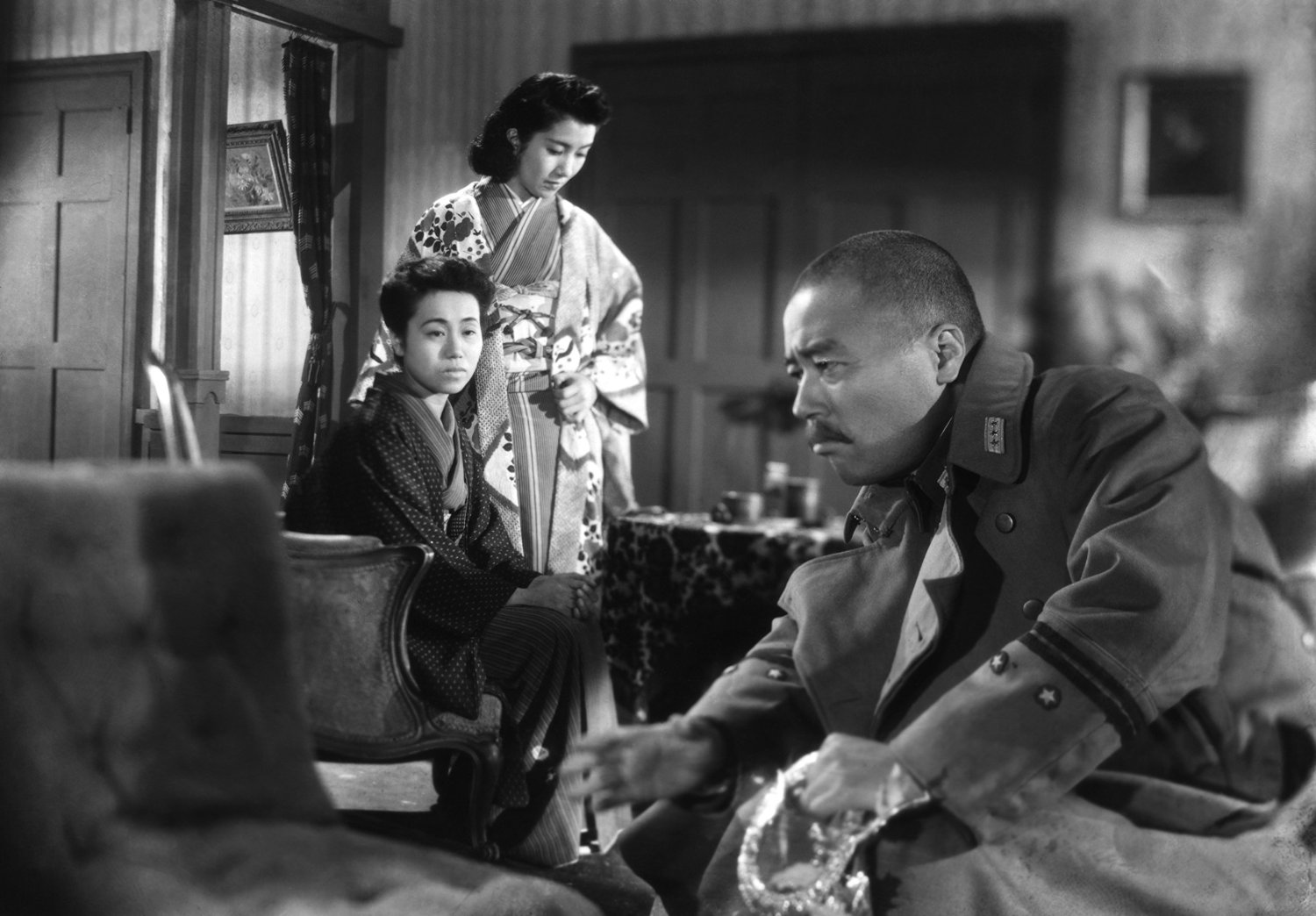
The Thick-Walled Room is set inside an American detention centre for soldiers who have been declared B or C class war criminals. In essence, these are the rank and file men who were “just following orders” or committed random acts of desperation because they believed it was necessary to survive. The men are kept fairly well in the prison, they aren’t treated cruelly though they are sent for forced labour in a stone quarry. The main protagonist of the story, Yamashita, insists on maintaining a beard as a form of mini rebellion (quipping that he’s trying to grow a rope to hang himself). He feels betrayed by a superior officer,  who ordered him to commit an atrocity and then cut some kind of deal to deny it afterwards and get off scot free – he returned to Yamashita’s home town, has married and is lording it over Yamashita’s own family as some kind of devious landlord.

The others in the cell include a young romantic dreaming of a girl he met in the war who, it turns out, has long forgotten him and is now living in the pleasure quarters. The film also doesn’t shy away from the other implications of the war with a Korean soldier also among the detained who laments what’s happening both to the country of his birth which is now once again at war and his adopted country tearing itself apart in guilt and defeat. When asked whether he’s from North or South Korea the soldier hesitates, perhaps offended by the question, and simply replies “I am Korean” before walking off. Others dream of home and wives and families and this whole thing being over. However, they’re all at the mercy of two governments – the Americans and the Japanese and though they believe they may finally be released when the treaty is signed, it’s never that simple.

Masaki Kobayashi begins the themes he would return to over and over again – the depths of human cruelty, repression, indifference, vengeance. These are man who risked their lives for a god only to find he was a man and nothing more. They’ve come back alive, but different. Not only must they deal with the shame of defeat and now being prisoners of their enemies but also with entire war guilt of a nation. These are just the little guys, they did as they were told even if they didn’t want to or they killed and stole to survive. They have done terrible things to those who had no role in the conflict, this is not in dispute, and they pay a heavy spiritual toll for those actions. The people who ordered and orchestrated these deliberate reigns of terror, however, have largely escaped or lied and cheated their way out of the hangman’s noose.

Kobayashi uses a lot of expressionist techniques more reminiscent of silent cinema than of the more recent films of the era. Whilst the men are inside the cell there is nothing outside it, the war still exists in here and in their minds. We start off leaning on the walls of the cell only to find ourselves thrown back into the heat of the jungle and finally thrown out again after encountering our dramatic event. The faces of the dead pass in montages across the screen crying “murderer” and “war criminal” in a constant vision of recrimination. Even if they are eventually released, these men will be in prison for the rest of their lives.

In fact, the film was so controversial that the release was held back until 1956 even though the American occupation was technically over before it was completed. Though it isn’t the most accomplished of Kobayashi’s films, The Thick-Walled Room includes many of the ideas and motifs that he would return to throughout his career. Kobayashi wants us to see things as they are and were from all angles. He sympathises with these men but doesn’t excuse what they or the nation as a whole has done, as he would continue to do he seeks a way forward that acknowledges the past but will bring us to a more compassionate future.


The Thick-Walled Room is the first of four early films from Masaki Kobayashi available in Criterion’s Eclipse Series 38: Masaki Kobayashi Against the System DVD boxset.


Morning for the Osone Family 大曾根家の朝 (Keisuke Kinoshita, 1946)

81avzyD41gL._SL1500_So, after making the subtly subversive Army, Kinoshita found himself persona non grata but all that changed with Japan’s final surrender and the coming of the Americans. You might think that means an end to the system of censorship and a greater freedom of expression but the truth is one master had simply been swapped for another. The Americans now imposed their own censor’s office and banned the depiction of various dangerous or inconvenient ideas including anything xenophobic, militaristic or anti-democratic. In short, the complete reverse of before but perhaps no less restrictive. However, the new requirements were undeniably closer to Kinoshita’s true feelings so there were fewer problems when it came to getting a film made. Accordingly Kinoshita began working on Morning for the Osone Family soon after the surrender and the film was released in 1946. Extremely raw and probing, the film deals with the effects of the war on a well to do, liberal intellectual family but turns their plight into a metaphor for the country as a whole.

The film begins in the Christmas of 1943 as the Osones gather together around the piano for a rendition of Silent Night as they prepare to say goodbye to the daughter’s fiancé who’s been drafted and will shortly be leaving for the war. The celebration is short lived as their peace is shattered by an ominous knock at the door. Oldest son Ichiro is carted off by military police for having written a mildly subversive essay in a newspaper. Whilst all this is going on Yuko’s fiancé, Akira, takes his leave handing her a letter to say she needn’t wait for him with the future so uncertain. It’s at this point that meddling fascist uncle first appears to reveal he has written to Akira’s family to break off the engagement because they are of a high status and with Yuko’s brother’s arrest he feels it’s inappropriate to bring them shame. As the war drags on, Uncle Issei comes to have more and more control over their lives but will the progressive atmosphere of the Osone household ever be able to withstand the bluster of Uncle Issei’s militaristic fervour?

Made immediately after the war, Morning for the Osone Family is filled with the bitterness and anger of disillusionment. Coloured by the knowledge of Japan’s impending defeat, the events can’t help but take on a portentous air and it’s pretty obvious the Osone family will never be able to return to that final Christmas in 1943 before everything was taken away from them. The obnoxious Uncle Issei becomes a metaphor for Japanese fascism as a whole with his heartless militarism and personal corruption. During one telling episode, Yuko remarks that the more they simply obey him the worse he’ll get and that they should stand up to him every now and then. The mother, Fusako, agrees but thinks it’s impossible. Later, in a last impassioned speech, she laments that she should have done more, said no earlier, but she tried to do what was expected of her. Fusako voices the rage and disappointment of the masses of ordinary people who went along with things they didn’t agree with because they felt it was the proper thing to do. Now she sees no need for the pretence, in this brave new world it’s time for the younger generation to do as they see fit without feeling beholden to these corrupt ideas peddled by those who claim to speak for everyone but have only ever been speaking for themselves.

Oddly, Morning for the Osone Family may have the most overtly propagandistic feeling of any of the films in Criterion’s Kinoshita and World War II boxset. Though it ends on an undeniably powerful declaration of hope for renewal and rebirth, its epilogue feels like a step too far – both hollow and needlessly over the top. Apparently this final scene was added at the behest of the Americans who wanted more deliberately democratic sentiments which may explain its on the nose tone though it isn’t entirely out of keeping with the rest of the film and most likely represents Kinoshita’s real feelings. Morning has arrived after a long night filled with pain and sorrow, all that remains now is to banish the darkness and welcome in the light.

Army 陸軍 (Keisuke Kinoshita, 1944)

Dem-3 Photo. Helene Jeanbrau © 1996 cine-tamaris.tif

With a name like “Army”, you’d expect this to be a stridently propagandistic film about brave men fighting for their countries – some of whom will likely fall but will cover their families in eternal glory through their selfless sacrifice. Those are certainly the ideas behind Kinoshita’s 1944 film, the last film he’d be permitted to make before the war’s end, however any lingering feelings of pro-militaristic ardor are completely undercut by the film’s near silent closing moments.

Like The Living Magoroku, we begin in another historical era – one just as turbulent as the contemporary action. As people flee burning houses at the dawn of the Meiji era, a father and son shelter a wounded samurai who gifts them a set of historical encyclopaedias. Despite the changing times, the father is convinced a man’s highest duty is to his country and makes a deathbed plea that his son Tomohiko become a fine soldier. Tomohiko tries his best, as an infantry Captain through the several of Japan’s international conflicts of the early 20th century he’s certainly had ample opportunity to distinguish himself. However, luck is not on Tomohiko’s side as minor injuries, illness or simply failing to be selected have kept him safely away from the front lines. Eventually invalided out, Tomohiko tries to make a go of civilian life, finally ending up trying to run a pawn shop (before realising he’s not good at that either and leaving the heavy lifting to his more capable wife). Still convinced of the wisdom of his father’s philosophy, Tomohiko pushes his wishes for military glory onto his oldest son – the equally weedy Shintaro whose slight frame and kindly nature don’t exactly point to a future Field Marshall. Japan needs soldiers though, it’s time for every man and boy to stand up to defend her!

Final scene excised, Army would look like the most obviously propagandistic film in the box set. Full of references to the importance of military virtue and physical strength over book learning, Army brings home that a man who does not fight is not a man. He is weak and womanly and is to be shamed. Even those who are in poor physical health or simply not built for brute force attacks are expected to suddenly shape up and join every other young man in sacrificing themselves nobly for the Emperor. Mothers, even, are not permitted to grieve as their sons were never theirs in the first place – they were merely taking care of them for the Emperor. Now they’ve done their duty and returned their progeny to the father of the nation, they ought to feel nothing more than relief at a job well done, or so says Tomohiko’s wife, Waka. Wouldn’t it be shaming to have a grown up son still at home, after all, or even one that was far from the front line but relatively safe? Prepare for the worst or hope for it? It’s an oddly macabre way of thinking.

However, the last scene of the film which is played almost silently, undercuts this cold willingness to sacrifice and shows it up for its own hollowness. Having originally claimed not to be going to see the brigade depart because she’s a weak and emotional woman, Waka is suddenly overcome by something. She rises and follows the other townspeople drifting towards the noise of the parade with its crowds of cheering, flag waving supporters. Desperately, anxiously, she searches for her son in amongst the multitudes of other young men in identical uniforms marching off gleefully almost certainly not to return. Having pushed through the ranks of ecstatic civilians, she finally catches a glimpse of Shintaro who smiles at her before disappearing back into the ranks of anonymous infantrymen. Waka is left bereft, alone and terrified – her only recourse is prayer.

Unsurprisingly, the army didn’t really like this bit. In fact, one high ranking official marched right down to Shochiku and accused Kinoshita of treason! Luckily, not too much came of that but Kinoshita’s next script about kamikaze pilots was rejected and he wasn’t allowed anywhere near a camera until after the end of the war. Waka’s final uncertainty, her grief at losing her son to this faceless monster undercuts the entirety of the previous 80 minute celebration of glorious military history and masculine pride. All of a sudden it’s not a joyful celebration anymore, it’s a funeral peopled with grieving wives and mothers – hardly the sort of message you want to send out when you’re trying to give the barrel a final scrape when it comes to conscripting for the army. Army is a film that’s defined by its final minutes and is surprising in the level of ambiguity it was allowed to get away with given the strict censorship conditions in place. As a propaganda film it fails, but by design. Kinoshita once again refuses to depict his characters as unfeeling robots who can suppress their natural empathy in the name of duty or honour and a mother’s love proves the most dominant (if hopeless) force of all.