A Writer’s Odyssey 2 (刺杀小说家2, Lu Yang, 2025)

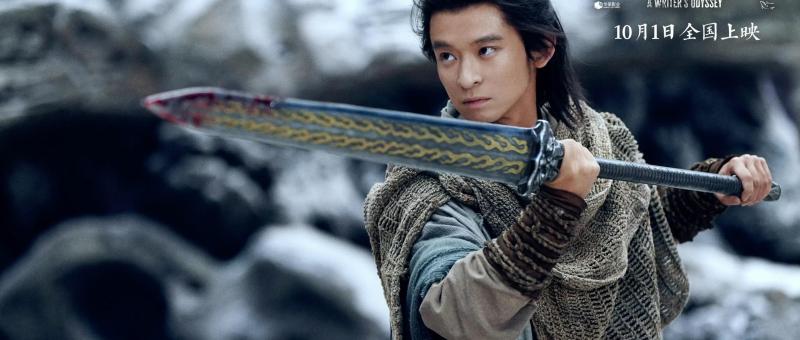
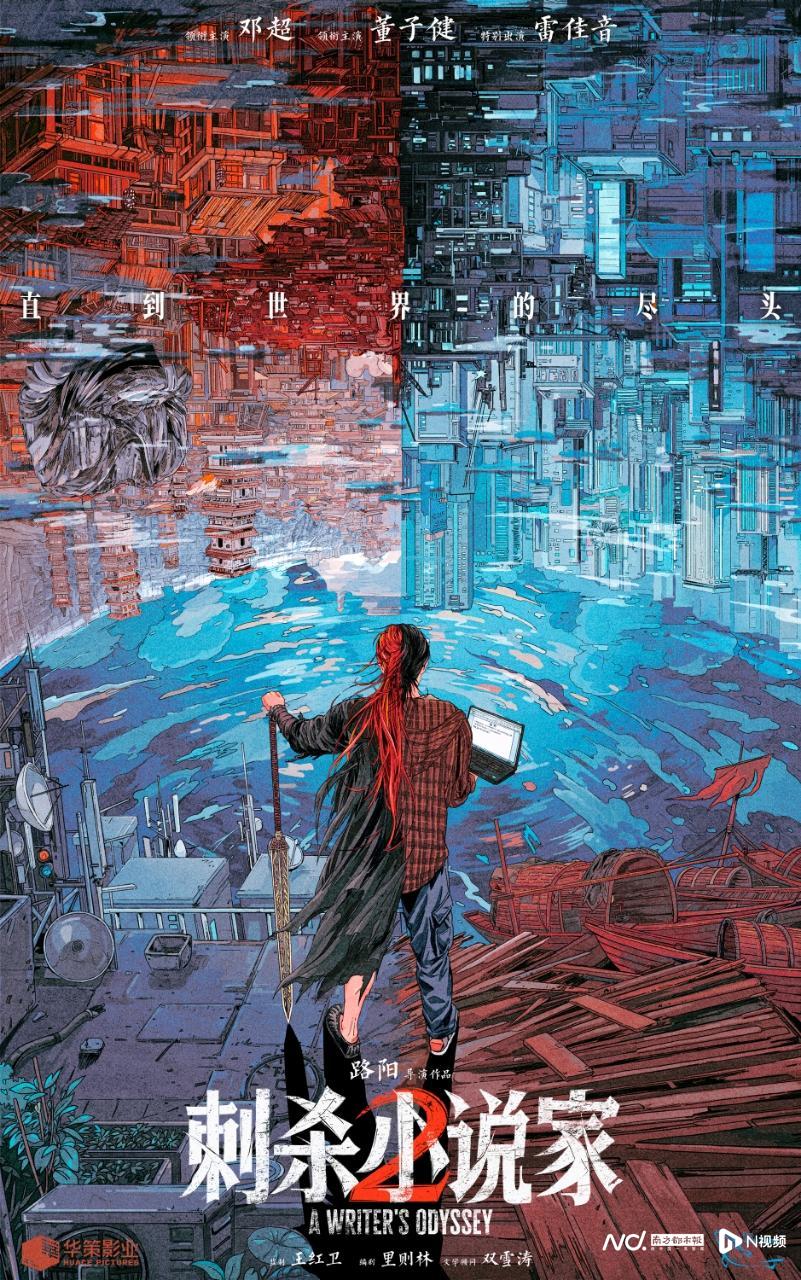
Arriving four whole years after the previous instalment, A Writer’s Odyssey 2 (刺杀小说家2, cìshā xiǎoshuōjiā 2) is in many ways a very different film. While its predecessor was a fairly serious affair tackling some of the issues of the modern China such as child trafficking, machinations of the oligarch class, and generalised capitalistic oppression, the sequel is a typically mainstream fantasy blockbuster complete with some fairly goofy humour and the ultimate message that despotism is bad and people should work for the good of others rather than just themselves.

In that regard at least, it’s another pointed attack on authoritarians and corporate bullies like Aladdin’s Li Mu. The entire Aladdin plot is, however, jettisoned, which seems like a missed opportunity, especially as it means that Yang Mi does not reprise her role and we don’t get any answers about who the boy was with Tangerine at the end of the previous film nor whether the “death” of Redmane led to the death of Li Mu in the real world as he feared it would. In truth, even Guan Ning (Lei Jiayin) is somewhat sidelined. Six years later, he, Tangerine (Wang Shendi), and Kongwen (Dong Zijian) are living as a family running a restaurant. Though Kongwen finished his Godslayer novel, it was stolen by an influencer, Cicada (Deng Chao), who accused him of plagiarism which got Kongwen blacklisted in the publishing industry and unable to earn any money through writing. As he’d said in the previous film, it was writing that gave his life meaning so now he’s started to become hopeless and depressed. 

Meanwhile, he’s begun to dream of Ranliang and the return of Redmane who has survived but as a mortal rather than as a god and is determined to get back everything he’s lost. This means, in meta terms, that he wants to challenge “god”, or really Kongwen, whom he sees as the architect of his fate. On the one level, it seems as if he’s trying to insist on his own free will and is sick of being controlled by unseen forces, but in reality he just wants the powers of a god for himself so he can oppress people properly. Nevertheless, this means he has to come to our world in order to square off against Kongwen, the writer.

It has to be said the vision of the real world on offer this time is much glossier and devoid of the kind of darkness that haunted Guan Ning. Though they’re worried because the restaurant’s not doing so well, the trio seem to have pretty nice lives with relatively few other problems outside of Cicada who is now aligned with Redmane in place of Li Mu standing in for a venal class of confluencers. Kongwen is then fighting a war on two fronts as Redmane taunts him to come over to the dark side and turn his fantasy story of good defeating evil into one of nihilistic despair echoing the way that Kongwen feels in his life.

The meta drama of the writer pursued by his characters is resolved in a fairly unexpected way with Kongwen effectively giving up his godlike powers and allowing his characters to save themselves through “mortal courage” rather divine intervention. Though Renliang had been plunged into chaos as the power vacuum Redmane left behind saw his former allies effectively become warlords reenacting the warring states period, in the end it’s solidarity that saves them as they agree to band together to oppose Redmane while offering the possibility of forgiveness if only Redmane can give up his quest for domination and agree to work for the common good. 

Kongwen learns something similar, remembering his writing isn’t solely an economic activity, and not only about himself but giving something back to the world. Torn between the anarchic ambition of Redmane and the righteousness of Jutian (Chang Chen), modelled after his own absent father, he struggles to find meaning amid the injustices of the modern China having been unfairly cancelled by netizens after being falsely accused of plagiarism by the man who stole his story and asks himself if it’s worth sacrificing his friends in a last ditch attempt to save them through teaming up with the forces of darkness. Nevertheless, Lu frames his tale in a much more lighthearted fashion as symbolised by demonic armour Darkshade’s sudden merging with a lettuce to become unexpectedly adorable. As such, it feels like something of a missed opportunity in choosing not to build on the foundations of the first film but sidestep them completely. Even so in upping its production values and the quality of its visual effects, the sequel embraces a new sense of fun which is definitely different but possessed of its own charm.


Trailer (English subtitles)
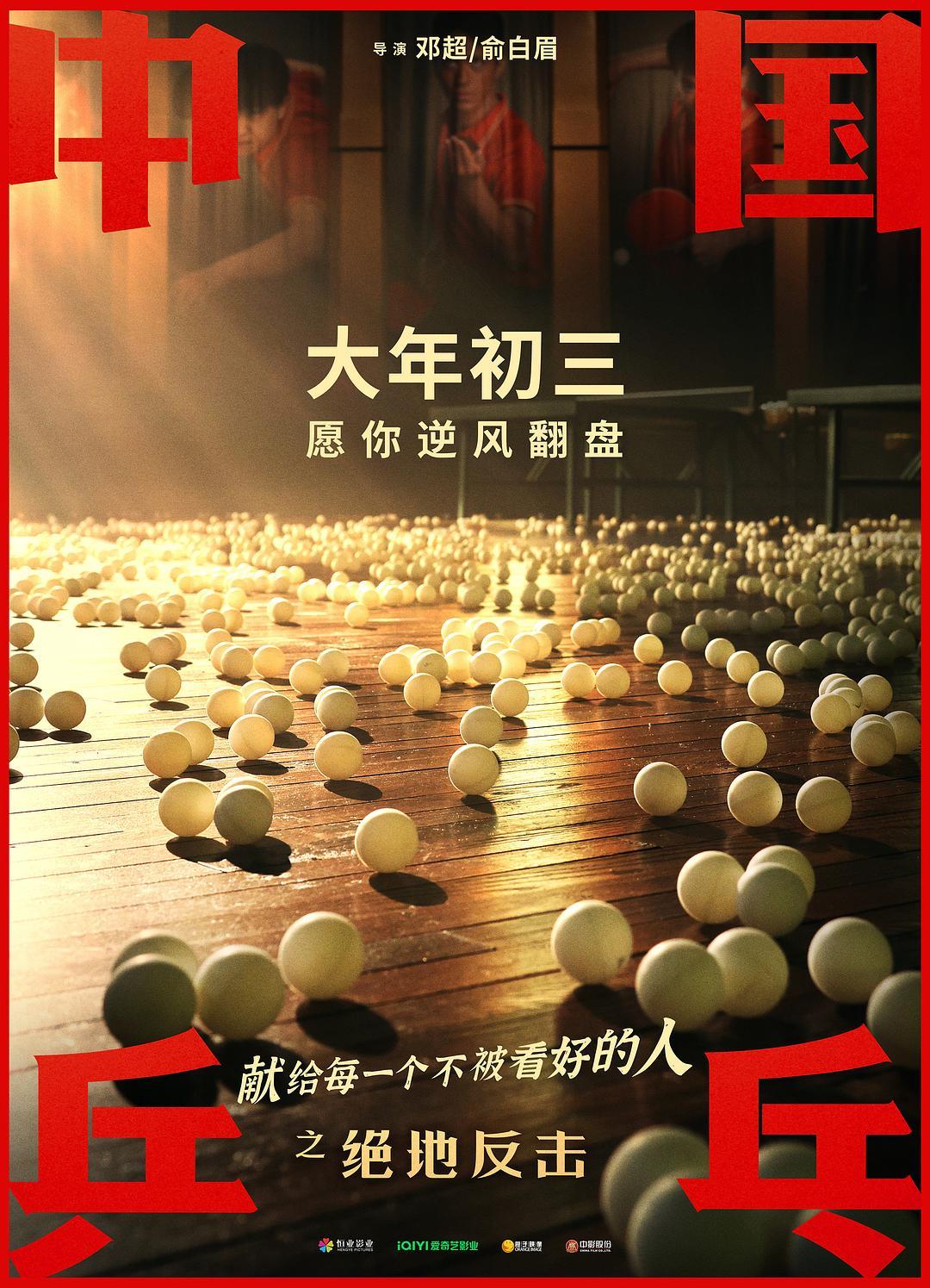
Ping Pong: The Triumph (中国乒乓之绝地反击, Deng Chao & Yu Baimei, 2023)

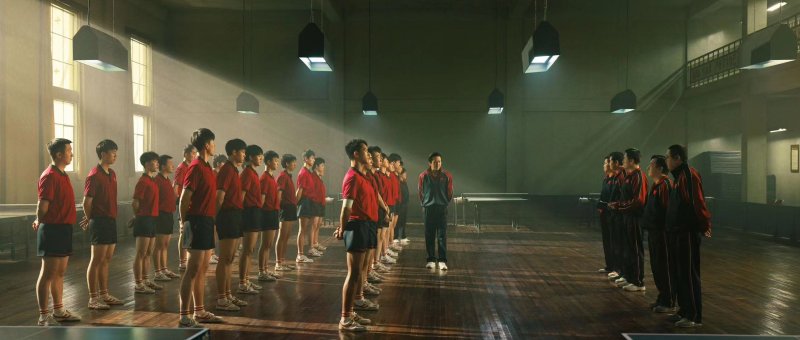
A changing China tries to recapture its sense of possibility by regaining its reputation as a ping pong powerhouse in Deng Chao and Yu Baimei’s rousing table tennis drama, Ping Pong: The Triumph (中国乒乓之绝地反击, Zhōngguó Pīngpāng zhī Juédì Fǎnjī). China can lose at any other sport, but not ping pong according to one aggrieved player making a dramatic return to the national team and echoing a sense of resurgent energy even as embattled coach Dai (Deng Chao) struggles to convince those around him that China can prevail. 

As the film begins, Dai is an exile living in Rome and training the Italian national team. He has fully acclimatised to the comparatively relaxed Italian society, is dressed in a stylish tailored suit and wool overcoat, and has a fashionable European haircut. But to some, including it seems an institutionally racist police force, he’ll always be an other as he discovers on trying to report a mugging but ending up getting arrested himself and questioned by a cop who doesn’t like it that he’s wearing an expensive watch. With his wife heavily pregnant, Dai decides to return home to China but is offered only an assistant coaching job and given a pokey flat that doesn’t even have its own bathroom in contrast to the spacious house the family were living in in Rome while the Chinese national team flounders in an ongoing decline. 

Dai’s fortunes in Italy play into the persistent message of contemporary mainstream Chinese cinema that there are no safe places for the Chinese citizen outside of China and that the only solution is to return home as soon as possible, while it’s also clear that his Westernisation is portrayed as a kind of bourgeois decadence that must eventually be corrected. On return to China, Dai continues to dress in his Italian suit rather than the team tracksuits worn by the other coaches until he’s fully reassimilated into the team and he’s even at one point criticised for spending too much time on his hair that could better be spent on training. Nevertheless, as he later points out they’re being beaten by European teams who are often trained by Chinese coaches who like him decided to chase their fortunes abroad in the confusions of early ‘90s China. 

A lengthy sequence near the film’s beginning suggests that the Chinese players feel the game has been taken away from them unfairly, that though they did not invent ping pong, it has become so integral to the Chinese identity that its loss strikes at the heart of the nation’s vision of itself. Afraid of China’s success, international nations conspired to effect the restriction in trade of a special kind of glue China used for paddles while modifying the rules so that they were more in favour of taller European players rather than small and speedy Chinese sportsmen whose techniques are no longer a fit for the contemporary game. Dai’s battle is partly to force change among traditionalists and convince them that China needs to up its game to meet international competition if it is to reclaim its sporting crown. 

It’s tempting to read the film as an allegory for China’s current economic ambitions if also a look back to a time of defeat in which the nation righted itself and became champions once again through unity, hard work, and faith in the future. The message is rammed home in the final pep talk Dai gives to a nervous player whose wealthy family disapprove of his choices and regard him as an embarrassment, reminding him that while their Swedish rivals took time out for holidays, sleeping, and eating breakfast they trained every minute of every day and he should learn to trust in that when faced with the seemingly insurmountable mountain of the European champion. Another player is told that he could lose the use of his arm if he continues playing but does so anyway (and is later fine), while it’s clear that Dai has made sacrifices which have strained his familial relationships in spending so much time away from his wife and young son. 

There’s also a subtle current of less palatable national unity in Dai’s wife’s claim that their son is slow to speak not only because his father is away so often but that he’s surrounded by too many different dialects and it’s impeding his development, making an uncomfortable argument for the primacy of standard Beijing-accented Mandarin. Nevertheless, the message is fairly clear in the frequent cut backs to young children watching the games and once again seeing China on the world stage, gaining a new sense of possibility for their own lives in the vicarious success of sporting championship. Deng and Yu shoot the matches with breathless intensity and an unexpected immediacy as the ball seems to barrel through the camera, and at one point takes the place of the star on the Chinese flag. “Chinese are the most diligent” Dai reminds his player, certain that they will get there in the end through sheer force of will, hard work, personal sacrifice for the national good, and above all togetherness as they battle seemingly insurmountable odds to reclaim their sporting crown and with it a national identity.


Ping-Pong: The Triumph screens in Chicago March 25 as part of the 16th season of Asian Pop-Up Cinema.

Original trailer (Simplified Chinese / English subtitles)

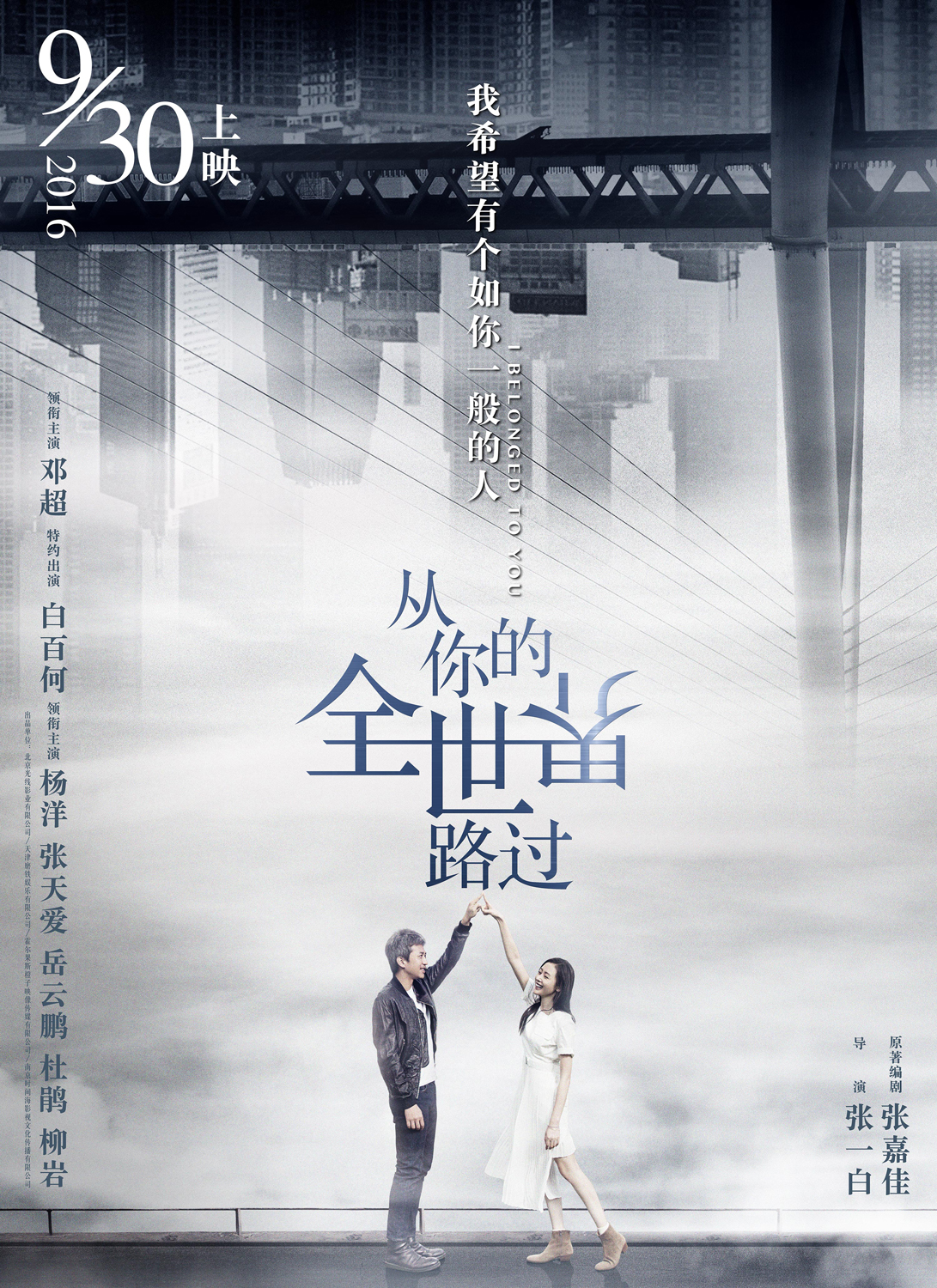
I Belonged to You (从你的全世界路过, Zhang Yibai, 2016)

A collection of lovelorn souls meditate on love and loneliness in Zhang Yibai’s adaptation of a series of popular short stories by internet author Zhang Jiajia. Perhaps misleadingly titled, I Belonged to You (从你的全世界路过, Cóng nǐ de Quánshìjiè Lùguò) is less tearjerking melodrama than humorous exploration of romantic disaffection in the modern society in which even love itself has perhaps become both duplicitous cliché and an unattainable dream. For smug DJ Chen Mo (Deng Chao), being in love means staying together forever, but for his co-host/longterm girlfriend Xiaorong (Du Juan) adolescent love has already run its course. Thoroughly fed up with his empty, somewhat cheesy words of advice to lovelorn callers, she abruptly breaks up with him live on air. 

Two years later Chen Mo hosts the show alone amid declining ratings, listeners now fed up with with his total capitulation to depressed cynicism and advertisers getting ready to pull the plug. Xiaorong has joined station management but seemingly has little desire to save the show, later entering into an unwise bet that should Mo be able to climb to the number one spot, she’ll marry him but if he fails he must parade through the town with a sign reading “I’m an idiot” which, as we later discover, is a callback to their uni days when they were young and in love. Mo laments that the only couple still together from way back when is his best friend Chubby (Yue Yunpeng), who currently lives with him, and the beautiful Yanzi (Liu Yan) whose heart he won being the only person willing to defend her when she was accused of thievery. Pure-hearted, Chubby does every job going, even allowing people to punch him for monetary compensation, so he can send the money to Yanzi who is currently abroad travelling the world. Mo seems fairly unconvinced by the arrangement, but also regards Chubby as his “anchor”, that as long as Chubby loves Yanzi, they are all still young and love is real.  

His other roommate, meanwhile, his cousin Shiba (Yang Yang) is being semi-stalked by the local police woman whose constant flirting he doesn’t seem to have picked up on. As we later discover, Officer Lychee (Bai Baihe) has also been disappointed in love, previously jilted at the altar by a foreign boyfriend who apparently did a disappearing act, but has apparently maintained her faith eventually entering to a wholesome relationship with the eccentric young man who spends all his time inventing new gadgets. Despite the evidence, however, Mo remains cynical and hung up on Xiaorong who seems to have defied the narrative destiny of their uni love story. Describing him as immature, she feels as if something changed with Mo during the radio show, that somewhere along the way he lost his sense of warmth. “It’s only when we are filled with love that our show passes on love. When we feel lonely we can’t warm anybody up” she tearfully explains taking over the broadcast, adding that Chen Mo might be the loneliest of all in his false bravado and prickly tendency to make off-colour jokes as a childish defence mechanism. 

Ironically, however, the ratings start to pick up thanks to mild-mannered intern Birdie’s (Zhang Tianai) unexpected outburst at a disgruntled caller who took Mo to task for his terrible, unsympathetic advice for his romantic problem. Silently in love with Chen Mo after his certain presence on the radio saved her from loneliness, Birdie does her best to “save” him, even later giving up her dream of romance to try and help him win back Xiaorong only for him to get the message too late, realising that Xiaorong has outgrown him and they’re on different paths while maybe what he needed was a spiky little bird to peck him out of his shell. 

Chen Mo called his show “Passing Through Your World” as if in acknowledgement that some people are supposed to brush past each other meeting only for a moment, but naively hoping to encounter someone that would make the world brighter just by being in it. Shooting with a whimsical arthouse lens, Zhang opens in a rainy Chongqing as if reflecting the loneliness and despair which plague each of his protagonists who each in one way or another find solace in the presence of Chen Mo through his radio show acting as a beacon for lonely souls everywhere, before ending in bright sunshine and golden fields leaving the neon-tinted city behind for a dream of a more innocent love. Nevertheless, not everyone gets their happy ending, and there’s something in the film’s most romantic gesture being the drawing of an umbrella on cutesy mural to help a lost little girl weather the storm. A breezy stroll through urban malaise and millennial love, I Belonged to You ultimately sheds its cynicism for a pure hearted faith in romantic destiny but does so with a healthy dose of maturity in acknowledging that the path of true love never did run smooth.


I Belonged to You streams in the US Feb. 12 to 18 as part of Asian Pop-Up Cinema’s “Happy Lunar New Year!”

Original trailer (English subtitles)

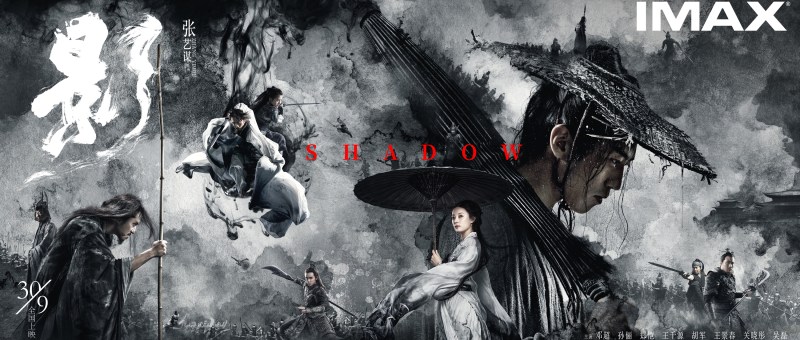
Shadow (影, Zhang Yimou, 2018)

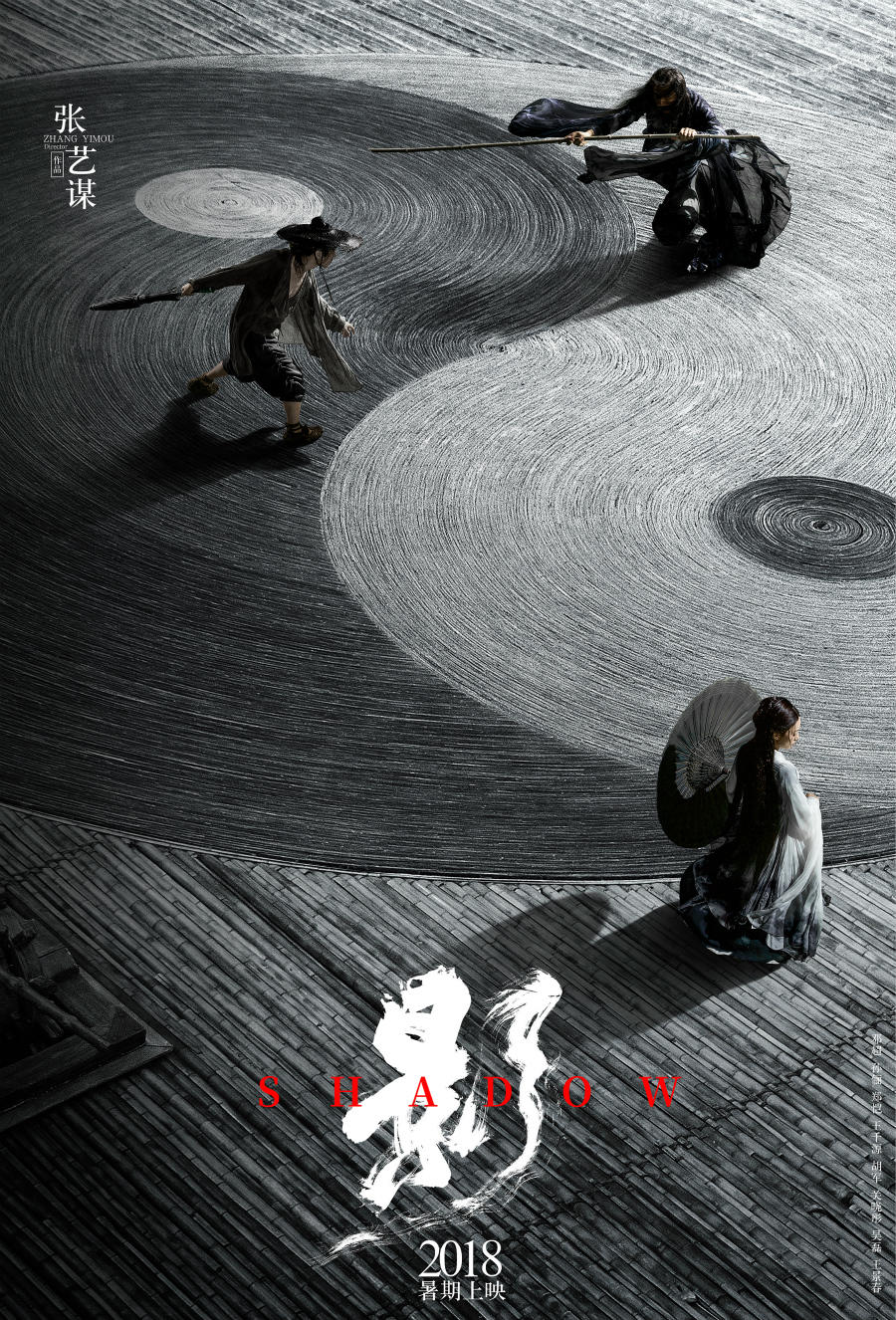
Shadow poster 1Zhang Yimou waxes Shakespearean in a tale of palace intrigue and a world out of balance in his latest return to the age of wuxia, Shadow (影, Yǐng). Drawing inspiration from classic ink paintings, Zhang’s monochromatic world has a chilling beauty even in its intense layers of oppression which make prisoners of king and subjects alike. Like the yin yang diagram on which the climatic battle takes place, Shadow is a tale of dualities and oppositions as its hollowed out hero begins to wonder who exactly he might be without the mirror.

Long ago in feudal China, the Kingdom of Pei has been living in peace thanks to an “alliance” with the Yang who are technically occupying the former Pei city of Jing. Many in the Kingdom of Pei are unhappy with this arrangement, regarding the loss of Jing as a humiliation and the king’s refusal to retake it more cowardice than pragmatism. Despite the king’s instruction that the truce must be maintained and war avoided at all costs, his trusted commander has undertaken a secret meeting with Yang in which he has agreed to a personal duel for the honour of Pei. The king is very unhappy. A lesser man might have lost his head, but the king needs his commander. What he doesn’t know, however, is that the commander is not all he seems. Nobleman Yu (Deng Chao) was badly injured during a previous fight with Yang and has retreated to the catacombs while his double, Jing (also Deng Chao), has been playing his part in court.

Jing, “saved” from poverty as a young child brought to the palace as a double for Yu, is grateful and loyal. He respects his masters and has trained hard to learn the skills needed to pass as a nobleman and more particularly as Yu. As such he has no “identity”. Even his name was given to him by his master and is simply that of the town where he was found which happens to be the disputed city itself. Jing does everything right – his instincts are good, he is clever and quick-witted with a talent for intrigue, all of which makes him both a danger and a shield for Yu. Yu, meanwhile, trapped in the same underground cell which used to house Jing, has become warped and embittered. Nursing a mortal wound, he plots and schemes against the king, scuttling goblin-like as he rails against his fate.

Yu promises Jing a release from his mental imprisonment if he agrees to take part in the duel with Yang. Jing knows that Yu’s promise is hollow and that he is not intended to survive, but submits himself to his fate anyway. He does this, partly, in hope but also because of his longstanding but unspeakable love for Madam (Sun Li) – Yu’s wife, who is one of the few people ever to express pity for his miserable circumstances. As the film opens, Madam and the king’s sister are reading proverbs together including one which insists that men are meant to rule. The king, however, is weak – he is effete and prefers the art of the brush to that of the sword, while his sister is “wild” – a bold and impetuous young woman seemingly more suited to the throne than her foppish brother.

As if to complete the theme, it’s Madam who eventually reveals the technique to beat Yang to her increasingly crazed husband. In order to defeat his hyper masculine enemy who fights with a giant sabre, Yu resolves to fight like a girl armed with one of Pei’s iconic parasols reconfigured in sharpened iron. Only by creating balance can they hope to win, meeting the weight of Yang’s blunt force with a lightness of touch and feminine elegance. 

The world of Shadow is one defined by its dualities – male/female, lowborn and high, betrayal and loyalty, arrogance and supplication. Jing’s existence is defined by that of the “true” commander – a shadow cannot exist without a form to cast it, or so it had always been thought. Offered the possibility of escape, Jing’s original identity begins to resurface. Yet his victory over his “other self” is also a defeat which infects him with the dubious moralities of the court, allowing him to become more than himself alone and leaving the world once again dangerously unbalanced. As the opening narration told us, however, it is not Jing, or Yu, or the king who hold the fate of Pei in their hands but Madam whose final decision will dictate the course of history. Set in a world of oppressive greys broken only by the driving rain and shocking redness of blood, Shadow may not return Zhang to the balletic heights of the poetic Hero, but does its best to add Shakespearean grandeur to its tragic tale of fractured identities and conflicting desires.


Screened as part of the 2018 BFI London Film Festival.

International trailer (English subtitles)

The Liquidator (心理罪:城市之光, Xu Jizhou, 2017)

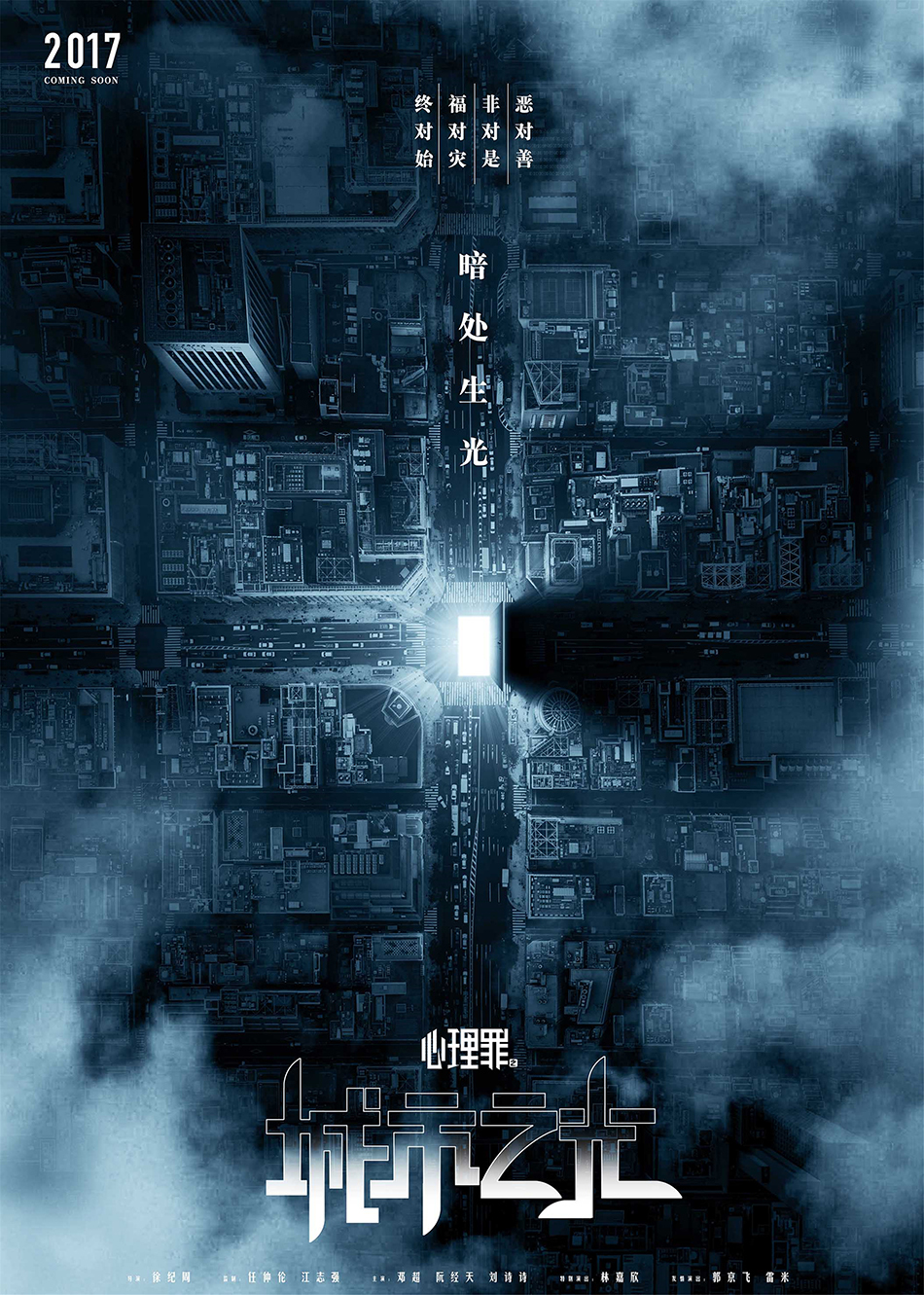
The Liquidator posterGiven a strangely ‘80s nonsensical two word title, Xu Jizhou’s The Liquidator (心理罪:城市之光, Xīnlǐ Zuì: Chéngshì Zhī Guāng) is a retro throwback to the lurid macho pulp which has largely faded from the crime procedural since its ‘90s heyday. Adapted from a novel by Lei Mi, the film follows last year’s Guilty of Mind as the second in the Fang Mu series only this time the eccentric profiler is played by marquee star Deng Chao rather than Guilty Mind’s Li Yifeng or Chen Ruo Xuan who starred in the Fang Mu TV drama, Evil Minds. A pulpy battle of wits between a crazed vigilante and a world weary cop, The Liquidator is already treading on some overly familiar territory but its main target is the rule of law apparently under threat of mob justice now that China too has entered the social media age.

Fang Mu (Deng Chao) is no longer a police officer after becoming the prime suspect in the disappearance of a man who escaped justice through judicial corruption, but he’s pulled back into the law enforcement fold when young policewoman Mi Nan (Cecilia Liu) is dispatched to get his profiling opinion on a difficult murder case. Calling himself “The Light of the City”, a vigilante killer is already amassing a collection of dedicated online followers thanks to his choice of targets which, to put it bluntly, are not law breakers just terrible people that most would like to get revenge on for one reason or another.

Originally reluctant, Fang Mu is soon hooked on the case only to realise that the crime scenes are being created entirely for his benefit – the killer is attempting to pull him into a battle of wits and taking innocent lives to do it. As it transpires the killer’s name, Light of the City, is inspired by something Fang Mu said in his graduation speech to the effect that the police are the light that shines in the darkness. The killer thinks the law doesn’t go far enough – his targets are bullying teachers, impious sons, and greedy lawyers, the immoral rather than the criminal. He exposes their transgressions online and then allows “netizens” to have their say. Netizens, as they have often been in the “real” world, are not a particularly understanding bunch and are firmly behind the “entertainment” the killer is providing, even down to the decision to live stream a murder.

Fang Mu’s defining trait is his liminal status as a law enforcement officer often pulled towards the dark side – hence why many of his colleagues think it’s perfectly possible that he’s guilty of the crime that got him kicked off the force. The vigilante’s “plan” is to pull him over the line by forcing Fang Mu to execute The City of Light and thereby become the thing he most fears. The Liquidator posits that a robust judicial system free from interference from both government and people is a prerequisite of a well functioning society and the police must be the shining beacons of these laws – if not even law enforcement obeys the law, then all is lost.

What transpires is a battle of minds between the brainy Fang Mu and the psychotic killer, but it’s also a battle for the soul of “society” which ought to place compassion and rationality over the sensationalism of trial by media and arbitrary mob justice. The killer works out his frustrations by proxy through attacking those who committed the same “crimes” which have led to their feelings of frustration and humiliation – chief among them being Fang Mu who has, apparently, offended solely in his continued excellence, but the killer’s personal vengeance is harsh and unforgiving, handing down a death sentence simply for unpleasant or anti-social behaviour.

Beginning in a promising vein, Xu nevertheless introduces his dedicated female cop only to sideline her in favour of Fang Mu before turning her into a mild love interest, potential victim, and sometime comic relief. Filled with macho histrionics (including, at one point, a gun fired in the air followed by a manly wail of grief), The Liquidator is an old fashioned action drama filtered through pulp noir and ‘90s horror with its grimy walls and dingy basements, but it straddles a fine line between ridiculous slasher serial killer thriller and serious cerebral procedural, landing somewhere around heroic bloodshed without the bromance. Ridiculous and melodramatic, Xu’s debut feature boasts excellent production design and innovative photography, but its slick aesthetic cannot overcome the more outlandish elements of the otherwise generic script.


Currently on limited release in UK cinemas courtesy of Cine Asia

Original trailer (Mandarin with English subtitles)

The Mermaid (美人鱼, Stephen Chow, 2016)

Mermaid

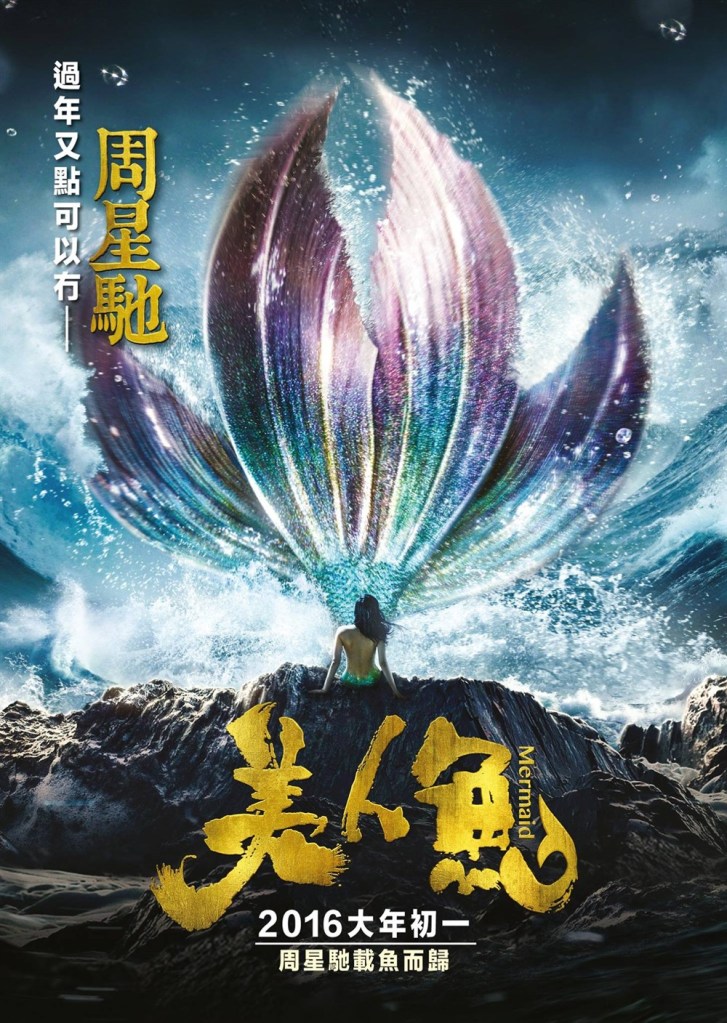
Stephen Chow unexpectedly became a mini phenomenon with that rarest of beasts – a foreign language comedy that proved a mainstream crossover hit, in the form of the double punch that was Kung Fu Hustle and Shaolin Soccer. However, his once ascendant star has been in retrograde ever since when it comes to screens outside of Asia. The surprise worldwide theatrical release of this latest film, The Mermaid (美人鱼, Mei Ren Yu), might be about to change all that.

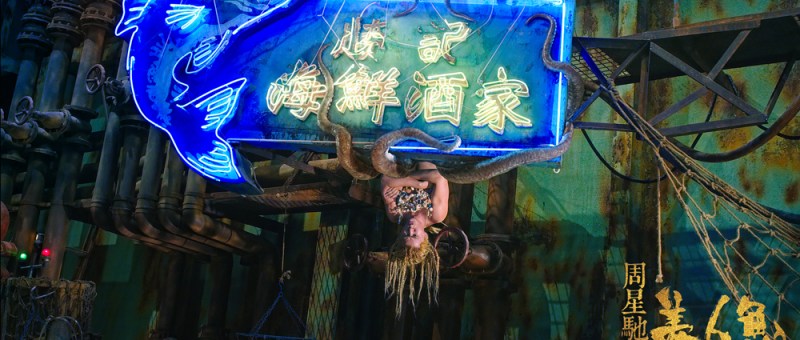
Loosely inspired by The Little Mermaid, Chow paints a world of consumerism in overdrive as heartless capitalists fall over themselves to destroy the beauty of the natural world to buy even more flashy status symbols even though they only make them even more miserable. After opening with some newsreel footage of mass deforestation and a bloody dolphin massacre, Chow shows us the natural world exploited in a different way as a group of visitors visit an “exotic animal show” which includes such wonders as a live tiger (actually a pet dog with stripes painted on its fur), a “Batman” (with fried chicken for ears), and, crucially a “Mermaid” (a fried fish with a doll’s head on the top).

We’re then introduced to rich playboy businessman Liu Xuan (Deng Chao) who lives life large in a giant western style estate surrounded by gold digging dollybirds. He’s bought some “surprisingly well priced land” to use in a reclamation project, only the problem is it’s technically a nature reserve. His underlings have come up with a scheme to frighten away the wildlife with sonar devices so they can destroy the area of outstanding natural beauty in peace. However, they didn’t know about the colony of Merpeople hiding out there who have a serious problem with Liu and have dispatched one of their number, Shan (Jelly Lin), to assassinate him!

Predictably, the assassination plot does not all go to plan with often hilarious results. Like Chow’s other movies, the main spine of the narrative is a romantic comedy in which a foolish and arrogant man is made to realise his own weaknesses through finally noticing a woman he previously had no interest in. This time Shan turns up looking like a crazy lady with her bizarre makeup and fake mermaid outfit which gets her instantly thrown out of Liu’s place though she does succeed in giving him her phone number. Usually, Liu isn’t the type to call back but he gets goaded into it by mistake and then his henchman actually brings Shan to his office where she fails at assassinating him first with poison and then with sea urchins. By this time the course is set as the pair bond during their macabre meet-cute with Liu becoming attracted to Shan’s otherworldliness and she to the goodness that might be buried inside him.

Liu, it seems, experienced extreme poverty in his childhood and so now cares only about making money. Or says he does, his depressing solo karaoke dances to a hit pop song with the chorus “no one understands my loneliness” might tell a different story. Being super rich is actually kind of boring and everyone he meets only cares about his money so meeting Shan (who is predominantly interested in killing him) proves refreshing. Nevertheless, money also becomes an anchor dragging you down, even if Liu starts to come over to the Merpeople’s point of view (particularly after testing out those sonar devices on his own ears) his associates aren’t likely to agree.

It all goes a bit dark towards the end – wildlife massacres and kidnappings for “scientific research” which seems to include things like vivisection and live experimentation not to mention the intentional eradication of the entire living environment of these hitherto hidden creatures all the while preaching about scientific progress and a desire for understanding. Chow is many things but subtle has never been one of them so he lays his environmental message on with a trowel but the rest of the movie is so big anyway that he gets away with it (and in style).

Light and bright and colourful, The Mermaid is another characteristically madcap effort from Chow who packs in all the absurdist humour one could wish for plus a decent dose of sight gags and good old fashioned slapstick. It has to be said that the quality of the CGI (of which there is an awful lot in the film) is, on the whole, woeful, though somehow this just ends up adding to its charms as another facet of its self-effacing wackiness. A hilarious return to form from Chow who has been away for far too long, The Mermaid looks set to continue its enormous box office success by becoming one of the director’s most fondly remembered efforts.


The Mermaid is currently in UK cinemas but the distributors have gone down the Bollywood route of chasing the diaspora audience only (as RogerEbert.com discovered during the US release) and not engaging with the regular film press in any way, shape, or form. Therefore there has been almost no coverage of the cinema screenings in the non-Chinese media. Here’s a list of the surprisingly high number of UK cinemas screening the film courtesy of my friends at Eastern Kicks so check it out because it very likely could be playing at a cinema near you!