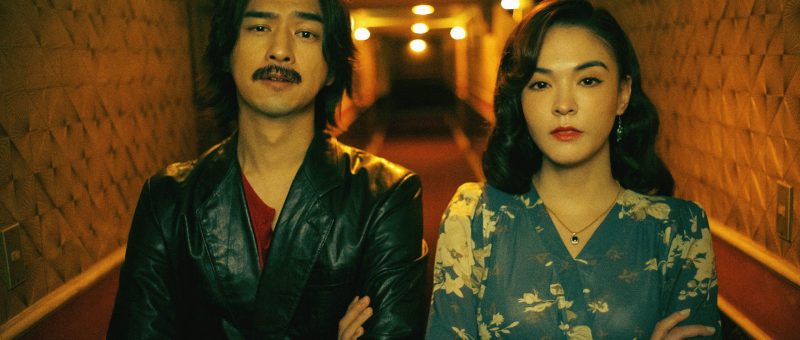
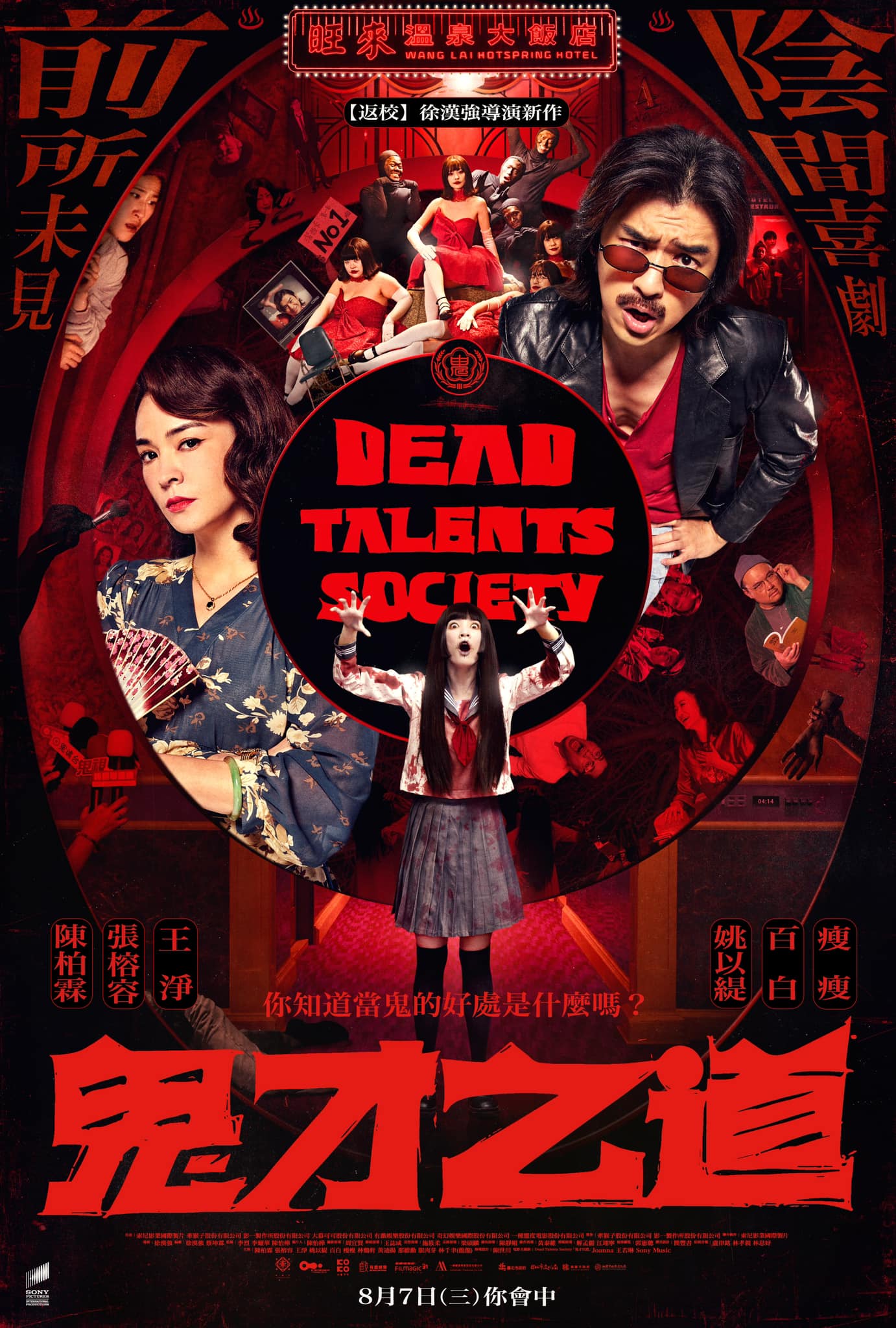
“Why is it more tiring to be dead than alive?” A fed up ghost asks themselves and with good reason. If you thought you’d be able to rest easy in the afterlife, you’ve got another thing coming because it’s just as much of a capitalist hellscape on the other side as it is here. The central conceit of John Hsu’s Dead Talents Society (鬼才之道, guǐcái zhī dào) is that a ghost must must earn their keep by haunting the living in order to provoke large-scale appeasement rituals and the burning of vast amounts of ghost money or risk disintegration and finally disappearing from this world.
In a certain way, this is the paradox of the ghost. They fear being forgotten and only want to be seen mostly by the living but also by the dead in order to feel the validation that they exist and are appreciated. For Rookie (Gingle Wang) , a teenage girl who it later turns out was almost literally crushed by the weight of parental expectation, this was something she was never able to feel in life partly because of her father’s well-meaning attempts to boost her confidence by telling her she was “special”. He even went so far as to mock up a fake certificate for her while leaving her to feel inadequate that her sister’s trophy shelves were full while hers were empty. It’s this certificate that’s gone missing during her family’s literal attempt to move on from her death and start again leaving her behind. With no place to return to, Rookie will disintegrate in 30 days if she can’t win a haunting licence which is a problem given her mousey personality and the lack of talent that left her feeling so inadequate in life.
Yet many of the pro ghosts are in the same position. Cathy (Sandrine Pinna) used to be the reigning queen, but her thunder was stolen by a former prodigy, Jessica (Eleven Yao), a very modern ghost who’s figured out how to haunt the internet and go viral for scaring influencers to death. In some ways, the living too are ghosts online haunting an alternate plane of reality while it’s through these online personas that we make ourselves seen. After all, in the modern world, there’s no better way to be “remembered” than by achieving internet fame. By contrast, all Cathy has is her decades old trick of backflipping on guests staying in the hotel room where she died in a lover’s suicide over a man who cared little for her. In a hilarious twist, the gang set up the trick on a harried businessman but he’s so busy he doesn’t even really notice any of their ghost stuff and remains entirely focussed on his work.
Taken in by the gang, the realisation that rookie begins to come to is that she never really needed to be “special” but only herself and for someone to see her as she really was. Her anxieties are those of contemporary youth burdened by the weight of parental expectation and fearing they can’t live up to it. Manager Makoto (Chen Bolin) experienced something similar in life, struck by anxiety while struggling to make it as a early ‘90s popstar while unable to make his mark in the ghost world by virtue of being unable to scare anyone because he’s too good looking. As he tells it, the best thing about being dead is that you no longer need to worry about what other people think and Rookie is therefore free to become herself or else disappear forever.
Even so, the irony is that the finale sees the central gangs take on unified appearances as if becoming one with one side doing better than the other in their genuine sense of mutual solidarity as a ghost world family. They watch J-horror-esque movies for tips and muse of the contradictions of fame that perhaps we accord those talented that are merely the most visible while these ghosts struggle to be seen in an increasingly haunted world of hollow influencers and illusionary online avatars. Rookie still doesn’t know what being seen means but has perhaps learned to see and accept herself thanks to her experiences in the afterlife. Charming and somehow warm in its lived-in universe of celebrity ghosts and professional hauntings, Hsu’s zany horror comedy may suggest there’s no escape from the living hell of capitalism but that dead or alive you might as well enjoy the ride as best you can before it all suddenly blinks out.
Dead Talents Society screens Nov. 9/10 as part of this year’s San Diego Asian Film Festival.
Original trailer (English subtitles)

 Windows on Worlds