
Remember What I Forgot (曾經擁有, Keian Chui, 2022)

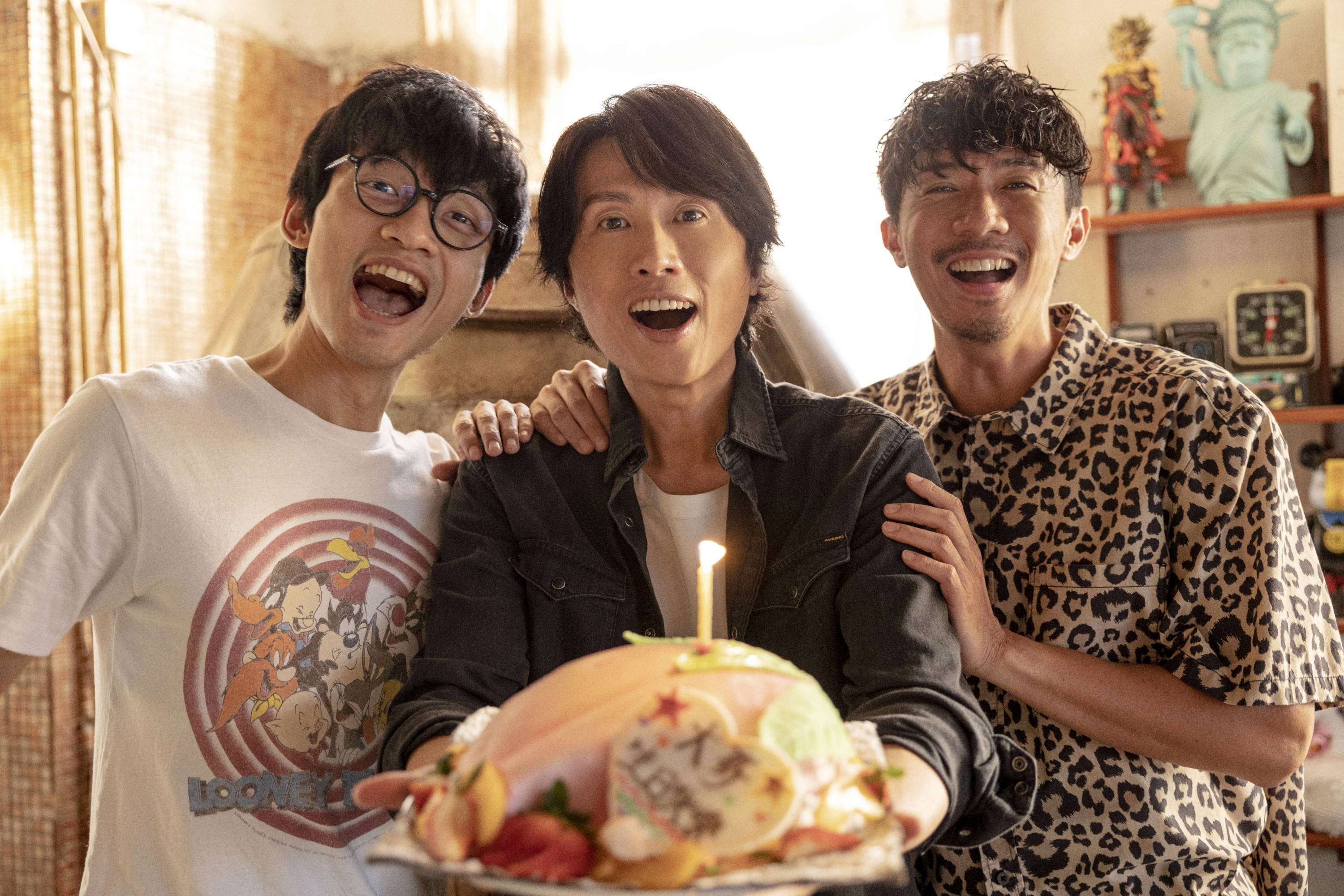
Shot in 2017 and held back until recently, Remember What I Forgot (曾經擁有) is one of series of films that suggest Hong Kong cinema is becoming a thing of a bygone era. The conceit is that the hero literally cannot remember as he has early-onset dementia and is to some extent stuck in the past or at least using Hong Kong cinema as a means of anchoring himself in a society that’s constantly changing as demonstrated by his quest to find a copy of Perter Chan’s 1996 film Double the Trouble which has gone out of print. 

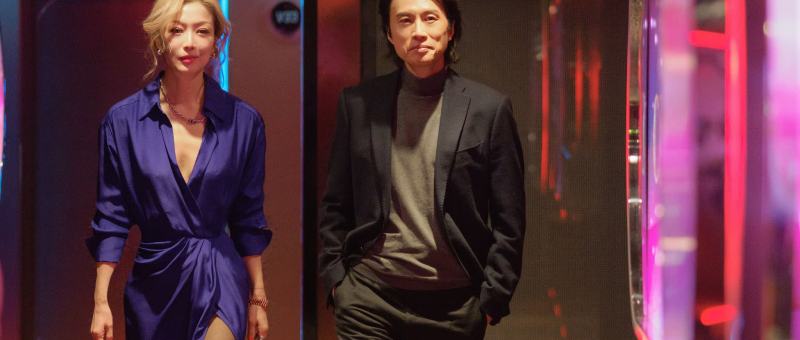
Kim (Philip Keung Hiu-Man) lives with his cousin, Wan, who is also afraid to move on because he’s worried Kim won’t be able to find his way home if they leave his moribund repair shop. Kim otherwise spends his time hanging out on film sets and watching movies at the cinema and at home which is what has convinced Ginger Keung (Fish Liew), a journalist working for a trashy TV expose show, that Kim maybe the so-called “Prince of Darkness”, a film reviewer who posts scathing takes on movies on his blog and has become the enemy of all Hong Kong film producers. 

It’s surprising they afford him so much power, but it does seem that love or loathe it his writing is eagerly awaited. Ginger tries to befriend Kim in order to exploit him by exposing him as the prince of darkness on her TV show though finds herself conflicted on realising his condition. Kim is also the only one who remembers Ginger as a screenwriter and apparently liked her film, The Movie Exorcist, which he described as “nonsensical” and having “no commercial value” but also the most fun he’s ever had at the movies. A dark satire of the death of the film business in which ghosts buy tickets in a haunted cinema, the film had been an expression of the frustration Ginger felt graduating film school but being unable to find any work. This is perhaps why she’s become cynical about Hong Kong cinema which she describes as lacking in passion. 

Having regained some of the memory he’d lost, Kim laments that he just wants to remember everything about Hong Kong cinema and doesn’t understand why no one else seems to care. Given his condition, his mind sometimes “remembers” scenes from classic movies such as Infernal Affairs and Comrades Almost a Love Story as if they had actually happened to him, which in a way they have because they’re a part of the history of Hong Kong of which he has now become a sole guardian. Poignantly, it seems that the reason he always goes to the same cinema and books the same seat is that he’s waiting for someone, but has also forgotten all about it and no longer remembers why he goes there except for his intense love of Hong Kong film.

Ironically, Kim’s becoming a movie star too in that Ginger is intent on filming him for her show while simultaneously feeling guilty for taking advantage of him and wondering if she really has what it takes to be this kind of ruthless “journalist” ready to upend someone’s life and expose them to censure and ridicule for view numbers. Maybe it was easier when she thought he was a snarky bastard trashing Hong Kong films for clicks in much the same way her show trash talks people’s “dirty laundry,” than when she realised he may be being exploited by someone else and in any case just has high standards because he loves Hong Kong cinema so much that he wants it to be better. Having remembered something, Kim tries to revisit an old cinema to keep an appointment, but it’s already been closed down as there’s no way back to that moment. Kim cannot find his way home except in the movies because that Hong Kong no longer exists anywhere else. Nevertheless, he seems determined to reclaim and preserve as much of it as he can while righting old wrongs and keeping that appointment even if the person he’s waiting for likely won’t arrive. It’s his enthusiasm that guides Ginger back from her cynicism, causing Ginger to rediscover her own love for Hong Kong films and re-evaluate her current line of work while helping Kim to achieve his dreams of keeping it alive.


Trailer (Traditional Chinese & English subtitles)

Alone No More (得寵先生, Daniel Ho & Thomas Lee Chi-wai, 2024)

A little dog literally and more figuratively saves the life of a grumpy old man in Daniel Ho & Thomas Lee Chi-wai’s warmhearted drama Alone No More (得寵先生). Touching on themes of old age loneliness, familial estrangement, animal cruelty, and life’s stray dogs, the film makes the case that all lives are important, both human and canine, and that we should try to forgive each other in the same way that dogs seem to continually forgive us.

In any case, it’s difficult to see why stray dog Roast Piggy chooses the grumpy Kai (Lawrence Cheng Tan-shui) to be her owner despite his animosity towards her. Kai is hostile to pretty much everyone and appears to have a strained relationship with his remaining family members from the resentful brother who became his boss at work to the daughter Zoie (Fish Liew) who rarely returns his calls. Having recently retired, it seems that Kai has not much else left to live for which might be why he makes the decision to end his life and leave his retirement fund for Zoie and her daughter. Luckily, Roast Piggy arrives just in time to save Kai and alert Una (Amy Lo) who runs a dog sanctuary and had been trying to catch her.

Though Kai tries to chase Roast Piggy away, she always comes back to him and he eventually comes to accept her but only after getting a lesson in what the consequences of calling animal control can actually be. The film doesn’t go into why Hong Kong seems to have such a large problem with stray dogs but the man at the pound says they euthanise thousands a year many of which are microchipped but have owners who either can’t be contacted or simply refuse to take the dog back. It turns out the Roast Piggy was abandoned by her former owner because a fortune teller told him she was bad luck and it does seem like other of the dogs were similarly released into the wild either because their owners no longer wanted them or because they could not afford to pay for their medical treatment. Una had wanted to adopt Roast Piggy herself if Kai wouldn’t take her, but is cautioned by her boyfriend Chan (Jay Fung Wan-him) that it could get expensive if the problem turns out to be that Roast Piggy had heart worms. Though Roast Piggy seems friendly and used to people, it is clear some of the other stray dogs have unfortunately been mistreated and require further rehabilitation before they can be put up for adoption with a regular family. 

The same might be said of Kai who does begin to mellow after taking in Roast Piggy and getting a new lease of life helping out at the dog sanctuary. Nevertheless, his relationship with his daughter who is married to a Canadian man having moved there with her mother as a child is a little harder to repair. Though Una encourages him to make amends, she also has a strained relationship with her mother she is otherwise unwilling to work on though there is no real reason why she should. This sense of disconnection feeds back into her relationship with boyfriend Chan who, conversely, is under his father’s thumb and as always does exactly as he’s told. It’s Chan’s money that’s bankrolled the sanctuary which adds an additional layer of complication, though he is perhaps being slightly unreasonable when he’s hurt that Una doesn’t agree to suddenly drop everything and move to Edinburgh with him because she wants to stay in Hong Kong to save stray dogs. 

In a way, Kai and Una are the ones left behind, he by his age and loneliness and she by her regret and isolation. It’s clear that Una has replaced relationships with people with those with dogs whom she finds it easier to talk to. A subplot about a horrible person who’s been putting down poisoned meat because they don’t like the dogs being around hints at the callousness and cruelty that led to them becoming strays in the first place but also to the prejudices that see those like Kai and Una excluded from mainstream society even if Kai was indeed a very difficult person to be around before meeting Roast Piggy. Nevertheless they too find sanctuary at the Warm Heart dogs home along with purpose and compassion in caring for these kindhearted animals who have so much love and forgiveness even towards those that tried to cast them out.


UK trailer (English subtitles)

All Shall Be Well (從今以後, Ray Yeung, 2024)

There’s nothing that breaks a family apart as quickly as an inheritance. As a cynical lawyer points out, even mothers and sons fall out when it comes to money, so there’s nothing like it to to focus minds with an us and them mentality to clearly define who is and isn’t included under the umbrella of family. But why is it that meaningless pieces of paper hold so much sway over us when we ought to by be governed by the emotional truths that until a moment earlier ruled our lives?

Angie (Patra Au Ga Man) had been fond of saying “because we’re family.” She never doubted her place in that of her partner who all appear, at least outwardly, to love her and accept her relationship with Pat in the way they’d accept any other marriage. But when Pat (Maggie Li Lin Lin) suddenly passes away in her sleep after one last family celebration the situation changes. Well-meaning family members step in to help with the work that must be done when someone dies, but perhaps unwittingly begin to take over slowly erasing Angie from their lives as not really one of them after all.

Her problems are two-fold. The biggest being that Pat never got round to making a will, nor did she think to put Angie on the deeds to the apartment they shared together or leave her financially provided for seeing as she’d managed all the money they’d made when they owned a factory and ran it together. The secondary problem is that Hong Kong does not recognise same sex marriage and so their relationship was not legally recognised. Had Angie been legally married to Pat, she should have inherited everything anyway because she was her spouse even without a will but with things the way they are she’s at the mercy of Pat’s brother Shing (Tai Bo). She never thought this would be a problem, because they’re family, but slowly realises that perhaps they don’t actually see her that way and with Pat gone no longer feel the need to include her.

Her sister-in-law Mei (Hui So Ying) insists on using a feng shui expert to plan the funeral who quickly puts the kibosh on Angie’s desire to have Pat buried at sea as she’d requested. Leaving aside the possibility that the feng shui master is conning them and receiving financial incentives from the people who run the columbarium, the family quickly begin to ignore Angie’s concerns swayed by the claims that interring her ashes will be more beneficial for her descendants which are Mei and Shing’s children seeing as Angie and Pat had none of their own.

A little disappointed in her kids, Mei at one point insensitively remarks that Angie is lucky not to have any though we’re also told that she almost gave in to parental pressure to marry a man in order to become a mother. Daughter Fanny (Fish Liew) makes lowkey racist remarks about her Indian neighbours as a way of expressing her frustration with her moribund marriage and unsatisfying living arrangements, while son Vincent (Leung Chung Hang) struggled to find employment and now works as an Uber driver thanks to the gift of a car from Angie and Pat which allows him to earn a living. He’s originally upset with his family’s suggestion of kicking Angie out of the apartment, but is also in a difficult position himself when his girlfriend becomes pregnant and they can’t find anywhere habitable to live on the kind of salary an Uber driver can earn. Though in her 60s, Mei is still doing a physically strenuous job as a hotel maid while Shing has taken a position he finds degrading as a nightwatchman at a carpark following the closure of his restaurant some years previously. 

The implication is these socio-economic pressures encourage them the abandon their responsibility to Angie as the beloved aunt they’ve known all their lives. But then there’s also the mild homophobia that rears its head, introducing Angie as Pat’s “best friend” and not allowing her to stand in the front with family at Pat’s funeral as if their relationship wasn’t really real because they were both women. Of course they may have behaved the same way had Pat been a man, squeezing Angie out because she had no legal claim as a common-law spouse, but it certainly seems to make it easier for them to abandon her and take everything she worked so hard to build with Pat as if they were really entitled to it. Shing justifies himself that he has to look after “his” family, which doesn’t include Angie, while cruelly implying that it’s what Pat would have wanted. 

In the end, Angie is left with no other option than to sue for her “rightful” share as a ”dependent” in an effort to force the family to recognise the legitimacy of her relationship with Pat. Thankfully she has another family in her community, though her own still living parents only partially accepted her relationship with Pat again referring to her as a “best friend” and making cracks about how she never married. But her family was Pat, and Pat is gone. Yeung paints a touching picture of grief as Angie reacts all the things she did with Pat but now alone, accompanied only by a sense of absence and comforted by her memories while otherwise exiled from a world that had seemed until then filled with familial love.


All Shall Be Well screened as part of this year’s New York Asian Film Festival.

Trailer (English subtitles)

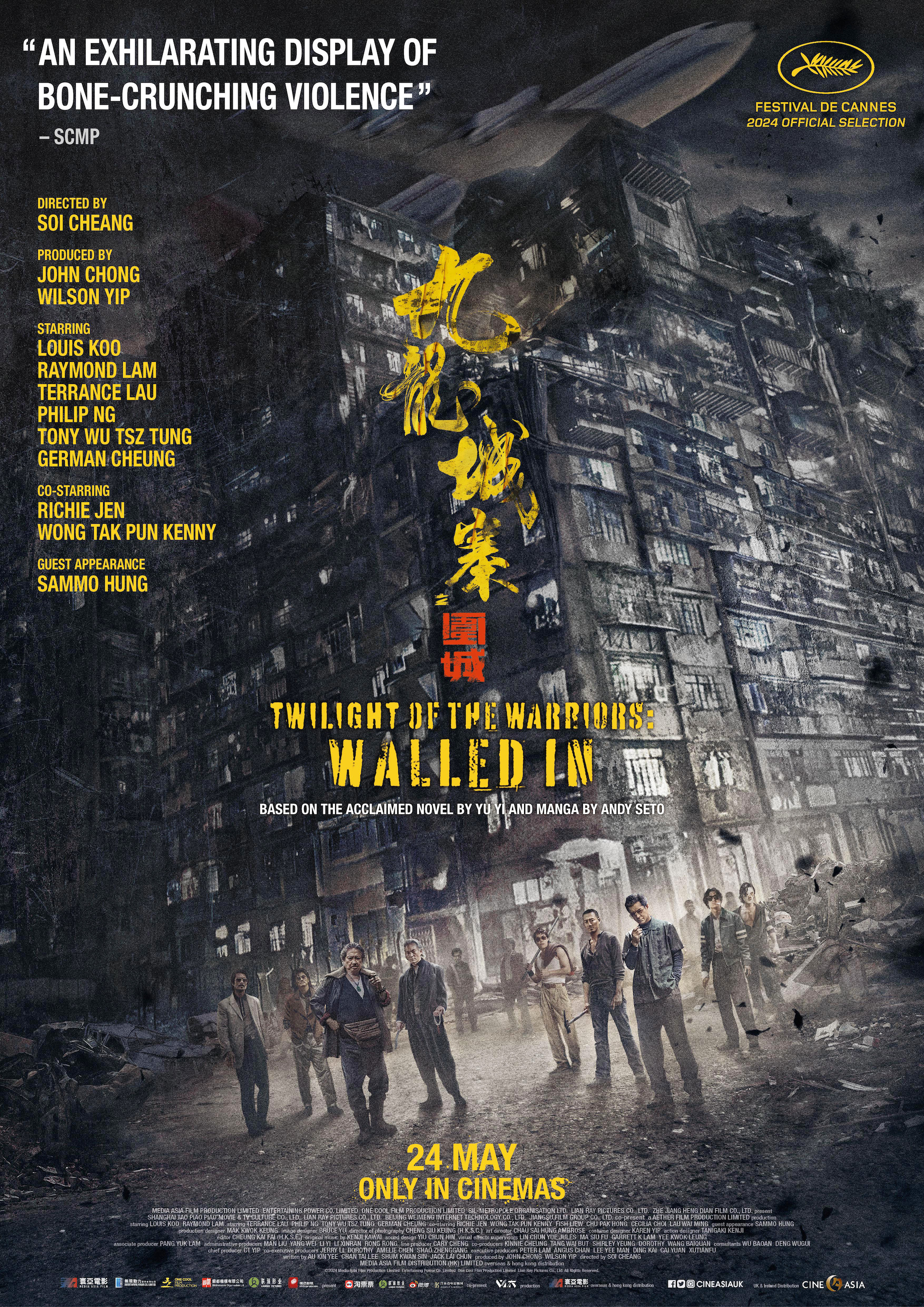
Twilight of the Warriors: Walled In (九龍城寨.圍城, Soi Cheang, 2024)

In Kowloon Walled City, you give help, you get help. Sometimes described as a colony within a colony, by the late 1980s the settlement was largely ungovernable and literal law unto itself save for the triads who maintained what little order there was. Yet in Soi Cheang’s Twilight of the Warriors: Walled In (九龍城寨.圍城) it’s a place of comfort and security, a well functioning community that as its leader Cyclone (Louis Koo Tin-lok) points out may be unpalatable for “normal” people but provides a point of refuge for the exiled and hopeless.

It’s difficult not to read it and Cyclone himself as embodiments of Hong Kong that is slowly disappearing. Dying of lung cancer, Cyclone is aligned with the fate of the walled city as someone whose time is running out, tired and world weary but still hanging on. In the opening sequence set 20 or so years before, we see Cyclone stand up to an apparent dictatorship and institute what seems to be a more egalitarian form of government though one obviously defined by violence. Nevertheless, when refugee Lok (Raymond Lam Wui Man) lands up there originally suspicious of Cyclone having been duped by local gangster Mr Big (Sammo Hung Kam-bo), he discovers him to be a stand up guy looking after those in his community and generally keeping the peace. Nevertheless, Lok’s arrival is the fatalistic catalyst for the opening of old wounds amid the free for all of the mid-80s society in which the Walled City, sure to be bulldozed, has just become a lucrative property investment.

Mr Big and his crazed henchman King represent this new order, amoral capitalistic consumerists who care little for the conventional rules of gangsterdom. Their bid to seize the Walled City has its obvious overtones as they seek to replace the (generally) peaceful egalitarian rule of Cyclone with something that appears much more authoritarian and ruthless. Believing himself to be a stateless orphan, Lok tries to keep his head down saving everything he can to buy a fake Hong Kong ID card which is also in its way a quest for identity not to mention a homeland and a sense of belonging. He finds all of these things, along with a surrogate father figure, in the Walled City only to have the new home he’s discovered for himself ripped out from under him because of a twist of fate. When he teams up with a trio of other young men who all owe their lives to Cyclone and the Walled City to attempt to take it back, it’s also an attempt to reclaim an older, more autonomous Hong Kong that exists outside of any kind of colonial control as evidenced by his final statement that no matter what happens some things don’t change.

This sensibility extends to the casting of the film which includes a series of Hong Kong legends including a notable appearance from the legendary Sammo Hung not to mention Louis Koo alongside a generation of younger stars such as Tony Wu and Terrance Lau Chun-him. Adapted from the manhua City of Darkness by Andy Seto, the film opens with a flashback to the original war for control of the Walled City that hints at deeper, extended backstories otherwise unexplored though equally mythologised by those who impart them to them Lok, a prodigal son and eventual inheritor of the City’s legacy. Even so, the comic book elements sometime distract from Soi Cheang’s otherwise evocative if hyperreal recreation of the Walled City slum or the political subtext that can be inferred in the presence of supernatural abilities such as those which seem to grant King near invincibility.

In any case, Soi Cheang looks back equally towards the history of heroic bloodshed in particular in his tale of brotherhood and loyalty in which the secondary antagonist is literally imprisoned by his own futile desire for a pointless vengeance on the descendent of a man who had wronged him but was already long dead himself. As he’d said, the future of the Walled City is in the hands of the younger generation who choose to end the cycle by setting him free rather than imprison themselves along with him while defending their home as well as they can. With some incredibly well designed action sequences including one that make its way onto a double-decker bus, Soi Cheang’s beautifully staged action thriller as its name suggests has a rather elegiac quality but also the spirit of resistance in its gentle advocation for the importance of supportive communities.


Twilight of the Warriors: Walled In is in UK cinemas from 24th May courtesy of CineAsia.

UK trailer (Traditional Chinese & English subtitles)

Table for Six 2 (飯戲攻心2, Sunny Chan Wing-Sun, 2024)

“It’s okay to be screwed, we’ll unscrew you later,” youngest brother Lung (Peter Chan Charm Man) comforts his dejected brother in an accidental advocation of what means to be a family in Sunny Chan’s followup to the phenomenally successful comedy  Table for Six. Like the previous film and in true Lunar New Year fashion, Table For Six 2 (飯戲攻心2) explores the concept of family in a wider sense along with contemporary attitudes to marriage and traditional gender roles.

Even so, it has to be said this table is now uneven as oldest brother Steve has literally run away from his romantic dilemmas taking off for Africa leaving new girlfriend Miaow (Lin Min-Chen) behind claiming she’s too far out of his league and it’s not fair of him to waste her youth. Ironically enough, Bernard (Louis Cheung) has now started a wedding business helping people pull off extravagant public proposals such as the sort of fake one he prepares for Monica (Stephy Tang Lai-yan) as a publicity stunt featuring him dancing in a 90s-style music video. As part of the campaign, they’ve set up Lung and Miaow as a fake couple hoping to build a following for their romance online much to unexpected chagrin of Josephine (Ivana Wong) who has begun to embrace her dreams by becoming a well-known quirky chef who makes food disguised as other food. Though they had agreed to separate so the could both follow three dreams at the end of the previous film, Josephine suddenly proposes leading Bernard to put on an extravagant wedding as promotion for his business. 

In a way, Bernard’s company symbolises the performative qualities of marriage as couples put themselves through a stressful and expensive ritual more out of obligation than real desire. When Lung is prevented from reaching the ceremony on time, Bernard ends up impersonating him in a full body costume making plain that the spectacle is more for show than sentiment and it could really be anyone up there simply fulfilling a role. In fact, no one even checks the certificates were properly signed. Then again, just as in Josephine’s cooking sometimes the “fake” and can actually contain the “real” just in a different way than expected. She may say that once a relationship has cooled the spark can’t be regained, but that doesn’t necessarily mean a new, different, spark couldn’t be found. 

Perhaps that’s what happened for Bernard and Monica who’ve now overcome the awkwardness of Monica having been in a longterm relationship with oldest brother Steve. Ironically enough, they’d more or less decided not to get married only to be blindsided by their reactions to the “fake” proposal but as it turns out more because of the emotional baggage from their parents’ failed relationships that have left them too afraid to get married. Monica is still traumatised by her father’s extra marital affair which resulted in a half-brother she’s never met but has since become a Cantopop star, while Bernard still has bad memories of being treated as a “red-headed” child and like Steve is preoccupied with a desire to keep the family together while worried that he isn’t really up to it. 

The lesson Bernard learns is that family is a burden that’s carried together so he didn’t need to save it on his own and that it’s alright to mess things up because his family will be there to take care of him. Miaow meanwhile is left in the same place as Steve had been in the first film, wondering how long she should wait for love or if Steve is ever coming back, trying to decide whether to accept a promising job offer in Japan or stay in Hong Kong. Part of her reluctance to move on is that she’s become wedded to the family and fears losing her place within it but as Monica says her status wasn’t dependent on blood or relationships and that she’s already been accepted into the family just for being herself. 

Then again, families can also be annoying as Bernard remembers after inviting his gangsterish uncles to one of the weddings only for them to muscle in as a major sponsor for another own insisting on designs the dress themselves complete with a par of shark fin wings to promote their business none of which meshes well with Monica’s passion for conservation. In any case, as Monica reflects family means you can embarrass yourselves together so maybe wearing a stupid dress for a few minutes isn’t such a big deal. Heartfelt and zany, Chan’s farcical drama shifts past the performative aspects of marriage and family to what lies beneath which, like Josephine’s cooking, may not always be what it first appears.


Table for Six 2 is in UK cinemas from 9th February courtesy of CineAsia.

UK trailer (English subtitles)

Lonely Eighteen (我們的十八歲, Tracy Choi Ian-Sin, 2023)

Looseley inspired by the experiences of star Irene Wan, Tracy Choi’s meandering drama Lonely Eighteen (我們的十八歲) charts the friendship between a pair of women trying to make their way in the ‘80s Hong Kong entertainment industry. Somewhat incoherent, the film positions itself awkwardly in its complicated gender politics while also ambivalent about the heroine’s commitment to her art and the things it may have cost her if also selling a mild message about female empowerment and independence.

Elaine and Ying meet as children, each from poor families and bonding in a shared sense of frustration. While Ying later moves away, Elaine’s family plan to sell her to a wealthy man though this does not appear to actually take place and she remains under the roof of her incredibly moody and abusive father. It’s her father who wanted to sell her and who makes her life a misery, yet the later part of the film will focus heavily on her love for him and guilt that her job prevented her from getting to the hospital in time when he passed away. In any case, after reuniting as teenagers, Ying introduces Elaine to a film producer she’s met through her clubland connections and the pair are signed as fledging starlets at a studio that mainly produces Cat III erotic movies. 

The film is very clear on the dichotomy between Elaine, wholesome and transcending her humble origins, and Ying who is earthier and trapped by the bad patterns of her childhood. Elaine soon progresses towards success as an actress, but Ying is somewhat traumatised by being cajoled into full frontal nudity by producer Ben and thereafter unable to shake off the label of erotic actress. Meanwhile she’s also trapped by her relationship with Shing, a guy she met at the club and wants to spend her life with but has a destructive gambling problem that disrupts her career.

In the film’s present day, it’s Elaine (now in her 50s) who is vacillating over marriage and what it might mean for her work as an actress and independence as a woman. Her manager seems to imply she won’t be getting work after the wedding, though her fiancé also seems rather controlling and disapproving of her career preferring she become a stereotypical housewife. It’s this that Elaine begins to rebel against, wanting to rediscover herself as an actress by taking on more challenging work even if her agent would prefer she stick to the commercial, while uncertain if she really wants to get married at the price of her career. The film ends with a fantasy wedding that reechoes the film’s lowkey conservative attitudes as Elaine’s fiancé effectively gives her permission to continue acting but only if she’s “transparent” with him. 

Elaine keeps saying that she wasn’t successful as an actress and feels guilty about letting her father down, though she appears to be working steadily and lives in a well appointed home whereas Ying has struggled with mental health issues and now works part time in a supermarket. The pair of them are subject to a hypocritical double standard and the vagaries of a sexist, largely unregulated industry. Ying never escapes the label of erotic actress, while Elaine’s attempt to break out of stereotypical roles in TV drama by agreeing to appear nude in a CATIII slasher backfires and leaves her exasperatiedly explaining that what she’s made is art and not porno. 

There are rumblings in the background, mentions of the Handover and the clearing of the slum where Elaine grew up which her father defiantly resists, yet the film can’t seem to find much of a through line or sense of purpose save the implication that the two women’s lives were largely defined by their family background with the perhaps unpalatable suggestion that Elaine used hers to propel herself forward while Ying’s continued to drag her down. Meanwhile, it’s also implied that Elaine’s “obsession” with acting has cost her in terms of her relationships, not only with Ying but not having said goodbye to her father because she needed to finish a scene while also remaining childless and unmarried at a comparatively late age. The resolution may point to her gaining the best of both worlds, claiming happiness on her own terms but also skews somewhat conservative in her fiancé’s chauvinism and the notion that she should be married even if she doesn’t really want to be. Even so, it does gesture at the enduring qualities of female friendship as Elaine and Ying patch up their differences while preparing to move on to a happier future.


Lonely Eighteen screened as part of this year’s London East Asia Film Festival.

Original trailer (Traditional Chinese / English subtitles)
A Guilty Conscience (毒舌大狀, Jack Ng Wai-Lun, 2023)

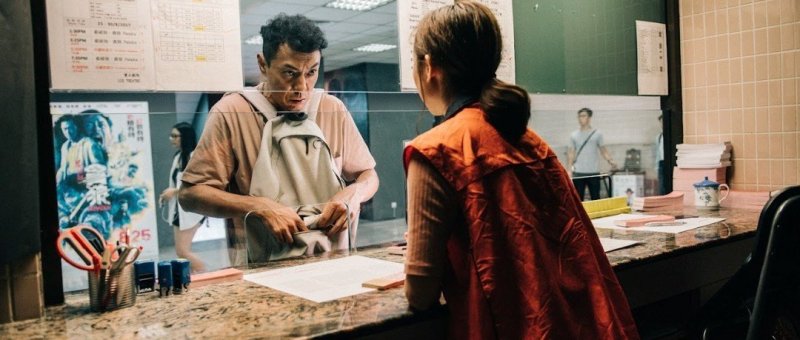
“Something is wrong” a defence lawyer eventually asserts, witnessing a blatant attempt at perverting the course of justice right in front of her but otherwise unsure what to do about it when her opponents are so sure that they really are above the law. The directorial debut from screenwriter Jack Ng Wai-lun, A Guilty Conscience (毒舌大狀) is the latest in a series of films to put the judicial system on trial in pointing out that we are not in fact all equal before the law and the systems that are intended to protect us can often by subverted. 

Subverting the legal system was in a sense what the hero, fast-talking lawyer Adrian Lam (Dayo Wong Chi-Wah), had been trying to do. After years on the bench, his career as a magistrate is going nowhere and he doesn’t really bother to show up anymore which is why he’s abruptly demoted to a committee dealing with potentially obscene material. Cutting his losses, he decides to join the private sector working for a sleazy firm representing the rich and powerful. His first case is supposed to be a walk in the park, defending a woman, Jolene Tsang (Louise Wong Dan-Ni), accused of murdering her daughter. As usual, Lam assumes the case will be easy to win and doesn’t really bother putting the work in, especially once he finds out the mother was the mistress of a powerful man, Desmond Chung (Adam Pak Tin-Nam), and assumes sorting out the murder charge will help him get in with the elite. Only Lam badly miscalculates and owing to his own hubris sees his heartbroken client sentenced to 17 years in prison for a crime she almost certainly did not commit. 

It’s a huge wake up call for Lam who is suddenly snapped out of his cynicism and burdened by the guilty conscience of the title knowing that it’s his sloppiness that sent a bereaved young mother to serve out the rest of her youth in jail. Opening a small office of his own in a rundown part of town he resolves to serve a better kind of justice, but also determines to do what he can for Jolene in an effort to correct his mistake. He gets a chance when someone involved with the case dies and leaves a note explaining that they lied during the original trial, but as the wealthy Chung family is involved he finds himself frustrated at every turn. No one is brave enough to go against them, while their sleazy legal advisor Tung (Michael Wong Man-Tak) continues to manipulate the system to his own advantage. 

Lam may have to play a little dirty, appealing directly to the jury and wilfully breaking court procedure to make sure they hear evidence which is otherwise inadmissible, but does so in the interest of “truth” which according to Tung has no place in a court of law. Tung may well be correct, objective truth is largely irrelevant when rhetoric and legal argument hold sway. What’s morally wrong might not actually be against the law, while doing what’s right might also get you into trouble. That’s where the jury comes in, Lam answers, as a kind of check and balance using common sense to temper cold legality and decide what might best serve a kind of moral justice rather than simply answer if an offence has been committed under the law. 

But Tung calls the jury “laymen”, implying they are too stupid to understand legal complexities and are in fact a spanner in the works of justice. He objects to the introduction of “feelings” and preaches “fairness” while manipulating the system to his own advantage. Lam catches him out by needling at his elitism, pointing out that he may think he’s an elite now that he hobnobs with the rich and powerful but in their eyes he’ll never really be their equal in a world still ruled by old money. In a case Lam presided over in which a young man was accused of stealing a pair of ready meals from a convenience store where he’d previously been employed, he asks the defendant if he thought poverty was an excuse to do whatever he wanted, irritated by his attempt to manipulate his feelings by emotionally blackmailing him in claiming the meals were for his elderly parents and only taken because his boss had not paid his wages. Nevertheless, Lam had acted in the interests of “fairness” spotting that he was being asked to repay the full price in compensation when the meals he stole were actually heavily discounted and adjusting the amount accordingly. In effect Lam does something similar in defending Jolene, asking the rich if they think their power and status puts them above the law. The Chungs at least clearly think they do, doing their best to intimidate and frustrate the course of justice. 

“Everything is wrong” Lam adds during his closing speech, decrying the influence of wealth and power not only in the judicial system but in society at large. Tung thought he could manipulate the prosecutor (Tse Kwan-Ho) in knowing him to be a stickler for letter of the law, but even he knows that sometimes you might have to break the rules to do the right thing and to apply the law incorrectly would not be in the best interests of justice. With strong comedic undertones and warmhearted charm, Ng’s farcical courtroom drama discovers that the real culprits are privilege, elitism, corruption, and ambition but that justice can be served if only we apply a little common sense. 


A Guilty Conscience is in UK cinemas now courtesy of Magnum Films Global.

Original trailer (Cantonese with Traditional Chinese / English subtitles)
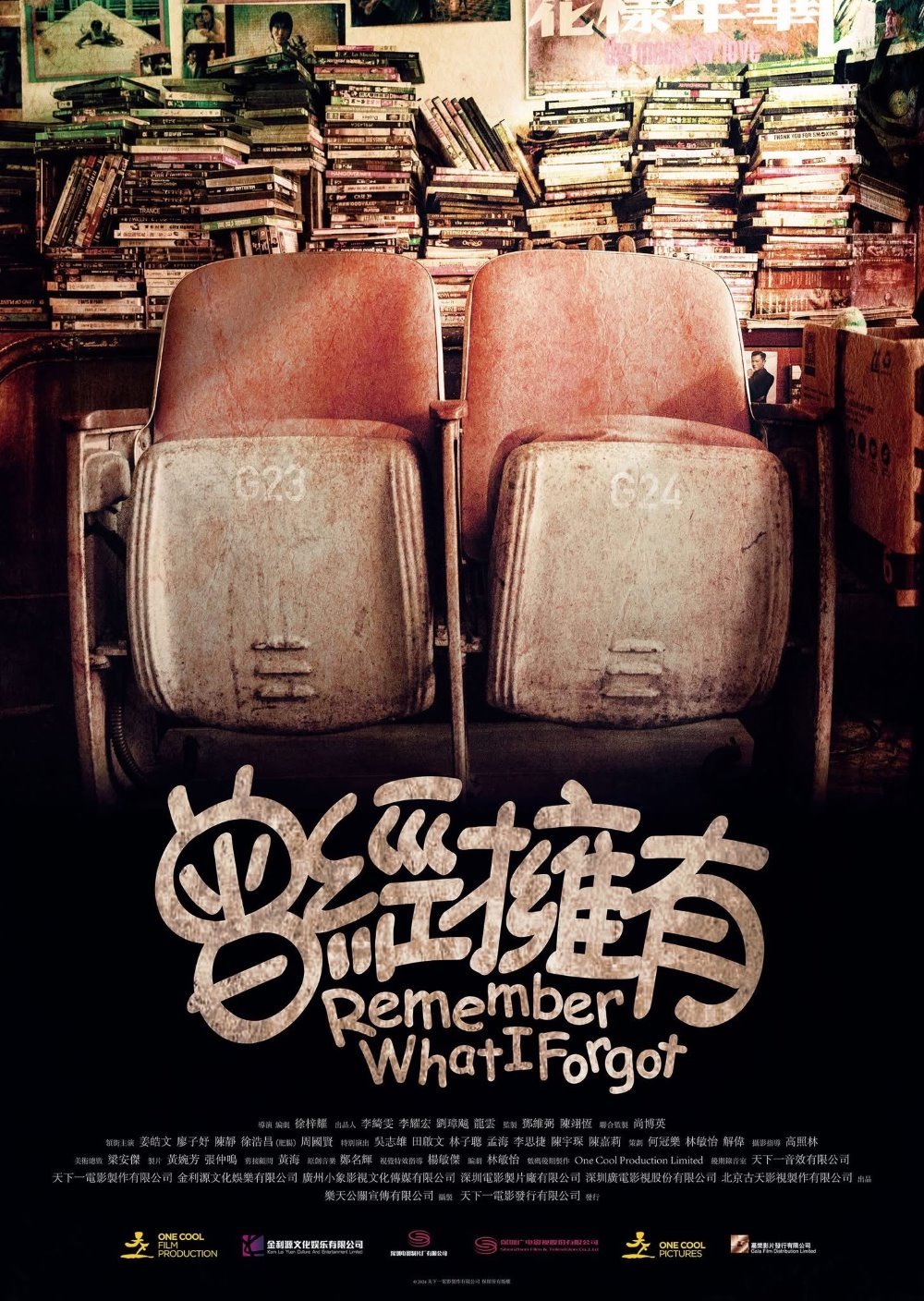
Table for Six (飯戲攻心, Sunny Chan, 2022)

“Wherever family is, that’s where home is” the dejected hero of Sunny Chan’s ensemble comedy Table For Six (飯戲攻心) is eventually told after struggling to keep his small family together by refusing to sell the apartment their parents left them in an old barbecue pork kitchen. Like his previous film Men on the Dragon, Chan’s tightly woven farce is a kind of delayed coming-of-age tale in which the hero realises that his familial bonds aren’t necessarily tied to a place and won’t disappear even if he has to leave it, but also the gentle celebration of food and family that has come to define the Chinese New Year movie (even if this one was delayed to the Mid-Autumn Festival for obvious reasons). 

Steve (Dayo Wong Chi-Wah) is the oldest of three brothers and a de facto father figure in the absence of their parents who have each passed away. Under the justification of obeying their late mother’s dying wish, Steve insists each of the brothers come home for dinner every night and now rarely leaves the apartment as if fiercely guarding an interior world he’s afraid he’ll one day lose. Working as a photographer from home, he ends up meeting popular Taiwanese influencer Miaow (Malaysian actress Lin Min Chen) who turns out to be one of his biggest fans and a now grown up woman who once sent him fanmail as a teenager. Miaow makes obvious romantic overtures but Steve tells her he’s not interested because he still hasn’t got over his ex Monica (Stephy Tang Lai-Yan) who broke up with him three years previously. This is also a problem because unbeknownst to him middle brother Bernard (Louis Cheung Kai-Chung) has been secretly dating Monica for the last six months. 

Much of the tension in the apartment stems from trying to integrate the competing desires of the brothers with their relationships as a family. Bernard and youngest brother Lung (Peter Chan Charm-Man) both want to sell the apartment for different reasons while only Steve insists on hanging on to it determined for them all to continue living together as impractical as that may be given that they are all approaching middle age. Lung quit his regular job some time ago to become a professional esports player which has further strained his relationship with longterm girlfriend Josephine (Ivana Wong Yuen-Chi) who is fed up with waiting for him to formalise their union while finding her own hopes and desires stifled by his obsession with esports success. To keep the peace Steve suggests an unusual solution in which he’ll employ Josephine as a cook which is certainly awkward on several levels given the resulting power dynamics but on the other hand not all that different from the status quo in practical terms as much as it annoys Lung who is secretly insecure in his lack of financial standing which is why he’s been putting off marriage. 

Essentially what Steve learns is that keeping the family together isn’t as literal a thing as he’d assumed it to be. If he wants to preserve it he might have to let it go and learn to move on from the past rather than stubbornly trapping himself in the inertia of his parents’ old apartment. Miaow turns out not be quite as vacuous as her online persona suggests, a neat subversion of Teorema as an unexpected guest who immediately sees and understands the unfulfilled needs of each of the family members and helps to guide them towards moments of realisation. Steve struggles to come to terms with the end of his relationship with Monica which turns out to have been caused by a minor misunderstanding while on the other hand processing complex feelings towards his brother trying to be magnanimous in the best interests of the future but on the other hand wondering if he and Monica might still have a future after all. 

Of course that does rather leave out Monica’s feelings though she too seems conflicted even if having made a choice to move on in deciding to date Bernard in the first place. Her pet peeve is that she hates it when people “disrespect” old things and can’t bear to see otherwise obsolete objects thrown away all of which suggests she might have made a mistake in moving on all while filling the apartment with relics of a disappearing Hong Kong such as old street signs and a pair of golden phoenix dragons which seem gloriously out of place in the otherwise industrial environment of the former barbecue pork kitchen. There might then be something of an additional message in Steve’s final realisation that home is where the family is in an era when so many have felt displaced and been forced to leave the place they love because it has changed beyond all recognition while he makes the decision to break out of his self-imposed inertia by moving on from the past to explore new possibilities outside of the apartment. Anarchic yet warmhearted and always forgiving of its sometimes flawed, often confused protagonists Chan’s cheerful family dramedy discovers that home is not so much a place as the people who live in it and that family is still family even if it’s far apart.


Table for Six is in UK cinemas now courtesy of Haven Productions.

Original trailer (Traditional Chinese / English subtitles)

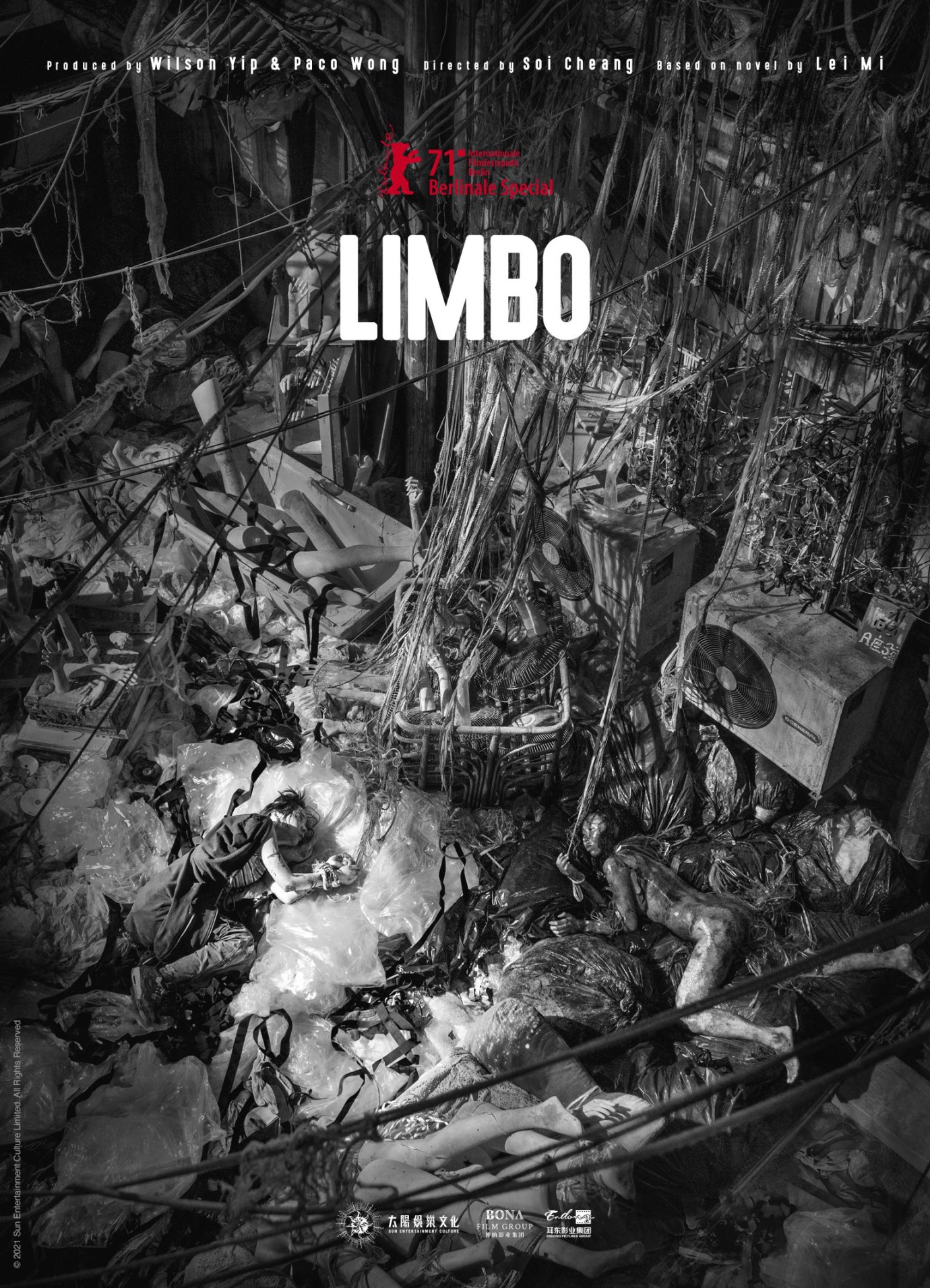
Limbo (智齒, Soi Cheang, 2021)

“I forgive you. Please live well”, a final message from the dying to one attempting to survive the junkyard hellscape of contemporary Hong Kong. Soi Cheang’s stylish thriller Limbo (智齒), shot in a high contrast monochrome lending the city state the rain-soaked aesthetic of cyberpunk noir, is in many senses a purgatorial odyssey as its pregnant title implies sending its duo of morally compromised cops into a world of the dispossessed inhabited by those “thrown away” by their society and thereafter left to rot among the detritus of an uncaring city. 

Hong Kong’s homeless may occupy a liminal space, trapped in an inescapable limbo, but it’s grizzled cop Cham (Gordon Lam Ka-tung) who is the most arrested, unable to move on from the accident which left his pregnant wife suspended in a coma. To escape his own sense of purgatorial inertia, he seeks closure in chasing down petty criminal Wong To (Cya Liu) whom he holds responsible for his fate on discovering she has been granted early parole for good behaviour. As fate would have it, Wong To’s release back into the underworld (after all, where else was she to go?) has unexpected connection to the case Cham is currently investigating in the mysterious appearance of random severed hands each belonging to “social outcasts”, as Cham’s slick rookie partner puts it, they fear may hint at the existence of a serial killer growing in confidence. 

Adapted from a novel by Lei Mi, the film’s Chinese title is simply “Wisdom Tooth”, a tongue in cheek reference to the ongoing toothache which places cop two Will Ren (Mason Lee) in his own kind of purgatorial pain, the offending molar eventually knocked out during his climactic fight with the killer during which he will in a sense transgress, passing from innocence to experience in gaining the wisdom that police work’s not as black and white as he may have believed it to be. “Cops are human too” his boss reminds him as he takes the controversial step of reporting his new partner for inappropriate use of force while pursuing a personal vendetta not exactly connected with his current case. He doesn’t disagree, but points out that police officers have guns and are supposed to uphold the law, not abuse their authority and take it into their own hands. 

But then, who is really responsible for the junkyards of the modern city and their ever increasing denizens abandoned by a society which chooses to discard them along with all their other “rubbish”, little different from the dismembered mannequins which people the killer’s eerie lair. Soi frequently cuts back to scenes of the dispossessed often looking stunned or vacant as they sit on mattresses or abandoned sofas surrounded by the pregnant disrepair of a city in the midst of remaking itself as if they were sitting on skin in the process of being shed by a slow moving snake. It would be tempting to assume the killer has a vendetta against “social outcasts”, his victims sex workers, drug users, and criminals though in truth these people are simply the most vulnerable even if there is no clear motive provided for the crimes save a minor maternal fixation and possible religious mania. A drug dealer ensnared by Cham’s net remains loyal to the killer, “We’re not as crazy as you. We are rubbish, so what? In this world, he’s the only one who cares.” she tells him, unwilling to give up her one source of connection even while aware of her constant proximity to death and violence. 

Cast into this world, Wong To too is trapped in an individual purgatory longing for forgiveness for her role in the death of Cham’s wife, a forgiveness he cruelly denies her even while making use of her desperation to force her to risk her life for him in betraying her underworld contacts to edge towards the killer. “Why are you treating me like this?” she asks, “I don’t want to die”, well aware that denied his direct vengeance by Will Cham is attempting to kill her by proxy. Wong To keeps running, keeps fighting, refuses to give up while seeking atonement and an escape from this broken world of violence and decay. It is she who eventually holds the key to an escape from purgatory, the cycle is ended only in forgiveness. Soi’s stylish drama may paint the modern society as a venal hellscape neglected by corrupt authority, but nevertheless permits a final ray of light in the possibility of liberation through personal redemption. 


Limbo streams in Europe until 2nd July as part of this year’s hybrid edition Udine Far East Film Festival.

Original trailer (English subtitles)

Sisterhood (骨妹, Tracy Choi, 2016)

Middle-aged regret and irreconcilable loss bring one lonely woman home from exile in Tracy Choi’s melancholy exploration of impossible love and illusionary futures, Sisterhood (骨妹, Gwat Mui). Moving from present day Taiwan to pre-handover Macao, Choi’s emotionally complex drama is both a chronicle of changing times and not as the collection of women at its centre attempt to protect themselves from a relentlessly patriarchal society through female solidarity only to see their fragile bonds disrupted by a political sea change. 

Choi opens in the present day with a now almost middle-aged Sei (Gigi Leung Wing-kei) visiting a doctor’s surgery after fracturing her wrist, apparently the result of an all too common drunken accident. Now living in Taiwan and running a small inn with her devoted husband who is perhaps overly supportive in his willingness to enable her drinking on the grounds that it keeps her “happy”, Sei appears to be quietly miserable. Spotting an ad in a newspaper telling her that an old friend, Ling (Jennifer Yu Heung-ying), with whom she’d long since lost touch has passed away jolts her out of her inertia, journeying back into the past as she finds herself travelling to a very different Macao to that of her youth in which the young Sei (Fish Liew) worked as a masseuse and was part of a quartet of close friends trying to survive the indignities of life on the margins through shared sisterhood. 

Sei’s “breakup” with Ling occurs on the very day that Macao returns to China, her friends seemingly thereafter scattering as she finds herself agreeing to a rebound marriage with an earnest Taiwanese customer who abruptly proposed on their very first date. We hear Ling tell her that she has found a man willing to marry her, but that her son Lok is an obstacle and so she plans to send him to the Mainland, cruelly ignoring the part that Sei has been playing in their lives as a co-parent even if, as we discover, the relationship between the two women goes largely undefined. Having moved in with her after losing her apartment, it is Sei who is there to support Ling when she becomes unexpectedly pregnant by a casual boyfriend/customer, eventually convincing her to have the baby by assuring her they’ll raise it together, but despite their pledges to stay together always the spectre of heteronormativity hangs over them constantly. Mocked in the street by a couple of old busybodies, Ling reacts with extreme sensitivity to the word “lesbian”, quickly moving her hand away from Sei’s as they push their son together in his pushchair lest conclusions be drawn from their closeness. Sei, by contrast, pays it no mind though this could easily be because she knows it isn’t “true”, at least in any concrete sense. The two women are evidently not lovers, if perhaps in love, but so impossible does their relationship seem to them that they lack the ability to recognise it let alone envisage its future. 

It is perhaps this degree of internalised shame that leads Ling to push Sei away, believing either that she will be “happier” in a heterosexual relationship, that she is in some way preventing her from living a more socially conventional life, or just afraid of her own feelings in assuming they are not returned and that she does not in any case deserve romantic happiness. The irony being that Sei’s married life seems to have been one of miserable emptiness and regret, stubbornly attempting to make the conventional work without quite knowing what the cause of her pain really is. On her return to post-handover Macao, she’s confronted with the failed futures of all her friends, one now a young grandmother owning her own business but forced to work herself to the bone to provide for her family, and the other near destitute and alone, floundering in the casino paradise of the upscale modern city. Meeting the now grown Lok she confides that she’s happy for him because lost as he is he has choices they never had in their young lives in which they did anything they could just to survive. 

The female solidarity which had enabled the four women to navigate a world in which they were encouraged to believe that their only option was to gain access to male economic power has thoroughly broken down in the post-handover society, and so Sei’s return is also a healing in helping to repair the broken bonds between her friends and restore the “sisterhood” which had been ruptured by the passing of an era. She can no longer repair her relationship with Ling and is perhaps left with a sense of longing and regret for an irretrievable past, but in coming to an understanding of her youth, her own feelings and desires, she gains the self-knowledge denied to her during her 15 years of exile, finally in a sense returning “home”. 


Sisterhood is available to stream in the UK 23rd October to 5th November via Barbican on Demand as part of this year’s Queer East Film Festival.

Original trailer (English subtitles)