Blind Love (失明, Julian Chou, 2025)

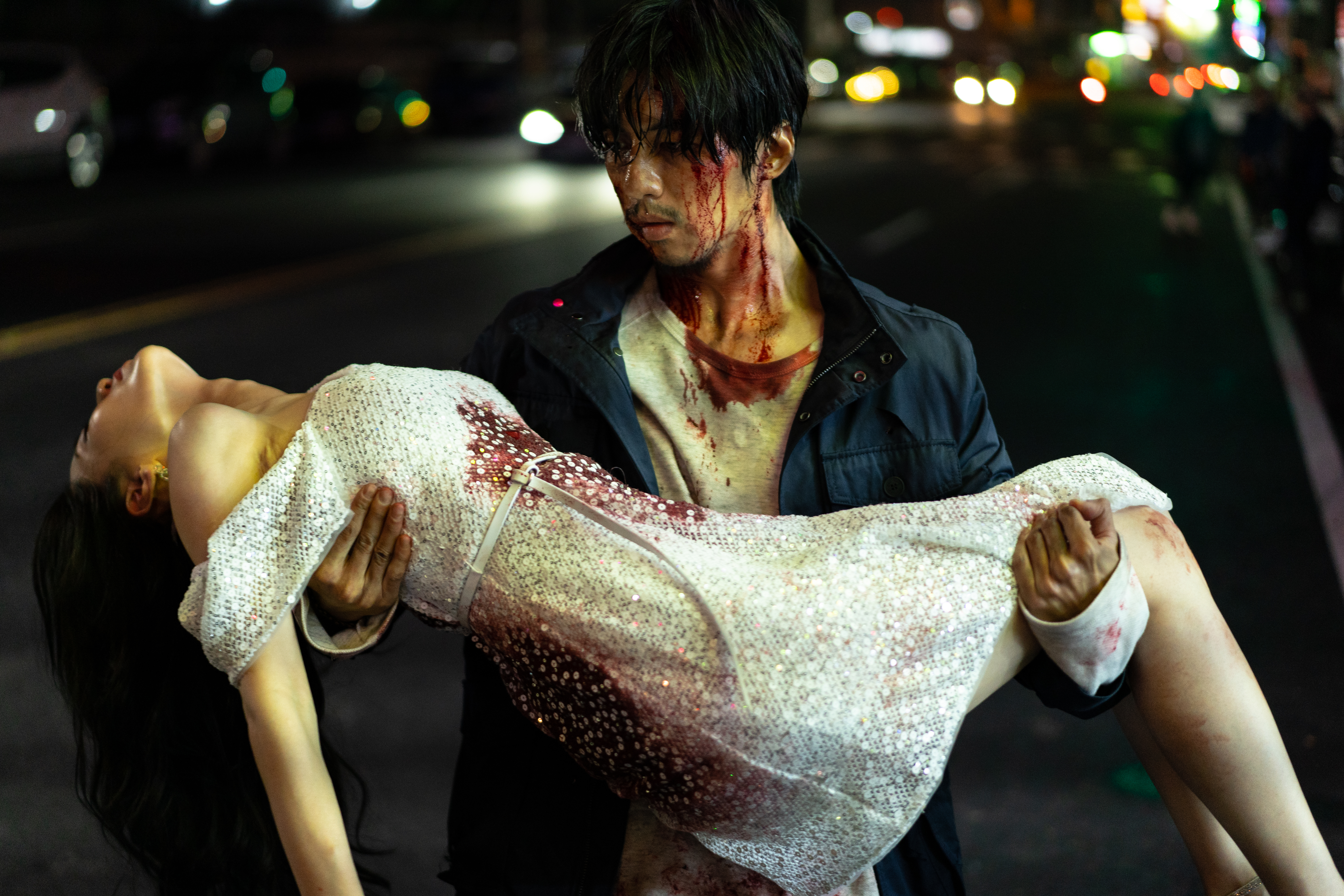
There’s none so blind as those who refuse to see, as the old saying would have it. Though in Julian Chou’s Blind Love (失明, shīmíng) the problem is often more an obsession with the gaze of others that prevents its lonely protagonists from looking within and coming to an acceptance of themselves along with what it is they really want out of life. Set before Taiwan’s legalisation of same sex marriage, the film positions patriarchal heteronormativity as the cage in which the heroine willingly imprisons herself in fear and shame.

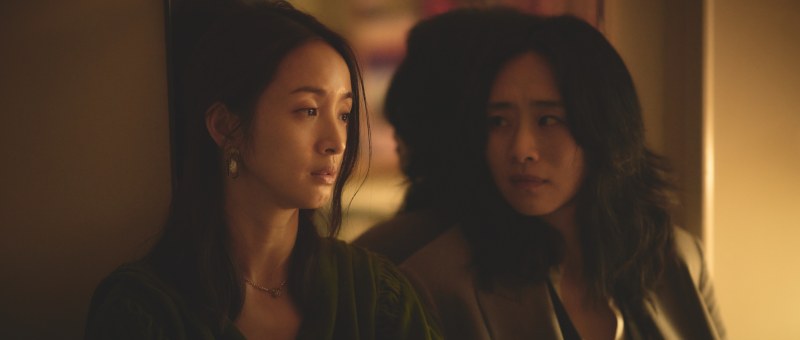
It’s telling that on being discovered with her girlfriend Xue-jin (Wu Ke-xi) when they were university students, Shu-yi (Ariel Lin) immediately jumps to the shame she feels in having done this to her mother. When the two women are together, it’s a bubble of perfect happiness, but on gazing at herself from the outside, Shu-yi feels only disgust in her feelings for Xue-jin and at some point evidently chose “properness” and conformity. Years later, when her mother has lost her sight and is living in a nursing home, she snaps at the nurse not to call her daughter because she’s married to a doctor and therefore very busy. Though it’s an odd moment, she says this with pride as if her own life were fulfilled by her daughter’s “successful” transition to wife to a professional man and mother to his sons. But it also seems as if this continual unseeing as manifested in her mother’s literal blindness is what later leads her to take her own life when forced to look inside herself while otherwise rendered dependent on Shu-yi and her unsympathetic husband Feng (Frederick Lee).

Feng is a selfish and unkind man who rules his home with an authoritarian iron fist. When Shu-yi tentatively hints that it might be better for her mother to live with them, he doesn’t answer but then immediately needles her, asking if she’s put on weight and whether the dress she’s supposed to wear to an important dinner will still fit. The domestic environment is rendered as a prison in which there is no natural light. The furnishings are cold and grey, as if there were no love or warmth here, and Shu-yi is under constant observation to ensure she plays her roles effectively. Feng sees his family only as tools or extensions of himself. He paints the picture of a perfect family to smooth his path to career success by ingratiating himself with the influential Doctor Gu and though Mrs Gu later sees through Shu-yi and is aware of the cracks within her marriage, chooses to unsee them and encourages Shu-yi to do the same by reaccepting her duty to dissolve herself within her husband’s ambitions even if her heart lies elsewhere. 

Feng exerts the same pressures on his teenage son, Han (Jimmy Liu Jing), by insisting that he study medicine though Han is now too old to submit himself to his father’s authority. You can’t let others decide for you, he tells a friend, and is told the same by Xue-jin whom he meets by chance and unwittingly falls for not knowing that she is his mother’s long-lost love. Xue-jin might seem like a more liberated soul having divorced her husband and accepted her sexuality while pursing her art as a photographer, which is of course the art of seeing, but her drink problem also hints at her loneliness and unresolved longing for Shu-yi. “You think what we do is wrong,” she tells Shu-yix with frustration, but Shu-yi can only answer, “How could be right?” before returning to her conformist life with all of its misery.

When she tells her younger son Rui that all that matters is how other people view you and asks him why he can’t just be “normal”, it’s as if she’s talking to herself. As the three of them pass through the pride parade and Rui asks what’s going on, Feng tells him that there are two kinds of people, the “normal” and the “abnormal” and that the people parading want to be seen as “normal” though they are not. Shu-yi pushes hard on the accelerator in anger and frustration, but it’s a divide she’s internalised within herself and remains unable to see that her love for Xue-jin is normal and natural. A woman in the bathroom at Feng’s dinner suggestively offers her her lipstick, explaining that it’s “the best form of camouflage for people like us,” before kissing her and leaving having rewakened Shu-yi’s latent desire. Hiding within this world of traditional femininity is the way Shu-yi has chosen to sublimate her desires and the concurrent self-loathing, but is also, in its way, an act of self-harm and means of punishing herself that amounts to a kind of suicide.

Only while making love with Xue-jin does she become fully herself before the self-recrimination finally kicks back in. Their connection is raw and honest, filled with tenderness and yearning, yet Shu-yi struggles to embrace happiness or accept her authentic self by escaping from the patriarchal superstructure represented by her mother and her husband’s authoritarianism. Chou ends on an ambiguous note in which Shu-yi is perhaps learning to see the truth of herself, but her world still appears cold and grey as if suggesting that, in the end, this kind of happiness and fulfilment is still not permitted to her even if she has finally accepted what kind of life it is that she wants.


Blind Love screens as part of this year’s San Diego Asian Film Festival.

Trailer (no subtitles)
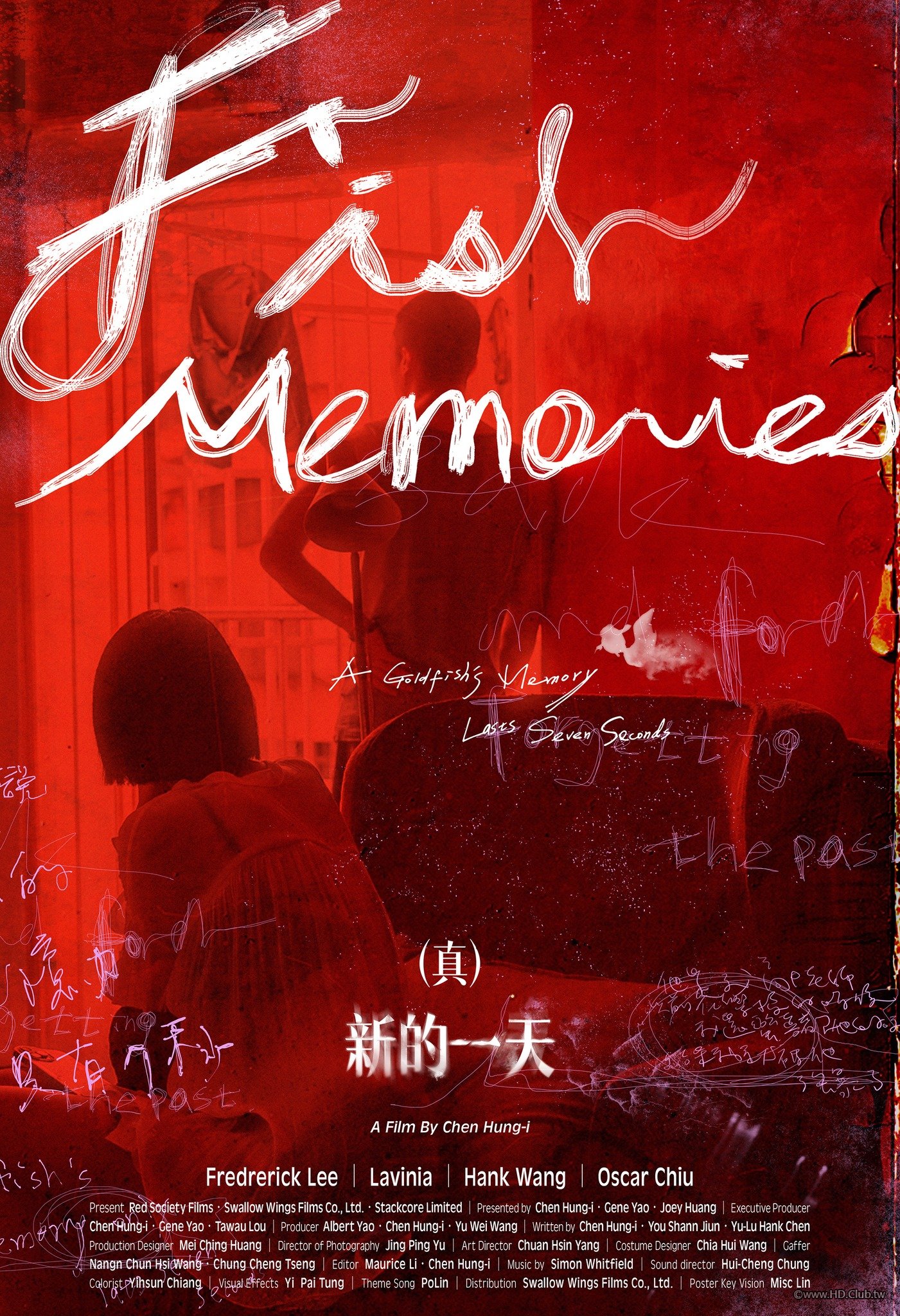
Fish Memories ((真)新的一天, Chen Hung-i, 2023)

The sometime narrator at the heart of Fish Memories ((真)新的一天, (zhēn) Xīn de tiān) says that she wishes her memory were like that of a fish, no longer than seven seconds, and that she were able to be free of her traumatic past by forgetting it. But of course, she is unable to forget and like her boyfriend, Shang, and the middle-aged man with whom the pair eventually form a twisted relationship, a kind of orphan drifting in the wake of parental failure.

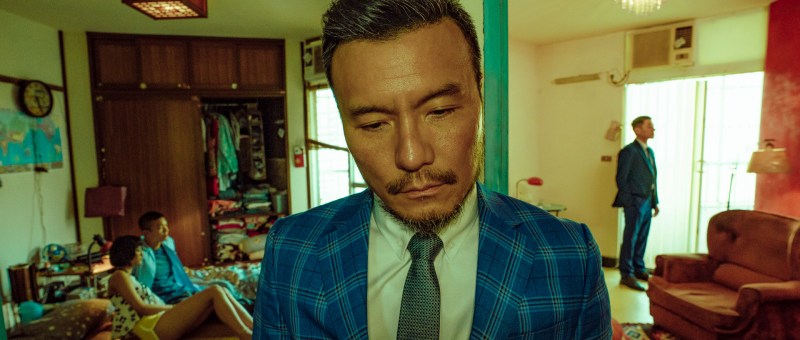
Businessman Zi Jie (Frederick Lee) also seems to drifting, seemingly dissatisfied with his financially comfortable but emotionally empty existence. He later says that his own parents only cared about about money and sent him away to Singapore when he was a teenager only for their business to then fail. He feels as if he’s done better than them, at least, but when asked how to avoid loneliness he answers only “earning money, spending money, earning money”. He has a girlfriend of around his own age, but bristles when she expresses a desire for greater intimacy and ends up pushing her away while beginning to bond with Shang (Hank Wang), a teenager he meets in a convenience store while picking up a parcel. He runs into the boy a few more times and ends up developing a friendship with him and also his same age girlfriend Zhen Zhen (Lavinia) who is still in high school and claims to have been sexually assaulted by one of her teachers who’s apparently done the same thing to several other girls with no apparent consequences.

Zi Jie’s relationship with the teens straddles an awkward divide, partly parental and partly friendly. He seems to partially regresses in their company, drinking incredibly expensive wine but also sitting around playing video games and agreeing to childish dares such as the one in which he ends up swapping places with Shang, waking up in his walkup apartment and dressing in his clothes. Shang’s living environment is not ideal, Zi Jie balks at the stairs while the place is cramped and filled with junk and Shang evidently rarely does no laundry but to Zi Jie it represents a kind of freedom. Of course, he can always return to his luxury apartment which still has power even during an outage which is an option not open to Shang who nevertheless seems to increase in confidence while wearing Zi Jie’s fancy tailored suit. Several times he approaches his rundown apartment block and looks to the sky as if echoing his sense of aspiration though that turns out not to be the reason he’s interested in Zi Jie. 

When he first gave him a car ride, Shang blunts told Zi Jie he wouldn’t sleep with him because he liked girls, remarking that Zi Jie looked “a bit gay”, but a sexual relationship does eventually evolve between the trio even as they also form an unconventional family unit. When they sit down to breakfast together with the doors onto the courtyard open and the sun drifting in with idyllic view behind, Zhen Zhen remarks that it’s the kind of moment she’s been waiting for all her life despite the awkwardness of this quasi-incestous and definitely inappropriate relationship given that the teens are underage and Zi Jie is a wealthy middle-aged man keeping them in his apartment.

But it’s perhaps when the streams start to cross that things begin to go wrong, Zi Jie making a huge miscalcutation while in the teens’ world that provokes a tragic event biding each of them together though only in the darkest of ways. The three of them are each in their way trapped in a tank, no more free than the fish they place inside it and in the end able to find freedom, of one kind or another, by remembering and acknowledging the truth. Repressing his sexuality and chasing only empty financial success has evidently left Zi Jie a hollow, broken man seeking to reconnect with his younger self through his relationship with Shang which in its way also prevents him from acknowledging the vast gulf that exists between them in their differing circumstances but also unites them in a shared feeling of irresolvable loneliness and the legacy of parental abandonment in a sometimes indifferent society defined by economic success.


Fish Memories screens 8th September in Melbourne as part of this year’s Taiwan Film Festival in Australia.

Original trailer (Traditional Chinese / English subtitles)

Breaking and Re-entering (還錢, Wang Ding-Lin, 2024)

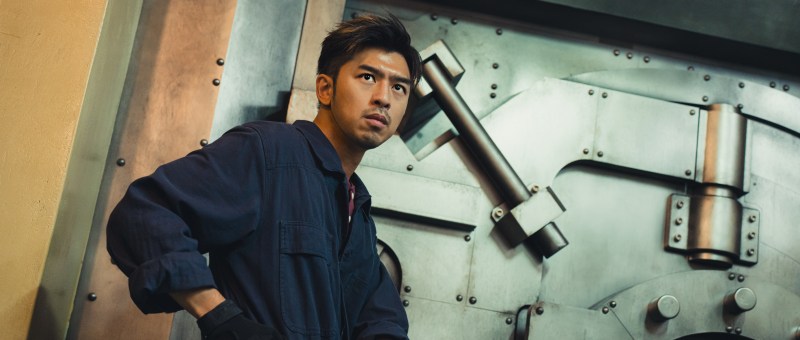
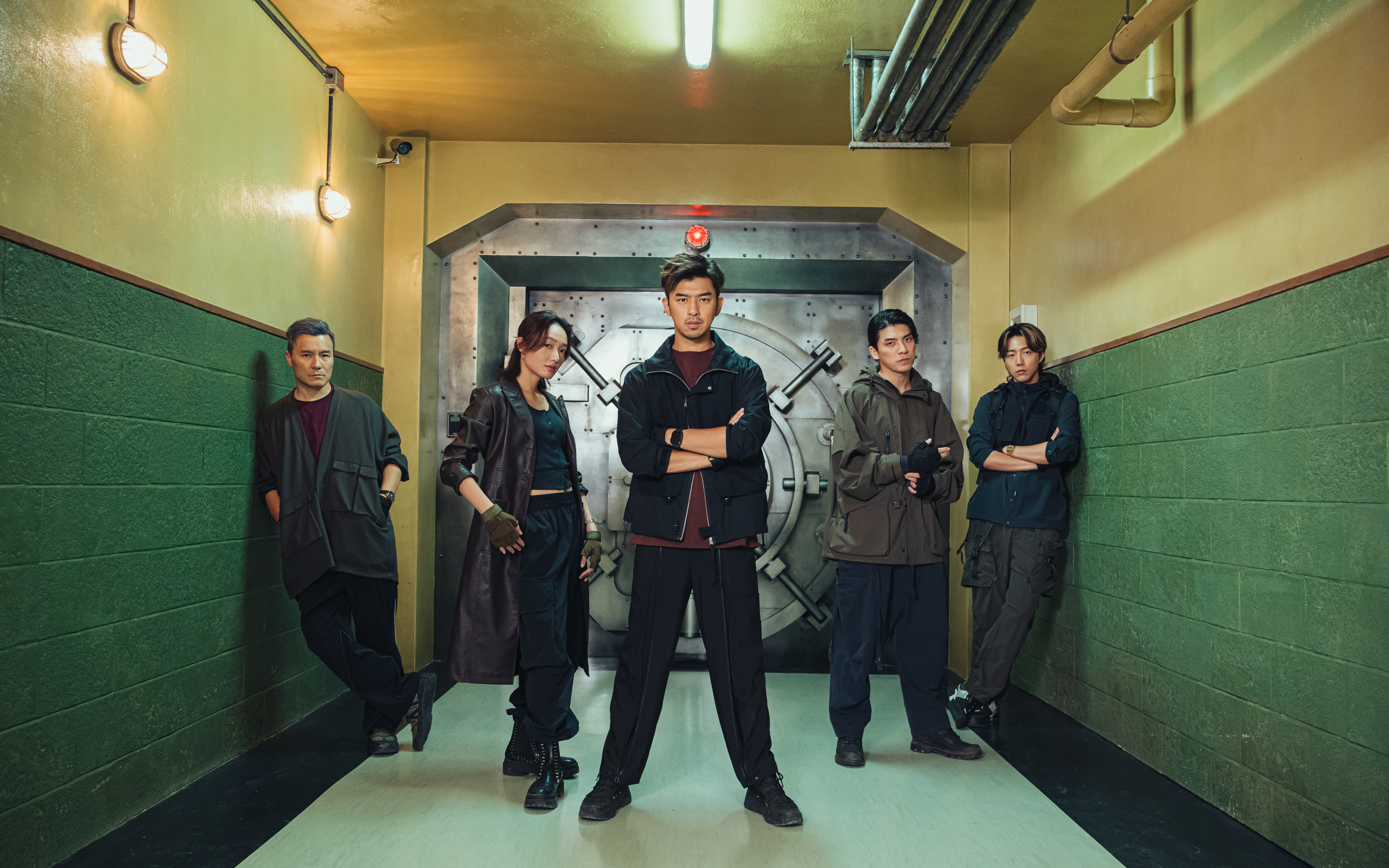
You go to the trouble of planning a massive heist, and then it turns out you have to put it all back again. The gang of theives at the centre of Wang Ding-Lin’s hugely entertaining crime caper Breaking and Re-entering (還錢, huán qián) brand themselves modern day Robin Hoods, pausing for a laugh when they claim to help the poor, “yeah, us”. Yet there is something a little suggestive about this particular gig as they find themselves hired for an inside job by an obnoxious bank chief who claims the most important thing in life is yourself and those around you are merely passengers to be jettisoned at will..

Chen (Wu Kang-ren) is a rich kid who inherited the family bank and thinks he’s hot stuff after studying abroad, speaking Mandarin like foreigner and peppering his speech with English. His big idea is a cryptocurrency called BST and his tagline is “Peace, Love, and Money” while ironically enough he is also claiming to run a charity to help the poor. It’s obvious he’s running some kind of scam and not altogether surprising that he’d plot to rob his own back and then have the thieves bumped off to keep them quiet along with the two employees he’s decided to frame for the crime. Unfortunately for everyone, one of his scapegoats, Shen Shu-wen (Cecilia Choi), is the long lost flame of chief crook Po-chun (Chen Bo-lin) who, having realised Chen plans to bump her off, comes to the conclusion his only option is to mess up Chen’s plan by putting the money back in the vault.  

Of course, Chen is a kind of gang leader too complete with his own chief minion, Hu, though at one point he simply shoots one of his guys in the back of the head after he complains that Chen that doesn’t really value him. By contrast, Po-chun’s gang is a close-knit family, a brotherhood of thieves founded on mutual solidarity and infinite loyalty. Chen’s philosophy maybe that the individual is all, but these men live and die for each other. Nevertheless, Po-chun has a problematic hero complex that sees him, as others put it, aways trying to “take responsibility alone”, sacrificing himself for the group rather than allow his fellow gang members to shoulder some of the burden. That’s presumably one reason he (un)intentionally ghosted Shu-wen after getting arrested and going to prison, convincing himself he was doing the noble thing by avoiding getting Shu-wen mixed up with crime but perhaps also ashamed and insecure unwilling to let her know he met her as part of a heist and his cover personality wasn’t real while never giving much thought to her feelings. Shu-wen spent the last five years looking for him which was apparently a primary motivation for changing her career to work in the bank.

Po-chun’s quest is really one of maturity, to stop being the lone hero and fully integrate into the group by sharing responsibility with the others rather than jump straight to self-sacrifice. As he says through the medium of a montage sequence, their secret weapon is teamwork which is how they’re able to fight back against the well equipped Chen and his minions when the reason Chen flounders is his arrogance and the indifference of his men. That is not to say there isn’t tension in the team, such as the unrequited attraction bruiser Wen-hao has for Po-chun that is quite definitely antagonised by the resurfacing of Shu-wen who seems to have figured out the group dynamics pretty quickly in addition to seeing through Po-chun’s strong man act. 

It’s the warm-hearted, lived-in relationships between the team members that give the film it’s charm along with the quirkiness of the elaborately planned reverse heist and its mild dig at corporate tyranny along with class-based inequality. But most of all what it seems to advocate for is a collective spirit and the triumph of the intellect over the pampered authority of rich kid Chen as Po-chun strategises a way out of his grasp while ending his influence and getting the girl. Wholesome and charming, the film makes the most of its surreal humour along with some hilariously placed reality gags such the infuriating slowness of a “high end automatic door” that ironically prevents a wealthy crook from fleeing the scene.


Breaking and Re-entering screened as part of this year’s New York Asian Film Festival and is also screening as part of the Taiwan Film Festival in Australia

Original trailer (English subtitles)

Life For Sale (售命, Tom Teng, 2021)

A nihilistic insurance broker chases existential validation in Tom Teng’s darkly comic crime drama, Life for Sale (售命, shòu mìng). Drawing inspiration from the novel by Yukio Mishima by the same name, the film takes aim at the commodification of life under a relentlessly capitalist society while its hero gradually discovers liberation in reaching an accommodation with death that begins to give meaning to his existence. Sucked not only into local gangster intrigue but shady international conspiracy, he finds himself forming a tentative relationship with an equally depressed neighbour who has troubles of her own. 

Ironically enough, Liang (Fu Meng-po) is a life insurance broker which quite literally means it’s his job to figure out exactly how much a life is worth. As for himself, he’s convinced his life is worthless and is obsessed with the idea of suicide while seemingly reluctant to actually die. He looks up banal ways to end his life on the internet and discovers that almost everything including carrots, cinnamon, and chewing gum, becomes poison if you consume enough of it. When he’s called into his boss’ office shortly after punching an irritating colleague in the face, he’s given a good idea of what his own life is worth when she tells him that the company bought a year of it with his salary but he’s been a poor investment and has actually cost them money through this rubbish sales record. It’s at this point he decides to call the corporate life quits and, taking inspiration from a copy of Life for Sale he found on the bus, decides that he should try monetising his life by selling it on the internet. 

His first offer is from creepy gangster Wang who repeatedly claims there’s nothing in the world his money can’t buy. He wants to send Liang on a dangerous mission to retrieve his wife’s dog from a rival gangster who’s kidnapped it, while a mysterious woman is also trying to recruit him for some kind of experimental research programme. Perversely he continues to think of his life as his own even having sold it resenting those who now think they own him and contemplates suicide as an expression of his autonomy. He comes to realise that his life is the one thing he has while simultaneously accepting that having lost it he is effectively dead already and has nothing left to lose. The realisation is liberating, his nihilism intensified as he resolves to do whatever he can to survive in part so that he might save others. 

Having begun with a darkly humorous take on the dehumanising nature of modern capitalism in which there is a price tag on each and every life, the film slides towards existential contemplation as Liang finds himself caught in the crosshairs not only of internecine gangland drama between the sinister wang and flamboyant Liao mediated though a chaotic hit on a dodgy policeman, but of an international conspiracy which is intent on doing something not entirely ethical to his body. Despite his newfound ruthlessness he is effectively emasculated firstly by the mysterious woman who tells him that he is a coward who does not deserve to be called a man and then by his neighbour who having lost faith in him declares that she will have to save her son herself thereby defining the value of her own life. 

All the while, Liang is plagued by a little bug that follows him around and seems to lead to trouble while perhaps echoing his capacity to survive. When he asks someone why they continue to smoke despite knowing the risks, he is ironically told that everyone has a little bit of a death wish and continues to leverage his own in a determination to at least make his death if not his life mean something. Then again, even post transformation he can’t seem to escape from the world in which everything is for sale agreeing to sell his life but drawing the line at his soul. On the run though perhaps no longer from himself, Liang has at least gained a new appreciation of the value he places on his own life and those which define the lives of others if strangely unaffected by failure or tragedy. Quirky production design and comic book-esque absurdity hint at the underlying satire but also contribute to a kind of origin story for a superhero escapologist looking for agency in a continually exploitative existence. 


Life For Sale screens at Lincoln Center 24th July as part of this year’s New York Asian Film Festival.

Original trailer (Traditional Chinese / English subtitles)

The Scoundrels (狂徒, Hung Tzu-hsuan, 2018)

The Scoundrels posterTaiwanese cinema has, of late, been most closely associated with whimsical romantic comedies and maudlin melodrama but a return to action could very much be on the cards if The Scoundrels (狂徒, Kuáng Tú) is anything to go by. A tensely plotted neo-noir, the debut feature from Hung Tzu-Hsuan takes its cues from classic Hong Kong heroic bloodshed and contemporary Korean crime thrillers as its conflicted hero battles himself in other forms, unwittingly taking the fall for the “Raincoat Robber” all while trying to reclaim his sense of self approval.

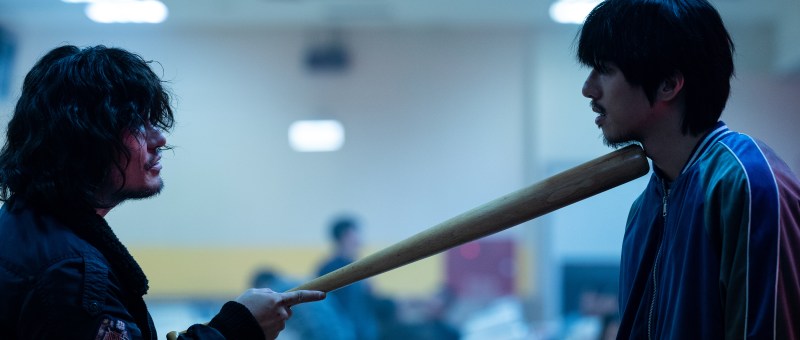
Ruining himself through a senseless act of self destructive violence, Ray (J.C. Lin Cheng-Hsi) lost his top basketball career along with the fame and fortune that went with it and now makes a living on the fringes of the crime world tagging luxury cars with GPS trackers so the thugs can pick them up later. His life takes an abrupt turn for the worse when he is about to tag the car belonging to the elusive “Raincoat Robber” (Chris Wu Kang-Ren) who takes him hostage at gunpoint and gets him to call an ambulance for the injured woman (Nikki Hsieh Hsin-Ying) lying in the back before abandoning her on the roadside and driving off.

Despite his obvious fear, Ray finds himself warming to the strangely jovial criminal who perhaps reinforces his sense of being wronged by the world with his dubious philosophies. Ben, as he calls himself, tells him that society is to blame and he’s better off embracing his darker nature but Ray remains unconvinced. Despite an awareness of his bad qualities – his self destructive need for violence and propensity to make unwise decisions, Ray prefers not to think of himself as actively criminal and resents being lumped in with the Raincoat Robber even if the TV stations sometimes paint him as a kindly Robin Hood figure who only shoots people in the knees  and makes a point of stealing from those who can afford to lose.

Even so there is something in what he says in that Ray struggles to emerge from the labels which have been placed on him throughout his life. He wants to change his fate, but is uncertain how to do it. If everyone calls him a crazed and violent man, perhaps it’s a label he can’t help but live up to and if you can’t beat your programming perhaps it’s easier to give in and simply become what everyone assumes you to be.

The police, as a case in point, quickly decide Ray is guilty because of his previous crimes and reputation as a man of violence. The veteran cop (Jack Kao) who arrested him before is convinced that Ray is their man not because the evidence says so but because he has it in for him and is convinced that no one is ever really reformed. Only one more earnest cop (Shih Ming-Shuai) bothers to examine the evidence and give credence to Ray’s pleas, but in any case Ray is unlikely to trust the authorities when the authorities have so little trust in him despite the encouragement of his loyal girlfriend (Nana Lee Chien-na) who seems to think he really might be guilty but looks as if she might stand by him anyway.

Ray wants to change his fate, but to do it he’ll have to face himself in the form of Ben only Ben is quite the adversary and in some ways even more like himself than he might have guessed if more ruthless and (almost) completely amoral. The awkward bromance between the two begins to simmer as they dance around each other never quite sure who is going to betray whom and when though Hung is careful to keep the tension high and the door open for a more genuine kind of camaraderie.

Set against the rain drenched streets of Taiwan at night, The Scoundrels fully inhabits its murky noirish world of tiny back alleys and underground gambling dens existing underneath the gleaming spires and shiny high tech hospitals. The action is thick and fast but always realistic with a good deal of humour which even sees the fight in a tea house tradition honoured in true heroic bloodshed fashion while Ray scraps for his life literally and metaphorically. A tightly plotted thriller with true noir flair, Hung’s debut is an impressively assured affair which makes the most of its meagre budget to prove that action cinema is well and truly alive and kicking in contemporary Taiwan.


The Scoundrels was screened as part of the 2019 Udine Far East Film Festival.

International trailer (English subtitles)