The Great Chase (華麗なる追跡, Norifumi Suzuki, 1975)

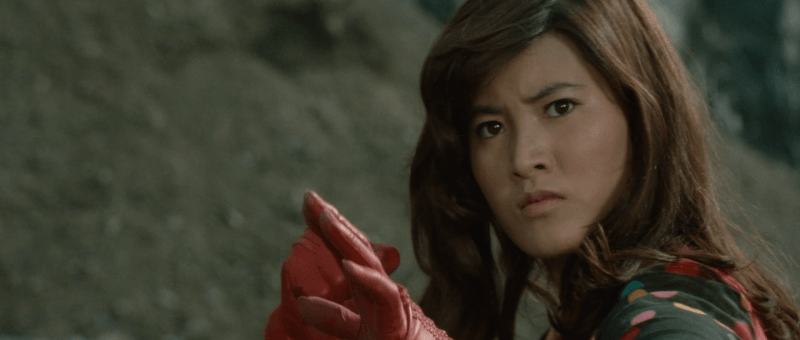
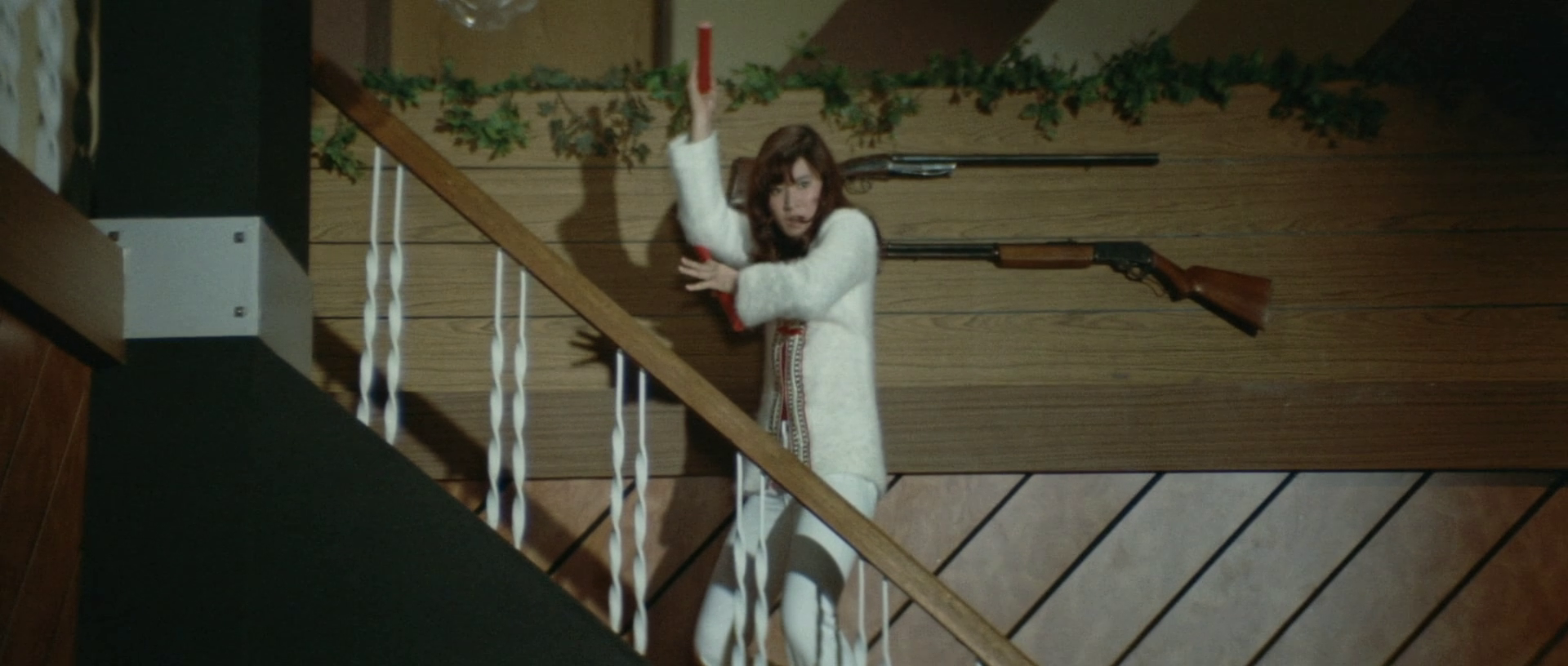
What about if you rebooted the Bannai Tarao series, but the hero was a female spy who is also a champion race driver and martial artist? Norifumi Suzuki did actually make a Bannai Tarao move in 1978 starring Akira Kobayashi, but the heroine of The Great Chase (華麗なる追跡, Karei-naru Tsuiseki) certainly loves a disguise or two and like the famous man of a thousand faces seems to have no trouble pulling them off as she infiltrates a gang of evil traffickers led by a furry which has come up with an ace new plan of packing heroin into coffins and having them shipped to nuns!

Oh, and the gang were also behind the death of her father who “committed suicide” in prison after being framed for drug smuggling. The Great Chase takes place in a world of pure pulp which somehow maintains its sense of cartoonish innocence even after Shinobu (Etsuko Shihomi) has infiltrated the heart of darkness and seen most of her associates killed by sadistic gang boss Inomata (Bin Amatsu). But at the same time, it delves into a deep sense of ‘70s paranoia as it becomes clear that the authority figures are all corrupt. Inomata has become a politician, while Shinobu’s father’s murder was orchestrated by the prison warden who was working with him in return for financial gain. The man who framed her father was a friend of his, implying that no one can really be trusted when there’s money to be made.

In a roundabout way,as this sense of anxiety is only reinforced by Shinobu’s role as some sort of secret agent working for the spy ring run by her uncle which is currently hot on the trail of the drug dealers even if they haven’t yet figured out who their boss is. Conversely, her home life is as wholesome as it could be with her two adopted siblings who run a florist’s along with Shinobu’s fan club. Her status as a kind of race car idol lends Shinobu a particular kind of ‘70s cool and turns her into some sort of superhuman figure capable of triumphing over any kind of adversity like a superhero worthy of any kid’s lunchbox. The siblings, Nagi (Fujika Omori) and Shinpei (Naoyuki Sugano), were taken in as orphans by her father which once again signals his goodness in contrast to the greed and selfishness of the gang that had him killed to cover up their crimes. 

That they peddle in drugs marks them out as a force of social disruption, but they’re also actively heretical in hiding behind the shield of the church. Suzuki frequently uses religious imagery in his films and here again echoes the romanticism of School of the Holy Beast with the use of red roses to decorate the coffin of the unfortunate young woman who has been turned into a vessel for smuggling drugs and has for some reason been laid out otherwise entirely naked. When it comes to retrieving the merchandise, we can see that many of the habits are being worn by men while Inomata himself masquerades as a priest. Then again, perhaps he is merely indulging his love of costume play seeing as he also has a hobby of wearing a furry bear suit to attack and rape women in his living room. 

Inomata’s claws then seem to represent something else, a rapacious, grasping sense of patriarchy in which he also uses drugs to bind women to him. Shinobu’s childhood friend Yukiko (Hisako Tanaka) has apparently fallen victim and laments that she is possessed by him body and soul to the point that the old Yukiko is dead which is why she hasn’t been able to step in and help Shinobu and is doing so now fearing that it may cost her her life. Suddenly, it’s all quite grim with the basement sex cult, whipping and torture, but Shinobu maintains her plucky spirit and is somehow able to lure Inomata towards a cable-car-based showdown. With a cameo from real life wrestler / singer Mach Fumiake, the film enters a kind of meta commentary on a real-life Shinobu (though she was not, as far as anyone knows, one of Japan’s top spies), but otherwise remains within the realms of pulp in which the heroine is able to pull off her difficult mission with the help of her talent for disguises before dramatically unmasking herself as the woman who’s going to take them all down. Camp to the max and incredibly surreal, the film never drops its sense of silliness even as the grim events enveloping Shinobu lead to tragic consequences that she barely has time to deal with before barrelling straight into the next duel with the forces of corruption.


*Norifumi Suzuki’s name is actually “Noribumi” but he has become known as “Norifumi” to English-speaking audiences.
Festival Champ (お祭り野郎 魚河岸の兄弟分, Norifumi Suzuki, 1976)

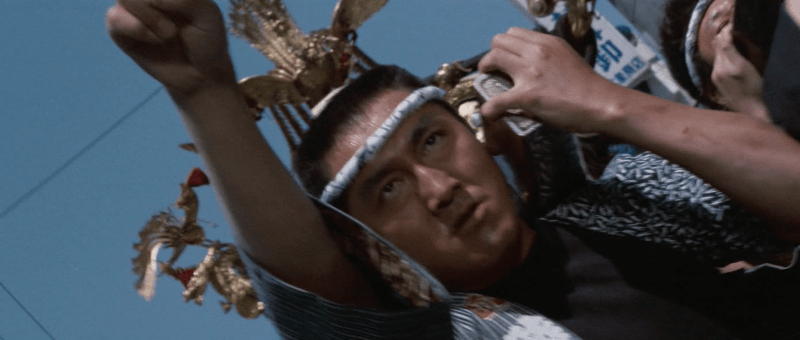
Who doesn’t love a festival? The hero of Norifumi Suzuki’s Festival Champ (お祭り野郎 魚河岸の兄弟分, Omatsuri yaro: Uogashi no Kyodai-bun) loves them so much that he travels all over Japan to help out in places where young men have become thin on the ground thanks to increasing urbanisation and rural depopulation. Following the success of Suzuki’s entries in the Truck Yaro series in 1975 and 1976, the film was part of a new line of comedies and sports movies launched by Toei as well as a vehicle for Hiroki Matsukata who was trying to move on from yakuza movies.

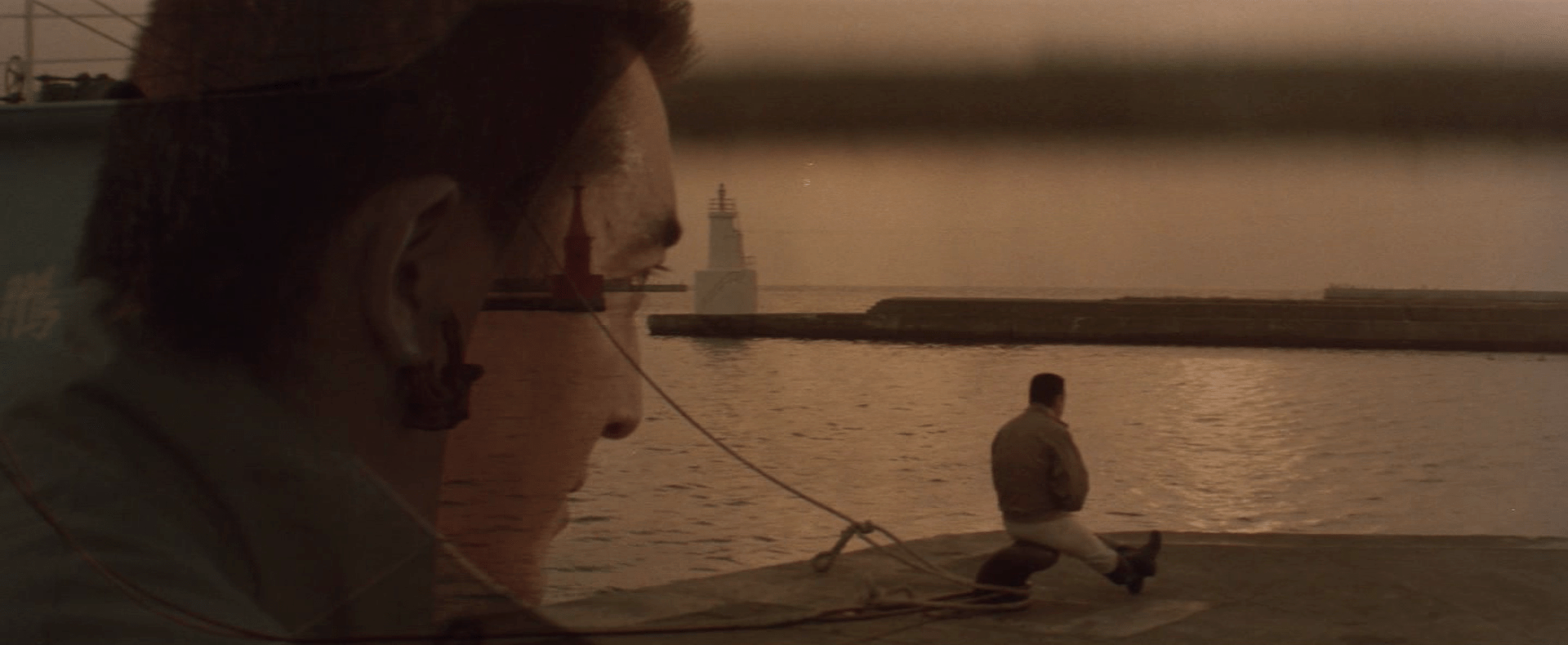
Katsuo (Hiroki Matsukata) is however something of a goodhearted bruiser who is always getting into manly scraps and especially at the festivals he travels to which is a pretty good hook for an ongoing series. But it’s not all that great for his employer who runs a family fishmonger’s at the Uogashi fish market and complains that Katsuo’s always running off and causing trouble. The fish market itself takes on an exoticised quality in the opening sequence which features a voice over from karate queen Etsuko Shihomi, here in a purely dramatic role, who is the daughter of a well-to-do traditional Japanese restaurant and travels there daily by speedboat to pick up the best fresh fish available. Suzuki throws in some documentary-style stock footage and statistics about the market that lend a strangely corporate feel, but then homes in on its capacity as a community hub. Kiyoko says it’s her favourite place precisely because there’s nothing formal about it. Deals are done through body language and you don’t need any kind of resume to work there, everyone’s welcome. 

That may be the implied contrast between Kiyoko’s father, who owns an upscale place and cultivates genuine relationships with local fishermen and brokers, and local boy made good Kurosaki who has supposedly become the CEO of a restaurant chain, itself a symbol of the soulless corporation of ‘70s Japan. Kurosaki rocks up dressed like a yakuza, but everyone treats him as a successful businessman and in part thanks to Katsuo’s boss Zenjiro’s recommendation is eager to make deals with him but predictably he’s running a huge scam that could destroy the local economy. Zenjiro is later faced with the difficult decision of selling his family business to repay all the other fishermen and brokers that have fallen foul of him. 

It’s this societal sense of unfairness that stripper Kumi (Terumi Azuma) hints at when she says she feels “frustrated” and that her long-lost brother Eiji (Toru Emori) probably feels even more frustrated than she does after he slaps her having found out that she’s become a burlesque dancer. As she points out to him, he ran away from home and left her behind with the aunt that was cruel to them so what exactly he expected her to do is a mystery. In the end, it’s his own fault for abandoning her, so he has no leg to stand on in criticising her for the way she’s lived her life. Kumi is well accepted in the local community and walks around in very elegant attire which gives her the air of an “ojosan” or upperclass lady to much greater extent that Kiyoko has in her love of the earthy world of the fish market. The fact that she turns out to be suffering from a tragic terminal illness perhaps only reinforces this sense of unfairness, that the modern world has essentially poisoned her and she can no longer survive in it.

The only things that give her solace are Katsuo and the idea of joining in carrying a shrine festival which would seem to be ways of reconnecting with a more essential Japaneseness. Despite his rowdiness, Katsuo is as she describes him the kindest person she’s ever met and a more positive vision of a still traditional masculinity that looks to protect the community and those around him. He gets into a fight with Eiji, but after exchanging a few blows the men become firm friends, while it’s trying to hook his wimpy friend Kinichi up with a date that brings him to Kumi in the first place. Meanwhile, it seems like Ayuko (Junko Natsu) has a crush on him and despite Zenjiro’s exasperation with Katsuo, everyone expects that he will eventually marry her and take over the family business. 

And so, it’s only a violent, but also quite funny, intervention from Katsuo that can eventually overcome the disruption Kurosaki threatens. Suzuki throws in a lot of his trademark weirdness including all of Zenjiro’s other daughters having fishy names, and a local sex worker who is insatiably aroused by octopuses followed by a gag in which Katsuo is trolled with a suggestive-looking shellfish, but mostly rests on a sense of qualified wholesomeness and community all carried on Katsuo’s broad shoulders as the lone guardian of a more essential Japaneseness otherwise uncorrupted by venal post-war capitalism.


*Norifumi Suzuki’s name is actually “Noribumi” but he has become known as “Norifumi” to English-speaking audiences.