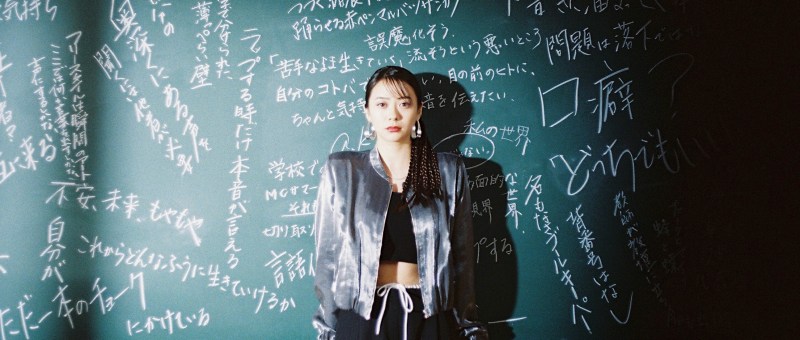

Yukiko a.k.a (雪子 a.k.a., Naoya Kusaba, 2024)

“Leave no one behind,” is the theory underpinning the SDGs that primary school teacher Yukiko (Rio Yamashita) is teaching to her students, but it’s also a practice that she unconsciously puts into practice only largely tends to forget to include herself. Timid and insecure, she makes little mark on the world around her and is afraid to express herself which she fears also interferes with her ability to interact with the children worrying that her reticence to speak up because she’s too worried they’ll say it’s all her fault prevents her from asking them if they’re alright or they need any help or guidance. 

It’s only through the possibly surprising hobby of rap music that she finds an outlet where she can be herself and say everything that’s on her mind, only most of her raps are all about her anxiousness and inability to communicate. She has however found a supportive community in a local park where there are a group of rappers who seem to have her back and encourage her to get more into the hobby by participating in rap battles so she can express herself more. It seems though that part of her anxiety stems from a sense that she’s approaching a crossroads in life and is in many ways dissatisfied. She’s been in a long-term relationship with another teacher, Kodai (Daichi Watanabe), she met when they were both students but as he’s been assigned to another school a long way away, they only meet up at weekends.

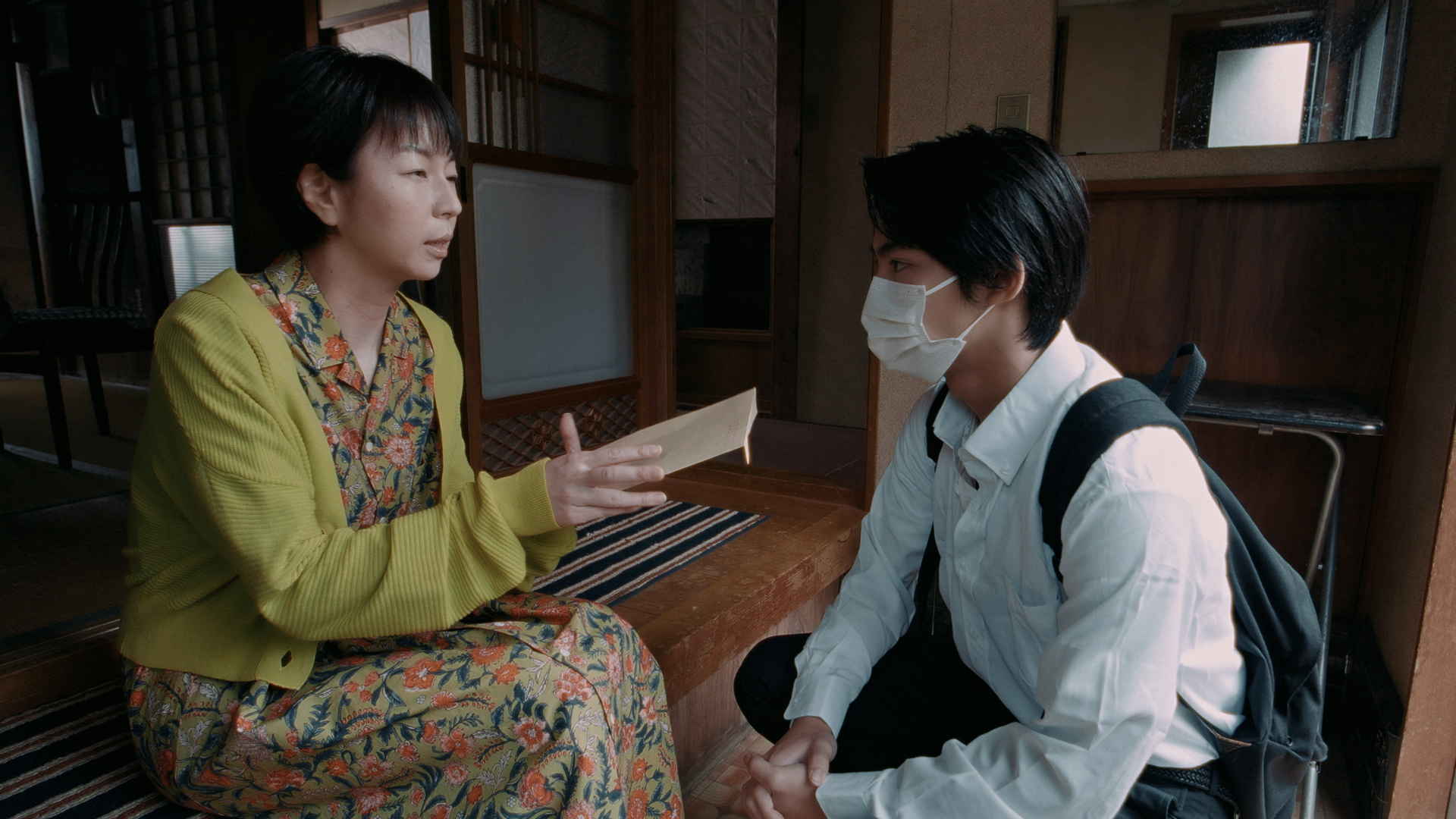
All around her, her friends are getting married and it seems Kodai may also be ready to pop what seems to most an inevitable question, but there’s something that seems to be holding her back. Kodai later tells her that he doesn’t like the her that does rap, which suggests in a way that he doesn’t really want the version of her that can express herself or is confident in saying what she does and doesn’t want. He’s much more interested in the timid Yukiko who meekly goes along with what he wants and is too afraid to rock the boat. A fellow teacher, Riho (Hina Higuchi), has an ambition to be married with a child before 30, which is surprising to Yukiko and often criticised for being old fashioned. Yet what the film seems to insist is that neither perspective is wrong, merely different, and largely a matter of what suits each individual. Riho is cool in her own way for living her life the way she chooses even if it conflicts with the prevailing attitude of the contemporary society and it’s this sense of empowerment that Yukiko is really seeking as an older teacher, Ohsako (Fusako Urabe), explains. With her short hair and serious demeanour it might be assumed that the kids wouldn’t like Ohsako, but she’s actually their favourite and perhaps precisely because of her self-assuredness. In contrast to the ultramodern Riho she likes to hand write and draw her teaching materials as a means of transmitting sincerity and integrity to the children while acting as a voice of authority between the teachers. 

Indeed, it’s Ohsako who largely teaches the film’s lessons and Yukiko how to embrace herself so that she can communicate better with the students explaining that her ability to pick up on the same anxieties in them is much more valuable than anything else. Locking eyes with a distressed young girl during a PE lesson, she quickly figures out that she’s experiencing menstrual cramps and is able to take her to the nurse’s office for some positive help and support. Meanwhile, she struggles with two boys in her class one of whom has become a school refuser and hikikomori. She visits Rui at his home every week with handouts but fails to make a breakthrough until she too is brave enough to expose her own fears and doubts. His deskmate Kotaro is now forced to join in with the girls either in front or behind when they’re asked to do pair work because of the painfully empty seat next to him.

But then unbeknownst to Yukiko, times have changed. Rui is not completely isolated but has been communicating with his friends, including Kotaro, through video games which as Kotaro’s father says is just as real to the children as talking in person. He’s also got really into educational apps and might have actually learned more by himself at home, which isn’t great for Yukiko’s self-esteem but at least he’s doing alright even if she might be becoming obsolete. Meanwhile the school still insists on making the kids read out loud to their parents who are then supposed to fill in a comment sheet but Kotaro writes those himself because his mum’s too busy. Nervously challenged by Yukiko, Kotaro’s mother asks what the educational point of the exercise is. She says she has her own way of communicating with her son and doesn’t have time for this meaningless bit of form filling. Yukiko’s insistence that it’s only 10 minutes belies a lack of understanding that Kotaro’s mother, who seems to be a working lone parent, simply doesn’t have another 10 minutes in her day. Still, the point is that Yukiko doesn’t really know the educational point of the exercise but has only been doing it because it’s what you do without giving it any real thought. 

But as Ohsako had said, maybe neither way is wrong, it’s just a matter of personal taste. Through her rap music hobby,  Yukiko begins to accept another side of herself while gaining the courage to be more confident and express herself more freely. She realises that it doesn’t really matter if she wins a rap battle or not because even putting herself out there was a minor victory that convinces her she has the power to do things with her life and live it in a way that best suits her while teaching similar lessons to the children and finally listening to her own advice.


Yukiko a.k.a screens in Chicago 22nd March as part of the 19th edition of Asian Pop-Up Cinema.

Trailer (English subtitles)
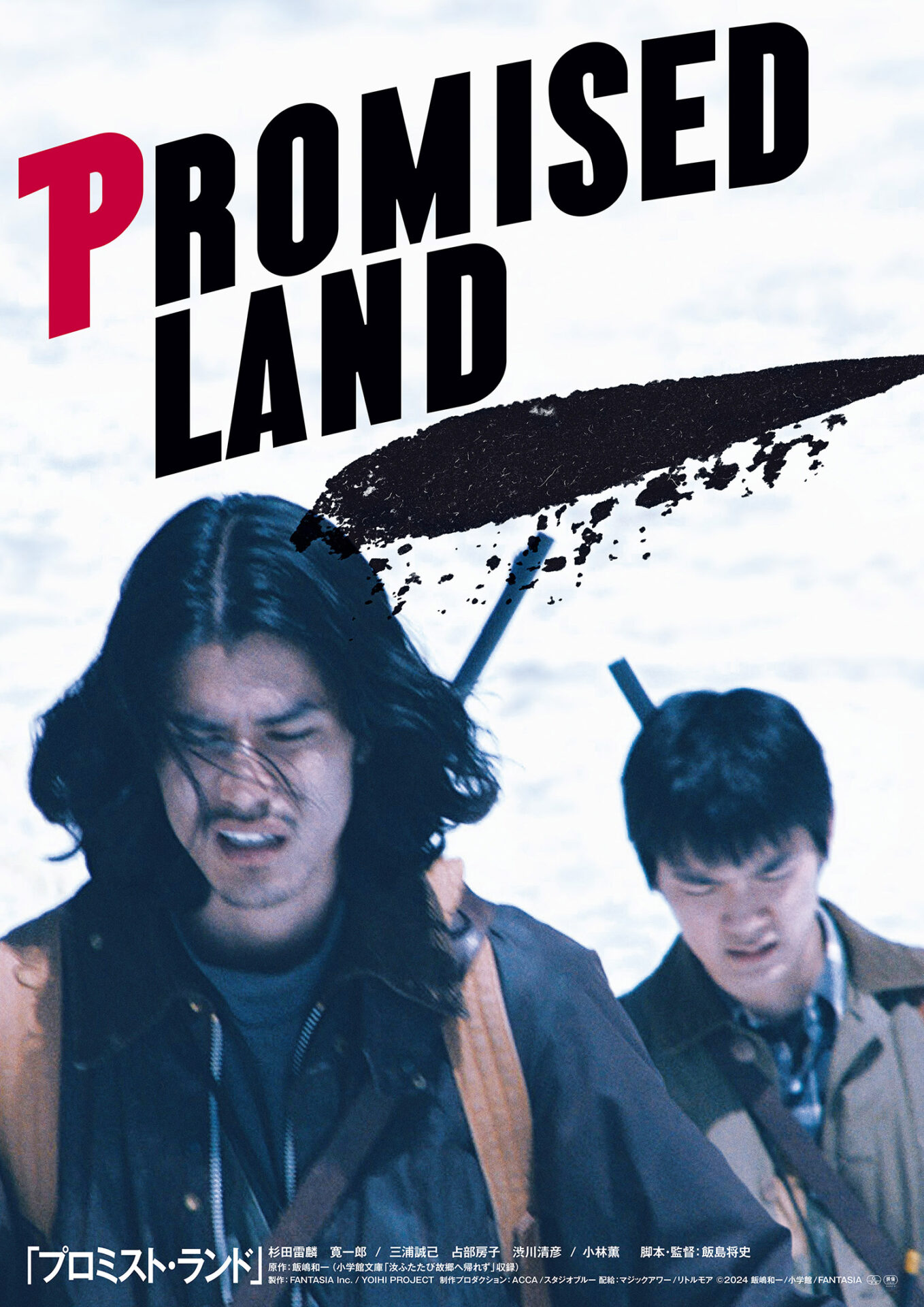
Promised Land (プロミスト・ランド, Masashi Iijima, 2024)

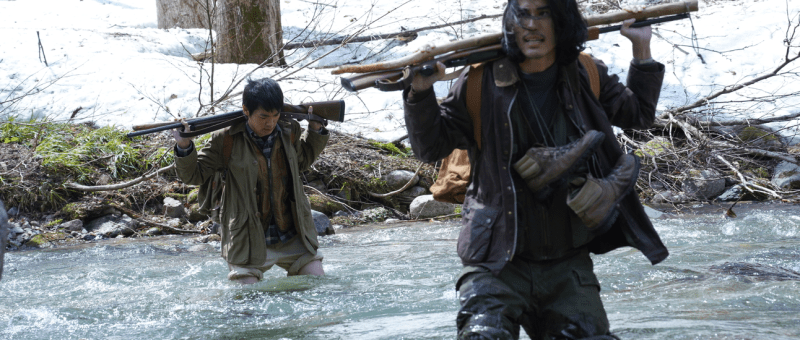
An avalanche approaches a small town in Japan, a harbinger of change in which the centuries old practice of bear hunting has finally been put to rest by government directive. The buried question at the centre of Masashi Iijima’s Promised Land (プロミスト・ランド) is who exactly that land has been promised to and what the rights and responsibilities surrounding it are in the midst of a changing society in which there may longer be a place for the hunter.

Some might argue that there shouldn’t be, and it has to be said this is one ancient tradition that’s increasingly hard to defend. Set in 1983, the film finds the “Matagi”, or traditional hunter, already all but extinct even before the head of the local association (which appears to only have five members) calls them all together and tells them the hunt is off for that year due to a preservation order by local government. One of the younger members, Rei (Kanichiro), immediately objects sensing that if the hunt is canceled this year it will never be held again. He says he thinks it’s unfair as it’s industry encroaching on the forests that has led to a decrease in the bear population rather than overhunting while another of the men takes constant pops at rich men from the city who come in and treat hunting like a hobby failing to abide by any of their rules such as not shooting mothers with their cubs.

The hunters seem to think of themselves as keeping nature in check, “culling” the bears to keep the mountain safe though there’s no sign that they are any real danger to humans and anyway their numbers are now depleted. There doesn’t seem to be any other way to defend this practice outside of tradition, but it’s evidently something very important to Rei, important enough to constitute a large part of his identity. Thus he alone is determined to defy the order and kill a bear anyway even though he knows there’s a good chance of going to prison for illegal hunting and being branded a poacher. 

Rei ropes in Nobu (Rairu Sugita), a childhood friend who apparently owes a debt to him having received a blood transfusion from him when he was four and now deeply resents having that fact wielded against him all these years later. Unlike Rei, Nobu is a much more modern young man whose father makes fun of him for wearing fashionable clothes and perfume. He hates working on his father’s farm and longs to escape the moribund small town and its brutal traditions such as the bear hunt he’s been roped into since birth just because like many things his ancestors always did it. While hunting for a bear, the pair have an opportunity to talk, Rei admitting that hunting and the gun represent for him the essence of the man he once was while reeling from the breakdown of his marriage to a woman he failed to support when she failed to fit in to village life. He recounts the story of a banker he did some work for who says that he envies the freedom of his life as a landscape gardener while he sits in a prison all day counting other people’s money but when he asks him why he does’t give it a try the man just backtracks and starts making excuses.

Rei seems to be wondering what true freedom means and perhaps feels he doesn’t really have it, asserting dominance over the mountain by killing the bear to regain control over his life. He calls the bears a gift from the mountain god as if they existed only for him to kill, though it’s difficult to see why his tradition or need for raw masculinity is worth more than a living creature’s life. When he eventually kills a bear, the film hovers on the ritualistic quality of the act as Nobu and Rei bend over the body, wafting it with leaves, and skinning its pelt before drinking its blood. This is an act of cruelty more of necessity. They have no need of the pelt or meat, do not make a major part of their income from selling them, and the bear did not threaten them. This is in short a tradition that can safely be left by the wayside, but by the film’s conclusion the two men seem to have switched positions Rei now pondering leaving the village while Nobu seemingly has a renewed desire to stay and preserve these old traditions. Perhaps it is his promised land after all, or else was intended to exist for the bears as creatures of nature free from the destructive forces of humanity.


Promised Land screened as part of this year’s Camera Japan.

Original trailer (no subtitles)

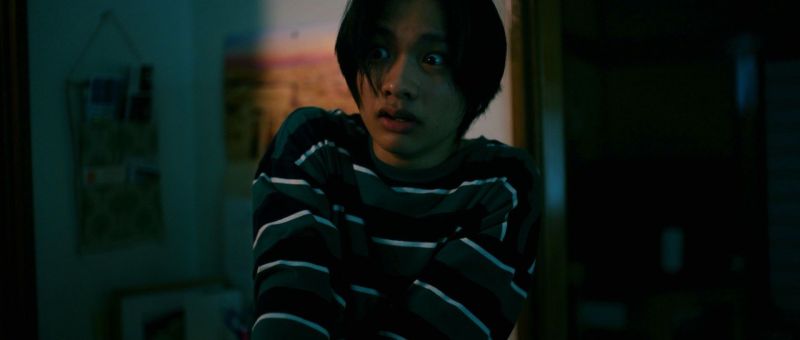
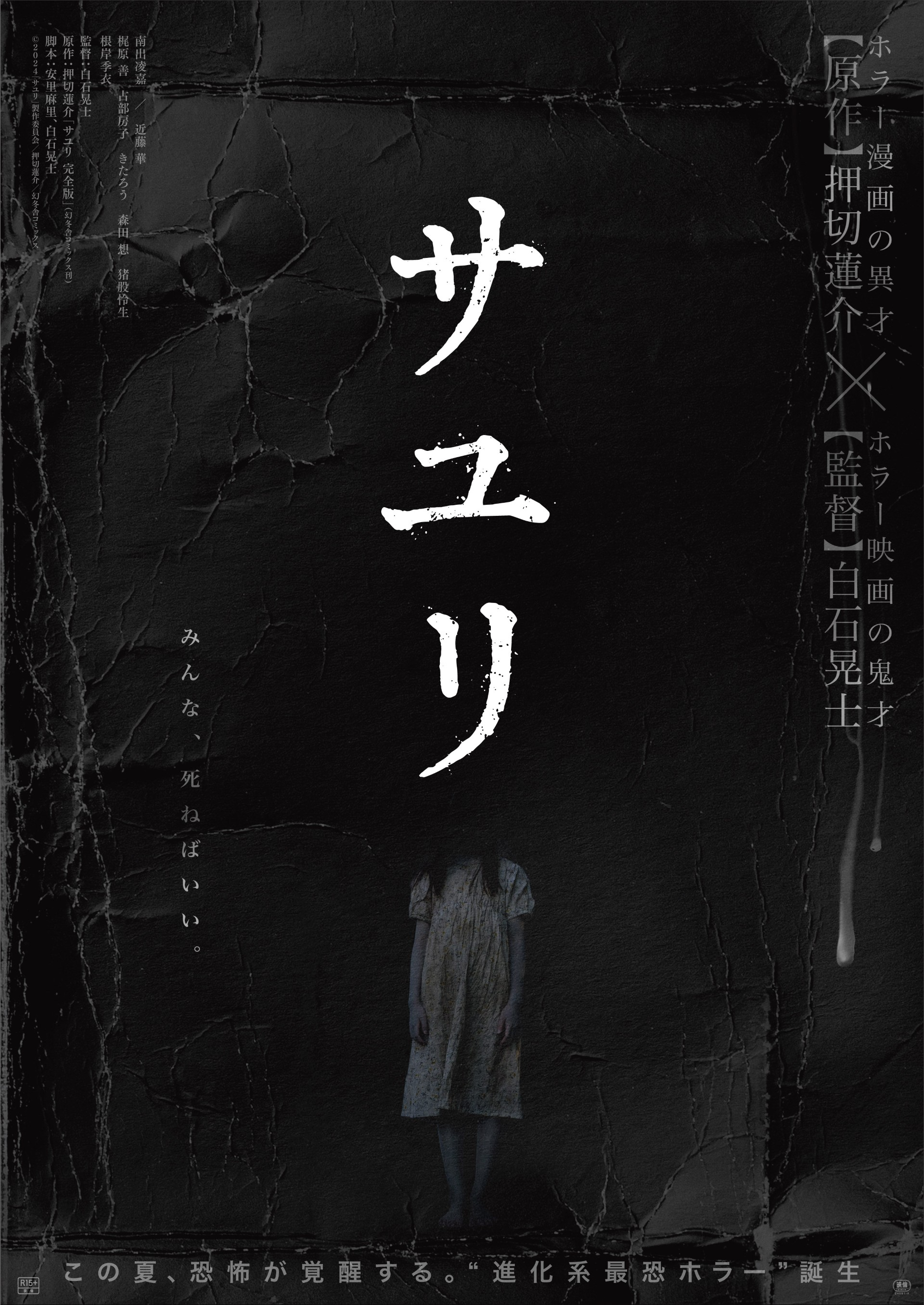
House of Sayuri (サユリ, Koji Shiraishi, 2024) [Fantasia 2024]

An excited family discover the perils of buying a “used” home in Koji Shiraishi anarchic haunted house horror House of Sayuri (サユリ, Sayuri). Unlike many other nations, Japan does not really have a comparable housing market as, given changing building regulations etc, it’s common to demolish the original structure and build a bespoke home in its place rather than move into one someone else has vacated. That obviously means that opting for an existing property can be a little bit cheaper, which is presumably how the Kakimis have finally managed to move into what they describe as the dream home, escaping a cramped city apartment for a spacious rural mansion with room enough for grandma and grandpa too.

Of course, this particular home is probably cheaper because something untoward once happened there, though the Kamikis probably don’t know that, and everyone who’s lived there since has moved out a short time later. In a way referencing Shiraishi’s previous work, we can’t really tell whether the malevolent spirit wants the family out or is merely trapped in a loop of revenge on the family that badly betrayed them. In any case, it makes its way through the Kamiki family unit starting with daughter Keiko and causing all manner of strange events in the house. Sensibly, older son Norio begins to ask why they don’t just move but the parents are so committed to their dream of homeownership that they can’t bear the thought and remain determined to hang on to it at whatever cost. 

In any case, some wise words from grandma advance a more positive way of battling the ghost, that they should fight it with the force of their lives. They laugh in its face and shout vulgar phrases that send it scuttling away in outrage. The best way to fight the darkness, grandma says, is to live well. Like the house itself, it seems grandma has a well hidden secret that makes her the film’s key asset, a hilarious force of nature and eternal wise woman otherwise ignored because her dementia undermines her credibility. Meanwhile, Norio makes an unexpected friend at school who just happens to be a psychic and is keen to warn that a little girl ghost has latched on to him and it would obviously be better if he could just move out on account of all the evil emanations that appear to be coming from his home.

But as grandma says, it’s the grudges of the living they ought to be afraid of. The house of course holds its secrets and its labyrinthine, multilevel structure is perfect for concealing them. Unfortunately the Kamikis have bought into this poisoned legacy and slowly start seeing their familial bonds fracturing while the ghost takes advantage of their vulnerabilities, their negative emotions and insecurities. In a sense it becomes a question of whether they can endure a place of trauma to maintain their dreams of homeownership or are prepared to make the more sensible decision of ceding ground and moving somewhere less toxic while Norio tries to reclaim his place in his family and protect what remains of it. 

Truly heading in some unexpected directions particularly in its unpredictable send half, the film takes on an absurdist quality but also returns to classic genre tropes of the legacy of child abuse and the betrayal of a parent who saw and did nothing perhaps because, like the Kamikis, they were prepared to accept this this kind of toxicity to maintain a happy family home and be seen as a model upper-middle class family living in a country mansion. It turns out, the only way to exorcise this much more literal ghost is by directly confronting the traumatic past and attempting to find accommodation with it be that through violence or forgiveness. But as grandma had said, the best weapon is love and life, throwing back at the ghost what it no longer has in a defiant expression of being alive and that joy contains which is also of course as grandpa had said a way of honouring the dead resolving to make the most of one’s remaining time in their memory. In any case, Norio discovers that you do not have to continue living in a haunted house but unlike a ghost are in fact free to leave the scene of trauma and seek new happiness in a less upsetting place.


House of Sayuri screened as part of this year’s Fantasia International Film Festival.

International trailer (English subtitles)

She is me, I am her (ワタシの中の彼女, Mayu Nakamura, 2022)

A gentle sense of haunting lingers over the protagonists of Mayu Nakamura’s pandemic-era anthology She is Me, I am her (ワタシの中の彼女, Watashi no Naka no Kanojo). COVID-19 seems only to have exacerbated their sense of loneliness and regret, confronted by the ghosts of other lives and absent friends while having little else to do but think about past and future amid an atmosphere of anxiety. Yet within the lonely city there is space for fresh connection and new beginnings even if in themselves somewhat unexpected.

The sense of distance is obvious from the first episode, Among Four of Us, in which three university friends meet again after many years in a public park, only in reality they’re each sitting on their own in different parts of the city while connected by telephone. They speak briefly of their lives, each filled with disappointment one a struggling actor, one a conflicted housewife happily married but wondering what might have been, and the other living with a former lover who can’t forget their absent friend. Much of the conversation revolves around Sayoko who haunts them on this beautiful moonlit night as they each realise they’ve done little but think about her though she somehow slipped away from them and may have had sorrows and regrets of her own they never thought to ask about. 

It’s Sayoko who again seems to haunt the third chapter, Ms. Ghost, in which a young woman encounters an old lady sleeping on a bench near the station and realises they have more than a little in common. In fact it’s almost as if she were talking to an older version of herself, alone and beaten down by life, dreaming of past glories. Both women reflect not only on their broken dreams as country girls who came to the city to act, but on the various ways they’ve been displaced by the pandemic having lost their places of work and been left with nowhere else to go. Forced into sex work after her hostess bar closed down, the younger woman is haunted by a sense of danger that she might end up just another name in the newspaper killed by a violent man. 

Then again the lonely woman of part two, Someone to Watch Over Me, finds herself captivated by a delivery driver, Kazuya, who hastily polished off one of the meals she ordered but did not have the strength to eat. Becoming somewhat obsessed with him she continues ordering food only to have him eat it, but is conflicted on discovering a note of darkness in their relationship. When he tells her that she is not alone even if she thinks she is, it comes across as a much less comforting statement than he meant it to be hinting at the various ways having someone to watch over you isn’t always as nice as it sounds. She too is haunted by absence, along a with a vague sense of being watched that she may however uncomfortably have started to enjoy. 

The heroine of the fourth episode, Deceive Me Sweetly, is haunted by the loss of her youthful dreams taken from her along with her high school lover, a photographer just like the delivery driver, by her declining sight. Yet she can perhaps see further than most and straight through the young man who arrives at her door attempting to run an ore ore scam poignantly claiming to be the brother that hasn’t contacted her in years. Struck by remorse, the young man begins to regret scamming this strangely trusting woman remarking that the real Kazuya wherever he may be must be lucky to have a family he could call in time of need, which the young man perhaps does not. While she is haunted by lost youth, the woman is also in a way haunting him like a mystical figure offering the hand of redemption and setting him free into a world that seems more open fuelled by the need to repay a debt of kindness to a woman he never really knew. Even in these days of lonely desperation, there can still be hope and connection. Filmed with dreamy minimalism, Nakamura’s four tales each starring actress Nahana and connected by seemingly random details discover a sense of the comfort in strangers that a city can offer even in the midst of its own loneliness. 


She is me, I am her had its World Premiere at Japan Society New York on Nov. 12 as part of The Female Gaze: Women Filmmakers from JAPAN CUTS and Beyond.

Original trailer (no subtitles)

Images: © 2022 Omphalos Pictures

Wheel of Fortune and Fantasy (偶然と想像, Ryusuke Hamaguchi, 2021)

It might be frightening, when you think of it, how much of life is dependent on coincidence. Chance encounters, some sparking lifelong connection others destined only for aching memory, are after all what life is all about. Given a little imagination, the heroes of Ryusuke Hamaguchi’s triptych of accidental meetings Wheel of Fortune and Fantasy (偶然と想像, Guzen to Sozo) each begin to work through their personal traumas, easing their loneliness in fleeting yet profound connections with others. “I’m glad I met you” one woman says to another, imagination and reality for a moment blurred as they role-play themselves towards a greater accommodation with the missed opportunities of the past. 

“Could you dare to believe in something less assuring than magic?” the anti-heroine of the first episode asks her former lover, undermining the central thesis in suggesting that sometimes coincidence is just that and everything else mere fantasy an attempt to convince oneself that life is grander than it is. Her friend, Tsugumi (Hyunri), excitedly tells her about the best night of her life born of a serendipitous meeting with a man who might be her soulmate but was also wounded, frightened of falling in love, still carrying the scars of betrayal after being cheated on two years previously.

What Tsugumi didn’t know is that Mieko (Kotone Furukawa) is the cheating girlfriend who broke the heart of her star-crossed lover Kazuaki (Ayumu Nakajima), but now Mieko’s sense of betrayal is two-fold. Tellingly, Mieko refers to her friend as “Gumi”, but to Kazuaki she’s the “Tsu” to his “Ka”, literally torn in two while Mieko both fears the loss of her friend and resents the love she herself discarded being picked up by another. The thought of the two of them, a perfect whole as she later admits, together near destroys her. When Kazuaki unwittingly invades their private space she has a choice, indulging in a moment of destructive fantasy which threatens to torpedo her friendship only for Hamaguchi to pull a Hong Sang-soo, zoom in and rewind, to allow her to make a more mature decision albeit one that leaves her exiled but allows a more positive path towards a freer future having let go of this brief moment of emotional trauma. 

But what if your emotional trauma is longer lasting, leaving you feeling isolated unable to understand why it is you’re not quite like everyone else and for some reason they won’t forgive you for it. Married housewife and mother Nao (Katsuki Mori) has gone back to college and is having an illicit affair with a much younger student but is frustrated not to be included in campus life in part blaming her sense of alienation on being so much older while also internalising a sense of discomfort that tells her it’s always been this way. Her lover, Sasaki (Shouma Kai), suggests it’s all her own fault, that she doesn’t know how to “go with the flow” and “puts up walls”. He meanwhile, is shallow and entitled, resentful towards a stuffy professor, Segawa (Kiyohiko Shibukawa), who held him back a year because his grades in French, a required subject, weren’t good enough.

To get back at him, he emotionally blackmails Nao into helping him set up a scandal but Segawa has a literal open door policy and their meeting eventually turns into something deeper even if Nao is forced to admit that a part of her craved this kind of seduction fantasy. Only Segawa, a distant, pensive man, meets her as an equal, tells her that he thinks her inability to go with the flow is no bad thing but a strength in that she lives by her own desires rather than those of an overly conformist society. An ironic mistake, however, later cheapens their profound connection spelling disaster for both while Sasaki it seems, as men like him often do, unfairly prospers plunging Nao into an even deeper sense of despair and self-loathing. “My own stupidity makes me want to cry” she confesses, offered hope only by another chance encounter with the unresolved past. 

Then again, do you actually need to meet to find resolution or is fantasy enough to overcome a sense of loss or missed opportunity? In the midst of a freak technological disaster in which the internet has been temporarily disabled, IT systems engineer Natsuko (Fusako Urabe) attends her 20-year high school reunion but the person she wanted to see wasn’t there. She thinks she sees her in fleeting moment passing each other on an escalator. The other woman seems to recognise her too, the pair of them caught in an escalator loop one chasing the other and thereafter visiting the other woman’s home. But as they talk they realise their chance encounter was mutual case of mistaken identity if one that exposes the similarities between them, connected Natsuko later puts it by an unfillable hole in the heart. Aya (Aoba Kawai), a middle-aged housewife, lives comfortably in a well-appointed suburban home but confesses herself wondering why she’s alive at all, feeling as if “time is slowly killing me”.

Not wanting to waste the “dramatic meeting” they role-play the conversation they might have had, Natsuko regretting having given up too easily on her high school love not wanting to cause her further pain but now realising that her care was mistaken, the pain was necessary for them both and its absence has condemned them to kind of limbo of unresolved longing and regret. Aya meanwhile reveals something else, a “boyish” friend for whom her feelings remain unclear though the final moment of connection in which she remembers her long forgotten name which literally translates as “hope” proves profoundly moving in the momentary connection between these two women, strangers but not, meeting by chance and bound by imagination each restoring something to the other if only in fantasy. 

A meditation on distance and intimacy, Hamaguchi’s series of empathetic character studies owes an obvious debt to Rohmer with a dash of Hong Sang-soo but is perhaps kinder allowing the randomness of life to provoke a gradual liberation in each of these wounded souls if only temporarily. The question might less be if you can believe in something less assuring than magic, than if you can learn to trust the strange mysticism of serendipity. 


Wheel of Fortune and Fantasy screened as part of this year’s BFI London Film Festival.

International trailer (English subtitles)

Complicity (コンプリシティ, Kei Chikaura, 2018)

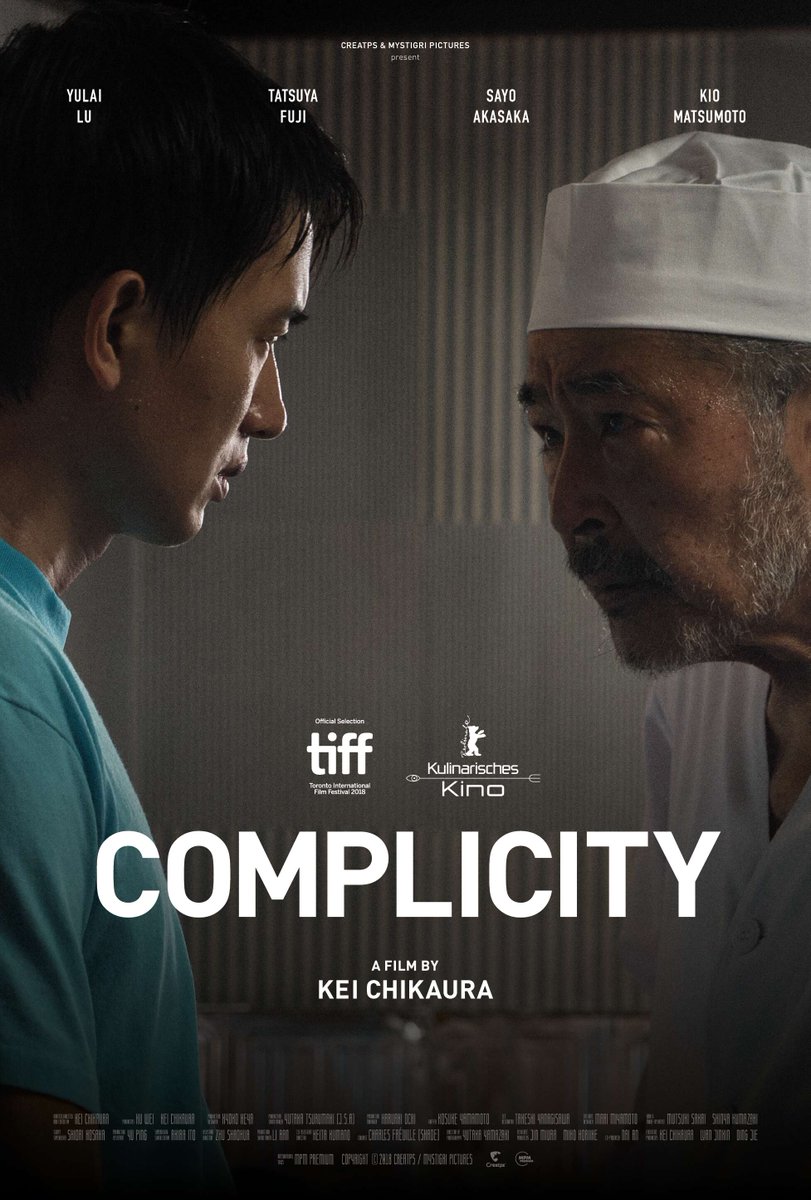
Complicity posterWith an ageing population and an economy trapped in a long period of stagnation, Japan has found itself in an awkward moment of possible crisis as it begins to realise it will need to embrace immigration or face a serious labour shortage. Like many nations, unfortunately, much of Japan remains uncomfortable with the idea of overseas labour especially when it comes to “low skilled” work in construction, manufacturing, and casual jobs such those in restaurants and convenience stores. Given government intransigence and pressing need, workers from other areas of Asia are often employed illegally and subject to exploitation by gangs or unscrupulous employers.

The hero of Kei Chikaura’s Complicty (コンプリシテ), Chen Liang (Lu Yulai), finds himself in just this position as he leaves his sickly mother and feisty grandma alone in rural China in the hope of making enough money in Japan to come home and restart the family business. What he discovers, however, is that he’s essentially been trafficked as cheap labour and is already in hock for an ID card he was conned into paying three times the going rate for on the pretext it was “safer”. Now living under the name Liu Wei, Chen Liang is disturbed to receive calls on his new phone intended for his namesake but is tempted when Liu Wei receives a job offer from an employment agency. Passing himself off as his cover identity, Chen Liang takes the job only latterly realising it’s the rather incongruous position of a trainee chef in a family-owned soba restaurant.

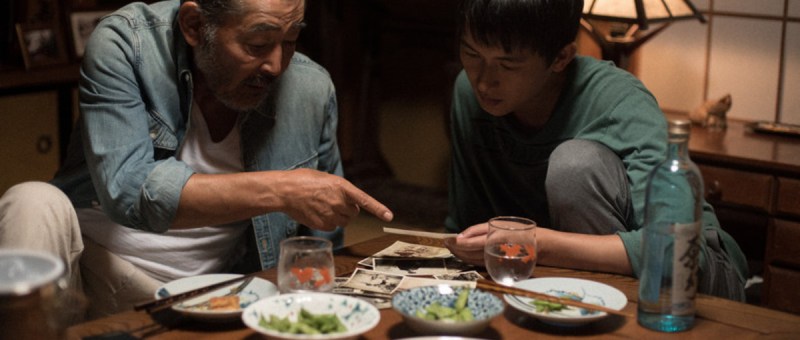
Against expectation, ageing soba chef Hiroshi (Tatsuya Fuji) and his daughter Kaori (Kio Matsumoto) are warm and welcoming people who are actually a little bit excited that someone from China wants to learn about soba. Taken in almost as a member of the family, Chen Liang begins to feel conflicted – he is after all lying to them, at least about his name and circumstances, and his presence in their home might cause them trouble if he is ever found out. Meanwhile, he also strikes up a friendship with an artist who is learning Mandarin but has to lie to her too, pretending they may one day meet up in Beijing when in reality he has never even been there.

His burgeoning romance with Hazuki (Sayo Akasaka) is what precipitates his downfall as she, unaware he is undocumented, reports his stolen wallet to the police. The lies do not stop there – Chen Liang is also lying to his worried mother back at home who thinks he’s working in an office, while she is simultaneously lying to him in pretending everything’s fine in order to facilitate his “happy” life in Japan where he is supposed to make lots of money and come back a wealthy man. In order to make his dream succeed, Chen Liang must become Liu Wei at the exclusion of all else, forsaking his life as Chen Liang and living carefully as if he has nothing to fear.

Chen Liang is onto a good thing and has fared much better than some of his friends who either got themselves picked up by the police for doing the gang’s dirty work or found themselves out in the cold with no feasible way to get back “home”. Hiroshi’s son, with whom he seems to have some kind of bad family history, looks down on Chen Liang unable to understand why his father employed someone from China when the business is on the rocks. His attitude seems to be one shared by many (though not the universally supportive customers in Hiroshi’s soba shop) who see only difference rather than commonality. Despite the language barrier, Hiroshi and Chen Liang are often able to communicate through written characters, while another poignant moment of bonding sees Chen Liang sing the Mandarin lyrics over the top of Hazuki’s cheerful refrain of a popular Japanese song by Teresa Teng beloved all across Asia. Hiroshi himself was born in Beijing at the end of the war – a painful reminder of the complicated history between the two nations, but also one of how much they are interconnected and how little place of birth has to do with cultural identity.

Emphasising how much they have in common rather than the various ways in which Chen Liang differs from the world around him, Chikaura paints a much more sympathetic portrait of a migrant worker than the one usually found in the media. Filling the void left behind by Hiroshi’s own resentful son, Chen Liang becomes a valued and trusted member of the family who are in a sense “harbouring” him but to protect rather than exploit. Pushed to go to Japan despite his misgivings and drifting into the soba shop job through accidental opportunism, Chen Liang had in a sense abandoned his identity in avoiding making concrete decisions. Being Liu Wei was also a way to hide from his insecurities and fears for the future, but only through the unconditional love he received under false pretences is he finally able to reclaim his name, fugitive but free at last. A powerful plea for empathy and cross cultural connection, Complicity is a beautifully drawn character study in which kindness and compassion eventually open new paths for a conflicted young man trying to find his place in an often hostile world.


Complicity was screened as part of the 2019 Nippon Connection Film Festival.

Original trailer (English subtitles)

Teresa Teng’s – Toki no Nagare ni Mi wo Makase

Mandarin version – I Only Care About You

Antenna (アンテナ, Kazuyoshi Kumakiri, 2004)

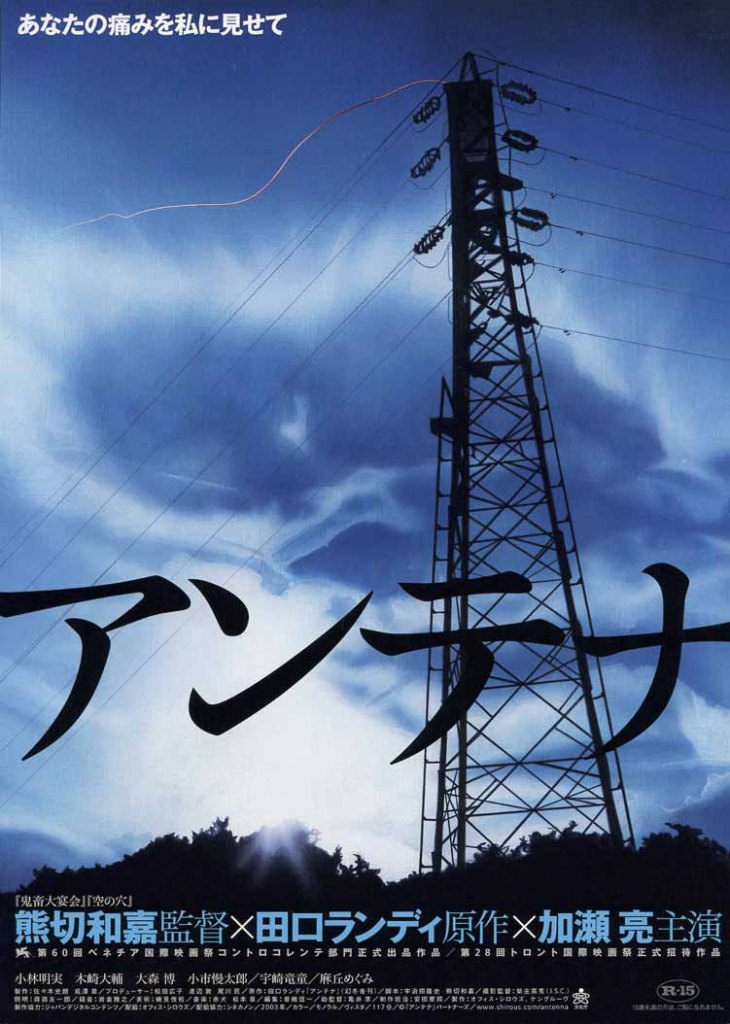
AntennaScarring, both literal and mental, is at the heart of Kazuyoshi Kumakiri’s third feature, Antenna (アンテナ). Though it’s ironic that indentation should be the focus of a film whose title refers to a sensitive protuberance, Kumakiri’s adaptation of a novel by Randy Taguchi is indeed about feeling a way through. Anchored by a standout performance from Ryo Kase, Antenna is a surreal portrait of grief and repressed guilt as a family tragedy threatens to consume all of those left behind.

Philosophy student Yuichiro (Ryo Kase) is currently working on a project which aims to reevaluate how pain is felt through attempting to identify with the pain of others. To do this he plans to investigate the S&M scene but before he can get started, a painful episode from his past is reawakened by current events. Yuichiro’s younger sister, Marie, has been missing since failing to return home from school one day when she was only eight years old. When news reports appear that another girl around the same age has been held captive in a nearby apartment complex since around the time Marie went missing hopes are sparked only to be dashed. Still no closer to discovering what happened to his younger sister, Yuichiro carries the guilt of having been unable to protect her as well as the inability to remember exactly what happened on that fateful day.

Matters come to a head when Yuichiro’s younger brother (their mother was pregnant with him at the time of the disappearance) turns up on his doorstep. Yuya (Daisuke Kizaki) repeatedly claims that Marie is about to return as he can feel her through his “antenna” (“like the horns of a snail”) and has a full scale fit aboard the train back. Things being what they are, the doctors advise Yuichiro to spend sometime at home as his distracted mother is no shape to cope with Yuya’s increasingly odd behaviour. A dutiful son, Yuichiro does what he can for what’s left of his family but his childhood home is far from a good environment for him.

Soon after Marie’s disappearance, both Yuichiro’s father and his uncle Shige who’d lived with them both died, leaving only Yuichiro’s mother and baby brother behind them. Unable to come to terms with Marie’s disappearance, Yuichiro’s mother has found religion, hosting Buddhist prayer sessions at the house and bringing in Feng Shui experts to try and heal the lingering sense of tragedy still present in the house. She has also become convinced that her second son, Yuya, is in fact the returned spirit of her daughter, raising him as a girl and dressing him in Marie’s clothes. This may explain some of Yuya’s conflicting behaviour and repeated insistence that his sister is “returning” in so much as something of her personality has become the ghost in his machine.

Once back in the house, Yuichiro’s mental state becomes ever more precarious as his memories of his sister’s disappearance begin to flicker to the surface. Overcome with repressed guilt, Yuichiro once again begins self harming by slashing his chest with a box cutter. Easing the mental pain with the physical, Yuirichiro finally begins to address some of his long buried trauma through repeated meetings with the dominatrix he was interviewing for his project. Undergoing a kind of S&M lead sex therapy, Yuichiro is slowly guided back through his memories to events he was too young to understand at the time and only now is fully able to comprehend.

Throughout his flashbacks Yuichiro is always sidelined, perched behind barriers or shut away by closed doors as the adults argue and loudly discuss things they claim are not suitable for children to hear. Crucial moments find him peaking through keyholes and seeing something he knew was not quite right but without knowing why. These incomplete and incomprehensible memories are the ones which haunt him, unresolvable but still trailing the guilt behind them of having seen yet done nothing.

Told in a slight non-linear fashion through frequent flashbacks, the film adopts a dreamlike tone and surreal imagery to make sense of the more extreme elements. The final sequence itself is either a hallucination or a dream that takes on a magical realist quality as the past is finally allowed to drift away from its lodging place, freeing up a space for light to return to the otherwise darkened house.

An intense exploration of buried trauma and childhood guilt, Antenna is a dark tale but does offer a glimmer of hope after all its hellish meandering. Kumakikri keeps things straightforward but his considered compositions have a strange kind of beauty despite the ugliness of the narrative. Embracing a number a taboo subjects coupled with strong emotion and explicit content, Antenna is not an easy watch but rewarding for those who can brave its extremes.


Original trailer (no subtitles)

https://www.youtube.com/watch?v=HL7ceRogLC8