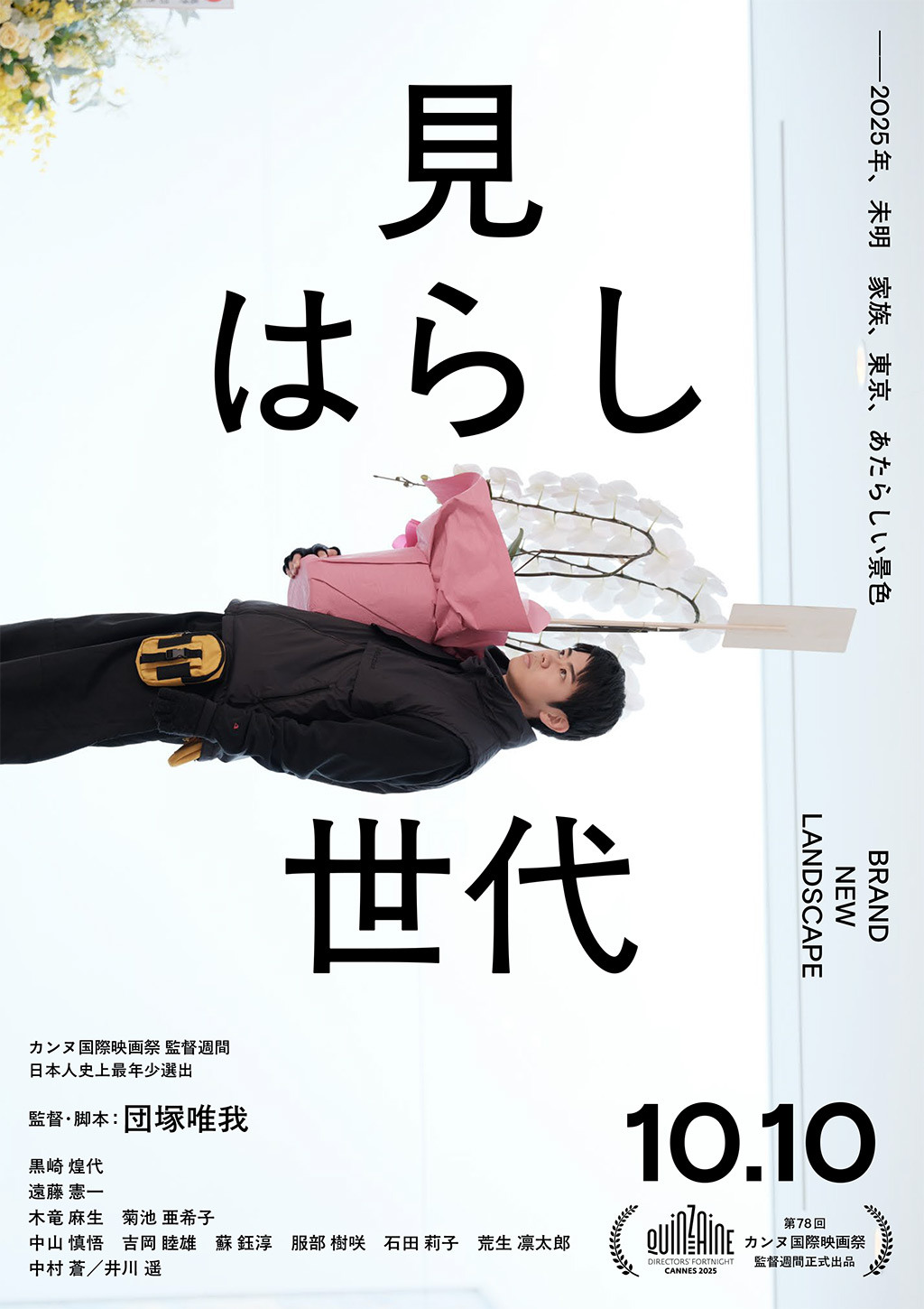
Brand New Landscape (見はらし世代, Yuiga Danzuka, 2025)

Do we inhabit spaces, or do the spaces inhabit us? Yuiga Danzuka’s autobiographically inspired Brand New Landscape (見はらし世代, Miwarashi Sedai) situates itself in a haunted Tokyo which is forever remaking itself around its inhabitants like a constantly retreating cliff edge that leaves them all rootless and in search of a home that no longer exists. Some long for a return to the past and wander endlessly, while others defiantly refuse to look back and are content to let history eclipse itself in a journey towards an ineffable “new”.

These imprinted spaces come to represent the disintegration of a family torn apart by their shifting foundations. Ten years previously, Ren (Kodai Kurosaki) and Emi’s (Mai Kiryu) mother, Yumi (Haruka Igawa), took her own life during a family holiday after their father Hajime (Kenichi Endo) told her that, despite his promises, he would be returning to Tokyo to pursue a work opportunity. “It’s pointless to go back and forth like this,” he remarks with exasperation, making it clear that he’ll be going no matter what she says. Rather than simply being a workaholic, Hajime is a deeply selfish person who doesn’t much care how other people are affected by the decisions that he makes. He wants this opportunity to prove himself and acts out of a mixture of vanity and a desire for external validation through professional acclaim rather than the love of his family. He claims he’s doing this for them, that the opportunity will provide additional financial security and a better quality of life for his children, but Yumi replies that they don’t need any more money. All she wanted was family time, albeit within this artificial domestic space of a rented holiday villa by the sea.

Three years after their mother’s death, Hajime left the children to chase opportunities abroad and they haven’t seen him in years. Younger son Ren is now working as a floral delivery driver for a company selling expensive moth orchids. It’s on a job that he first learns that Hajime has returned and is holding an exbitiion of his work that includes the controversial Miyashita Park redevelopment project designed to fuse the natural space of the park with a commercial centre the exhibition’s copy describes as a symbol of the “new” Tokyo. It also, however, required the displacement of a number of unhoused people who were living in the park in order to provide space for upscale outlets such as Louis Vuitton and Gucci. When Hajime accepts the opportunity to work on another such project, a young woman on his team voices her concern. She asks him where these unhoused people are supposed to go, but Hajime says it’s not his problem. It’s for the authorities to decide. She asks him if he’s considered the effect taking on such a large project will have on their team when the company is already working beyond its limit, but he gives her all the same excuses he gave Yumi that make it clear he’s not interested in the needs and well-being of his employees just as he wasn’t interested in those of his family. “It’s pointless going back and forth,” he tells her while trying to sound sympathetic but really emphasising that his decision is made and nothing she could say would sway him from his course.

Maybe, to that extent, oldest daughter Emi is much the same in that she’s decided she doesn’t want to see her father and resents Ren’s attempts to force her into doing so. She’s about to move in with her boyfriend and looking ahead towards marriage, but also prone to “low energy” days like her mother and anxious in her relationships, fearful that like that of her parents’ they can only end in failure. Ren, meanwhile, struggles with authority figures like his ridiculous boss who tries to assert dominance by giving him a public telling off about the non-standard colour of his hip pack, and then yells at him that he’s fired only to chase him out of the building throwing punches when Ren calmly replies that shouting only makes him look silly. In the midst of the drama, another young woman states her own intention to quit, politely bowing to everyone except one particular man before walking out the other door towards freedom as if to remind us that there are countlessly other stories going on in this city at the same time.

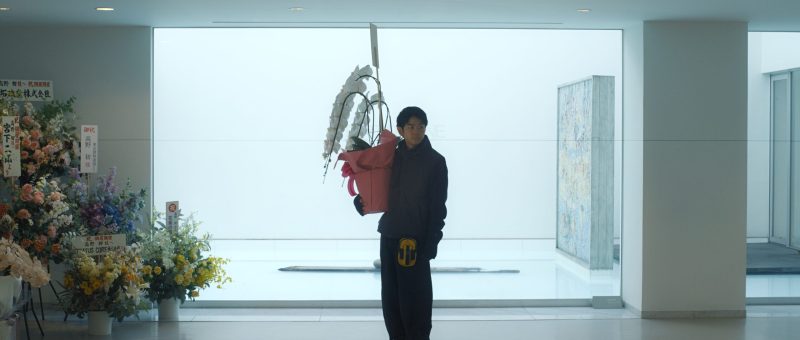
There’s a moment when Ren is delivery the orchids that he just stands there holding them, like he doesn’t know where to go or what to do. He’s lost within this space and is unable to find his way back within a Tokyo that’s always changing. In an attempt to find some sort of resolution, he drives Emi back to the service station where they had their final meal as a family, only their mother’s chair remains painfully empty. A perpetually falling ceiling light hints at the unreliability of these spaces. It isn’t and can’t ever be the same place it was before and has taken on new meanings for all concerned. Ren stares up at the Miyashita Park development as if caught between admiring his father’s achievement, wondering if it was worth it, and mourning the loss of everything it eclipsed in building over the past with a “new” that will quickly become the “old” and then be rebuilt and replaced. Nevertheless, he has perhaps begun a process of moving on even if for him moving forward lies in looking back.


Brand New Landscape screens as part of this year’s San Diego Asian Film Festival.

Original trailer (no subtitles)
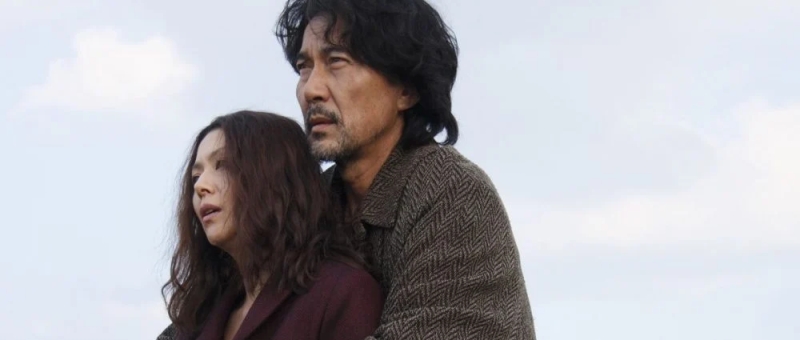
Tokyo Sonata (トウキョウソナタ, Kiyoshi Kurosawa, 2008)

Orphaned salarymen are the soulless ghosts haunting an increasingly empty city in Kiyoshi Kurosawa’s eerie tale of urban anxiety Tokyo Sonata (トウキョウソナタ). Undermining the certainty of the traditional family, Kurosawa paints it as a simulacrum dependent on each member playing their respective role blindly or otherwise, though in this case the integrity of the family unit is shaken by an economic intervention in which the accepted rules of the society have been upended with a vindictiveness that seems inexplicably unfair. 

This is the bargain of the salaryman dream. A man like Sasaki (Teruyuki Kagawa) now aged 46 came of age at the tail end of an era of economic prosperity. He was brought up in an atmosphere of jobs for life in which the corporate family was almost more “real” than the emotional which is one reason why it comes as such a shock when his boss effectively divorces him. He’s found someone new, planning to outsource Sasaki’s entire department to China while less than kindly explaining that as he has no other skills he of no more use to the company. Sasaki immediately clears his desk in anger, walking home early with a pair of carrier bags then, after meeting his son in the street, attempting to climb in through an upstairs window to avoid alerting his wife, Megumi (Kyoko Koizumi), to the fact he’s home early.

Sasaki is unable to tell her that he’s lost his job in part because of the acute embarrassment it would cause him. Somewhat dazed and confused, he’s become one of many disenfranchised salarymen who survived the 15 years of economic stagnation only to have the rug pulled out from under them. Being a salaryman was in a way his whole identity and without it he doesn’t know who he is, which is one reason he puts on a suit every day and goes to sit in the park surrounded by other similarly dressed men with briefcases who now seem to haunt the city like crows ominously dotting the horizon. In a repeated motif, Kurosawa shows us people trapped in kafkaesque queuing situations shuffling around buildings while prevented from moving forward but forced to keep pace with the increasingly glacial environment. At the moment an old school friend he runs into, Kurosu (Kanji Tsuda), seems to give up he is swept into a great parade of the suited and hopeless while Sasaki hovers on its edges. 

It’s this threat to Sasaki’s masculine pride which is largely founded on his economic ability to support a family that kickstarts a chain reaction in his home even he becoming increasingly violent and authoritarian in an effort to overcome the sense of humiliation and powerlessness he feels after being made “redundant”. His younger son, Kenji (Kai Inowaki), tells him he wants to learn the piano but Sasaki irritably shuts him down either because he’s now worried about the money or simply sees it as a frivolous waste of time. Later when Megumi asks him why he won’t he change his mind he insists that he has to stick to his original decision otherwise it would undermine his patriarchal authority as a father. 

But this “authority” was perhaps already largely illusionary given that an intense work schedule meant he was rarely home to do much parenting. After finding out Kenji spent his lunch money on piano lessons behind his back he ironically shouts at him for lying and keeping secrets even though this is obviously what he himself has been doing in keeping up the illusion of his identity as a conventional salaryman. His older son, Takashi (Yu Koyanagi), was keeping secrets too his being his desire to join the US military believing that Japan no longer has a future for him in an atmosphere of stagnation not only economic but emotional and spiritual. Takashi tells his mother she should leave Sasaki, but to her question of who would play the role of mother replies that it makes no difference simultaneously encouraging her to reclaim an individual identity and perhaps robbing her of one just as Sasaki lost his in being shorn of his salaryman credentials. 

Lying on the sofa one evening she raises her arms and poignantly asks someone to lift her up but Sasaki has already gone to bed without even looking at her. Her life as a housewife is thankless and emotionally unfulfilling. Donuts she spent ages making go uneaten while her husband and sons brood on their own problems alone. At a car dealership, the salesman shows her a people carrier explaining that it’s perfect for family camping trips while she gravitates towards a red convertible, mesmerised by the way the roof can just disappear as if it were literally freeing her of her stultifying existence. On showing Takashi the shiny new driving license she’s just got as a symbol of her desire for independence, he scoffs that she’ll never use it but she counters him that it’s for “ID” which it is in more ways than one.

The family is imploded, the illusions of a conventional middle-class life upturned as Sasaki and Megumi each ask themselves if there’s a way to start again and escape their sense of middle-aged futility and disappointment. Cracking under the weight of conventionality, the foundations begin to fracture but the family nevertheless finds itself returning if with greater degrees of clarity and perhaps with less inclination to play the play the roles assigned to them rather than those they might wish to play as embodied by Kenji’s moving performance at the piano capturing all of the chaos and confusion of the world around him but finding in it also harmony and a gentle breeze that feels almost as if the city itself were breathing once again.


Tokyo Sonata screens Feb. 18 as part of Family Portrait: Japanese Family in Flux

International trailer (English subtitles)

The Fish Tale (さかなのこ, Shuichi Okita, 2022) [Fantasia 2022]

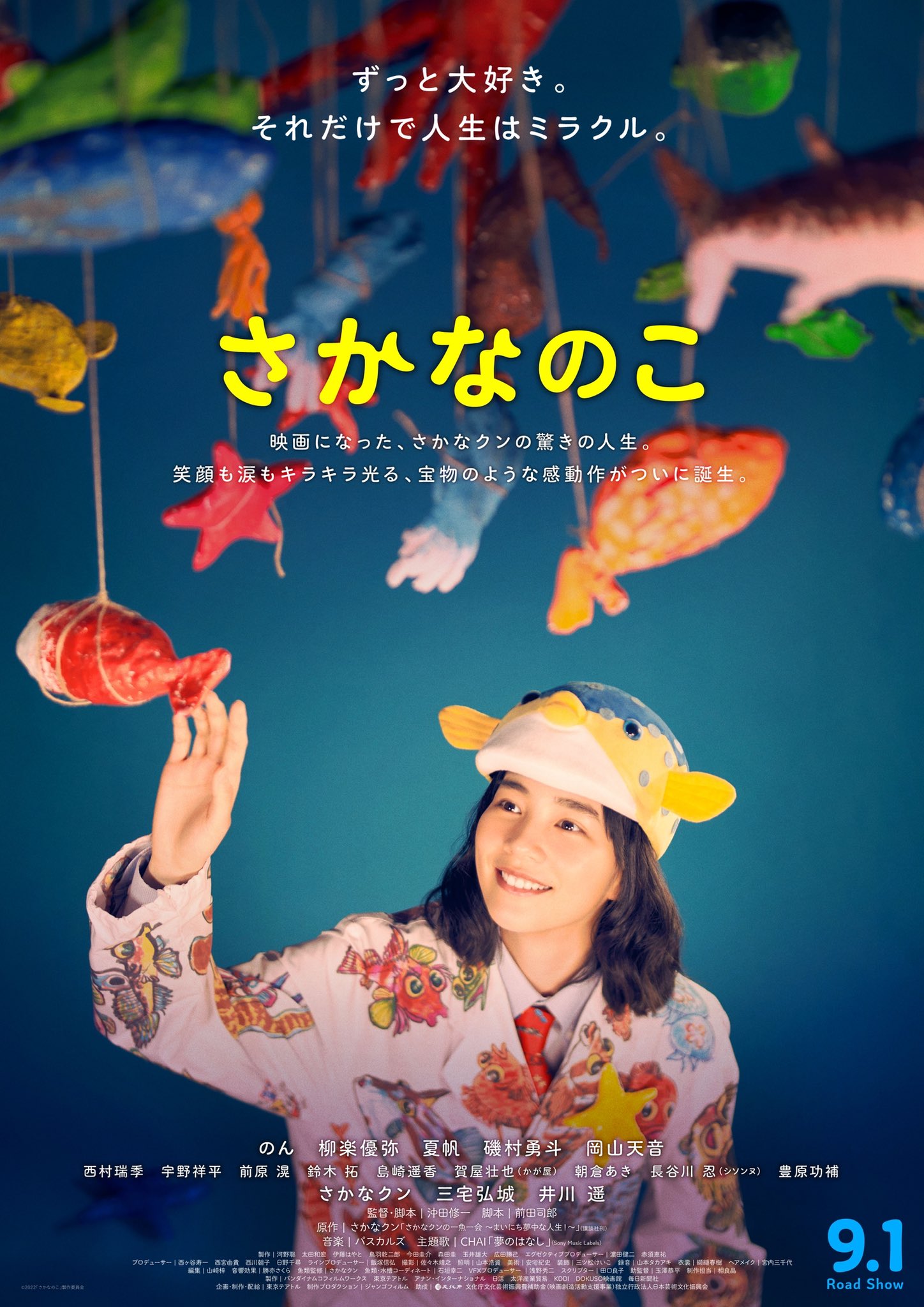
Shuichi Okita has made a career for himself exploring the lives of eccentric people and The Fish Tale (さかなのこ, Sakana no kKo) is certainly no exception. Based on the memoirs of the real life “Sakana-kun”, the film is a testament to the ways in which true enthusiasm can become an infectious source for good while even subjects which might seem esoteric can have universal appeal when delivered in the right way. Meebo (Non) is not like everyone else but sees nothing wrong in that nor do they see anything wrong in the way others live their lives (save for thinking edamame are better than fish). 

Later a TV personality, best-selling author, and YouTuber, Meebo has been totally obsessed with fish all their life. They draw pictures of fish, edit a fish-themed newspaper in middle school, and talk about fish all day long but they still eat fish and find how good it tastes just another thing that makes fish the best thing ever. Though Meebo’s mother (Haruka Igawa) is ever supportive, their father (Hiroki Miyake) has his doubts worried that Meebo isn’t like the other children and is going to struggle later in life. When Meebo meets a strange man with a fish hat on his head (a cameo from the real life Sakana-kun) whom most of the other children avoid, their mother says it’s alright to go to his house to see his aquarium but their father disagrees for obvious reasons later calling the police when Meebo fails to return home at the agreed time. Mr. Fish Head is the only person with whom the young Meebo can truly bond in their shared love of sea life but he also bears out their father’s sense of disapproval in admitting that he came from a wealthy family but is now low on funds because like Meebo he wasn’t suited to conventional schooling and has never been able to hold down a steady job. 

Meebo’s mother meanwhile is more relaxed, calmly telling Meebo’s teacher that having good grades isn’t necessarily important for everyone and she doesn’t want to force Meebo to make themselves unhappy by giving up fish to get them. In any case employment is something Meebo struggles with, fired from the aquarium for spending too much time admiring the fish and then later let go from a sushi bar. Meebo is hired to create an aquatic display for a dentist with an extremely gaudy office but fails to correctly interpret the brief unable to understand the dentist just wanted something flashy and superficial (like himself), but is finally offered a job at a pet shop with a sympathetic boss who appreciates their deep knowledge of and love for fish. 

As Meebo says, they don’t understand what “normal” is save for a vague sense that they may not be but continues to live their life happily no matter what others might think. When they’re targeted by delinquents in high school, Meebo ends up simply inviting them to come fishing with them and is generally able to win over those who don’t understand or approve of their obsessive interest with the force of their enthusiasm. Then again, there are those who are simply too conventional such as the young woman childhood friend Hiyo (Yuya Yagira) tries to introduce her to who rudely laughs at Meebo’s “childish” determination to become a “fish expert” as if such a thing were inherently ridiculous. Time and again its these special connections often made in childhood which continue to help Meebo on their way, engineering a friendship between the leaders of two rival high school gangs who later hire them to help decorate the interior of a new sushi bar. 

That’s not to say their life is not sometimes difficult, but their love for fish always seems to carry them through while the joy and enthusiasm they bring with them makes others happy and more curious about the world in which they live. Their love of sea life eventually trickles down to the next generation with childhood friend Momo (Kaho) taking her daughter to the aquarium just like Meebo’s mother had them and buying her an encyclopaedia of fish which Meebo themselves had written. A quirky, warmhearted tale of total self-acceptance, Fish Tale is also testament to the positive influence of “obsessive” passion which far from dark or introverted can help to illuminate the lives of those who might also be afraid of their differences and love for that which others may deride as niche.


The Fish Tale screened as part of this year’s Fantasia.

International trailer (English subtitles)

Until the Lights Come Back (大停電の夜に, Takashi Minamoto, 2005)

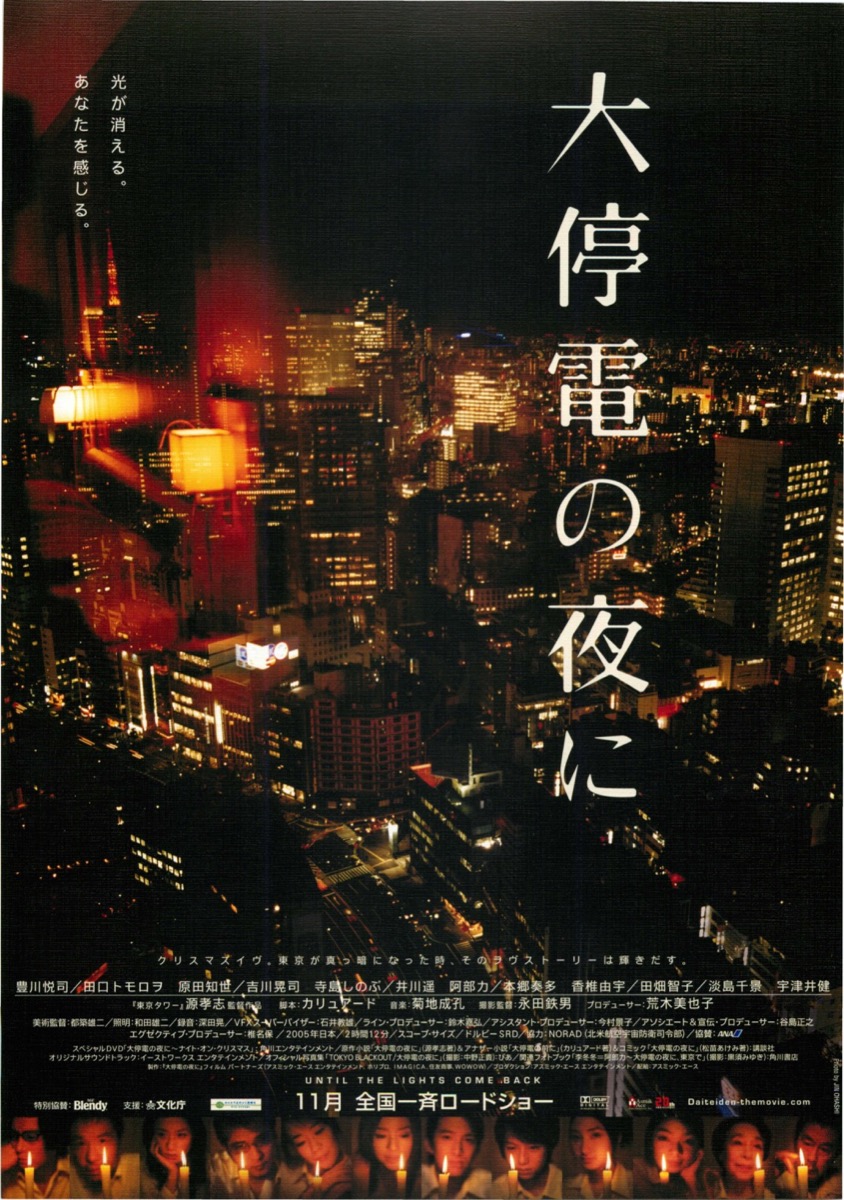
Until the Lights Come Back posterChristmas is, among other things, conveniently held on the same day every year. As such, it can’t help but become a moment of minor introspection inviting a thorough investigation of a life’s trajectory. In Japan, Christmas is also about romance which means it can also be an intense or melancholy occasion in which relationships past and present come up for reappraisal. Takashi Minamoto’s ensemble drama Until the Lights Come Back (大停電の夜に, Daiteiden no Yoru ni) spins a tale of city life as it catches hold of a number of accidentally connected souls and puts them through the emotional ringer thanks to an artificial psychological pause engineered by a power cut on Christmas Eve,

A melancholy barman sets a record going. A boy tracking satellites sees a girl hovering dangerously close to edge of the roof opposite. A conflicted salaryman finds out a dark family secret. A mistress is dumped while a wife wonders how much longer she should wait. A pregnant woman is chased by a yakuza, and an old lady gets an unexpected phone call.

Somehow, all of these events are connected though it takes a moment to figure out how. Christmas is a time for romance, but for the dejected salaryman, Ryotaro (Tomorowo Taguchi), it’s about to become a very difficult day indeed. When his terminally ill father decides to tell him the secrets of his birth, it prompts him into a mild bout of introspection concerning his own familial relationships. Ten years with the patient Shizue (Tomoyo Harada) haven’t cured his philandering and the marriage is strained to breaking point. Still, he thinks nothing of cancelling their special Christmas Eve dinner together to go meet his mistress even if his true purpose is to end things before they get any more complicated.

Missed connections and frustrated love stories continue to dominate. The mistress, Misuzo (Haruka Igawa), gets into a lift with Chinese bellboy Dongdong (Tsuyoshi Abe) who was supposed to be going back to Shanghai to visit his long-distance girlfriend who he worries is losing interest. Meanwhile, the melancholy barman, Mr. Kido (Etsushi Toyokawa), is pining for a failed love of his own – a woman he foolishly abandoned and then tried to pick back up again only to learn she had married someone else and that the marriage was unhappy. Mr. Kido gave up his musical dreams to open a jazz bar in the hope his love would someday return to him, only to be visited by “hope” in a different form – that of the strange young woman, Nozomi (Tomoko Tabata), from the across the way who’s about to have a very big business night in her off the beaten track artisanal candle shop.

Meanwhile, the recently released ex-yakuza, Gin (Koji Kikkawa), pines for his lost love in the form of the heavily pregnant Reiko (Shinobu Terajima) who swore to wait for him but eventually drifted away and married someone else though she seems to be happy enough which, strangely, he seems to find a comfort. When the lights go out there’s nothing much else to do but talk and think and so each of our wounded protagonists is forced to put their pain into focus, considering the wider context of an emotional landscape and attempting to find accommodation within it. Mr. Kido can’t quite let go of his failed love, however much he might want to, but Gin can perhaps learn to be thankful that the woman he loved found someone nice who looked after her when he couldn’t.

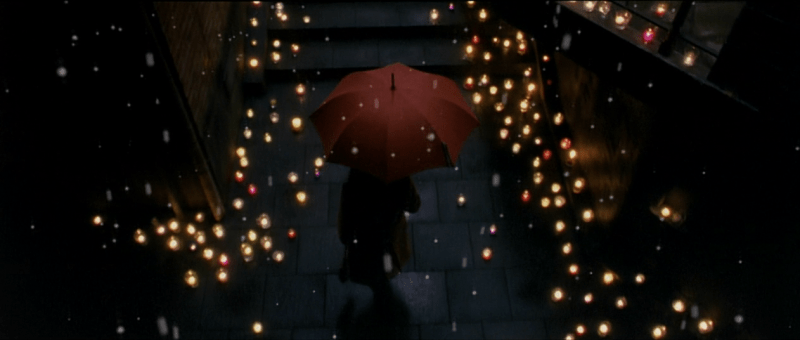
While the older generation swap stories of the eerie wartime blackouts and those of the comparatively less worrying power outages born of an inability to keep up with a rapidly recovering economy, the young make the best of it – swapping the twinkling lights of Christmas displays for the wonder of the stars. Candlelight and unexpected friendships give birth to new ways of thinking and create their very own Christmas miracles which seem set to pave a way towards a happier future for all in which forgiveness and understanding rule. Strangely warm yet never sentimental, Until the Lights Come Back captures a brief moment of stillness in a lonely city as its disconnected heroes find themselves pulled into a series of concentric epiphanies, putting the past to rest while learning to embrace an as yet unseen future.


Original trailer (no subtitles)
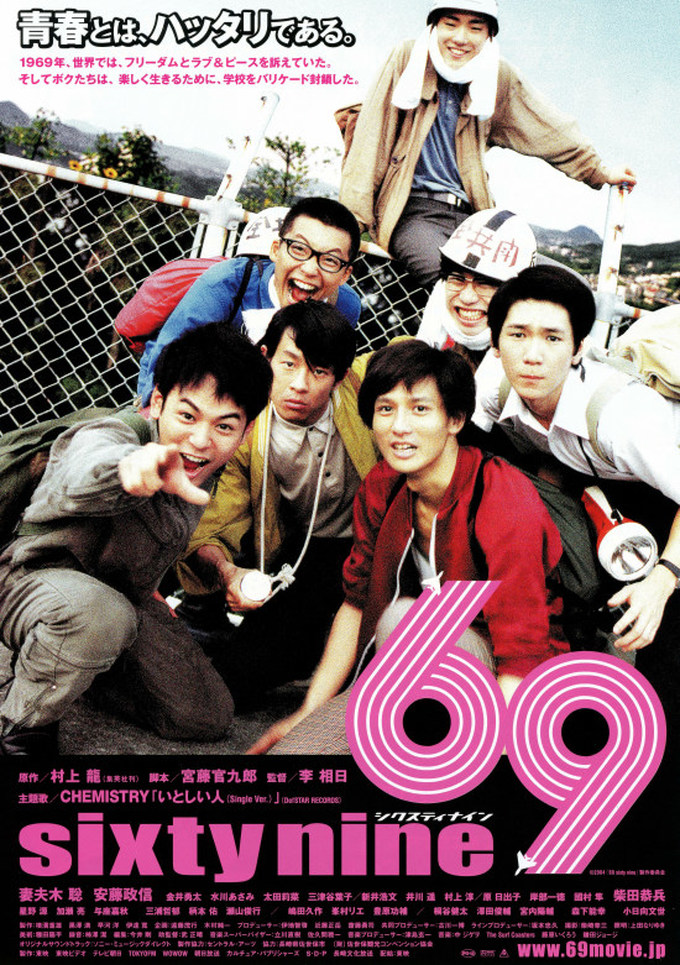
69 (Lee Sang-il, 2004)

69Ryu Murakami is often thought of as the foremost proponent of Japanese extreme literature with his bloody psychological thriller/horrifying love story Audition adapted into a movie by Takashi Miike which itself became the cornerstone of a certain kind of cinema. However, Murakami’s output is almost as diverse as Miike’s as can be seen in his 1987 semi-autobiographical novel 69. A comic coming of age tale set in small town Japan in 1969, 69 is a forgiving, if occasionally self mocking, look back at what it was to grow up on the periphery of massive social change.

The swinging sixties may have been in full swing in other parts of the world with free love, rock and roll and revolution the buzz words of the day but if you’re 17 years old and you live in a tiny town maybe these are all just examples of exciting things that don’t have an awful lot to do with you. If there’s one thing 69 really wants you know it’s that teenage boys are always teenage boys regardless of the era and so we follow the adventures of a typical 17 year old, Ken (Satoshi Tsumabuki), whose chief interest in life is, you guessed it, girls.

Ken has amassed a little posse around himself that he likes to amuse by making up improbable fantasies about taking off to Kyoto and sleeping with super models (oddly they almost believe him). He talks a big about Godard and Rimbaud, posturing as an intellectual, but all he’s trying to do is seem “cool”. He likes rock music (but maybe only because it’s “cool” to like rock music) and becomes obsessed with the idea of starting his own Woodstock in their tiny town but mostly only because girls get wild on drugs and take their tops off at festivals! When the object of his affection states she likes rebellious guys like the student protestors in Tokyo, Ken gets the idea of barricading the school and painting incomprehensible, vaguely leftist jargon all over the walls as a way of getting her attention (and a degree of kudos for himself).

69 is a teen coming of age comedy in the classic mould but it would almost be a mistake to read it as a period piece. Neither director Lee Sang-il nor any of the creative team are children of the ‘60s so they don’t have any of the nostalgic longing for an innocent period of youth such as perhaps Murakami had when writing the novel (Murakami himself was born in 1952). The “hero”, Ken, is a posturing buffoon in the way that many teenage boys are, but the fact that he’s so openly cynical and honest about his motivations makes him a little more likeable. Ken’s “political action” is merely a means of youthful rebellion intended to boost his own profile and provide some diversion at this relatively uninteresting period of his life before the serious business of getting into university begins and then the arduous yet dell path towards a successful adulthood.

His more intellectual, bookish and handsome buddy Adama (Masanobu Ando) does undergo something of a political awakening after the boys are suspended from school and he holes up at home reading all kinds of serious literature but even this seems like it might be more a kind of stir crazy madness than a general desire to enact the revolution at a tiny high school in the middle of nowhere. Ken’s artist father seems oddly proud of his son’s actions, as if they were part of a larger performance art project rather than the idiotic, lust driven antics of a teenage boy but even if the kids pay lip service to opposing the war in Vietnam which they see on the news every night, it’s clear they don’t really care as much as about opposing a war as they do about being seen to have the “cool” opinion of the day.

Lee takes the period out of the equation a little giving it much less weight than in Murakami’s source novel which is very much about growing up in the wake of a countercultural movement that is actually happening far away from you (and consequently seems much more interesting and sophisticated). Were it not for the absence of mobile phones and a slightly more innocent atmosphere these could easily have been the teenagers of 2003 when the film was made. This isn’t to criticise 69 for a lack of aesthetic but to point out that whereas Murakami’s novel was necessarily backward looking, Lee’s film has half an eye on the future.

Indeed, there’s far less music than one would expect in the soundtrack which includes a few late ‘60s rock songs but none of the folk/protest music that the characters talk about. At one point Ken talks about Simon & Garfunkel with his crush Matsui (Rina Ohta) who reveals her love for the song At the Zoo so Ken claims to have all of the folk duo’s records and agrees to lend them to her though his immediately asking to borrow money from his parents to buy a record suggests he was just pretending to be into a band his girl likes. Here the music is just something which exists to be cool or uncool rather than an active barrier between youth and age or a talisman of a school of thought.

Lee’s emphasis is firmly with the young guys and their late adolescence growth period, even if it seems as if there’s been little progress by the end of the film. There’s no real focus on their conflict with the older generation and the movie doesn’t even try to envisage the similar transformation among the girls outside of the way the boys see them which is necessarily immature. That said, the film is trying to cast a winking, wry look back at youth in all its eager to please insincerity. It’s all so knowingly silly, posturing to enact a revolution even though there’s really no need for one in this perfectly pleasant if slightly dull backwater town. They’ll look back on all this and laugh one day that they could have cared so much about about being cool because they didn’t know who they were, and we can look back with them, and laugh at ourselves too.


Ryu Murakami’s original novel is currently available in the UK from Pushkin Press translated by Ralph McCarthy and was previously published in the US in the same translation by Kodansha USA (but seems to be out of print).

Unsubtitled trailer:

and just because I love it, Simon & Garfunkel At the Zoo