The Final Piece (盤上の向日葵, Naoto Kumazawa, 2025)

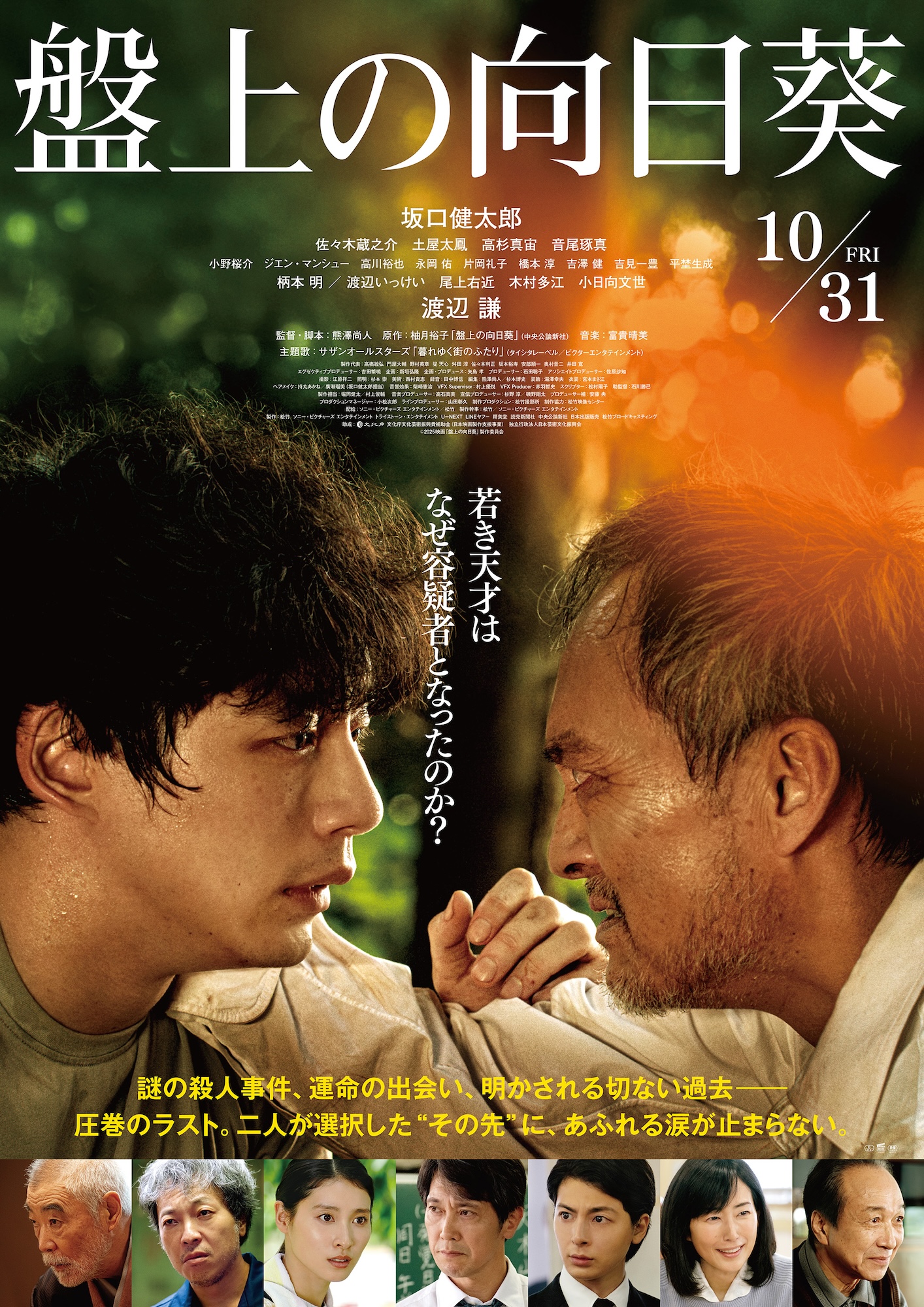
When a body is discovered buried with a priceless set of shogi tiles, it unearths old truths in life of an aspiring player in Naoto Kumazawa’s sprawling mystery, The Final Piece (盤上の向日葵, Banjo no Himawari). In Japanese films about shogi, the game is often a maddening obsession that is forever out of reach. Hopefuls begin learning as children, sometimes to the exclusion of everything else, but there’s age cut off to turn pro and if you don’t make the grade by 26, you’re permanently relegated to the ranks of the amateur. 

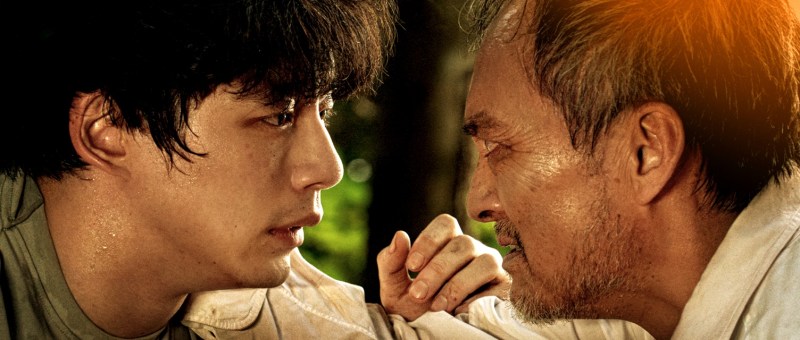
Junior policeman Sano (Mahiro Takasugi) was one such child and in some ways solving the crime is his final match. The thing is, he loves the game and admires Kamijo’s (Kentaro Sakaguchi) playing style along with the aspirational quality of his rise from nowhere not having trained at the shogi school and turning pro at the last minute to win a prestigious newcomer tournament. He’s hoping Kamijo will win his game against prodigious player Mibu (Ukon Onoe) with whom Kamijo’s fortunes are forever compared. Which is all to say, Sano really doesn’t want Kamijo to be the killer and is wary of accusing him prematurely knowing that to do so means he’ll be kicked out of professional shogi circles whether he turns out to be guilty or not.

Nevertheless, the more they dig into Kamijo’s past, a sad story begins to emerge that strongly contrasts with his present persona, a slightly cocky young man with a silly beard and smarmy manner. While Mibu seems to have been indulged and given every opportunity to hone his skills, Kamijo was a poor boy whose father had drink and gambling problems and was physically abusive towards him. His mother took her own life, leaving Kamijo to fend for himself with a paper round while his father occasionally threw coins at him and railed against anyone who questioned his parenting style. Good intentions can have negative consequences, the landlady at his father’s favourite bar remarks recalling how he went out and beat Kamijo for embarrassing him after another man told him he should be nicer to his son.

Toxic parental influence is the wall Kamijo’s trying to break in shogi. Aside from the man raising him, Kamijo finds another, more positive, paternal figure in a retired school teacher (Fumiyo Kohinata) who notices his interest in shogi and trains him in the game while he and his wife also give him clean clothes and a place to find refuge. But Kamijo can’t quite break free of his father’s hold much as he tries to force himself to be more like the school teacher. As an impoverished student he meets another man, the cool as ice yakuza-adjacent shogi gambler Tomyo (Ken Watanabe), who insists he’s going to show him the “real” shogi, but in reality is little different from his father if more supportive of his talent.

Kamijo finds himself torn between these three men in looking for his true self. Though he may tell himself he wants to be like the schoolteacher being good and helping people in need, he’s pulled towards the dark side by Tomyo and a desperate need for shogi which tries to suppress by living a nice, quiet life on a sunflower farm that reminds him of the happier parts of his childhood. There’s a cruel irony in the fact that the police case threatens to ruin to his shogi success at the moment of its fruition, even if it accompanies Kamijo’s own acceptance of his internal darkness and the way it interacts with his addiction to the game. 

Tomyo’s own obsession may have ruined his life as he looks back over the town where he spent his happiest months with a woman he presumably lost because of his gambling and need for shogi glory even though he never turned professional and remained a forever marginalised presence as a gambler in shogi society. Unlocking the secrets of his past seems to give Kamijo permission to accept Tomyo’s paternal influence and along with it the darker side of shogi, but there’s something a little uncomfortable in the implication that he was always doomed on account of his “bad blood” aside from the toxic influences of his some of his father figures from the man who raised him and exploits him for money well into adulthood, and the ice cool gangster who taught him all the best moves the devil has to play along with a newfound desire for life that may soon be snuffed out.


The Final Piece screens as part of this year’s Japan Foundation Touring Film Programme.

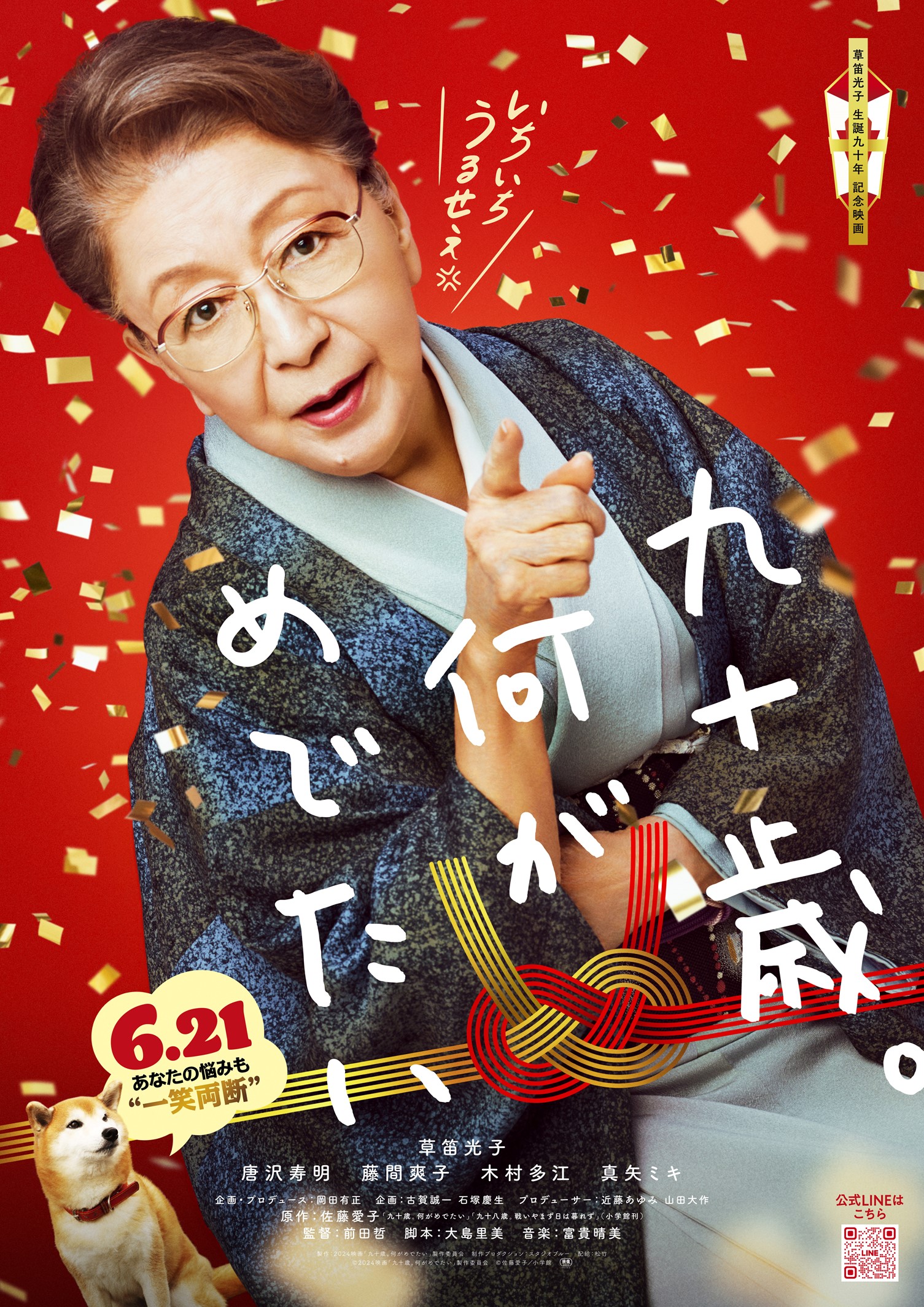
90 Years Old – So What? (九十歳。何がめでたい, Tetsu Maeda, 2024)

Everyone keeps congratulating Aiko Sato (Mitsuko Kusabue) on reaching 90, but she can’t see what’s so special about it. Having retired from writing after publishing her last novel at 88, she’s really feeling her age and has little desire to anything but sit around waiting to die. That is, until she’s badgered into picking up her pen by a down on his luck, “dinosaur” editor certain that her words of wisdom will strike a chord with the young people of today.

Marking the 90th birthday of its leading lady Mitsuko Kusabue and directed by comedy master Tetsu Maeda, the film takes its name from a collection of essays published under the title “90 Years Old, So What?” which largely deal with what it’s like to be old in the contemporary society along with the way things have changed or not in Japan over the last 90 years. It does not, however, shy away from the physical toll of ageing despite Kusabue’s sprightliness or the undimmed acuity of Aiko whose only barrier to writing is that she fears she’s run out of things to say and the energy to write them. During her retirement, she remarks on the fact that her legs and back hurt while she also has a heart condition and everything just feels like too much bother. Her daughter Kyoko (Miki Maya), who lives with her along with her twenty-something daughter Momoko (Sawako Fujima), asks her why she doesn’t go out to meet a friend, but as Aiko says, most of her friends have already passed on or like her don’t really have the energy to leave the house. 

In many ways, her age isolates her as she finds herself slightly at odds with the contemporary society. She turns the television up louder because she finds it difficult to understand what younger people are saying and doesn’t get why they stare at their phones all the time. Though she manages most things for herself, she has to call repair people, which costs money, if something breaks down while her daughter’s not around to fix it, even if it’s something as simple as a paper jam in a fax machine or pushing the off button on the TV too hard so it won’t turn back on again. Nevertheless, so intent is she on “enjoying” her retirement that she repeatedly turns down the entreaties of a young man from her publisher’s who wants her to write a column and always turns up with fancy sweets which are, as she says, well-considered gifts, but also a little soulless and superficial being driven by fashionable trends of which Aiko knows nothing and by which she is not really impressed.

There is something quite interesting about the contrast between herself and fifty-something Yoshikawa (Toshiaki Karasawa) who is also a man behind the times and a relic of the patriarchal culture she railed against in her writing and rejected in her personal life, divorcing two husbands and going on to raise her daughter alone. In the opening scenes, she reads an entry from an advice column about a woman who’s sick of her husband of 20 years because he’s a chauvinist who dumps all of the domestic responsibilities onto her while looking down on her because of it. Aiko tuts and contradicts the advice of the columnist, remarking that the answer is simple. She should just tell him to his face that she hates him and then leave. Nevertheless, the fact remains that not all that much has changed since she was young. The husband’s behaviour is considered “normal”, while the woman’s desire to be treated with respect or leave her marriage is not. Yoshikawa is effectively demoted because he has no idea that his treatment of a female employee amounts to workplace bullying and sexual harassment even if he didn’t intend that way because he’s trapped within this old-fashioned patriarchal ideal and is unable to see that his behaviour is not acceptable nor that he’s been taking his family for granted while considering only his own needs and positioning himself as the provider. 

Yet it’s 90-year-old Aiko rather than his humiliating demotion or the failure of his marriage who begins to show him the error of his ways by accepting him into her own family like a lonely stray. Aiko’s essays don’t really say that everything was better in the past, even if she’s confused by modern people who are annoyed by the cheerful sounds of children playing and a city alive with life because she remembers how everything went quiet during the war and how depressing that could be. But she does sometimes think that progress has gone far enough and things were better when people had more time for patience with each other. That said, patience is one of the things Aiko has no time for, advising Yoshikawa to charge forward like a wild boar because one of the benefits of age is that you just don’t care anymore what anyone thinks so get ready to annoy people or exasperate them but carry on living life to the full. Ironically, that might be a gift that he gave her by convincing her to write again which returned purpose to her life and gave her a reason to engage again with the world around her lifting her depression and making her feel as if she still mattered. The real Aiko turned 100 in 2023 and carried on writing, while 90-year-old Kusakabe is herself undergoing something of a career resurgence in recent years proving that even if you’re 90 years old, so what? There’s still a lot of life left to be lived and you might as well carry on living it doing what you love for as long as you can.


90 Years Old – So What? screens 21st June as part of this year’s Toronto Japanese Film Festival.

Trailer (English subtitles)

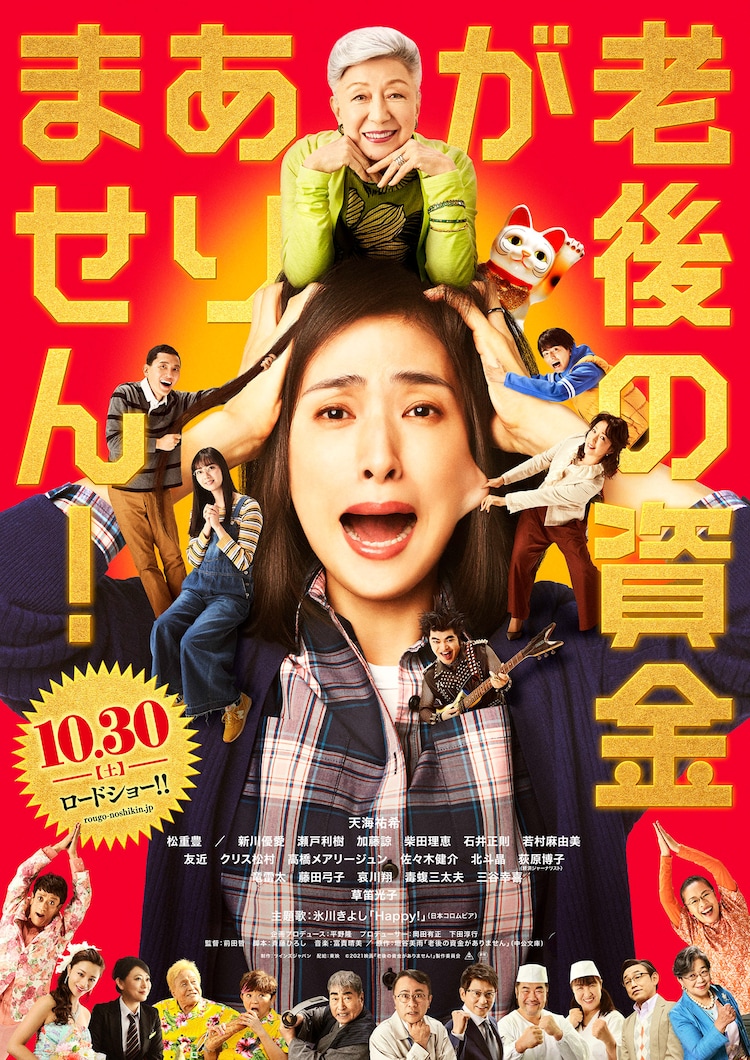
What Happened to Our Nest Egg!? (老後の資金がありません!, Tetsu Maeda, 2021)

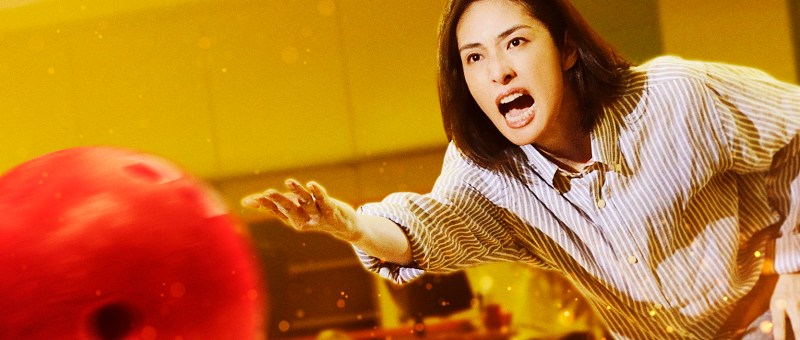
A minor controversy erupted in Japan in 2019 when then finance minister Taso Aso issued a statement recommending that couples should have 20 million yen (£104,620 total at the time of writing) saved for their retirement on top of the state pension in order to live a comfortable life in old age. All things considered, 20 million yen actually sounds like quite a low sum for two people who might live another 30 years post-employment. Nevertheless, Atsuko (Yuki Amami) and her husband Akira (Yutaka Matsushige) are now in their mid-50s and don’t have anywhere near that amount in savings. They’re still paying off their mortgage and though their children are grown-up, neither of them seem to be completely independent financially and both still live at home. 

Tetsu Maeda’s familial comedy What Happened to Our Nest Egg!? (老後の資金がありません!, Rogo no shikin ga arimasen!) explores the plight of the sandwich generation which finds itself having to support elderly relatives while themselves approaching retirement and still needing to support their children who otherwise can’t move forward with their lives. Seeing an accusatory ad which seems to remind her personally that even 20 million yen isn’t really enough when you take into consideration the potential costs of medical treatment or a place in a retirement home, Atsuko has a sudden moment of panic over their precarious financial situation. The apparently sudden death of Akira’s 90-year-old father acts as a sharp wake up call especially as Akira’s apparently very wealthy but also selfish and materialistic sister Shizuko (Mayumi Wakamura) bamboozles him into paying for the entirety of the funeral while pointing out that they’ve been footing most of the bill for the parents’ upkeep over the last few years.

There was probably a better time to discuss the financial arrangements than with their father on his deathbed in the next room, but in any case Shizuko doesn’t pay attention to Atsuko’s attempt to point out they’ve been chipping in too. Akira’s mother Yoshino (Mitsuko Kusabue) also reminds them that their family was once of some standing and a lot of people will be attending the funeral so they need to make sure everything is done properly. The funeral arranger is very good at her job and quickly guilts Atsuko into spending large sums of money on pointless funeral pomp to avoid causing offence only to go to waste when hardly anyone comes because, as she later realises, all of the couple’s friends have already passed away, are bedridden, or too ill to travel. 

Yoshino is however in good health. When Shizuko suddenly demands even more money for her upkeep, Atsuko suggests Yoshino come live with them but it appears that she has very expensive tastes that don’t quite gel with their ordinary, lower-middle class lifestyle. Having lived a fairly privileged life and never needing to manage her finances, Yoshino has no idea of the relative value of money and is given to pointless extravagance that threatens to reduce Atsuko’s dwindling savings even more while in a moment of cosmic irony both she and Akira are let go from their jobs. Now they’re in middle age, finding new ones is almost impossible while their daughter suddenly drops the bombshell that she’s pregnant and is marrying her incredibly polite punk rocker boyfriend whose parents run a successful potsticker restaurant and are set on an elaborate wedding.

The film seems to suggest that Atsuko and Akira can’t really win. They aren’t extravagant people and it just wasn’t possible for them to have saved more than they did nor is it possible for them to save more in the future. Instead it seems to imply that what they should do is change their focus and the image they had of themselves in their old age. One of the new colleagues that Akira meets in a construction job has moved into a commune that’s part of the radical new housing solution invented by his old friend Tenma (Sho Aiwaka). Rather than building up a savings pot, the couple decide to reduce their expenses by moving into a share house and living as part of a community in which people can support each other by providing child care and growing their own veg. Yoshino too comes to an appreciation of the value of community and the new exciting life that she’s experienced since moving in with Atsuko. It may all seem a little too utopian, but there is something refreshing in the suggestion that what’s needed isn’t more money but simply a greater willingness to share, not only one’s physical resources but the emotional ones too in a society in which everyone is ready to help each other rather than competing to fill their own pots as quickly as possible. 


What Happened to Our Nest Egg!? screens as part of this year’s Japan Foundation Touring Film Programme.
Trailer (English subtitles)