Papa (爸爸, Philip Yung Chi-kwong, 2024)

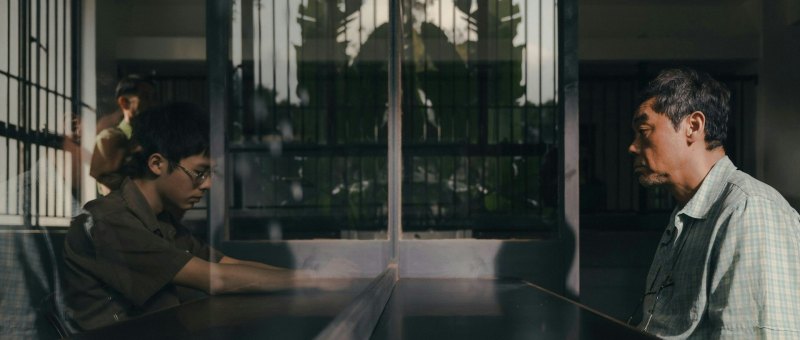
A man struggles with conflicted emotions after learning that his teenage son has killed his mother and sister in a bloody attack in Philip Yung Chi-kwong’s empathic character drama, Papa (爸爸). As much as he’s responsible for the deaths of those dearest to him, Ming (Dylan So) is still Nin’s (Sean Lau Ching-wan) son and he has a real desire to love and care for him while at the same time wondering why and continuing to blame himself as if this tragedy were really provoked by his failures as a father. 

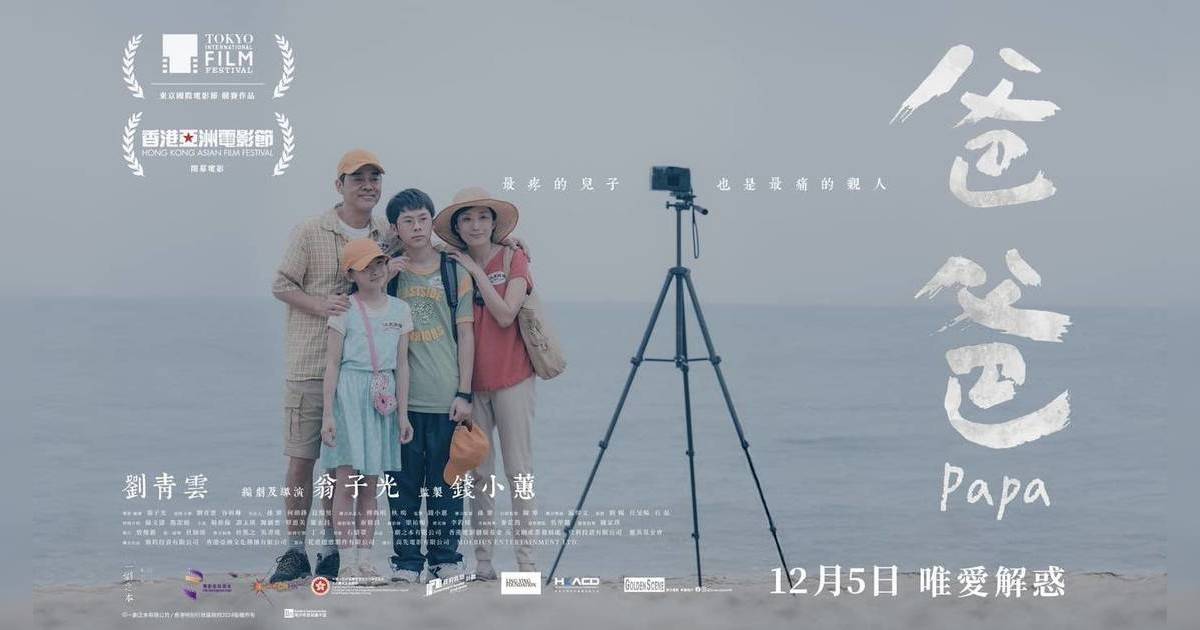
Weaving back and forth through the last 30 years, Yung meditates on a theme of loss while linking Nin’s life with key moments in history. In 1997, the year of Hong Kong’s handover to China and also the beginning of the Asian financial crisis, Nin buys a newfangled digital camera hoping to record the birth of his daughter, Grace. Nin isn’t convinced by this technological advance and wonders if it will just lead to people wasting their time taking endless photos now they don’t have to worry about running out of film, but it’s also the means by which he is eventually able to preserve his family by making use of the temporary pause provided by its timer function so that they can all occupy the same space for a moment but also for eternity.

Otherwise, he worries that the family’s business concerns put too much strain on their relationships. He and his wife Yin (Jo Koo Cho-lam) worked opposing shifts at a 24hr eatery meaning they rarely got to spend time together and the children grew up with each of their parents never fully there. Though Nin had wanted to stop opening overnight so they could have a more conventional family life, Yin, from Guangdong on the Mainland, was against it and wanted to keep going until the children were a bit older. There’s an implication that this 24hr culture is also something of an older Hong Kong that’s gradually being erased in the post-Handover society and that Nin and his family are living in an age of decline.

Though Ming won’t give a reason for what he did, in his court testimony he claims to have heard voices telling him that there were too many people and it was making everyone angry so he needed to kill a few and bring the population down. Nin again blames himself, reflecting that the family live in a typically cramped flat where the children have to share a room and everyone is piled on top of each other even if he and his wife are rarely there at the same time. In flashbacks to happier times when Ming was small, there’s a suggestion that Ming resented his sister and that he always had to share not only his possessions, his mother suggesting that they buy a smaller bike for his birthday so Grace can use it too, but his parents’ attention. In a particularly cruel moment, Ming tells Grace that none of her favourite characters from Doraemon are actually “real” but merely imaginary friends Nobita made up in his head because he is autistic. 

But along with his aloofness, poor social skills and lack of empathy, Nin remembers Ming caring for the stray kitten Grace adopted but then grew tired of though he had not originally been in favour of taking it in. He seems to have been living with undiagnosed schizophrenia, something else Nin blames himself for wondering if there was something he could have done. “If I’d been there it wouldn’t have happened,” he tells the press in the incident’s aftermath, but even if he was ill it’s hard to believe the little boy he taught to ride a bike and took on trips to the beach could have done something so violent and hateful and then show such little remorse. Even so, he’s still his son and the only thing he can still rescue from the wreckage of his life while meditating on all he’s lost. As such, it’s another recent film from Hong Kong about how to live on in a ruined world. Yung’s camera has an elegiac quality aided by a retro synth score and the neon lighting of an older Hong Kong drenched in melancholy, but also weary resignation and a determination to keep going if only in memory of a long absent past that were it not for a photograph “to prove that we were here” would go unremembered.  


Trailer (Traditional Chinese / English subtitles)
Back Home (七月返歸, Nate Tse Ka-ki, 2023)

“This place is cursed” according to an exasperated policeman dealing with yet another suicide at a rundown public housing estate in Hong Kong in Nate Tse Ka-Ki’s gripping supernatural thriller, Back Home (七月返歸). It’s true enough that this seems to be a fairly haunted land in which it has become quite difficult to tell the living from the dead, “they seem so real, I can’t tell the difference” a little boy admits while unfairly burdened by the ability to see things that others don’t or at least have become adept in not seeing. 

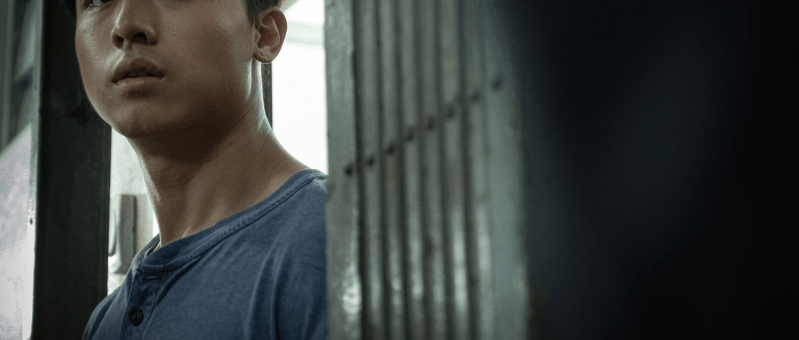
Wing (Anson Kong Ip-sang) too once had the ability to see ghosts, but apparently grew out of it after moving to Canada to live with his uncle a decade previously. All this place holds for him now is horror, he admits on being called home following his estranged mother’s attempt to take her own life. Now stable but in a coma, a doctor suggests it’s like her soul has gone wandering and they’ll have to wait to see if it ever comes back. Staying in his childhood home, Wing finds himself assaulted by painful memories of the past along with more literal ghosts he can’t really be sure aren’t manifestations of his trauma or symptoms of a fracturing mind. 

Then again, there is something very weird about this particular block. The people who remember Wing remember him as “spooky”, a boy who was rejected by the community around him after claiming to see ghosts. His embarrassed mother regularly railed at him, accusing him of lying and blaming him for his father leaving the family while seemingly suffering from mental health issues that have also seen her reduced to a figure of fun by the local kids. She tries all sorts of Taoist rituals including having him beaten with a burning stick to close his third eye all which understandably results in Wing deciding to remain silent and speak no more of ghosts while otherwise unseeing them in effort that must place extreme strain his own mental health. His plight is essentially one of repression in which he is haunted in more ways than one while forced to deny his authentic self because of a social taboo.

Even so, it’s a taboo others would quite like to break. In some ways we can’t quite tell if it isn’t Wing who’s dead and haunting his childhood home or if everyone else is actually a ghost. The ominous Uncle Chung who sells paper sacrifices hints as much when he unironically offers to make some for Wing while his overly cheerful wife’s constant offers of her special soup seem as if they may have some kind of ulterior motive. Complaining that there’s definitely something rotten in this apartment block, Wing discovers that there have been other victims besides his mother and hears from a little boy, Yu, that anyone who visits the forbidden seventh floor meets a sticky end. What’s waiting for Wing up there is a Lynchian world of repressed memory eager to confront him with his traumatic past and either set him free or trap him there forever. 

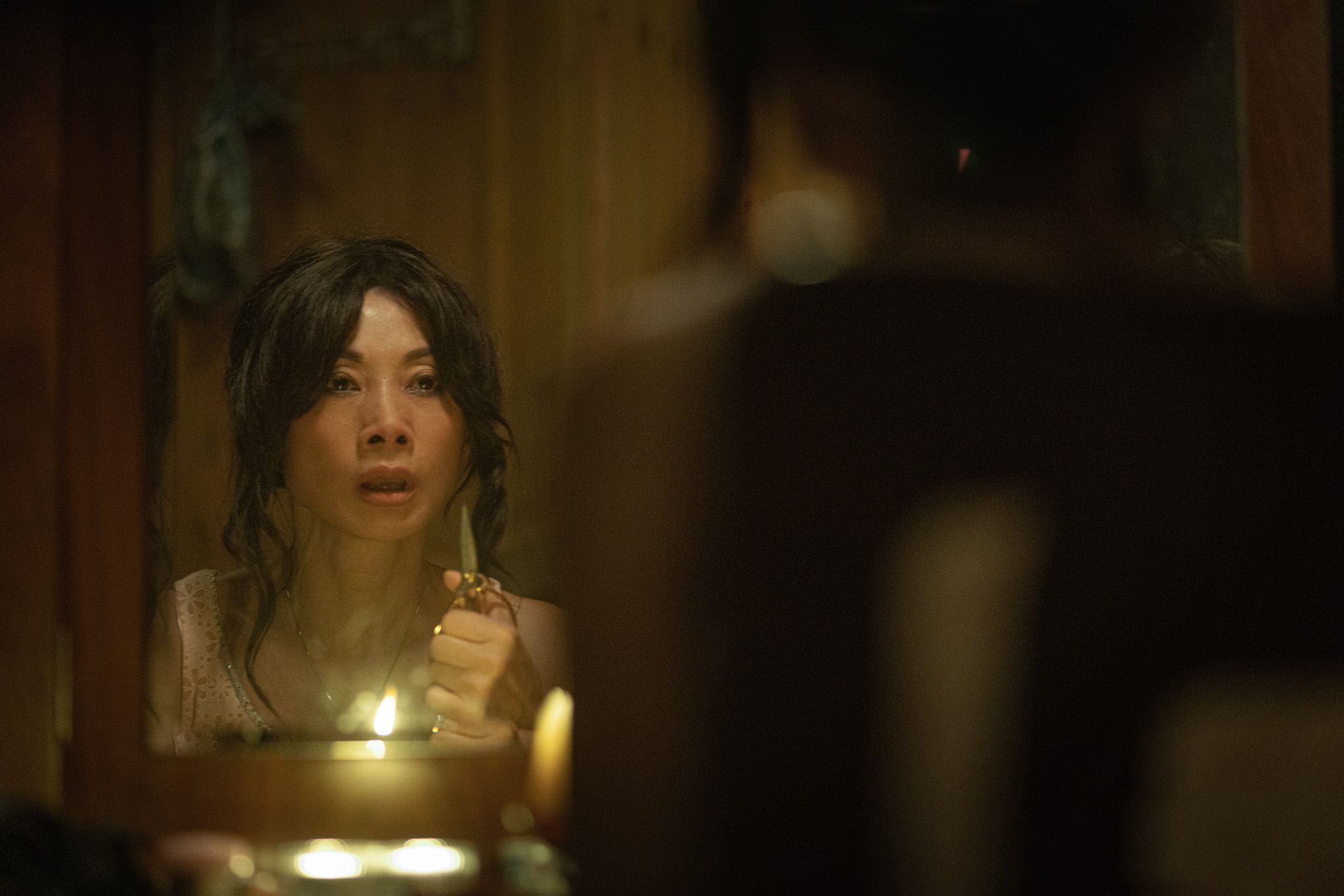
Bonding with Yu who is after all much like himself, a lonely little boy rejected by his peers while constantly “bothered” by wandering spirits, Wing starts to suspect there’s something more sinister going on. Director Nate Tse Ka-ki drops in repeated visual clues such as the distinctive pairs of scissors that seem to turn up in odd places while otherwise blurring the lines between the world of the living and the dead and alluding to other kinds of exile such as Wing’s life in Canada and estrangement from his family. On his return “back home”, he feels conflicted and resentful almost as if his mother had called him back and was refusing to let him go while grandma Chung ominously offers to look after Wing’s offspring when he eventually has one now that he’s where he’s supposed to be she assumes for good. It’s difficult not to read something sinister in her speeches about engineering a better future to “bring peace to this place” even before it becomes clear that it isn’t so much the lifting of a curse she’s interested in as its fulfilment. Some viewers may also detect something familiar in her delivery. In any case, in embracing a younger version of himself Wing may finally be able to escape his haunting even if it leaves him with a difficult choice between comforting fantasy and an objectively horrific “reality”.


Back Home screened as part of this year’s New York Asian Film Festival.

Original trailer (Traditional Chinese / English subtitles)
Images: ©️mm2 Studios Hong Kong