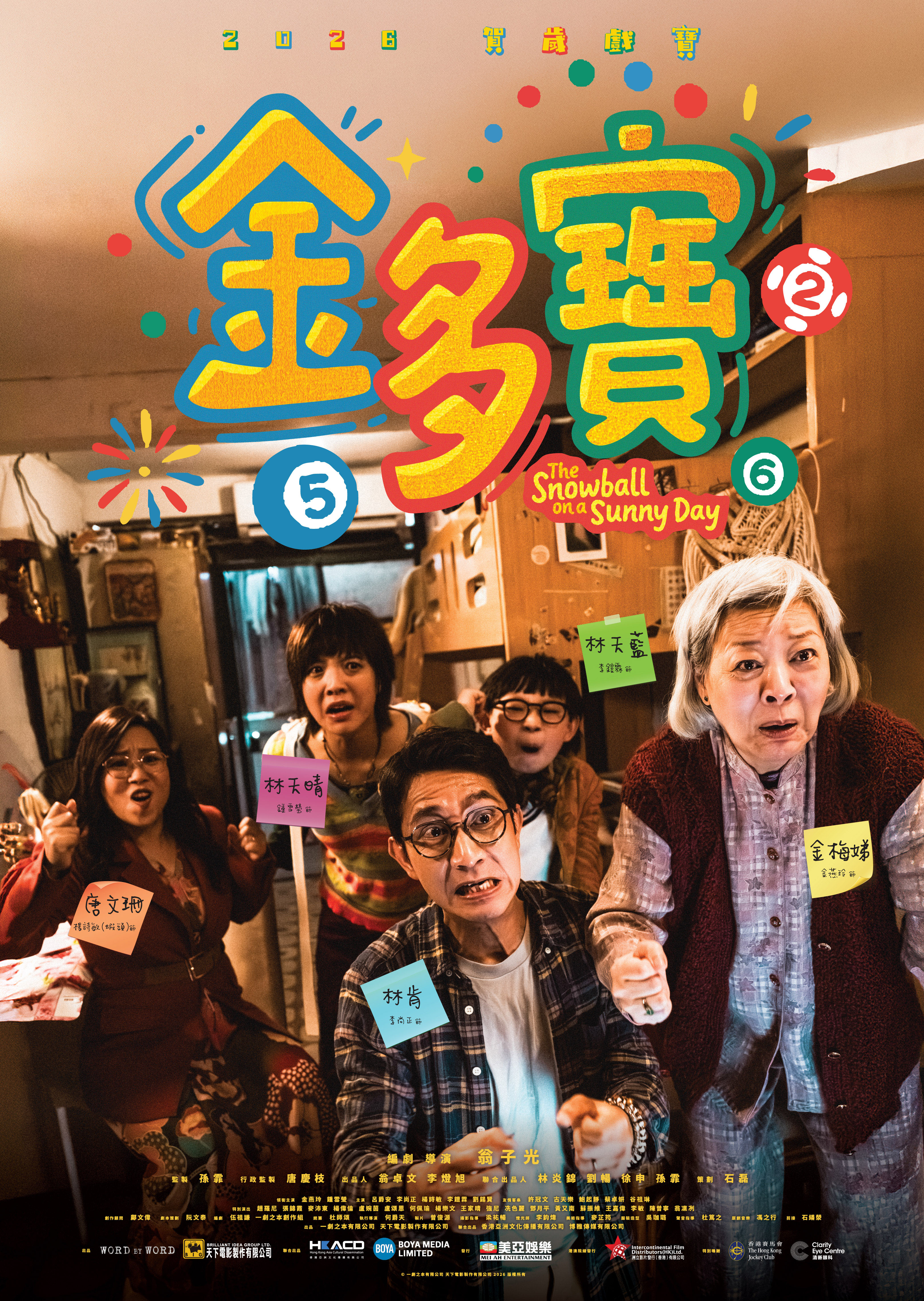
The Snowball on a Sunny Day (金多寶, Philip Yung Chi-Kwong, 2026)

Philip Yung isn’t the first person you think of when it comes to Lunar New Year Comedies. His previous films have largely been hard-hitting crime dramas such as Port of Call and Papa. The Snowball on a Sunny Day (金多寶) is then a world away with its largely warmhearted story of an ordinary family pulled apart by the demands of modern living but brought back together through subterfuge when it becomes necessary to keep up the pretence that they’ve won the lottery.

As one of their neighbours says, every family needs its little white lies every now and then. Widowed grandmother Mui (Elaine Jin) has been playing the same lottery numbers for 30 years. Buying the ticket has become the responsibility of granddaughter Sunnie (Chung Suet Ying), but she is currently living a frantic life as a script supervisor/runner on film sets. Her plan to use her father’s Jockey Club account to buy one online is frustrated when he reveals he’s cancelled it after a run of bad luck at the tracks, meaning she’ll have to go to the shop in person. When she gets there, the security guard turns out to be someone she had an altercation with on a shoot, so they won’t let her in. A relative, Great Uncle Wah, says he’ll buy a ticket for her, but is escorted out by loan sharks before he can do so.

Inevitably, Mui’s numbers come up and Sunnie doesn’t have the heart to tell her that she never bought the ticket, so she embarks on an elaborate ruse to pretend they’re all millionaires by “borrowing” an expensive villa where her friend Jay (Edan Lui ) is currently “housesitting” for a film producer who’s apparently disappeared following rumours of some kind of financial impropriety. In some ways, Mui’s desire for a house where the whole family could live together is reflective of the current realities of the Hong Kong housing market. Even with a lottery win, the villa wouldn’t really be within their reach, which is why they have to make up excuses to convince her mother Charlotte (Harriet Yeung), an estate agent, that there are reasons it’s so “reasonably priced” that aren’t necessarily dealbreakers for the family such as being a stigmatised property where a violent death took place. 

Meanwhile, this tranquil, spacious environment and relief from financial pressures provide a place in which Sunnie’s parents, who are currently separated but keeping the breakdown of their marriage secret from Mui, a chance to work out their differences. Her father Ken (Jiro Lee) is a washed up former idol star who evidently didn’t make any financial plans for his or his family’s future and now makes a living as a taxi driver who refuses to move with the times by following GPS or working via apps. Sunnie, meanwhile, was sent to live with Mui so that her mother Charlotte could devote her attention to her younger brother Harry (Marek Li Hoi-Lam) who is neurodivergent and has health issues. 

While some tension exists between Mui, Sunnie, and Charlotte, Sunnie is reaching the age at which she begins to realise the sacrifices that were made on her behalf and is mindful of repaying them. Her career as a filmmaker is, however, off to a slow start with her life mostly spent at the beck and call of autocratic directors, managing extras and on occasion having to step in herself such as playing the part of a ghost when an actor doesn’t show up and wearing the costume that Mui has hand stitched for the production, presumably without any pay. There are various meta comments about the declining state of the Hong Kong film industry coupled with a sense of nostalgia for an earlier time when her grandfather hand painted posters and marquees for the latest releases after he and Mui migrated from Indonesia. 

Mui’s life on the public housing estate similarly evokes a sense of warmth in a community that’s otherwise disappearing. Aside from the jobsworth of an estate manager to goes around telling people off for drying their washing outside or breaking some sort of other rule, Mui is well liked by her neighbours and only wants to move to have more space so the family could all live together. Through all the zany, farcical action as they try to keep up the act for Mui, from whom you can’t can’t really hide anything, the family begins to repair itself in true New Year comedy style while apparently making friends with some of their other “enemies” such as an extra/ice cream van diver and a Liverpool fan with whom Manchester United devotee Ken has some kind of vendetta. Despite the silliness, the film has a degree of genuine poignancy in its closing moments as various truths are revealed and the family is forced to remember what it is that’s really most important. 


The Snowball on a Sunny Day screened as part of Hong Kong Film Fest UK

Trailer (Traditional Chinese / English subtitles)
Papa (爸爸, Philip Yung Chi-kwong, 2024)

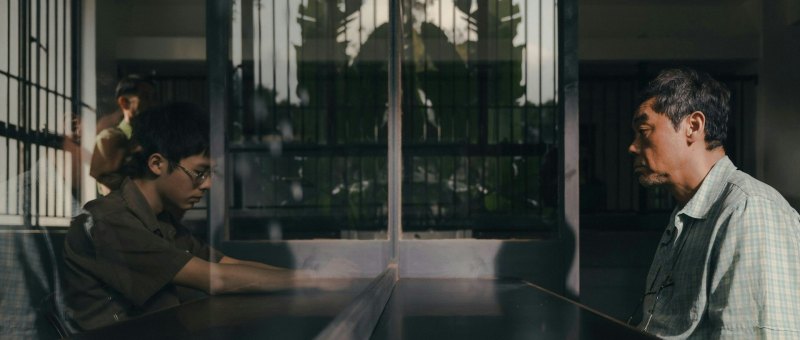
A man struggles with conflicted emotions after learning that his teenage son has killed his mother and sister in a bloody attack in Philip Yung Chi-kwong’s empathic character drama, Papa (爸爸). As much as he’s responsible for the deaths of those dearest to him, Ming (Dylan So) is still Nin’s (Sean Lau Ching-wan) son and he has a real desire to love and care for him while at the same time wondering why and continuing to blame himself as if this tragedy were really provoked by his failures as a father. 

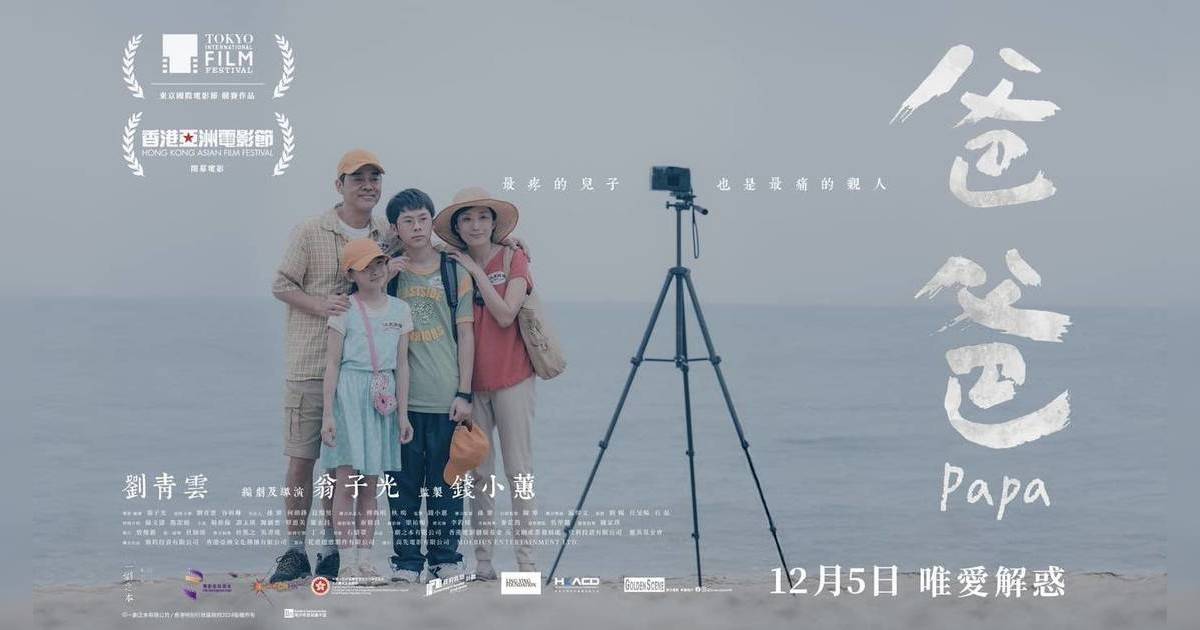
Weaving back and forth through the last 30 years, Yung meditates on a theme of loss while linking Nin’s life with key moments in history. In 1997, the year of Hong Kong’s handover to China and also the beginning of the Asian financial crisis, Nin buys a newfangled digital camera hoping to record the birth of his daughter, Grace. Nin isn’t convinced by this technological advance and wonders if it will just lead to people wasting their time taking endless photos now they don’t have to worry about running out of film, but it’s also the means by which he is eventually able to preserve his family by making use of the temporary pause provided by its timer function so that they can all occupy the same space for a moment but also for eternity.

Otherwise, he worries that the family’s business concerns put too much strain on their relationships. He and his wife Yin (Jo Koo Cho-lam) worked opposing shifts at a 24hr eatery meaning they rarely got to spend time together and the children grew up with each of their parents never fully there. Though Nin had wanted to stop opening overnight so they could have a more conventional family life, Yin, from Guangdong on the Mainland, was against it and wanted to keep going until the children were a bit older. There’s an implication that this 24hr culture is also something of an older Hong Kong that’s gradually being erased in the post-Handover society and that Nin and his family are living in an age of decline.

Though Ming won’t give a reason for what he did, in his court testimony he claims to have heard voices telling him that there were too many people and it was making everyone angry so he needed to kill a few and bring the population down. Nin again blames himself, reflecting that the family live in a typically cramped flat where the children have to share a room and everyone is piled on top of each other even if he and his wife are rarely there at the same time. In flashbacks to happier times when Ming was small, there’s a suggestion that Ming resented his sister and that he always had to share not only his possessions, his mother suggesting that they buy a smaller bike for his birthday so Grace can use it too, but his parents’ attention. In a particularly cruel moment, Ming tells Grace that none of her favourite characters from Doraemon are actually “real” but merely imaginary friends Nobita made up in his head because he is autistic. 

But along with his aloofness, poor social skills and lack of empathy, Nin remembers Ming caring for the stray kitten Grace adopted but then grew tired of though he had not originally been in favour of taking it in. He seems to have been living with undiagnosed schizophrenia, something else Nin blames himself for wondering if there was something he could have done. “If I’d been there it wouldn’t have happened,” he tells the press in the incident’s aftermath, but even if he was ill it’s hard to believe the little boy he taught to ride a bike and took on trips to the beach could have done something so violent and hateful and then show such little remorse. Even so, he’s still his son and the only thing he can still rescue from the wreckage of his life while meditating on all he’s lost. As such, it’s another recent film from Hong Kong about how to live on in a ruined world. Yung’s camera has an elegiac quality aided by a retro synth score and the neon lighting of an older Hong Kong drenched in melancholy, but also weary resignation and a determination to keep going if only in memory of a long absent past that were it not for a photograph “to prove that we were here” would go unremembered.  


Trailer (Traditional Chinese / English subtitles)
WE 12 (12怪盜, Berry Ho Kwok-man, 2023)

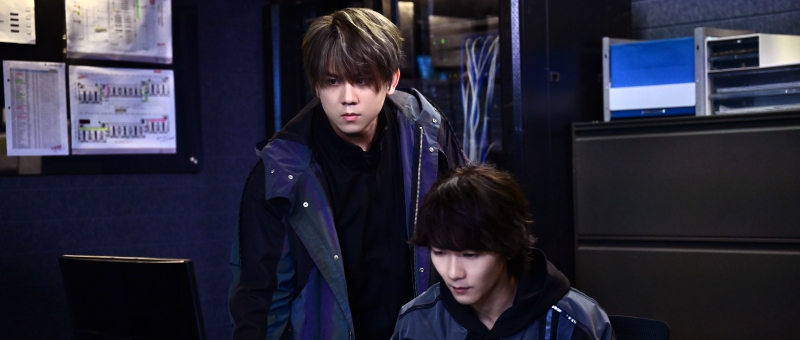
Phenomenally popular Cantopop boyband Mirror have been dominating the Hong Kong box office lately with several of the guys playing regular roles in movies not particularly designed as vehicles for their star persona such as Anson Lo’s turn in arty horror It Remains, or Lokman Yeung in Mad Fate. We 12 (12怪盜) is however the first time the band have made a movie altogether as an ensemble star vehicle and is clearly intended for their many devoted fans filled as it is with what seem to be in jokes and references to the guys’ “real” personas or at least those of the “character” they play in terms of their membership of Mirror.

The guys’ solo projects and movie work are perhaps hinted at in the film’s central thesis, if you can call it that, in that the boys have been doing too many solo missions and have lost their team spirit. In the universe of the film, they’re a kind of crime fighting zodiac who do things like save princesses and conduct jewel heists. Each of the band members, who use similar character names, is introduced with a special power which ranges from the ability to converse telepathically with animals to the nebulous “strategic planning” and the downright plain “abseiling” which seems particularly unfair given that any of the other guys could obviously learn to abseil too and then he wouldn’t have a power anymore.

In any case, their group mission is to stop a mad scientist from activating a device which can send mosquitos to other universes because it would destroy our ecosystem. Meanwhile other scientists are working on creating a “right-wing chicken” which turns out to be less political than it sounds and in fact much more absurd, along with a series of other cancer causing foods just in case you weren’t sure if they were really “evil” or not. Even so, the plot isn’t really important more a means of tying the silliness together given that focus is split between the 12 guys who each have their particular moment to shine and personalised gags. When the big job goes wrong because they decided to all do their own thing rather than work as a team, they have to come back together again and rediscover the equilibrium of Kaito (i.e. Mirror). 

Which is all to say, it’s a little impenetrable to the uninitiated but fans of the band will doubtless be in heaven. It’s all in the grand tradition of boyband popstar movies in which the silliness is sort of the point in generating a sense of conspiracy with fans that they’re the ones who get the jokes because of their intimate relationships with the stars. The film also features extended cameos from fellow Cantopop group Error who play their back up team and have a few gags of their own, while Malaysian actress and star of Table for Six Lin Min Chen also has a small cameo as the kidnapped princess. 

The best performance comes however from The Sparring Partner’s Yeung Wai-lun as the slimy security manager Johnny who is obsessed with order and dresses in fascist uniform so obviously out of keeping with the silliness and absurdity the boys represent in a mild kind of rebellion towards anything serious or grown up society in general. There is something quite childish about the way the gags suddenly pop up out of nowhere along with the otherwise nonsensical nature of the film which isn’t so much a nonsense comedy like those of the 80s and 90s as much something totally random perhaps intended to express the essence of Mirror or at least that which its fans believe it to be. For all of these reasons, the film makes very little literal sense and does not hang together very well for anyone not already well versed in the world of the band but presumably plays out just fine for anyone with a 21st-century equivalent of a decoder ring and a silly sense of humour willing to join the boys for whatever crazy adventure they may be embarking on next.


WE 12 is on UK cinemas now courtesy of CineAsia.