Luminous Woman (光る女, Shinji Somai, 1987)

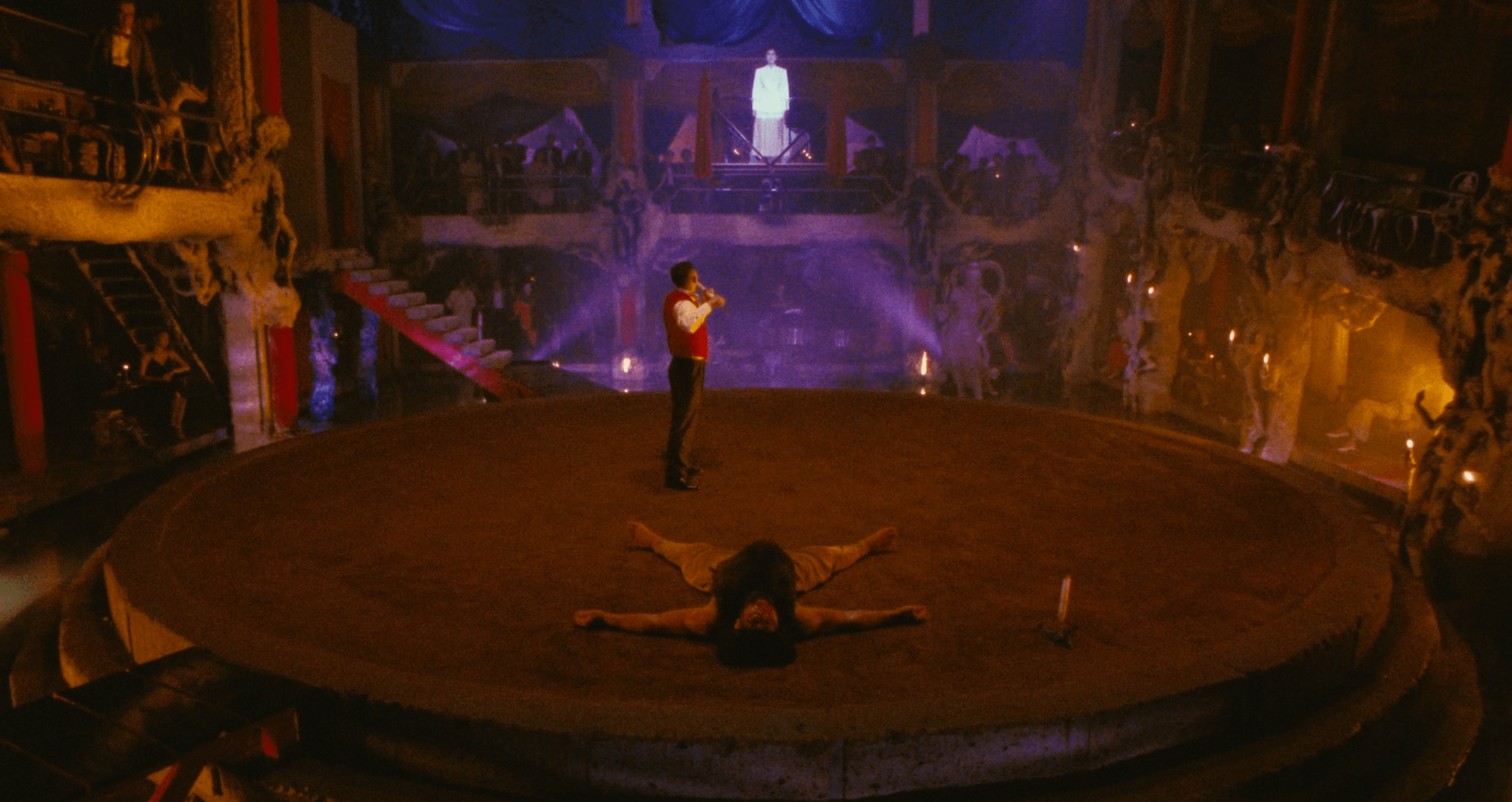
“I’ve come to the city and my heart has turned black” sings a monstrously corrupt former opera singer turned bizarre nightclub impresario in hellish Bubble-era Tokyo. A tale of urban “sophistication” versus pastoral innocence, Shinji Somai’s Luminous Woman (光る女, Hikaru Onna) sends a pure-hearted mountain man into the dark heart of the modern day city hoping to rescue the woman he loves who swore she would return to him but instead has been swallowed whole by the neon-lit landscapes of the contemporary capital. 

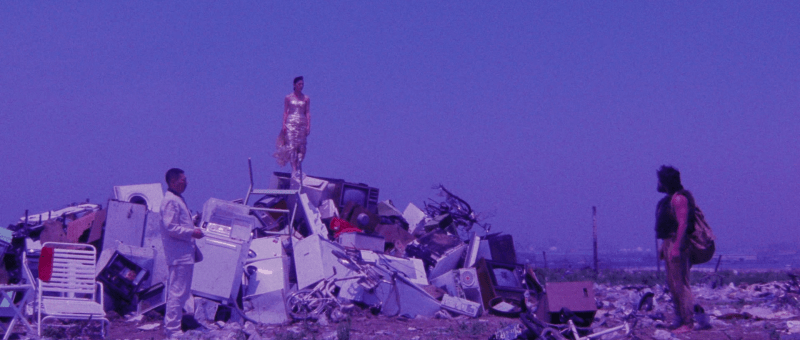
“Tokyo is lonely place” the hero immediately exclaims on witnessing it from the urban sprawl across the water in the company of an opera singer, Yoshino (Monday Michiru), whom he describes as like a doll without any blood coursing though its body. The incongruity of Sensaku’s (Keiji Muto) presence is immediately signalled by his appearance. Dressed in a bearskin jerkin and baggy trousers, walking with bare feet (all the way from Hokkaido!) and his face mostly beard, he looks every part the frontiersman as if he’d somehow stepped out of the 19th century straight into Bubble-era Japan. As he explains, he’s come looking for his woman, Kuriko (Narumi Yasuda), who travelled to Tokyo to study accounting to help the local farmers manage their businesses when she returned to run a farm with Sensaku. 

The first note of discord arrives when the man travelling with the opera singer, Shiriuchi (Kei Suma), tells him that he knows a woman by that name who also came from the same town in Hokkaido but she now works as a bar hostess. Shiriuchi only agrees to tell Sensaku the rest of what he knows if he makes an appearance at his club in its gladiatorial floor show. Sensaku is used to the primal struggle, he’s a mountain man after all and physically robust. He isn’t afraid of a fight only warning that there’s a chance he may kill his opponent to which Shiriuchi declares so much the better.

This a Tokyo populated by those who are in a sense already dead. Shiriuchi’s floor shows leverage mortal struggle as a means of existential validation, yet his concept of “sophistication” founded in European classicism is directly contrasted with the idealised pastoralism to which Sensaku eventually returns as he and the other villagers plant new crops surrounded by greenery and an incongruous mix of animals including a mischievous racoon. Yoshino, the “bloodless” opera singer has lost her ability to sing seemingly because of her oppression at the hands of Shiriuchi who describes as her as a “commodity”, “precious as a diamond”, but later treats her as a kind of broken toy complaining that if he cannot “enjoy” her body nor exploit her voice she has no further value to him. 

It soon becomes clear that Kuiriko too has fallen under his spell, working at an equally weird nightclub where the pale-faced hostesses wear kimono and sing children’s folksongs. She came to the city for education, but has become a drug user which leaves her vulnerable to Shiriuchi’s manipulation. Several times he is referred to as “master” and there is something Devil-like about him in the influence he seems to wield in these strange spaces of the prosperous city buried somewhere beneath the neon lights and sprawling office blocks. The pinkish tint of Somai’s colour grading along with his characteristically roving camera add to the sense that we already in hell and if Sensaku does not escape from it soon, he too will be consumed like Akanuma (Hide Demon) before him who came to look for a woman only to discover that she had already found happiness with someone else. 

Mountain man Sensaku’s identification with fisherman Akunuma is only further deepened by the sensation that he too is “burning” in the literal flames which lend a hellish glow to the empty swimming pool where he consummates his relationship with Yoshino who subsequently regains the ability to sing. They are both in a sense pure-hearted men out of place in the emotional austerity of a modern capitalist society, a pair of Orpheuses descending into hell in search of lost love but finding only disappointment and ruination. Sensaku is finally able to escape in accepting that he cannot rescue Kuriko in part because she has no desire to be rescued, while Yoshino may still come with him if she too chooses to leave. Somai’s characteristically long takes add an edge of eerie oscillation to his often theatrical composition which culminates in the scene of two women connected via telephone call seemingly sharing the same space even as one is surrounded by a spiderweb of laser-like red string. Dreamlike and often surreal, Somai’s etherial fable casts the Bubble-era society as a hellish underworld of broken dreams and human cruelty but finally takes refuge in a scene of pastoral restoration neatly mirroring the trash-heap paradise of its opening.


Luminous Woman screens at Japan Society New York on May 5 & 13 as part of Rites of Passage: The Films of Shinji Somai

Teaser trailer (no subtitles)
Seven Days War (ぼくらの七日間戦争, Hiroshi Sugawara, 1988)

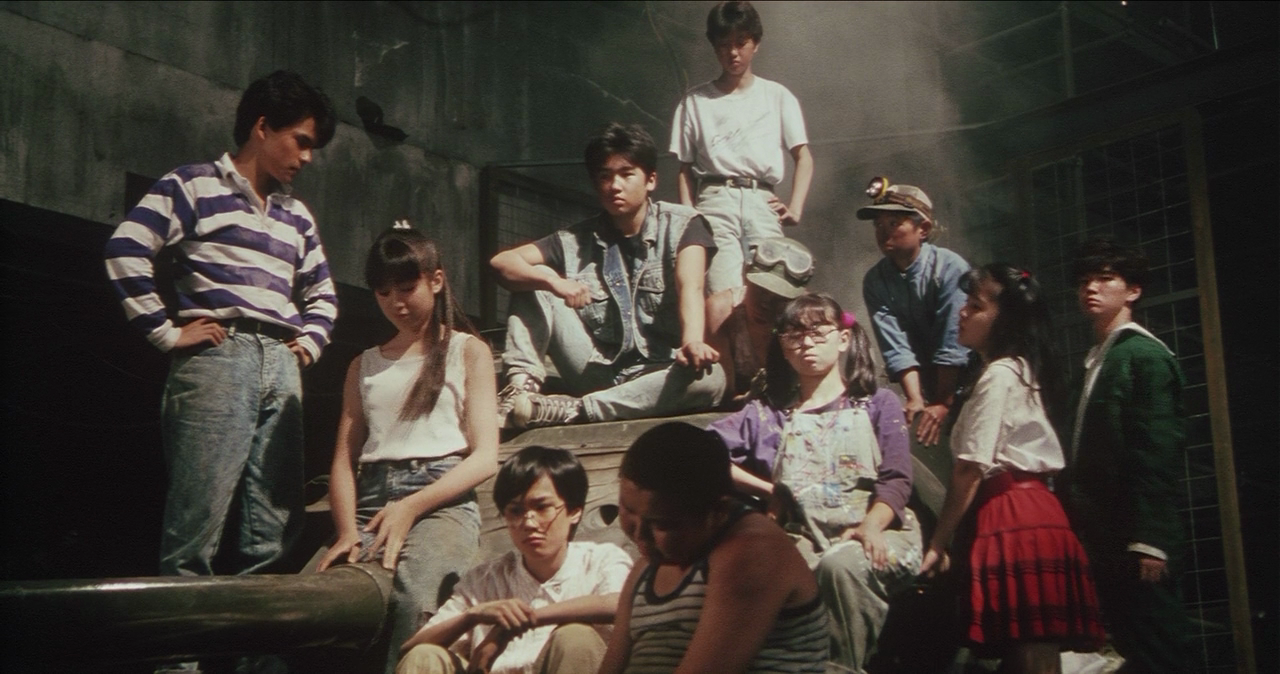
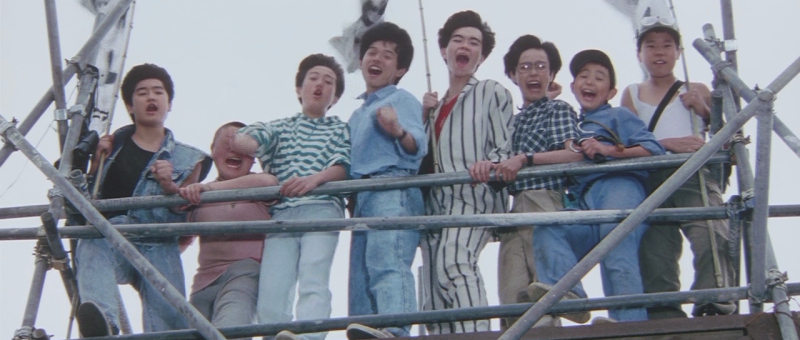
“What’s wrong with a little happiness?” one of the “eight heroes” of Aoba Jr. High Class 1-A asks, retreating from the duplicitous adult world into a teenage paradise. Another Kadokawa teen movie, Seven Days War (ぼくらの七日間戦争, Bokura no Nanoka-kan Senso) adapts the first in a series of Kadokawa novels by Osamu Soda and situates itself very much in the throws of the Bubble era in which the young rail not only against a rigid, conformist society but familial disappointment and the enduring legacy of the authoritarian past. 

According to the principal’s assembly speech, at Aoba Jr. High the motto for the day is “intellect, morality, and physique”. While he’s busy talking, another teacher, Yashiro (Shiro Sano), is patiently going through students’ bags and confiscating things he doesn’t like, even such innocent items as hairbrushes lest they should be used “to attract boys” rather than to maintain one’s appearance as the school would doubtless wish seeing as we later see the same teacher taking a ruler to make sure all the girls’ skirts are at regulation length. A boy late for assembly is also taken to task over his hair, accused of having had a perm and physically dragged towards a water butt by violent P. E teacher Mr. Sakae (Yasuaki Kurata) who later beats another overweight student for not performing well enough on the monkey bars. 

It’s small wonder the kids want to rebel. Eight of the boys in Yashiro’s class suddenly disappear one day, seceding to form their own society hiding out in a disused factory. Discovered and questioned, their only demands are to have the bad teachers fired and for all the students to be treated equally, but as expected their requests fall on deaf ears. Mindful of the school’s reputation, the principal tries to calm the anxious mothers but his underling, Nozawa (Yasuo Daichi), cooly absolves himself of all responsibility insensitively telling the parents that their children’s actions are obviously a reflection of poor parenting rather than a reaction to conditions at the school. 

As crude as that sounds, it’s accidentally echoed in another of the children’s demands in that they reject the idea that “children are robbers of parents’ lives”. Many of them are dealing with some degree of familial discord, often caused by the socio-economic stresses of the Bubble era in which everyone works all the time. The parents of ringleader Eiji (Kenichiro Kikuchi) are always arguing because his father is never around to help out at home, claiming that his golf weekends etc are essential work activities while his mother complains she’s worn out expected to handle the domestic responsibilities all alone. The broody Hiroshi (Toshitada Nabeshima) resents his mother for never being home, forever off working and communicating with him largely through answerphone messages. Nakao (Ken Ohsawa), the most studious of the boys, complains that he doesn’t really like the subjects he’s forced to study and only goes to cram school to please his parents. Hitomi (Rie Miyazawa), a female student who ends up joining the group later, is often left to her own devices with her father away working in Mexico and her mother always off “playing golf” which she seems to suspect is a euphemism for some other activity. 

What the kids want is to be free to be themselves, rejecting the salaryman straitjacket the mainstream world seems to be preparing for them. This being 1988, it goes without saying that the older teachers were children themselves during wartime and the legacy of militarism seems to have endured in their extreme love of order and discipline which has also infected the slightly younger and especially scary Yashiro. The wartime echoes are driven home by the very random find of a WWII tank for some reason hidden in the factory which the kids eventually repurpose and weaponise as part of their resistance, fortifying their hideout with a series of otherwise non-lethal booby traps to keep the authorities out even after the principal orders armed troops in. In the final confrontation, Nozawa turns up wearing a WWII German uniform only to be humiliatingly defeated by one of the gang’s Mousetrap-esque devices. 

Their rebellion, however, remains temporary and goodnatured, culminating in a beautiful fireworks display that has the adults admiring their artistry, while they later appear dressed once again in their school uniforms apparently considering their next revolutionary act. A Bubble-era time capsule, Seven Days War has much in common with other ‘80s kids movies, but positions its contemporary teens at the intersection of the authoritarian past and the consumerist present each of which conspire to rob them of their freedom but in their own way fighting back for their right to be themselves in a still conformist society.


Music video (no subtitles)

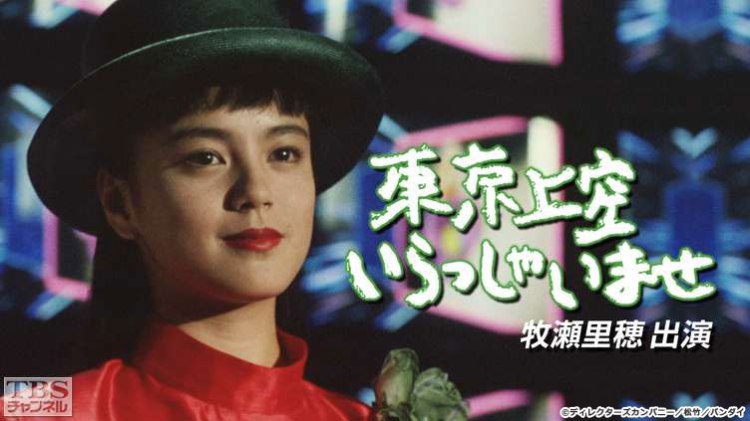
Tokyo Heaven (東京上空いらっしゃいませ, Shinji Somai, 1990)

title-752

In Japan, Shinji Somai is a well known and highly regarded director yet few of his films have ever made it overseas and he remains almost unknown in the West. Even by these standards, Tokyo Heaven (東京上空いらっしゃいませ, Tokyo Joukuu Irasshaimase) seems to be something of a forgotten episode in Somai’s career and is difficult to find even on unsubtitled DVD.

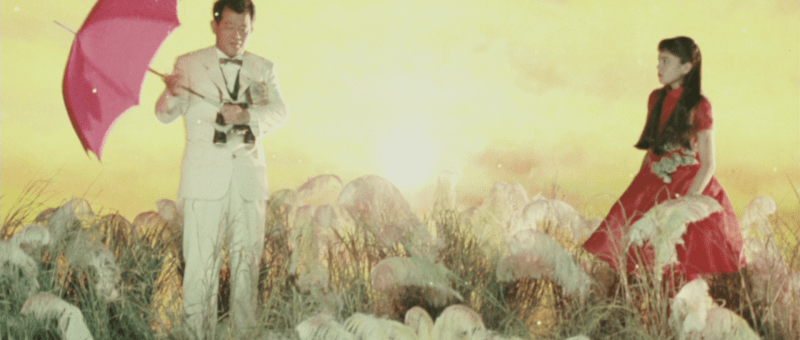
Set in 1990, the film begins with spoilt brat, up-and-coming idol star, and soon to be campaign girl Yu (Riho Makise) at a glitzy launch party. It’s time for 16-year-old Yu to be heading home, but sleazy producer Shirayuki (Tsurube Shofukutei) has other plans and instructs his underlings to set her up with him which they, guiltily, do. However, during the cab ride home Yu eventually escapes his molestations by jumping out into the middle of the road where she’s immediately mown down by an oncoming car. Waking up in a pastoral vision of heaven, Yu meets her guide, “Cricket”, who looks exactly like Shirayuki, the last face she had in her mind before she died. Given the opportunity to return to Earth but not as her old self, Yu tells Cricket to make her the girl on her campaign posters. Waking up in the room of one of the advertising executives working on her account, Fumio (Kiichi Nakai), she discovers resurrection isn’t all it’s cracked up to be.

Taking its queue from A Matter of Life and Death, Tokyo Heaven is first and foremost a fantasy romance (in the broadest sense) though leaning more towards bittersweet comedy than heartrending tragedy or profound human truths. Yu has returned to Earth but is unable to make contact with her family or let her presence be known to anyone other than Fumio. She no longer appears in photographs or mirrors and gradually comes to the realisation that her life really has ended and this small reprieve is only temporary. Many of Somai’s films focus on the emotions of younger people and the irony here is that Yu only grows up once she’s technically dead. Having had the chance to experience a “normal” adolescence with a part-time job at a fast food restaurant and a tentative romance Yu eventually feels ready to move on.

At only 16 years old, Yu was about to become a the face of a large scale advertising campaign. Her image haunts the streets of Tokyo and the loathsome Shirayuki is desperately trying to spin the tragic events into some kind of narrative that will both cover-up his entirely inappropriate behaviour with a school girl in the back of his chauffeur driven car and save some of the hard work already in place on the campaign itself. Hence, no one other than the girl’s parents is being told that Yu is dead and all previous commitments are being cancelled due to “poor health” or “taking a break” etc. Even after death, Yu’s image is being exploited and her soul ignored.

The conflicted trombone player, Fumio, comes to appreciate Yu for who she really is during their brief time together, resents Shirayuki’s treatment of her and wants the campaign to go ahead in an attempt to prolong her “presence” even if in image only. Through his contact with the increasingly vivacious Yu, Fumio who has previously been berated by his brother for not wanting to join their family bathroom fittings business and labeled as someone with an impenetrable shell who prefers his own company by his sometime girlfriend from downstairs, also comes to appreciate the joys of being alive a little more and reconsider some of his previous life choices.

Bearing Somai’s trademark long yet dynamic takes, Tokyo Heaven is a colourful tribute to Tokyo right before the bubble burst. Almost a prescient warning about the dangers of praising image over reality, the film becomes a poignant tale of learning to appreciate the sheer pleasure of being alive. Its slightly strange and perhaps abrupt ending has the potential to be misread, but the general message about the transience of life and the importance of living the way you want to live is one that cannot be overstated.


Screened from film as part of the London Japanese Embassy Filmshow programme on 19th November 2015.

There isn’t even a trailer available for this but if you can understand Japanese there’s a talkshow event with star and comedian Tsurube Shofukutei recorded at the recent Tokyo Filmex Somai retrospective in 2011.

And a musical scene from the film featuring Yosui Inoue’s Kaeranai Futari

http://www.youtube.com/watch?v=ardfYunlDRk