A Girl Named Ann (あんのこと, Yu Irie, 2024)

In the wake of tragedy, it’s easy to think that if only you had made a different choice then everything would be alright, but in reality it’s never as easy as that and blaming oneself is merely an act of vanity. There’s a peculiar kind of tradeoff that occurs to journalist Kirino (Goro Inagaki), that if he hadn’t written an article exposing a policeman who founded a support group for former drug users trying to integrate into mainstream society as a sex pest, then he might have gone on to help more people. Of course, he would have gone on abusing some of them too and his behaviour would probably have escalated into something much worse. The journalist begins to ask himself if it’s worth it for the net good, without necessarily examining the ramifications of the policeman’s actions.

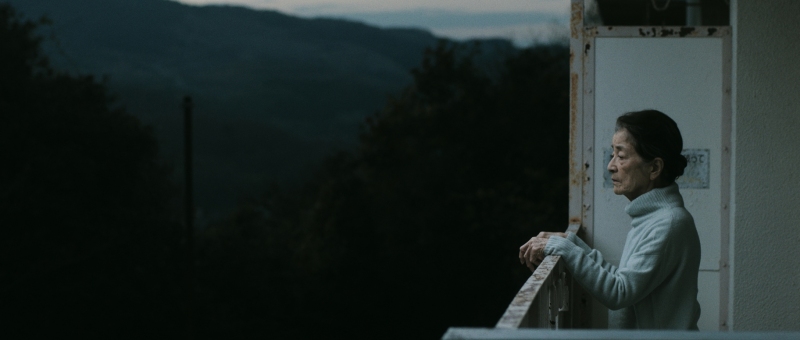
Yu Irie’s bleak social drama A Girl Named Ann (あんのこと, An no Koto) draws inspiration from a real life case in which a young woman began to turn her life around only to reach a crisis point during the pandemic. The film’s title almost makes an everywoman of its heroine who is resolutely failed by the society in which she lives and in the end discovers only a sense of futility in realising that she will never fully be able to escape the clutches of her abusive mother (Aoba Kawai) who forced her into sex work at age 12. Ann never even finished primary school even though middle school is compulsory and is functionally illiterate. Her reading level is that of a small child which of course makes it near impossible for her to be employed in any kind of salaried job while when she does secure employment her mother steals all her money. 

Being arrested by Tatara (Jiro Sato), a policeman who at first seems well-meaning even if positing “yoga” as a means of turning Ann’s life around, finally gives Ann the encouragement to come off drugs and try to integrate into mainstream society. To his credit, Tatara does everything he can for her from providing a paternal presence to finally helping her escape her mother by getting her a place in an apartment complex set up for women who are being stalked or have experienced domestic violence. Living alone gives Ann a sense of confidence and positivity that allows her to imagine a better future for herself while confronting her past. But on the other hand, it remains true that Tatara may have been better to help her move to another city where her mother would be less likely to find her and derail her life at every conceivable opportunity rather than keeping her close at his own support group which is perhaps an act of vanity if not something worse. No one helps for free and Ann encounters only differing kinds of exploitation from the employers who take her on at poverty wages because they know how desperate she is and don’t think she deserves any better, to the conflicted journalist Kirino who is only really invested in his investigation of Tatara. Ann seems to resent him for exposing Tatara and taking him away from her, but neither of the men make much of an attempt to continue supporting her once the story breaks. 

Ann’s plight exposes how the weakest in society were disproportionately affected by the coronavirus pandemic. The care home she was working at, poignantly because she wanted to learn how to take care of her grandmother (Yuriko Hirooka) who had shielded her from her mother’s abuse, is forced to restrict the number of employees on site meaning Ann is let go while the classes she’d been taking to improve her literacy are also cancelled. Though the apartment requires no rent, she no longer has a means of feeding herself not to mention being stuck inside all the time with nothing to do but study, and not even that when all her pens run out of ink. People are often judgemental and there is no further social support available to her. Even Tatara had been overly fixated on her drug use and while it’s true that she would otherwise be unable to rejoin society without recovering, he otherwise fails to consider other factors such as Ann’s toxic home life or trauma from the long years of abuse she suffered that all contribute to the problems she is facing. 

Even so, unlike her mother Ann is a warm and caring person who is well liked at the care home and clearly has a lot of love to give but the universe won’t seem to give her a break. Perhaps it would be easiest to simply blame her mother, but something must have made her like that too and there’s no one there for her either. She sometimes calls Ann “Mama”, as if the roles were reversed and she were the child being parented by Ann rather than the other way round. In any case, she comes to embody the selfishness of an indifferent society which could have saved a girl like Ann if really wanted to but in the end did not.


A Girl Named Ann screens as part of this year’s Japan Foundation Touring Film Programme.

Trailer (English subtitles)

Images: ©2024 “A Girl Named Ann” Film Partners
The Box Man (箱男, Gakuryu Ishii, 2024)

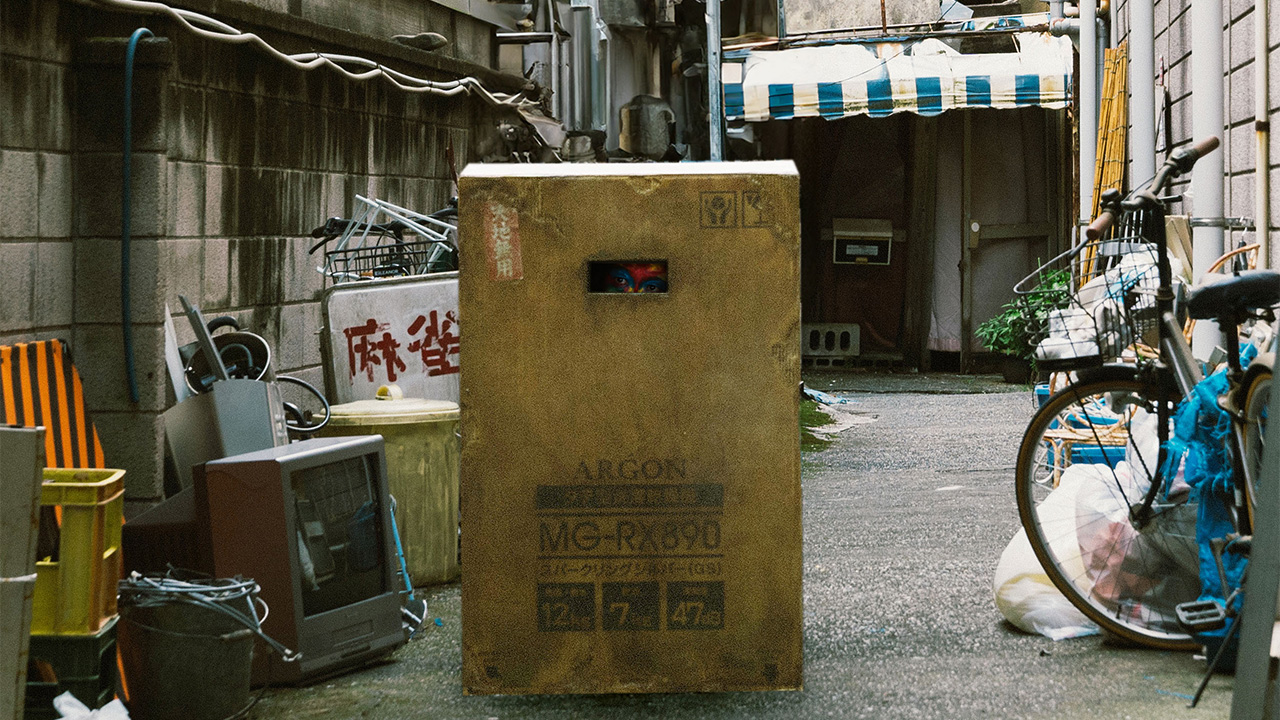
Those who obsess over the Box Man, become the Box Man, in Gakuryu Ishii’s adaptation of the Kobo Abe novel. Yet the unnamed hero’s problem is that he feels himself unable to become “the real thing” and is thereafter trapped inside a labyrinth while forever seeking an exit. It’s never clear to him, or to us, if the cardboard box he wears is really just that or something imbued with a supernatural power that actively masks his identity even from himself.

Tellingly, the only named character is a woman, Yoko (Ayana Shiramoto), who seems to exist outside of the box. She appears to be free, confident, aware of all she is and apparently certain of her identity. The Box Man, or perhaps “a” Box Man, meanwhile, is known only as “myself,” a former photographer (Masatoshi Nagase) who almost pities those who target him in memory of the Box Man who once infected and cursed him to the same fate. Watching the city through the tiny letterbox slit, he remains a step away from our world and later refers to the box as the entrance to some other place suggesting that it’s really we who are trapped on the other side of the cardboard.

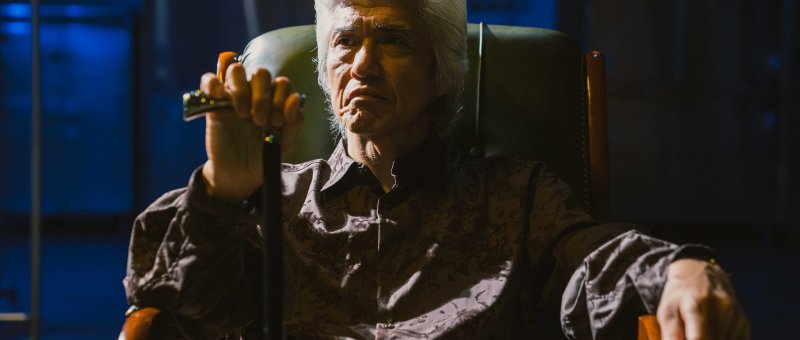
He advances something similar when he in effect turns the box inside out, walling himself inside a single room by covering the windows and doors to box out the world but not really finding escape. Still, others seem to covet the title of Box Man, those also without concrete identities but going by names such as Fake Doctor (Tadanobu Asano) and the General (Koichi Sato), both of whom are apparently interested in the Box Man and tracking his every move. It seems they believe there can only be one real, authentic Box Man allowed, but become increasingly uncertain which of them is “real”. The notes the Box Man is keeping become key to his identity, but like a metaphor for the unseen hand of fate, one points out that perhaps someone else has written them out for them, Myself lamenting that the author has written a better version of himself than he ever could. 

There is something undeniably absurd about the way the Box Men scuttle around, occasionally sticking their ams out of the box’ flaps while arguing over the true identify of the Box Man despite having described the mystery as boring. The Fake Doctor seems to want to destroy the box, as if he wanted to obliterate it perhaps in an attempt to destroy the image of a mask to avoid the suggestion that he has one himself, while it remains unclear if this would free the other Box Man or trap him further while Fake Doctor would take his place. When Myself killed the Box Man before him, a mask may have been what he wanted. A photographer sick of seeing the world and longing to be free of it, to shed himself of an identity he no longer wanted only to search for it once again even as others try to crush it from without. 

The Box Man comes to the conclusion that it’s the world that should be boxed away, but of course it’s all the same. When he remarks that Yoko, after leaving their sanctuary, did not really escape but has simply gone to a deeper level, it’s reflective if his own desire to find meaning in a meaningless world. He claims that he dreams of a world yet to begin but is finally confronted perhaps by anonymity in witnessing a row full of Box Men apparently all also devoid of personality which might in an ironic sense tell him who is if only in reflection. 

Strange and surreal, Ishii lends an edge of absurdity to the strange existence of the Box Man while perhaps aligning the letterbox frame of his open window to that of the cinema screen and the artificial reality that surrounds us. In any case, it seems the other world the Box Man longed to enter was that of the self, his interior life expanding inside the box as a small galaxy he has somehow become lost inside, no longer able to see beyond himself but trapped inside an “exitless black hole” looking for a path to authenticity away from this “fantasy” in which everything is “fake” save the potential salvation of a distant guiding light.


The Box Man screens in New York July 13 as part of this year’s JAPAN CUTS.

Original trailer (English subtitles)

Plan 75 (Chie Hayakawa, 2022)

In 2016, a 26-year-old man went on a violent rampage murdering 19 people at a care home for the disabled claiming that he had done it “for the sake of society”. Prior to his crime, the killer had written an open letter in which he stated that he dreamed of a world in which those with severe disabilities could be peacefully euthanised, while claiming that those with no ability to communicate had no right to life and were nothing more than a drain on society. An expansion of her earlier short featured in the anthology film Ten Years Japan, Chie Hayakawa’s Plan 75 opens with a sequence which appears to directly reference the 2016 mass killing but in place of the widespread outrage and reconsideration of a social stigma towards disability that followed in its wake, the government decides to implement a “voluntary” euthanasia program for those aged 75 and over in response to the “concerns” of the young in an ageing society. 

Intergenerational resentment does indeed seem to be a motivating factory, the killer in this incident feeling himself oppressed by the responsibility of caring for the elderly while simultaneously hemmed in by a stangnant economy and heirarchical society. He points out that Japanese people have always praised self-sacrifice on behalf of the nation and alludes to the archaic tradition of ubasute or throwing out the old in which elderly people were abandoned on mountainsides to die in time of famine. There is no denying that the Plan 75 initiative has its insidious qualities in placing undue pressure on elderly people to give up their lives in order not to “burden” the young, an elderly woman attending a cancer screening remarking that she feels a little awkward as if she’s “clinging on to life”, being somehow greedy in the simple desire to continue living. 

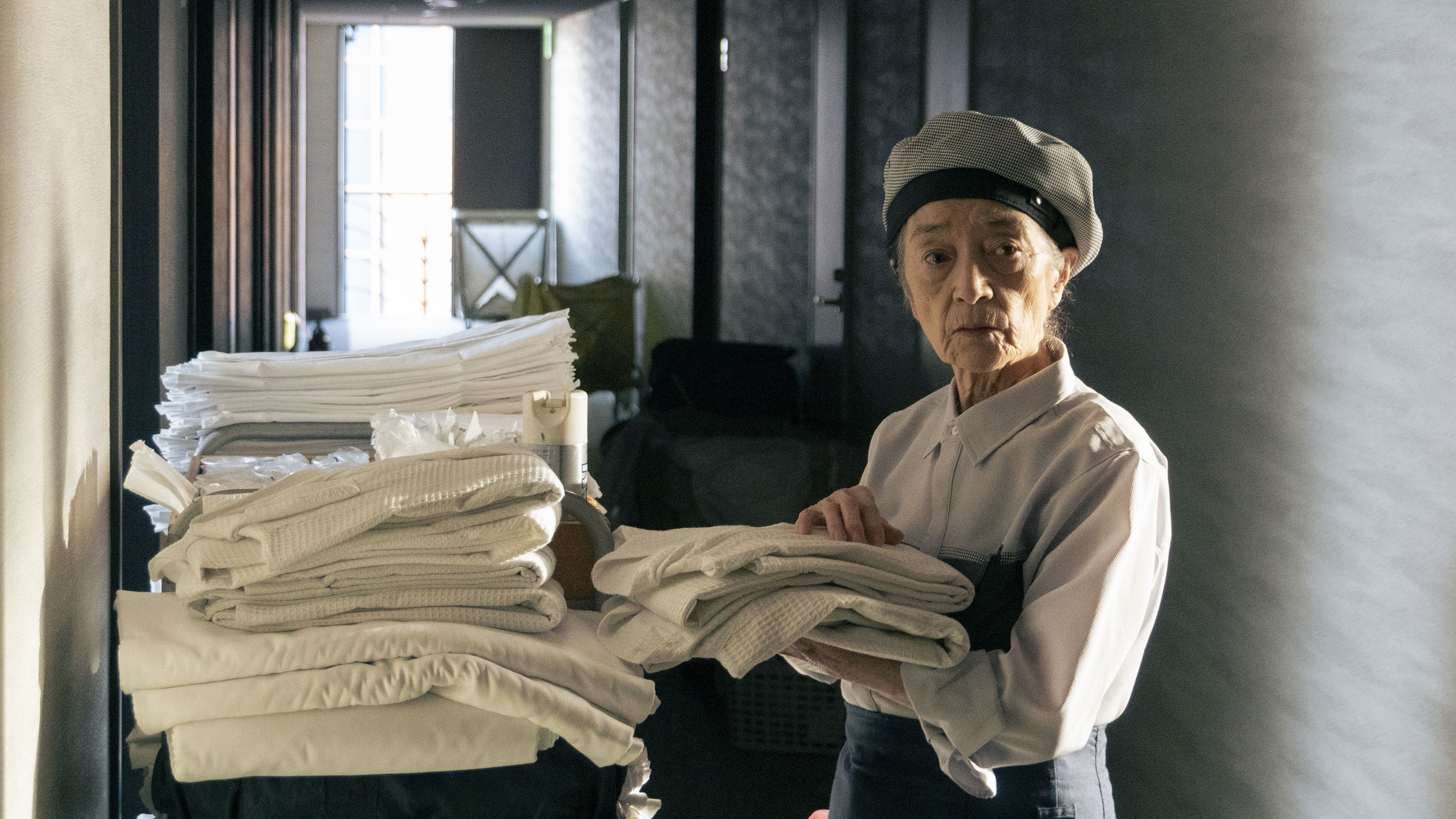
Meanwhile, their society has already abandoned them. 78-year-old Michiko (Chieko Baisho) had no children and lives alone supporting herself with a job as a hotel maid where all of her colleagues are also elderly women. When one of them has a fall at work, they are all laid off. The hotel claims that they’ve received complaints from guests about exploiting elderly people, but Michiko suspects it’s more like they don’t want one of them to drop dead in someone’s room. Not wanting to be a “burden”, Michiko is reluctant to apply for social security but even when she accepts she has few other options the desk at city hall is closed. Her building, like her now old, is set for demolition but no one is willing to rent to an unemployed 78-year-old woman nor is anyone willing to employ one. More and more Michiko is pushed towards Plan 75 if only to escape her loneliness. Being robbed of the opportunity to work also removes the opportunity for socialising especially as the other old ladies decide to move in with family and leave the area. 

This is in fact an integral part of the Plan 75 business plan with case workers specifically instructed to keep the applicants happy through regular phone calls while prohibited from meeting them in person to prevent the older person changing their minds having made new social connections that make their lives more bearable. In the quietly harrowing scenes at the processing centre, for want of a better term, it becomes obvious that the majority of those submitting to Plan 75 are women as staff members empty out their handbags, dumping their possessions into a large bin while setting aside anything of value such as watches or bracelets which are perhaps another valuable revenue stream for a callous government that sees the programme as a cost cutting exercise.  

Case worker Hiromu (Hayato Isomura) only becomes conflicted about Plan 75 after recognising an applicant as his estranged uncle and eventually discovering that despite sales claims of dignified funerals remains are often sent to landfill care of an industrial waste company. His uncle’s plight perhaps highlights the pitfalls of life in post-war Japan. Living hand to mouth working construction jobs all across the country he never had an opportunity to put down roots or save for his old age and is now living a lonely life of desperate poverty. Heartbreakingly he put his application in on his 75th birthday, an act Hiromu’s boss describes as almost heroic as if he couldn’t wait to sacrifice himself for the common good. Later a sign goes up that fixed addresses are no longer needed to apply, while the Plan 75 stand in a local park where they are in the process of putting bars on the benches so that homeless people can’t sleep there doubles as a soup kitchen. 

One has to ask, if there was money available for all of these resources to help people die why is it not available to help them live? A young woman assigned as Michiko’s handler appears to have second thoughts while bonding with her over the phone, tearfully reminding her she still has the right to withdraw (though it’s never mentioned if that means repaying the $1000 signing bonus) while Michiko’s life too has been brightened by this little bit of intergenerational friendship, itself cruelly commodified in the allotted 15-minute sessions included in the plan. Told with quiet restraint, Hayakawa’s vision of an eerily dystopian future in which human life is defined by productivity and all human relationships transactional, where loneliness is the natural condition and society itself has become little more than a death cult, is painfully resonant in our increasingly disconnected world. 


Plan 75 screens at Japan Society New York on Nov. 20 as part of The Female Gaze: Women Filmmakers from JAPAN CUTS and Beyond.

Festival trailer (English subtitles)

Images: © 2022 KimStim