Twilight Cinema Blues (銀平町シネマブルース, Hideo Jojo, 2023)

Japan’s mini theatres have been in a status of crisis since the pandemic. Already struggling under the weight of changing times the immediate restrictions pushed many over the edge unable to entice older regulars back into screens or find a new audience among the young. This is doubly bad news for the industry as a whole as it’s mini theatres that allow indie films the platform they need to succeed and without them there is little avenue for films produced outside of the mainstream. Like Lim Kah-Wai’s Your Lovely Smile, Hideo Jojo’s Twilight Cinema Blues (銀平町シネマブルース, Ginpeicho Cinema Blues) similarly extols the virtues of the mini theatre which is not just somewhere to watch films but a place to belong that has room for anyone and everyone that wants to be there.

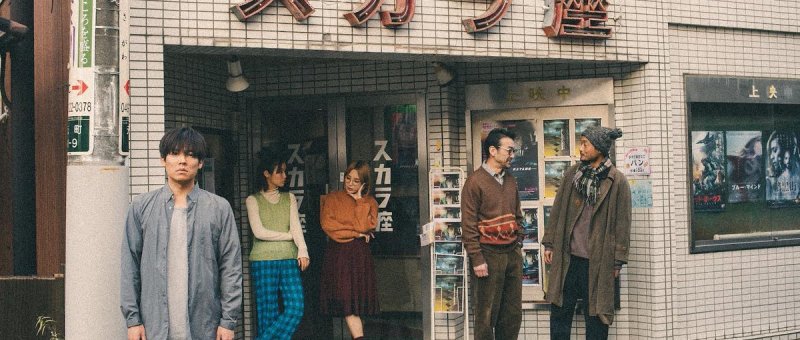
That’s more than true for Takeshi (Keisuke Koide), a struggling man approaching middle age who’s become near destitute and is almost sucked into a welfare scam targeting the homeless by a pair of shady yakuza claiming they run an NPO. At the orientation he runs into Kajiwara (Mitsuru Fukikoshi ), the owner of a mini theatre who declines to join the gangsters’ scheme but offers Takeshi the opportunity to bunk in his storeroom while working part-time little knowing that to Takeshi this particular mini cinema is like a return to source allowing him to rediscover his love of film.

But the mini cinema itself is also struggling. They simply don’t get bums on seats and Kajiawa is behind on paying his staff. Though they have a small collection of regulars, they aren’t enough to keep the lights on on their own. Even the projectionist is thinking he’ll probably retire along with the machine. Unable to afford new films, Kajiawara relies on cheap and easily licensable classics such as old favourite Casablanca but is largely unable to see away out of his situation while feeling guilty over ending what was effectively a family business and local landmark. The building’s 60th anniversary, 60 being a symbolic number in Japanese culture as it represents a full turn of the Chinese zodiac and literal new start, presents an opportunity to both Kajiawara and Takeshi to begin to move forward by renewing their faith in cinema.

The faith of Takeshi’s homeless friend Sato (Shohei Uno) needed no renewing. Though he had nothing, the ability to see a film twice a month made him feel human while the community at the cinema is perhaps the only one that still accepts him. He offers a small prayer after every film, and instructs Takeshi that he should the same. But his openhearted faith is also his undoing, allowing him to fall for the yakuza scam little realising they’ll force him to work for them taking half of the social security payments they helped him sign up for in the process. In the outside world, men like Sato find only exploitation and prejudice with cinema their only refuge.

Then again, filmmaking isn’t easy. A young woman who desperately wanted her debut film to play in her hometown cinema has based her first feature on the life of her father, a failed film director who drank himself to death (in a neat allusion to Oshima’s Cruel Story of Youth, her film’s title literally translates as “cruel story of a director”). Similarly, the suicide of a much loved assistant director has prevented those around him from moving on, preoccupied with the shock his death caused them in its suddenness and lack of obvious cause. They blame themselves sending their lives into a downward spiral that results in crushing financial debts and the end of a marriage. In some ways, the film is an ode to the ADs who keep everything running, including on occasions the director, and are in a sense the custodians of filmmaking.

Still, it’s clear that not everything can seamlessly repaired. Times have moved on even if some have been left behind and you can’t always simply reclaim what you’ve lost, but you can always start again with another spin of the wheel and make the most of what you’ve got. It won’t be the same, but that doesn’t mean it won’t be good. Jojo’s heartwarming tale of cinema has an undercurrent of darkness and despair running beneath, but also suggests that the silver screen can be a beacon hope when the world is at its bleakest and not least for those whose existence largely lies behind it.


Screened as part of this year’s Japan Foundation Touring Film Programme.

Original trailer (English subtitles)

The Cornered Mouse Dreams of Cheese (窮鼠はチーズの夢を見る, Isao Yukisada, 2020)

It’s quite a potent image somehow, a mouse caught in a trap unable to reach out and touch the cheese they’ve risked their life for yet continuing to dream of it as if nothing else really existed. Perhaps love is much the same, at least according to a young woman who warns against falling in love too deeply worrying that in the end you won’t be able to keep it together and so will fall apart. Adapted from a popular Boys Love manga by Setona Mizushiro, Isao Yukisada’s The Cornered Mouse Dreams of Cheese (窮鼠はチーズの夢を見る, Kyuso Wa Chizu No Yume Wo Miru) is in someways in dialogue with his earlier tale of triangulated love between two women Luxurious Bone, if sharing some of that film’s perhaps outdated attitudes towards sexuality. 

The titular mouse is office worker Kyoichi (Tadayoshi Ohkura) who is halfheartedly having an affair with a colleague seemingly just because he can. Unbeknownst to him, his wife has hired a private detective who just happens to be an old friend from university, Wataru (Ryo Narita). Wataru warns him that he’s got pictures of him and his mistress but agrees not to tell his wife, if Kyoichi agrees to accompany him to a hotel for some low level intimacy. The abruptness of the overture seems to hint that the two men had some kind of history in university but this appears not to be the case and Kyoichi continues to struggle with his sexuality partly it seems out of a degree of self-loathing that convinces him he’s not the sort of person anyone should love.

In Luxurious Bone, the problem had been that the two women could not quite accept the validity of their desire for each other and instead ended up having vicarious sex with the same guy. Something similar occurs between Kyoichi and Wataru each in their own way unable to accept the way they feel. Kyoichi repeatedly states that he doesn’t want to cause someone else pain but in fact hurts everyone around him because of his own inability to reckon with his feelings. He continues to womanise, but eventually asks Wataru to move into the grey industrial bachelor pad he gets when his marriage breaks down while keeping him at arm’s length. Wataru is jealous in a direct sense, resenting Kyoichi’s various girlfriends, but also on deeper level lacking faith in his homosexuality or at least ability to accept it fearing he will always in the end choose to be with a woman. 

Both men are imprisoned by an internalised homophobia, Kyoichi most obviously in rejecting his desire for Wataru. “A straight guy can’t handle it” he tells him in an ironic choice of words, earlier having told him that guys like him belonged “in another world”. The film seems to present Kyoichi’s sexuality as a binary choice, men or women, precluding the idea that he might simply be bisexual while inviting the inference that his womanising is an attempt to mask his latent homosexuality and that he is in fact living a lie in betrayal of himself in denying his desire for Wataru. But then Wataru is consumed by insecurity, as if on some level believing he is inherently inferior to a woman and that Kyoichi will always “choose” to be straight while simultaneously certain that he does in fact return his feelings. He tells him that his problem is that he passively accepts love from others but in the end doesn’t trust it and continues to look for it in the next person who shows any interest in him, but it seems Wataru doesn’t have much faith in love either pulling away just as Kyoichi draws closer and unable to accept the validity of his love for him. 

The film maintains some of the more frustrating aspects of BL literature in that it never really considers why Kyoichi rejects his same sex desire nor does it address what the potential complications of his life maybe if he were fully to accept his sexuality and attempt to live openly with Wataru. On the other hand, it perhaps lessons the impact of the darker elements of the interplay between the two men in which Wataru effectively stalks Kyoichi and then blackmails and bullies him into sex which the film justifies on the basis that Kyoichi must on some level want to be liberated from his repressed desire while Kyoichi in turn manipulates and tortures Wataru through his womanising and reluctance to enter a full sexual relationship even while living together. The film’s ambiguous closing scene in which Kyoichi sits on Wataru’s stool and places his yellow ashtray, looking oddly like a wedge of cheese, on his grey coffee table the only splash of colour in his exquisitely decorated yet desolate grey room may also uncomfortably hint that their love is always impossible because it is a love between two men rather than accepting that the only barriers to it lie in internalised homophobia and emotional vulnerability. Even so it is a fairly touching love story of a man learning to accept his sexuality even if in the end it leads to a re-imprisonment rather than a liberation. 


Original trailer (English subtitles)

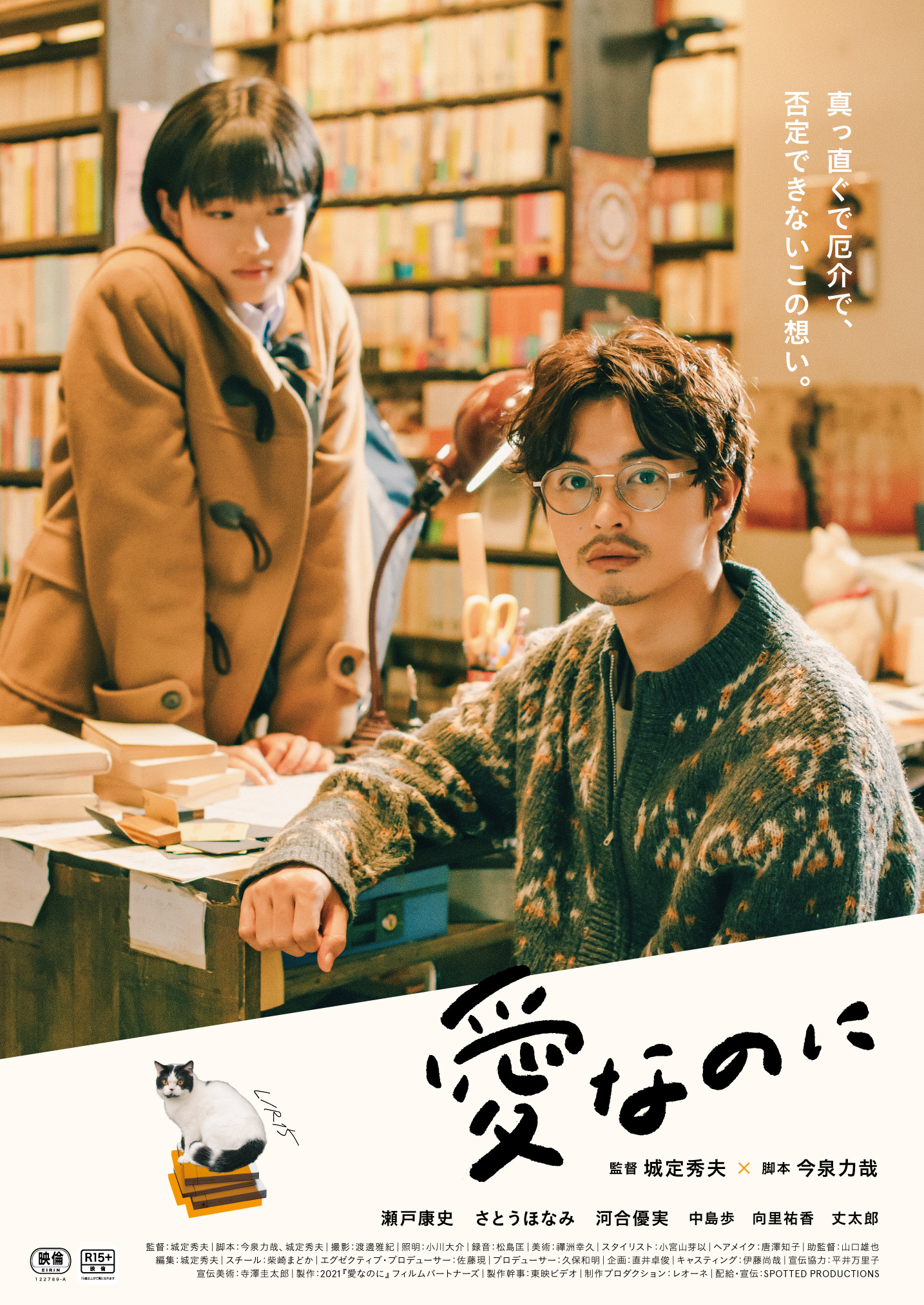
Love Nonetheless (愛なのに, Hideo Jojo, 2022)

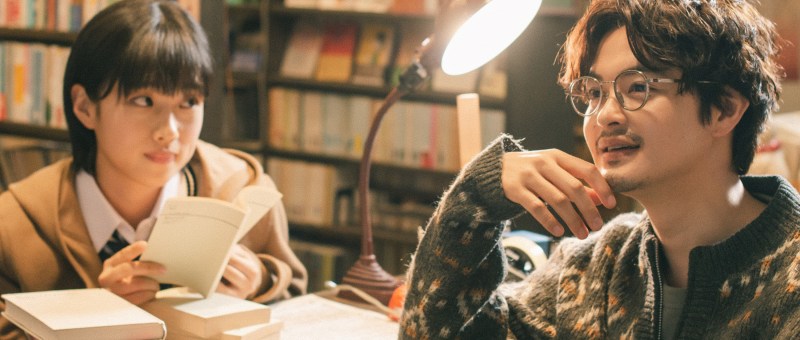
“Don’t deny love!” the fantastically awkward yet empathetic hero of Hideo Jojo’s Love Nonetheless (愛なのに, Ai Nanoni) eventually exclaims when confronted by the parents of a high school girl whose crush on him he’d tried to diffuse sensitively while growing to appreciate her friendship. Scripted by the ever prolific Rikiya Imaizumi who has made something of a name for himself examining the complicated romantic lives of young people in the contemporary society, Jojo’s prickly dramedy like his other film this year To Be Killed by a High School Girl deals with some quite uncomfortable ideas but does so with as much sensitivity as it can muster. 

The lovelorn hero, Koji (Koji Seto), for example is always trying to rationalise the circumstances around him considering his own actions and their implications carefully. When he catches a high school girl, Misaki (Yuumi Kawai), stealing a book from the secondhand bookshop where he works he chases her but she, surprisingly, stops running when she notices him struggling and buys him a bottle of water from a vending machine before eventually confessing that she stole the book because she saw him reading it. Not only does she announce she’s in love with him, she immediately proposes marriage. 30-year-old Koji is shocked and alarmed. He tries to turn her down but she doesn’t listen, continuing to frequent the store bringing him letters reiterating her marriage proposal which he never answers. 

Meanwhile, he’s hung up on an unrequited crush, Ikka (Honami Sato), who he’s just learned is about to be married. Even he describes himself as a “creep” looking back over of a cringeworthy series of tweets he’d sent her which she never replied to, while she explains to her fiancé Ryosuke (Ayumu Nakajima) why she’s not planning on inviting him to the wedding despite inviting everyone else from her old part-time job. Unbeknownst to her, Ryosuke has secretly been carrying on with their wedding planner, Miki (Yuka Kouri), who is content with the no strings nature of their relationship and ironically hates the “bizarre ritual” she has been hired to organise having developed a rather cynical view of marriage due to the nature of her work. The couple seem to be in a fairly liminal state, their apartment still full of boxes while they bicker about the financial strain of a ceremony which as Miki points out is not even about them but solely for their families and any children they may later have. 

All these people supposedly love each other, so why is it all so difficult and destructive? Always introspective, Koji realises he may have alienated Ikka with his inappropriate behaviour and has reflected on his actions but the fact remains that most of the other men are not so emotionally aware. Misaki is also courted by an awkward classmate who greets her with roses but thrashes them to the ground in frustration when she turns him down and later physically attacks Koji even when he points out that hitting his love rival won’t change the fact that Misaki’s not interested in him. Ikka meanwhile is approached by a sleazy salaryman when drinking alone in an izakaya whose response when she tells him she’s married is “so what, I am too”. Ryosuke appears to be having an affair for no other reason than he could while simultaneously confused by Miki’s lack of emotional investment in their relationship only for her to patiently explain to him that his problem is he’s bad in bed something which a lover would be unable to tell him directly. Ikka begins to realise this for herself while turning to Koji to get back at Ryosuke on learning of the affair as if believing that a level playing field of emotional betrayal would somehow allow them to start their married life on an equal footing. 

The secondary question arises of how important sex is in a romantic partnership, Ikka wondering if Ryosuke really is just a bad lover or if their unsatisfying sex life is a sign that they are simply incompatible and should separate given that she finds much more fulfilment with Koji whom she chose because of her lack of romantic interest in him. Koji meanwhile, fully aware of the realities of the situation, points out that it’s unfair and irresponsible of Ikka to exploit his feelings for her while cautioning her that her behaviour is heading towards the self-destructive and that she should reconsider marrying Ryosuke not because he thinks she should date him but simply because this complicated situation is obviously unhealthy for everyone. You could of course say the same about his awkward, perhaps uncomfortable relationship with the teenage Misaki which might in a sense be romantic, both slightly inappropriate and essentially innocent even if his eventual concession that he might love her one day is a step too far in failing to fully diffuse her one-sided crush in part because he’s become dependent on the attention he receives from her in the letters he doesn’t answer. 

Then again, the most troubling aspect of Ryosuke’s affair is not the extra-marital sex but the manipulative lie he constructed to excuse it designed to arouse Ikka’s sympathy in tying it back to her awkward experience with one-sided workplace crushes. Aware of the affair but not the lie, the choice she thinks she’s making is if her relationship with Ryosuke is strong enough to accept sacrificing sexual fulfilment or if perhaps this is as good as it gets when it comes to marital compromise. Koji’s solution seems to be that you should let love rest where it lands, denying it is pointless even if not reciprocated while sensitivity with other people’s feelings is essential for a happy, healthy society. Warmhearted and empathetic in its forgiveness of its messy protagonists’ many flaws, Jojo’s steamy drama never pretends love is easy but suggests it comes in many forms and in the end maybe follow your heart is as good advice as you’re ever going to get.


Love Nonetheless screened as part of this year’s Udine Far East Film Festival.

Original trailer (English subtitles)