Dark Nuns (검은 수녀들, Kwon Hyeok-jae, 2025)

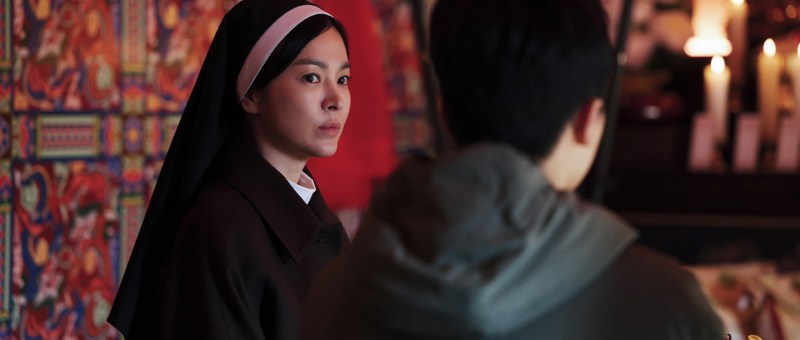
Large organisations have a tendency to gloss over inconvenient truths, but is it really in keeping with the teachings of the Church to ignore a confirmed case of demonic possession and allow a boy to die rather than admit that demons are real and members of the clergy are conducting successful exorcisms? According to Sister Giunia (Song Hye-kyo), a chain-smoking nun with a penchant for vulgar language, it is not, but she is largely hamstrung because of the ingrained misogyny of the patriarchal superstructure of the Catholic religion.

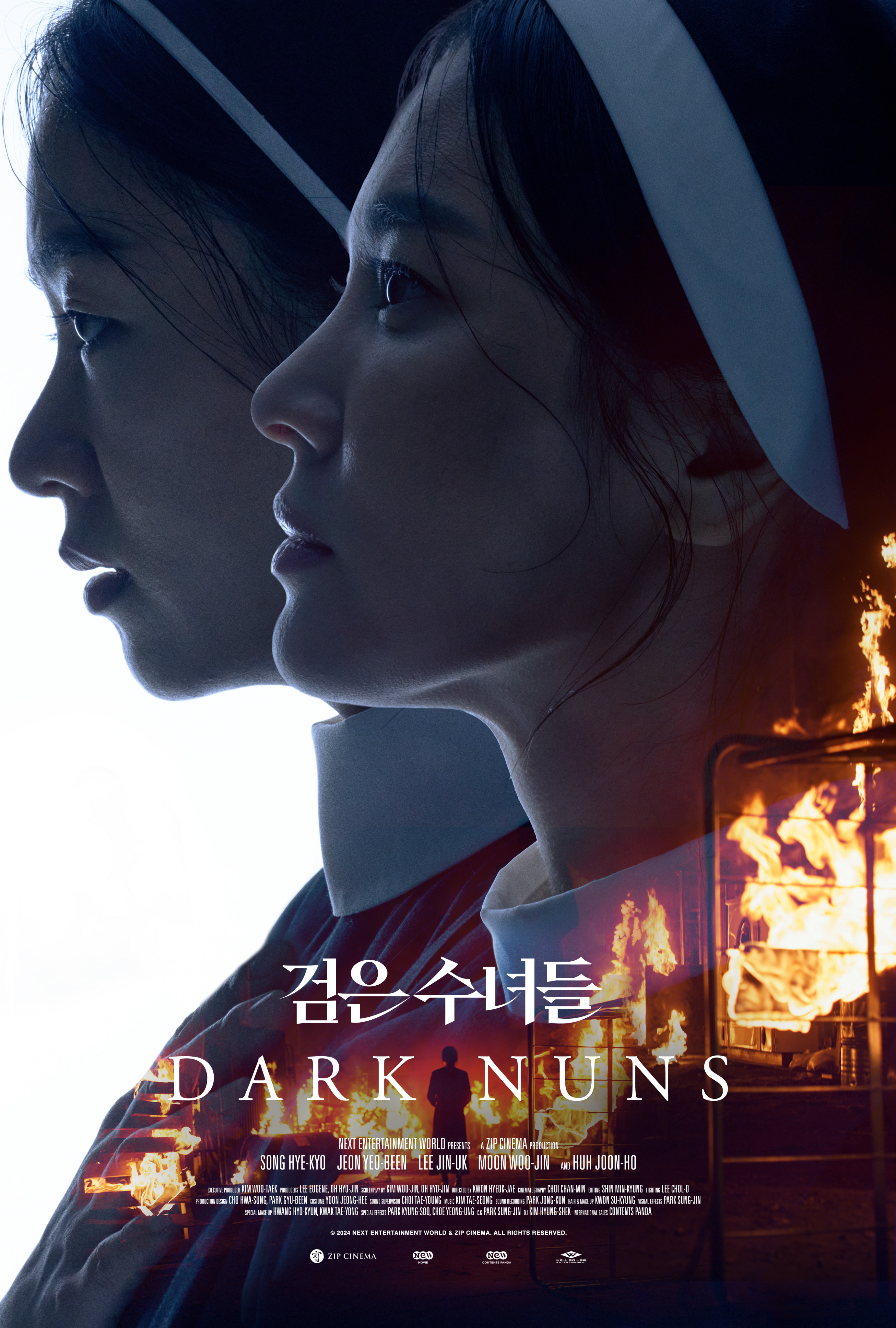
A spin-off from 2015’s film The Priests, Dark Nuns (검은 수녀들, Geomeun Sunyeodeul) goes in hard for the Church’s hypocrisy. As Giuna squares off against a powerful demon when taking over from two priests who’ve botched an exorcism on a teenage boy, it taunts her that the blood of all the demons she has slain will echo in her womb like a drum. There’s a suggestion that the existence of a nun is itself is an affront to God, as if a woman who has rejected her maternity and remained celibate is an aberration suggesting that a woman’s only proper role lies in motherhood. The fact that Giuna is later diagnosed with uterine cancer implies the same, as if she has cursed herself in her decision to serve God and become a bride of Christ. In her final confrontation with the demon, it tells her again that she will die of the tumour in her womb, a fact she already knows, but Giunia counters that she will exorcise the demon from this boy and use her womb to imprison it. Which is to say, she will kill him with her maternity and thereby fulfil her ideal role by becoming a “mother” to this demon, and symbolically to Hee-joon (Moon Woo-jin) the possessed boy, before condemning them both to the flames. 

This fact itself is ironic, as the council at the Church refused her request to conduct an exorcism because she is not ordained and “only” a nun. Of course, a woman cannot be ordained in the Catholic Church and the priesthood is open only to men. Her powerlessness within the organisation makes it easy for them to dismiss what she is saying while writing her off as a crazed devotee of the weird teachings of Father Kim, the priest from the earlier film. When they finally do give permission for an “unofficial exorcism” after Giuna has contacted the Rosicrucians in Rome to borrow some holy artefacts necessary for the ritual, the council inform her that the exorcism will be performed by Father Paolo (Lee Jin-wook). A sceptic who believes demonic possession is a psychological phenomenon not a spiritual one, Father Paolo is an odd choice but there is something quite moving and transgressive when in he fact takes off his priestly robes and places them over Giunia’s shoulders, ordaining her and acknowledging both that what she has said is true and that she is the only person who can carry out this exorcism. 

This is doubly true as Father Paolo had also tried to use the teachings of the Church to press another nun, Sister Michela (Jeon Yeo-been), by leading her to believe that her own spiritual awareness was a psychological illness that she should struggle to overcome through faith and medicine. It seems that Michela and other women like her may have found themselves retreating within Catholicism to reject the destiny of becoming a shaman while she herself was placed in a Catholic orphanage as a “cursed” child born between a human and a demon. Giuna had friend who was once a fellow nun but has now left to assume her true calling as a shamaness. The two remain good friends and often work together while Giuna is open to the presence of other gods and other forms of spiritual divination such as Michele’s talent with the Tarot. As such, all of these practices exist within a wider spiritual universe which is another challenge to the Church’s oppressive rigidity in its denial of folk beliefs and ancient traditions. After all, there is no real gender bias in shamanism, or if there is, it runs the other way for the majority of shamans are women. 

In any case, beating the demon requires everyone to work together for a common goal using, as the Rosicrucian father says, “all available means”. Through participating in the exorcism, Sister Michela begins to accept her own identity later continuing to work with Deacon Choi to track down the remaining 12 Manifestations while accepting Sister Giuna as a mentor figure. They are each in a way freed from the Catholic Church while simultaneously remaining inside of it as they progress with their mission of quieting the demonic forces at large in the world and protecting the innocent from their rippling evil. 


Dark Nuns is released digitally in the US July 15 courtesy of Well Go USA.

Trailer (English subtitles)
Noryang: Deadly Sea (노량: 죽음의 바다, Kim Han-min, 2023)

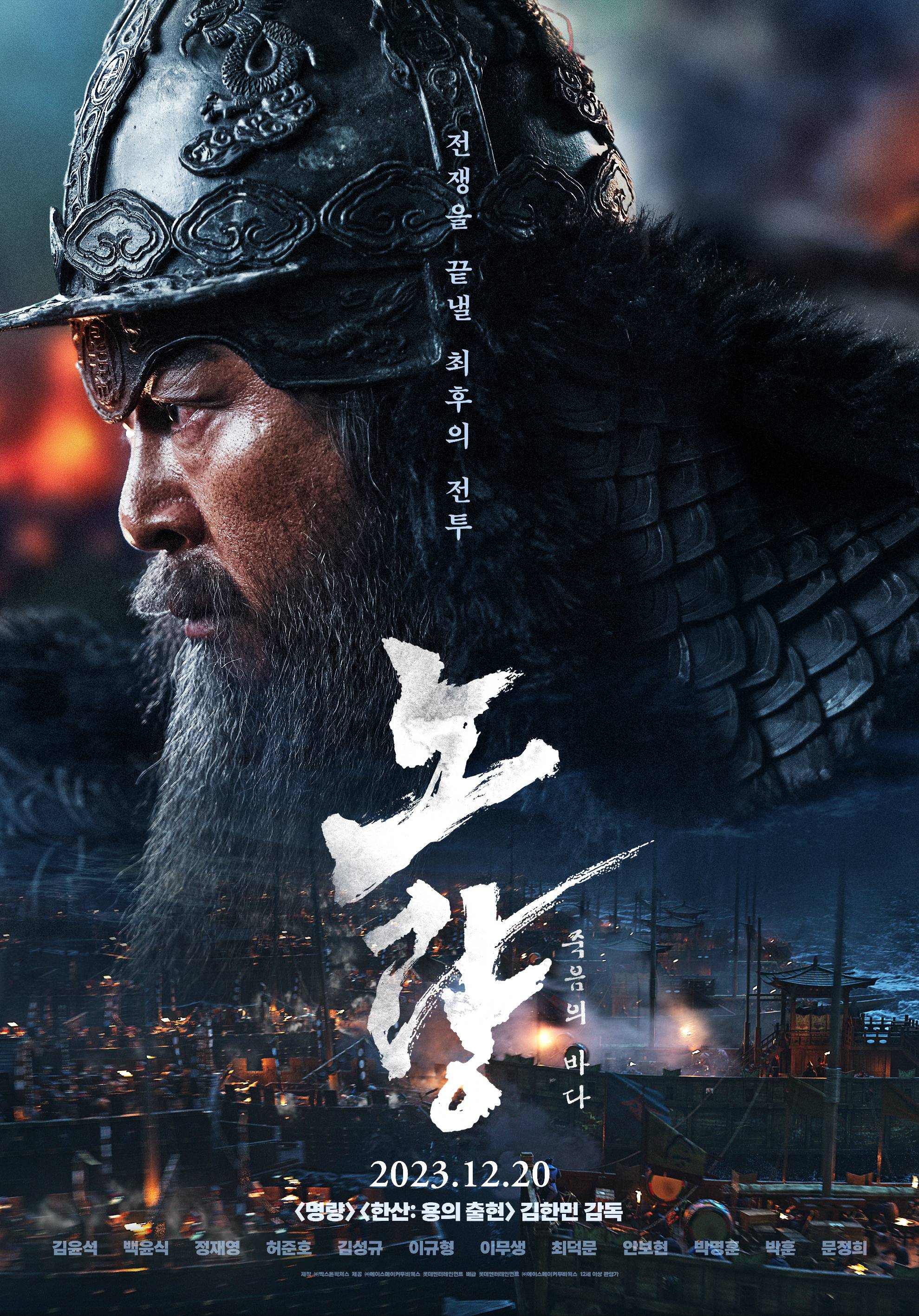
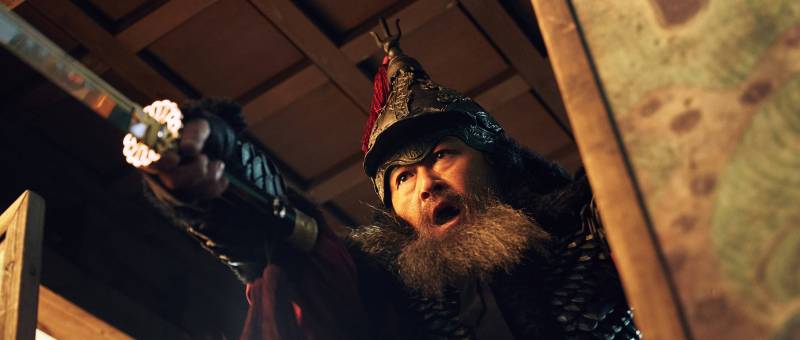
The strange thing about Noryang: The Deadly Sea (노량: 죽음의 바다, Noryang: Jugeumui Bada), the third and final instalment in Kim Han-min’s trilogy about 16th century admiral Yi Sun-sin is that everyone wants to end the war but they all want to end it definitively and so are unable to simply let it run its course. Then again, there is a little more complexity involved in the depiction of Yi in asking whether his desire to repel the Japanese once and for all is really about the national good or personal vengeance for the death of one of his sons at the hands of Japanese raiders.

The opening scenes taking place in 1598 witness the death of Toyotomi Hideyoshi who had launched two invasions of Korea in the previous decade which were in themselves precursors to an invasion of Ming China in an attempt to disrupt the Chinese Tributary System that prevented Japan from trading with China without agreeing to pay them taxes and recognise their political superiority. In the film at least, his deathbed order is to withdraw troops from Korea where they had been unsuccessfully fighting for the previous year. The leader of the Japanese forces, Konishi Yukinaga (Lee Kyu-hyung), is however prevented from leaving by a naval blockade placed by Admiral Yi around their fort on Suncheon Island. With Hideyoshi dead, Yukinaga is keen to return to Japan as quickly as possible in order to defend Hideyoshi’s young son, Hideyori, from Tokugawa Ieyasu who makes a very sinister appearance at Hideyoshi’s deathbed.

One might wonder why Yi does not allow Yukinaga to simply leave and return to Japan now that the war is technically over yet he insists that without a full surrender nothing is guaranteed and the Japanese may simply regroup and return as they had done before. Then again, he’s haunted by nightmares of his son’s death in which he witnesses him cut down by Japanese pirates while unable to intervene dragged back by shadowy figures rising from the water. Yi also later makes clear that his motivation is coloured by a desire for revenge to the extent that he is willing to sacrifice his life for it, which is one thing but it also necessarily means he’s willing to risk the lives of his men over what is partly a personal vendetta. 

Yukinaga, meanwhile, and the Japanese in general are depicted as cruel, ruthless, and cowardly. Shimazu (Baek Yoon-sik), the admiral leading the reinforcements sent to help spring Yukinaga, wilfully fires on his own men in order to cut his way through to the enemy and then threatens to execute sailors who tried to desert. In the end Yukinaga breaks his promise and declines to come to the assistance of Shimazu’s fleet as arranged, turning away and sailing back to Japan (he is subsequently beheaded after being on the losing side of the battle of Sekigahara as he was unable to commit ritual suicide because he was a Christian). They had originally been let down by a Chinese general they’d bribed to assist them but had decided not to turn up given the war was already over, making a secondary agreement with Admiral Chen (Jung Jae-young) who also desires a peaceful end to the disruption but vacillates between each side while not really wanting to get involved before making a fairly disastrous intervention in the final battle. 

There is something a little a uncomfortable in the film’s framing and most particularly in its post-credits scene which reinforces Yi’s conviction that the war isn’t really over without a complete surrender from Japan. In any case, Yi becomes a literal beating heart of the battle banging the drums of war to encourage weary fighters that it isn’t over yet and to keep going to the last man buoyed by the spirits who appear to him of his son and allies who lost their lives fighting similar battles in the previous films. That aside, Deadly Sea is mostly standalone though some knowledge of Japanese and Korean history in the late 16th century is undoubtedly helpful. Kim devotes the second half of the film to a lengthy series of naval battles as Yi tries to lure Shimazu to a vulnerable position, eventually shooting a harrowing long take from the perspective of an ordinary sailor trying to cut his way through after boarding a series of enemy boats. The senseless futility of the violence is the point, but it’s one that’s continually lost on Yi who continues to insist that this war will never really be over until they chase the invaders all the way back to their own islands and into total capitulation even as his quarry sails away towards his own unhappy destiny in an equally turbulent Japan.


International trailer (English subtitles)

Dr. Cheon and the Lost Talisman (천박사 퇴마 연구소: 설경의 비밀, Kim Seong-sik, 2023)

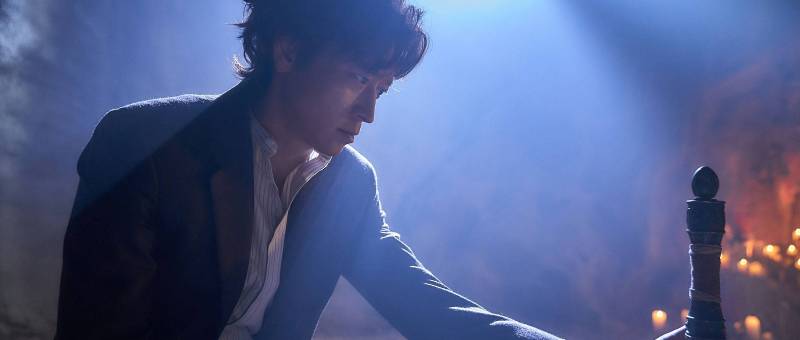
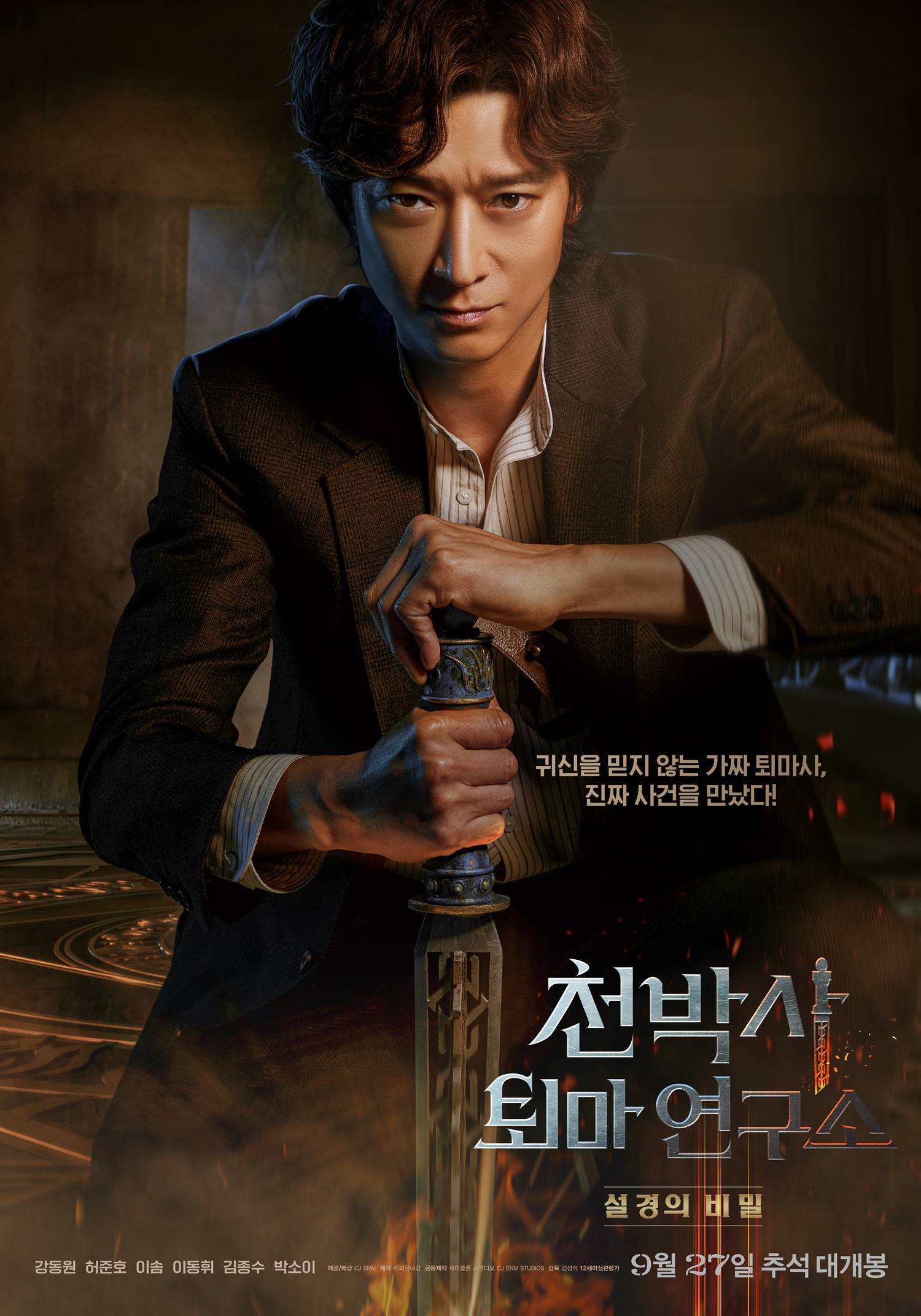
The titular Dr. Cheon (Gang Dong-won) doesn’t believe in ghosts. Some may see him as a scammer or a conman, but he is a real doctor and sees what he’s doing as a kind of role-play therapy exorcising the demons that disrupt human relationships through, essentially, giving people what they want but were unable ask to ask for. Inspired by a popular webtoon, Kim Seong-sik’s charmingly quirky supernatural adventure Dr. Cheon and the Last Talisman (천박사 퇴마 연구소: 설경의 비밀, Cheonbaksa Toema Yeonguso: Seolgyeongui Bimil) has a pleasing retro quality that recalls classic serials along with the wisecracking heroes of old as Cheon exorcises a few demons of his own while trying to constrain a great evil. 

In a strange way, Cheon’s cynicism maybe a direct result of knowing that ghosts are real and one of them killed his brother and grandfather who was in fact the chief shaman. These days, Cheon is YouTube celebrity exorcist who runs what he calls a “high tech psych” company carrying out fake rituals with the aid of a series of special effects designed by “Apprentice Gang”, or more accurately his assistant In-bae (Lee Dong-hwi), featuring ominous wind and more dynamite than seems advisable. Kim has some fun casting the couple from the bunker in Parasite, on which he served as an AD, as wealthy homeowners with more money than sense convinced they’ve got a ghost largely because because their teenage daughter has recently become moody. Using Sherlock Holmes-like powers of deduction, Cheon assesses what’s at the heart problem in the family and gives each of them some spiritually endorsed advice such as that the husband should stop buying ugly statues his wife doesn’t like and the parents should cut the teenage daughter some slack. 

As he suggests, every one is happy so it doesn’t really matter that he lied to them or that the ritual was fake because they’ve still been cured of what ails them albeit through some psychological manipulation rather than religious reassurance. Then again, those around Cheon may find it somewhat embarrassing that their teachings are being exploited to make money out of desperate people even if Cheon seems to think it was alright to scam the wealthy family because they can after all afford it. Conversely, he tries to turn down a young woman who comes to the office judging from her clothes that she wouldn’t be able to pay only to change his mind when she flashes a bag full of cash. 

Unlike Cheon, Yoo-kyoung (Esom) actually can see ghosts and ought to be able to see through Cheon but perhaps chooses not to while he, refreshingly, does not take too long to re-accept the fact that ghosts are real after all and this one has a particular bone to pick with him personally. Kim casts the ghost world in shades of blue and gives them untold power, able to fly around in spirit form and possess one person after another in quick succession, while otherwise lending the empty streets a kind of warmth in the orange glow of the flares In-Bae uses to survey the landscape. With gorgeous production design and impressive effects, the film incorporates the trappings of shamanism from drums to lines of prohibition but deepens its lore with a series of key artifacts as Cheon finds himself reaccepting his destiny as a shaman while weilding the sword of justice.

In any case, the film seems to ask why not both, suggesting that Cheon’s fake shaman business is sort of real anyway and in its way provides healing not least to himself. They are all haunted by ghosts of the past whether they see them or not, while Cheon’s eventual quest is one of vengeance that would also allow him to lock away his trauma in a sealed room deep underground and bound by the chains of hell. The sight of the many sutras the villain had placed to possess and control the townspeople suddenly bursting into flames implies a kind of liberation or purification in which the dark presence has finally been lifted even if it may not be for long. Hugely entertaining and fantastically witty, Kim ends the film with a post-credits sequence teasing a potential series and the irresistably intriguing further adventures of Dr. Cheon, fake shaman and real exorcist, showman and swordsman battling evils both ancient and modern.


Dr. Cheon and the Lost Talisman screened as part of this year’s London Korean Film Festival.

International trailer (English subtitles)

White Badge (하얀 전쟁, Chung Ji-young, 1992)

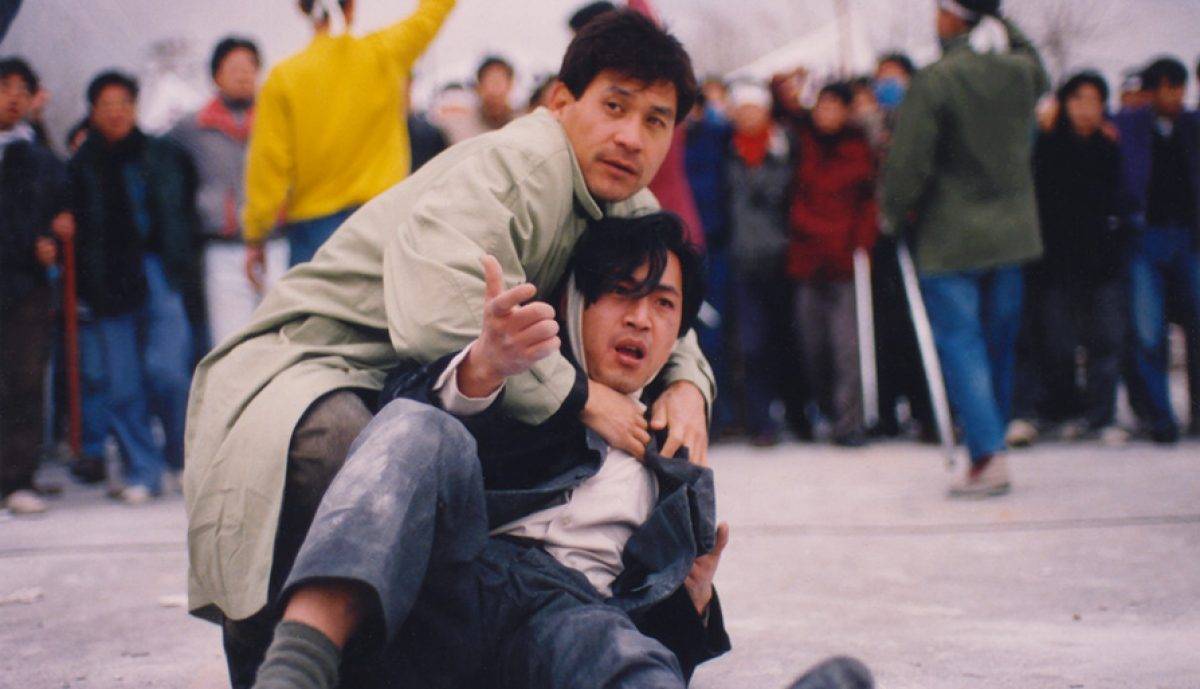
Change was in the air in the Korea of 1979. Park Chung-hee, who had seized power in 1962 by means of military coup and thereafter ruled as a repressive dictator, was assassinated by the head of the KCIA for reasons which remain unclear. A brief window of possible democratic reform presented itself but was quickly shutdown by a second military coup by general Chun Doo-hwan who doubled down on Park’s repression until finally forced out of office in the late ‘80s. It’s into brief moment that Chung Ji-young’s White Badge (하얀 전쟁, Hayan Jeonjaeng) drops us as a traumatised reporter finds he is being given permission revisit the painful past now that they are finally “free” to speak their minds, but remains personally reluctant to open old wounds. 

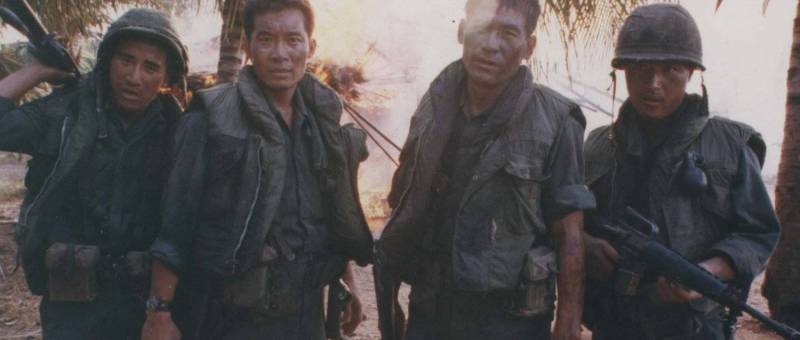
Han Gi-ju (Ahn Sung-ki) is a functioning alcoholic whose wife has left him and remarried though he still spends time with his small son who appears to adore his dad. In the wake of Park’s assassination, his boss wants him to write the true story of his experiences as a soldier in Vietnam, but Gi-ju is not convinced. He’s still haunted by nightmares of his time in the army and has no desire to go delving into his own painful memories even if it is perhaps the right time to let the people know how it really was. A little while later, however, he starts getting nuisance phone calls which turn out to be from an old war buddy, Byeon Jin-su (Lee Geung-young), who remains too shy to get in touch but later sends him a collection of photos and, somewhat worryingly, a pistol taken as a war trophy from the Viet Cong. 

We only come to realise the significance of the pistol’s passing at the film’s conclusion, but the fact remains that both men have been permanently changed, perhaps damaged, by their experiences in Vietnam only in different ways. Displaying obvious symptoms of PTSD, Jin-su has reverted to a childlike state, somewhat unsteady in his mind, and quickly flying into a panic on hearing loud noises such as helicopters or fireworks which return him to the battlefields and the terrible things he saw there. Gi-ju, meanwhile, is brooding and introverted. He drinks himself to sleep but is woken by nightmares. His marriage has failed and his only friendship seems to be with his editor who drags him to a karaoke box to schmooze a wealthy friend from school who, somewhat ironically, made most of his money manufacturing weapons used in Vietnam while never having to serve himself. “What’s wrong with that?” he asks, “We made money thanks to President Park. When President Park died, my dad cried.” unwittingly outlining the entire problem and in fact embodying it as he continues throwing his money about with the excuse that the only thing to do with dirty money is spend it dirtily. 

Prior to that, he’d criticised Gi-ju’s manhood by betting that he’d never actually killed a Viet Cong soldier. Gi-ju laments that all anyone ever wanted to know about Vietnam was how much money he made and whether he bedded any Viet Cong women. They never wanted to know the reality of it, that he found himself increasingly disillusioned not just with his country and the war but with “human values and history”. While in Vietnam he witnesses street children chasing soldiers for candy and flashes back to his own days as a street orphan after the Korean War tugging on the sleeves on American GIs who crudely threw him only empty packets of cigarettes. The colonised is now a coloniser and it’s an uncomfortable feeling. On a long march, Gi-ju and another soldier pass an old man along the wayside who keeps shouting “pointless” and explains to them that in his 70 years he’s seen many people walk along this road. First it was the Chinese, and then the French, the Japanese, the Americans, and now the Koreans. If you truly want to help, he says, go home and leave us in peace. “We don’t care who wins, we just want to farm and nothing else. So please leave us alone”. 

The utter senselessness of their presence is further brought home to Gi-ju when his unit panics and fires on what it thinks is a huge unit of Viet Cong soldiers, but actually turns out to be a field full of cows. The locals are obviously upset, demanding compensation, but his Staff Sergeant is unrepentant, little caring that they’ve just destroyed the local economy and the ability of these ordinary people to feed themselves in their panic and incompetence. Yet in his first few pieces for the paper, Gi-jun recounts that the first six months were ones of ambivalent tedium in which they mostly dug ditches and bonded over beer. They were torn, hoping it might stay this way but also embarrassed by the thought of going home with no combat experience. 

As time goes on, however, they find themselves on ever more dangerous missions only to discover that they have been used as decoys, their heavy casualties dismissed as “small sacrifices of war”. Betrayed by their country, these men were also forced to betray themselves. After firing on civilians in panic, the Staff Sargeant orders his men to kill the survivors to cover up his mistake, threatening them at gun point. One is never quite the same again, and the other finally kills his superior to avenge his transgression. Gi-ju is not witness to these events, only to their effects, but is obviously aware of the cruelty that his service entails. 

Dissatisfied with his first manuscript recounting a humorous episode from the early days, Gi-ju’s boss tries to curate his memories, asking him for a cliched anti-war tract about how combat turns intellectuals into cowards while the ignorant are reborn as heroes. Something much the same happens with a documentary crew on the ground who actively ask the soldiers to re-stage the action for the camera. Everyone has their Vietnam narrative, and no one is quite interested in the full horror or the present pain of these wounded men. Reuniting with Jin-su whose mental state is rapidly declining, the pair are caught up in a democracy protest by students who actively resist the draft and the militarisation of education, ironically on the other side, targeted by men like they once were. Abandoned by a country which essentially sold them as mercenaries to curry favour with the Americans, Jin-su and Gi-ju struggle to gain a foothold in this strange moment of hope in which martial law, the force which dictated the course of their lives, may be about to fall. That was not to be, but for the two men at least, something has perhaps been put to rest if only with the terrible inevitability of a bullet finally hitting its target.


White Badge screens 22nd October as part of this year’s London East Asia Film Festival