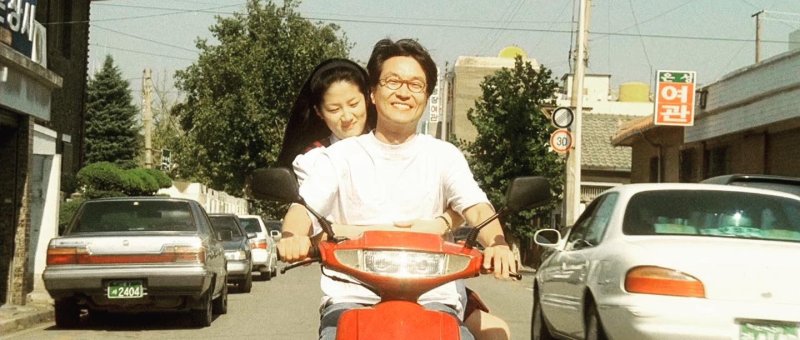
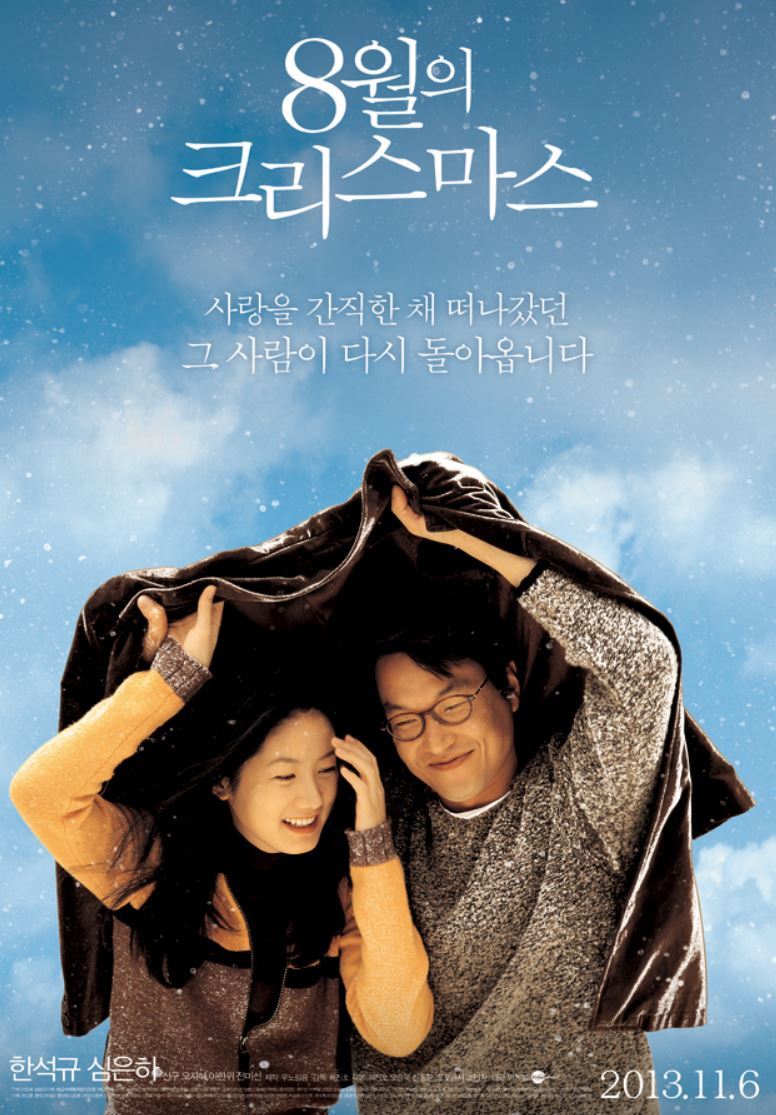
Christmas in August (8월의 크리스마스, Hur Jin-ho, 1998)

The cruel ironies of life are visited on a lovelorn photographer nearing the end of his days in Hur Jin-ho’s understated melodrama, Christmas in August (8월의 크리스마스, Palwolui Christmas). Christmas in August was Hur’s debut feature though he’d become primarily known for similar material in coming decades even if the romance was rarely as subtle and achingly poignant as in his first film. In some ways about life’s unfinished business, the impossibilities of communication, and coming to terms with impending death Hur allows his melancholy leads to discover a kind of serenity even in the depths of their yearning.

We never really find out the nature of Jung-woo’s (Han Suk-kyu) illness, only that it does not ostensibly interfere with his ability to live a normal life, though unfortunately terminal. After learning that he has only a short time to live, he simply goes home and washes the dishes, continuing with the mundanities of his life as if determined to get on with it. When someone asks him about his health, he tells them that he’s fine or that it’s not really serious, drunkenly letting slip to a friend that he will die soon but making it sound like a joke. Aside from a single moment of drunken railing against his fate, he accepts it with dignity and continues living quietly much as he always has while making preparations for after he’s gone, painstakingly writing down instructions for his father on how to use the TV remote and use the more modern printing facilities in his photography studio. 

There is perhaps a certain irony in the fact that he’s a photographer which is after all about trapping a memory or a point in time and preserving it for an eternity. He himself cannot move on, apparently hung up on his first love who married another man only to return later seemingly unhappy and regretful though she only asks him to remove the photo of her from the display in front of his store as if the memory of her youthful self is too painful to bear. And then, a young traffic warden wanders in looking for an urgent enlargement. For Da-rim (Shim Eun-ha), despite her youth, everything seems to be last minute, making several visits to the shop with an order that must be completed as soon as possible before visiting with no order at all. 

The relationship that arises between them is diffident and tender. It is also largely unspoken, Da-rim simply remarking on having a friend that can get them free tickets to an amusement park without exactly asking Jung-woo if he would like to accompany her. From his side, Jung-woo is passive, happy to be in her presence but also wary in knowing there is no possible future for them. He obviously cannot tell her that he’s ill or this brief respite from the futility of his life would disappear while she takes his diffidence as a lack of interest. It’s a love story that never quite gets started but is deeply felt all the same even its chasteness. 

Then again, perhaps words are unnecessary in situations such as this, a single photograph explanation enough on its own. In essence a gentle character study of a dying man’s learning to part with life as mediated through his yearning for a young woman though knowing that his love cannot be fulfilled, Hur presents death as something warm to be accepted rather than feared. Jung-woo takes a final photo with his friends whose eyes are all moist with tears as they pull him to the centre though he, like always, meant to stand on the end. He simply continues living, doing the dishes, retouching photographs, drinking with friends or else quietly crying himself to sleep. 

Though employing many of the tropes of romantic melodrama, Hur aims for subtlety and the eternal heartbreak of life’s unfairness that what we most desire arrives as soon as we can no longer have it. Even so, Jung-woo accepts his fate with good grace and treasures the memory of an unexpected love even as it slips away from him, storing it safely inside a photograph and a letter he may not actually intend to send. “Thank you and goodbye,” he signs off, which might be as a good a declaration of love as any other.


Original trailer (no subtitles)
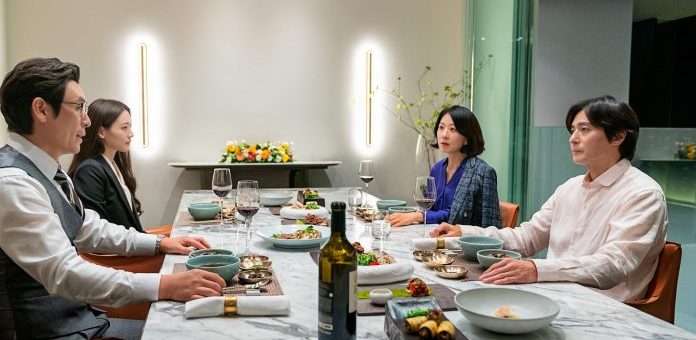
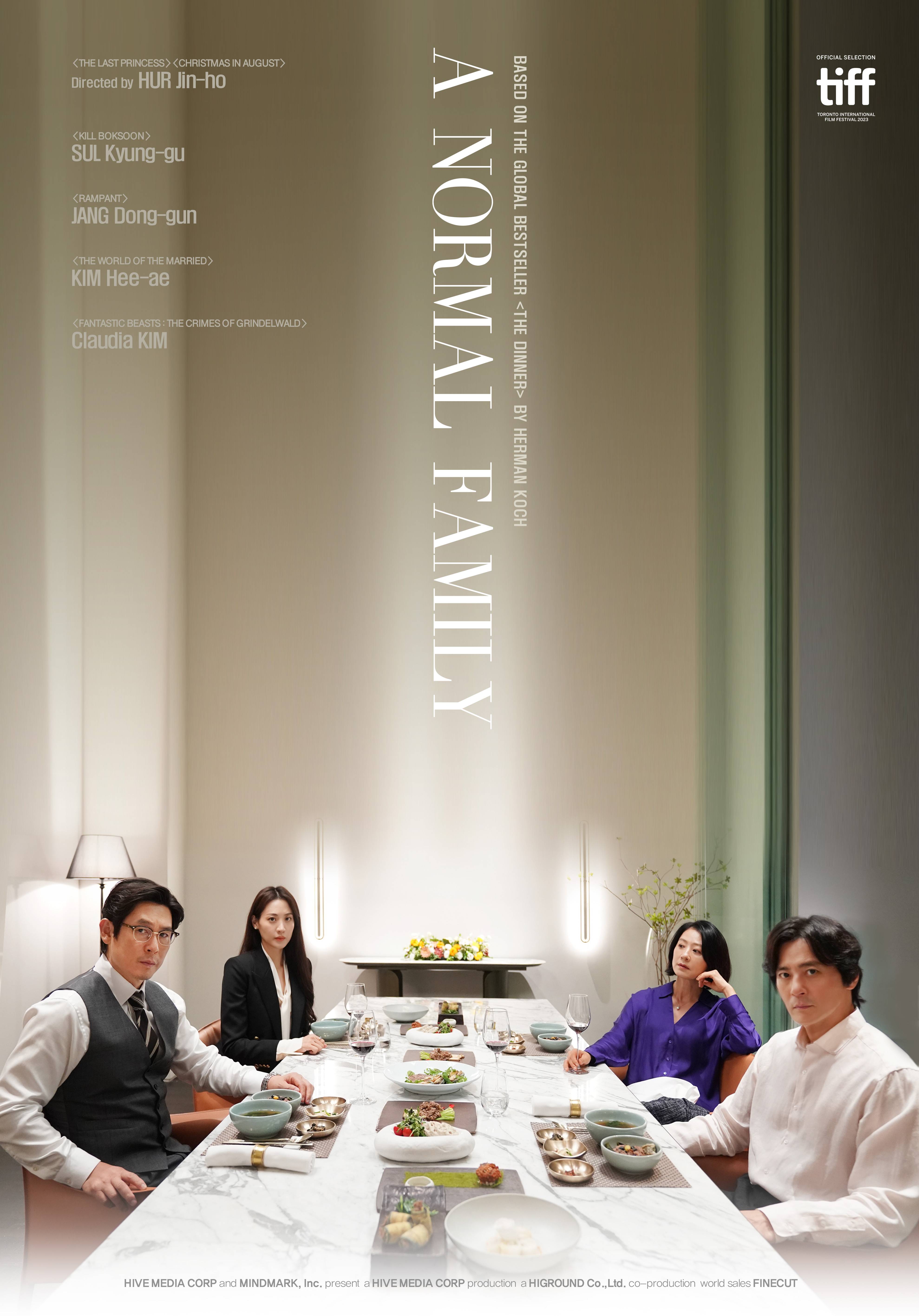
A Normal Family (보통의 가족, Hur Jin-ho, 2023)

“Parents are weak before their children” according to an apparently doting dad in Hur Jin-ho’s A Normal Family (보통의 가족, Botong-ui Gajok), yet later he will have to ask himself what it means to be a father and what exactly it is that he’s raising his daughter to be. Based on the Dutch novel The Dinner and a departure for Hur who is best known for romantic melodrama, the film nevertheless takes aim at the chaebol culture of the contemporary Korean society in which consequences are only for those without means. 

Twin cases further exacerbate the rift between two brothers, cynical lawyer Jae-won (Sol Kyung-gu), and earnest doctor Jae-gyu (Jang Dong-gun) as one finds himself defending the feckless son of a wealthy industrialist, and the other doing his best to save the life of a child seriously injured when a case of road rage resulted in the death of her father. Meanwhile, the brothers’ respective children, Jae-won’s daughter Hye-yoon (Hong Ye-ji), and Jae-gyu’s son Si-ho are later the subject of a viral video which appears to show two teens beating a homeless man half to death. 

Jae-gyu had resented his brother and rejected the idea of Si-ho doing an internship at his hospital on the grounds that he wants him to grow up to be a person with “integrity” rather than one who’d unfairly use his privilege and connections to get ahead. Yet as time moves on we begin to wonder if it isn’t also a little because he’s ashamed of his son who is socially awkward and apparently struggling academically. His wife Yeon-kyung (Kim Hee-ae), meanwhile, is a classic helicopter parent who spends an evening out repeatedly calling Si-ho’s phone and irritated when he doesn’t pick up. The implication is that they’re so hellbent on getting Si-ho into a good university to fulfil their own sense of esteem as parents that they’ve raised a child to conventional success that they’ve lost sight of what might actually be best for him as a whole individual.

On realising Si-ho maybe the violent teen in the video, Jae-gyu’s first instinct is to go to the police but he soon loses his moral authority on failing to follow through. Once again, the question is whether they choose to protect Jae-gyu from the consequences of his actions because they fear for him or because they fear the embarrassment his criminal status would bring to them. On the surface, Jae-woo has no such qualms, immediately torching the dress Hye-yoon was wearing that night while going into damage limitation mode trying to keep the teens’ identities secret. Yet he must also reckon with the fact that he’s brought her up in a world without consequences in which conventional morality no longer really applies to her because she is wealthy and has an elite lawyer for a father. 

In any case, just as Jae-gyu’s morality began to crumble so Jae-won begins to wake up to the idea that perhaps it’s a problem that his teenage daughter and her cousin beat a man half to death and then went back to their lives without batting an eyelid. Hye-yoon shows no remorse, cheekily asking her father for a car he promised her if she passed her exams while later expressing the view that as the man was homeless, a person who in her eyes had failed to achieve personhood through attaining markers of conventional success such as a degree and steady job, his life was of no consequence. Yeon-kyung later says something similar, not understanding why they’re making a fuss over “someone like that” whose life is worth nothing in comparison to her son’s future. 

Yeon-kyung is also relentlessly rude to Jae-won’s second wife, Ji-su (Claudia Kim), who is from a much more ordinary background and does everything she can to try and get along with her. Ji-su presents a much more conventional moral compass in considering what kind of mother she wants to be not only to her own newborn child but to Hye-yoon who like Yeon-kyung mainly treats her with contempt. It’s she who begins to wonder if covering this up is really the right thing for Hye-yoon and Si-ho or if failing to show them that actions have consequences will only encourage them to behave in ways otherwise offensive to a commonly held sense of humanity. 

The brothers switch sides, but the truth is that each of them has been teaching their children the wrong lessons in creating a world in which money settles everything and consequences are only for those who can’t pay. Yeon-kyung tries to justify herself that as she’s done a lot of good deeds it somehow balances out, Si-ho too echoing her on suggesting going to church as if you could buy your right to behave badly by saving up goodness points which is also another way of saying that consequences don’t apply. The children think that as long as they fulfil the role they’re expected to play, get good grades and become successful members of society, then nothing else really matters. Darkly comic, Hur’s steely drama suggests that the inequalities of the contemporary society, the elitism and anxiety have slowly eroded not only the most essential of relationships but the soul of the nation’s children who know nothing other than those with money need not pay for their crimes.


A Normal Family screened as part of this year’s London Korean Film Festival.

Original trailer (English subtitles)

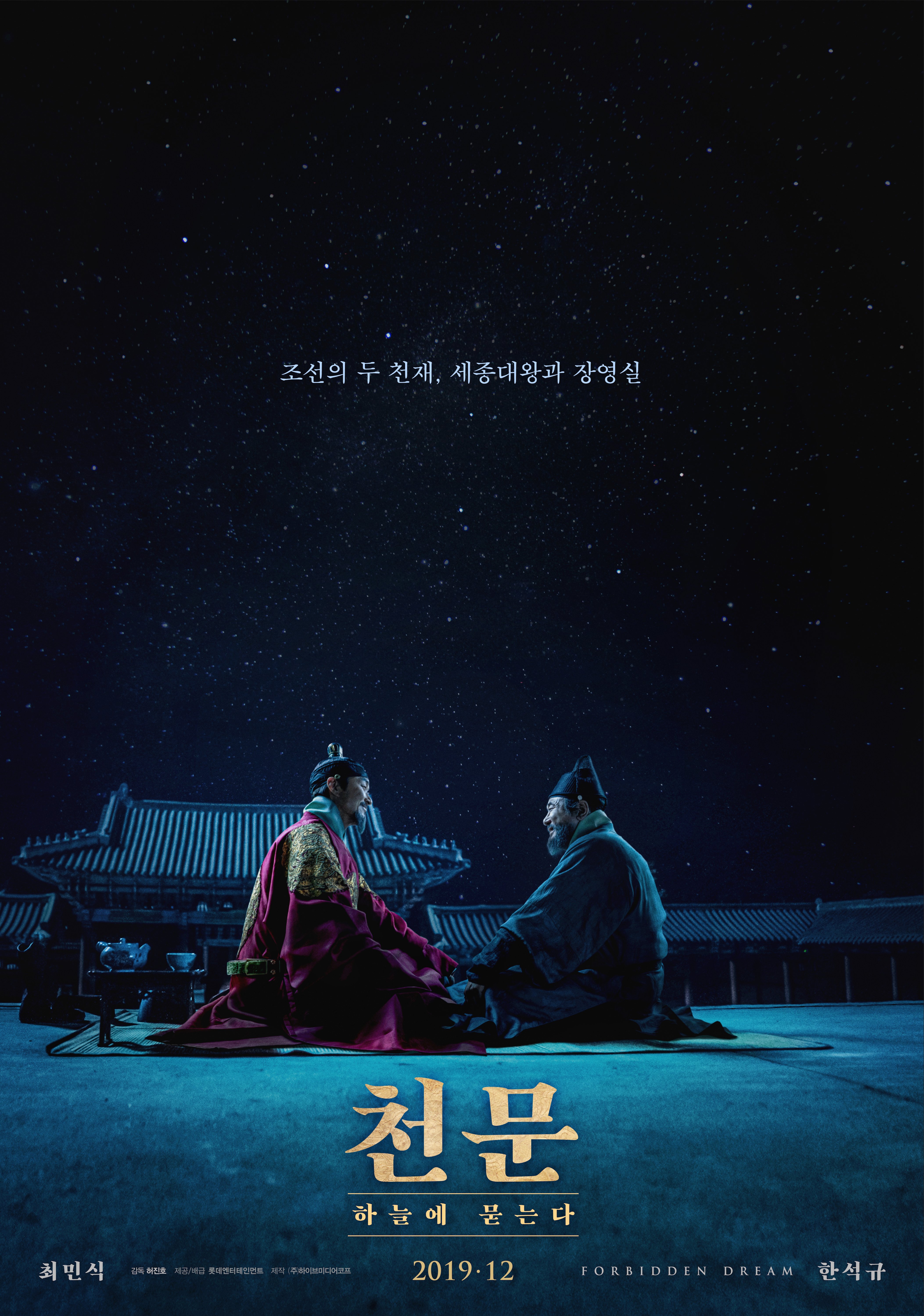
Forbidden Dream (천문: 하늘에 묻는다, Hur Jin-ho, 2019)

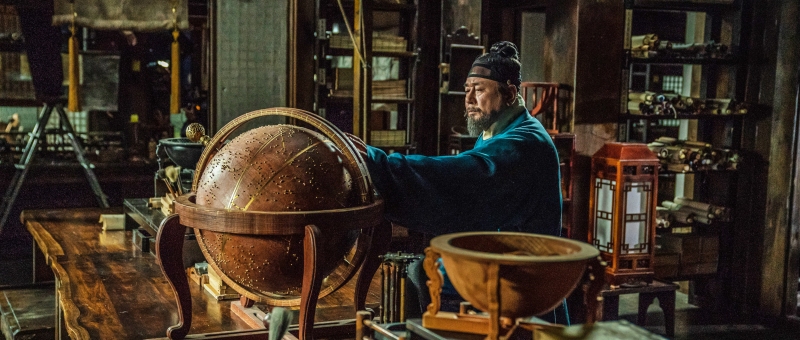
Technology is a great motivator for social change, which is one reason why there are those who would prefer to shut it down before it exists, afraid of the threat it poses to their own power and status. Best known for tearjerking romantic melodrama, Hur Jin-ho follows historical epic The Last Princess with a quietly nationalistic journey back to the Joseon era in which calls for greater sovereignty perhaps incongruously go hand in hand with progressive politics which see the good king Sejong (Han Suk-kyu) agitate for greater social equality through the democratisation of knowledge. This is his “Forbidden Dream” (천문: 하늘에 묻는다, Cheonmun: haneul-e mudneunda), the existence of a “fair” society in which anyone can read, write and learn regardless of the social class into which they were born.

Apparently inspired by the mysterious disappearance of legendary court inventor Jang Yeong-sil (Choi Min-sik) from the annals despite his close friendship with the king, Hur sets his tale in the 1440s during which time Korea is a tributary of the Ming. The problem with that is that though Korea remains a sovreign nation and Sejong its king, the Ming have positioned themselves as the culturally superior arbiters of knowledge. Facing persistent famines, Sejong is convinced that the key to agricultural prosperity lies in getting rid of the Ming almanac and using their own time zone which is better suited to the Korean Peninsula and will allow their farmers to make the best use of their land. The Ming, predictably, do not like his idea and are forever sending envoys to tell him to stop trying to “improve” on their technology. Nevertheless, he persists which is how he comes to meet Jang Yeong-sil, a technological genius whose innate talent has brought him to the palace despite the fact that he was born a slave. 

In Yeong-sil, the perhaps lonely king Sejong discovers a kindred spirit, the two men quickly, and transgressively, speaking as equals when it comes to developing their new technology. Giddy as schoolboys, they work on their inventions together for the betterment of the people, beginning with building a water clock to better indicate the time when the sun goes down. Sejong frees Yeong-sil and makes him a “5th rank scientist”, gifting him the clothes of a gentleman, but his open hearted egalitarianism sets him at odds with his ambitious courtiers who resent being forced to share their space with a former slave, puffed up on their feudal privileges that convince them advancement is a matter of name and intrigue. 

Just as Hur suggested in The Last Princess that the courtiers sold their country out because of an internalised sense that Korea was small and backward and could not stand alone, so Sejong’s ministers begin to abandon him and turn their fealty to the Ming. Sejong believes in Korean independence, certain that only by standing free can the country prosper and the people be happy. Others however fear Sejong’s “forbidden dream” of a more equal society knowing that it necessarily means a lessening of their own power and the privilege they feel themselves entitled to. Besides timekeeping, Sejong has also been working on a new alphabet which will further set them apart from the culture of the Ming. The ability to read and write using Chinese characters which Sejong feels are not perhaps well suited to Korean has hitherto been reserved for the elite. Sejong’s alphabet which will eventually become the Hangul still in use today removes the barriers to knowledge which ensure the rule of the few can never be challenged while also reinforcing the idea of a cultural Koreanness which is valid in its own right, equal to that of the Ming, and obviously a better fit for his people who will then be able to create glorious inventions of their own. 

Hangul is the “something eternal that no country can take away” that Sejong dreamed of as his legacy, but it’s also the thing that costs him his transgressive friendship with Yeong-sil as his courtiers reject his internal challenge to the social order, favouring the feudal certainties of the Ming over his revolutionary kingship. Undeniably homoerotic in the depths of its sincerity, the attachment of the two men, a slave and a king, is embodiment of Sejong’s forbidden dream as a symbol of a better world where all are free to innovate. “Class does not matter” he tells Yeong-sil as they stare up at the stars, “what matters is that we look at the same sky and share the same dream”. That better world, however, will be a long time coming, Yeong-sil a martyr punished for his class transgression but making a personal sacrifice on behalf of the king who was also his friend so he can bring about his forbidden dream of an independent Korea powered by cutting edge technology created by men like him with fine minds from all walks of life. Well, perhaps there’s still some work to do, but you get there in the end. Anchored by the magnetic performances of its two veteran leads, Forbidden Dream does not entirely escape the pitfalls of the Joseon-era drama with its palace intrigue and complex interpersonal politics, but is at its best when celebrating the intense friendship of two men united by the desire to innovate even if that innovation is not always convenient for the world in which they live.


Forbidden Dream streamed as part of this year’s New York Asian Film Festival.

International trailer (English subtitles)

Images: © 2020 LOTTE ENTERTAINMENT All Rights Reserved.

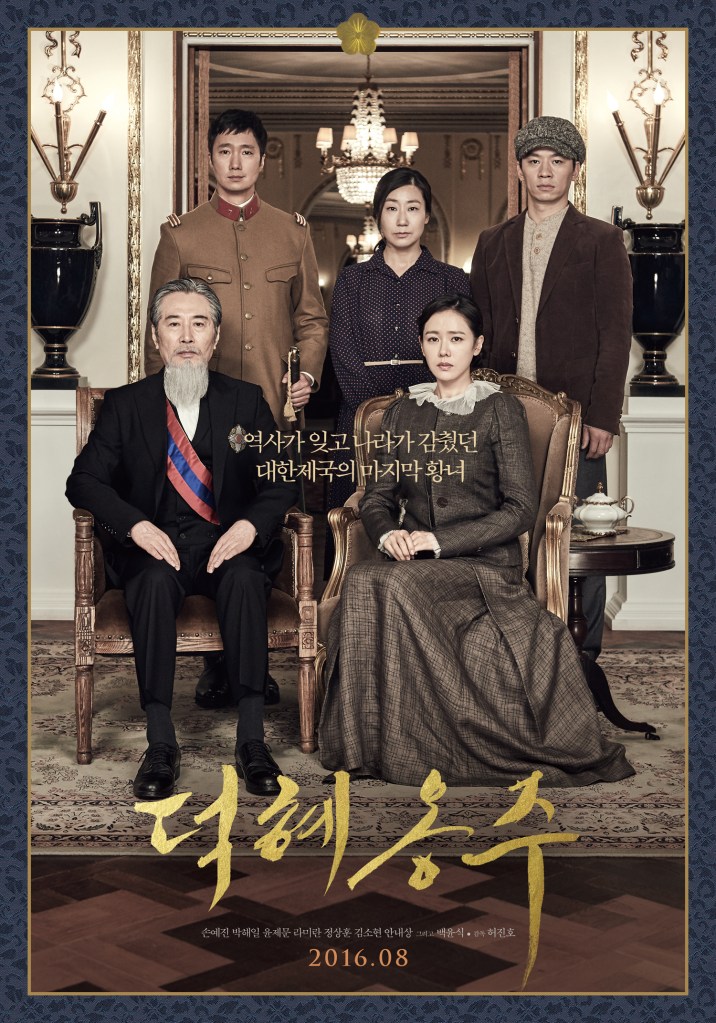
The Last Princess (덕혜옹주, Hur Jin-ho, 2016)

last-princessReview of Hur Jin-ho’s The Last Princess first published by UK Anime Network.


Filmic biopics of real life historical figures are not generally known for their fierce adherence to fact, but The Last Princess (덕혜옹주, Deokhyeongjoo) is unusually honest in its approach in the sense that it includes a brief opening statement to the effect that the film pays very little attention to historical veracity. Hur Jin-ho adapts the story of Korea’s last princess, Yi Deok-hye (Son Ye-jin), as recounted in a novel by Kwon Bi-young, whilst indulging the genre he’s best known for – romantic melodrama. Another of the recent spate of films to address Korea’s colonial past, The Last Princess is the story of a woman who was fiercely loyal to her homeland, even in the face of harsh opposition and final rejection by the very people she’d been striving so hard to protect.

Told in a non-linear fashion, The Last Princess spans the majority of Deok-hye’s life from her opulent childhood in the royal palace to her eventual repatriation to Korea in the mid 1960s. In 1919, nine years after Korea had been annexed by the Japanese, Deok-hye lives in the palace with her loving father, the former Emperor (Baek Yoon-sik), and her mother, the concubine Lady Yang (Park Joo-mi). Her carefree days soon end when she witnesses her father’s death by poison and comes to understand her precarious position as puppet royalty of a subjugated regime.

Her life, and those of her remaining family members, is largely in the hands of a traitorous civil servant, Han (Yoon Je-moon), whose fierce loyalty to the Japanese emperor knows no bounds. Deok-hye is unwilling to assist him in his desire to use her as a tool to promote the “Japanisation” of the country and so is packed off to the mainland to study with the promise that she can return to live with her mother in Korea after her studies have ended. Needless to say she does not return.

In a touch of cinematic romanticism, the film elides two characters into one in the otherwise fictional character of Kim Jang-han (Park Hae-il). The son of a resistance fighter loyal to the emperor, Jang-han was betrothed to Deok-hye when they were both children and later returns to her as an adult in Japan where he is active in the Resistance, before coming back to find her years after the war. Jang-han hatches a plan to help Deok-hye and the other royal family members escape for exile in Shanghai but the the pair are eventually separated.

Recalling other recent Korean Resistance movies Age of Shadows and Assassination, The Last Princess has its share of action as Deok-hye and Jang-han attempt to escape the Japanese occupation and foster the revolution from abroad. The villain of the piece this time around is not so much the Japanese but the Koreans who willingly helped them as as exemplified here by the odious Han. Han is the most typically melodramatic character and only lacks a moustache to twirl to complete the effect. Hellbent on ingratiating himself with the Japanese, Han is determined to harness his princess’ appeal to sell the virtues of the Japanese state. When Deok-hye resolutely refuses to play along, he threatens her family members and friends in an attempt to force her compliance but finds her love for her country too strong to be bent by his egocentric cruelty.

Sent away and kept a virtual prisoner far from home, there is little Deok-hye is able to do in service of her nation. Introduced to the Resistance operating in Japan, she begins to see a way to help and eventually finds herself taking a stand when blackmailed into reading out a propaganda speech in front of a collection of forced labourers. Beginning the speech in Japanese as ordered, Deok-hye finds she cannot continue and eventually makes her real feelings known in Korean as she instructs the people in front of her not to give up, she will be right along side them fighting to regain their homeland. In a touch of Casablanca inspired drama, a chorus of Arirang suddenly springs up among the crowd, much to the consternation of the Japanese officers expecting a show of contrition, as the Princess herself is whisked off to pay a heavy price for her “betrayal”.

The Last Princess forces its heroine through constant loss – of her home, of her position, of her family, of a future, of love, of a child, of happiness, of her mind, and most importantly of her nationality. Deok-hye never wanted to be Japanese, did not travel to Japan of her own volition, and did her best to resist even at great personal cost. Nevertheless she finds eventually finds herself barred from her homeland due to opposing political concerns when the fledgling Republic fears the misuse of a powerful symbol like a royal family to frustrate the democratic future. Played with wonderful sensitivity by leading actress Son Ye-jin, Deok-hye suffers as her nation suffers, longing for independence both personal and national but finding only new cages everywhere she goes. Despite the unconvincing ageing makeup of the latter part of the film and an overly intrusive score, The Last Princess is an impressively produced prestige picture which plays its melodrama credentials to the max but is also undoubtedly moving in recounting the tragic story of its heroine whose constant misuse and lack of agency mirror much of the history of the nation she holds so dear.


Reviewed at the 2016 London Korean Film Festival.

International trailer (English subtitles)

A Good Rain Knows (호우시절, Hur Jin-ho, 2009)

a-good-rain-knowsHur Jin-ho’s A Good Rain Knows (호우시절, Howoosijeol) was originally developed as a short intended to form part of the China/Korea collaborative omnibus film Chengdu, I Love You which was created as a tribute to the area following the devastating 2008 earthquake. However, Hur came to the conclusion that his tale of modern day cross cultural romance required more scope than the tripartite omnibus structure would allow and decided to go solo (Chengdu, I Love You was later released with just Fruit Chan and Cui Jian’s efforts alone). Very much Korean in terms of tone and structure, Hur uses his central love story to explore the effects time, memory, culture, and personal trauma on the lives of everyday people.

Smart suited businessman Park Dong-ha (Jung Woo-sung) has arrived in China as part of the Korean efforts to provide assistance in rebuilding after the 2008 earthquake which took thousands of lives and caused mass destruction. Met by a genial Korean ex-pat acting as his guide, Dong-ha takes in some sightseeing including a park dedicated to Tang dynasty poet Du Fu. As it turns out, an old university friend is also working at the park museum as a multilingual tour guide. There is more than a little unfinished business between Mei (Gao Yuanyuan) and Dong-ha though time has been passing all the while, throwing up obstacles every way you look to try and frustrate this serendipitous reunion.

Though the film is a collaborative effort between China and Korea, the bulk of the dialogue is spoken in English as Mei doesn’t speak Korean and Dong-ha doesn’t know any Mandarin (the pair apparently studied in the US and each returned to their home country separately, subsequently losing touch). Truth be told, the English is not always successful leaving both actors a little adrift – something which is not helped by conflicting Chinese and Korean acting styles. However, in someways this slight hesitance only adds to the restrained quality of their romance as each frequently adds tiny phrases of their own languages, becoming lost for words or trying to find exactly the right thing to say at the right moment.

The romance between Mei and Dong-ha never quite got going in their student days and seems to have taken on the status of a great lost opportunity. Time has moved on and they’re both different people. Student Dong-ha wanted to be a poet but now he’s a company man, even if a slightly conflicted, melancholy and romantic sort. Mei’s life has followed a more natural course though she too carries a deep seated sense of sadness caused by more recent personal tragedies. Both are left in a place of needing to relearn how be themselves – Dong-ha by getting back to writing and Mei by (literally) getting back on a bike but these are more natural, personal problems rather than the familial or social concerns which are the usual barriers to a successful melodrama romance.

Beautifully photographed, A Good Rain Knows takes its cues from Du Fu when it comes to the poetic, filling the screen with its vibrant green scenery. Of course, this contrasts strongly with the ruined buildings Dong-ha visits as well as the upscale hotels and restaurants, but the natural surroundings at least lend a healthy feeling of earthy wholesomeness to the proceedings. Hur has opted for a Korean orientated viewpoint, framing Chengdu as the slightly alien place it is to Dong-ha filled with bizarre foodstuffs and awkward conversations but nevertheless also an opportunity to reassess the current course of one’s life. A mature, realistic romance, A Good Rain Knows ends on a note of hopeful ambiguity – wisely avoiding the big romantic finale, Hur undercuts the inherent melodrama with wistful melancholy, the possibility of a happy ending is still in sight but there are no easy answers here, only a need for time and commitment.


Original trailer (English subtitles)