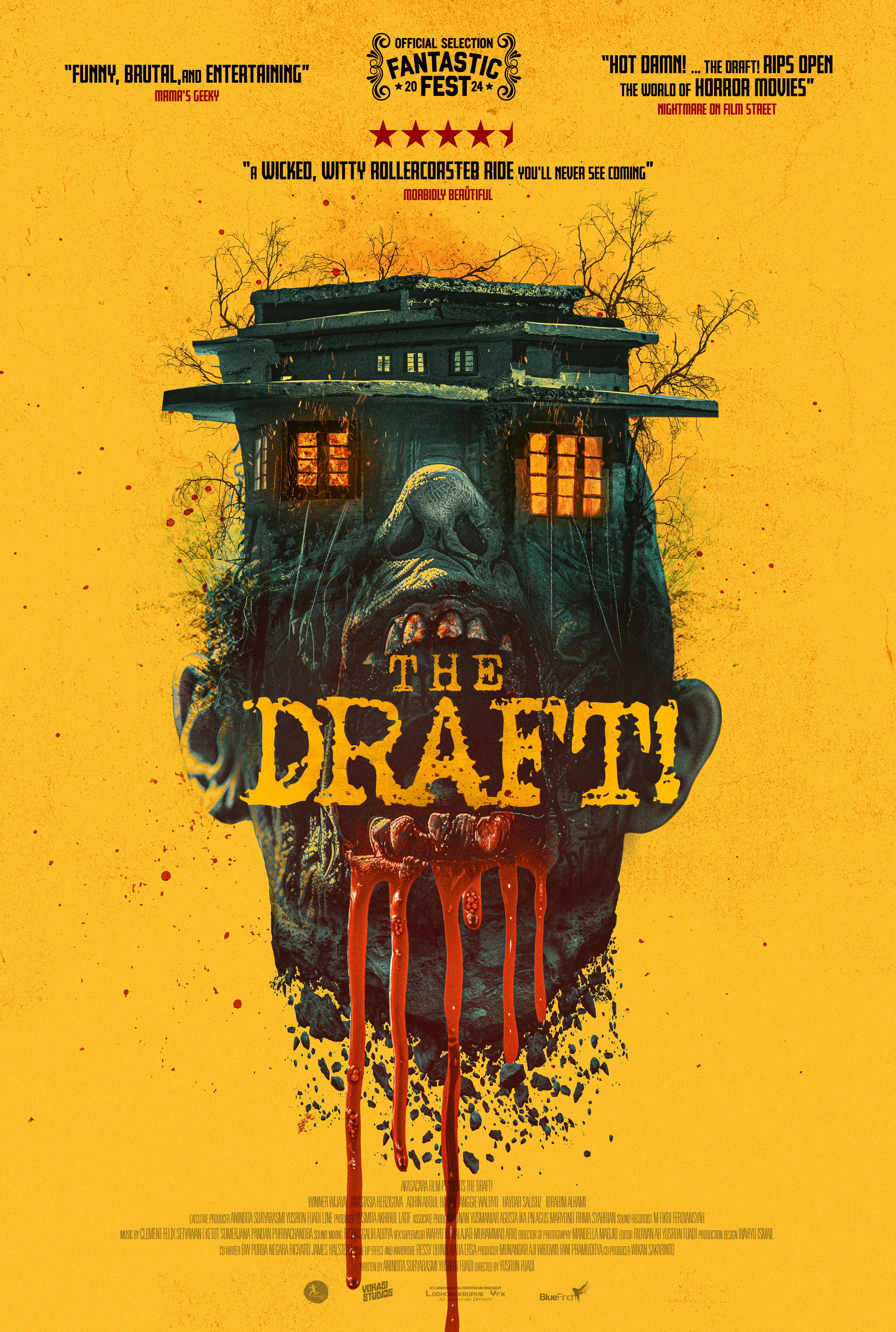
The Draft! (Setan Alas!, Yusron Fuadi, 2023)

It’s easy to feel as if you’re trapped on a certain path and that unseen forces are dictating your life, leaving you with little power to overcome your fate. But what if you were really imprisoned inside the as yet unfinished script for a terrible movie by a lazy, half-hearted writer who can’t think of anything more interesting than killing you in horrifying ways while being constantly hassled by an equally dull producer who threatens to replace him with Joko Anwar? 

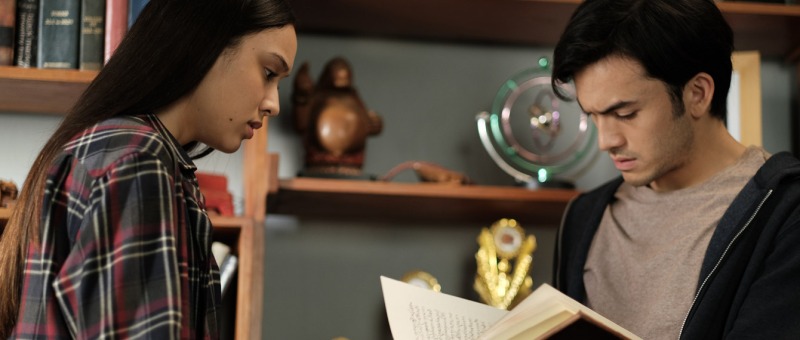
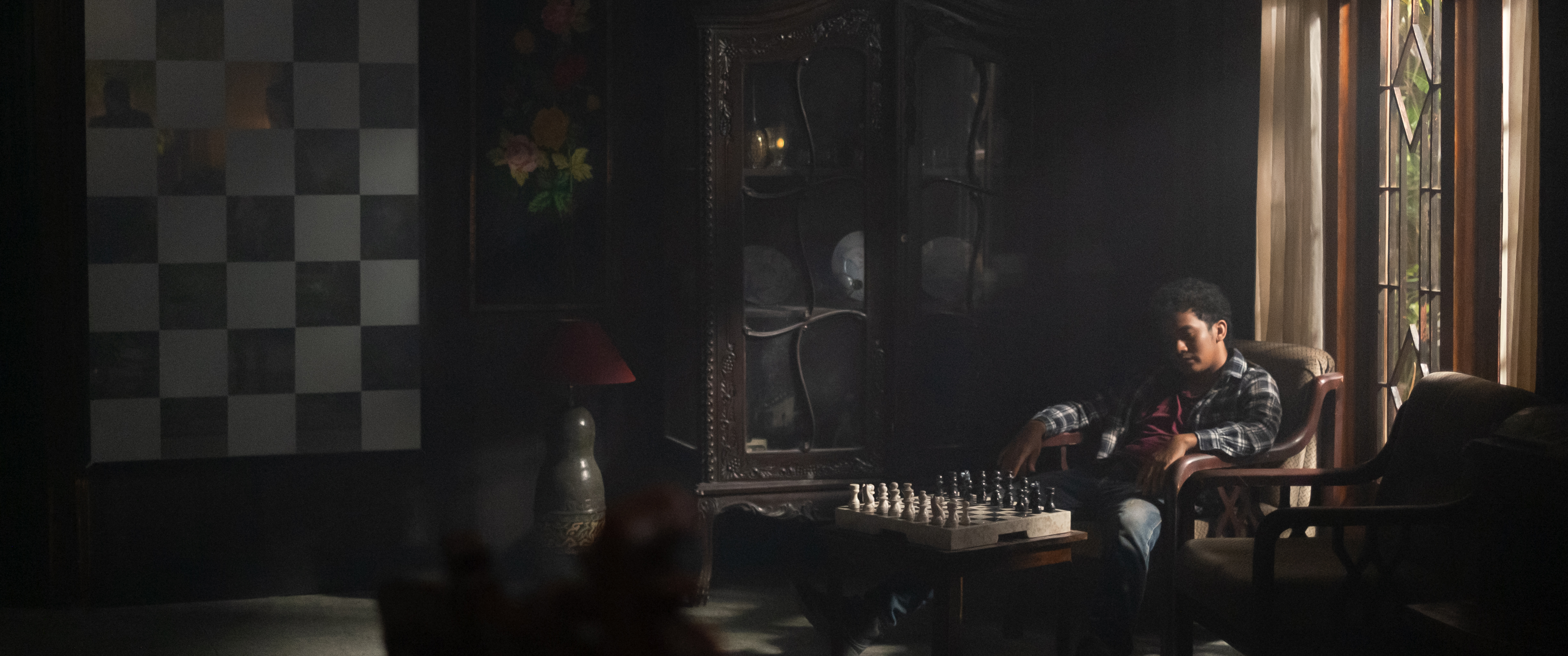
That is indeed the dilemma faced by those at the centre of Yusron Fuadi’s Indonesian meta horror, The Draft (Setan Alas!). The opening sequence follows them as they drive towards a remote country villa owned by rich girl Ani’s (Anggi Waluyo) recently divorced parents. As soon as they get there, they begin remarking on how it’s just like something out of an Indonesian horror movie complete with a Dutch cemetery not too far away and a creepy caretaker who seems to pop up out of nowhere. Predictably, the power’s gone out and the generator’s on the blink, so they’ll have to have atmospheric candles instead and obviously can’t get any phone signal to call for help. Ani’s also brought a photo of her apparently deceased younger sister, though none of that turns out to matter because the screenwriter’s about to forget about it. 

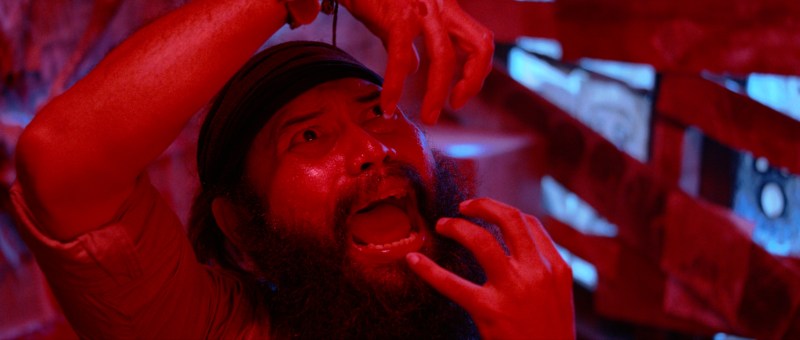
All of this heavy exposition is delivered in a very knowing manner, as if mocking the tropes of the Indonesian horror movie while simultaneously indulging in them until the gang suddenly figure out that they’re just characters in a half-written screenplay which is why they can’t really remember much of their pasts. As such, they’re desperately in search of “god”, or the writer, who alone has control over their fates and seems to have ill intentions for them while their only means of defence is to force him into a rewrite so they won’t die. After a while, they begin to work out how they can manipulate this world by influencing the writer’s thoughts when their joking speculation about might what happen next gives him ideas, so they can also write into their dialogue that there’s a massive stash of arms in the basement that will be very useful against the surprise zombie hordes. 

Meanwhile, in the real world, time passes for the writer who burns his motorbike and argues with his producer while constantly rewriting the screenplay to suit his preferences. The gang joke that there can’t be that many zombies coming because CGI’s too expensive, and no one would give a film with dialogue this bad a budget big enough to pay for thousands of extras. The writer is damned if he does and damned if he doesn’t. He either writes the film the producer wants with its generic plot and stereotypical characters or he doesn’t get to make a film at all.

The characters too are protesting being a part of this project and fighting for a movie along with a better life in which they have more light and shade, actual backstories and personalities both they and the audience can invest in. But increasingly, their author leaves them hanging as the real interferes with his screenwriting dreams and years go by with no more “revisions” leaving this film a perpetually unfinished draft that he may pick up again some day more out of idleness that ambition. The dream world of the movie seems to be forever receding like the cliff edge that prevents the characters from leaving, the abandoned drafts burning away as stripping layers from their reality. 

Trapped in this eternal state of limbo, they do at least realise they have an advantage and time to train, to write their own stories in the absence of their not quite so omniscient god. They might, after all, enjoy a life of “worldly pleasures without any consequences or commitment” while they wait as if this place too could be a kind of heaven free of any possible constraint save the inability to leave or to feel time passing and finally be allowed some kind of forward motion and growth. This project might be paused, indefinitely, and destined to live forever in the draw as an unfinished draft, but there might still be time to bring themselves into being while their inattentive creator perhaps does the same.


The Draft! is on UK and Ireland digital platforms 27 October.

Trailer (English subtitles)
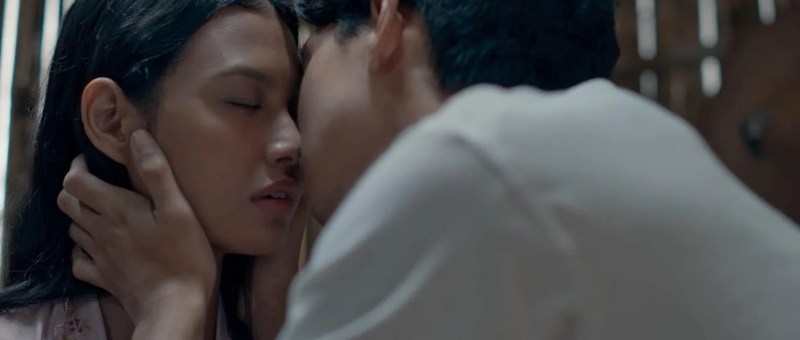
Gowok: Javanese Kamasutra (Gowok: Kamasutra Jawa, Hanung Bramantyo, 2025)

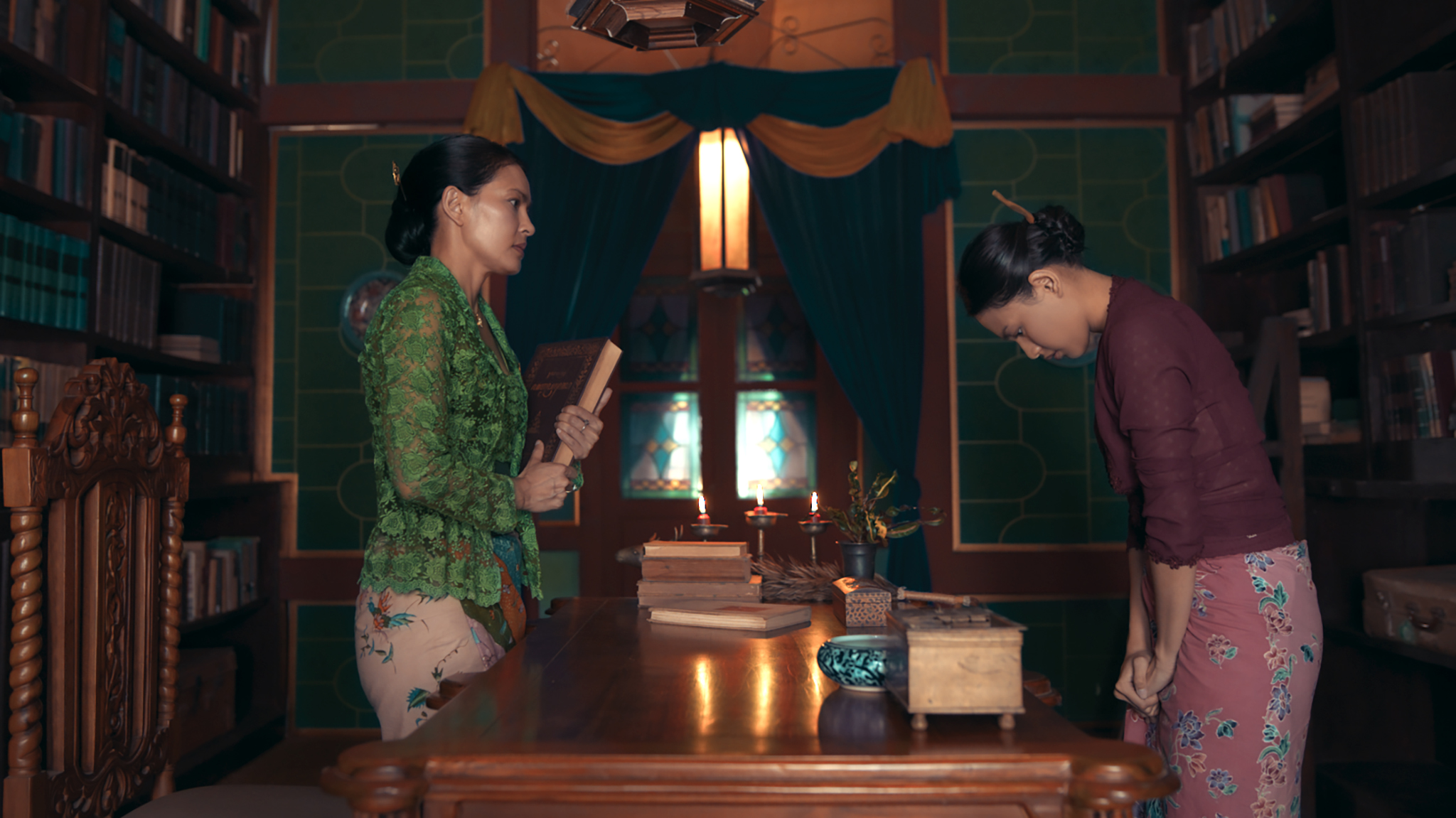
There’s an essential contradiction at the centre of Hanung Bramantyo’s spicy romantic melodrama Gowok: Javanese Kamasutra (Gowok: Kamasutra Jawa) in that, on the one hand, the gowok is said to exist so that men learn how satisfy their wives’ sexual desires. Which is to say, the sexual desires of women are recognised and approved rather than denied or taboo while men are expected to live up to satisfying them as part of what it means to be a proper man. But at the same time, women are constrained by the patriarchal institution of marriage, have few rights of their own, and are largely unable to live independently while lacking status as anything other than a man’s wife. 

Indeed, the inserting of increasingly outdated notions of sex and class that stand in the way of romance and set the tragic events in motion rather than the black magic to which many attribute the looming crisis. Years before, Jaya’s mother had been in love with the soon-to-be king, but he couldn’t marry her because she wasn’t of sufficiently noble birth. She agreed to step aside and marry a mutual friend on the condition he would be given high office and her son would marry into royalty so that she would be a queen in all but name and their family would enter the royal bloodline.

Now a university student, Jaya (Devano Danendra / Reza Rahadian) is sent to a gowok to make a real man out of him, though as he explains to his father, that’s not what a real man is. Jaya is a young man of the new Indonesia who believes in things like equality of the sexes and the breaking down of the old class system even if he maintains his privilege in other ways, including submitting himself to the gowok. Nevertheless, while he’s there, he falls in love with the adopted daughter of his gowok Santi (Lola Amaria), Ratri (Alika Jantinia / Raihaanun), and makes her a lot of promises about the future while introducing her to the women’s movement in 50s Indonesia that offers her the vision of a different future in which she might become an independent woman rather than being forced to become a gowok herself. To become a gowok necessarily means that she would not be able to marry. Most gowok adopt children to succeed them. Accidentally seeing a secret ritual, Santi fears that Ratri has fallen victim to a pure love spell that threatens spiritual disaster should the man break his promise which, as an older woman, she knows he almost certainly will. 

Then again, that turns out not quite to be the case and the lovers are in fact betrayed by those still clinging on to to the old class system. The destructive quality of their romance is played out against the background of the screws tightening across Indonesia as anti-communist fervour takes hold and suspicion falls on the women’s groups when military generals are abducted and murdered. Despite his progressive views, Jaya ends up married to a princess at his mother’s behest, exemplifying the ways in which women try to hold on to power by exerting matriarchal control over their sons. As for the princess, she is already pregnant by her communist boyfriend but prevented from marrying him and forced to marry Jaya instead though apparently coming fall in love with him after their marriage. Meanwhile, it turns out that there is an awkward connection between Jaya and Ratri that lends their fateful meeting a tragic quality even as his mother refuses to entertain the idea of Ratri marrying her son because her mother was a sex worker and she is not of their class.

In any case, though the gowok system may not actually be that different from other folk practices, there is something uncomfortable about it in that some of the “men” are very young and do not want to be there. Though Jaya, who is also sent there against his will, is in university and falls for Ratri who is around the same age, when his own son, Bargas, is sent to the gowok he is only around 14 and looks very childlike while ushered into “manhood” by a then 33-year-old Ratri. The system is at least potentially abusive and unethical while demonstrating how men are also ensnared by the patriarchal trap in that they too are being groomed for marriage whether they like it or not. It was in fact a man’s inability to remain faithful to the wife chosen for him that led to Ratri’s mother’s death and the activation of a black magic curse.

In any case, it turns out that human motivations can be far more damaging than any curse in the long years of anger, resentment, and misery born of misunderstandings and deliberately misdirected love. Ratri desperately tries to overcome her past and become an independent woman as a gowok but finds herself frustrated by the changing nature of society which promises so much freedom and opportunity in her youth only to immediately roll back on it while her own attempt at revenge backfires with tragic results. Poignant in its themes of tragic romance, the film quietly hints that this kind of oppression may not have really gone away even as Ratri seeks to reclaim her legacy in the 1980s-set coda by turning the gowok house into a school that educates women in a final attempt to finally free them from patriarchal control.


Gowok: Javanese Kamasutra screened as part of this year’s New York Asian Film Festival.

Trailer (English subtitles)

Tale of the Land (Loeloe Hendra, 2024)

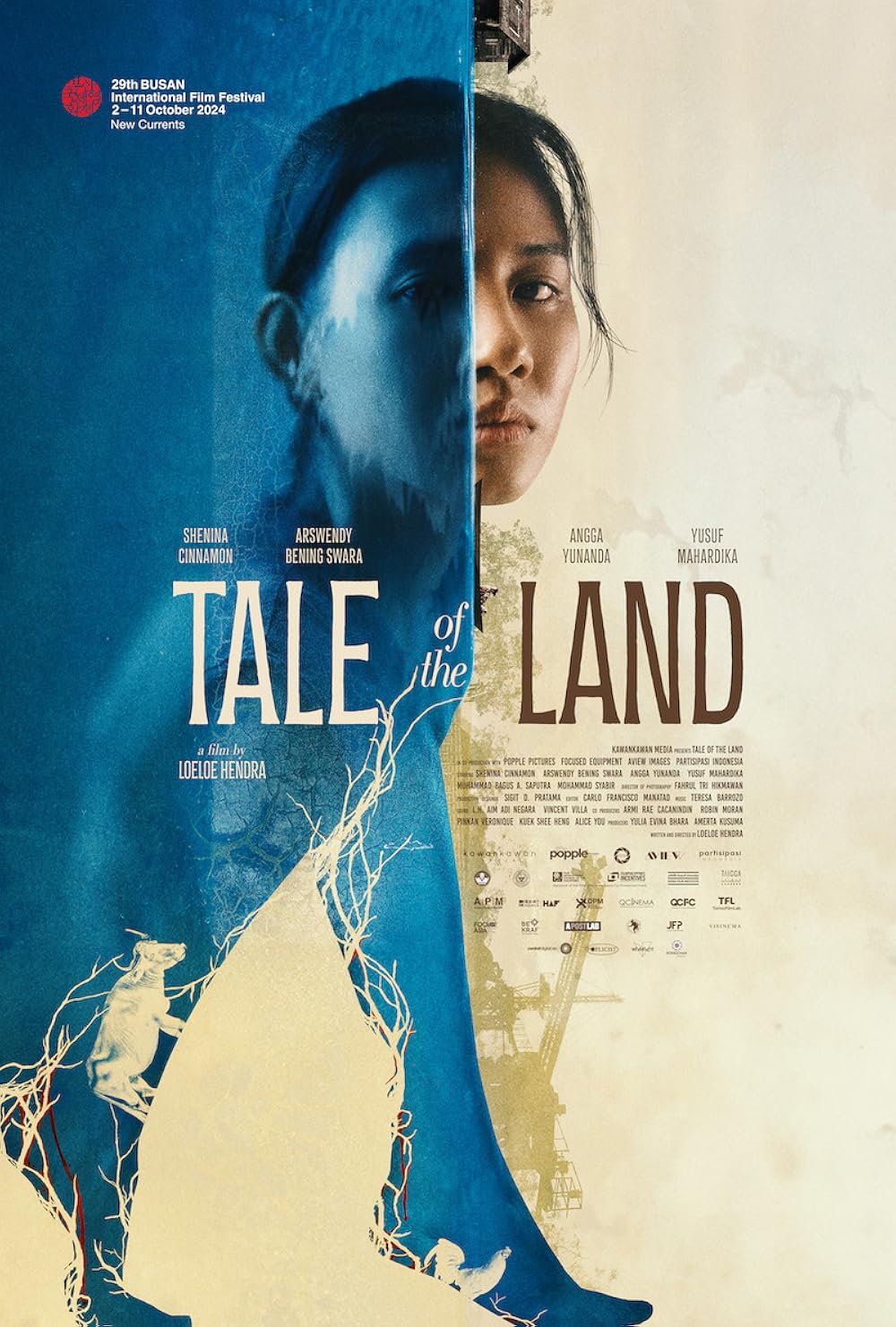
After witnessing her parents’ murder, a young woman is forced into an isolated way of life in Loeloe Hendra’s indie drama, Tale of the Land. Land is, at least according to grandfather Tuha, a place where nothing good happens which might be why he insists on keeping May on the boat. Or then again, perhaps as May is beginning to suspect, he is willingly constraining her and ensuring that she will remain at sea though she now wants a little more out of life.

On one of his ventures out, Tuha is passed by a huge and impressive coal liner while plagued by visions of the house sinking. May asks him if the house will last, but he replies that it surely will for the ancestors will protect them. Yet this is why land has become such a contentious issue to Tuha. The family was forced off their ancestral land by the arrival of the mine. Tuha isn’t lying when he tells May that the land is dangerous because the mine appears of have acquired the consent of the villagers through threat and violence. He no longer speaks to his surviving son because he views him as a traitor for having given in and thrown his lot in with the miners.

But May isn’t sure she believes her grandfather anymore. Perhaps he’s only saying that because he fears being alone and means to trap her with him. Tuha told her that she’s the victim of an incurable curse and is in effect allergic to the land. Every time she touches ground, she collapses. Her fate is echoed in the wounded buffalo she sees on the shore, longing for freedom yet tethered and caught between two worlds. The buffalo turns out to belong to Lawa, a local soldier who seems to have taken a liking to May but a sworn enemy of Tuha in representing the modern nation  mired in authoritarianism and destructive capitalism. 

Thus May is caught between the two men, the grandfather with his certain faith in the power of the ancestors, and the modern man who swears he’ll cure her and also take her to the site of her parents’ graves. Tuha tells her that this is the only place left to them and they must accept it, that she should give up any thought of returning to the land and learn to be happy with the self-sufficient life they’ve built at sea. The film is then a kind of parable for the fate of the Dayak people who have been displaced from their ancestral lands by the incursion of modernity in the form of violent corporatism as manifested in the destructive mining industry which ruins the environment. Whether May’s condition really is a “curse”, or a trauma response to witnessing the deaths of her parents, the land is a dangerous place and most particularly for people like her. Yet the sea isn’t really safe either and offers her little prospect of safety or happiness.

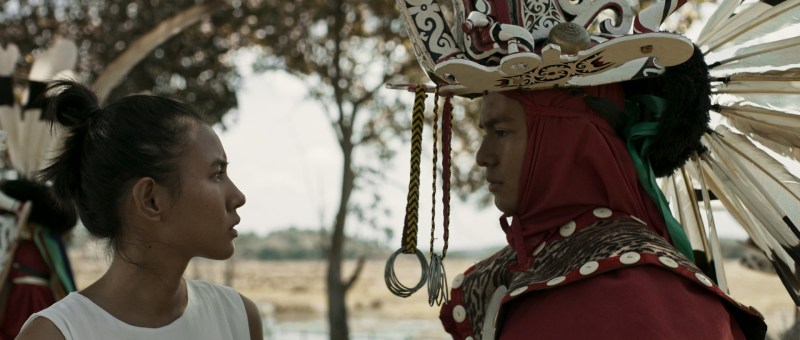
She tries to fight her curse with modernity by simply wearing shoes so that the soles of her feet don’t touch the earth, but discovers that it isn’t really that simple. Dreams and reality become indistinct, May performing a traditional folk dance on the house on the water and also taking part in a folk ritual with Lawa on land. She experiences echoes of the life that’s been taken from her, but finds little in its place already fed up with the monotony of life on the sea but torn between her grandfather’s warnings and Lawa’s promises. Tuha constantly berates her for doing the wrong thing, claiming it’s her fault they’ve no fish because she upset the ancestors by forcing him to kill a chicken in order to appease her curse but she can’t be sure he’s wrong, or that his stubbornness isn’t justified. He was right when they said they had nowhere else to go because their people have been exiled from their own lands and can no longer wander freely but are trapped within a liminal space literally floating in the ocean between the land and the horizon while unable to travel in either direction. May may be on the move and trying to reclaim what is hers by right, stepping ashore onto an uncertain land little knowing whether it will accept her or she it.


Tale of the Land screens as part of this year’s Cinema at Sea.

Trailer (English subtitles)

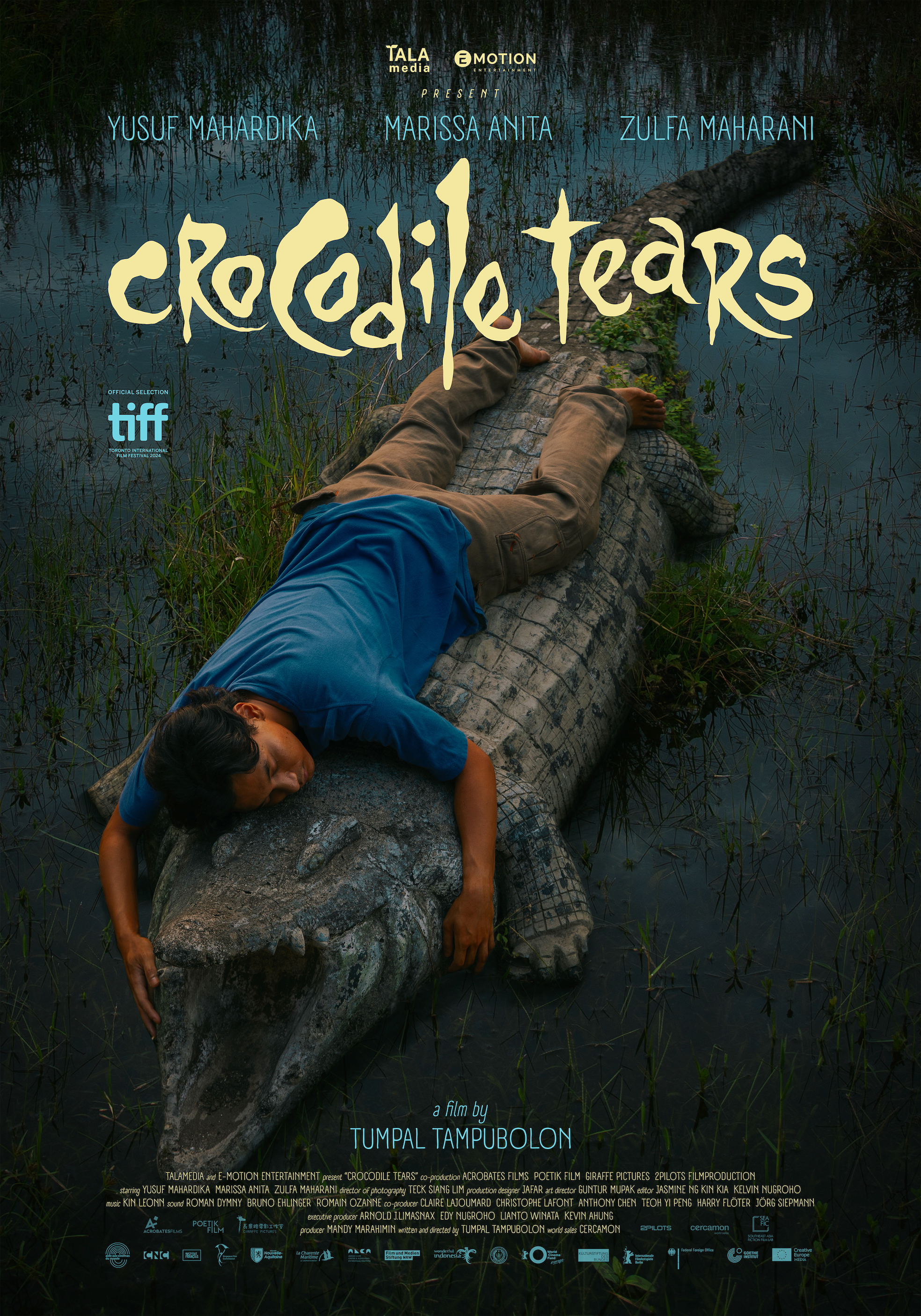
Crocodile Tears (Air Mata Buaya, Tumpal Tampubolon, 2024)

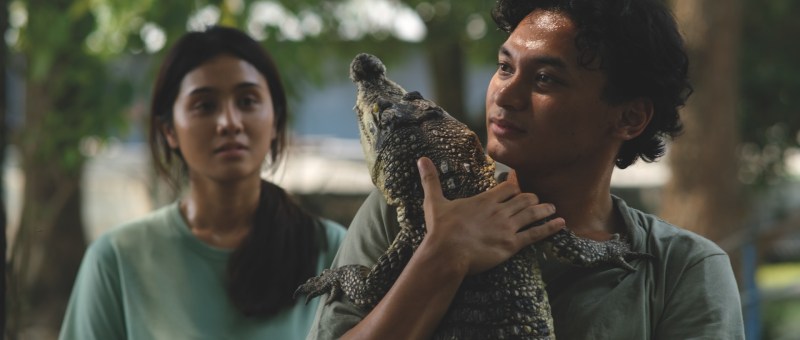
What happens when the baby wants to break out of the egg? The hero of Tumpal Tampubolon’s Crocodile Tears (Air Mata Buaya) isn’t a baby, he’s a 20-year-old man, but the crocodile zoo where he lives with his mother is also a kind of extended womb in which she keeps him constrained. The film’s title is apparently inspired by the fact that crocodiles protect their young by holding them in their jaws, the same jaws they use to snap at the live chickens Johan (Yusuf Mahardika) and his mother (Marissa Anita) throw over the fences. 

Mama is evidently aware her little boy’s growing up. In the first shot of the film he’s furtively masturbating until he’s interrupted by her screaming for him outside. She scrubs his pants and seems to notice that they’re soiled, taking care to remind him that he should keep himself clean now he’s a grown man, but Johan doesn’t seem to understand telling her that he showers every day. Perhaps he’s smarting a little at her comments having overheard two women complaining about a bad smell while sitting next to him at a restaurant and wondering if he carries the stench of the crocodile park even when in the outside world. Later he takes to wearing some of the perfume he picked up for his mother’s birthday and had also given to his girlfriend Arumi (Zulfa Maharani).

Arumi is a direct threat to Mama who knows that another woman will inevitably replace her. She and Johan still sleep in the same bed. The irony is that her loneliness becomes that of Johan who is terrified of ending up all alone in the crocodile park prevented from having anything like a normal life by his mother’s possessive neediness. He loses his virginity to Arumi, a more worldly woman working in the local karaoke box and on the fringes of the sex trade, and she becomes pregnant though unsure whether or not Johan is the father. He realises he likely isn’t, but like his mother is so lonely that he doesn’t care only begging Arumi not to leave him because he can’t bear the idea of being on his own. 

But despite the obvious conflict and rivalry between them, the past is essentially repeating with each woman oppressed by Indonesia’s oppressively conservative and patriarchal social norms. Mama had Johan at 19 and seemingly unmarried. Though she resented the baby in her womb, when he was born she gave all of herself to him and he became her entire world. There are rumours that Mama may have murdered her husband and fed him to the crocodiles though Johan says he never knew his father. He was told both that he had died before he was born and that his father is the zoo’s white crocodile whom his mother refers to as “Papa” and claims to have a special connection to “mentally”. Now Arumi looks her in the eye and says she will do for her child as she did for Johan, but she too has been railroaded into a marriage through lack of other options. Aside from the stigma attached to unwed motherhood, she is fired from the karaoke bar for shoving a customer who was harassing her with the boss apparently thinking it’s all part of her job and she should have known better than to upset a paying client. 

The two women become almost like crocodiles in a cage snapping in defence of their territory as if knowing only one of them can stay. Plagued by strange visions, as is Arumi later, it seems the choice is really Johan’s of whether to bust out of his shell and symbolically break free of his mother’s womb or abandon the idea of starting his own family with Arumi to stay in there forever. Tumpal Tampubolon cracks up the sense of dread and eeriness  beginning merely with discomfort in this quasi-incestuous relationship and heading into the realms of folk horror with its strange and surreal hallucinations that confront Johan with his Oedipal dilemma as he tries to crawl free only waiting to see if Mama’s jaw will finally snap.


Crocodile Tears screened as part of this year’s BFI London Film Festival

Original trailer (English subtitles)
Falling in Love Like in Movies (Jatuh Cinta Seperti Di Film-Film, Yandy Laurens, 2023)

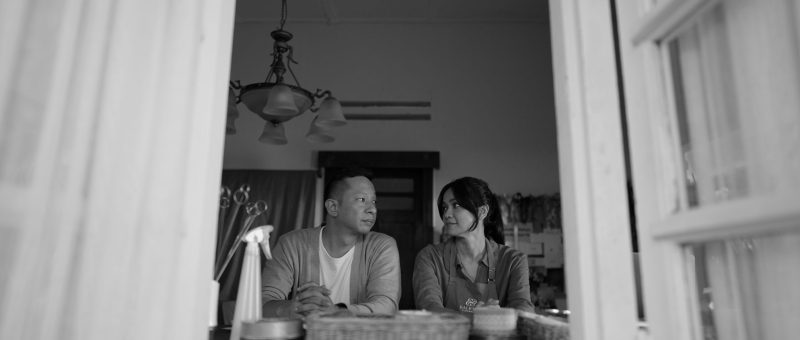
The screenwriter hero of meta rom-com Falling in Love Like in Movies (Jatuh Cinta Seperti Di Film-Film) seems intent to prove that romance can be just as fiery for the middle aged as it can for the average teenager even as his own love interest cautions him that grown-up love is much more considered. It’s mostly about long conversations and frank discussions about what you both do and don’t want rather the clumsiness and artificial barriers that disrupt the relationship between young lovers. She, and the film’s producer, wonder if an audience would find that very interesting, but there is of course something incredibly captivating about witty dialogue and a slow burn romance although that might not actually be quite how it turns out for the lovelorn screenwriter.

Or at least, Bagus (Ringgo Agus Rahman) wants to fall in love like the movies rather than like in real life. His chief idea is that he’s going to write a screenplay for a romance and then his old high school friend Hana (Nirina Zubir) will go to see it and understand it’s all about her so they’ll end up together the end. What it makes it all even more awkward, is that Hana is very recently widowed and Bagus’ clumsy pursuit of her is incredibly insensitive especially as he frames it as a kind of salvation, that he’s helping her to “move on” and escape the inertia of her grief.

Through his experiences, he may come to learn that he’s become stuck in his own head applying movie logic to real life and expecting people to behave the way they would in one of his screenplays in which he of course controls everything. Yet in another way the film is also a departure for him as it’s his first based on his own original idea as opposed to being an adaptation of a existing material. He later says that he’s writing it to try and understand something, yet it’s not until others read it that he begins to see himself reflected and dislike what he sees. His lead actor asks if he made himself this annoying on purpose, while the actress complains the movie Bagus is “cruel” and insensitive in his dismissal of Hana’s feelings little knowing that movie Bargus and writer Bargus are basically the same. 

What he’s left with is the gap between the fantasy of cinema and a more rational reality, the illusion of a romance like in the movies and the less glamorous process of getting to know someone gradually and putting love together piece by piece. On a baseline level, he’s emotionally immature and a little self-interested, unable to see that writing a screenplay as a roundabout confession of love is not romantic but cowardly and what’s really romantic is being present and honest about his feelings even if it’s all quite awkward and maybe a little bit inappropriate considering his love interest only lost her husband a few months previously and in any case has every right to reject future romance if that’s her choice.

Hana is in many way’s the film’s moral arbiter, though often framed within Bargus’ gaze as a tragic victim of her grief only to adopt the moral high ground in the final “reality” of the film. Laurens often wrongfoots us in his meta commentary, shifting from 2.35 black and white to letterboxed colour and structuring the film around title cards liked to screenwriting theory which ultimately pay off in Bargus’ ironic epiphany that actually he was the protagonist all along only he’d forgotten to give himself a character arc in his ongoing fixation on Hana’s supposed need to change. His screenplay is literally all about him, but he’s too close to it to see that his behaviour is not really acceptable off the page and if it’s romantic successes he’s after, he’ll have to recalibrate his idea of what romance is while pitching it to his producer boss and convincing him that it’s worth taking the risk on the smart sophistication of a witty rom-com about the gap between the magic of the movies and the difficult realities of love and loss in which going to the supermarket might be the most romantic thing you’ll ever do.


Falling in Love Like in Movies screens April 24th as part of this year’s San Diego Asian Film Festival Spring Showcase.

Original trailer (no subtitles)

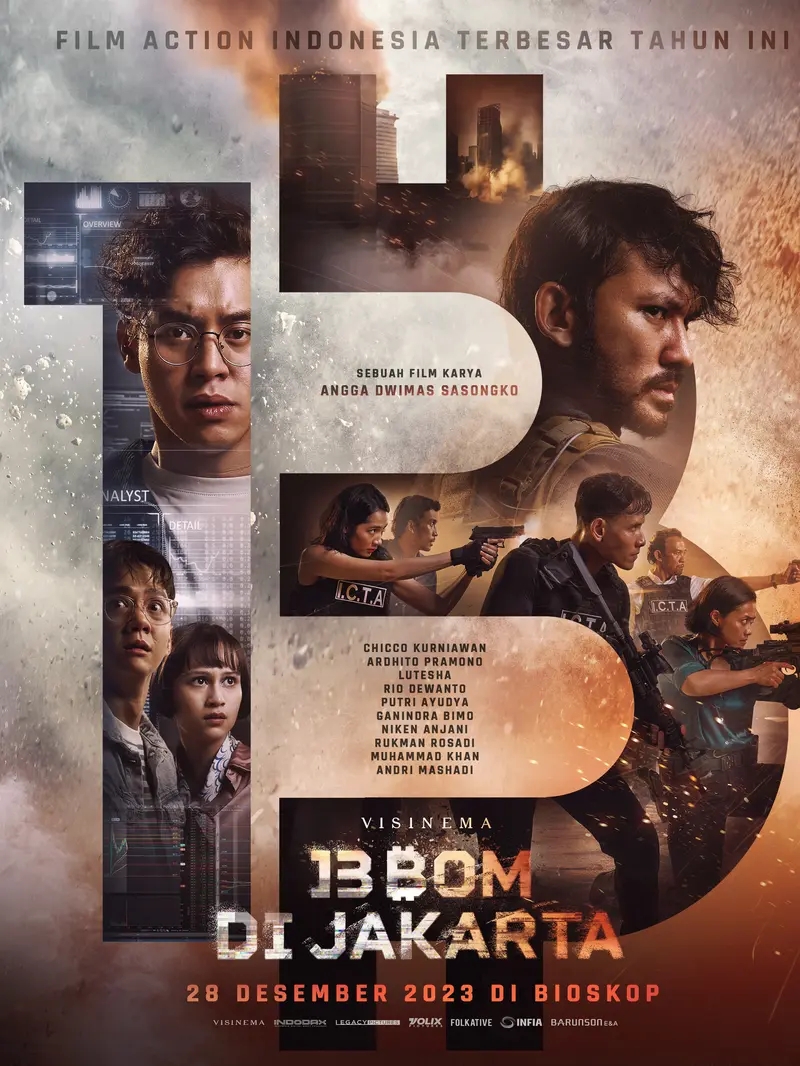
13 Bombs (13 Bom di Jakarta, Angga Dwimas Sasongko, 2023)

There’s an interesting juxtaposition in opening scenes of Angga Dwimas Sasongko’s action thriller 13 Bombs (13 Bom di Jakarta). A security guard in a cash van listens with exasperation to a radio broadcast voicing the nation’s economic decline before remarking that his mortgage keeps going up but his pay stays the same. Meanwhile, across town, two youngsters celebrate after receiving a huge payout from the cryptocurrency exchange app startup they’ve been running, drinking and partying oblivious to the poverty that surrounds them. Yet it’s the two youngsters that have unwittingly spurred a desperate man towards revolution, giving him the false idea of a utopia uncorrupted by money.

The interesting thing about the terrorists is that after attacking the cash van they blow the doors open and then leave without the money, allowing the people to pick it up instead. The explosion was apparently one of several more to come as the gang have placed 13 bombs around the city which they are holding to ransom, demanding to be paid in bitcoin solely through the boys’ exchange. The level of the crypto kids’ complicity is hard to discern, but it soon becomes clear they weren’t up for loss of life even if there’s a large payout at the end of it though they don’t really trust the police either. 

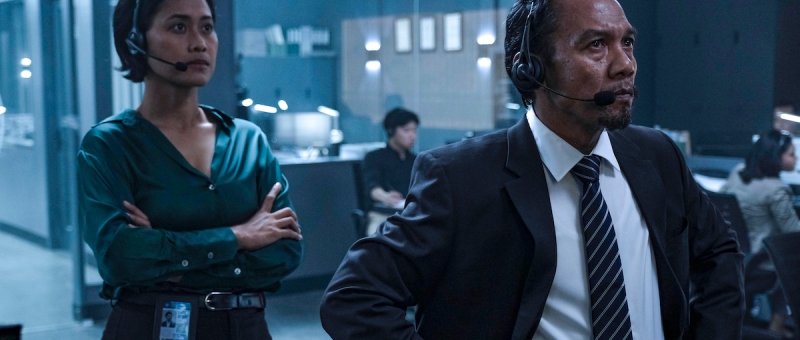
The police, or more precisely, the Counter Terrorism team, don’t come out of this very well. They’re originally quite reluctant to view the incidents as “terrorism” because that will make everything very “complicated” and also worsen the already precarious financial situation. They also seem to be fairly blindsided, arguing amongst themselves about the proper course of action with the sensible and reliable Karin (Putri Ayudya) often shouted down for relying too much on gut instinct as in her decision to trust bitcoin boys William (Ardhito Pramono) and Oscar (Chicco Kurniawan) only for them to immediately run away hoping to find the gang’s hideout for themselves after being disturbed by a strange message from the gang branding them as their allies.

Bitcoin seems like a strange thing for the revolutionaries to pin their hopes on, though it later seems they hope to do away “money” in its entirety, though it’s true enough that all of them have suffered because of the evils of contemporary capitalism. Many were victims of the same pyramid scheme, one man losing everything after his mother invested the family fortune and died soon after, and another scarred by the suicide of his wife and later death of his child. You can’t say that they don’t have a point when the press the authorities on their failure to protect the poor along with their uncomfortable cosiness with wealth and power. As their leader says, people starve to death every day because of poverty or die earlier than they would have because of a lack of access to healthcare yet the authorities don’t seem to be doing much at all to combat those sorts of “crimes”.

Nevertheless, there’s tension in the group with some opposing leader Arok’s (Rio Dewanto) increasingly cavalier attitude to human life and worrying tendency to suddenly change their well designed plans. The battle is essentially on two fronts, the police stalking them with traditional firepower and Arok fighting back with technology, harnessing the power of the internet to disguise his location while hacking police systems and public broadcasting alike to propagate his message of resistance against corrupt capitalism and oppressive poverty. Counter Terrorism does not appear to be very well equipped to deal with his new threat, but can seemingly call on vast reserves of armed troops even if in the end it’s mostly down to maverick officer Karin to raid the villains’ base largely on her own trying to rescue the boys after realising they are trying to help her after all.

These action sequences are dynamic and extremely well choreographed even if some of the narrative progressions lean towards the predictable and the final gambit somewhat far fetched in its implications. Then again, it’s also surprising that Counter Terrorism doesn’t seem to have much security and should perhaps have considered paying a little more for bulletproof glass in the control room. The subversive irony of the seeing the words “New Hope” and “deactivated” on the final screens cannot be overstated even as a kind of order is eventually restored in an otherwise unjust city.


13 Bombs screened as part of this year’s Osaka Asian Film Festival.

Original trailer (English subtitles)
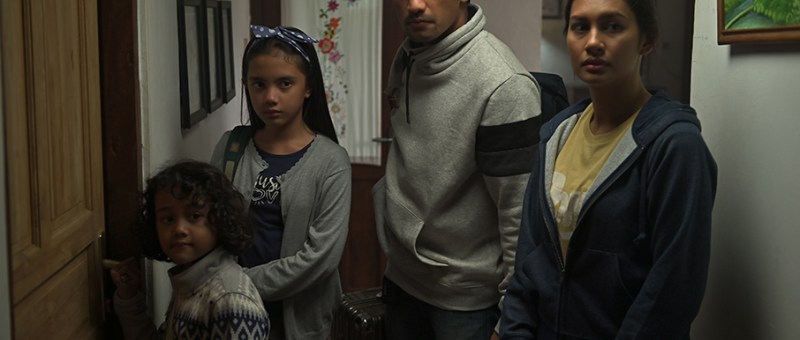
Like & Share (Gina S. Noer, 2022)

Two young women seeking escape from a repressive social culture find themselves betrayed by the hypocrisies and lawlessness of the online society in an infinitely empathetic drama from Two Blue Stripes’ Gina S. Noer, Like & Share. Like many young people, they see internet stardom as a path towards freedom and independence, but are too naive to understand its underlying darkness even when presented with evidence of its misuse in the alarming popularity of an illicit sex tape and its violent sequel. 

Lisa (Aurora Ribero) in particular is strangely fascinated by the video despite realising that in the sequel that followed the woman is crying and appears to have suffered sexualised violence at the hands of the man whose face is never seen. “No face, no case” the girls are fond of saying, naively thinking that they can safeguard themselves from potential harm simply by shooting from the neck down. When nude photos are leaked of another girl at school, she’s able to claim that it’s not her and encourage people to block the sender but still it seems like no one really believes her. Lisa and Sarah (Arawinda Kirana) seem to feel a sense of invincibility, that they’re in control of their online personas and the channel they’ve set up featuring beautifully produced ASMR videos accompanied by a deliberately “sexy” voice over. Though Lisa is unsure, Sarah brushes off some of the more unpleasant comments they get as simply par for the course while reminding her that they’ll get more likes and shares appealing to the sort of people that make them. 

But the girls are largely ill-equipped to understand the world they’re entering, not least because of the repressive atmosphere in which they’ve been raised. Lisa soon becomes fixated on the sex tape, addicted to pornography and masturbation which temporarily replaces ASMR as her preferred method of stress relief. The problem is compounded by the fact that her mother has married an older, quite conservative religious man and converted to Islam. She is very keen that Lisa not upset her new stepfather, who has agreed to pay for her education, mainly because it’s her own “second chance” to atone for the failure of her first marriage and prove herself a good wife and mother. “What sort of good woman are you that has no empathy for other women?” Lisa later asks her but gets little reply. Her mother advises her to read the Quran if she wants to calm herself down, though Lisa counters that she can’t read Arabic anyway.

As Lisa explains, she was merely curious and it’s not as if she could have asked her mother for knowledge or advice. Her addiction partly stems from the illicit nature of the activity, had she had a healthier outlet and better access to sex education she would probably not have reacted to the video in such an extreme way. Sarah later experiences something similar after meeting a boy, Devan (Jerome Kurnia), at a local recreation ground and agreeing to date him without necessarily seeing any red flags in the fact he’s 27 with a full-time job and wants to date a 17-year-old high school girl. Every time she expresses reluctance to take their relationship to the next level he calls her “childish”, later assaulting her and filming it to use as blackmail and potential online clout. “It’s always the girl’s life that’s ruined, never the man’s” he later sneers, certain that he’ll get away with it because it’s his word against hers and as her lawyer cautions her after Devan leaks the video going to the police is risky because there’s a chance she could end up being charged with obscenity under the country’s laws surrounding pornography. 

Misogyny is already deeply ingrained in the system. Ironically enough, the girls’ teacher tells them the school can’t afford to fund group activities so they need to go swimming on their own and film it for him so he can mark them. The videos are shown to the entire class with even the teacher appearing to salivate over the footage of teenage girls in wet swimsuits while their male classmates make inappropriate comments that go largely unchallenged. Sarah is unwilling to accept that what happened to her was rape, firstly brushing it off as a potential fetish for rough sex or suggesting that Devan did not hear her say no despite having previously told her about a too spicy dish at a restaurant that if she doesn’t like or want something she should say so. Lisa meanwhile is forced to accept her partial complicity after crossing paths with the woman from the sex tape and becoming somewhat fixated on her before reflecting on the harm that she had done in having watched it in the first place. It’s she that later helps Lisa come to an understanding of the best way to support her friend through her ordeal which may be simply to be there and to listen. 

Despite the judging eyes of the world around them, the two women have their friendship and the refreshingly progressive support of Sarah’s older brother who stands by his sister rather than blaming her. Even so, it’s other women who often fail her from the conservative judgement of Lisa’s mother to a lawyer at a court hearing who says that Sarah made her choice when she decided to enter the hotel room with Devan and has no right to call her “regret” “rape”. Yet Lisa and Sarah are finally able to repair their friendship and stand up in solidarity against a patriarchal social culture, refusing to let Devan off the hook while reassuming control of their channel by reading out some of the inappropriate messages they’ve been sent by men online. “Thank you for being brave” a message on the website of a woman’s legal organisation reads, once more reinforcing the power of female solidarity against systematised misogyny. 


Like & Share screens March 14/18 as part of this year’s Osaka Asian Film Festival.

Original trailer (English subtitles)
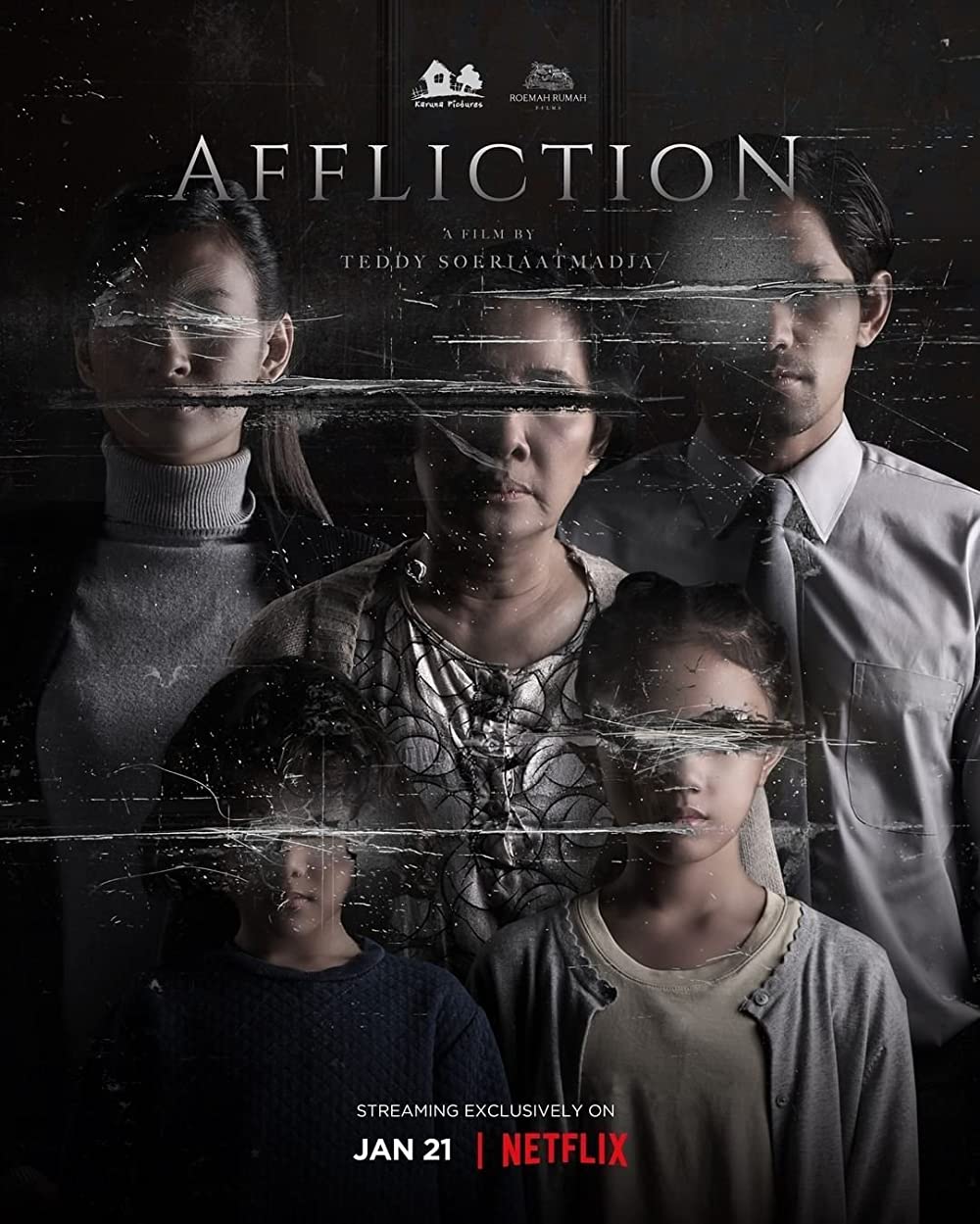
Legend of Gatotkaca (Satria Dewa: Gatotkaca, Hanung Bramantyo, 2022)

Indonesia has quietly been building its very own superhero cinematic universes over the past few years with Joko Anwar’s Gundala almost certainly the best known internationally. The Legend of Gatotkaca (Satria Dewa: Gatotkaca) is similarly intended to be the first in a new franchise, Satria Dewa, which draws influence from Indian mythology and is set in a dualistic world centuries after a battle between good and evil was ended by the gods to stop evil winning. 

Essentially an origin story for the titular hero Gatotkaca, the film follows down on his luck photographer Yuda (Rizky Nazar) who had to drop out of university because he is poor and also responsible for taking care of his mother who is suffering with memory loss and mental illness following an incident 15 years previously in which the pair were attacked by a mysterious figure in black who could shoot lasers from his fingers. Yuda assumes his memories from back then must have been a dream and that his mother’s mental distress has more to do with his father, Pande (Cecep Arif Rahman), abandoning the family. Nevertheless, he is soon dragged into intrigue when his best friend Erlangga (Jerome Kurnia) is murdered in the same way his mother was attacked during his university graduation ceremony. Determined to figure out the truth, Yuda and professor’s daughter Agni (Yasmin Napper) find their way to a secret organisation Erlangga had been a part of which aims to save the world from destructive forces carrying the Kaurava gene. 

In the film’s dualistic world view, there was once a civil war between those carrying the Pandava gene which encourages good, humanistic qualities and the Kaurava whose impulses are dark and destructive. But then as Professor Arya (Edward Akbar) who studies such things points out, Pandava can also be destructive while Kaurava are capable of using their “destructive” qualities for good. Even so, most of the bad things that have happened in the world particularly in the last 15 years since a mysterious meteorite fell to earth, can be attributed to the rising Kaurava influence from political corruption to illegal logging and even the COVID-19 pandemic. Someone is bumping off Pandava in an effort to release evil Kaurava general Aswatama (Fedi Nuril) from his imprisonment within a giant gemstone which explains the “mysterious” deaths of talented people like Olympic sportmsmen and a doctor who discovered a COVID-19 vaccine. 

Of course, Yuda turns out to be a chosen one and must pursue his destiny as the defender of the Pandava before assuming his rightful role as Gatotkaca. Only by confronting his immediate family history can he make himself whole and gain the strength to defeat Aswatama, saving the world from chaos. Meanwhile he has to contend with a romantic subplot in which Agni is aggressively courted by the odious and entitled Nathan (Axel Matthew Thomas) and his father who have at least strong Kaurava energy aside from being embodiments of oppressive elitism looking down on Yuda simply because he is poor. The underground cell Yuda eventually comes into contact with are also in their way a resistance to this same elitism, though unusually well equipped in their incredibly expensive-looking lair filled with the latest technology and looked after by a kindly Indian granny who is herself a Karauna but uses her powers, and at one point a good old-fashioned shot gun, for good.

It’s this duality to which the film eventually returns as Yuda declares they must be the light in the darkness and the darkness in the light as they secretly wage a war against an ancient evil apparently already well established in the contemporary social order. This being the first instalment in what seems to be cued up as a burgeoning franchise, there is undoubtedly a lot to take in from the talk of heirlooms and amulets to holy water and ancient weapons though the film does boast some excellent production design even if the centralisation of genetics as an indicator of good and evil is equally uncomfortable. Nevertheless, it’s a promising start to the cycle with a series of exciting action set pieces showcasing the art of silat along with some impressive CGI in the Star Wars-esque laser warfare even if it’s clear Gatotkaca’s toughest battles are yet to come.


Legend of Gatotkaca streams in the US via Hi-YAH! from 17th February and will be released on Digital, blu-ray, and DVD on March 21 courtesy of Well Go USA.

International trailer (English subtitles)
Affliction (Teddy Soeriaatmadja, 2021)

The lives of an affluent urban family are disrupted when they receive a call from a mysterious visitor informing them that she is no longer prepared to look after the husband’s ageing mother in Teddy Soeriaatmadja’s eerie familial horror, Affliction. What posits itself as a meditation on the effects of childhood trauma turns out to be its reverse, but nevertheless contemplates contemporary filiality as the wife, blaming herself for her mother’s unexpected death by suicide, tries to repair her familial bonds by resolving to look after her estranged mother-in-law. 

The fact that Nina (Raihaanun Soeriaatmadja) has never met her mother-in-law Bunda (Tutie Kirana) despite long years of marriage to her husband Hasan (Ibnu Jamil) doesn’t seem to have felt odd to her, at least until she’s visited by a young woman who informs her that Bunda has advanced dementia and needs more comprehensive care than she can give her. Her words that it’s time a son should look after his mother further add to Nina’s sense of guilt especially as she is still grieving for her own mother whose ghost she saw slightly before she died leading her to believe that there might have been something more she could have done to save her. But when she mentions the strange encounter to her husband, he becomes angry and belligerent explaining that he has a “different” relationship with his mother than Nina had with hers and has no desire to return home or ever see her again though open to the idea of hiring a new live-in nurse. 

Nevertheless, the family to eventually make it out to the incredibly remote mountain area where Hasan grew up. To Nina there seems to be something not quite right with the house, a sense of discomfort and unease that is something more than her mother-in-law’s strange manner though bar a strange episode on their first meeting she appears to be in much better health than the young woman who visited implied. Even so, Bunda is indeed very territorial over her home, citing herself as its guardian and point blank refusing to leave it despite the worrying presence of a mysterious woman who turns up at night to stare in at them through the eerie fog gathering outside. 

Much of the drama centres on Nina and Bunda who are neither divided mother and daughter-in-law nor bonded in solidarity as women trapped by a patriarchal system that turns them into the carer and the cared for whether they like it or not. Despite having agreed to take responsibility for his mother, Hasan is incredibly ambivalent the entire time, constantly banging on about needing to get back to the city for an important interview and accusing Nina of trying to sabotage his career in pointing out that it’s going to take a little more time to sort things out with Bunda than just packing all her stuff and bundling her into the car. A child psychologist, Hasan ironically had little time for his own children and family prioritising his career prospects ahead of his role as a father, but on arrival at the cabin his manner turns towards the controlling and narcissistic, eventually taking off and leaving Nina and the kids behind while he finishes his big presentation back in the city. 

Hasan hints at a traumatic past in an opening speech insisting that a lack of parental love is responsible when a child becomes violent towards their peers but it turns out that there’s a reason beyond toxic parenting in Bunda’s raucous laughter on hearing her son’s occupation that implies both an intense love for him along with shame and resentment that he seems only to have rejected her. The house is indeed haunted as Nina had feared, though by something much darker and more human than she could ever have expected. Where a happier resolution might have been expected in Hasan suddenly realising that his narcissistic obsession with career success is ruining his family life, we find only the toxicity of familial bonds as Nina is asked to make the same choice that Bunda had but chooses a different way to save her family, easing another mother’s pain rather than allow the unresolved past to erode her relationship with her children as she tries to salvage what she can from the ruins of a seemingly perfect life.


Affliction screened as part of this year’s Five Flavours Film Festival.

Trailer (no subtitles)

Autobiography (Makbul Mubarak, 2022)

“It’s 2017. Forget about hierarchies. We are friends” a former general disingenuously reassures from the other side of the bars in Makbul Mubarak’s pointed exploration of the mediation of power in contemporary Indonesia, Autobiography. A young man with few prospects for the future is drawn towards authoritarianism by a charismatic father figure but is soon confronted by the realities of his quasi-fascist posturing only to discover that there may be no real escape from the violent world of toxic masculinity that he has unwittingly entered. 

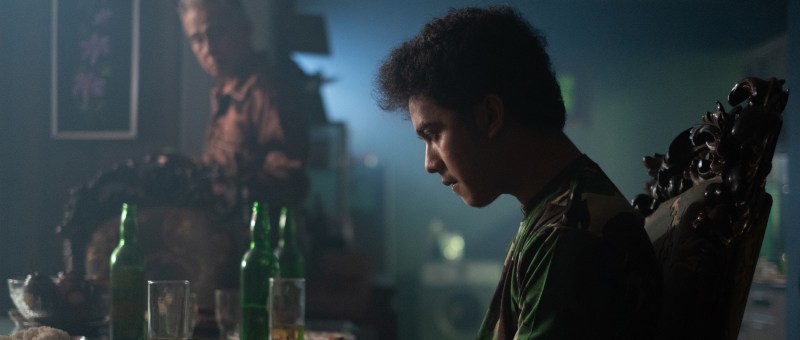
19-year-old Kib (Kevin Ardilova) lives alone in a vast mansion, the country home of a former general, Parna (Arswendy Bening Swara), who soon arrives unexpectedly with the intention of beginning his political career. Kib is quite obviously awestruck by the figure of the General, gazing at him like some long lost saviour drunk on the sense of power he exudes from every pore. On silently collecting the old man’s laundry, he stops to stare at a large portrait of him in uniform on the bedroom wall as if somehow thinking he too could one day be a fine general wielding such infinite power for himself. 

Such a thought might in a sense be transgressive. Kib is a servant in this house and as his father Amir, currently in prison for standing up to developers who were trying to steal his land, points out, their ancestors have always served the ancestors of Purna. Purna may tell him that no one cares about class anymore, but it obviously isn’t true or these two men wouldn’t be on opposite sides of the bars, or perhaps they would but their positions might be reversed. “Be careful who you trust” Amir tries to warn his son, but it’s already too late. Kib is ambitious. There’s something that bristles in him when Purna asks after his brother and wonders how well he can be doing as a migrant worker in Singapore with thinly concealed disdain in his voice. When Purna gives Kib an army shirt and says he looks just like him when he was young, a resemblance soon noticed by others, it flatters him to think he may be the General’s son rather than that of a mere servant turned convict. 

The more time he spends with Purna the more like him becomes, walking around with a swagger, exuding power and intimidation as if he really were a soldier not just a boy in a green shirt. Tragically he doesn’t even quite understand how this power mechanism works or what it’s implications are. When he accidentally bumps into a mosque while attempting a tight three point turn, local men surround the car demanding compensation. Purna gets out and puts on a show of authority. On realising what they’re dealing with the men instantly back down. Purna has a sheepish Kib apologise, and the men apologise to him, before explaining that sorry is a powerful word that can turn rage into blessing. What Kib fails to realise is that Purna is talking not about humility but intimidation, a mistake he learns to his cost in bringing a boy only a little younger than himself to Purna to “apologise” for disrespecting him expecting the General to pull the same trick again but shocked when events take a much darker turn than he’d anticipated. 

The boy he brought in, Argus, was the son of a woman whose coffee plantation would have to go if Purna got his hydroelectric plant approved. Purna sells the plant as a way of dealing with the problems caused by inefficient infrastructure but hides the corruption at its centre, forcing families off their land for the developers’ benefit through violence and intimidation. Argus is just as angry Kib, only he’s not falling for Purna’s sales patter. Kib watches the General shift the blame onto the developers, whom he backs and back him, while claiming to be a man of the people and giving a glib speech at the funeral of a boy he killed in nothing other than pettiness. 

Yet Purna is ageing and his grip on power may not be as firm as it once was while his seeming sentimentality in his attachment to Kib as a surrogate son is also a weakness. Kib may be deciding that being a migrant worker’s not as bad as becoming the heir of a man like Purna, but once you’re in it’s hard to get out as the ambivalent closing scene implies catching him dumbstruck once again only now like a general overseeing his troops and in one way or another a prisoner of his father’s house, a servant inheriting the mansion whether he wants it or not. In many ways a tale of seduction, Autobiography paints a fairly bleak picture of the contemporary society ruled by violent masculinity and fragile authority figures who quite literally visit their sins on their sons. 


Autobiography screens 15th/16th October as part of this year’s BFI London Film Festival.

Original trailer (English subtitles)