
Soul Reaper (Malam Pencabut Nyawa, AKA Respati, Sidharta Tata, 2024)

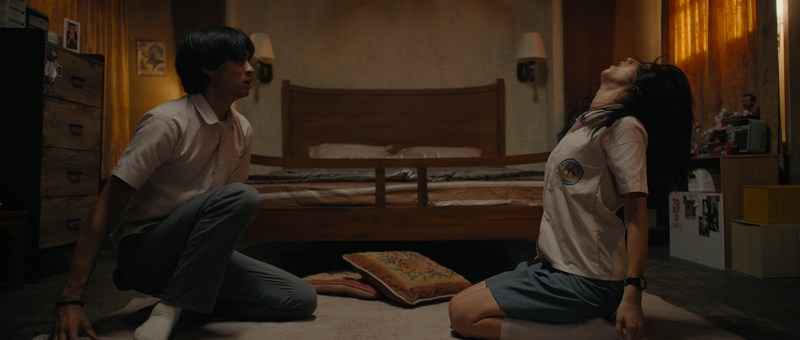
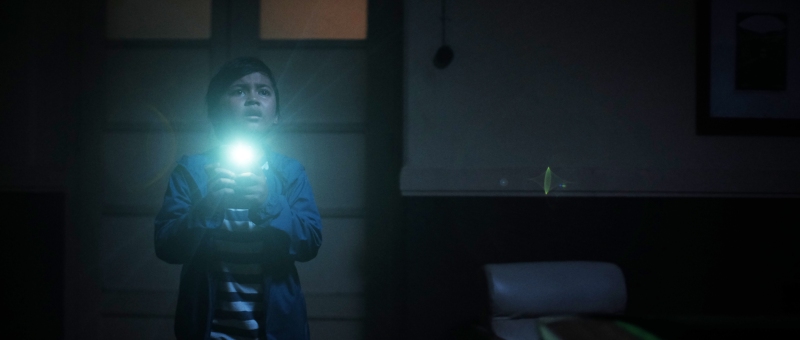
A young man finds himself haunted by the spectres of his trauma, but also, as it turns out, by a not so ancient evil in Sidharta Tata’s eerie horror film Soul Reaper (Malam Pencabut Nyawa AKA Respati). Plagued alternately by nightmares and insomnia, he discovers an ability to enter a hidden world of dreams while simultaneously noticing a connection with an ongoing spate of mysterious deaths along with that to a traditional village and its ancient beliefs. 

Suffering with a kind of survivor’s guilt, Respati (Devano Danendra) blames himself for the death of his parents and is haunted by visions of their vengeful ghosts. A new girl at his school, Wulan (Keisya Levronka), is ostracised by the others who hear that the reason she left her last school was that she has a tendency to get possessed by ghosts which upset the other students. Like Respati, she is also haunted by bad dreams and desperately misses an absent parent, in her case her mother. The fact that so many seem to be connected by violent robbery hints at a generalised anxiety within the wider community that is only exacerbated by the series of mysterious deaths hitting the news. 

What Respati eventually realises is that he’s witnessing real deaths in his dreams though taking place in the dream realm. Others who’ve suffered loss and trauma such as a man who recently lost his young daughter are led away towards a bright light where they think they see their loved ones but are actually consumed by a dark force. In the midst of his own grief, Respati is forced to face a secondary trauma that relates to his grandfather’s hometown where the villagers believe in the power of an ancient god. A powerful witch, Sikma, convinced herself that she was the inheritor of the witch’s power and in her zeal to learn more about the dream world began sacrificing her patients. The other villagers shunned her until she too ended up dying a mysterious death after which her body disappeared.

Sikma maybe feeding on grief, but she also had a child who viewed her as a mother and is now bereft in the same way as Respati and Wulan are having lost their parents. Respati refuses to talk about his trauma with the doctor his grandfather takes him to about his insomnia but discovers a new way to face it through the dream realm as if by overcoming his nightmares he could learn to sleep peacefully again while simultaneously ending the series of mysterious deaths by taking care of Sikma. In the dream realm, he is able to manifest his own desires by virtue of his lineage that makes him a descendent of the mountain goddess and imbued with her power which means that he is able to make peace with the past by envisioning a different outcome for a painful event which, though it cannot change what really happened, allows him to let go of his guilt while realising what’s really important. As a young man his grandfather brought from the country advises him, you never really know how much time you have left, so it’s important to cherish your loved ones while there’s still time.

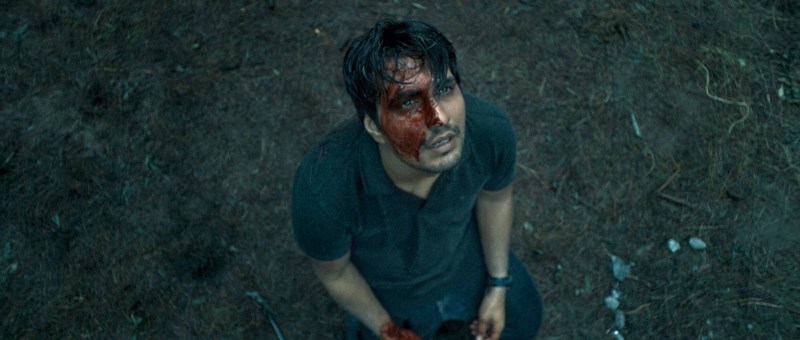
The irony is that everyone wants the same thing and has been hurt in the same way, though they have different ways of dealing with their grief in their inability to let go of the past. The dream world appears as an eerie forest in which it is the grieving who are called towards the light as if like Respati they blame themselves for not going with those they loved, though it also echoes an ancient horror in the natural world. The grieving are pinned in the mortal realm by tree roots which seem to encircle and constrain them until they break free, called towards the light by a comforting lullaby which offers them one way to escape their grief, whereas Respati can only leave by violent means. Ejecting oneself from the dream realm involves physical pain rather than simply the emotional, but allows him to literally “wake up” from the inertia of his grief to find a new purpose in life and overcome his trauma. Bringing traditional folk horror with its witches and ancient gods together with a more overtly modern tale of psychological haunting lends an additional edge to Respati’s quest to solve the mysterious deaths but even if his own trauma has been exorcised it seems this particular strand of evil may not quite be done with him yet.


Soul Reaper is released Digitally in the US 17th June courtesy of Well Go USA

Trailer (English subtitles)

Affliction (Teddy Soeriaatmadja, 2021)

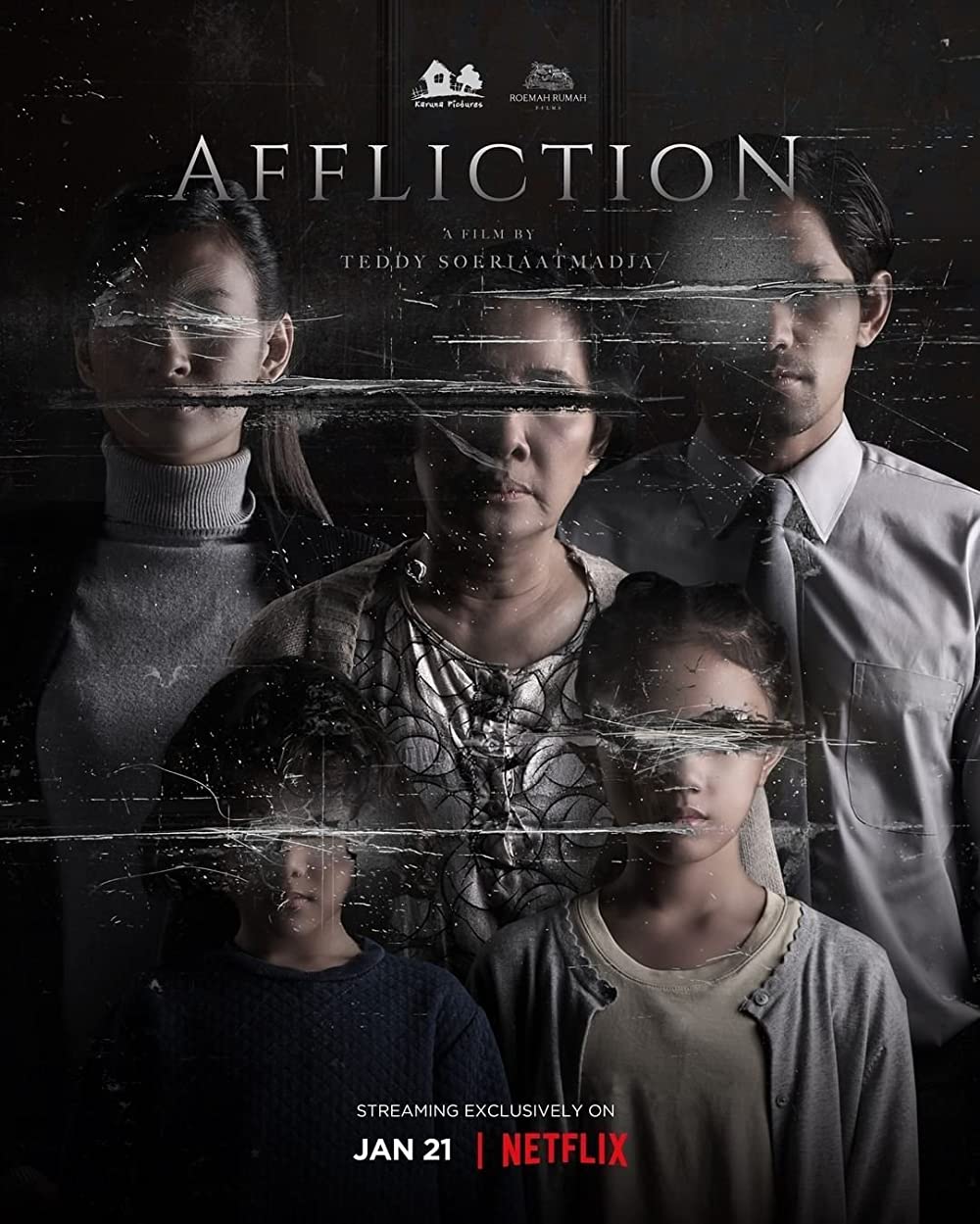
The lives of an affluent urban family are disrupted when they receive a call from a mysterious visitor informing them that she is no longer prepared to look after the husband’s ageing mother in Teddy Soeriaatmadja’s eerie familial horror, Affliction. What posits itself as a meditation on the effects of childhood trauma turns out to be its reverse, but nevertheless contemplates contemporary filiality as the wife, blaming herself for her mother’s unexpected death by suicide, tries to repair her familial bonds by resolving to look after her estranged mother-in-law. 

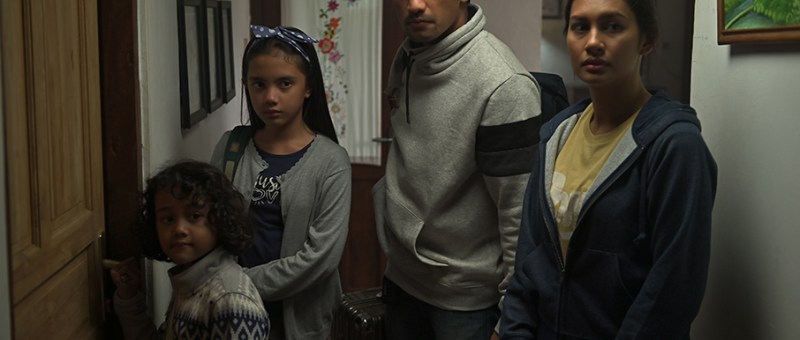
The fact that Nina (Raihaanun Soeriaatmadja) has never met her mother-in-law Bunda (Tutie Kirana) despite long years of marriage to her husband Hasan (Ibnu Jamil) doesn’t seem to have felt odd to her, at least until she’s visited by a young woman who informs her that Bunda has advanced dementia and needs more comprehensive care than she can give her. Her words that it’s time a son should look after his mother further add to Nina’s sense of guilt especially as she is still grieving for her own mother whose ghost she saw slightly before she died leading her to believe that there might have been something more she could have done to save her. But when she mentions the strange encounter to her husband, he becomes angry and belligerent explaining that he has a “different” relationship with his mother than Nina had with hers and has no desire to return home or ever see her again though open to the idea of hiring a new live-in nurse. 

Nevertheless, the family to eventually make it out to the incredibly remote mountain area where Hasan grew up. To Nina there seems to be something not quite right with the house, a sense of discomfort and unease that is something more than her mother-in-law’s strange manner though bar a strange episode on their first meeting she appears to be in much better health than the young woman who visited implied. Even so, Bunda is indeed very territorial over her home, citing herself as its guardian and point blank refusing to leave it despite the worrying presence of a mysterious woman who turns up at night to stare in at them through the eerie fog gathering outside. 

Much of the drama centres on Nina and Bunda who are neither divided mother and daughter-in-law nor bonded in solidarity as women trapped by a patriarchal system that turns them into the carer and the cared for whether they like it or not. Despite having agreed to take responsibility for his mother, Hasan is incredibly ambivalent the entire time, constantly banging on about needing to get back to the city for an important interview and accusing Nina of trying to sabotage his career in pointing out that it’s going to take a little more time to sort things out with Bunda than just packing all her stuff and bundling her into the car. A child psychologist, Hasan ironically had little time for his own children and family prioritising his career prospects ahead of his role as a father, but on arrival at the cabin his manner turns towards the controlling and narcissistic, eventually taking off and leaving Nina and the kids behind while he finishes his big presentation back in the city. 

Hasan hints at a traumatic past in an opening speech insisting that a lack of parental love is responsible when a child becomes violent towards their peers but it turns out that there’s a reason beyond toxic parenting in Bunda’s raucous laughter on hearing her son’s occupation that implies both an intense love for him along with shame and resentment that he seems only to have rejected her. The house is indeed haunted as Nina had feared, though by something much darker and more human than she could ever have expected. Where a happier resolution might have been expected in Hasan suddenly realising that his narcissistic obsession with career success is ruining his family life, we find only the toxicity of familial bonds as Nina is asked to make the same choice that Bunda had but chooses a different way to save her family, easing another mother’s pain rather than allow the unresolved past to erode her relationship with her children as she tries to salvage what she can from the ruins of a seemingly perfect life.


Affliction screened as part of this year’s Five Flavours Film Festival.

Trailer (no subtitles)

Death Knot (Tali mati, Cornelio Sunny, 2021)

Orphaned siblings attempt to process the dark legacy of the superstitious past in the debut feature directed by and starring actor Cornelio Sunny, Death Knot (Tali mati). Travelling from the comforting sophistication of the modern city back into the eerie darkness of the ancient forest, the pair find themselves confronted first by a filial dilemma and then a spiritual conundrum in their potential destiny which their possibly shamaness mother may have gone to great lengths in order to prevent. 

As the film opens, Hari (Cornelio Sunny) texts with his younger sister Eka (Widika Sidmore) who somewhat sexistly tells him not to stay single too long because he needs someone to cook for him. Falling asleep watching a program in which a woman remarks on the presence of jinns as manifestations of energy that can’t be seen by the naked eye, Hari has a strange dream in which he witnesses his mother hanging herself in the forest in the middle of the night uttering only the words “stay away”. As it turns out, Eka had exactly the same dream and a phone call from their estranged uncle who rather bluntly tells them that their mother is dead and as the villagers won’t have anything to do with her they need to come for the funeral, confirms their worst fears. Ignoring the warning in the dream, Hari, Eka, and her husband Adi (Morgan Oey) drive back to their home village but quickly find themselves out of their depth trying to figure out what’s going on. 

The first clue is the reaction from a previously friendly old woman who suddenly gets up and walks off after exclaiming that the body should have been burned not buried when Hari stops to ask for directions. The second clue is that only three people including their uncle turn up for the funeral. The third clue is that everyone keeps telling them to leave town right away while the fourth is that they can’t because of a mysterious storm that has apparently closed all the roads. Meanwhile, hostile uncle Rahmen immediately asks for what seems like a lot of money to cover his expenses for the clandestine funeral and then wastes no time staking his claim to their mother’s house. Though neither of the siblings want it, the request offends Hari who feels guilty that he never really got to know his mother and is wary of abandoning the last traces of her in the house she once owned. 

Described by Adi as creepy, the house does however have a dark legacy, the pair already aware that their father left and took them to the city because of their mother’s strange behaviour that saw her ostracised by the other villagers who suspected her of being a shamaness responsible for a strange phenomenon known as “The Harvest” in which spates of suicides take place across a specific month. Hari tries to rationalise it away, pointing out that it’s hard to live in rural poverty and putting a label on unexplained deaths is easier than admitting that people are taking their own lives because of economic precarity and an ongoing sense of despair, but with the increasing strangeness all around him he has to admit a degree of spiritual unease in this fiercely traditional world he is ill-equipped to understand. 

Rather than hauntings and jump scares, Cornelio Sunny concentrates on conjuring an atmosphere of supernatural dread in which anyone may suddenly become a grinning demon, performing strange ritualistic dance and odd movements only to suddenly disappear from view. An educated man from the city, Hari quickly becomes fed up with talk of ancestral deities, pacts with the devil, and black magic, only latterly accepting his role within an arcane system and understanding that his mother’s distance may have been her way of protecting him which has in the end backfired. Yet having destroyed the symbol of this spiritual oppression, Hari discovers that there may be no escape from its darkening legacy or the atavistic superstitions of the villagers, an ominous cloud always hanging over him even as he faces the final choice of whether to continue fighting or accept the inevitable. Proceeding with moody fatalism, the ironically titled Death Knot ensnares its confused hero in a tightening noose of spiritual dread and filial guilt before cutting him adrift a victim of his own sophistication. 


Death Knot streamed as part of this year’s hybrid edition Udine Far East Film Festival.

Original trailer (English subtitles)

The Queen of Black Magic (Ratu Ilmu Hitam, Kimo Stamboel, 2019)

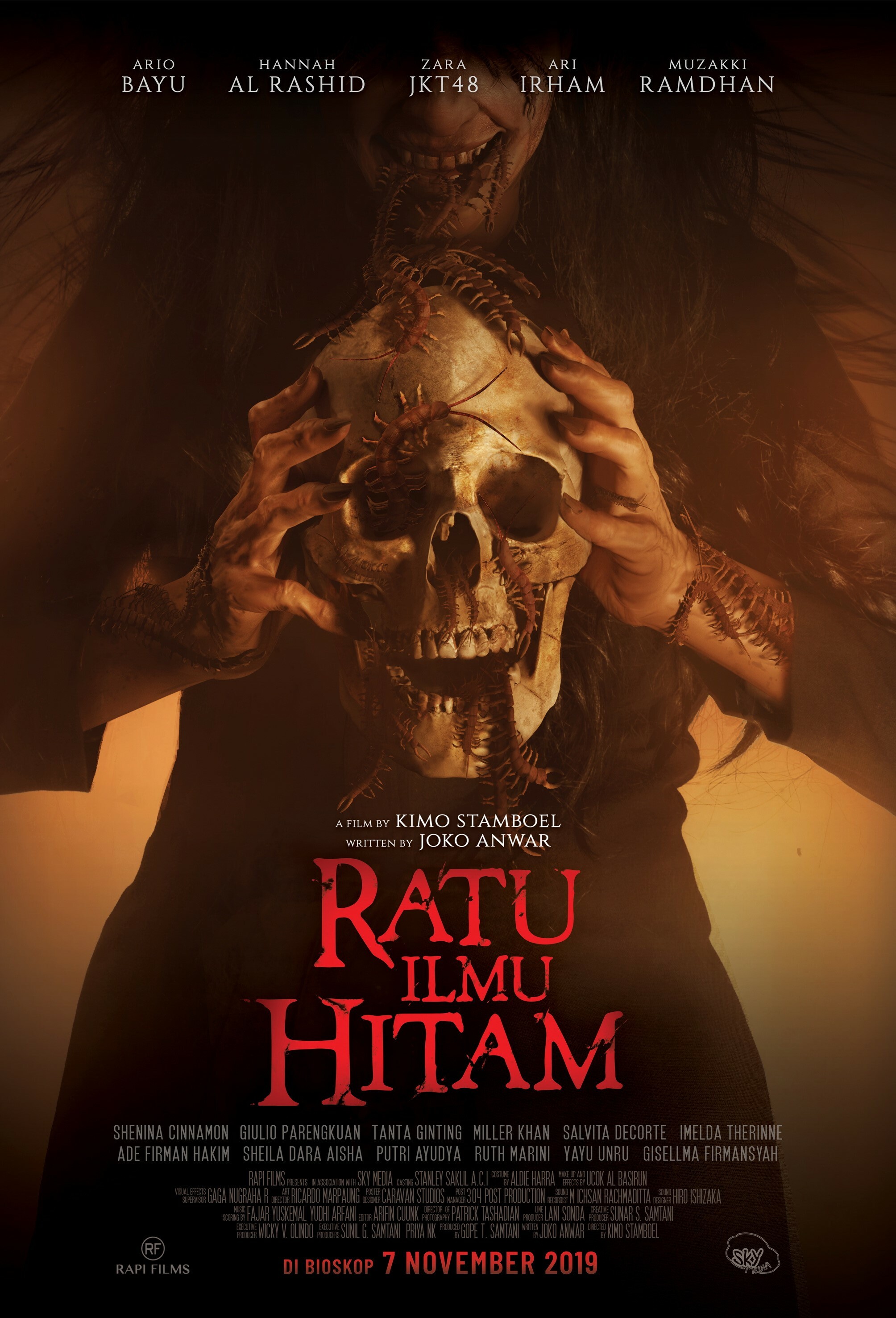
“I’m not here just to punish you, I’m here to create hell” the vengeful tormentor at the centre of Kimo Stamboel’s contemporary remake of the 1981 classic The Queen of Black Magic (Ratu Ilmu Hitam) cooly intones. Reminding her victims that not to know is also a sin, the shadowy villainess has come she says to create hell on Earth because she is uncertain that mortal transgressions will be suitably punished after death and means to ensure those who have sinned suffer accordingly. Quite literally trapped in the space of their trauma, the heroes attempt to find a way out of their guilt and shame but are perhaps confronted as much by themselves as by a witch hellbent on justice as they try to find escape from the traumatic past. 

Hanif (Ario Bayu) and his wife Nadya (Hannah Al Rashid) have foregone their planned holiday to Bali to visit the man who ran the orphanage where Hanif spent much of his childhood who is now apparently close to death. This comes as a surprise to their three children who hadn’t realised their father was adopted or really ever thought about kids who don’t have parents, and though they are perhaps annoyed to have missed out on their holiday they are also a little excited to be going somewhere so unusual. Unfortunately however, the family’s cheerful mood is broken when they hit what they assume is a deer on their way to the orphanage casting an air of foreboding over their journey. 

Though it appears Hanif has been “open” with his wife about his past, the same is not necessarily true for his “brothers” Anton (Tanta Ginting) and Jefri (Miller Khan) who have also brought their partners to meet Mr. Bandi (Yayu A.W. Unru), Jefri’s wife Lina (Salvita Decorte) complaining that she knew nothing about any of this until they were already in the car on their way over. Far from a happy reunion, however, the brief sojourn at the orphanage begins to highlight the strain on each of the familial relationships, Lina apparently experiencing a kind of body dysmorphia and preoccupied with her weight while Anton’s wife Eva (Imelda Therinne) is constantly applying moisturiser to guard against a mysterious rash she was convinced was down to flesh eating bacteria but others feel is simply “dry skin”. These will however be the least of their worries as the men vaguely hint on voicing their anxiety that Mr. Bandi’s biological children may sell the estate to developers unsure of “what they’ll uncover”.

This perhaps implies that the now grown up men know more than they’re willing to admit about the dark secrets the orphanage hides, something which Hanif has in any case not shared with his wife who has only a rosy picture of his childhood with Mr. Bandi who eyes her with nervous suspicion even on his death bed. Nevertheless, the men have each been drawn back to the source of their trauma and now find themselves unable to escape without a reckoning, recalling a similar occasion that they tried to run only to find themselves mysteriously brought back as if by some supernatural force. There are indeed dark, other worldly forces in play but also a healthy dose of patriarchal violence, entrenched misogyny, abuse of power, and as the villainess had hinted a wilful tendency not to see especially when it comes protecting the most vulnerable members of society, children without parents who are easily manipulated in the knowledge that, as Hanif originally puts it, they would otherwise die abandoned. 

Justifying a particularly ironic part of her revenge plan, the witch reveals that the orphans may in fact be better off dead than raised by a man like Bandi, something which Hanif himself echoes if not quite with the same intent. Creating her hell, she forces her prey to harm themselves and each other with a variety of weapons ranging from kitchen knives, scythes, and comparatively more modern projectile weapons to insects literally choking the guilty from the inside. The orphanage itself is a place out of time, frozen as it was during Hanif’s childhood, one of the two orphans to have remained behind as mystified by Hanif’s inquisitive son Haqi’s (Muzakki Ramdhan) references to such things as “the internet”, “wi-fi” and “streaming” as he is by the “scary” VHS tape she shows him featuring actual footage of his father and a mysterious figure of legend. Yet even in realising they have allowed themselves to serve poor masters, deceived by a man they trusted, there is a sense the men at least, absent from the final frames, may never be able to free themselves from their guilt, forever haunted by the spectre of those they have unwittingly harmed. An eerie, gory, dread-propelled voyage through human cruelty to supernatural retribution, Queen of Black Magic positions the evil that men do ahead of that performed by vengeful witches looking for spiritual justice as its misused heroes attempt to find accommodation at least with the traumatic past.  


The Queen of Black Magic is available to stream via Shudder in the US, Canada, UK, Ireland, Australia, and New Zealand from 28th January.

Trailer (English subtitles)

May the Devil Take You (Sebelum Iblis Menjemput, Timo Tjahjanto, 2018)

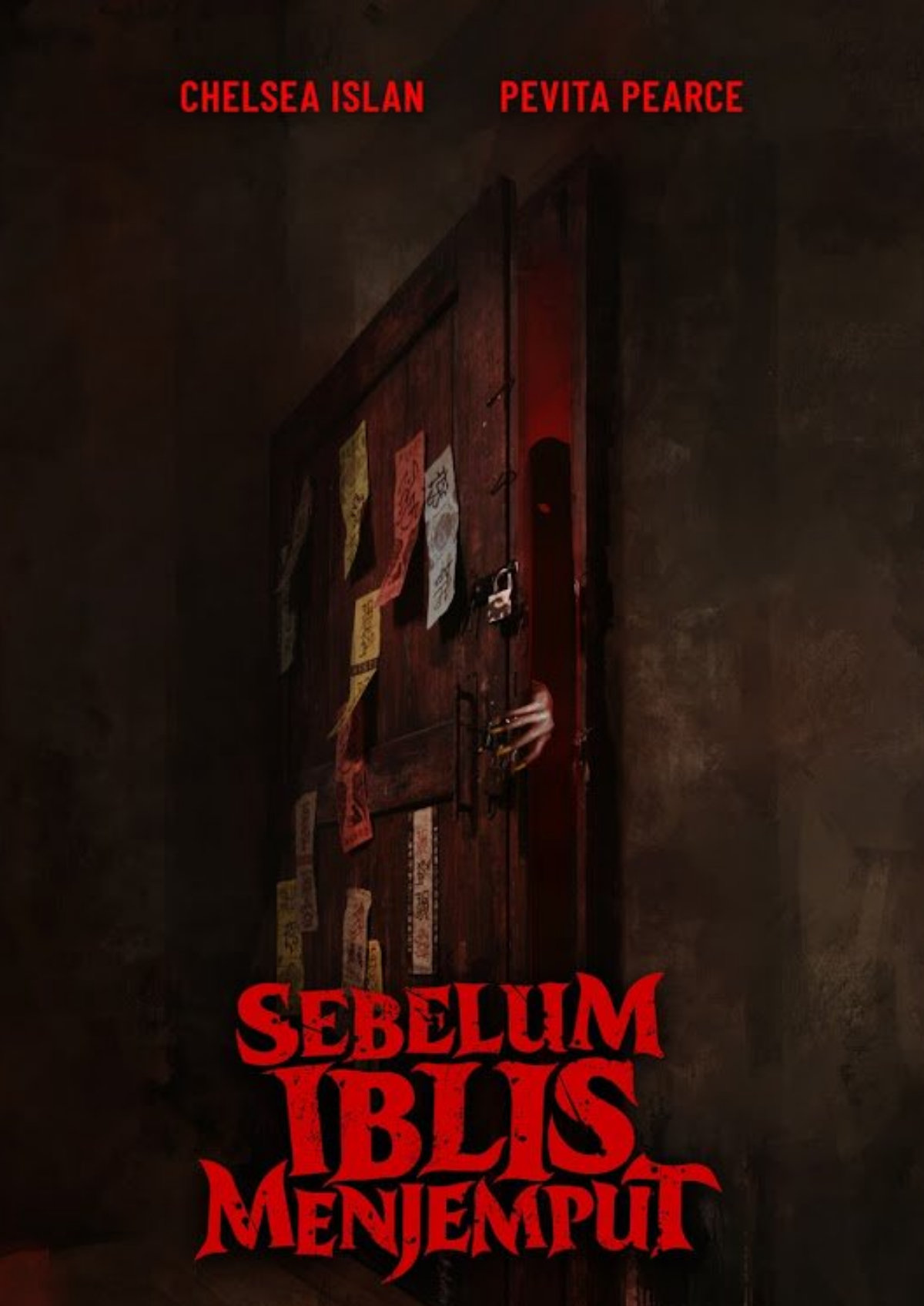
may the devil take you posterTop travel tip – if you encounter a door which is plastered with Buddhist sutras, it’s generally a very bad idea to open it. In this case, just not opening the door is a valid and very sensible option. Sadly, it’s one the protagonists of Timo Tjahjanto’s May the Devil Take You (Sebelum Iblis Menjemput) decided not to take. Following Joko Anwar’s Satan’s Slaves, May the Devil Take You also has a few hard questions to ask about the nature of “family” and how strong those bonds really are when the supernatural presses on already exposed nerves.

The film opens with formerly successful property entrepreneur Lesmana (Ray Sahetapy) entering some kind of agreement with a demonic shamaness whom he later kills and hides in the basement of his remote country villa. An undisclosed amount of time later, Lesmana is struck down with a mystery illness which forces his fractured family back together. Alfie (Chelsea Islan), Lesman’s estranged daughter from his first marriage, is called back to the bedside along with her step-siblings Ruben (Samo Rafael) and Maya (Pevita Pearce), famous actress step-mother Laksmi (Karina Suwandhi), and half-sister Nara (Hadijah Shahab). Forced politeness eventually gives way to resentment, especially when Laksmi begins to ponder selling the villa which is technically in Alfie’s name even if still thought of as a “family” property. When everybody unexpectedly turns up at the same time in search of things of value, they have very little idea of what it is that awaits them there.

Once again the threat is a bad inheritance in which the children are forced to pay for the crimes of their “father” who has let greed get the better of him and allied with dark supernatural forces in order to make himself fabulously wealthy. Lesmana’s sensational success is less due to his business acumen than to selling his soul, well not actually “his” but those belonging to his loved ones, to the Devil. His business empire apparently in tatters, Lesmana has both a problem and a solution, but the Devil is always wanting more and there may lines Lesmana won’t cross even when he is apparently willing to sacrifice the lives his wife and children just to be accounted a “success”.

There may be horrors lurking in the cellar of every home, but in this one they are quite literal and very, very angry. Family, as a concept, is the weapon the Devil chooses to wield, poking into all the dark and uncomfortable corners that basic civility usually leads most to avoid. Alfie, angry and carrying the trauma of her mother’s death, is resentful of her father’s new family and most particularly of her imperious step-mother whom even Maya later describes as “not a good person”. Yet for all that she can’t quite bring herself to “hate” her step-siblings, especially the kindly Ruben who seems to have embraced his role as a natural peacemaker. Their bonds will be tested by insidious evil which presses hard on their insecurities of their awkward family set-up in which no-one quite feels accepted, or wanted, or loved by almost anyone else.

Then again, family itself becomes a source of salvation when the buried past is unearthed and then reburied having been properly dealt with. Rather than a comment of Lesmana’s rejection of traditional religion and misuse of black magic, May the Devil Take You is an exploration in the desperation of a greedy man whose desire for infinite instant gratification is matched only by the Devil himself. Lesmana was willing to sell his family for gold only to change his mind and lose them anyway. The supernatural horror is all too real, but rooted in the sins of the father and in the broken familial connections which continue trap each of the protagonists in the stereotypically creepy remote rural mansion complete with creaking floorboards and leaky ceilings. Tjahjanto’s awkward tone, over-reliant on genre norms to degree of parody but distinctly serious, makes for a strangely uneven experience but there is certainly enough hellish imagery to fuel the nightmares of many a susceptible viewer.


Screened at the 2018 BFI London Film Festival.

Original trailer (no subtitles)

Satan’s Slaves (Pengabdi Setan, Joko Anwar, 2017)

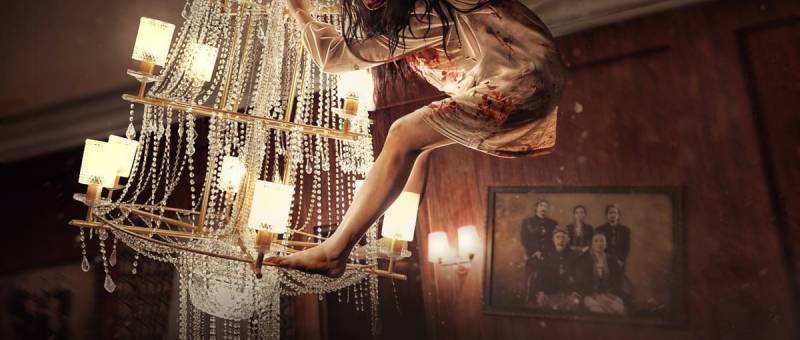
Satan's Slaves posterBad things happen in houses where they don’t pray. So says a kindly Imam in Joko Anwar’s chilling horror remake Satan’s Slaves (Pengabdi Setan). Taking inspiration from a 1982 classic, Anwar updates the tale of supernatural dread and familial breakdown for the new century while maintaining the early ‘80s setting and pushing back still further into the superstitious, gothic past. The family, threatened by financial, social, and spiritual pressures is stretched to breaking point by supernatural unease. Advised that the cure for their ills is religion, they begin to conform but, unlike the original, godliness cannot save them from a greater evil and if the family chooses to save itself, it will be through acts of selfless love rather than brutal adherence to a set of outdated social codes.

As the film begins, eldest daughter Rini (Tara Basro) – a 22-year-old former college student, has given up her studies and become the defacto maternal figure to her small family while her mother, Mawarni (Ayu Laksmi ), remains bedridden after a long illness. Mawarni was once a famous singer and the family’s breadwinner, but having been out of the spotlight so long her music has begun to go out of fashion. Royalties have dried up and there is little prospect of any further income. Lacking the funds to pay for ongoing hospital care, the family have brought Mawarni home to care for her themselves though the father (Bront Palarae), worrying about feeding his children, secretly urges his wife to be on her way to a better place, as a disturbed Rini hears him say from outside the door. Soon enough, Mawarni is gone, but not forgotten. Strange noises fill the old mansion as Mawarni’s bell continues to tinkle in the night, her records play without warning, and radios reset themselves to play her song. When dad leaves the siblings – 16-year-old Tony (Endy Arfian), 10-year-old Bondi (Nasar Annus), and 7-year-old Ian (M. Adhiyat) who is deaf and mute, in Rini’s care to head into the city in search of money, the kids are left to deal with the legacy of his moral cowardice all alone.

Adopting the trappings of the classic European gothic chiller, Satan’s Slaves sets itself in an old fashioned villa located in a forest some distance outside of the city. If the house were not creepy enough on its own, it is also conveniently located next to the local graveyard where Mawarni has now been laid to rest (in theory, at least). Moving in “next door”, a kindly Imam and his spiritually open minded son Hendra (Dimas Aditya) promise to provide pastoral care to the bereaved children but find themselves engulfed by the house’s increasing power to isolate and terrorise.

Tipped off by Hendra, Rini discovers a dark and disturbing secret regarding her mother’s former life and her own origins. Devolving into a vast conspiracy involving satanic fertility cults and their apparently omnipresent spy networks, Satan’s Slaves revels in its oppressive atmosphere of supernatural dread and human impotence as the children find themselves surrounded on all sides by faceless, umbrella wielding zombies lying in wait to tear their home apart.

Rini is told, by an old friend (Egy Fedly) of their grandmother’s (Elly D. Luthan), that the fertility cult requires child sacrifice but that the cult cannot take the child unless the family gives it up. She is being asked, quite literally, to put her life (and those of her siblings) on the line in order to save “the family”, yet “the family” or more particularly hers already has its problematic elements. Rini’s grandmother, recently deceased in mysterious circumstances, was not originally accepting of her daughter-in-law because of a class difference and also because of her occupation as an “entertainer” which was not considered respectable at the time. She only warmed to Mawarni once the children were born which was already some years into the marriage as Mawarni, finding it difficult to conceive, became desperate for a child and for her mother-in-law’s acceptance.

Rather than the lack of spiritual rigour which the Imam blames for the increasing demonic presence, it is these social taboos which seem to have opened the door to evil. The kids try the religious solution, but unsurprisingly it doesn’t help them. Literally haunted by their late mother who feels herself “abandoned” by her family, her loving husband hastening her death now that she is no longer economically useful and has become an unbearable burden, the only way to defeat this curse is to reverse it through unconditional familial love and solidarity even given what Rini now knows about her history. Oppressive in atmosphere yet filled with an eerie beauty as shadowy figures slowly colonise the misty Indonesian forest, Satan’s Slaves challenges the idea of “the family” in the face of strict patriarchal social codes and finds that in order to survive it must salvage itself through acts of defiance and self identification.


Screened at the 20th Udine Far East Film Festival.

Original trailer (English subtitles)