Love Never Ends (我爱你!, Han Yan, 2023)

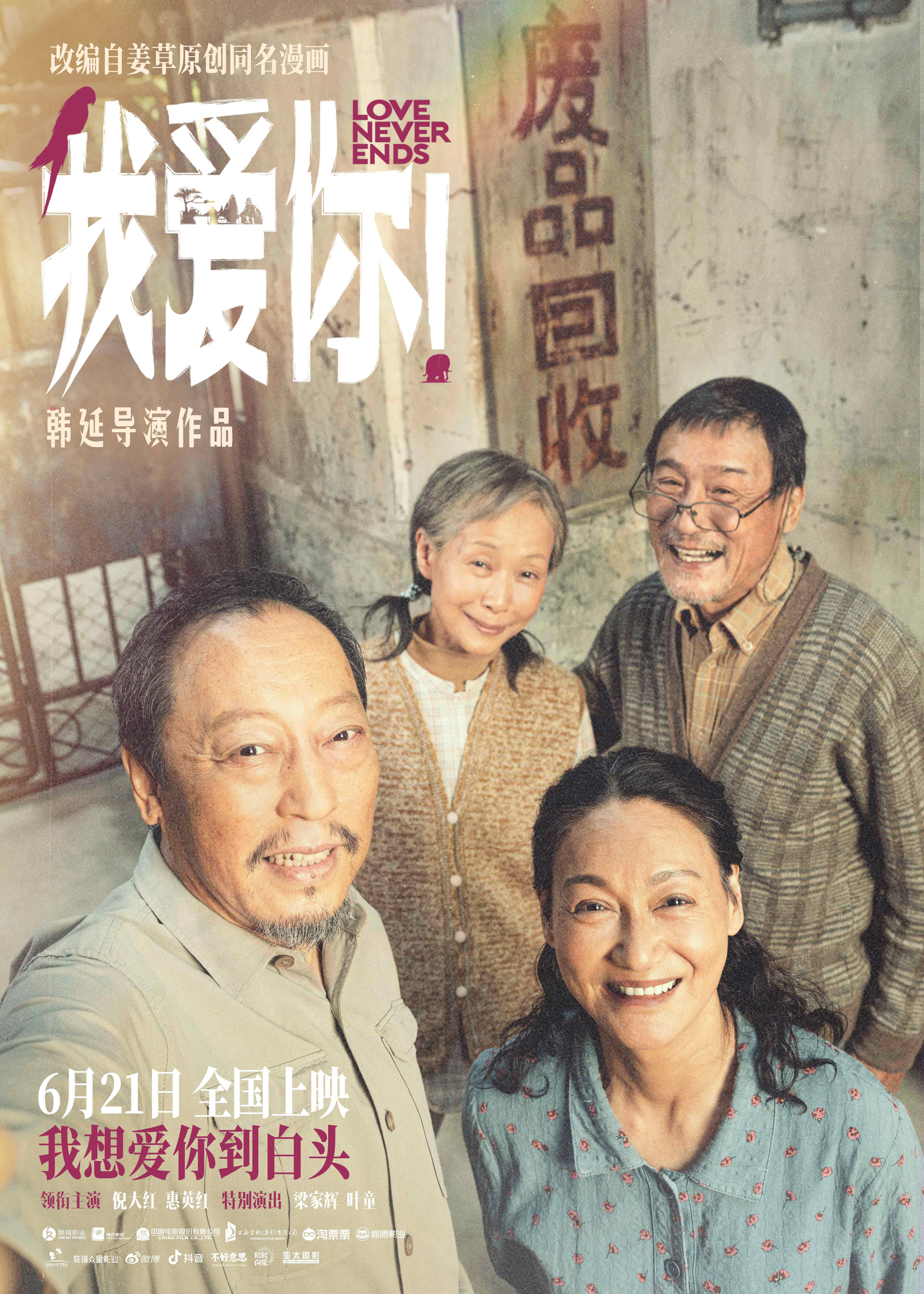
The generational tensions in the contemporary society are gradually exposed when a retired mechanic begins to fall for a feisty widow in Han Yan’s quietly affecting romantic dramedy, Love Never Ends (我爱你!, wǒ ài nǐ). Based on a Korean webtoon by Kang Full the Chinese title “I Love You!” hints at its true intentions along with the potential for incongruity when exploring romantic courtship among the older population even as the film hints at the destructive cycles of repression and lost love in a still conservative culture. 

Something of a rebel, widower Wenjie (Ni Dahong) walks around with a chain whip clipped to his belt that should probably be illegal. He likes to get it out every now and then to whirl around while talking like the hero of a martial arts serial, claiming that his whip exists for truth and justice so he’s going to use it to punish unfilial children and heartless bullies. Quite frankly, it’s ridiculous and on this particular occasion he chooses the wrong side coming to the defence of a park manager who’s trying to move a pair of elderly scrap collectors on because inspectors will soon be arriving and he’s worried their presence will make him look bad. Wenjie mock slaps the woman, Ru (Kara Hui Ying-Hung), stopping his hand just before connecting with her face and then shatters her jade bracelet with the whip. It’s fair to say they don’t get off on the best foot, which is unfortunate as Wenjie soon discovers she is the carer for a former Cantonese opera star, Mrs Qiu (Lu Qiuping), his daughter desperately wants to take on her son, Sai, as a pupil. 

In one sense, the scene makes plain the battle for the use of space in urban environment, Wenjie insisting the park is for “everyone” to exercise, but simultaneously suggesting that Ru and her friend Dingshan (Tony Leung Ka-Fai) have no right to use it. Meanwhile, it becomes clear that Wenjie is also rebelling against a kind of infantilisation at the hands of his well-meaning children who have put up a surveillance camera in his home to make sure he isn’t drinking alcohol while his doctor also breaks medical ethics by immediately calling to tell them that the security system hasn’t worked because whatever he says Wenjie has obviously been continuing to drink. It may be for his own good, but a role reversal has taken place as his children exercise all the power not just over his life but their own chidren’s too. Wenjie’s teenage granddaughter wants to study abroad to reunite with her boyfriend, but her parents don’t approve echoing the sad story of Ru who once came from a moderately wealthy village family and eloped with a painter when her parents pressured her to accept an arranged marriage to the headman’s son only for the painter to die not long afterwards leaving her all alone in an unfamiliar city. 

Mrs Qiu too has her own sad romance in having been prevented from marrying her childhood sweetheart because of parental opposition. Despite her illustrious career, she eventually became a heartbroken recluse while her lover, Chen (Bao Yinglin), was driven out of his mind and has spent his whole life in a psychiatric hospital pushing a wooden mannequin around believing it to be Qiu save for the heartbreaking moments of lucidity in which he realises the truth. Dingshan, meanwhile, is lovingly caring for his wife who has advanced dementia and cannot bear the thought of being parted from her while she continues to dwell on a sense of guilt that her older children felt neglected that they had to spend what little they had trying to cure their youngest daughter’s illness though it eventually resulted in the loss of her hearing because they could not treat it fast enough. 

The children are, however, largely ungrateful. The sons barely visit them and are each a little repulsed by their parents’ humbleness, more or less ignoring them at their 45th anniversary celebration while one of the daughters-in-law sprays disinfectant everywhere as if she thinks this place is dirty and a danger to her children. Wenjie can barely contain himself on witnessing such unfiliality and perhaps comes to reflect that his children’s micromanaging is at least better than the total indifference of Dingshan’s sons and daughters though they suffered so much more to raise them. He blames himself for his wife’s death worried that she didn’t tell him she was in pain until it was too late or worse that she did and he didn’t listen, while uncertain how to pursue a new romance with Ru just as she wonders if Chen and Qiu are really the lucky ones living in an endless fantasy of romantic love. Conversely, she’s afraid of romance because it will inevitably lead to the pain of separation and she isn’t sure it’s worth it in the time she has left. 

Then again, Wenjie has a youthful quality, shifting from the wuxia speak of his mission for justice to embrace the new internet lingo of his grandchildren along with its meme culture before following his granddaughter’s lead in deciding to please himself rather than those around him by saying how he really feels even if it’s a bit awkward or embarrassing. A minor subplot about the inheritance of traditional culture echoes the intergenerational themes as little Sai resolves to learn from the previous generation in order to pass it on to the next, while Ru and Wenjie finally come to an acceptance of living in the moment that even if it eventually leads to heartbreak there’s no point being unhappy now too. 


Original trailer (Simplified Chinese & English subtitles)
Where the Wind Blows (風再起時, Philip Yung, 2022)

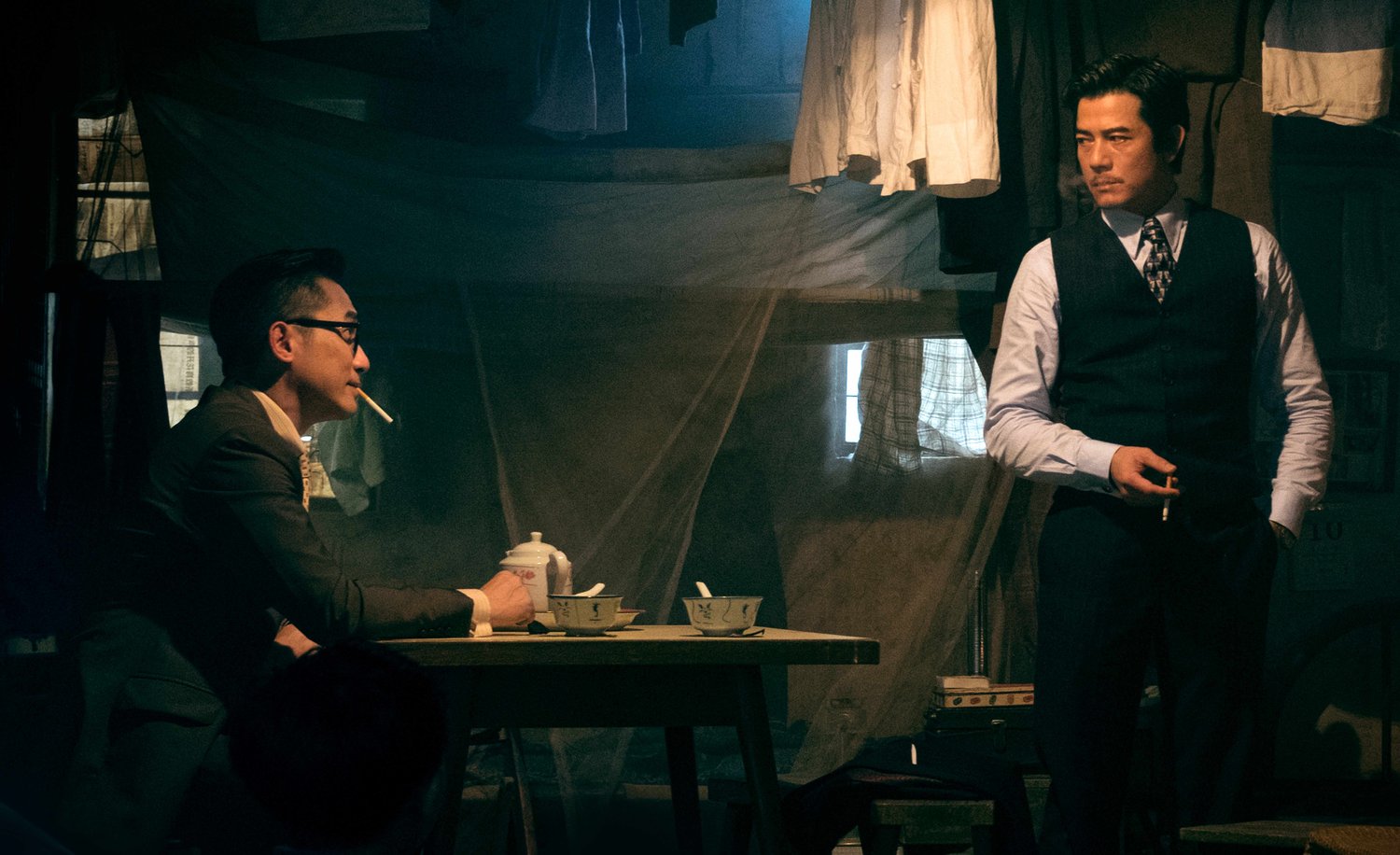
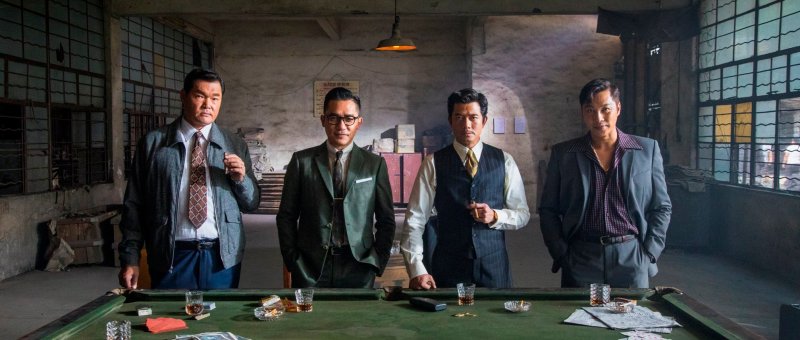
Philip Yung’s first film since the acclaimed Port of Call was scheduled for release all the way back in 2018 only to be repeatedly held up by troubles with the censors later compounded by the coronavirus pandemic. For many reasons, it isn’t surprising that Where the Wind Blows (風再起時) would run into trouble with the current censorship regime dealing as it does with the touchy subject of police corruption albeit it in the colonial era, but the most surprising thing may be that it was passed at all given the subversive undertones of a late speech delivered by the voice of reason, ICAC chief George Lee (Michael Hui Koon-man), whose attack on the corrupt practices of the British authorities has obvious parallels with the modern day. 

The film is however set firmly in the past ranging from the 1920s to the 1980s and inspired by the “Four Great Sergeants” of post-war Hong Kong who amassed great personal wealth while working as police officers. Once again, the police is just the biggest gang, or perhaps the second biggest given that the great racket in town is the colonial rule. It is indeed the British authorities who have enabled this society founded largely on systemised corruption, something which as Lee points out they are unwilling to deal with because it suits them just fine and they have no real interest in the good of Hong Kong. 

In any case, flashy cop Lok (Aaron Kwok Fu-shing) started out as an earnest bobby before the war who was shocked by the institutionalised corruption all around him and refused to participate in it. But his law abiding nature only made him a threat to other officers who needed him to be complicit in their crimes to keep them safe. After several beatings, he ended up accepting the culture of bribery just to fit in. In the present day, he and likeminded detective Nam (Tony Leung Chiu-wai) justify their dubious methods under the rationale that they’re helping to “manage” triad society by effectively licensing the gangs in taking protection money to leave the chosen few alone while enriching themselves in the process. 

Then again, the balance of triad society is disrupted by the arrival of a bigger Mainland outfit which later ends up backing Lok, with the assistance of his Shanghainese wife (Du Juan), to place him in a position which is the most beneficial to themselves. To quell riots by supporters of the KMT in 1956, Nam lies to the protestors that he secretly supports their cause and that if they do not disperse there is a chance the British Army will forcibly disperse them which he also describes as an inappropriate outcome because this is a matter that should be settled among the Chinese people not by foreigners. In the final confrontation with ICAC chief Lee, the British authorities rule out military or police action, though the rioters in that case are in fact policeman angry about increasing anti-corruption legislation. Ironically enough, Lee’s speech advocates for something similar to that which Nam had suggested, essentially saying that the Hong Kong people should decide their own future and that society in general should be more mindful as to the kind of Hong Kong their children and grandchildren will eventually inherit. 

In any case, the four sergeants are soon eclipsed by changing times while Lok and Nam are mired in romantic heartbreak in having fallen for the same woman who brands Nam an over thinker and implies she may have married Lok less out of love than in the knowledge he’d be easy to manipulate. For his part, Lok is damaged by wartime trauma which has left him cynical and nihilistic while filled with regret and longing for a woman he lost during the war in part because he did not have the money to pay for medical treatment which might have saved her. In this sense, it’s money that is the true corrupting force in a capitalist society in which, as Lee suggests, it might eventually become necessary that you’d have to bribe a fireman to save your house or an ambulance driver to get your ailing mother to a hospital. Then again, as Nam says power lies in knowing there are those weaker than yourself. Yung’s sprawling epic apparently rant to over five hours in its original cut before being reduced to three hours forty-five and then finally to the present 144 minutes leaving it a little hard to follow but nevertheless filled with a woozy sense of place and an aching longing for another Hong Kong along with a melancholy romanticism as a lonely Nam dances alone to a ringing telephone bearing unwelcome news. 


Where the Wind Blows screens in Chicago on March 14 as part of the 16th season of Asian Pop-Up Cinema.

Original trailer (Traditional Chinese / English subtitles)

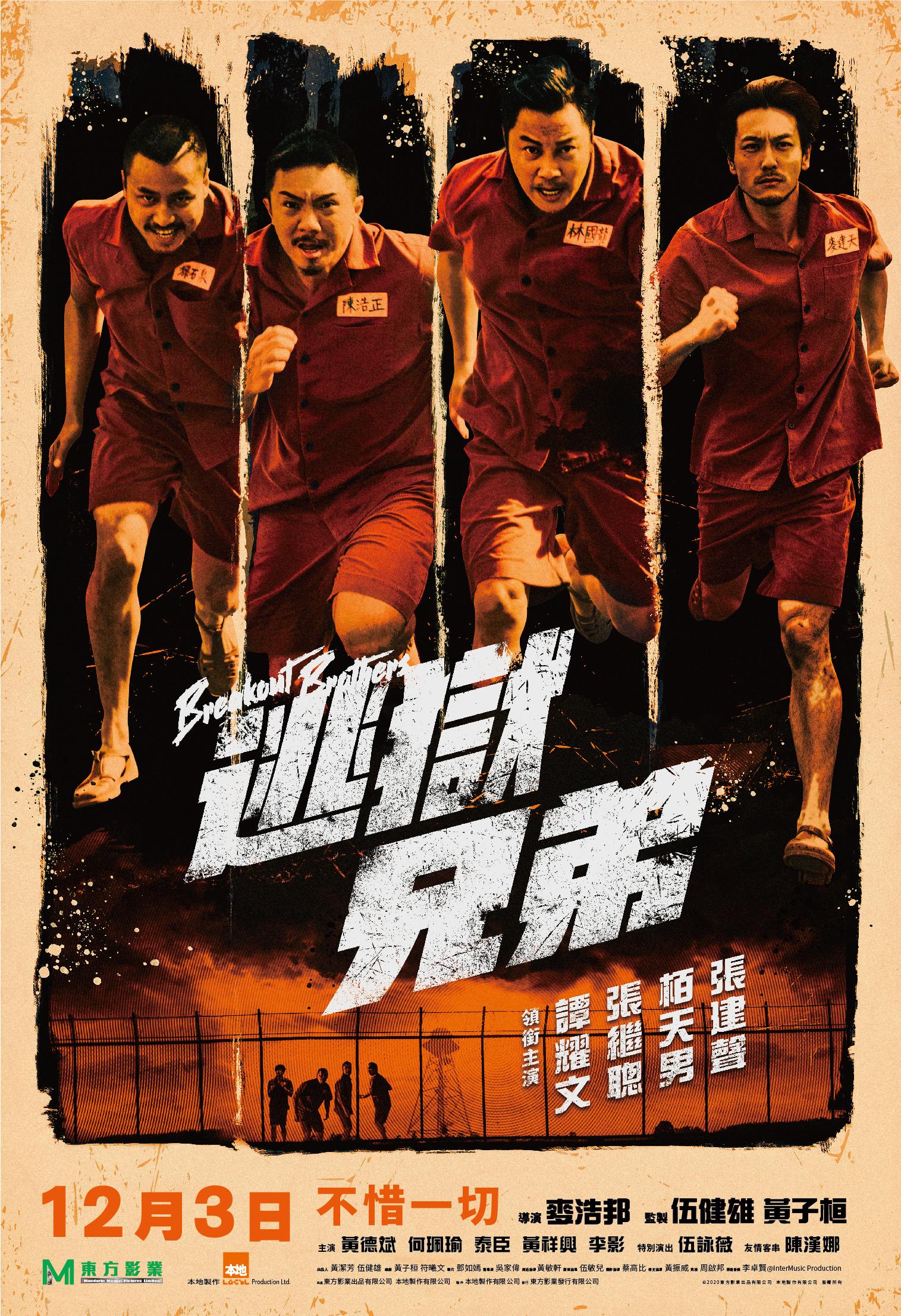
Breakout Brothers (逃獄兄弟, Mak Ho-Pong, 2020)

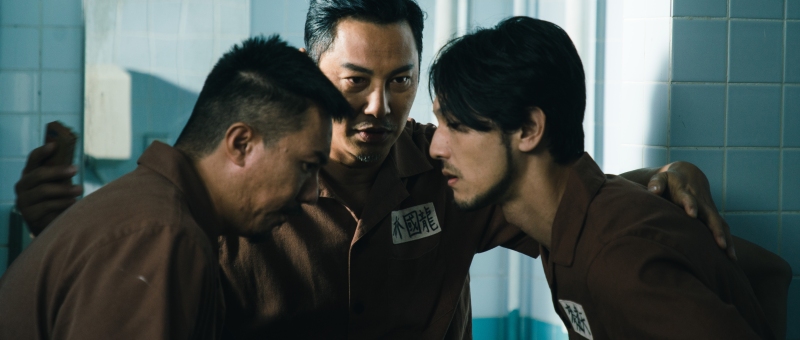
“I’m treating this as a vacation” says affable triad Chan (Louis Cheung Kai-Chung) of his three month prison term, after all it’s rent free and three meals a day who could say no to that in the difficult economic environment of pre-handover Hong Kong? Nevertheless, it’s hardly a vacation if you can’t cut it short and Chan, along with two buddies, will eventually find reasons to want to leave. Mak Ho-pong’s genial prison break comedy Breakout Brothers (逃獄兄弟) takes occasional subversive potshots against an increasingly corrupt social order but eventually discovers that you can’t escape social responsibility while the real reward is indeed the friends you make along the way. 

That is at least the conclusion that newbie prisoner Mak (Adam Pak Tin-Nam) comes to after being pulled into an escape plan formulated by petty gangster Chan who decides to make a break for it after learning that his dear mother has been taken ill and needs a kidney transplant which only he can give her. Thinking of his prison time as a vacation from the pressures of everyday life, Chan has been a low maintenance prisoner and therefore assumed the warden would agree to a temporary release to let him help his mum, but Warden Tang (Kenny Wong Tak-Ban) who has already served a “life sentence” of 30 years in post has recently been promised a promotion and doesn’t want anything to mess it up like a prisoner turning fugitive while on hospital leave. Spotting a workman disappearing from a storeroom and emerging Mario-style from a manhole on the other side of the fence Chan gets an idea and enlists Mak, an architect inside after being framed for taking bribes, to help him figure out the logistics, and Big Roller (Patrick Tam Yiu-Man), leader of the prison’s second biggest gang, for access and protection. 

The guys’ predicaments are perhaps embodiments of the age, Chan wanting out for reasons of filial piety while for Big Roller it’s in a sense the reverse in learning the daughter he was told had died is in fact alive and about to be married. Mak meanwhile wants out because he’s a sitting duck inside, the shady construction CEO who framed him for signing off on lax safety procedures which led to a fire in a prominent building having enlisted the services of rival gangster Scar (Justin Cheung Kin-Seng) to intimidate him into dropping his appeal. Hints of institutional corruption extend to the colonial prison system with guards quite clearly intimidated by prisoners and often turning a blind eye to cellblock violence while it’s also implied that Warden Tang has in a sense facilitated the rise of Scar at the expense of Big Roller as a means of maintaining order. He, like the colonial authorities, will soon be on his way but anticipating his own freedom is keen there be no trouble which is why he refuses Chan’s compassionate leave and extends little sympathy to new boy Mak. 

In any case, the real draw is the bumbling crime caper of the guys planning a heist-style escape which is, in the history of prison escapes, not an especially elaborate one. The prison is not exactly max security, and as they plan to escape during the celebrations for the Mid-August festival none of them are anticipating much difficulty in making it to the outside though as expected not quite everything goes to plan. Mak, meanwhile, eventually takes Big Roller’s advice and decides to stay inside to clear his name properly while the gang ensure his safety rather than try to live as a guilty fugitive and possibly be caught only to end up with more time. The other two have more pressing temporary goals and have not perhaps considered what to do after they’ve completed them, believing only that their lives are untenable if they cannot fulfil their duties as father and son respectively. 

Perhaps for this reason, the Mainland-friendly conclusion has each of the men recommitting themselves to paying their debts to society, Chan even insisting that he’s going to use his time wisely to improve his education in order to be a better husband and son while Big Roller promises to become a carpenter for real. Mak gets a partial vindication in that the shady CEO is finally forced to face justice while also realising that his slightly elitist, individualist stance has been mistaken thanks to the warm and genuine relationships he’s discovered inside. More comedy crime caper than tense prison break thriller, Breakout Brothers remains true to its name in prioritising the unconventional friendship that develops between the trio as they bond in a shared sense of existential rather than literal imprisonment. 


Breakout Brothers screened as part of this year’s New York Asian Film Festival.

Original trailer (English / Traditional Chinese subtitles)