He’s a Woman, She’s a Man (金枝玉葉, Peter Chan, 1994)

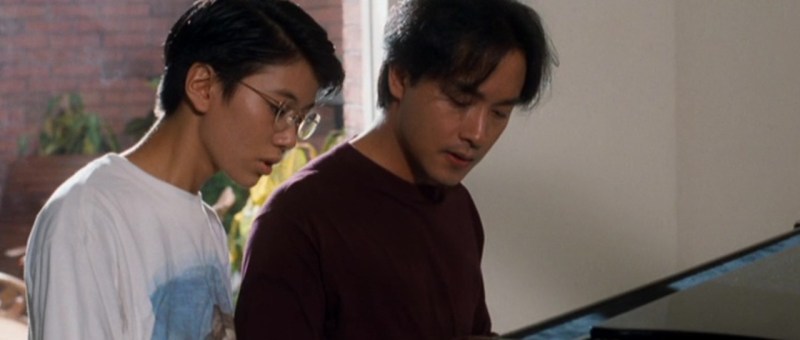
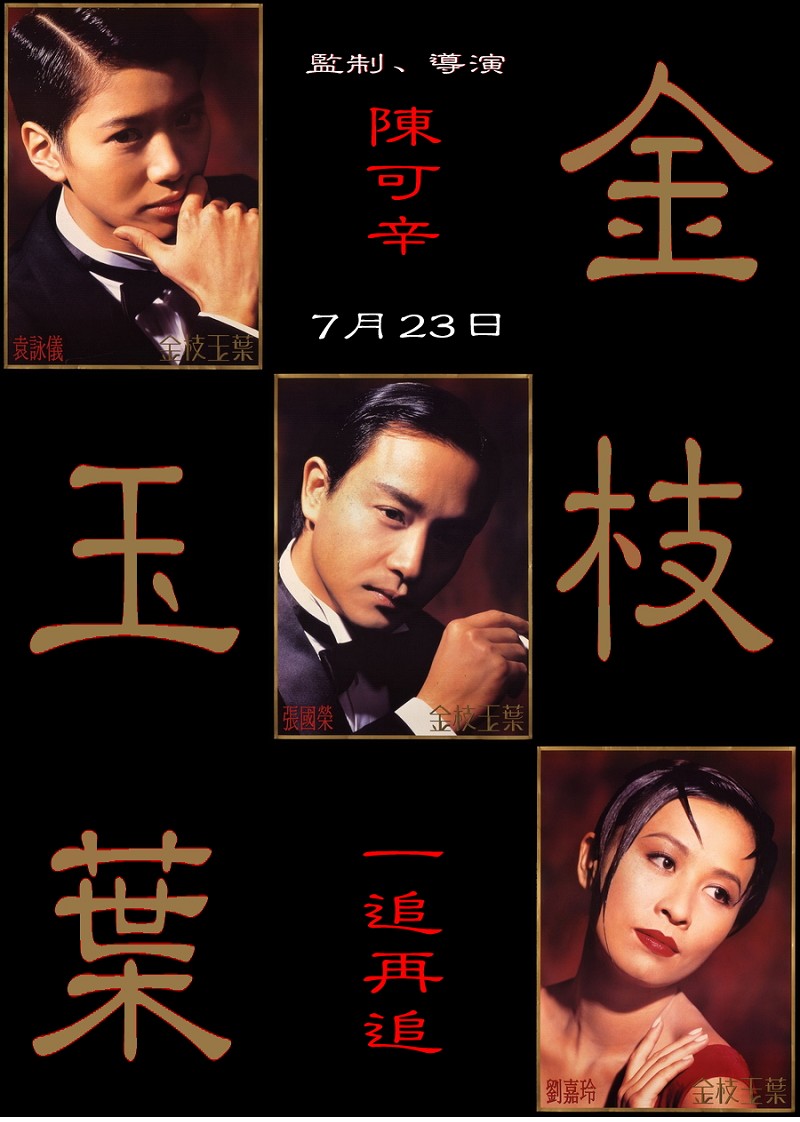
A frustrated composer in a moribund relationship with his former muse experiences a moment of existential confusion on feeling an unexpected attraction to his latest prospect whom he assumes to be male in Peter Chan’s hilarious meta comedy, He’s a Woman She’s a Man (金枝玉葉). Broadly progressive in its views of gender and sexuality, the film also takes aim at a growing obsession with celebrity in an increasingly consumerist culture. 

The heroine, Wing (Anita Yuen), is a case in point. She’s completely obsessed with the singer May Rose (Carina Lau) to the point that she almost lives her life vicariously through her. Rose’s successes are her successes, while she earns a few extra pennies peddling celebrity tat like Aaron Kwok’s used tissues. Rose meanwhile is riding high professionally by winning yet another reward, but her relationship with songwriter/manager Sam (Leslie Cheung) has clearly run its course. He’s become bored with the “celebrity” lifestyle and hasn’t written anything new in some time while unwilling to admit that he’s fallen out of love with Rose, refusing to take on new proteges because of his habit of falling in love with them.

That’s one reason he finally agrees to take on a male star, assuming there will be no danger of romantic conflict and intending to kick back against celebrity culture if ironically by creating an “everyman” sensation. But unbeknownst to him, Wing has had a male makeover and decided to enter the auditions in the hope of meeting her idols. Unexpectedly picked up for a recording contract during a spat between Rose and Sam, Wing finds herself having to keep up the act but is conflicted on fearing her presence is only deepening the rift between the “perfect couple” whose wedding it is her life goal to witness. 

Even before her makeover, Wing makes repeated references to her atypical gender presentation in lamenting her flat chest, especially in contrast with a rival celebrity hunter she nicknames “big boobs”. She takes lessons in performative masculinity from her roommate and best friend since primary school Yuri (Jordan Chan), who appears to have no romantic interest in her, and stuffs glow sticks down her trousers to make herself feel more “complete”. Yet despite all that, she is always forced to deny her seeming femininity with several people directly asking her if she is “gay” which is a more complicated question than it seems given that she’s a straight woman but currently living as a man. To find out for sure, Rose tries to seduce her in an attempt which is admittedly predatory and ends in a chase around the bed with Wing desperately trying to avoid being accidentally “outed” in an amorous moment. 

Nevertheless, there is a degree of romantic attraction in Wing’s obsession with Rose which is also a reflection of her internalised sense of shame in her atypical femininity as seen in her wide-eyed observation of Rose’s shadow dance as she slips into something more comfortable along with her admission that she always wanted to know what it felt like to touch a breast (because she feels she has none of her own). Even so, she begins to fall for Sam who is slowly being driven out of his mind with romantic confusion in being unable to reconcile his attraction to Wing with his heterosexuality. One of Wing’s closest associates whom he refers to as “Auntie” (Eric Tsang) is an openly gay man who asks him the all important question of whether of what’s really bothering him isn’t Wing’s ambiguous sexuality but his own. The question takes on a meta dimension in the knowledge that Cheung was himself bisexual but at that point not openly. Much as Sam explains, he might personally not have a problem with it but some people in the industry are very “sensitive about this kind of thing”.

Sam doesn’t know that Wing is “really” a woman, which might neatly explain his inexplicable attraction to her, but cannot begin to reconcile himself until he accepts that it “doesn’t matter what you are” because the fact remains that he loves her. Wing might make her final dash in more stereotypically female attire, but she does so in a voluminous white dress which, aside from its matrimonial connotations, further emphasises her lack of conventional femininity in her literal inability to manage it as she attempts to run while trying not to trip over herself. “Too much reality can really get up your nose,” Rose had complained in trying to keep her fantasy of a fairytale romance alive while internally accepting she can no longer be the “ordinary” girl Sam is looking for in a world of celebrity miasma and consumerist aspiration, finally reaching her own moment of self-acceptance just as Wing decides to shoot her shot right into Sam’s tender heart.

Trailer

Tales from the Occult (失衡凶間, Fruit Chan, Fung Chih-Chiang, Wesley Hoi Ip-Sang, 2022)

A collection of Hong Kongers contend with the hidden horrors of the contemporary society in the first instalment in a series of anthology horror films, Tales from the Occult (失衡凶間,). Veterans Fruit Chan and Fung Chih-Chiang are accompanied by Wesley Hoi Ip-Sang making his directorial debut as the three directors each tackle lingering terrors as the protagonists of the three chapters are quite literally haunted by past transgressions from a pop singer on the edge consumed with guilt over a teenage trauma, to a sleazy financial influencer who might inadvertently have killed a hundred people, and the denizens of a rundown tenement who are too afraid to report a possibly dangerous presence to the police lest it damage the property value of their flats. 

In Wesley Hoi Ip-Sang’s opening instalment The Chink, a carefree high school girl chasing a stray cat stumbles on the body of a burglar who apparently fell from the rooftops and was trapped in a tiny cavity between two buildings. Some years later Yoyi (Cherry Ngan) has become a successful pop star but is still haunted by her failure to report the body to the police all those years ago worried that perhaps if she had he might have been saved though he had obviously been dead for some time when she found him. Her kindly psychiatrist uncle Ronald (Lawrence Cheng Tan-shui) tries to assuage her anxiety but fails to consider that there might actually be a dark presence in her new flat. Meanwhile, she’s also under considerable stress given that she’s in an ill-defined relationship with Alan, her married manager, who eventually brands her “mentally unstable”, and she’s somehow oblivious to the fact her high school best friend is clearly in love with her. Even so, as it turns out, perhaps you can also be haunted by the living while there are some threats that even the most well-meaning of psychiatrists is ill-equipped to cure. 

It’s ironic in a sense that Yoyi was provided with her new apartment as a path towards an illusionary freedom which is really only a means for Alan to exert greater control over her life while the heroine of Fung Chih-Chiang’s final sequence The Tenement has in a sense chosen seclusion in installing herself in a moribund tenement block in order to concentrate on her writing. The contrast between the two buildings couldn’t be more stark but even the tenement dwellers are paranoid about house prices while assuming the creepy, water-drenched presence encountered by author of pulpy internet novels Ginny (Sofiee Ng Hoi Yan) is an attempt by developers to scare them out of their homes amid Hong Kong’s horrifyingly competitive housing market. Still, like Yoyi they are each haunted by past transgressions but pinning the blame on former gangster Frankie Ho (Richie Jen) who was once accused of drowning a man. What began as a haunting soon descends into farce as they realise the “water ghost” seems to be a young woman who has passed away in their stairwell and decide to “dispose” of her with Frankie’s help to avoid a scandal destroying the value of their homes. But then, all is not quite as it seems as the sudden appearance of a journalist investigating a scandalous “love crime” makes clear. 

Fruit Chan’s middle chapter Dead Mall also takes aim at internet investigators and dodgy “influencers” as sleazy financial snake oil vlogger Wilson (Jerry Lamb) fetches up at a shopping centre surrounded by shoppers in masks to advertise that the mall is actually doing fine despite the economic downturn produced by the pandemic which he describes as worse than that of SARS. In reality the mall is “dead” with barely any customers and rows of shuttered stores, Wilson is simply doing a paid post in an attempt to raise its fortunes not least because the original mall was destroyed in a fire 14 years previously started by a carelessly discarded cigarette. Wilson is pursued not only by those who claim they lost money because of his terrible financial advice, but by a paranormal live streamer who has a separate grudge against him while he continues to refuse any responsibility for his actions answering only that investment carries risk and there’s no opportunity without crisis. What he discovers is perhaps that you reap what you sow, Chan frequently cutting to hugely entertained netizens baying for his blood while he attempts to outrun his fiery karma. 

In each of the increasingly humorous storylines, Chan’s being a particular highlight of wit and irony, there is a lingering dissatisfaction with the contemporary society from the pressures of the fiercely competitive housing market to the kind of financial desperation and longing for connection that fuels the consumerist emptiness of influencer culture. The jury might be out on whether there’s really any such thing as “ghosts” but the haunting is real enough even if it’s only in your mind. 


Tales from the Occult screens at the Garden Cinema, London on 9th July as part of Focus Hong Kong’s Making Waves – Navigators of Hong Kong Cinema.

Original trailer (English subtitles)

Hell Bank Presents: Running Ghost (冥通銀行特約:翻生爭霸戰, Mark Lee, 2020)

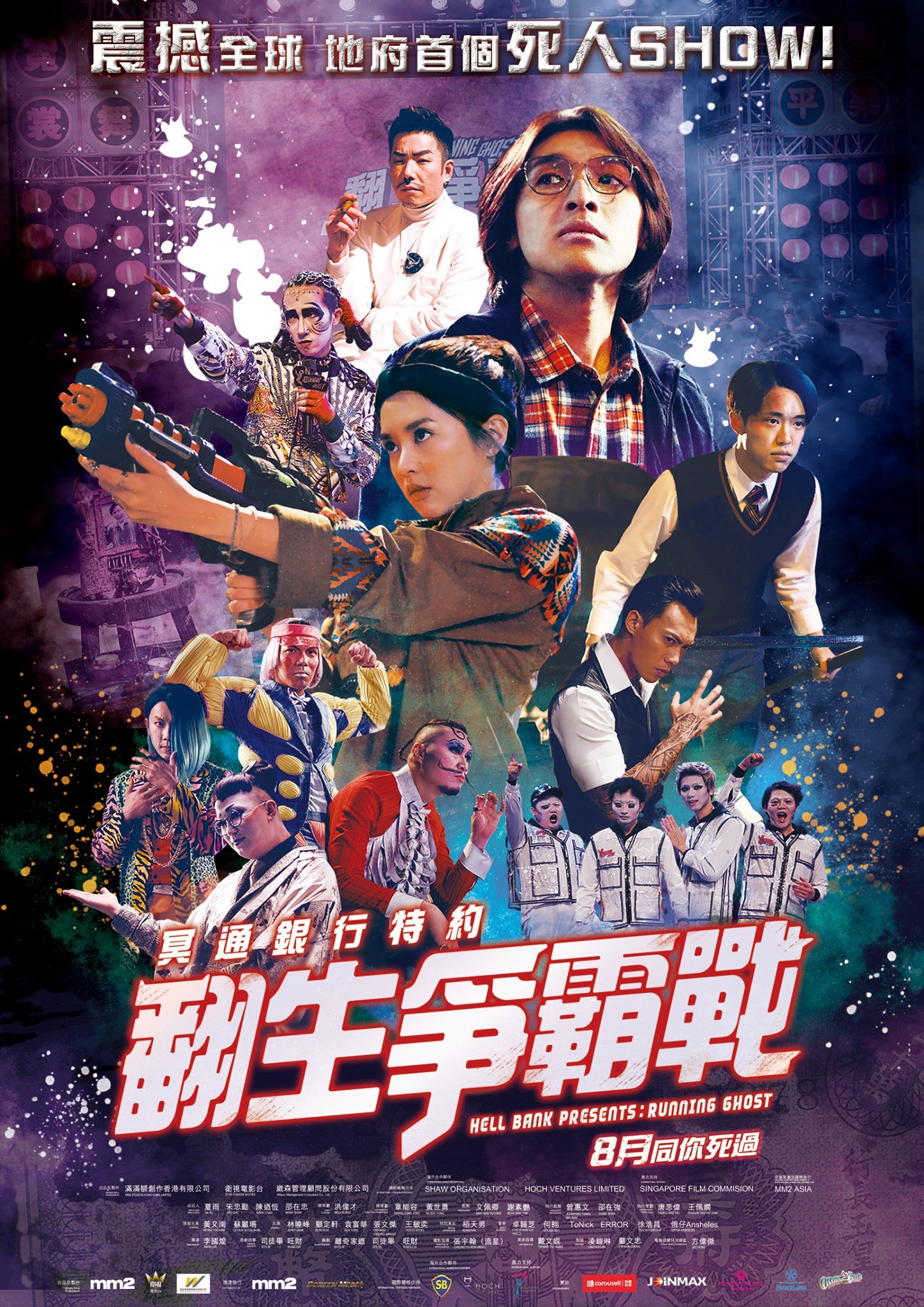
“The most important thing in life is to know how we die” according to the very efficient lady manning the desk in the Labour Department of Hell where, it seems, everyone has to do their bit. No rest for the wicked, even in death. A glorious satire on the business of modern living, Mark Lee’s Hell Bank Presents: Running Ghost (冥通銀行特約:翻生爭霸戰) sends its recently deceased hero on a quest to find meaning in his life from the other side as he becomes an unwilling contestant in an undead variety show. 

Wong Hui Kwai (Wong You-nam) has been dead for 22 days. Unusually, he can’t remember how he died, and as he tells the lady at Labour Department of Hell when asked what he achieved while alive was known chiefly for his ability to install internet cables with maximum efficiency (unfortunately Hell is already fully covered for wi-fi). Sadly, Hui Kwai didn’t do anything of note in his life and now it’s over he’d really rather just take it easy, which is why when he’s offered a nice job he tries to back out towards fiery torture. Nevertheless he finds himself a sudden replacement for a contestant who ascended at an extremely inconvenient moment right before he was supposed to take to the stage on Hell’s hottest variety show Hell Bank Presents: Running Ghost in which the prize is instant resurrection. Hui Kwai needs to succeed in three rounds of ghostly pranks, making the living faint, possessing a living person, and then scaring someone to death. 

Asked again on the stage where the MC reframes his abilities as a cable guy to paint him as a concealment expert, a very useful skill for a ghost trying to scare people, Hui Kwai is again forced to confront the fact that his life was extremely disappointing, his only “talent” was going to work, sleeping, and then going to work again. You might even say he was already a ghost before he died, though the resurrection prize does sound good because it would allow him to take care of some “unfinished business” with his childhood sweetheart Bo Yee (Venus Wong) whom, he fears, is being taken advantage of by an unscrupulous estate agent. As General Bull tells him, his problem is he needs to believe in himself more, pointing out that his nerdy appearance is just like that of a super hero before they discover their hidden powers. He never accomplished anything because he never really tried, if he wants his life back he’ll have to actually fight for it. 

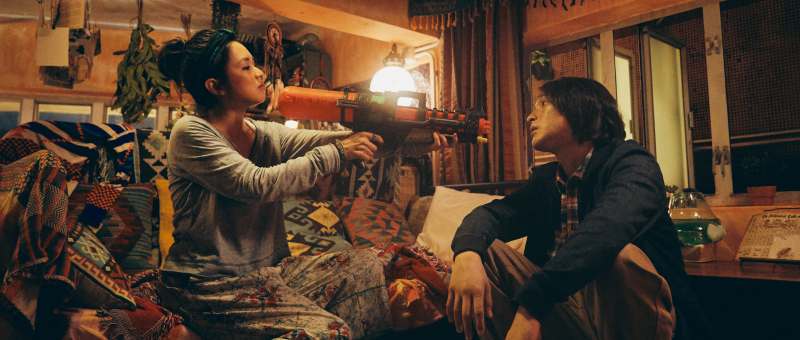
Unfortunately, having been dead only 22 days he’s not exactly powerful which is why he’s abruptly sucked into the dream catcher set up by eccentric ghost enthusiast Ling Kay (Cecilia So Lai Shan) who has some “unfinished business” of her own, trying to trap a spirit in the hope that they’ll be able to make contact with her late father. Lee has a lot of fun with the gadgetry of the supernatural which runs from Ling Kay’s old school dream catcher and Ouija boards to water pistols filled with ghost-busting pee and children’s flashlights “blessed” with the ability to burn up spirits. Are you a ghost needing to find an unlucky person to scare? There’s an app for that, and it works with your “Fat-bit” wristwatch. Meanwhile, even in Hell there are variety shows sponsored by Starbucks Coffins which have breaks featuring ads for services you can use to offload your unwanted funerary offerings. Paper money is no longer any good, in the after life they use “Helipay”, but General Bull who can presumably beam himself anywhere still travels in a gothic rickshaw pulled by an unfortunate underling forced to re-enact his suicide every night as part of his eternal torment. 

Running Ghost excels in its madcap world building in which the after life is somehow much more technologically advanced than the mortal realm, all slick touch screens and augmented reality, but perhaps still subject to the same old vices in which the undead vacuously watch reality shows and get their kicks pranking the living. Still, only after he’s died can Hui Kwai make the zero to hero journey, realising his unfinished business is really learning to unlock his latent potential which he does by protecting someone else, just not the someone he originally came back to protect. A much needed shot in the arm for HK supernatural comedy, Hell Bank Presents: Running Ghost is a spooky delight. 


Hell Bank Presents: Running Ghost streamed as part of this year’s New York Asian Film Festival.

Original trailer (Cantonese with English & Traditional Chinese subtitles)