I Still Remember (二次人生, Lik Ho, 2021)

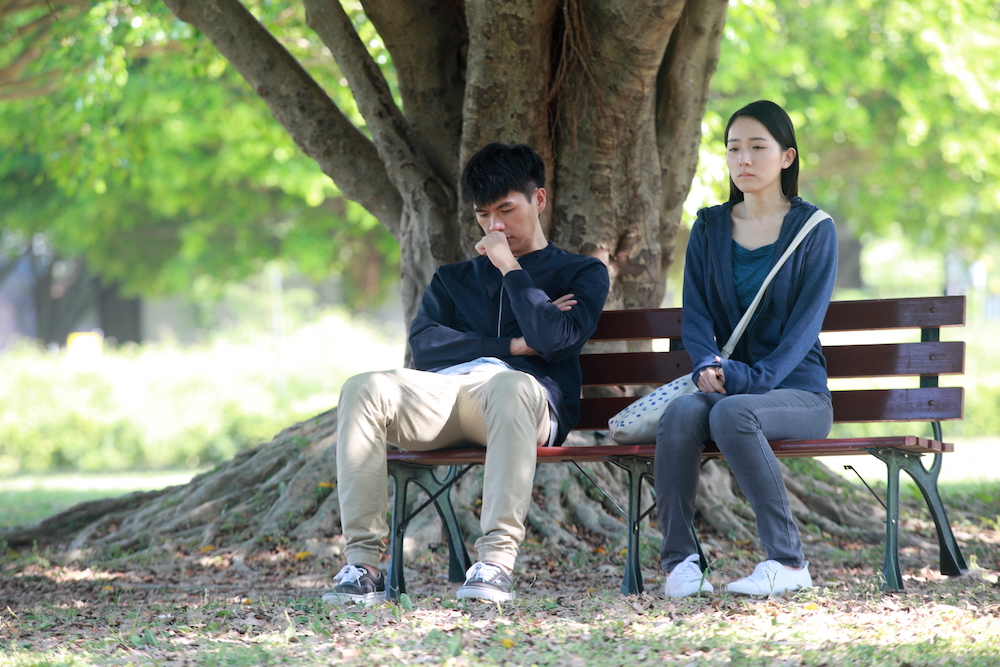
“I didn’t want to be left alone” admits the hero of Lik Ho’s sporting drama I Still Remember (二次人生) as he watches others his age pull relentlessly ahead of him while he languishes behind drained of all energy and sense of forward motion. Yet reuniting with an equally disillusioned father figure and a young woman battling a different sort of malaise, he eventually comes to realise that he’s never really been “alone” at all but has perhaps suffered a kind of self abandonment, standing on the sidelines cheering for everyone else but failing to cheer for himself or realise that others are in fact attempting to cheer for him only he couldn’t hear them. 

Now around 30, Lee Chi-hang (Tony Wu Tsz-Tung) has an unsatisfying job in real estate working for his childhood best friend (Johnny Hui) which is just as well because he’s regarded by many as the office dead weight and most of his colleagues are running bets on when he’ll eventually be fired. Raised by a single mother (Michelle Lo Mik-Suet), his father having passed away before he was born, Chi-hang was brought up to believe an “ordinary life” was good enough but also feels guilty that he hasn’t made good on his mother’s hopes for him and despite having attended university has no real sense of ambition in life. “How can you be so useless?” his exasperated girlfriend (Sofiee Ng Hoi Yan) eventually asks him, abruptly exiting his life as she leaves to pursue her own personal growth and fulfilment tired of waiting for Chi-hang to step up. 

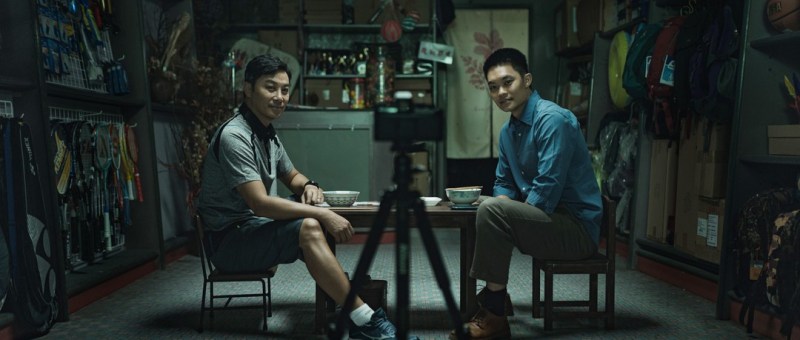
Attending a reunion for his primary school class brings him back into contact with Mr. Wong (Patrick Tam Yiu-Man), his former PE teacher who had also been something of a surrogate father as he and his wife often looked after him while his mother worked. Mr. Wong it seems has troubles of his own in that his wife Wai-Ying (Isabel Chan Yat-Ning) is suffering with a longterm illness which is why he’s given up teaching and opened a sporting goods store which is itself floundering. Bamboozled into taking part in Mr. Wong’s camping trip, Chi-hang finds himself enlisted to help mentor a young woman, Tin-sum (Toby Choi Yu-Tung), who wants to lose weight and triumph in a 5k race in the hope of winning a trip to Japan to meet her idol, a handsome Japanese pop star (Alston Li Ka-Ho). 

Unlike Chi-hang, Tin-sum is not “alone” in that she appears to have a pair of extremely loving and supportive parents who let her know that whatever happens in the race they’re proud of her all the same. Yet she also finds herself on the receiving end of social prejudice, rejected by the mean girls in her idol fan club who arbitrarily introduce a weight limit for race entrants in order to “preserve the image of Hong Kong” while the competition also provokes a falling out with her best friend (Jocelyn Choi Zung Sze) who ends up siding with the bullies. Chi-hang meanwhile admits that he doesn’t really take his mentoring duties very seriously, too busy “running away” from his own problems to be much use in tackling anyone else’s.  

Yet through picking up the pace, each of the beleaguered runners begins to find direction in the finish line. Rediscovering the sense of joy and possibility he had as a small boy in primary school, Chi-hang realises that he’s never been as alone as he thought he was, all of the people in his life have been running at his side all along rooting for his success. While Tin-sum gains a new sense of self-confidence in finishing out her 5k without being pressured to lose weight or give up her appetite for life, Mr. Wong finds a sense of relief in being able to pass on the baton to a surrogate son in the now more self-assured Chi-hang finally figuring himself out and taking control over his future. Atmospheric shots of the nighttime city filled with a sense of melancholy alienation give way to poignant flashbacks of cherry blossom in bloom outside the primary school where Mr & Mrs Wong first met and bonded with little Chi-hang, while he realises that he does indeed “still remember” the sense of security, positivity, and energy he had as a child as he steps up the pace building the “ordinary life” his mother had envisaged for him. 


I Still Remember streams in the UK 31st March to 6th April as part of Focus Hong Kong. Readers in Chicago will also have the opportunity to catch it at Lincoln Yards Drive-In on April 17 as part of Asian Pop-Up Cinema’s Season 12.

Clip (English subtitles)

Apart (散後, Lester Chan Chit-man, 2020)

“There’s gotta be a price for chasing dreams” sighs the heroine of Lester Chan Chit-man’s Apart (散後) as she mulls over lost love and the fight for Hong Kong independence. A collection of youngsters find themselves swept up in the Umbrella Movement, but some are more committed to the cause than others and divided loyalties are enough to eventually pull even those who love each other apart. 

Yin (Will Or), his cousin Toh (Chan Lit-man), Yin’s girlfriend Maryanne (Sofiee Ng Hoi-Yan), and the bashful Shi (Yoyo Fung) are all earnest university students studying hard to build professional lives for themselves. Maryanne is strongly against Mainland interference and has become a keen participant in the Umbrella Movement protests, dragging Yin and his more committed cousin along for the ride. The conflict lies in the fact that Yin comes from a fairly wealthy family. His father, Hung (Lester Chan Chit-man), is the CEO of a successful coach company and strongly pro-China. Authoritarian in the extreme, he thinks that you have to respect order and that the future lies in the Mainland. Yin’s animosity towards him may be more youthful rebellion against his hypocrisy in his many affairs and subsequent remarriage to younger woman Yin doesn’t seem to care for, than it is true political conviction. Toh’s father, meanwhile, is originally sympathetic towards the protestors and against Mainland interference (if only to needle Hung) but changes his tune when the protests start affecting his business.

“It turns out some people just want to make a living” Yin admits trying to broker peace, but finds his loyalties continually strained as he tries to balance his desire for Maryanne with his personal ambition. As the protests intensify, Yin pulls back. He objects to his friend’s increasing conviction that there can be no victory without violence and fears the outcome of a battle fought on such tense fault lines. Maryanne, however, doubles down, devoting all her energies to the movement, unforgiving of Yin when he dares to step back on the night that his grandmother dies and secretly beginning to doubt him, riddled with romantic jealousy over his growing attraction to Shi. 

In some ways Maryanne represents for him Hong Kong, while Shi represents the Mainland. Yin is a man pulled between two poles and perhaps treating neither of them with the respect they really deserve. The years wear on and the Umbrella Movement winds down. Yin pursues his technological interests in the US, perhaps hoping to escape the HK/China divide through removing himself to another continent. The crisis does not however stop. Maryanne becomes a lawmaker, trying to further her aims in the political arena but encountering fierce resistance. She is lonely and tired, but refuses to give up. Yin finds himself torn, in love with Maryanne but considering settling down with Shi who, like him, is ready for “a settled life”, while Maryanne knows she cannot rest until Hong Kong is free. He won’t come to the protests with her because he fears damaging his prospects on the Mainland, and she won’t be welcome if she accompanies him there (not that she would want to). Politics drives them apart, and as Maryanne said there’s a price for following your dreams. 

Toh, a little younger, remains committed to the ideal but also tempered by practicality, changing the future through teaching the past while his Chinese-American step-cousin, Jessica (Jocelyn Choi), eventually returns to chronicle the battle for democracy from an international perspective. In his student days, someone asks Yin why it is they who have to fight this battle and he replies that they alone can afford this naivety. They can afford to be bold, passionate, reckless, unrelenting, and unafraid of the consequences because they are young. As they grow older, some of them grow away. Yin gives in to practicalities, leans towards his father’s point of view, and eventually does what he thinks is right in looking for peace and compromise, but his actions betray Maryanne’s revolution. Maryanne looks for political solutions, but finds them slow going nevertheless continuing the fight. Nothing may change, but we’re here to show them we won’t mindlessly obey, Shi offers of the Umbrella Movement, filling the streets with the colour of resistance in tiny paper umbrellas in a vibrant yellow.


Apart was screened as part of this year’s Osaka Asian Film Festival.

Original trailer (English subtitles)

A Home with a View (家和萬事驚, Herman Yau, 2019)

Home with a view poster 2Everyone needs an oasis. It might be a mirage, but still you need to believe in it anyway or with the world the way it is you might just go crazy. For the Lo family, that oasis was their tiny harbour view for which they paid handsomely even though their home could be described as modest at best. Relying on the calming vision of the sea to preserve their peace of mind, the family are constantly preoccupied by the rapid increase in high rise apartment buildings which threaten it, but did not bank on a cynical businessman setting up home on the rooftop opposite and putting up a giant advertising billboard to make a few extra pennies.

Adapting the stage play by Cheung Tat-ming, Herman Yau uses the woes of the Lo family to satirise the effects of Hong Kong’s ongoing housing crisis as they find themselves living in a cramped apartment block where everyone seems to have problems but no inclination to mind their own business. Mrs. Lo, Suk-yin (Anita Yuen Wing-yi), is fed up with the butcher (Lam Suet) who lives directly above them and his habit of loudly mincing pork while she’s trying to eat her dinner in peace, while the kids – son Bun-hong (Ng Siu-hin) and daughter Yu-sze (Jocelyn Choi), resent the intrusion of cigarette smoke wafting up from the flat below belonging to an elderly resident whose oasis is presumably tobacco. Meanwhile, Grandpa (Cheung Tat-ming) is in poor health and in the process of losing his marbles all of which makes for a very exciting home environment where chaos rules and there is always something new to bicker about.

Family patriarch, Wai-man (Francis Ng Chun-yu), sunk considerable expense into buying this apartment because of its sea view. In fact he’s still paying off a hefty mortgage which is why the family is engaged in a money saving competition where they challenge each other to come up with the best schemes and bargains, but he is at heart a kindhearted man which is perhaps why he finds himself handing over a huge wad of cash to pay off the overdue rent of the lady next-door who was threatening to commit suicide rather than risk eviction with her husband seemingly having disappeared off somewhere leaving her alone with her young son. He is not, however, above jamming with the system and is himself an estate agent peddling “low cost” subdivided flats with no widows or kitchens and only access to communal bathrooms in disused but not quite redeveloped former industrial buildings.

Desperate to reclaim their access to serenity, the family set about trying to get the cynical businessman opposite, Wong (Louis Koo Tin-lok), to take the billboard down but he proves smug and indifferent to their plight. In fact, his resentment towards those who can afford swanky sea view apartments is one of the reasons he put the billboard up in the first place so he’s not about to take it down just because he’s realised its presence is inconsiderate. Trying to get the authorities, including an old friend with a longstanding crush on Suk-yin, involved proves largely fruitless with the family locked into a bureaucratic nightmare which saps all their energy and only drives them all crazier even as they begin to unite in pooling their efforts to outsmart Wong who insists the billboard is “art” which he made himself and enriches the city.

The intersection between art and advertising, as well as mild motion towards both things as acts of protest, is only one of the film’s meta touches, but its main theme is indeed family and the various ways the modern society both frustrates and cements it. The Los who were always at each other’s throats, became calm sitting together gazing out at the peaceful harbour but later returned to their individual spheres before reuniting in conflict. Meanwhile, we discover that Wong has a sad story of his own which paints him as a lonely man without a family who likes the attention the billboard has brought him because it’s finally forced people to acknowledge his existence. Rather than managing to make friends with him, the Los descend further into their psychotic fury as they try to defeat Wong, ironically rediscovering their family solidarity in the process. “In this terrible world only family can protect us”, Grandpa says, and in this crazy cutthroat society he may be right. Perhaps the best course of action is to all go mad together rather than try to resist the craziness.


A Home with a View was screened as part of the 2019 Udine Far East Film Festival. It is also currently available to stream via Netflix in the UK (and possibly other territories).

Original trailer (English subtitles)