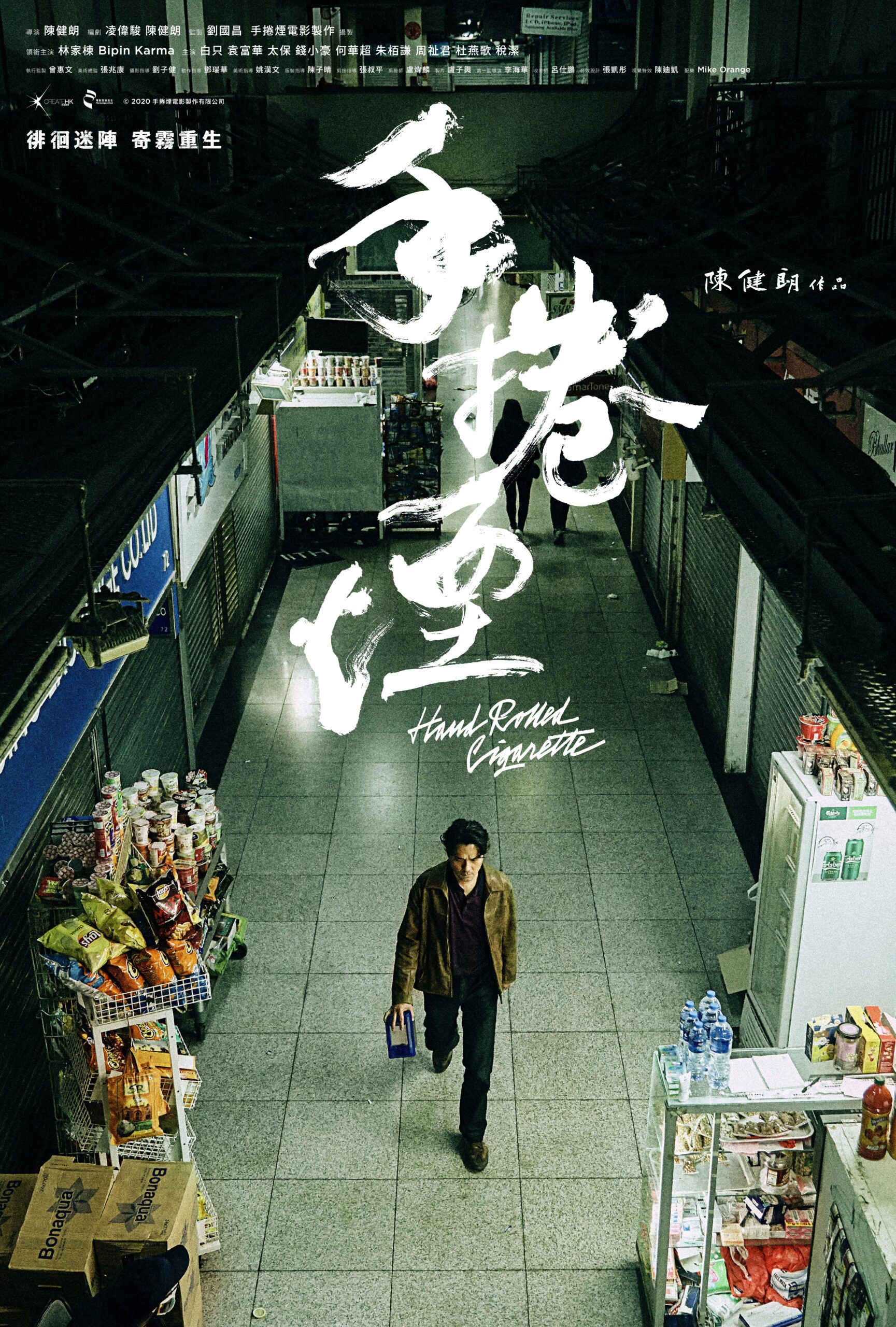
Hand Rolled Cigarette (手捲煙, Chan Kin-long, 2020)

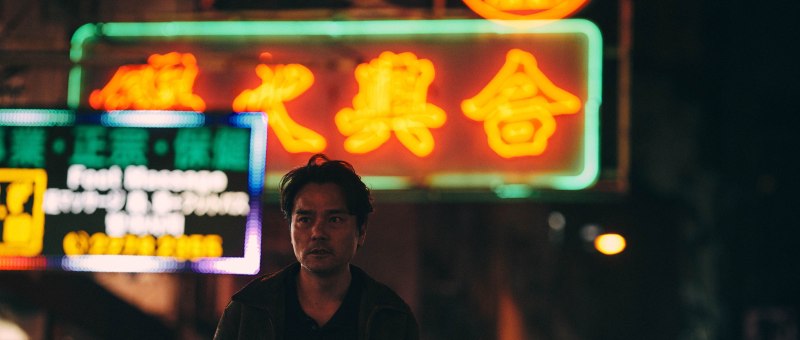
A former serviceman turned triad middleman bonds with a similarly oppressed South Asian petty criminal in Chan Kin-long’s noirish crime drama Hand Rolled Cigarette (手捲煙). An unexpected awards contender, the first directorial effort from actor Chan aligns its disparate heroes as two men in a sense betrayed by the world in which they live, one longing for a way out and the other too convinced he no longer deserves one to continue looking. 

“Let’s start over” Chiu (Gordon Lam Ka-tung) philosophically muses over a cigarette contemplating the coming handover. As a brief title card explains, when the British Army pulled out of Hong Kong, it hung its local recruits out to dry, disbanding their units and leaving them entirely without support. 25 years later, Chiu has become a dejected triad middleman, as we first meet him setting up a dubious deal for smuggled turtles between Taiwanese mobster Pickle (To Yin-gor) and local top dog Boss Tai (Ben Yuen). On his way back to his flat in Chungking Mansions, Chiu literally runs into a South Asian man apparently in the middle of a drug deal. Kapil (Bitto Singh Hartihan) dreams of bigger prizes, listening to the stock market report on the morning news and musing about robbing a bank. His cousin Mani (Bipin Karma), more conflicted in their criminal activities, cautions him against it reminding him that they already face discrimination and don’t need to add to their precarious position by giving their ethnicity a bad name. “If we have money people can’t look down on us” Kapil counters, seemingly desperate to escape his difficult circumstances by any means possible which eventually leads him to make the incredibly bad decision to cheat local triads out of their drug supply. Leaving Mani and his schoolboy brother Mansu (Anees) alone to carry the can (literally), Kapil takes off while Mani finds himself crawling into Chiu’s flat for refuge when chased by Boss Tai’s chief goon Chook (Michael Ning). Unwilling at first, Chiu agrees to let Mani stay, for a price, only to find himself falling ever deeper into a grim nexus of underworld drama. 

Chiu’s plight as a former British serviceman makes him in a sense an exile in his own land, a displaced soul free floating without clear direction unable to move on from the colonial past. We later learn that he is in a sense attempting to atone for a karmic debt relating to the death of a friend during the Asian financial crisis, also beginning in 1997, of which he was a double victim. Most of his old army buddies have moved on and found new ways of living, some of them rejecting him for his role in their friend’s death and tendency to get himself into trouble while Chiu can only descend further into nihilistic self-loathing in his self-destructive triad-adjacent lifestyle. 

Mani, by contrast, did not approve of his cousin’s criminality, particularly resenting him for using Mansu’s schoolbag as a means of shifting drugs. He dreams of a better life but sees few other options for himself, hoping at least to send Mansu to university and ensure he doesn’t share the same fate. Chiu continues to refer to him solely by a racial slur, but simultaneously intervenes in the marketplace when Chook and his guys hassle another South Asian guy insisting that they’re all locals and therefore all his “homies”, despite himself warming to the young man and even going so far as to sort out child care for Mansu otherwise left on his own. “Harmony brings wealth” Boss Tai ironically exclaims, but harmony is it seems hard to come by, Chiu’s sometime Mainland girlfriend expressing a desire to return because the city is not as she assumed it would be while little Mansu is constantly getting in fights because the other kids won’t play with him. 

“There’s always a way out. I’ll start over” Chiu again tells Mani, though he seems unconvinced. Clearing his debts karmic and otherwise, Chiu discovers only more emptiness and futility while perhaps redeeming himself in rebelling against the world of infinite corruption that proved so difficult to escape. A moody social drama with noir flourishes, Chan’s fatalistic crime story is one of national betrayals culminating in a highly stylised, unusually brutal action finale partially set in the green-tinted hellscape of a gangster’s illegal operating theatre. Men like Chiu, it seems, may not be able to survive in the new Hong Kong but then perhaps few can. 


Hand Rolled Cigarette streams in Europe until 2nd July as part of this year’s hybrid edition Udine Far East Film Festival.

Original trailer (English / Traditional Chinese subtitles)

Fagara (花椒之味, Heiward Mak, 2019)

Fagara poster 2“We remember the bad and forget the good” a regretful mother laments, trying to find the right words to connect with her emotionally distant daughter. Heiward Mak’s adaptation of the Amy Cheung novel Fagara (花椒之味, Hjiāo zhī Wèi) melts a subtle One China narrative into a heartwarming meditation on unexpected connections and the modern family as three women from three cultures discover an instant and easy bond, meeting as sisters in adulthood united in a shared sense of hurt and disappointment but learning to find the good among the bad as they process the legacy of their late father and the pain he left behind.

Harried middle-aged travel agent Acacia (Sammi Cheng Sau-man) spends her days fending off junk calls and booking discreet getaways for executives going on “business trips” with their secretaries. So, when she gets a panicked message that her estranged father Ha Leung (Kenny Bee) is in hospital she naturally assumes it’s a scam, only it’s not – she needs to get across the Harbour to Victoria Hospital, but in a motif that will be repeated finds it difficult to get a cab willing to take her. By the time she arrives, it’s too late. Her dad has passed away. So little does she know about him that she has to double check what year he was born on his driving licence, passed to her by a young man working at her father’s “family” hotpot restaurant.

On charging his phone, Acacia is shocked to discover that he’s been exchanging text messages with two other young women, apparently his daughters from other relationships in Taiwan and on the Mainland. Thinking they ought to at least know, Acacia invites them to the funeral, which, embarrassingly enough, she has arranged as a Taoist ceremony because she was unaware her father was actually a Buddhist (something apparently known to some of the other guests only they were too polite to say). Meeting for the first time and setting aside their mutual resentments, the three women find an easy connection, uniting to save the restaurant by figuring out Ha Leung’s secret recipe for his famed Fagara soup.

Though Mak largely minimises the obvious political allegory in favour of the human story, it’s impossible to miss the message that these three women are all daughters of the One China, let down by a well meaning but flawed “father” who nevertheless loved them all if imperfectly. Given the current tensions, some might find the implications of that message trite at best, but you can’t argue with the positivities of finding common ground as children failed by distant paternity, or as Acacia puts us, “regardless of the choice he made, he hurt us all”.

Cherry (Li Xiaofeng), the daughter from the Mainland, counters that she was never “hurt” because she was never anyone’s “choice”. Abandoned twice over, Cherry has lived with her grandmother (Wu Yanshu) since her mother remarried in Canada, leaving her behind. A young woman of her times, she’s staked everything on Instagram fame, rejecting the idea of marriage in favour of perpetual independence but unselfishly. The most family oriented of the sisters, she is determined to take care of her grandmother even while she tries to push her away partly in vanity, afraid to let her see the vulnerability of ageing, and partly not wanting to feel as if she’s trapped her granddaughter in a life of servitude to an old woman that will leave her lonely in her own old age.

Acacia meanwhile also remains lukewarm on the idea of “family”, resentful towards her father and insecure in her relationships, breaking up with a meek but supportive fiancée (Andy Lau Tak-wah) because he was only ever bold enough to say he was “OK” with getting married. Striking up a friendship with a cheerful doctor (Richie Jen Hsien-chi) who knew her father, she meditates on her future while trying to sort out her complicated feelings about her father’s “family” hotpot shop.  What she discovers is that her father, while useless at the business of family, had a gift for the family business, turning the hotpot shop into a makeshift community offering second chances to those who couldn’t find them elsewhere.

Uncle Leung, as they called him, was also the only one to encourage Taiwanese daughter Branch (Megan Lai) to follow her dreams when everyone else told her to give up and settle down. Unlike Acacia and Cherry, Branch has a relationship, albeit a strained one, with her mother (Liu Juei-chi) who, as she reveals to Acacia, struggles to connect with her daughter, never quite knowing the right words to say, always striking on the ones sure to work the wound. Heavily coded as gay, Branch is aloof and closed off, literally shutting a devoted young woman out of her life, but begins to brighten on connecting with her sisters, shifting from silent but deeply felt sadness at the funeral to a cheerful solidarity helping to make the restaurant a success. Of course, it turns out that the secret ingredient in the soup was memories of everyone Ha Leung had loved, literally a “family hotpot”. Finally learning to remember the good as well as the bad, Acacia finds the strength to forgive her father, seizing her independence and driving off into a freer future full of possibility but with her sisters, in spirit at least, right alongside her.


Fagara was screened as part of the 2019 Five Flavours Film Festival.

Original trailer (English subtitles)