Vampire Cleanup Department (救殭清道夫, Chiu Sin-Hang & Yan Pak-Wing, 2017)

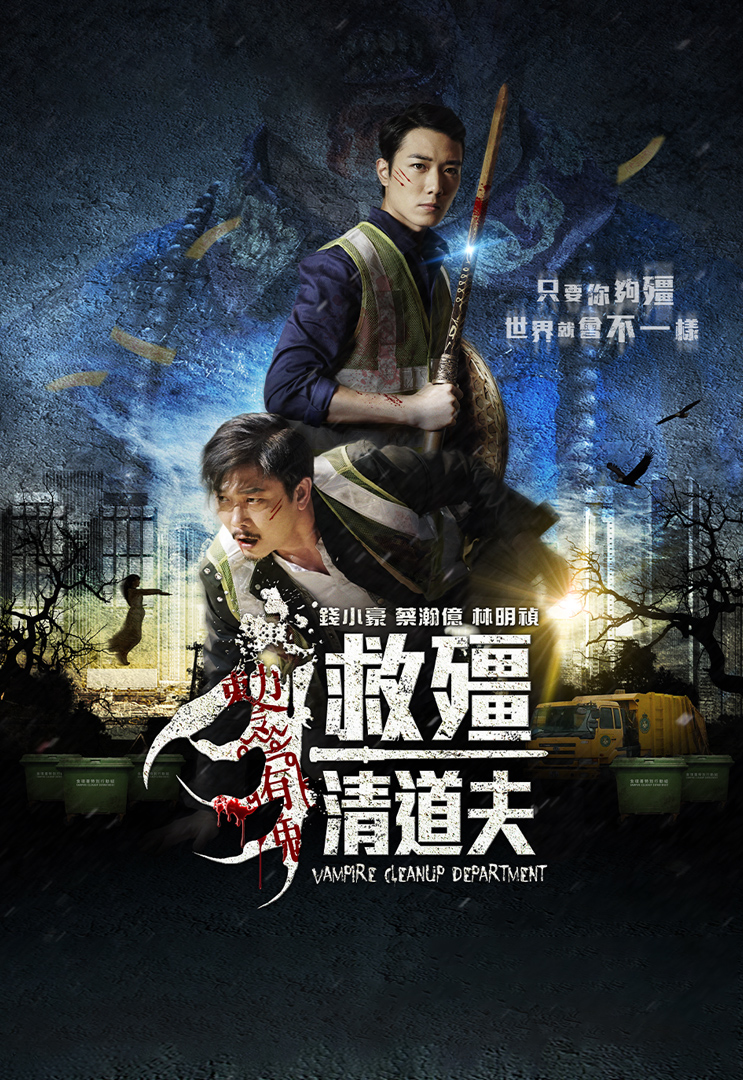
There are strange things going on all around you that you have no idea about. The life of the average man on the street can be far more mysterious than you could ever imagine. Or so the hero of Chiu Sin-Hang and Yan Pak-Wing’s nostalgic comedy Vampire Cleanup Department (救殭清道夫) realises on being co-opted into a top secret government anti-vampire squad after embarrassingly getting bitten on the bum by a creature of the night.

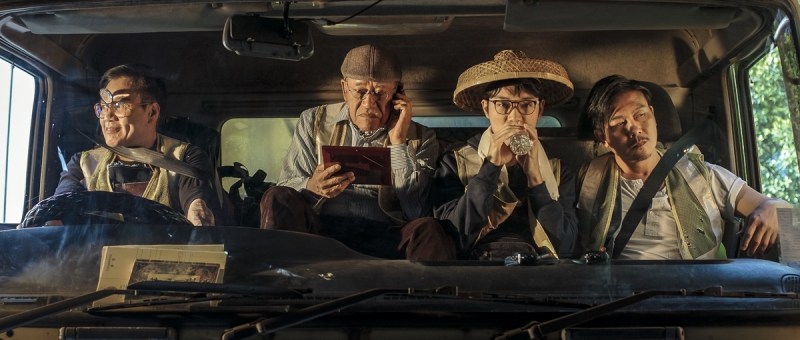
Tim (Babyjohn Choi) is a down-on-his-luck young man who was raised by his eccentric grandmother after his parents’ death and now assumes she has dementia because she continues to call him by his father’s name. All of his family members seem to have some association with rubbish, his grandmother collecting cardboard to alleviate their poverty, and Tim seems to have internalised a sense of himself being the same. Tim thinks his parents were regular street cleaners who were killed in an accident, only later finding out that they were part of the cleanup squad and everyone has been keeping this from him to keep him safe from vampires. Realising that he’s immune, however, after being bitten on the bum and feeling no ill effects beyond embarrassment, they decide he’s a prime candidate for injecting new blood into the team.

Though most obviously paying homage to classic hopping vampire movies such the Mr Vampire series several of the alumni of which are featured in the film, it also seems to have some spy movie influences with its small cell of operatives and Bond-esque vampire fighting gadgets while in some ways seeking to move on from the central Taoist mythology. Master Ginger (Yuen Cheung-yan) is apparently the only Maoshan Taoist left in Hong Kong. Part of Tim’s early training involves learning all of the various seals he uses to trap vampires but photoing them instead, while otherwise basically acting as a general dogsbody doing the team’s washing and other miscellaneous tasks.

Meanwhile, the gang is seemingly targeted by a shady rival organisation run within the local police force. Slimy policeman Chu (Jiro Lee Sheung-ching) is working with a foreign scientist who says that vampires are real, they’re just dead bodies infected with a virus that makes them move. He needs more samples to come up with a vaccine, and Chu seems willing to do whatever it takes to get them to him. A vaccine is eventually developed, but it is it seems homegrown in being taken from Tim’s blood which is immune to the toxin and developed through his parents’ sacrifice, which is perhaps a subversive hint of a grassroots organisation run by ordinary people like street cleaners standing up to an authoritarian external force that wants to stamp out their history and take away their power.

But at the same time, as all this has been kept from Tim, he has a hard time separating the “vampires” from the people they used to be, convinced that some of them can be rehabilitated and go back to being more like people. On his first case, he comes across a beautiful young woman (Lin Min Chen) who was apparently buried alive as a sacrifice to the landlord vampire, another hint at lingering feudalism and land profiteering in the contemporary era. Tim is moved by seeing what he thinks are tears, but turn out to be droplets leaking from the air conditioner. Nevertheless, he can’t bring himself to burn her as he’s been being taught to do so takes her home and starts looking after her until she eventually bonds with him and fights back against her former master.

Shedding his nerdy image by removing his glasses so he can see “properly”, the conclusion that Tim comes to is that vampires and human beings are much the same in that there’s good and bad everywhere. Sometimes it’s possible to turn an enemy into a friend and aim for peaceful co-existence, but at the same time a lot more youngsters have joined the apparently secret organisation to defend their streets from an evil external threat. Though a little more cute and cuddly than the films that inspired it, Vampire Cleanup Department does at least succeed in resurrecting the hopping vampire tradition for a new generation.


Trailer (Traditional Chinese / English subtitles)
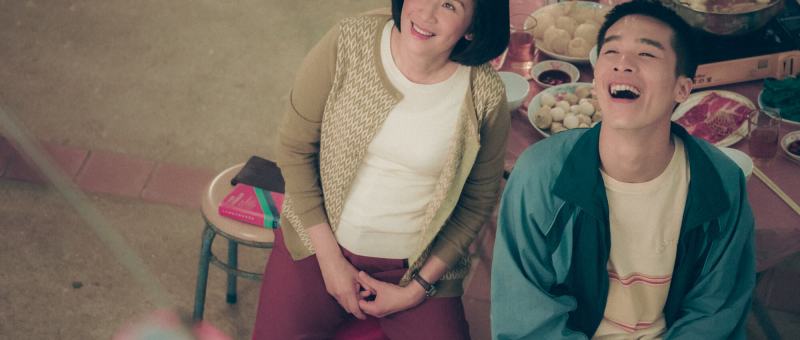
Zero to Hero (媽媽的神奇小子 , Jimmy Wan Chi-Man, 2021)

“No one treats you like an ordinary person, so become an extraordinary one” the heroic mother at the centre of Wan Chi-Man’s Zero to Hero (媽媽的神奇小子) tells her young son as he struggles to find a place for himself as a disabled person in an unaccommodating society. Inspired by the real life story of multi-medal winning Paralympian So Wa Wai (Leung Chung-hang), Wan’s inspirational tale is as much about maternal determination as it is about overcoming preconceived limits but also makes a series of subtle points about how the contemporary society treats disability. 

Wan opens in Guangzhou in 1981 as Wai’s mother Mrs. So (Sandra Ng) frantically rushes him to hospital only to be told that he has jaundice which has resulted in cerebral palsy meaning that he will likely never be able to walk or feed himself. The doctor double checks if the family would like to proceed with treatment given this information to which they emphatically reply they would. A few years later, the family has migrated to Hong Kong and Mrs. So is forced to take Wai with her to her job in a laundry, eventually finding herself at her wits end after his hearing aid goes missing placing her son on the shoot and shouting at him to walk only to shut the belt down just before he reaches the edge. At this point, Wai manages to pull himself onto his feet, proving the doctors wrong and teaching himself to walk unassisted. Witnessing an older Wai run away from neighbourhood bullies gives Mrs. So an idea and she soon tries to enrol him in a club for athletes with physical disabilities only to be turned away because of his age but his decision to join in anyway gets him noticed by former Paralympian relay runner Coach Fong (Louis Cheung Kai-chung) who decides to take him on and train him up. 

In contrast to other sporting biopics, Wai’s path to Olympic success is more or less drama free even as he strives to improve his athletic abilities and overcome the mild resentment among some of his teammates in needing to change their style and position in order to accommodate him. Wan does however hint at the difficulties of living as a disabled person in late 20th century Hong Kong, Fong explaining to Mrs So that the Paralympics aren’t aired on Hong Kong TV and disabled athletes earn only 10% of that earned by the able-bodied. Wai does receive a small subsidy, but the Sos are otherwise forced to scrimp and save so that Wai can continue running, a situation that becomes impossible after his father is injured in an accident and left unable to work. 

It’s also clear that Mrs. So’s all encompassing love for her son causes occasional tension in the family in leaving her younger, able-bodied son understandably feeling neglected while everyone fixates on Wai’s sporting success. Wai’s brother is perfectly aware that he was born in part as a safety net for Wai so that someone would be around to look after him once the Sos have passed away and cannot at times help resenting him. Yet the family unit remains generally united until the older Wai’s prideful resentment of what he sees as his mother’s micro-managing begins to undermine their relationship. “I just want to run” Wai explains, fed up with the series of commercial opportunities his mother has agreed to on his behalf in an attempt to keep him financially secure in the future. When a director for an advert tells him he’s speaking “too well” and asks him to sound more disabled Wai has had enough, leading to a confrontation that ends both in romantic heartbreak and a falling out between mother and son. 

“Catching up is the story of my life” Wai reminds Fong, emphasising the film’s inspirational message that sometimes people have further to go but get there in the end while also signalling the various ways lack of accommodation for his disabilities has continued to hold him back outside of his sporting success. A heartwarming tale of an incredible mother-son bond, Zero to Hero insists that the mutual determination to succeed turned them both into heroes allowing Wai to achieve his full potential as a Paralympian bringing gold and glory back home in defiance of those who told him he’d never be anything. 


Zero to Hero screens Aug. 21 as part of this year’s New York Asian Film Festival.

Original trailer (Traditional Chinese / English subtitles)

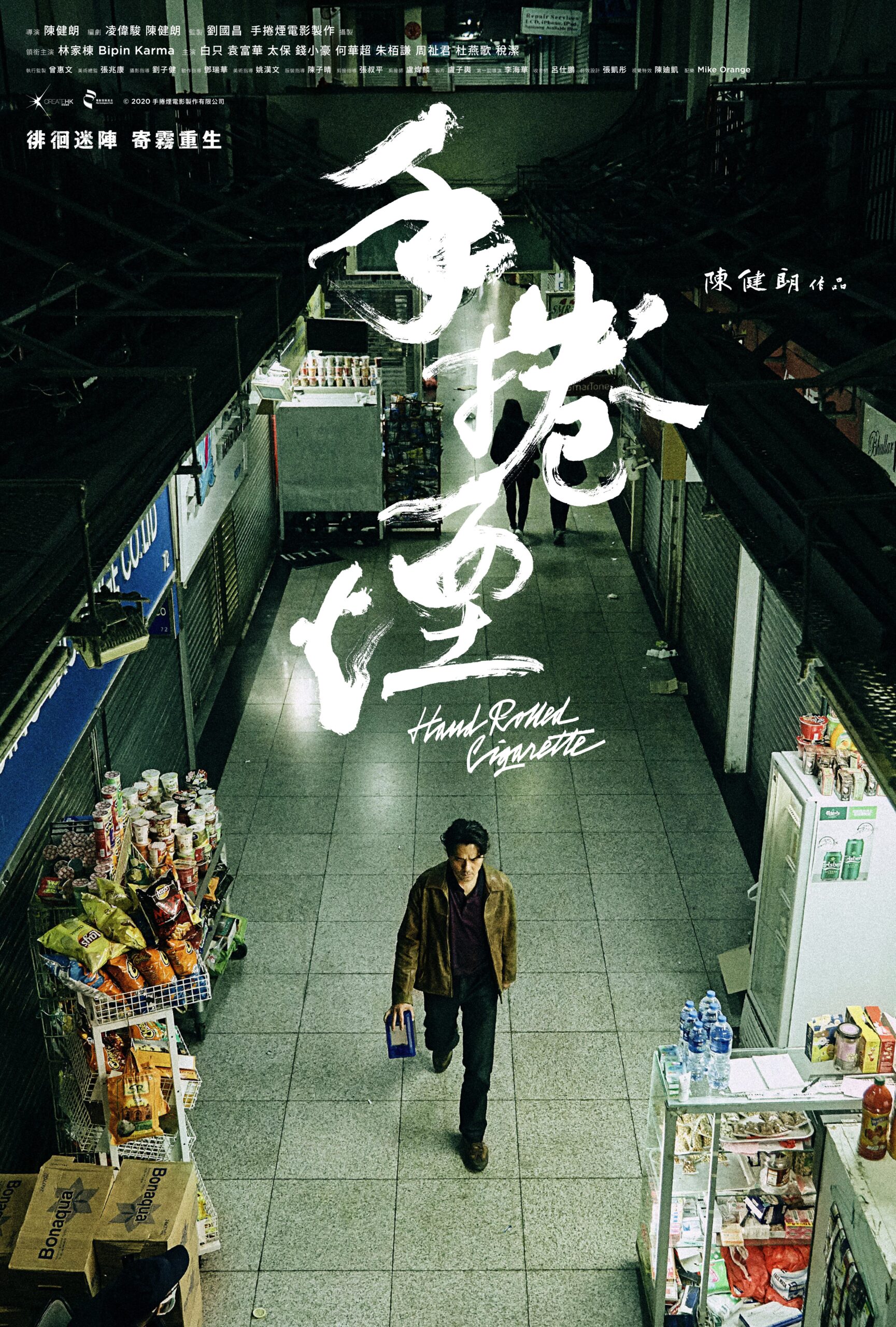
Hand Rolled Cigarette (手捲煙, Chan Kin-long, 2020)

A former serviceman turned triad middleman bonds with a similarly oppressed South Asian petty criminal in Chan Kin-long’s noirish crime drama Hand Rolled Cigarette (手捲煙). An unexpected awards contender, the first directorial effort from actor Chan aligns its disparate heroes as two men in a sense betrayed by the world in which they live, one longing for a way out and the other too convinced he no longer deserves one to continue looking. 

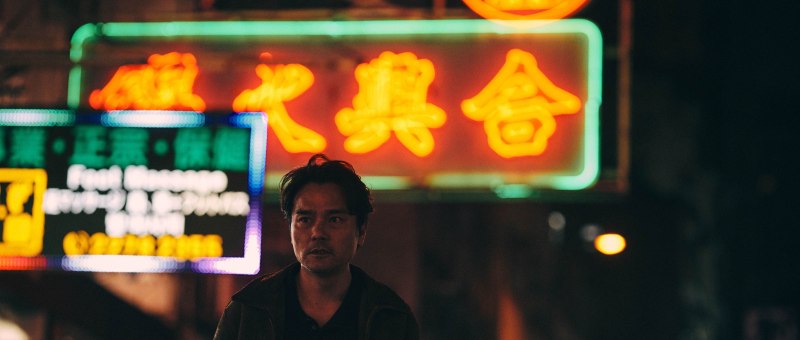
“Let’s start over” Chiu (Gordon Lam Ka-tung) philosophically muses over a cigarette contemplating the coming handover. As a brief title card explains, when the British Army pulled out of Hong Kong, it hung its local recruits out to dry, disbanding their units and leaving them entirely without support. 25 years later, Chiu has become a dejected triad middleman, as we first meet him setting up a dubious deal for smuggled turtles between Taiwanese mobster Pickle (To Yin-gor) and local top dog Boss Tai (Ben Yuen). On his way back to his flat in Chungking Mansions, Chiu literally runs into a South Asian man apparently in the middle of a drug deal. Kapil (Bitto Singh Hartihan) dreams of bigger prizes, listening to the stock market report on the morning news and musing about robbing a bank. His cousin Mani (Bipin Karma), more conflicted in their criminal activities, cautions him against it reminding him that they already face discrimination and don’t need to add to their precarious position by giving their ethnicity a bad name. “If we have money people can’t look down on us” Kapil counters, seemingly desperate to escape his difficult circumstances by any means possible which eventually leads him to make the incredibly bad decision to cheat local triads out of their drug supply. Leaving Mani and his schoolboy brother Mansu (Anees) alone to carry the can (literally), Kapil takes off while Mani finds himself crawling into Chiu’s flat for refuge when chased by Boss Tai’s chief goon Chook (Michael Ning). Unwilling at first, Chiu agrees to let Mani stay, for a price, only to find himself falling ever deeper into a grim nexus of underworld drama. 

Chiu’s plight as a former British serviceman makes him in a sense an exile in his own land, a displaced soul free floating without clear direction unable to move on from the colonial past. We later learn that he is in a sense attempting to atone for a karmic debt relating to the death of a friend during the Asian financial crisis, also beginning in 1997, of which he was a double victim. Most of his old army buddies have moved on and found new ways of living, some of them rejecting him for his role in their friend’s death and tendency to get himself into trouble while Chiu can only descend further into nihilistic self-loathing in his self-destructive triad-adjacent lifestyle. 

Mani, by contrast, did not approve of his cousin’s criminality, particularly resenting him for using Mansu’s schoolbag as a means of shifting drugs. He dreams of a better life but sees few other options for himself, hoping at least to send Mansu to university and ensure he doesn’t share the same fate. Chiu continues to refer to him solely by a racial slur, but simultaneously intervenes in the marketplace when Chook and his guys hassle another South Asian guy insisting that they’re all locals and therefore all his “homies”, despite himself warming to the young man and even going so far as to sort out child care for Mansu otherwise left on his own. “Harmony brings wealth” Boss Tai ironically exclaims, but harmony is it seems hard to come by, Chiu’s sometime Mainland girlfriend expressing a desire to return because the city is not as she assumed it would be while little Mansu is constantly getting in fights because the other kids won’t play with him. 

“There’s always a way out. I’ll start over” Chiu again tells Mani, though he seems unconvinced. Clearing his debts karmic and otherwise, Chiu discovers only more emptiness and futility while perhaps redeeming himself in rebelling against the world of infinite corruption that proved so difficult to escape. A moody social drama with noir flourishes, Chan’s fatalistic crime story is one of national betrayals culminating in a highly stylised, unusually brutal action finale partially set in the green-tinted hellscape of a gangster’s illegal operating theatre. Men like Chiu, it seems, may not be able to survive in the new Hong Kong but then perhaps few can. 


Hand Rolled Cigarette streams in Europe until 2nd July as part of this year’s hybrid edition Udine Far East Film Festival.

Original trailer (English / Traditional Chinese subtitles)