 Many things have changed in the post-war world, but not everything and even with the new freedoms there are some lines which cannot be crossed. Keisuke Kinoshita made his career considering where these lines are and examining the lives of those who find themselves standing in front of them. Starring the veteran actress Kinuyo Tanaka who also produces the film, and the very young and fresh faced Toshiro Mifune, Wedding Ring (婚約指環 (エンゲージリング), Konyaku Yubiwa (Engagement Ring)) is a classic melodrama filled with forbidden love, repressed passion, and societal constraints but Kinoshita brings to it his characteristic humanity expressing sympathy and understanding for all.
Noriko (Kinuyo Tanaka) has been married seven years but her husband, Michio (Jukichi Uno), was drafted shortly after the wedding and was not repatriated until two years after the war ended. A year after he returned, Michio fell ill and has been on extreme bed rest ever since. After her father-in-law’s retirement and her husband’s illness, running of the family jewellery store fell to Noriko and so she spends the week in Tokyo taking care of business and comes back to the seaside fishing village of Ajiro where Michiro lives for the benefit of his health at the weekends. Consequently, though the couple care for each other, the marriage has never really been given the chance to take hold and they remain more companions or good friends than husband and wife.
Things change when Michio gets a new physician, Dr. Ema (Toshiro Mifune), who literally falls into Noriko’s lap during a packed bus ride from the station. Where Michio is sickly and weak, Ema is physically imposing and in robust health. Ema lives in the peaceful resort town of Atami which is on the train route from Ajiro to Tokyo meaning that Noriko and Ema sometimes wind up on the same train, developing an obvious attraction to each other which they both know to be impossible but cannot bring themselves to abandon.
In many ways Noriko is the archetypal post-war woman – strong and independent she runs the family business singlehandedly and lives alone in the city while her husband remains in the country busying himself with writing poetry. Despite the difficult circumstances, Noriko is not particularly unhappy save being unfulfilled and perhaps craving the physical intimacy her husband can no longer offer her. Her first meeting with Ema brings something in Noriko back to life as she swaps her dowdy, dark coloured suits for looser, more colourful clothing and walks with a new found spring in her step.
This change in his wife has not escaped the attention of Michio who astutely notices that she seems to be “glowing” – a development he silently attributes to the presence of Dr. Ema. Michio does his best not to resent the doctor but internalises a deep seated feeling of guilt and inadequacy as he realises that he can no longer provide what his wife needs and has become an obstacle to her happiness. A sensitive man apparently marked by his wartime experiences, Michio is angry and jealous but also resents himself for feeling that way, deepening his depression and conviction that he is nothing but a burden to his wife who deserves a full marriage with a man who can satisfy all of her needs and desires.
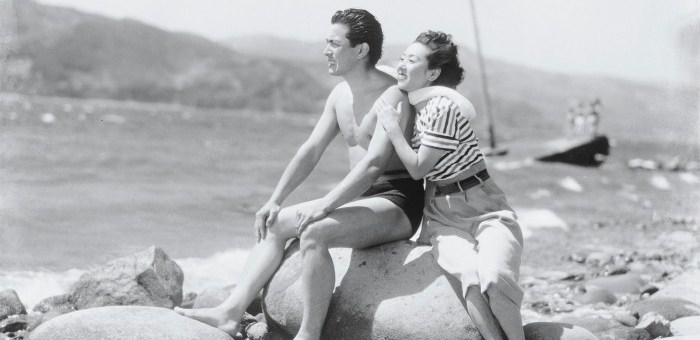
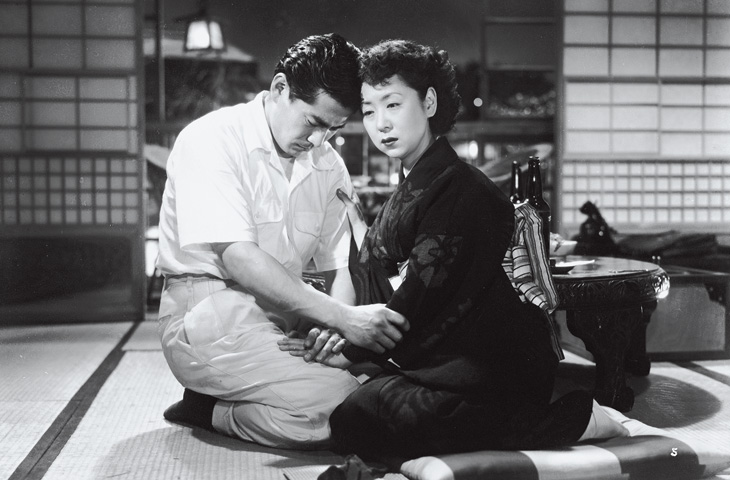
Desire is certainly something Noriko feels as she gazes at Ema’s powerful hands, broad shoulders, and athletic physique. Clasping his sweaty jacket to her breast in desperation eventually gives way to accidentally bold physical contact as hands catch hands and Noriko finds herself caressing Ema’s shoulder as he prepares to dive back into the sea dressed only in his woollen trunks. Ema feels the same attraction but also understands that it cannot be, not least because he is Michio’s physician and has begun to have idle fantasies of being unable to save him, freeing Noriko from her unfulfilling marriage so they can finally be together. Both sensible people, Noriko and Ema are eventually able to discuss their feelings and social responsibilities in a mature fashion, agreeing that they cannot act on their desires even if they find them hard to relinquish.
Rather than wedding ring, the Japanese title of the film more accurately refers to an engagement ring. Noriko’s wedding ring never comes off, but the engagement ring with its large stone comes to represent her shifting allegiances. Discovering the ring abandoned on the dresser, Michio begins to understand he is losing his wife to the strapping young doctor whose healthy, powerful body he cannot help but envy. The camera seeks out Noriko’s hand, with or without the shiny diamond of the engagement ring, quickly signalling the current direction of her desires.
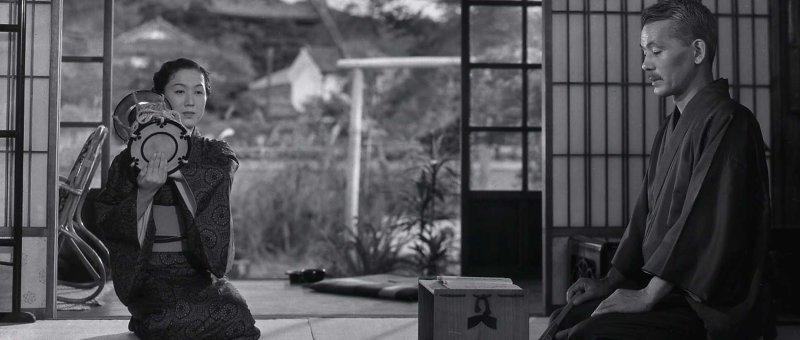
Michio, who cannot give full voice to his emotions, expresses himself through tanka poetry, something which the equally sensitive doctor can also understand and later makes use of himself in communicating the inexpressible delicacy of his feelings to the married woman with whom he has fallen in love. Torn between love and duty, Noriko and Ema battle their mutual passion while Michio battles his sense of self and feelings of ongoing inadequacy but Kinoshita refuses to condemn any of them, rejecting an angry showdown for a nuanced consideration of personal desire versus social responsibility. The conclusion may be conservative, but the journey is not as the trio eventually part friends even if with lingering sadness in accepting the choice that has been made and resolving to move forward in friendship rather than rancour.
Screened at BFI as part of the Women in Japanese Melodrama season.
Opening scene (no subtitles)
 Windows on Worlds