Warrior of the Wind (風の武士, Tai Kato, 1964)

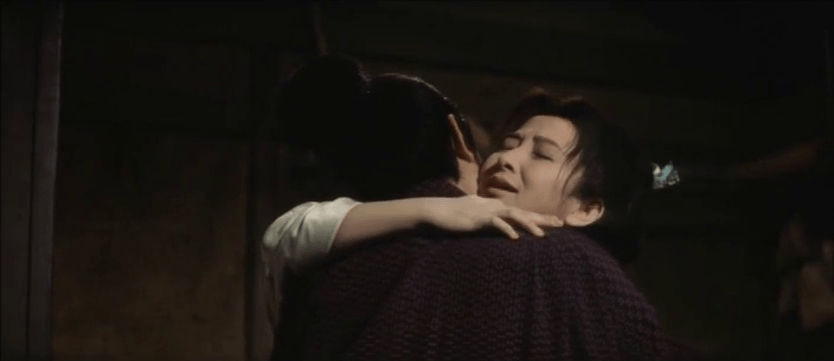
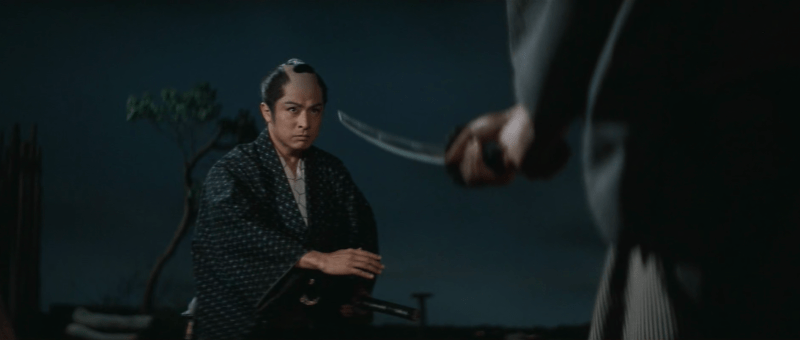
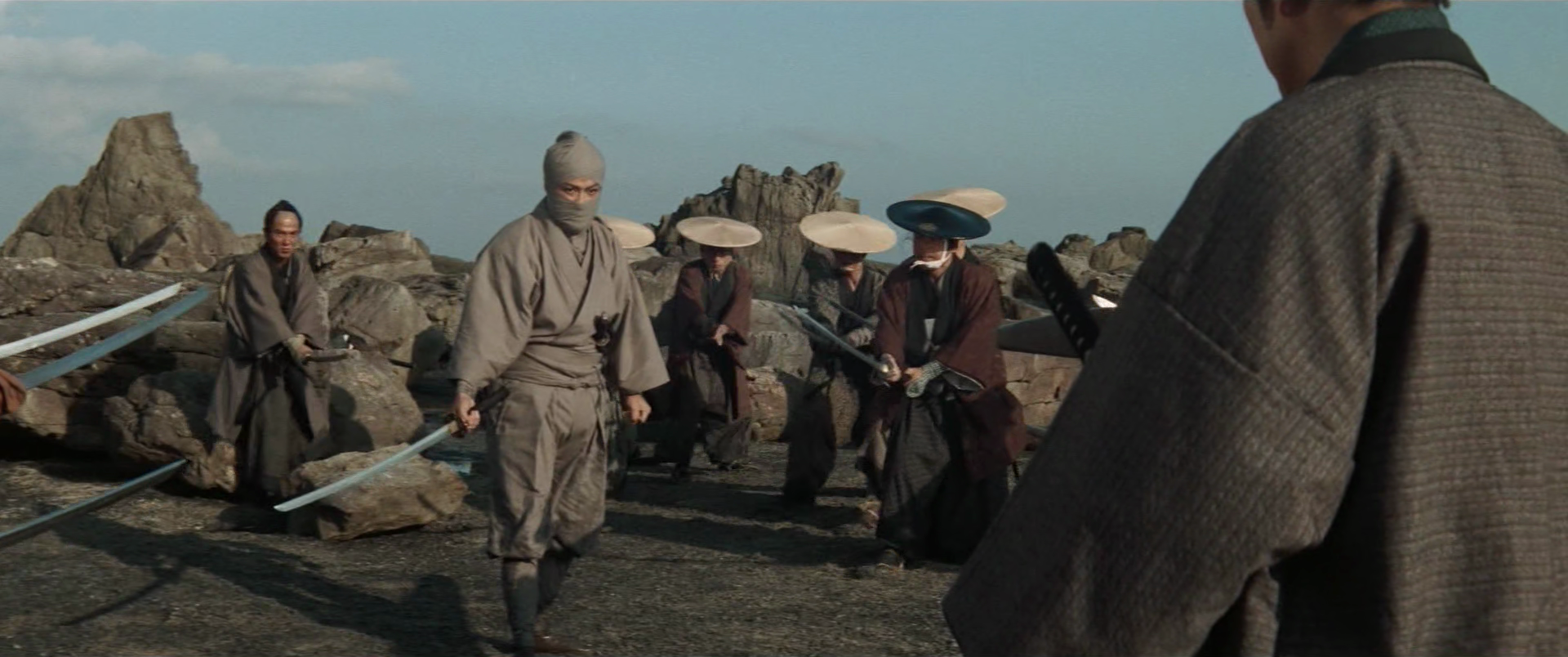
Mysterious forces swirl around a hidden village deep in the mountains said to contain copious amounts of gold in Tai Kato’s adaptation of the Ryotaro Shiba novel, Warrior of the Wind (風の武士, Kaze no Bushi). Though billed as a ninja movie (the film’s poster prominently features jidaigeki star Hashizo Okawa in ninja wraps with a shuriken in his hand), the film is really more of a historical romance in which a feckless young man finds new purpose through a love that is destined to remain unfulfilled.

Shinzo’s (Hashizo Okawa) main problem is that he is a second son and at the tail end of the Edo era, which means he has no real prospects in life. As the film opens, he is still in bed in the afternoon when he has to be woken by his indulgent older sister who nevertheless needles him about his complicated love life. A bit of a Don Juan, Shinzo has been romancing a young woman from a local inn, Osei (Naoko Kubo), but has also fallen for the daughter of a dojo master, Ochino (Hiroko Sakuramachi). In order to woo her, he’s got a part-time job as an instructor and faces rivalry both personal and professional with his colleague, Koriki (Minoru Oki), who is also interested in Ochino though she appears not to like him. 

Later, Osei describes their relationship as being more of a friends with benefits situation, though it’s clear that she is really in love with Shinzo but doubts that he takes it as seriously as she does. The implication is that she feels this romance to be impossible because of the class difference between them. Shinzo’s romantic interest in her may be precisely because he is only a second son, but even so he likely will not marry her because she is not noblewoman. Conversely, Ochino doubts Shinzo’s sincerity when he makes overtures to her knowing that he is technically still in a relationship with Osei and is unsure whether or not she can trust him despite her obvious attraction. This element of romantic confusion adds to the pervasive sense of mistrust that colours the late-Edo society in which it is impossible to tell whose side anyone is really on when even individuals struggle to define their own authentic identity. Rounding out the chaos, Shinzo is also pursued by a woman working with mysterious shogunate agent The Cat, who says she no longer knows who she is anymore and asks Shinzo to make love to her in the aim of finding out.

Shinzo too is given a mission on behalf of the shogun. As his brother says, this ought to be what finally gives his life purpose. The way to serve a lord is to carry one’s orders, as Shinzo is old after asking too many questions. But conversely, it seems to be that he finds purpose more in saving Ochino and the eventual mutual recognition of their feelings than he does in fulfilling his purpose as a samurai lord. It turns out that both the shogunate and the Kishu clan want to take over the village because it was said to have amassed vast amounts of gold, which, aside from the desire to possess it themselves, makes them a threat to the shogunate in the event they are gathering funds for a rebellion. The village is only thought to have 200 residents, though they are believed to be remnants of the once-powerful Heike clan who fled into the mountains.

Ochino’s “true identity” is then that of a Heike princess, but she again sets her authentic identity through love in making the decision to give herself bodily to Shinzo and take no other husband despite knowing she must return alone to the hidden Brigadoon-style village and thereby identifying herself as “Shinzo’s wife”. Koriki had attempted to make her his wife in nature through rape, which she seems to have escaped, despite Koriki’s taunting Shinzo with claims that he has already “made her a woman”. In her resistance, Ochino has asserted her own right to autonomy while otherwise assuming her position as leader of the clan, which has also now defeated the threat of invasion and conquest.

Bloodier and more visceral than some of Kato’s other jidaigeki adventures, the film is surprisingly gory in places with bloodspurts hitting the camera and blood trailing from flying shuriken. The violence of the action scenes is conveyed through frenetic editing and the use of POV-style closeups from the perception of the aggressor that often see the victim reeling from a blow seemingly delivered by the camera itself or else staring in horror. Visions of oddly positioned corpses add the sense of absurdity in this internecine world of intrigue and mystery where, it seems, love is the only truth but even so must itself then be denied in order to preserve the precarious order of the bakumatsu society.


Trailer (English subtitles)
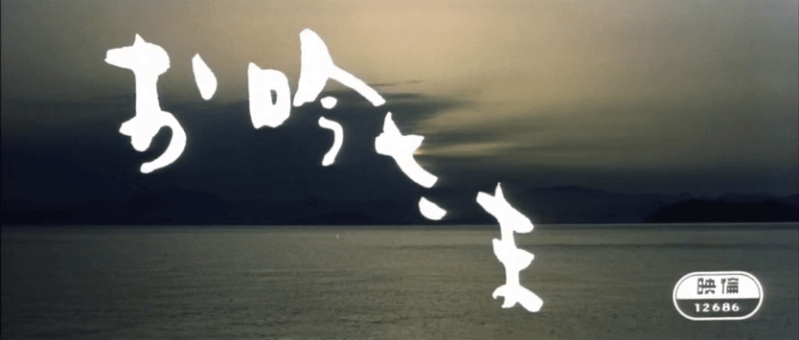
Love Under the Crucifix (お吟さま, Kinuyo Tanaka, 1962)

Love Under the Crucifix cap 1A legendary screen actress, Kinuyo Tanaka completed only six films in her career as a director. The last film that she would ever make, Love Under the Crucifix (お吟さま, Ogin-sama), is the only one to be set in the historical past taking place against the backdrop of turbulent late 16th century politics just forty years or so before the nation would embark on 200 years of self imposed isolation undertaken in the name of preserving the national character while solidifying a political regime. As in her other films, however, Tanaka employs a standard melodrama narrative in order to subvert it. Her heroine defies all “for love”, but not so much in itself as for the right to it and to the legitimisation of her feelings as a human woman with all the rights and freedoms that ought to entail.

The film begins in the 15th year of Tensho (or 1587). Toyotomi Hideyoshi (Osamu Takizawa) is attempting to solidify his command over a Japan which is in a state of constant warfare. Meanwhile, foreign trade and influences, including Christianity, are flooding into the nation. There is growing suspicion among Hideyoshi’s advisors that Christian converts are nothing more than foreign spies working to undermine the social order and cannot be trusted. Therefore, Christianity is a spanner thrown in the works of Hideyoshi’s plans for peace and unification, only no one is quite sure as yet what to do about it except disapprove.

Meanwhile, our heroine, Ogin (Ineko Arima), is the step-daughter of prominent tea master Rikyu (Ganjiro Nakamura). She has long been in love with Ukon (Tatsuya Nakadai) – a young lord who has converted to Christianity and is in fact already married. Despite the impossibility of her love, Ogin holds fast to its purity and has refused all entreaties to marry. However, she is placed in a difficult position when it is made clear that a prominent suitor affiliated with the local lord desires her. Rikyu affirms that he will follow Ogin’s will, but Mozuya (Hisaya Ito) is too important a man to be refused out of hand and the consequences of turning him down may be severe. Ogin searches for a sign from Ukon, but he coldly tells her to marry, refusing any confirmation of the feelings which she believes to exist between them.

The film’s English title, Love Under the Crucifix, reminds us that this is not so much a story of religious freedom as social oppression. Divorced form its Christianising context, the crucifix was in this era the primary punishment for sexual transgression, most often for both men and women committing adultery or daring to love in places where society would not approve. Thus Ogin lives her life under it in being reminded of the potential costs of her inappropriate emotions. Even so, observing a young woman tied to the cross (Keiko Kishi) and apparently electing to go to her death rather than become the concubine of the local lord against her will, Ogin sees in it not censure but defiance and path towards personal empowerment if only in ultimate negation.

The literal crucifix becomes a noose around Ogin’s neck in the form of the necklace given to her by Ukon. Ogin remains unconvinced by Ukon’s religiosity even if she respects it but later resents the austerity it provokes in him while wondering if his friendship with her was only ever a pathway to conversion. Ukon’s troubles are multiple, not only is he oppressed by the social strictures of his time but also by an additional burden of Christianising morality which instructs him that his feelings are sinful and must be rejected.

Later, Ogin berates Ukon insisting that all of this suffering and the predicament they now find themselves in might have been avoided if only he had not kept his feelings hidden. Ukon’s religiosity obliges him to behave in ways which are cruel and selfish, and which ultimately bring him little other than additional suffering and unhappiness. This emotional tension has also played into the hands of the ruling regime who are content to use their feelings, and the prevailing tendency towards properness, against them as a plot against Rikyu and to prevent Ukon’s return as a military rival.

Despite Rikyu’s best efforts, Ogin has indeed become a pawn in the hands of men. Rikyu, as we’re reminded at the film’s conclusion, fell from favour and committed ritual suicide at the age of 70. Like Ogin, he remained true to himself even when politically unwise, advancing his philosophies of simplicity and respect for the natural world in the face of what he saw as Hideyoshi’s increasingly gaudy superficiality. Thus he councils Ogin that there is nothing wrong in her feelings and her only duty to him or to anyone else is to try to live happily even if that means she must live in hiding with the less courageous Ukon who refuses to abandon his faith but struggles to find the courage to fight for love, or more specifically for the right to love, as Ogin has done all her life.

Ogin is, in a sense, already on the cross as she continues to suffer not for faith but for faith in love and in her own right to her individual feelings and agency. Faced with being forced to surrender her body to a man she does not love because of a cruel game played by men for men, Ogin prefers death and finds in it the ultimate expression of her personal freedom and emotional authenticity.


The Moon Has Risen (月は上りぬ, Kinuyo Tanaka, 1955)

the moon has risen bookletOne of the most celebrated actresses of the 1930s, Kinuyo Tanaka’s post-war career took a couple of unexpected turns. In 1949, she was one of a small number of performers sent to tour America as a cultural ambassador but the reception upon her return was anything but welcoming as her old fans openly criticised her “Americanised” ways. In the same year, she ended her long standing contract with Shochiku to go freelance which meant she could pick and choose her projects from across a wider field of directors and actors she wanted to work with. What she wanted, however, was somewhat unheard of – she wanted to direct. The second woman to ever helm a feature film in Japan, Kinuyo Tanaka made her behind the camera debut in 1953 with the extremely impressive melodrama Love Letter which was penned by the ever supportive Keisuke Kinoshita. Tanaka’s directing career was almost derailed by her good friend and long time collaborator Kenji Mizoguchi who, for reasons which remain unclear, attempted to block her acceptance into the directors guild of Japan (ending their working relationship in the process), but after eventually joining Nikkatsu as a director she was able to begin work on her second film – The Moon Has Risen (月は上りぬ, Tsuki wa Noborinu), ironically enough scripted buy Shochiku stalwart Yasujiro Ozu.

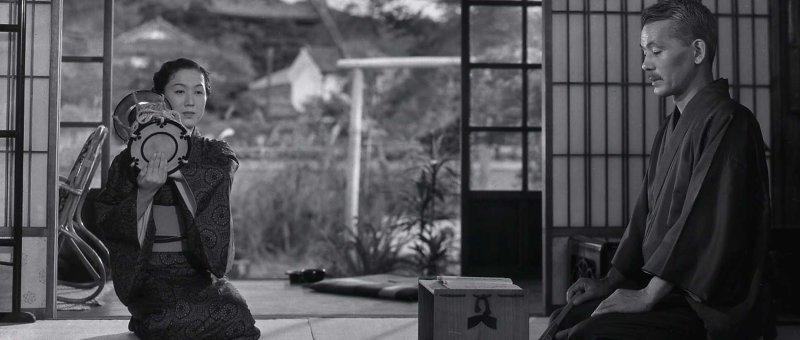
In the classic Ozu mould, The Moon Has Risen is a family drama but Tanaka pulls the focus a little to home in on the central three sisters. Cared for by widowed patriarch Mokichi (Chishu Ryu), the Asai family consists of widowed oldest sister Chizuru (Hisako Yamane), reserved middle sister Ayako (Yoko Sugi), and the exuberant youngest sister Setsuko (Mie Kitahara) who is in a kind of relationship with the currently out of work intellectual, Shoji (Shoji Yasui). When an old school friend of Shoji’s, Amamiya (Ko Mishima), pays a surprise visit whilst he’s in the area to take a look at a broadcast tower, Setsuko sees it as an opportunity to set him up with her shy sister Ayako once Amamiya makes a few wistful remarks about remembering her from their school days.

The first part of the film stays firmly in the realms of comedy as Setsuko sets her plan in motion. She and Shoji do everything they can to find out whether there is any romantic possibility between the pair – baiting Amamiya to come to a non-existent clandestine meeting and then timing him to see how long he’ll wait before giving up, and convincing each of them that the other has something very important to say which can only be said under the romantic light of a full moon. Youthful as she is Setsuko’s plans largely backfire but then the moonlight gets inside them and something shifts.

The courtship of Ayako and Amamiya is quiet and restrained. They keep their romance a secret, communicating with each other through secret codes leading to poignant passages from the Manyoshu – the oldest existing collection of Japanese poetry, which everyone in the family is desperate to figure out but can’t quite get to grips with. Chizuru can’t decide if this painfully innocent path to romantic connection is very old fashioned or very modern but it certainly captures something of the cultural shift of post-war society – the marriage is “arranged” in a sense with Setsuko as a matchmaker but it’s also self determined as Ayako and Amamiya come to recognise their mutual feelings for each other, embrace their love match, and make their own independent decisions to marry.

Modern girl Setsuko has also made a proactive decision in her attachment to Shoji but their shared matchmaking quest eventually drives a wedge between them. As she later puts it, they spent so long worrying about Ayako that they forgot all about worrying about themselves. Shoji’s problem is a common one in being both out of work and soft hearted as he proves when he finds a job but decides to recommend a needier friend for it instead. A blazing row nearly threatens to end things but, again, the pair rely on gentle, well meaning advice from their elders and eventually realise they’re about to make themselves miserable in a fit of pigheadedness.

Though Tanaka mimics the veteran director with iconic Ozu-inspired compositions and frequent use of pillow shots, her emotional canvas is more direct than her mentor’s stoical resignation. Steering clear of Ozu’s trademark tatami mat view and preference for direct to camera speech, Tanaka’s lensing is shier and avoids faces altogether to focus on the physical. She lingers on clasped hands, or on uncertain feet, as they hug the ground unwilling to stay or go. Having ignored her for most of the film, Tanaka turns back to Chizuru whose lonely widowhood seems like a forgone conclusion, as her eyes brim with tears on hearing her perceptive father’s acknowledgement of a possible new suitor.

Mokichi’s inevitable loneliness is background rather than foreground as his daughters take centerstage, leaving him to wonder why young people prefer the “dusty, dirty Tokyo”, to his peaceful Nara but in any case he remains perfectly content for each of them to find their own path to wherever it is they’re supposed to be. In her attempt to film Ozu’s script with Ozu’s camera, The Moon has Risen may seem like a step backwards for Tanaka following the more inventive Love Letter but even while working within such constraints she manages outdo the master in her essential emotional immediacy and well observed depiction of lives and loves post-war women.