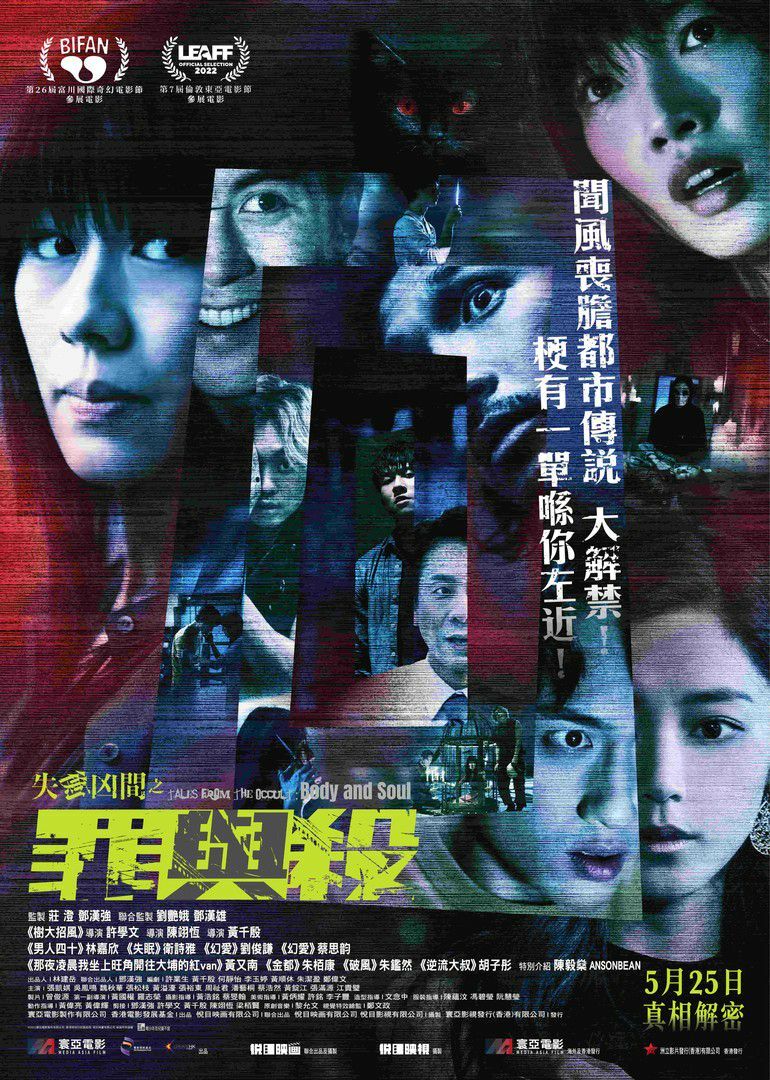
Tales from the Occult: Body and Soul (失衡凶間之罪與殺, Frank Hui, Daniel Chan Yee-Heng, Doris Wong Chin Yan, 2022)

The second in a series of horror-themed anthologies, Tales From the Occult: Body and Soul (失衡凶間之罪與殺) takes fairytales as its theme but truth be told none of the episodes has very much in common with the most well known version of their respective stories. What they do have in common is a rather grisly view of the nighttime city perhaps inspired by classic Cat III shockers though mediated through a strong sense of irony. “I like it a bit dark” one of the heroes exclaims and it’s certainly a sentiment shared by each of the three directors. 

The first instalment, Frank Hui’s Rapunzel finds former idol star Maggie (Michelle Wai) trying to prop up her flagging career while constantly written off as a has been best known for a cheesy pose in a dated shampoo commercial. Her manager sends her to an obnoxious rich kid’s birthday party where the women are so young they weren’t even born when she was a star and relentlessly mock the weird “aunty” and her “retro” movies. One of the guys sets fire to her hair which is even more of a problem for her because she’s supposed to have an important meeting with a producer in the morning and he’s not going to hire her with a less than perfect appearance. Maggie’s desperation eventually draws her into the orbit of a hair fetishist serial killer from whom she must try to escape while attempting to rescue her hair and save her career. A secondary strain of social community places the killer’s creepy all night salon in a building that’s about to be torn down for urban renewal leading him to be bullied by gangsters to move out but not wanting to for obvious reasons. Maggie meanwhile eventually makes a surprising decision in order to fix herself which is in its own way cannibalistic at least of the female image when it comes to the idea of perfect hair. 

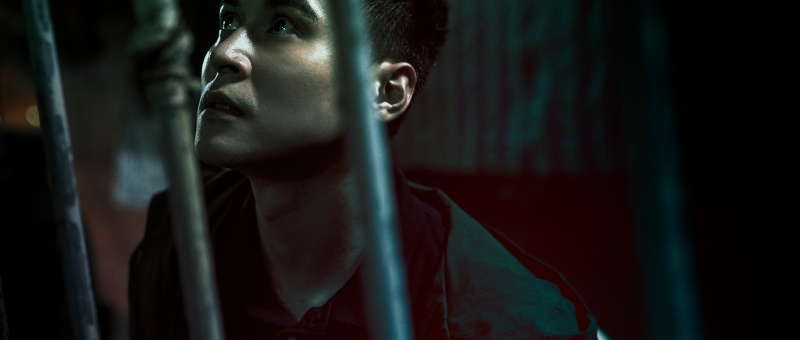
You couldn’t say that Daniel Chan’s Cheshire Cat really has that much to do with the classic Alice in Wonderland character either, though Chan does throw in something like a Mad Hatter’s tea party and leave his heroine trapped in a cage suspended above the air. Nora (Cecilia Choi Si-Wan) works in a cat rescue centre and is particularly upset by the idea of people hurting her feline friends, especially as her own cat Bobo was recently murdered. After agreeing to rescue a kitten trapped under a van she unwittingly passes into a grim haunted house adventure with a death metal vibe. In a series of atmospheric shots, Chan frames Hong Kong in an angry red tint capturing the increasing resentment of Nora as she continues to take out her rage on those who would harm poor defenceless creatures. 

Doris Wong’s The Tooth Fairy perhaps ironically subverts its title while toying with the interplay of sadomasochistic fetishes. Dental nurse Sammi (Karena Lam Ka-Yan) is being relentlessly harassed at work by sleazy dentist Steve (Tommy Chu Pak-Hong) who won’t take no for an answer. On her way to the bank, she comes across a fight between two young men in which one bites off the other’s ear, and invites the biter to her clinic to get his swollen cheek looked at. Steve, however, does not take kindly to this after seeing he and Sammi flirt with each other, extracting a healthy tooth without anaesthetic as if teaching him a lesson, but clearly deriving sexual pleasure from his pain just like the sadistic killer on the news. In any case events soon escalate following some cake-related triggering and not just for its capacity to ruin your teeth. The killer may claim they’re setting people free from their earthly suffering but is clearly in part at least killing for the thrill. 

In any case, danger seems to lurk behind every corner with potential serial killers apparently all around us as the heroes find out during their various quests. Their stories may not have much in common with their inspiration but each have a strangely ironic quality curiously mimicking B-movie cinema in terms of colour palette and production design, Frank Hui eventually opting for a neon-coloured nightmare lair while Nora and the gang chase through a haunted Hong Kong and Sammi does her best to extricate herself from the unwanted attentions of her sleazy boss who is perhaps the real monster in the shadows. 


Trailer (English subtitles)

July Rhapsody (男人四十, Ann Hui, 2002)

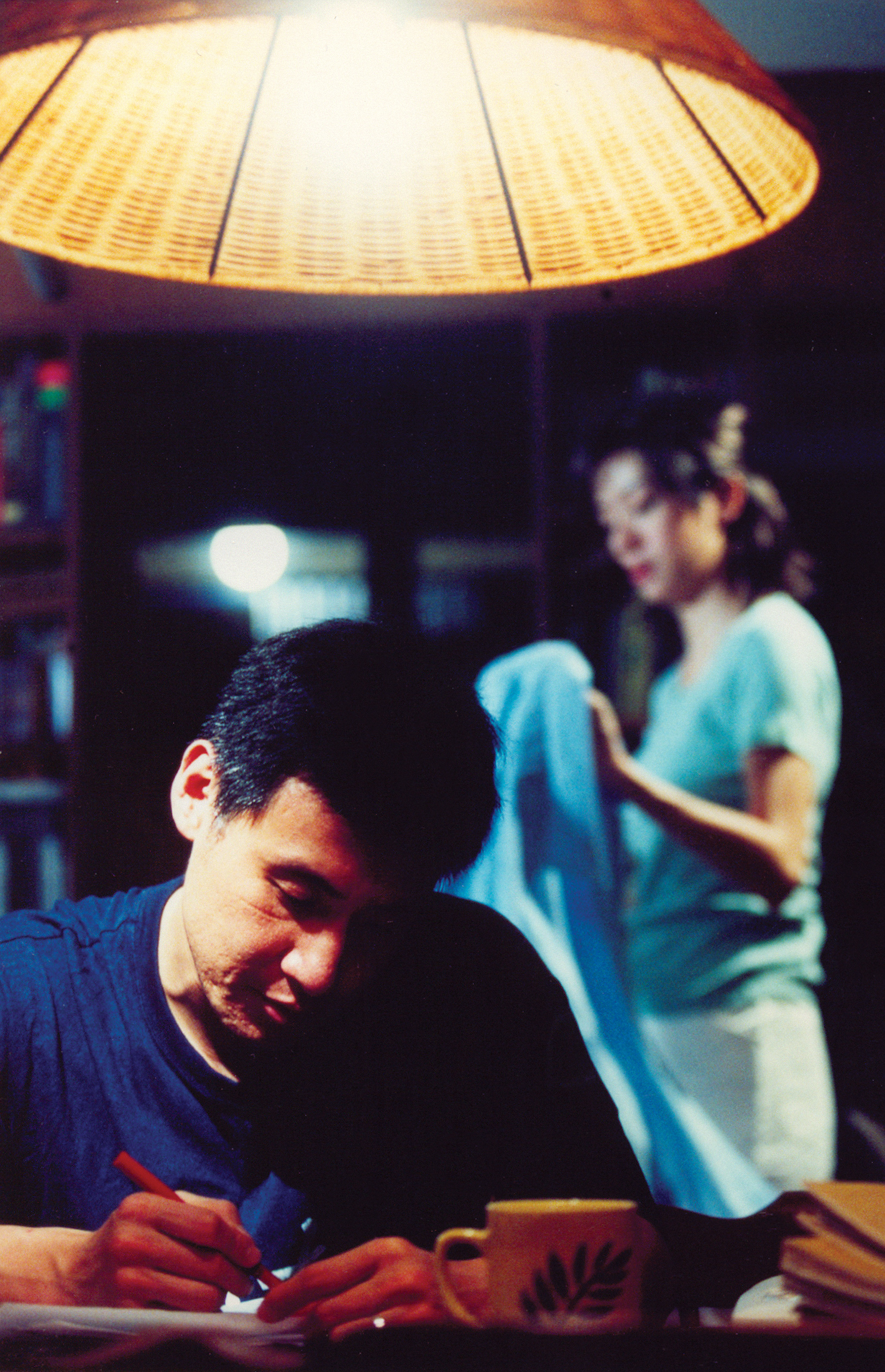
“Not every ending fulfils your expectations” a weary mother advises her son sharing long buried family secrets which will at least set them free if not perhaps happily. Scripted by Ivy Ho, Ann Hui’s July Rhapsody (男人四十) is as the Chinese title “a man at 40” implies a film about mid-life crises and quiet desperation as a middle-aged school teacher begins to resent the loss of his youth while transgressively drawn to a free-spirited student. 

Lam (Jacky Cheung Hok-Yau) describes himself as “stiff”, a “boring” man who teaches Chinese literature to disinterested students while privately consumed by a sense of inferiority observing with envy the yachts that litter the horizon on a trip to the beach with his son. At a reunion dinner he gets up with irritation when one of his former classmates now a wealthy financier tries to pay the bill for everyone insisting on paying his own way while perhaps exposing the sense of belittlement he feels around his more successful friends. His wife Ching (Anita Mui Yim-Fong) questions his decision pointing out that even if he could afford to pay his bit perhaps his friend Yue (Eric Kot Man-Fai) couldn’t and would feel equally insulted should Lam simply agree to pay his share too. To add insult to injury, one of his friends also wants to hire him to tutor his young son in classical Chinese poetry which leaves him feeling somewhat humiliated but on the other hand not wanting to turn the money down. 

These feelings of dissatisfaction with the way his life has turned out only intensify as he reaches the age of 40 and begins to feel his options narrowing wondering if this is really all there is. He and Ching recall a melancholy poem they learnt at school in which a scholar on a boat laments “the limitations of life” only for the poem to be ironically cut short when the couple’s younger son, Stone, comes to fetch his mum because the soup is boiling dry. Even without knowledge of the final revelations told in a two part story divided between a mother and a father to a son, we can gather that Lam married extremely young and became a father soon after. He studied at night school and became a teacher as a steady job to provide for his family and perhaps to a degree resents them for limiting his choices. His classmates, aside from Yue, all went on to find more lucrative careers while he lives in a small two bed flat snapping at his wife that he’s unlikely to find the money to buy a bigger one. 

When he irritably tells her a tube of glue they bought is “all dried up” it sounds like an insult and a way of describing their moribund relationship. Beginning to bond with free-spirited high school girl Wu (Karena Lam Ka-Yan), Lam initiates intimacy with Ching but then turns away leaving her lonely and disappointed. She meanwhile explains to him that a figure from their past whom he seems to resent has become ill and is all alone. She would like to care for him but only with Lam’s consent which he gives but grudgingly. Talking to her son, Ching admits that she isn’t sure if she’s helping this man out of pity or because she simply wants to see him suffer given the effect he has had on her life. Similarly Lam later confesses to Wu that he may have befriended Yue because he was a poor student and unpopular. At his side, Lam was always going to look good bearing out his sense of insecurity in wanting to be seen as the best, idolising his Chinese literature teacher and desperate for his praise only to find himself ironically echoing his transgressions in allowing himself to be seduced by a student. 

Ironically enough, Lam tells his son that he became a teacher because he sat behind Ching in class and wanted to stand out front so that he could see her face. Wu represents for him that same innocent teenage romance, but also a sense of the path not taken in her free-spiritedness and confidence. Lam followed the conventional path, did everything right, and now he’s unhappy. Wu rejects education and goes straight into business, supported by a wealthy father, planning to go travelling in India to look for new stock for her shop. His sons too perhaps echo his conflicting desires, Ang the older studious and responsible, and the younger Stone (changing his name to the cooler “Rocky”) uninterested in his studies. The melancholy poem which frequently recurs hints at a parting while husband and wife each attempt to resolve something but are left only with uncertainty and perhaps tragically in opposing positions in considering the further course of their lives. 

This very literary drama is related in a series of stories, Lam’s told to his son first in person and then in a letter, followed by Ching’s and the constant stream of classical Chinese poetry that floods the screen guiding the couple towards the expanse of the Yangtze River. As Ching had said, not every ending fulfils your expectations because in the end life is not so neatly packaged. There may be no real accommodation with middle-aged disappointment but there may be new ways forward to be found in resolving the traumatic past.


July Rhapsody screens at Garden Cinema, London on 10th July as part of Focus Hong Kong’s Making Waves – Navigators of Hong Kong Cinema.

Original trailer (Traditional Chinese / English subtitles)

Legally Declared Dead (死因無可疑, Steve Yuen Kim-Wai, 2019) [Fantasia 2020]

“The road to hell is paved with good intentions” a well-meaning insurance agent is advised in Steve Yuen Kim-Wai’s Legally Declared Dead (死因無可疑), though he struggles to fully understand its meaning and in the end you have to wonder how good his intentions really were. Yusuke Kishi’s novel The Black House has been adapted twice before, firstly in an idiosyncratically absurdist take by Yoshimitsu Morita, and then in Korea by Shin Terra who remained firmly within the realms of contemporary K-horror. Yuen lands somewhere between the two, adopting a stylish veneer of neo noir as the traumatised hero has his worldview upended by heinous immorality. 

Yet as Wing-shun (Carlos Chan Ka-Lok) tells Ching (Stephen Au Kam-tong), the office investigator, he’s just a broker and it doesn’t do to be suspicious of all his clients. A nice, well mannered young man, Wing-shun is all poised customer service charm, but he also firmly believes that the business of insurance is a noble good, that he’s helping people by being there for them when disaster strikes. As such, he doesn’t like to think that people are abusing the system, and is reluctant to reject a claim. On the other hand, he calms a pair of panicked gangsters who are most definitely on the fiddle by explaining that neither he nor his colleague can help them because being a broker is like being a dealer at the casino, they can only push the paperwork to the floor manager who alone has the authority to decide whether or not to pay out and wait for their instructions. 

Wing-shun’s casino metaphor is more true than he intends it, what else is insurance after all than a kind of gambling? Wing-shun can tell himself he’s there to provide relief and support in times of need, but really he’s betting against misery which might be better than betting in its favour but it’s still wagering people’s lives. That fact’s brought home to him when he takes a call late one evening from a man who asks him if they pay out on suicide. Cheerful as ever, Wing-shun asks for his policy number to check the paperwork before realising the darkness inherent in the question and telling the person on the other end of the phone not to do anything rash, “money doesn’t solve everything”. The man simply asks for his name and then abruptly hangs up. Wing-shun chalks it up to just another weird thing that sometimes happens and forgets about it but the next day he’s told that a client has personally requested him to talk over their policy and wants a home visit to a rural location outside the city. A little bemused, Wing-shun does as he’s told and encounters Chu Chun-tak (Anthony Wong Chau-Sang), not realising he’s the man from the phone only noticing he’s behaving quite strangely. Suddenly Chun-tak starts shouting for his son Kafu and gesturing to another room inside which Wing-shun discovers the boy hanging. 

The boy’s death triggers painful memories for Wing-shun who is burdened with a sense of guilt over the death of his older brother in childhood. Unable to escape the idea he’s been set up and Chun-tak only invited him out here to “find” the body, Wing-shun is convinced that he killed Kafu in order to claim his life insurance payout. Kafu was Chun-tak’s stepson and also had learning difficulties, while Chun-tak’s wife Shum Chi-ling (Karena Lam Ka-Yan) is partially sighted and walks with a pronounced limp. Wing-shun is particularly worried because Chun-tak also has a policy on her and it’s reasonable to assume she’ll be next in the firing line. He struggles, however, to convince others of his suspicions. The policeman investigating closes the case when the autopsy comes back with suicide as the cause of death, attributing the motive to exam stress, while the insurance company fails to find evidence to deny the claim.  

Unlike the other adaptations, Legally Declared Dead keeps the suicide option on the table while Wing-shun begins to go quietly out of his mind. Meanwhile, his psychology student girlfriend (Kathy Yuen Ka-Yee) hooks him up with her dubious professor (Liu Kai-chi) who is studying the “criminal personality” and claims that while some people commit crime because of trauma and desire a few so because they’re simply born bad and can never be saved. These people, he says, are manipulative narcissists who often exploit the vulnerable, making them a kind of “slave”. Professor Kam becomes overly invested in Wing-shun’s case, convinced on meeting him that Chun-tak is a clear case of “criminal personality”, murdered his son, and is almost certainly going to murder his wife. But is it really fair to decide someone’s killed their child just because they’re a bit odd and admittedly desperate for money, aren’t they just being judgemental and prejudiced? Come to that, is it sexist and ablest to assume that Chi-ling is naive and powerless, that she is a potential victim and could not have been involved in her son’s death or conversely maybe planning to off her husband?

Wing-shun lives with a collection of rare insects including a few praying mantises, which he states cannot be caged in pairs because the female will devour the male, but he continues to think of Chi-ling as sweet and harmless seeing her tenderly calm her husband down after starting to accompany him on their daily visits to the insurance office to ask about the money. On the other hand, with her limp and milky eye Chi-ling is also uncomfortably coded as villainous in an unpleasant alignment of physical deformity and “evil”, while Chun-tak is also assumed to be abusive largely because he struggles to communicate in the “normal” way. 

Nevertheless, the idea that some people are deliberately maiming themselves to claim on “workers’ insurance” either at their own behest or forced into it by loansharking gangsters pursuing gambling debts is presented as no real surprise just another element of a cynical and duplicitous society. Wing-shun knew this, but perhaps didn’t really believe it. The Chu case exposes to him the ugliness of the world in which he lives, raising with it old memories of his childhood trauma, the very kind of trauma which professor Kam insists causes some to commit crimes. Becoming fixated on the idea of Chun-tak as a murder, Wing-shun descends into nervous paranoia but is perhaps less interested in getting justice for Kafu and protecting Chi-ling than vindicating himself and defending the “nobility” of insurance as a concept for social good while avoiding dealing with his own childhood trauma in refusing his responsibility towards his brother. 

Shooting the pulpy material with a stylish, B-movie sheen, Yuen closes with a Silence of the Lambs-inspired climax which sees Wing-shun venture alone into the nest of a killer, repeatedly blinded by ultraviolet light and denied the ability to fully asses his reality. He thinks he finally understands Ching’s caution that the “road to hell is paved with good intentions” which he perhaps had in his desire to get justice for Kafu and protect Chi-ling, but in the end he might have to admit that the killer had a point when they said he  was “just like me”, a “criminal personality” consumed by latent violence caused by unresolved childhood trauma. “You do what you need to to survive, you scam people and they scam you” Wing-shun’s friend shrugs, but it’s a lesson Wing-shun learns all too well, once again refusing his responsibility as a secondary victim looks to him for help but discovers only cold and cynical resentment.


Legally Declared Dead streamed as part of this year’s online edition of Fantasia International Film Festival. It will also be available to stream in New York State on Sept. 5 only as part of this year’s New York Asian Film Festival.

Original trailer (English subtitles)

The White Storm 2: Drug Lords (掃毒2天地對決, Herman Yau, 2019)

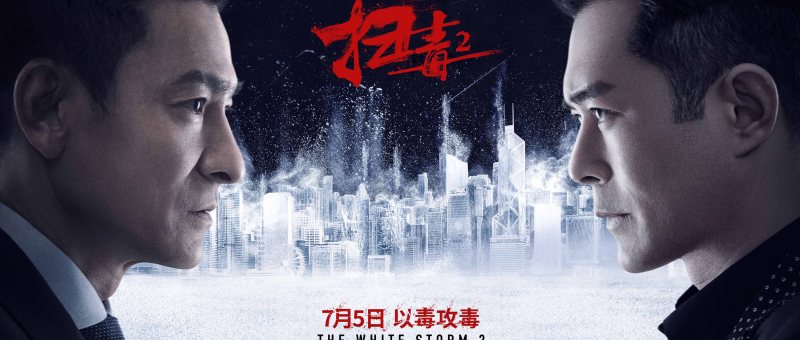
132134ti38vkkj3p299ni8The war on drugs comes to Hong Kong care of Herman Yau’s latest foray into heroic action, White Storm 2: Drug Lords (掃毒2天地對決). In the grand tradition of Hong Kong movies adding a random prefix to the title, Drug Lords is a “thematic” sequel to Benny Chan’s 2013 hit White Storm, which is to say that it shares nothing at all with Chan’s film save the narcotics theme and the participation of Louis Koo who returns in an entirely different role. What Yau adds to the drama is a possibly irresponsible meditation on vigilante justice and extrajudicial killing which, nevertheless, broadly comes down on the side of the law as its dualist heroes eventually destroy each other in a nihilistic quest for meaningless vengeance.

A brief prologue in 2004 sees depressed Triad Yu Shun-tin (Andy Lau) abandoned by his girlfriend who can no longer put up with his gangster lifestyle and inability to break with his domineering mob boss uncle. Meanwhile, across town, flamboyant foot-soldier Dizang (Louis Koo) scolds one of his guys for supposedly selling drugs in the club, only to be picked up by Shun-tin’s uncle Nam (Kent Cheng) and severely punished for getting involved with the trafficking of narcotics. Nam orders Shun-tin to cut off Dizang’s fingers as punishment, which he does despite Dizang’s reminder that they’ve been friends for over 20 years. Conflicted, Shun-tin makes amends by driving Dizang to the hospital with his fingers in a freezer bag, but by this point Dizang has had enough. To teach him a lesson, the Triads also tip the police off to raid the club, during which the wife of squad leader Lam (Michael Miu) is killed by a drug addled patron.

15 years later, Shun-tin has left the Triads and become a successful businessman married to a beautiful lawyer/financial consultant (Karena Lam) with whom he has started an anti-drugs charity, while Dizang has become Hong Kong’s no. 1 drug dealer, operating out of a slaughterhouse as a cover. The trouble occurs when Shun-tin learns that his former girlfriend was pregnant when she left him and that he has a 15-year-old son in the Philippines who has become addicted to drugs. Drugs have indeed ruined Shun-tin’s life, if indirectly. His grandfather was an opium addict, and his father died of a heroine overdose (which is why his Triad gang swore off the drugs trade). All of which means he has good reason for hating drug dealers like Dizang, but his sudden admiration for Duterte’s famously uncompromising stance on drugs is an extraordinarily irresponsible one, especially when it leads to him embarrassing the HK police force by offering a vast bounty to anyone who can kill Hong Kong’s top drug dealer – a deadly competition that, like extrajudicial killings, seems primed to put ordinary people in the firing line.

As Lam tells him, the situation is absurd. Shun-tin’s bounty means Lam will have to spend more time offering protection to suspected drug dealers than actively trying to catch them while it also leaves Shun-tin in an awkward position as a man inciting murder and attempting to bypass the rule of law through leveraging his wealth. Indeed, as a man from the slums who’s been able to escape his humble origins and criminal family to become an international billionaire philanthropist he shows remarkably little consideration for the situation on the ground or the role the kind of ultra-capitalism he now represents has on perpetuating crime and drug use, preferring to think it’s all as simple as murdering drug lords rather than needing to actively invest in a creating a more equal society.

Meanwhile, Dizang continues to lord it about all over town and Lam finds himself an ineffectual third party caught between summary justice meted out by a man who thinks his wealth places him above the law and a gangster on a self-destructive bid for vengeance against the Triads he feels betrayed him, including his old friend Shun-tin. Truth be told, the “friendship” between Dizang and Shun-tin never rings true enough to provoke the kind of pathos the violent payoff seems to be asking for while the film is at times worryingly uncritical of Shun-tin’s vendetta, suggesting that the police are ill-equipped to deal with the destructive effects of the drug trade. Nevertheless, even if it’s to placate the Mainland censors, Yau ends on a more positive message that reinforces the nihilistic, internecine nature of the conflict while hinting, somewhat tritely, at a better solution in the sunny grasslands of the child drug rehabilitation centre Shun-tin has founded in Manila. That aside, Drug Lords is never less than thrilling in its audacious action set pieces culminating in a jaw dropping car chase through a perfect replica of the Central MTR subway station.


The White Storm 2: Drug Lords is currently on limited release in UK cinemas courtesy of Cine Asia. It will also screen as the closing movie of the 2019 New York Asian Film Festival.

Original trailer (English / Traditional Chinese subtitles)

Integrity (廉政風雲 煙幕, Alan Mak, 2019)

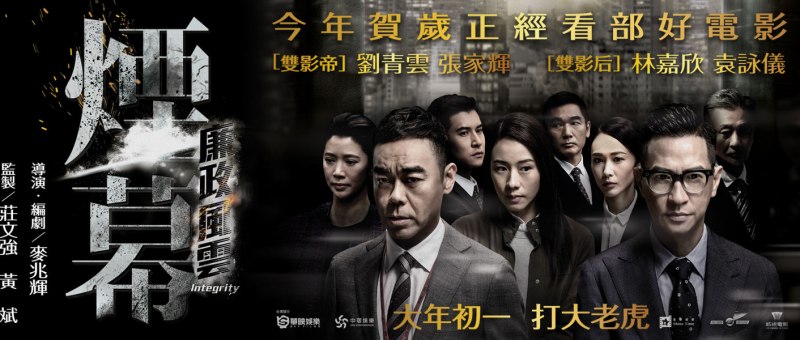
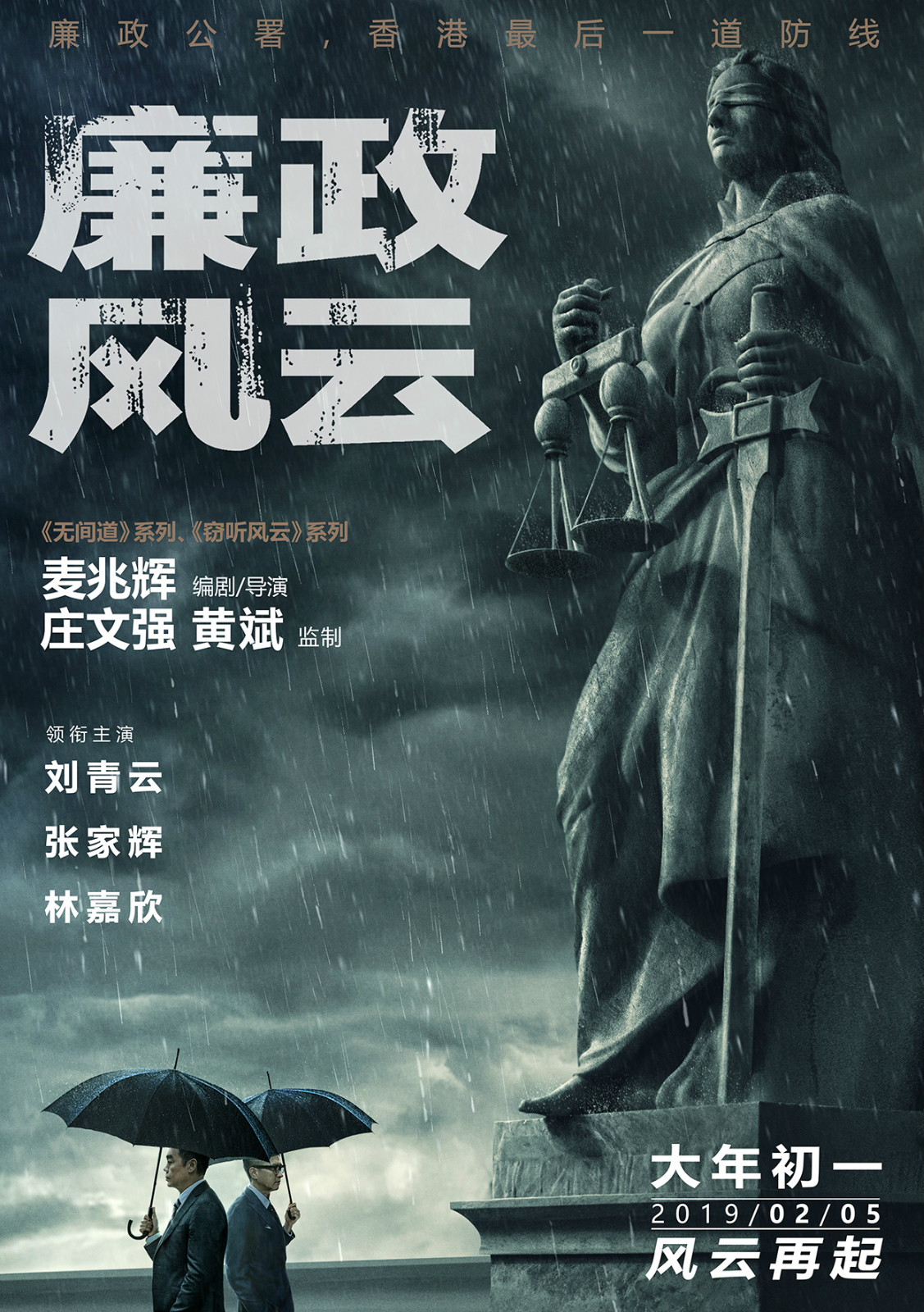
Integrity poster 1Alan Mak made his name with the phenomenally successful Infernal Affairs (co-directing with Andrew Lau) which later blossomed into a trilogy – a pattern he repeated with the Overheard series, making time for a few standalones in between. 2019’s Integrity (廉政風雲 煙幕), released as gritty alternative to the saccharine and silly fare usually on offer for Lunar New Year, finds him in similar territory and is once again touted as the first in a projected trilogy this time revolving around the ICAC who have become a Hong Kong movie favourite as of late. Drawing inspiration from classic ‘70s thrillers and American New Cinema, Integrity has a few questions to ask about the nature of corruption and the limits of control.

The drama begins with ICAC officer King (Sean Lau Ching-wan) briefing star witness Jack Hui (Nick Cheung Ka-fai) on their upcoming court case. Shortly after Jack has handed over a USB stick containing new evidence, he slips his protective detail and disappears leaving King’s case with a giant hole in the middle, especially considering one of the two defendants has also skipped town. Given a seven day recess, King reluctantly allows his wife, fellow ICAC officer Shirley (Karena Lam), to travel to Sydney to chase Jack while pressing his available leads in the form of defendant two and the rest of the USB stick.

Eschewing action in favour of intricately plotted conspiracy, Mak keeps the tension high as he slowly reveals the ambiguities of the case, reminding us that no one is quite as innocent as we might assume. We find out the relationship between Jack and King (pregnant names indeed) may not have been as straightforward as we first assumed while we’re also made aware of the extremely lucrative trade in black market cigarettes and the backhanders to the customs bureau that make it possible. Then again we have to ask ourselves why it is a top accountant like Jack might suddenly decide to turn whistleblower when he’s been perfectly content with his complicity in corruption for the last 20 years.

King is intent on catching “The Puppet Master” by following their financial trail, convinced that taking down the middlemen in the tobacco smuggling scam will eventually flush them out. He thinks he holds all the cards but isn’t quite aware what game it is he’s playing. Desperate to catch his quarry, King is in danger of crossing the line as he convinces defendant two to tell all by (falsely) promising her immunity as a prosecution witness. She eventually spills the beans, but warns him that people will die – something that tragically comes to pass when the Puppet Master starts taking care of loose ends.

Obsessed as he is, King isn’t quite sure he cares who might get hurt in his quest for justice. Then again, King’s need to catch the bad guy, as his boss (Alex Fong) tries to point out as kindly as possible, is a kind of displacement activity designed to get his mojo back so he can patch things up with his put-upon wife. Despite talk of divorce, the pair are still wearing their wedding rings and have romantic photos as their smartphone wallpaper while they continue to bicker (somewhat) affectionately via text message. The awkward romantic subplot is most likely intended to set up a series motif though it seems wholly out of place with Mak’s more serious themes, especially when tipping into unwelcome clichés such as Shirley’s impromptu shopping trips paid for with King’s card when she gets fed up with his persistent sexism.

The central theme of King’s own fracturing “integrity” gets lost in the shuffle but is dealt a killer blow by the extremely unwise ‘90s flashback and its eventual ‘80s counterpart which undercut almost everything that’s gone before, creating a series of inconvenient plot holes in the process. Mak isn’t quite sure where he wants to go and presents us with a series of trick endings, the final of which is a step too far even if it perhaps plays into his themes of karmic justice and the costs of betrayal (not to mention making it 100% clear for the mainland censors’ board that crime never pays). Though managing to nail the the tense ‘70s conspiracy thriller vibe in its early stretches Integrity’s ridiculous third act plot twists ruin an otherwise promising tale of greed and suspicion while perhaps reinforcing the idea that no one can be trusted and all connections are, to a point at least, mercenary.


Currently on limited release in UK cinemas.

Original trailer (English subtitles)

https://www.youtube.com/watch?v=bh3W1QOA4kI

The Liquidator (心理罪:城市之光, Xu Jizhou, 2017)

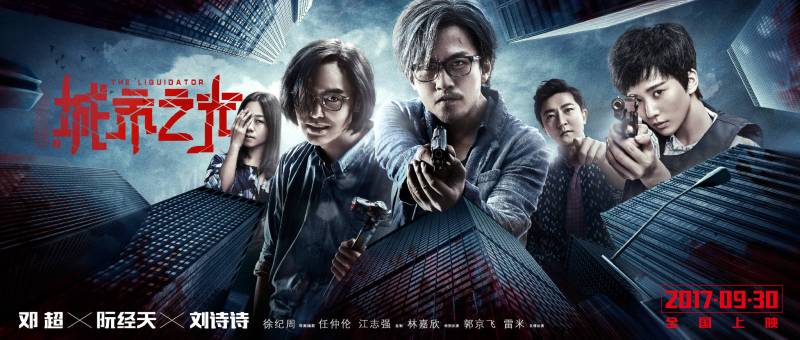
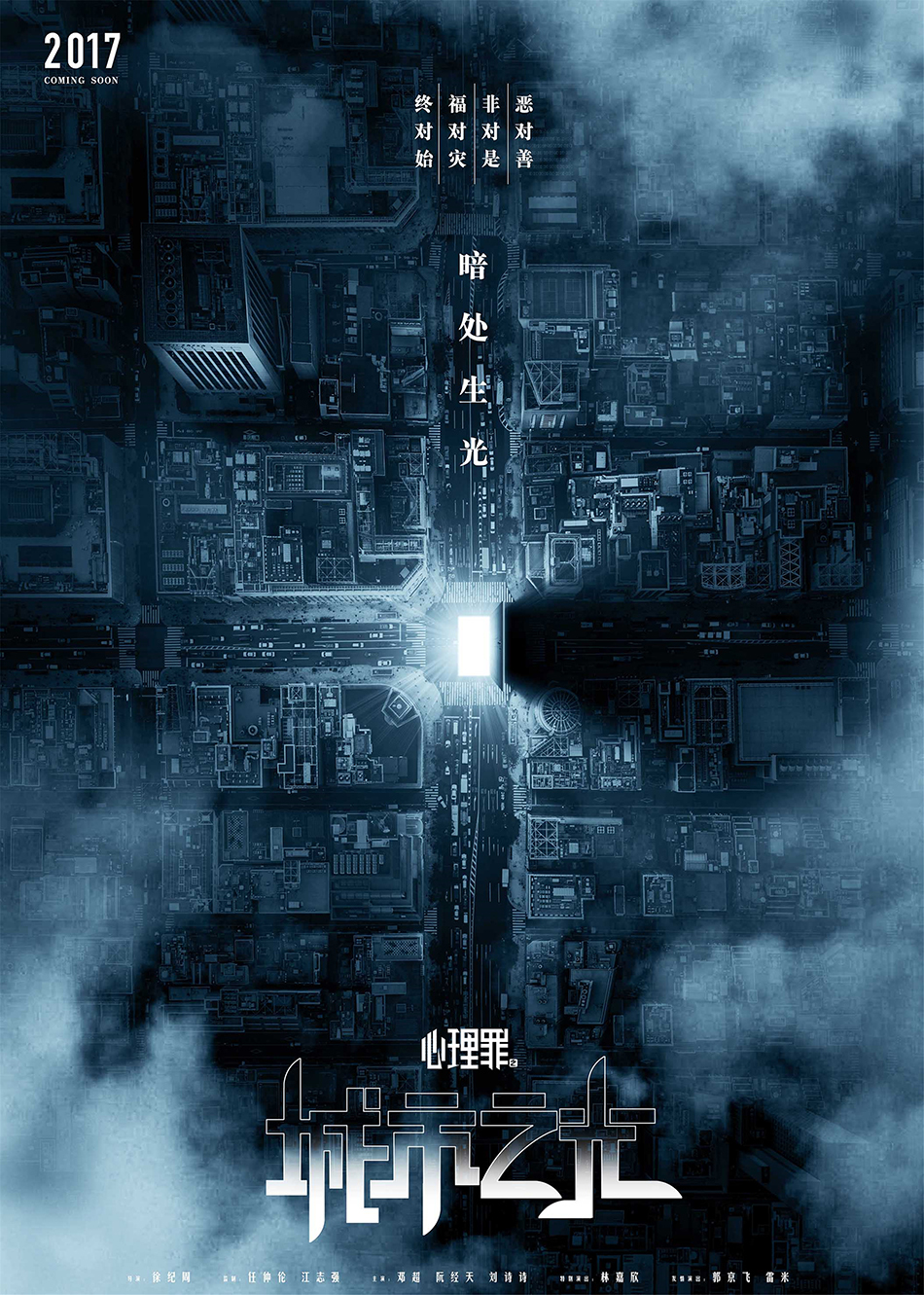
The Liquidator posterGiven a strangely ‘80s nonsensical two word title, Xu Jizhou’s The Liquidator (心理罪:城市之光, Xīnlǐ Zuì: Chéngshì Zhī Guāng) is a retro throwback to the lurid macho pulp which has largely faded from the crime procedural since its ‘90s heyday. Adapted from a novel by Lei Mi, the film follows last year’s Guilty of Mind as the second in the Fang Mu series only this time the eccentric profiler is played by marquee star Deng Chao rather than Guilty Mind’s Li Yifeng or Chen Ruo Xuan who starred in the Fang Mu TV drama, Evil Minds. A pulpy battle of wits between a crazed vigilante and a world weary cop, The Liquidator is already treading on some overly familiar territory but its main target is the rule of law apparently under threat of mob justice now that China too has entered the social media age.

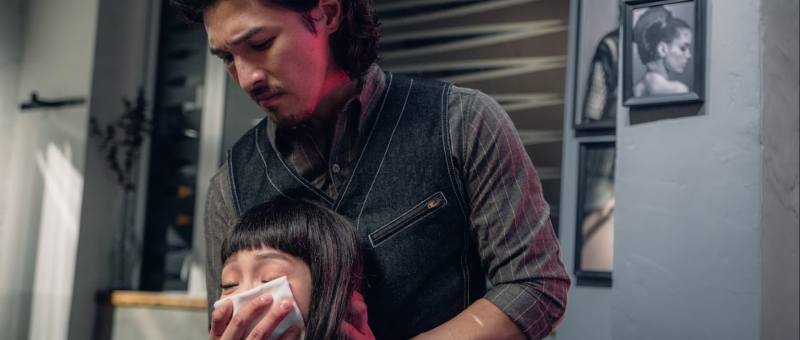
Fang Mu (Deng Chao) is no longer a police officer after becoming the prime suspect in the disappearance of a man who escaped justice through judicial corruption, but he’s pulled back into the law enforcement fold when young policewoman Mi Nan (Cecilia Liu) is dispatched to get his profiling opinion on a difficult murder case. Calling himself “The Light of the City”, a vigilante killer is already amassing a collection of dedicated online followers thanks to his choice of targets which, to put it bluntly, are not law breakers just terrible people that most would like to get revenge on for one reason or another.

Originally reluctant, Fang Mu is soon hooked on the case only to realise that the crime scenes are being created entirely for his benefit – the killer is attempting to pull him into a battle of wits and taking innocent lives to do it. As it transpires the killer’s name, Light of the City, is inspired by something Fang Mu said in his graduation speech to the effect that the police are the light that shines in the darkness. The killer thinks the law doesn’t go far enough – his targets are bullying teachers, impious sons, and greedy lawyers, the immoral rather than the criminal. He exposes their transgressions online and then allows “netizens” to have their say. Netizens, as they have often been in the “real” world, are not a particularly understanding bunch and are firmly behind the “entertainment” the killer is providing, even down to the decision to live stream a murder.

Fang Mu’s defining trait is his liminal status as a law enforcement officer often pulled towards the dark side – hence why many of his colleagues think it’s perfectly possible that he’s guilty of the crime that got him kicked off the force. The vigilante’s “plan” is to pull him over the line by forcing Fang Mu to execute The City of Light and thereby become the thing he most fears. The Liquidator posits that a robust judicial system free from interference from both government and people is a prerequisite of a well functioning society and the police must be the shining beacons of these laws – if not even law enforcement obeys the law, then all is lost.

What transpires is a battle of minds between the brainy Fang Mu and the psychotic killer, but it’s also a battle for the soul of “society” which ought to place compassion and rationality over the sensationalism of trial by media and arbitrary mob justice. The killer works out his frustrations by proxy through attacking those who committed the same “crimes” which have led to their feelings of frustration and humiliation – chief among them being Fang Mu who has, apparently, offended solely in his continued excellence, but the killer’s personal vengeance is harsh and unforgiving, handing down a death sentence simply for unpleasant or anti-social behaviour.

Beginning in a promising vein, Xu nevertheless introduces his dedicated female cop only to sideline her in favour of Fang Mu before turning her into a mild love interest, potential victim, and sometime comic relief. Filled with macho histrionics (including, at one point, a gun fired in the air followed by a manly wail of grief), The Liquidator is an old fashioned action drama filtered through pulp noir and ‘90s horror with its grimy walls and dingy basements, but it straddles a fine line between ridiculous slasher serial killer thriller and serious cerebral procedural, landing somewhere around heroic bloodshed without the bromance. Ridiculous and melodramatic, Xu’s debut feature boasts excellent production design and innovative photography, but its slick aesthetic cannot overcome the more outlandish elements of the otherwise generic script.


Currently on limited release in UK cinemas courtesy of Cine Asia

Original trailer (Mandarin with English subtitles)