
Ciao UFO (再見UFO, Patrick Leung Pak-Kin, 2019/2026)

“Where will I go in this future?” a young man tearfully asks, unexpectedly cast adrift and handed a future he never expected to have with no one to help him navigate this new reality. Speaking from the perspective of the Handover, his confusion hints at a sense of despair falling over Hong Kong, but also echoes through the contemporary society in a place where, as he later says, nothing stays the same, though that might not necessarily be such a bad thing.

Long delayed for a wider release, Patrick Leung Pak-Kin’s Obayashi-esque drama has a potent sense of nostalgia for a lost Hong Kong of the 80s and 90s, but also a hope that, even if the past cannot be reclaimed and we cannot become who we once were, it is never too late to start again or to choose a new path that leads back to who we were really supposed to be. As children, Heem, Kin, Hoyi, and her unnamed little brother were firm friends living on the Wah Fu estate. The fact that they are no longer in touch reflects a sense of displacement amid the rapid economic growth of that later 20th century in which these kinds of apartment complexes fell out of use leaving communities scattered as the housing market escalated to the extremes of today thanks to rampant property speculation. 

The children see the UFO at moment of extreme emotional despair and it gives them only a temporary respite from the terrors of a more adult world. In the mid-1990s, they have all lost their way. Kin (Chui Tien-you) once said he wanted to be an explorer like his father, but is now working several low-paying jobs such as manning a paper stand, selling vacuum cleaners, and acting as an agent of encroaching modernity by setting up home computers for first-time users. He no longer believes in aliens or the UFO, and though he reconnects with an equally melancholy former schoolmate, keeps her at arms’ length and lacks the courage to fight for what he really wants. Heem (Wong You-nam), whose childhood leukaemia has gone into remission, is working as an extra without much of a plan for the rest of his life, because he never expected to have one. He still believes in the UFO and tries to reconnect with his childhood friends amid the X-Files inspired alien obsessions of the ‘90s.

Hoyi (Charlene Choi), meanwhile, who wanted to be a joker making people laugh has been pushed onto a more conventional path as a professional accountant that appears to be making her unhappy, though she’s unable to escape it. While Kin falls victim to stock market mania and Heem Tamagotchi profiteering before joining his brother’s burgeoning real estate business, Hoyi’s straight and steady path would seem to be the winner, though perhaps there’s not so much need for accountants when everyone’s going bankrupt in the Asian financial crisis just as no has the money to buy apartments, which is something Heem’s brother didn’t seem to consider in thinking himself superior to those who got hooked on the stock market.

Several times the three’s path cross, though they do not meet each other and remain locked on their own melancholy paths. Hoyi’s free spirited “hippie” uncle teaches her a classical song written by an ancient poet that he says is about learning to find beauty in loneliness, perhaps sensing her sense of isolation as she wilfully suppresses herself to be the person that she thinks she’s supposed to be including a potential marriage to a man who’s the polar opposite of her authentic self. Austin (Joey Leung) pulls her back to earth when she’s lost in space, which is another way of saying that he crushes her dreams and desire for happiness by telling her to forget about UFOs and concentrate on being a wife and mother after their wedding.

The UFO then comes to represent a kind of nostalgia and the longing for a lost a past, but within that also finds a sense of hope that what once was can be again. It might not be the same, but it’s still there and it’s not too late to turn around and rediscover that sense of wonder in life. The childhood friends eventually reunite and find new solidarity in their shared experience that makes this new reality a little more bearable, even amid its painfulness and irony. The film ends with Hoyi’s brother (Ng Siu-hin) wearing a mask and telling us that it is April 1, 2003, which is the day that Leslie Cheung died, along with perhaps a certain vision of another Hong Kong, but also hints at the SARS crisis that would strike that year along with the more recent pandemic. Perhaps everything is a cycle, but as they say, the end of one thing is the start of another. They haven’t seen any UFOs for a long time and perhaps won’t ever see one again, but the hope remains, and with it the courage to live in this new future whatever it may hold.


Ciao UFO is in UK cinemas from 15th May courtesy of Central City Media.

Trailer (English subtitles)
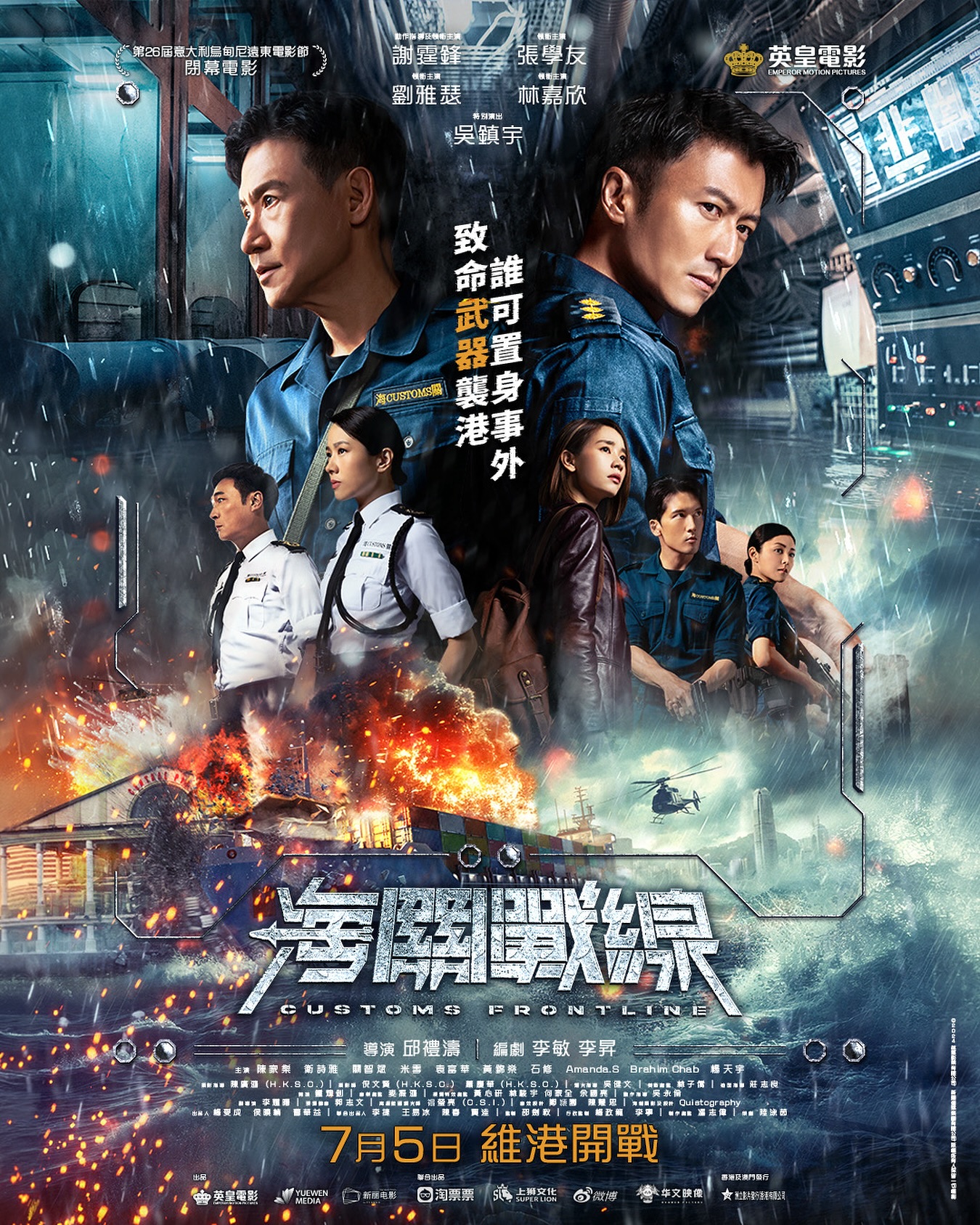
Customs Frontline (海關戰線, Herman Yau, 2024)

Who knew life as a customs official could be so dangerous? Those at the centre of Herman Yau’s high octane drama certainly do put themselves on the front line, facing constant threats of violence as they attempt to protect Hong Kong from nefarious goods and shady businessmen. The crisis in this case is, however, more international in nature as a Hong Kong corporation appears to be supplying an African warlord with seriously high tech equipment in exchange for diamonds. 

A mild political point is made that the world largely ignores conflicts in Africa, the warlord explaining that he needs all these weapons to defend himself because no one else is going to and those that do come to him largely do so for reasons of exploitation, including Dr Raw who acts as their supplier. The customs guys get dragged into it when a boat sails into their waters illegally and thereafter become determined to recover the MacGuffin of a high tech navigation device apparently stolen from the Thai army who would quite like it back. The gang are aided in their quest by a couple of Thai Interpol officers including Ying (Cya Liu) who helpfully speaks fluent Mandarin. 

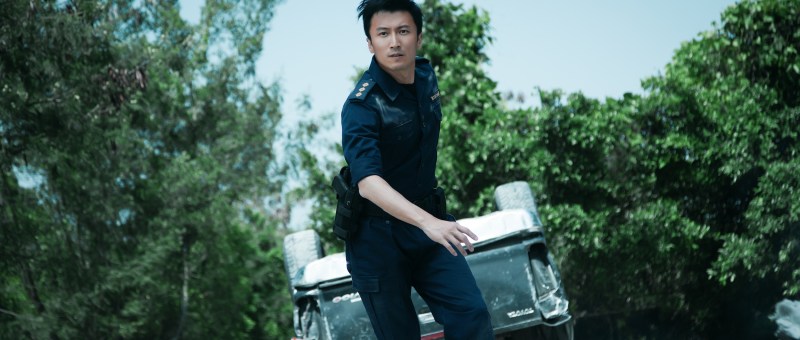
Meanwhile, Customs is divided by internal polices as two divisions vie for control over the project while plotting their ascension to the soon to be vacated post of deputy commissioner. Veteran officer Cheung (Jacky Cheung) is raked over the coals by brash supervisor Kwok (Francis Ng) and, unbenkownst to him in a romantic relationship with his rival, Athena (Karena Lam). His parter Lai (Nicholas Tse) is meanwhile nursing a degree of heartbreak having broken up with team member Katie (Michelle Yim) a year previously only to hear that she is now engaged to marry someone else. 

Perhaps surprisingly, these interpersonal dynamics largely fall by the wayside and are never dealt with again. However, the film does get into some depth with Cheung’s mental illness which it suggests is largely due to the stress of the job and has turned him into two quite different people. Somewhat insensitively, the film further stigmatises metal illness in its implications regarding Cheung’s career and emotional wellbeing with constant shots of his medication and the suggestion that he is not really up to the job. 

For the most part, however, the Customs division end up in a series of firefights and car chases eventually trying to protect the son of an industrialist (Carlos Chan) who died in suspicious circumstances after trying to sever ties with smugglers. They’re strafed in an African compound, and engage in daredevil stunts trying to outrun the bad guys with combat skills that seem incongruous with their role as customs officials. The earnest Lai runs around punching bad guys in the name of justice to heal his broken heart while otherwise failing to bond with plucky Interpol agent Ying who still ends up as a damsel in distress despite her obvious skills though her chief manoeuvre is a honeytrap, using poisoned lipstick to knock out the chief arms dealer.

The film may hint at a dissatisfaction with inequality and consumeristm along with a healthy mistrust for large, family-owned corporations but otherwise fails to follow through. Cheng dreams of a place in the sun, a house by the sea for Athena where they could leave the stressful world of customs and intelligence behind but also seems resentful of her ambition asking her if she’d choose a quiet life with him over a shot at becoming deputy commissioner and annoyed when she replies that she hopes she can do both, achieving her career goals and then enjoying the rest of her life in a peaceful retirement at Cheung’s side. It may be this sense of hopelessness that drives him, realising he can’t attain what he really wants in the elusive career success denied him because of his reluctance to play the game along with the lack of financial power it affords him leaving him unable to buy that house by the sea or give Athena what he thinks she wants (but probably doesn’t, at least in the way he wants to give it to her). Though falling flat in terms of its interpersonal drama, the action scenes are at least exciting and well-designed even if the whole is somewhat hollow in its continual lack of bite.


Customs Frontline screens in New York July 17 as part of this year’s New York Asian Film Festival.

Original trailer (Traditional Chinese / English subtitles)

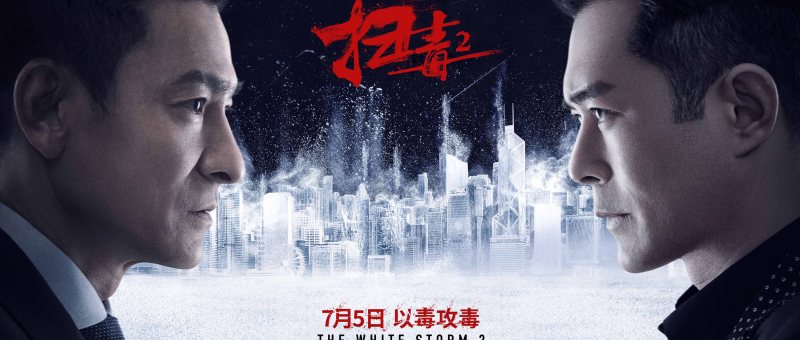
The White Storm 2: Drug Lords (掃毒2天地對決, Herman Yau, 2019)

132134ti38vkkj3p299ni8The war on drugs comes to Hong Kong care of Herman Yau’s latest foray into heroic action, White Storm 2: Drug Lords (掃毒2天地對決). In the grand tradition of Hong Kong movies adding a random prefix to the title, Drug Lords is a “thematic” sequel to Benny Chan’s 2013 hit White Storm, which is to say that it shares nothing at all with Chan’s film save the narcotics theme and the participation of Louis Koo who returns in an entirely different role. What Yau adds to the drama is a possibly irresponsible meditation on vigilante justice and extrajudicial killing which, nevertheless, broadly comes down on the side of the law as its dualist heroes eventually destroy each other in a nihilistic quest for meaningless vengeance.

A brief prologue in 2004 sees depressed Triad Yu Shun-tin (Andy Lau) abandoned by his girlfriend who can no longer put up with his gangster lifestyle and inability to break with his domineering mob boss uncle. Meanwhile, across town, flamboyant foot-soldier Dizang (Louis Koo) scolds one of his guys for supposedly selling drugs in the club, only to be picked up by Shun-tin’s uncle Nam (Kent Cheng) and severely punished for getting involved with the trafficking of narcotics. Nam orders Shun-tin to cut off Dizang’s fingers as punishment, which he does despite Dizang’s reminder that they’ve been friends for over 20 years. Conflicted, Shun-tin makes amends by driving Dizang to the hospital with his fingers in a freezer bag, but by this point Dizang has had enough. To teach him a lesson, the Triads also tip the police off to raid the club, during which the wife of squad leader Lam (Michael Miu) is killed by a drug addled patron.

15 years later, Shun-tin has left the Triads and become a successful businessman married to a beautiful lawyer/financial consultant (Karena Lam) with whom he has started an anti-drugs charity, while Dizang has become Hong Kong’s no. 1 drug dealer, operating out of a slaughterhouse as a cover. The trouble occurs when Shun-tin learns that his former girlfriend was pregnant when she left him and that he has a 15-year-old son in the Philippines who has become addicted to drugs. Drugs have indeed ruined Shun-tin’s life, if indirectly. His grandfather was an opium addict, and his father died of a heroine overdose (which is why his Triad gang swore off the drugs trade). All of which means he has good reason for hating drug dealers like Dizang, but his sudden admiration for Duterte’s famously uncompromising stance on drugs is an extraordinarily irresponsible one, especially when it leads to him embarrassing the HK police force by offering a vast bounty to anyone who can kill Hong Kong’s top drug dealer – a deadly competition that, like extrajudicial killings, seems primed to put ordinary people in the firing line.

As Lam tells him, the situation is absurd. Shun-tin’s bounty means Lam will have to spend more time offering protection to suspected drug dealers than actively trying to catch them while it also leaves Shun-tin in an awkward position as a man inciting murder and attempting to bypass the rule of law through leveraging his wealth. Indeed, as a man from the slums who’s been able to escape his humble origins and criminal family to become an international billionaire philanthropist he shows remarkably little consideration for the situation on the ground or the role the kind of ultra-capitalism he now represents has on perpetuating crime and drug use, preferring to think it’s all as simple as murdering drug lords rather than needing to actively invest in a creating a more equal society.

Meanwhile, Dizang continues to lord it about all over town and Lam finds himself an ineffectual third party caught between summary justice meted out by a man who thinks his wealth places him above the law and a gangster on a self-destructive bid for vengeance against the Triads he feels betrayed him, including his old friend Shun-tin. Truth be told, the “friendship” between Dizang and Shun-tin never rings true enough to provoke the kind of pathos the violent payoff seems to be asking for while the film is at times worryingly uncritical of Shun-tin’s vendetta, suggesting that the police are ill-equipped to deal with the destructive effects of the drug trade. Nevertheless, even if it’s to placate the Mainland censors, Yau ends on a more positive message that reinforces the nihilistic, internecine nature of the conflict while hinting, somewhat tritely, at a better solution in the sunny grasslands of the child drug rehabilitation centre Shun-tin has founded in Manila. That aside, Drug Lords is never less than thrilling in its audacious action set pieces culminating in a jaw dropping car chase through a perfect replica of the Central MTR subway station.


The White Storm 2: Drug Lords is currently on limited release in UK cinemas courtesy of Cine Asia. It will also screen as the closing movie of the 2019 New York Asian Film Festival.

Original trailer (English / Traditional Chinese subtitles)

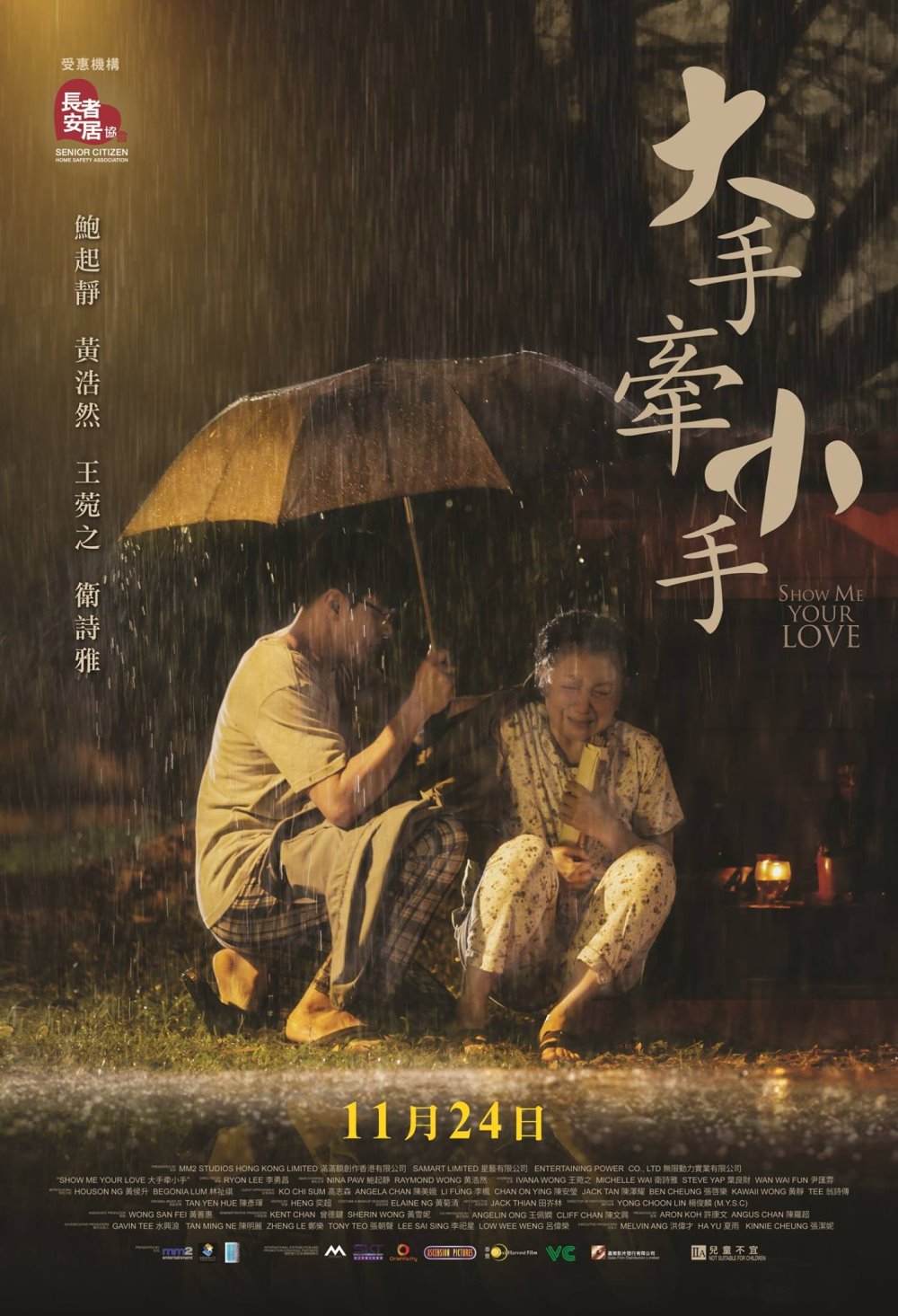
Show Me Your Love (大手牽小手, Ryon Lee, 2016)

Show Me Your Love posterIs it ever really too late to make up for lost time? Malaysian-born director Ryon Lee explores dislocations familial and geographical between a conflicted son and the guilt ridden mother who left him behind. Show Me Your Love (大手牽小手) shifts from frenetic, ambitious Hong Kong to sleepy, laidback Malaysia and from the ‘80s to the present day as two generations reprocess the idea of family in the wake of their own fears and disappointments both afraid and eager to put the past behind them while there is still time to make amends.

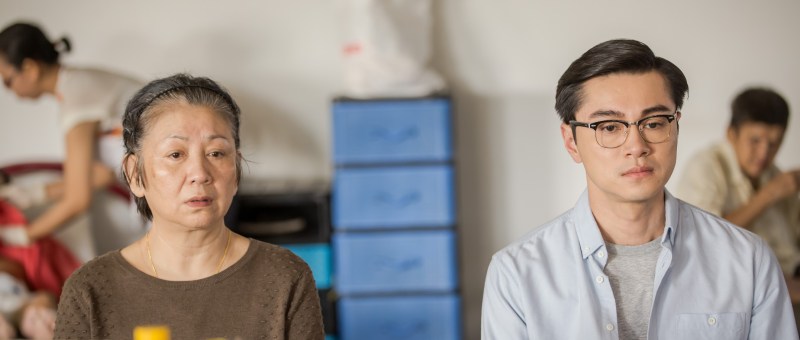
In the Hong Kong of 2016, Nin (Raymond Wong Ho-yin) is a successful teacher with a high-flying estate agent wife Sau-lan (Ivana Wongwho’s trying to convince him to give up his teaching job and movie to Guangzhou to invest in property. Home life is somewhat strained with Sau-lan working overtime and Nin worrying about a move he doesn’t really want to make, all of which means it’s the worst possible time to get an unexpected long-distance phone call informing him that the aunt that helped to bring him up when he lived in Malaysia has passed away. Travelling alone to the funeral, Nin is encouraged to reconnect with his estranged mother Sze-nga (Nina Paw Hee-ching) who has apparently started to behave strangely much to the consternation of Nin’s cousin who had been looking after her but is due to move to Australia to be close to her own children. Sze-nga angrily insists that she doesn’t want to return to Hong Kong with Nin and so he has little choice other than to place her in an old persons home at least until he can sort things out.

Nin’s melancholy voice over relates to us the various reasons he chose not to stay in contact with his mother. After abruptly moving them from Hong Kong to Malaysia when he was a boy, Sze-nga was continually evasive about her personal life and frequently told him minor lies which left him with longstanding trust issues and a lingering fear that she would soon abandon him. Sze-nga eventually did just that, depositing him with her sister while she went abroad again to work only to resurface 10 years later when her son was almost a man, taking him back and accidentally ripping him away from the surrogate family he’d formed with his aunt.

Truth be told, Nin never quite felt as if he belonged in his aunt’s family either despite her best efforts. A nosy a relative made sure he was pulled out of the family wedding photos in case someone thought he’d been officially adopted, somehow signalling his liminal status like a stray cat given temporary refuge. Perhaps for that reason he never managed to keep in contact with his aunt, either, forgetting to send her a New Year card as he’d promised he would. Broken promises become something of a theme from Sze-nga’s constant attempts to smooth things over with a comforting lie to the guilt and resentment that stands between mother and son.

Failure to communicate honestly continues to cause problems for the pair as well as for Nin individually whose longstanding fear of confrontation has led him to avoid telling his wife he’d rather not move to Guangzhou or to explain what’s going on in Malaysia. Eventually joined by his wife and daughter, Nin begins to repair his familial wounds by coming to understand a little about his “difficult” mother in that she always wanted the best for him but had a funny way of (not) showing it. Before it’s too late, he decides to make up for lost time by making good on some of those long forgotten promises as seen on a cute homework assignment he made as a 10 year old in which he was tasked with figuring out his mother’s hopes and dreams.

Despite the fierce sentimentality, Lee makes space for some typically Hong Kong verbal humour to lighten the mood while Nin’s melancholy childhood reminisces take on a rosy, whimsical tone even as he relates his own heartbreak in feeling abandoned and rejected by his often absent mother. Show Me Your Love is a warm and funny tale of putting the past to rest before it’s too late, making the most of the time you have left with the people that you love before it runs out with too much left unsaid.


Show Me Your Love screens as part of the eighth season of Chicago’s Asian Pop-up Cinema on 26th March, 2019 at AMC River East 21, 7pm where actress Nina Paw Hee-ching will be present for an introduction and Q&A.

Original trailer (English subtitles)

Canadian-Hong-Kong actress and Cantopop star Ivana Wong also sings the same titled main titles theme

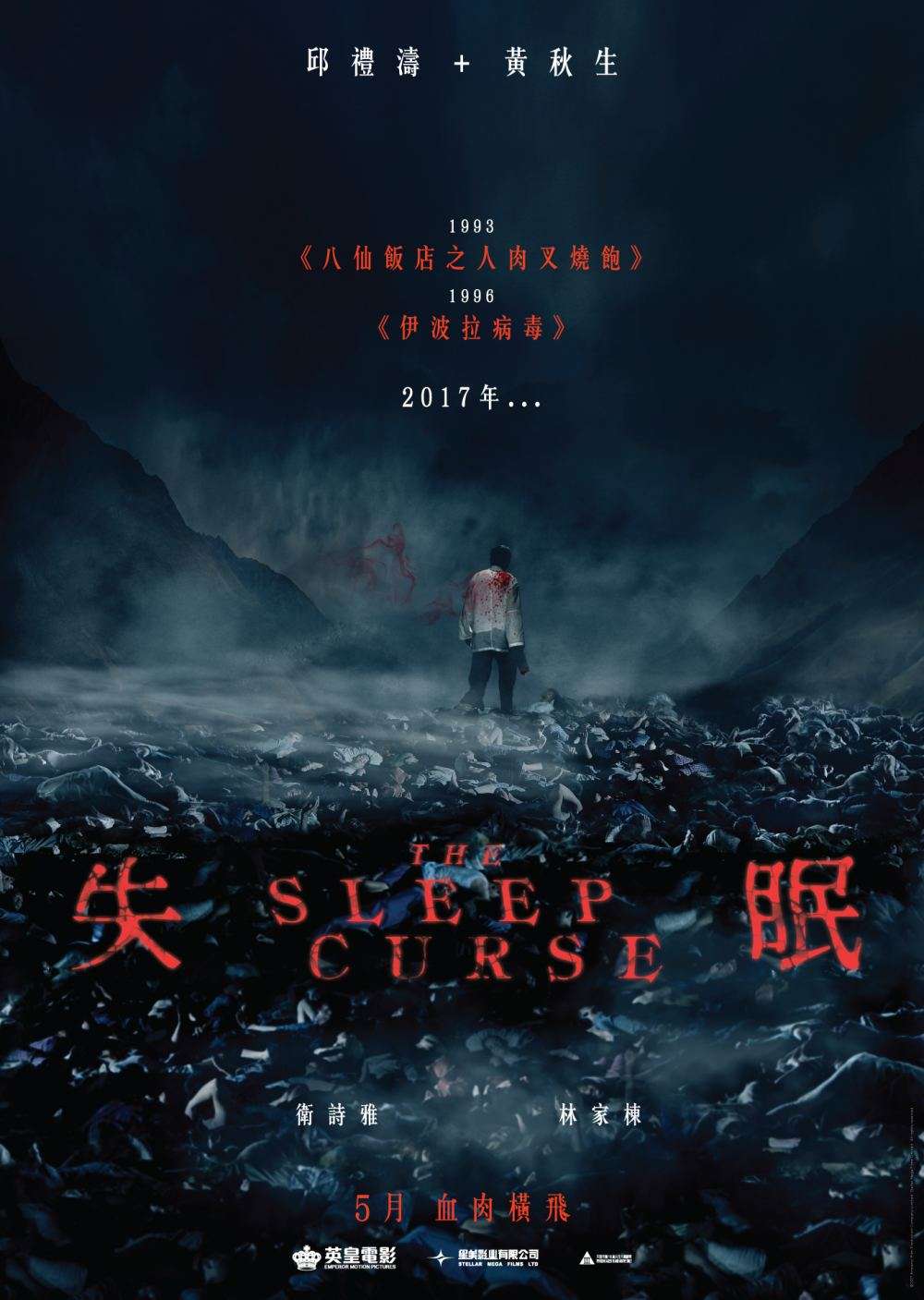
The Sleep Curse (失眠, Herman Yau, 2017)

sleep curse posterInsomnia can be like a curse, a yearning for sleep that yields no rest and paints the days with a lingering greyness but the regular kind of sleeplessness rarely has consequences as extreme as those experienced by the beleaguered protagonists of Herman Yau’s The Sleep Curse (失眠). Historical trauma and cultural memories continue to haunt the present, the refusal to lay the dead to rest giving rise to a hundred hungry ghosts all asking for recognition and some gesture of atonement from those that have come later. Yau’s film touches on some thorny, even taboo areas but doing so in the context of a Category III horror extravaganza that eventually descends into a bloodbath of perverse depravity might even push poor taste too far.

In 1990, a Malaysian Chinese grandfather celebrates his birthday and then develops chronic insomnia which eventually drives him insane, murderous, and suicidal. Meanwhile, abrasive professor Lam Sik-ka (Anthony Wong) is hard at work on a controversial research programme to discover a way for people to live without the need for sleep. His latest grant application has just been turned down because the university can’t see the benefit in his research and claim his methods are unethical. Sik-ka is, therefore, even happier than might be thought to reunite with a former girlfriend, Monique (Jojo Goh), who is the granddaughter of the Malaysian Chinese grandpa and suffers from a rare sleep disorder herself. It’s not for herself she’s approaching Sik-ka though, but for her brother.

For unrelated reasons, Sik-ka is also anxious to lay his own father’s ghost to rest by visiting a Taoist priest to help him remember what happened to his dad back in 1943. What ensues is two lengthy flashbacks to occupied Hong Kong in which Sik-ka’s father, Sing (also played by Wong), is coerced into collaborating with the Japanese when it is discovered that he was raised in Japan and has fluent command of the language. While Sing’s capitulation is guilt-ridden and born of fear for himself and his family, another turncoat, Chow Fok (Gordon Lam), has embraced his role as an active participant in Japanese rule, rounding up girls for the local “comfort station” which he himself runs.

The Japanese are an easy target, but Yau has his sights set on the evils of collaboration and his eye is particularly unforgiving. Sik-ka’s father is repeatedly described as a “good man”, though often by those seeking to justify his less good actions. The film acknowledges the difficulty of Sing’s position as a single father desperate to protect his son and mother yet fearing that one wrong move or unwise refusal may get them all killed. He does good where he can – helping a small number of young comfort women to escape, but finds that his “good” deed provokes only more harm when 40 are required to take the place of four escaped. Sing saves one of twins, “awarded” to him in place of a wife by the lecherous Japanese Colonel, but finds himself the subject of a curse by her supernaturally endowed sister who casts her evil eye upon all those who have wronged her.

This particular plot development makes little sense seeing as Sing is the one thing between her sister and the fate worse than death that she has just endured. Nevertheless, the vengeful ghost of a betrayed woman follows one generation to the next in her quest for retribution, remaining unseen and unremembered by those who should avenge her. Given the sensitivity of the issues, which maybe more pronounced in territories further North than Hong Kong, it is perhaps in poor taste to make them the centre of an exploitation leaning Category III horror film, offering only the message that the unresolved past will eventually consume the children who inherit only past trauma from their guilt ridden (or unrepentant) forebears.

Yau begins in the mode of tame absurdity as Sik-ka calmly breaks into a morgue for an impromptu bit of brain theft (later shoving his loot into a hollowed out durian fruit to hide his crime), but descends into blood soaked depravity in the increasingly strange final reel. Genuinely outrageous, though also incoherent, The Sleep Curse should provoke nightmares enough with its shocking, gore filled finale but may also leave a sour taste in the mouth.


Original trailer (Cantonese with English subtitles – contains intense gore/violence!)